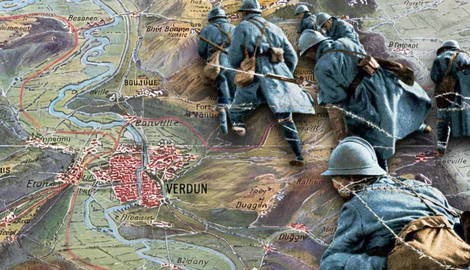
France has gone through many wars and conflicts. But if you were to ask the average French person to identify the nation’s deadliest war, chances are they will point you towards the trenches of the Somme or Verdun. And that’s because those locations featured prominently during World War I. Notably, the conflict led to about 1.3 million French deaths and is widely regarded as the deadliest war that France has ever experienced.
Analyzing the Demographic Disaster

To understand how World War I crippled France, demographic data offer more details regarding the mortality of the conflict. In August of 1914, France was full of patriotic energy. Under the banner of the Union Sacrée, civilians and soldiers stood united for France. But that sentiment was destroyed on the banks of the Marne, the Somme, and in the hills above Verdun, as the war preyed disproportionately on one specific group— young men.
While every nation involved saw fewer births during the war, France was hit hard, resulting in what historians refer to as the “birth deficit.”
French men born around 1894, for example, who had just reached adulthood by 1914, died in large numbers, with studies indicating that roughly 30 percent of that specific age group died during the conflict.
A Nation out of Balance
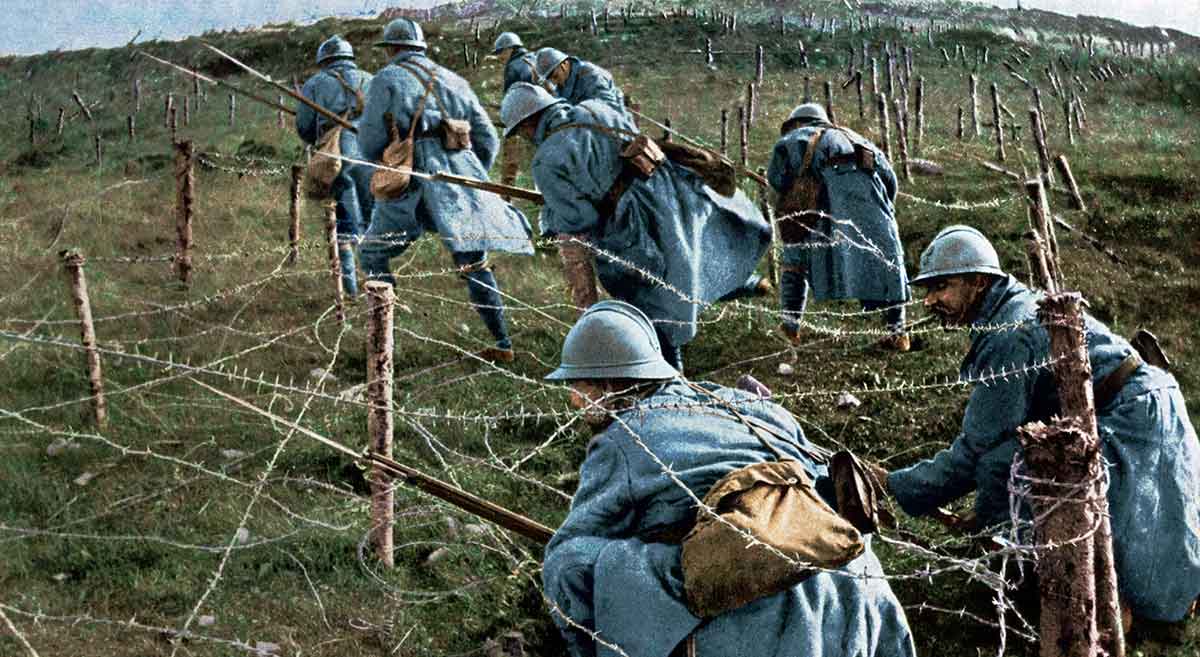
It should come as no surprise that France experienced countless war widows as a result of the First World War. With over a million dead, how did French society recover from the heavy loss of young men?
In a notable shift in French population trends, there were simply not enough men to go around. In the age groups most affected by the war (ages 20 to 35 in 1918), there were roughly 0.88 men for every French woman. What gets forgotten is that there were just as many women who did not become war widows because their potential husbands were never around to be lost.
As a result, France suffered from hundreds of thousands of “missing marriages” due to the lost generation of soldiers. What did these missing marriages mean for France? A crisis of labor. During the early 1920s, France faced a shortage of manual labor that could not be met by its own citizens. To fill jobs that would have otherwise gone to the lost generation, the country relied heavily on immigration. Between 1921 and 1931, France accepted more than one million immigrants, mainly from Italy, Poland, and Spain, to bridge the gap left by its fallen soldiers.
How the War Compared to the Napoleonic Wars

The war devastated a generation. When comparing it with the Napoleonic Wars, it is easy to see a tragic progression. While Napoleon’s era saw a demographic decline that France struggled with, World War I worsened France’s population problems. By the end of the conflict, millions of families suffered the loss of fathers, sons, and breadwinners. For perspective, France lost a higher number of men compared to Britain. The physical and psychological losses also cannot be understated.
It is estimated that World War I cost France roughly 1.3 million dead soldiers. While Napoleon fought on a much grander scale, the Napoleonic Wars caused fewer long-term changes to France’s population than the Great War. France recovered more quickly from the losses of the Napoleonic era and regained its power. That said, the nation took many decades to recover from the losses sustained during the First World War. And even when it did, it still had more immigrants than before 1914.
Why the Great War Changed France Forever

France was the European nation with one of the highest numbers of immigrants in the years following the First World War. By 1939, when it went to war again, the French population graphs were still hollow. One generation of lost fathers equaled one generation of lost sons. France’s top demographer at the time, Alfred Sauvy, called it a nation aging before its time. So when the Second World War came two decades later, they were fighting with far fewer young men than France should have had. In many ways, WWI remains one of France’s deadliest conflicts.