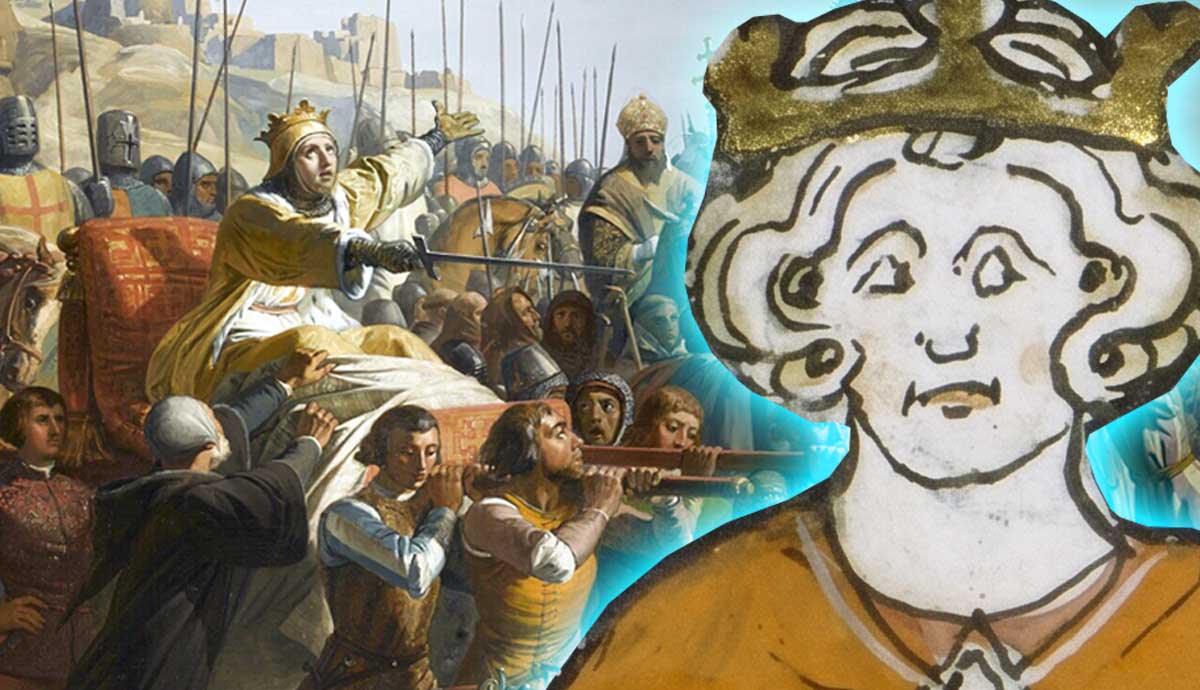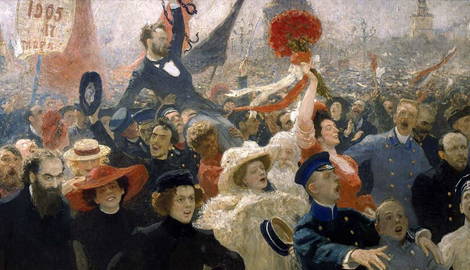

During the turn of the 20th century, the Russian Empire witnessed rapid industrialization and urbanization that in turn raised political consciousness among workers and peasants in the empire. These political tensions combined with the desire for greater autonomy among non-Russian communities in the empire and led to the outbreak of the 1905 Revolution. With the bulk of its armed forces engaged in the Russo-Japanese War, the tsarist government appeared to be on the verge of collapse and was compelled to offer political concessions to end the revolution.
The Romanovs at the Beginning of the 20th Century
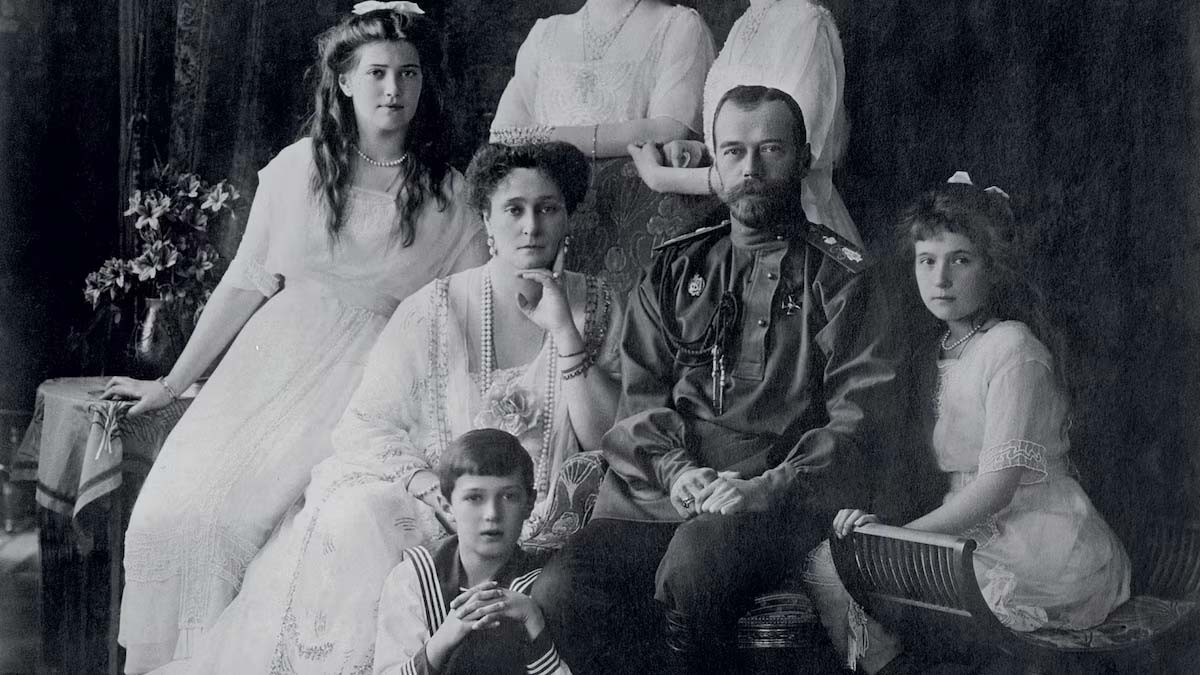
The Romanov dynasty had ruled Russia since 1613. The Romanovs emulated other European monarchies by centralizing power and pursuing territorial expansion to the Pacific coast. At the same time, Russia struggled to modernize at the same rate as its European rivals. Russia’s powerful landed aristocracy ensured that serfdom was not abolished until the 1860s, while national minorities in the western parts of the empire frequently sought independence from Russian rule. With radical political ideas spreading across Europe in the 19th century, a violent upheaval seemed all but inevitable.
Following the assassination of the reformist Tsar Alexander II in 1881, his successors Tsar Alexander III and Nicholas II reverted to reactionary policies to preserve the regime. The secret police known as the Okhrana targeted enemies of the state and sent them into internal exile in Siberia. The landlords retained much of their power over the peasantry, who were taxed heavily and often lacked the means of independent subsistence. Russia also increased its military spending to ensure that it could fight the Ottomans or any other European power at any time.
A decade before the 1905 Revolution, Nicholas II succeeded his father Alexander III and retained his father’s policies. Peasants still struggled to pay off redemption dues for their land and aristocratic landlords continued to dominate Russian society. Alexander III and Nicholas II’s efforts to develop Russian industry resulted in poor conditions for factory workers in cities, encouraging the creation of labor unions to demand better working conditions.
The Rise of Revolutionary Socialism and Different National Movements
The Romanovs faced a diverse set of revolutionary movements that grew more powerful at the turn of the century. Inspired by the 1848 uprisings across Europe, revolutionary movements throughout the empire began taking on the authorities in the late 1800s. The People’s Will, an insurgency based in major cities, assassinated Tsar Alexander II. The years before 1905 witnessed the formation of various political organizations that either sought to place constitutional limits on the tsar’s power or to overthrow the monarchy and establish a socialist state.
The most powerful revolutionary movements at the time included the Socialist Revolutionaries, who were popular in the countryside and favored a form of agrarian socialism, and the Russian Social Democratic Labour Party, a Marxist organization which saw the working class as the vanguard of socialist revolution. However, after 1903, the RSDLP split between the moderate Menshevik faction, led by Julius Martov, and hardline Bolsheviks, led by Vladimir Lenin. Efforts to re-establish unity between the two factions were largely unsuccessful.
Additionally, nationalist movements developed throughout the empire. Ukraine, Poland, the Baltics, and other colonies of Russia witnessed a rise in nationalism that coincided with the revolutionary movement in Russia. Polish nationalists wanted to avenge the defeat of the 1863 uprising. Jewish communities in the Pale of Settlement came to embrace revolutionary ideas in response to widespread antisemitism and political violence under the Romanovs. While many left-wing revolutionaries such as Julius Martov and Leon Trotsky were Jewish, this created the trope that the Bolsheviks were a Jewish movement.
Bloody Sunday
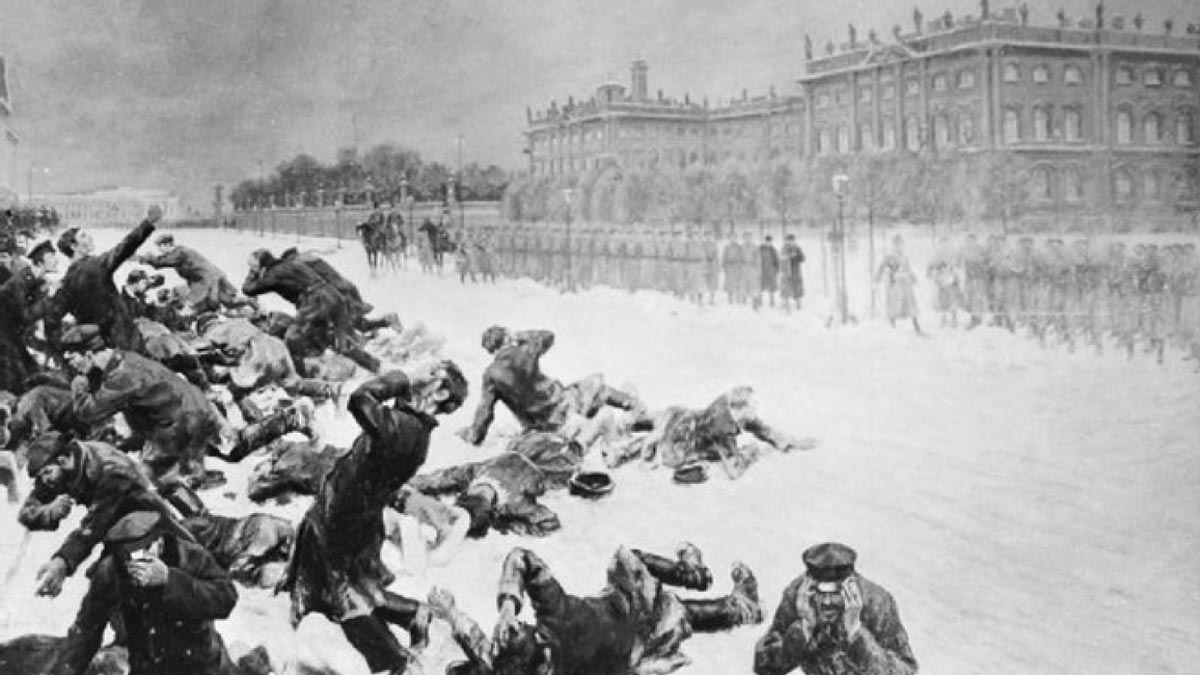
When many Russian peasants in the countryside moved to cities they hoped to gain more work opportunities. However, many struggled to find jobs, became homeless, or were condemned to work in miserable conditions. Strikes were commonplace and were often brutally suppressed by Russian state authorities. This, however, did not lead to a reduction in strikes or work stoppages.
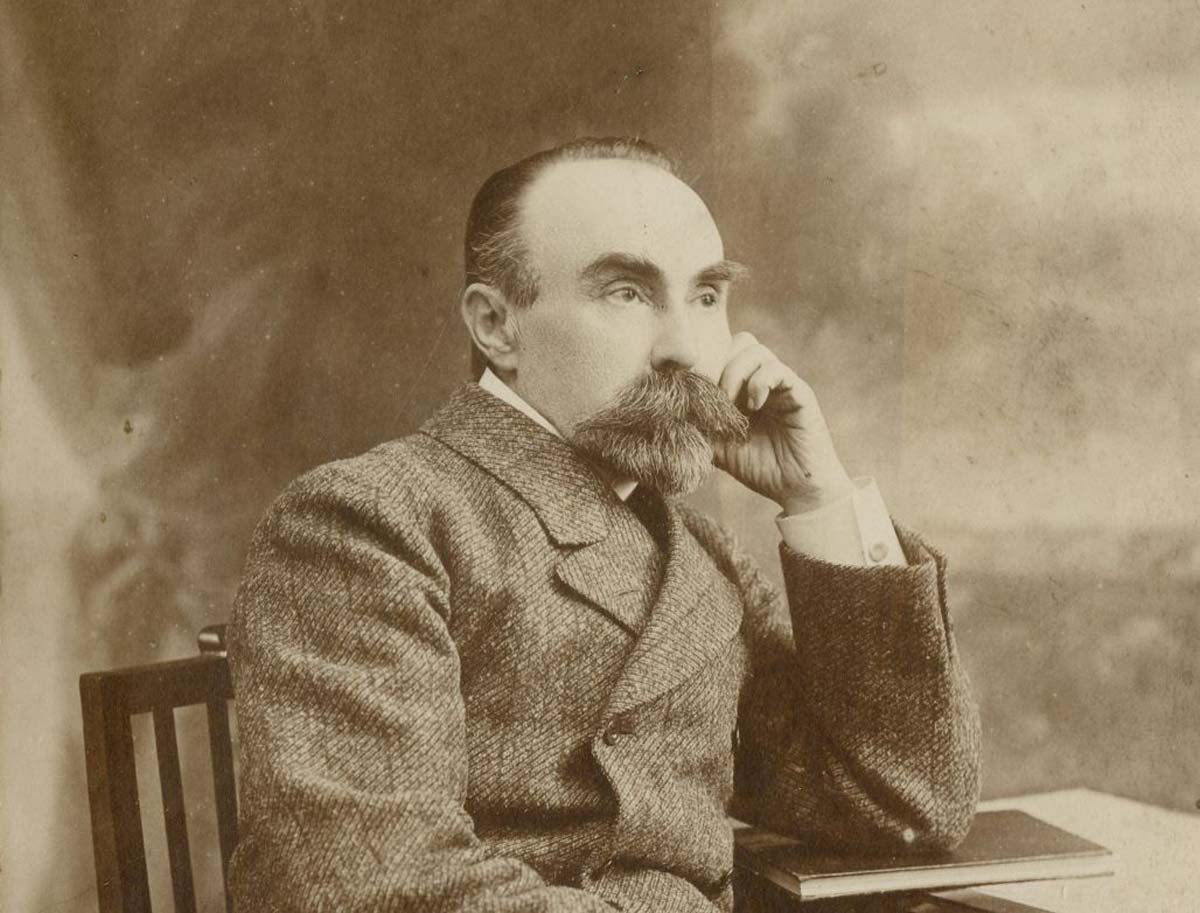
Father Georgy Gapon, a Ukrainian Orthodox priest living in St. Petersburg, was a major organizer of the strikes. He led an organization called the Assembly of the Russian Factory and Mill Workers of the City of St. Petersburg. Ironically, Gapon received some backing from parts of the Russian government who hoped to control the union movement from the inside. On Sunday January 22, 1905, he led a procession of workers in St. Petersburg to the Winter Palace with a petition addressed to the tsar. It demanded an end to the Russo-Japanese War, universal suffrage for all, and increased labor protections. Ironically, the demands were opposed by many of the revolutionary factions who hoped for more radical change.
When the marchers reached the Narva Gate, they found that soldiers of the city garrison and the Imperial Guards had been mobilized to stop the march. In a series of clashes, hundreds of marchers were killed by gunfire or trampled by horses. Gapon subsequently left the country. Opponents of the Tsar, even those opposed to the march, were angered and radical calls for violent action increased. Even Tsar Nicholas himself, who was away from St. Petersburg, was appalled by the death toll. The events of Bloody Sunday unleashed a torrent of revolutionary activity that lasted throughout the year.
Strikes and Mutinies
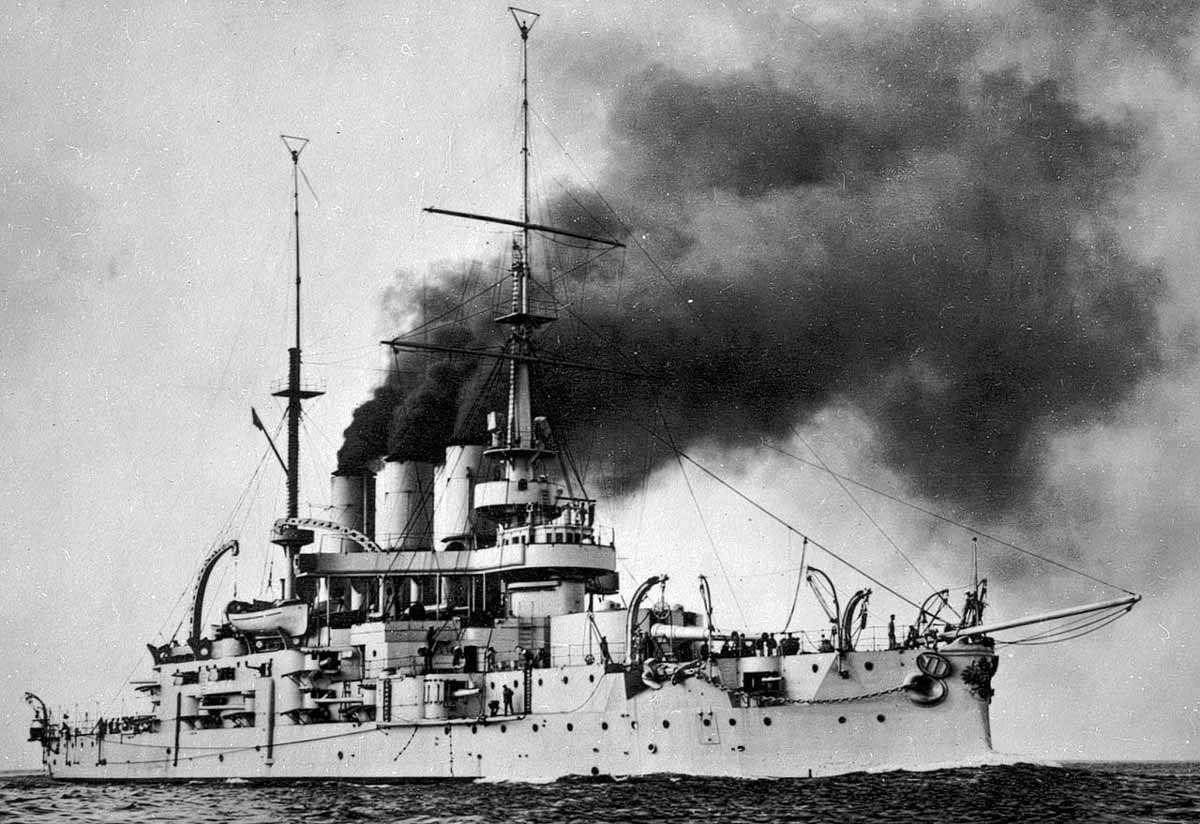
The killing of so many peaceful marchers kicked off a series of rebellions and demonstrations all across the Russian Empire. Polish socialists instigated a series of strikes in major Polish cities; nearly 94% of Polish workers participated in these actions over the course of the year. In Riga, Latvia, nearly 130 workers were shot after striking. Many people striking in the fringes of Russia demanded, in addition to labor rights, that there would be a halt to Russification policies that suppressed non-Russian culture.
The divide-and-rule policies in Russia led to major ethnic clashes throughout the Empire too. In the Caucasus, Armenians and Tatars killed each other in a series of massacres that presaged the Armenian Genocide in WWI. Jews came under attack from both opponents and supporters of the tsar, leading to the deaths of nearly 3,000 of them in pogroms. The bloodiest one in Odesa in October 1905 caused nearly 800 deaths. Polish leftists and rightists fought each other, even as they demanded independence from Russia. Amidst the chaos, revolutionary movements struggled to bring together the opponents of the Tsar. The St. Petersburg Soviet chaired by Leon Trotsky, the first of its kind, was ridden by infighting between the Mensheviks and Bolsheviks.
The military was affected too. Army units either fighting in Manchuria or on garrison duty staged mutinies as a result of battlefield losses and poor treatment by officers. The navy was ridden with mutinies, of which the battleship Potemkin in Odesa being the best known. The scale of the strikes and mutinies was immense; by October it was estimated that millions of Tsar Nicholas’ subjects were engaging in revolutionary activity.
End of the Revolution
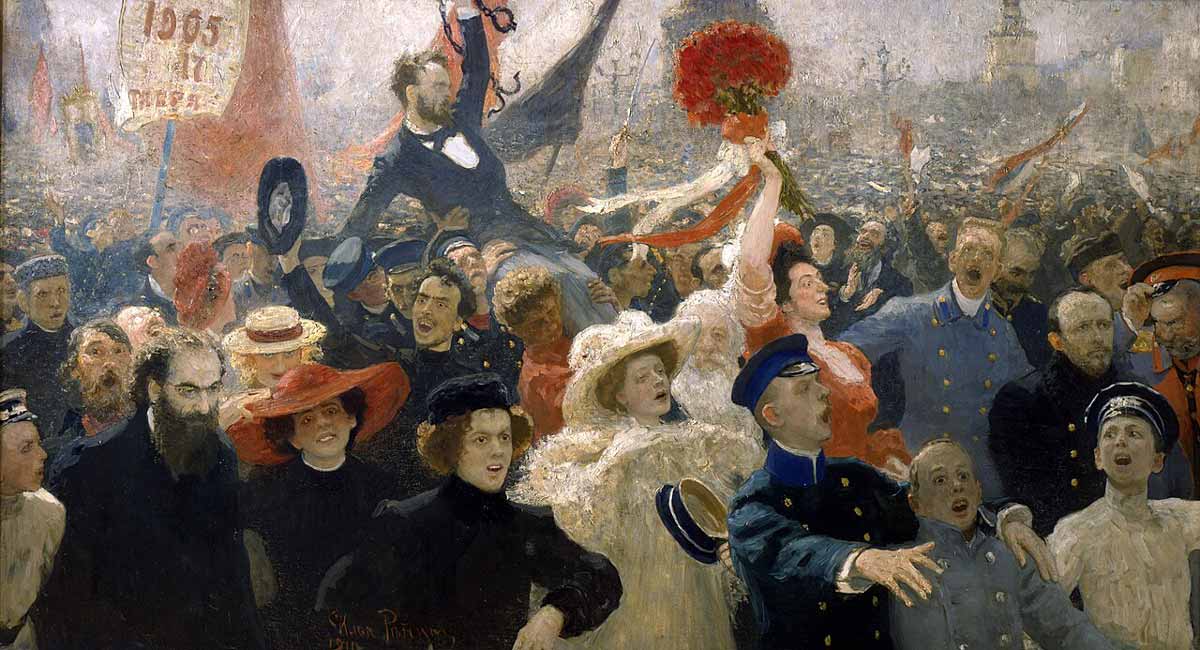
The government fought back ferociously against the revolution. Loyal military units unaffected by mutinies were brought in to crush any resistance. Large portions of the empire were subject to emergency rule, in which the Okhrana and police could arrest anyone. The naval mutinies in Kronstadt, Odesa, Vladivostok, and Sevastopol were broken with the deaths of 2,000 sailors. The tsar also relied on a militia called the Union of Russian People, more commonly referred to as the Black Hundreds. This organization was responsible for many of the pogroms that took place during this period.
At the same time, Nicholas hoped to offer the strikers some reform to bring back order. He created the Shidlovsky Commission to investigate the causes of the strikes. However, this commission was dissolved before it could start work. Additionally, he published the Bulygin Rescript and October Manifesto, promising more rights and elections in an attempt to weaken the revolutionary movement. Amnesties for people arrested in the revolution were issued and Russia’s prison population declined.
The Tsar’s concessions divided the opposition. Some liberals were pleased, especially with the promise of creating the Duma, and called for a halt in the protests. The radicals, however, wanted to destroy the tsarist regime entirely. More violent uprisings took place before the year’s end. Lenin helped instigate the largest uprising in Moscow in December. After it was defeated, the revolution effectively came to an end, though disturbances in the countryside continued into 1906 and 1907. After the Treaty of Portsmouth that ended the Russo-Japanese War, the tsar had more manpower at his disposal to pacify the countryside. The 1905 Revolution claimed the lives of some 1,500 tsarist loyalists and 15,000 revolutionaries.
The Russian Constitution 1906 and the Aftermath of the Revolution
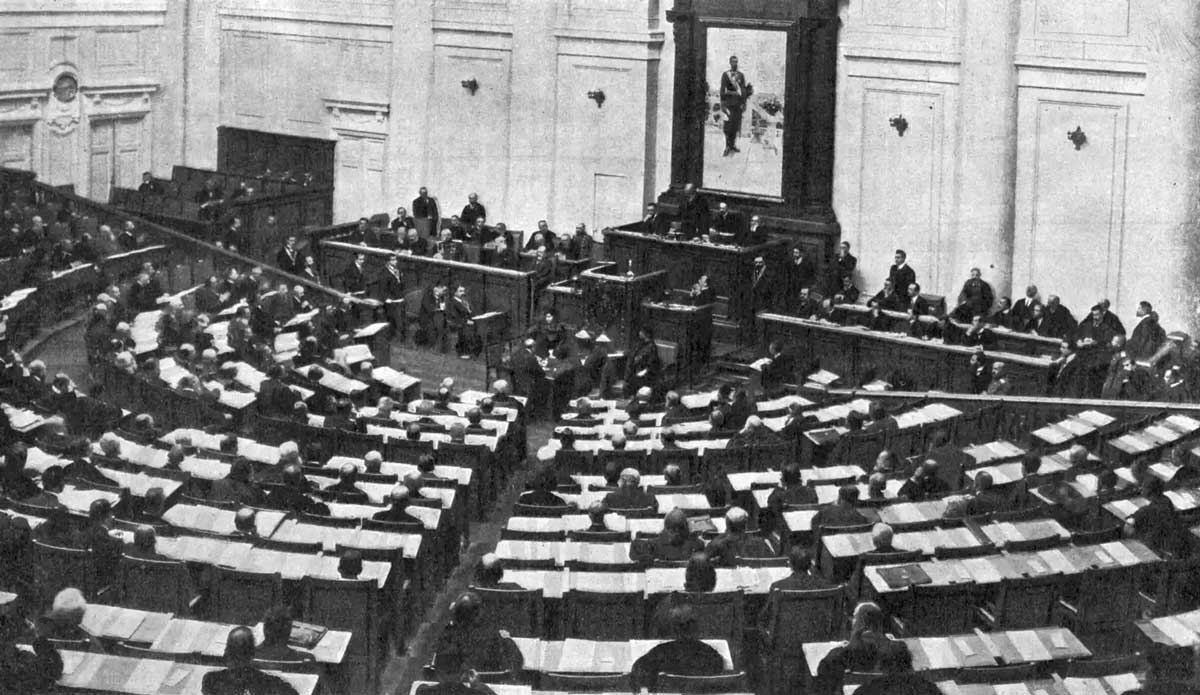
Once it became clear that the tsar would need to make concessions, he announced the creation of a bicameral parliament. An elected representative body known as the Duma served as the lower house, while the existing State Council took on the functions of the upper house, with some of its members elected and others appointed directly by the tsar. However, the Fundamental Law of 1906 reiterated the tsarist ideology that the empire was one and indivisible. Furthermore, the tsar retained the right to veto any legislation passed by the Duma.
The First Duma was convened in April 1906 and dominated by the Constitutional Democratic (Kadet) Party. Although they did not seek to overthrow the tsar, the Kadets demanded more radical reforms than the tsar was willing to offer, and he dissolved the First Duma in 73 days. Elections were held for a Second Duma in 1907, but this proved even more radical and was soon dissolved.
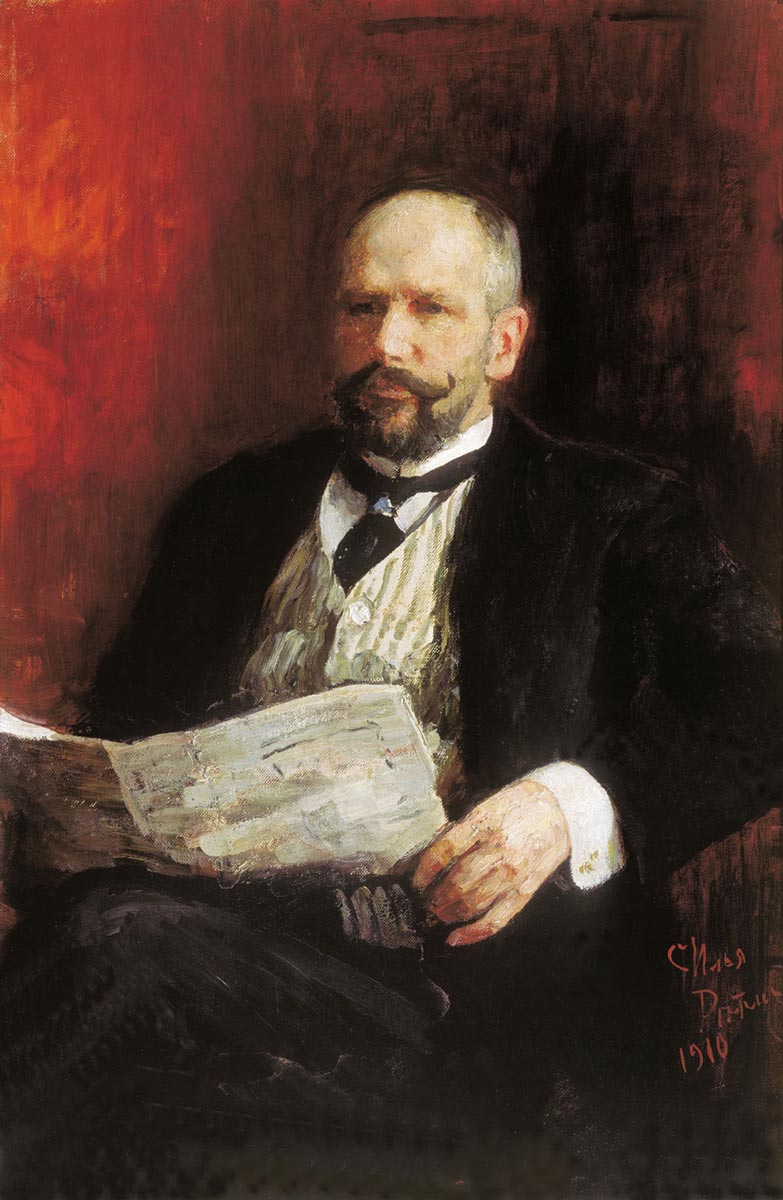
The failure of the Second Duma prompted Nicholas’ prime minister Pyotr Stolypin to propose changes to the electoral franchise that resulted in the more conservative Third Duma, which proved more effective at legislating. While Stolypin brutally crushed any remaining peasant disturbances, he also instituted reforms to improve the livelihoods of peasants and urban workers. His policies created a new class of peasant landowners called kulaks, whom he hoped would be a bastion of support for the tsarist regime in the countryside. He also sought to relieve pressure in European Russia by encouraging the economic development of Siberia. Stolypin’s reforms were not enough for the revolutionaries and in 1911 Stolypin was assassinated by Dmitrii Bogrov, a Ukrainian Jewish Anarchist who hated the Empire.
The continued repression by the tsar inspired terrorist attacks by Socialist Revolutionaries and Bolsheviks. Between 1906 to 1909, revolutionary factions killed nearly 8,000 people. Anti-Russian nationalist movements continued to develop in the Empire and sought external support. For instance, Józef Piłsudski created a Polish underground movement that received help from Germany and the Austrian Empire. In 1913, Tsar Nicholas II celebrated the 300th anniversary of Romanov rule in Russia. The widespread demonstrations of support for the tsarist regime on this occasion belied the revolutionary tensions under the surface. While the 1905 Revolution had failed to topple the tsar, Leon Trotsky later described it as the dress rehearsal for the end of Romanov rule in 1917.