National days celebrating a nation’s history and culture are common in the modern world. The rise of secular holidays joining religious commemorations was one product of nationalism’s rise across Europe and the rest of the world over the 19th and 20th centuries. Historian Eric Hobsbawm referred to these secular patriotic holidays as an “invented tradition” designed to help foster a collective national identity.
French Bastille Day (July 14th) commemorates a pivotal chapter in the country’s history: the onset of the French Revolution and the road to its modern republic.
Historical Context of French Bastille Day: July 14 and the Storming of the Bastille
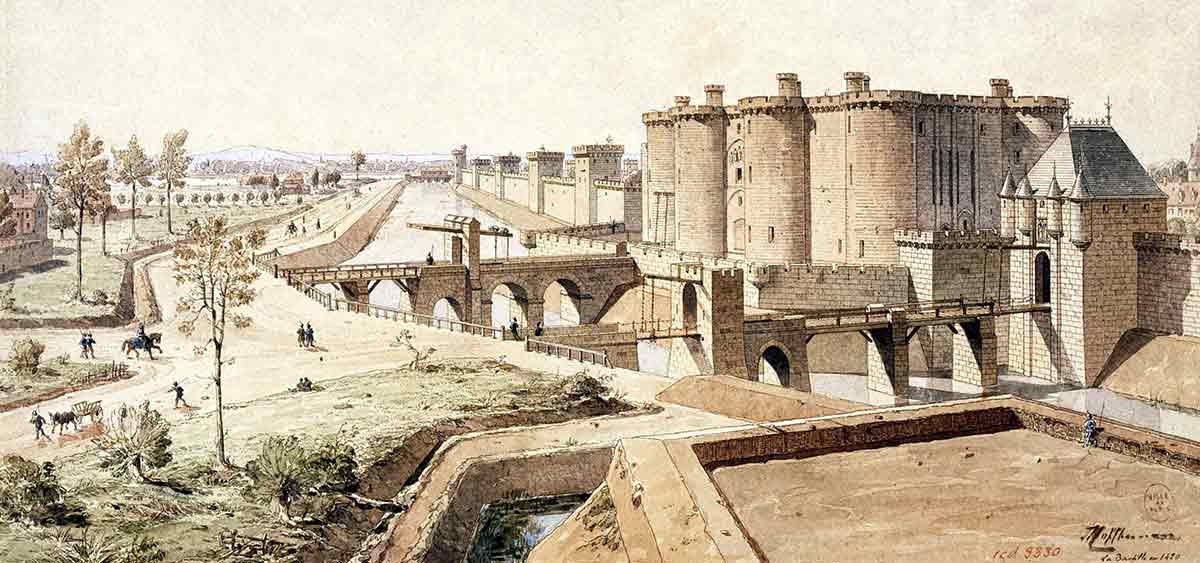
Many of today’s iconic landmarks and symbols of Paris and France are associated with 1789 and the storming of the Bastille. For instance, historian William Doyle points out that the Eiffel Tower was constructed as part of the exhibition celebrating the centennial of the outbreak of the French Revolution in 1889 (2001, 2). Scholars Hans-Jürgen Lüsebrink and Rolf Reichardt note that French history had multiple bastilles. In fact, Lüsebrink and Reichardt explain that a bastille initially referred to defensive towers built during the Hundred Years’ War (1997, 6).
However, by the late 18th century, the term “bastille” was associated with the royal fortress in Paris. Lüsebrink and Reichardt argue that the Parisian Bastille became an increasingly loathed and feared symbol of royal power in the decades preceding the crises that produced the French Revolution in 1789 (1997, 7-8).
Turbulent demonstrations began to rock the streets of Paris in the summer of 1789. The growing royal military presence in Paris soon backfired and undermined King Louis XVI’s authority. Indeed, Parisians rose to voice their anger at a new unpopular ministry, which historian François Furet said was designed to crush any momentum for reform (1993, 67).
France’s support for the American Revolutionary War had depleted the country’s finances, and the Assembly of Notables had refused to approve the drastic financial reforms proposed by Charles-Alexandre de Calonne (the controller-general of finance) in 1877. As a result, in 1878, Louis XVI had to summon the Estates-General, the assembly of representatives of the three “estates” (orders) of the country: clergy, nobility, and the Third Estate (the majority of the French population).
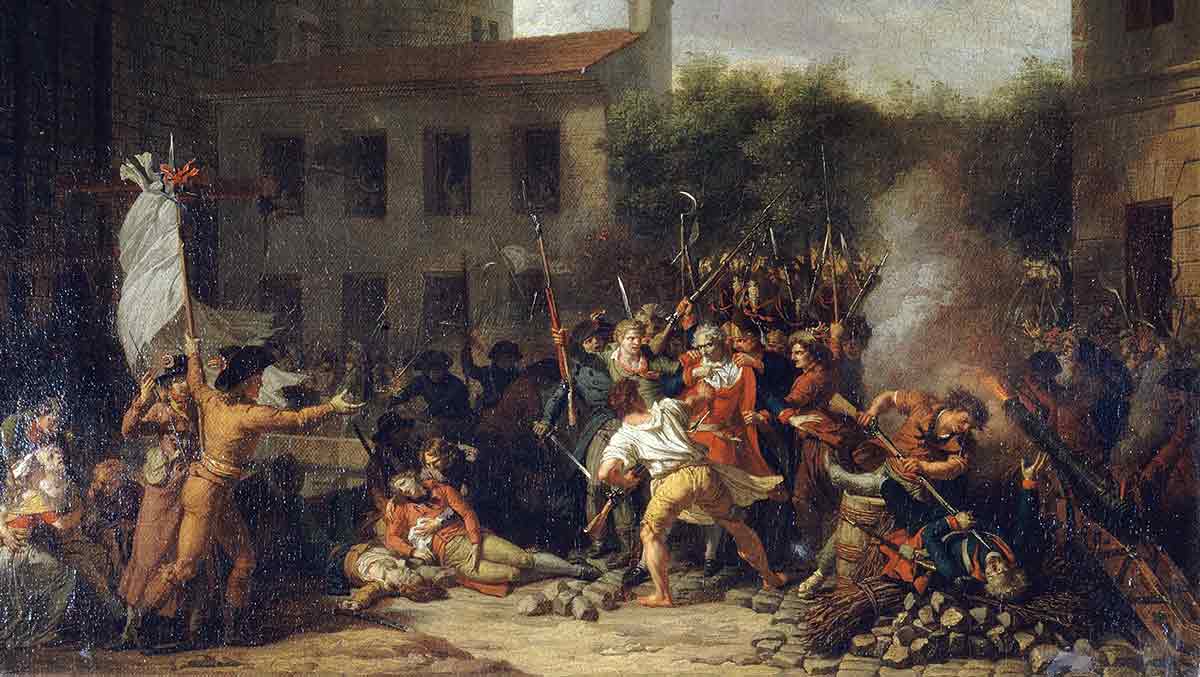
On July 11, King Louis XVI’s dismissal of the pro-reform minister Jacques Necker led to widespread discontent among the population, with many Parisians taking to the street to voice their dissatisfaction. Soon, the unrest gained momentum. By the afternoon of July 12, William Doyle explains that many French Guards joined rioters to seize the city (2001, 42). Rioters captured an arsenal early on July 14 and marched on the Bastille in hopes of securing more weapons. Furet notes that the Bastille fell after a bloody round of firing that afternoon (1993, 68). The king’s decision to reinstate Necker failed to put an end to the protests. It was the beginning of the French Revolution.
The Making of a National Holiday in France
As historian William Doyle points out, Parisian rioters spontaneously began demolishing the Bastille on the afternoon of July 14, 1789 (2001, 42). However, as François Furet noted, few at the time could have imagined that the Bastille would become such a significant site of national memory (1993, 68).
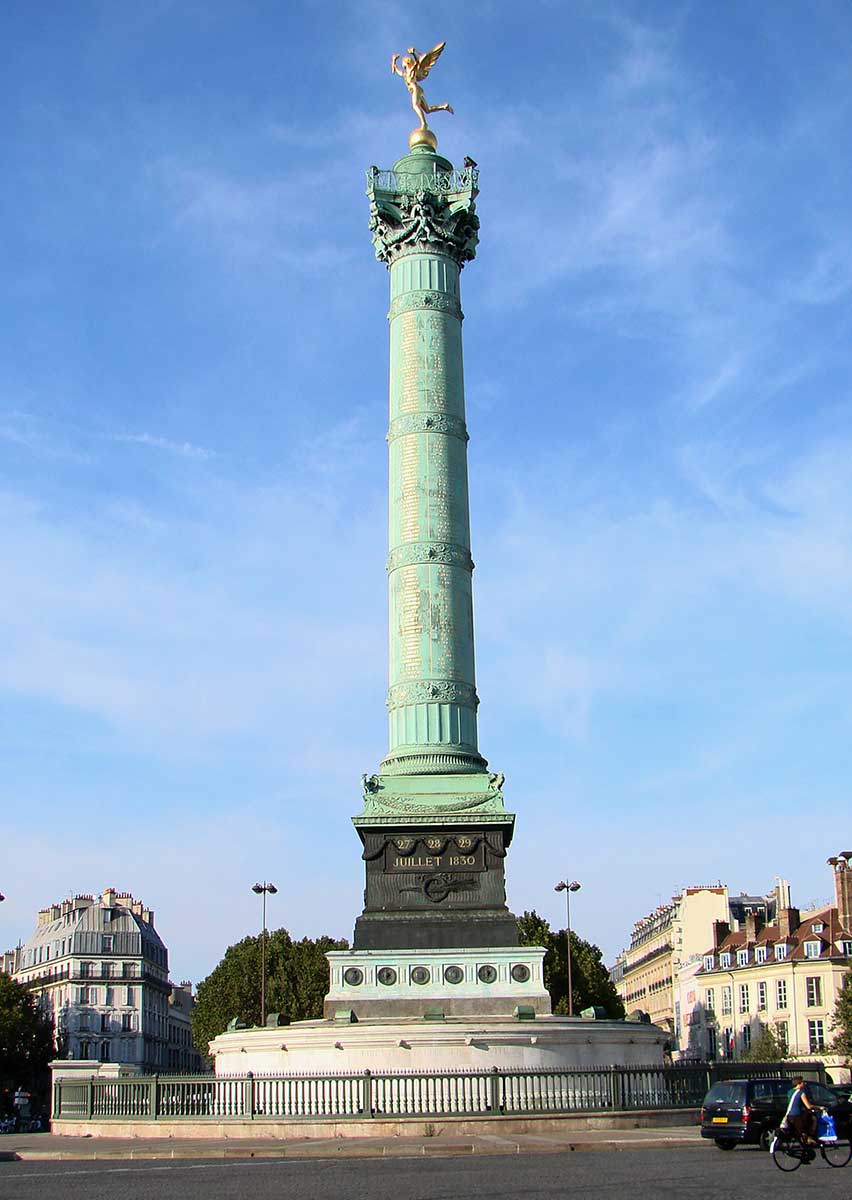
Nevertheless, the site of the Bastille was a reminder of national history decades before Bastille Day became France’s national holiday. A monument has stood in the square where the Bastille once existed since the 1800s.
However, this monument, known as the July Column, does not commemorate the storming of the Bastille. Instead, it marks the July Revolution of 1830. This uprising witnessed the rise of Louis-Philippe, known as the “citizen king,” and the so-called July Monarchy (1830-1848), a reign that marked the rise of the bourgeoisie and ended with the 1848 Revolution.
Indeed, the July 14 storming of the Bastille was not consistently commemorated in France before 1880. French governments between Napoleon and the Third Republic did not celebrate July 14 as a national holiday. For example, Napoleon’s birthday, August 15, was established as a primary national holiday on the calendar during the First Empire (1804-1815).
So, how and why did July 14 become France’s national day? The answer lies in part in the country’s disastrous defeat in the Franco-Prussian War of 1870, a conflict that famously led to the proclamation of the German Empire in the Palace of Versailles. After this defeat, France’s leaders desperately sought to foster unity and promote the impression that the country was rebuilding its image as a significant global power.
What Event Does French Bastille Day Commemorate?
The Third French Republic (1870-1940) established July 14 as France’s national day in 1880. We associate this day with the storming of the Bastille and the start of the French Revolution of 1789. However, there is some debate about what precisely the French people celebrate on July 14 or Quatorze Juillet.
For historian François Furet, the 1880 law creating the French Bastille Day holiday symbolized the triumph of republican values first articulated in France during the early years of the French Revolution. However, Furet argued that this was not meant to celebrate the events of 1789 directly because of the violence of later phases of the French Revolution, culminating in the Reign of Terror of 1793-1794, when the Committee of Public Safety (led by Maximilien de Robespierre) controlled the French government, executing thousands of people without trial (1993, 537).
Historian Eric Hobsbawm pointed out that the July 14 holiday was part of a growing repertoire of republican symbols in France under the Third Republic. For example, Hobsbawm referenced the increasing prevalence of the government’s monogram (RF, for French Republic) and visual representation of the republic, Marianne, in French society (1983, 272-273).
On the other hand, journalist Hugh Schofield emphasized the lingering pro-monarchy sentiments in France in the decades after the French Revolution. While acknowledging that today, people associate the holiday with the storming of the Bastille and the pro-republican tradition in France, Schofield points out that the 1880 law was ambiguous about the specific event the July 14 festivities were meant to celebrate (2013).
In this view, people celebrating French Bastille Day in the late 19th century may have been commemorating the Fête de la Fédération, a holiday established in 1790 (a year after the start of the French Revolution) to celebrate and foster national unity, rather than the storming of the Bastille.
Commemorations of July 14 Through Modern French History
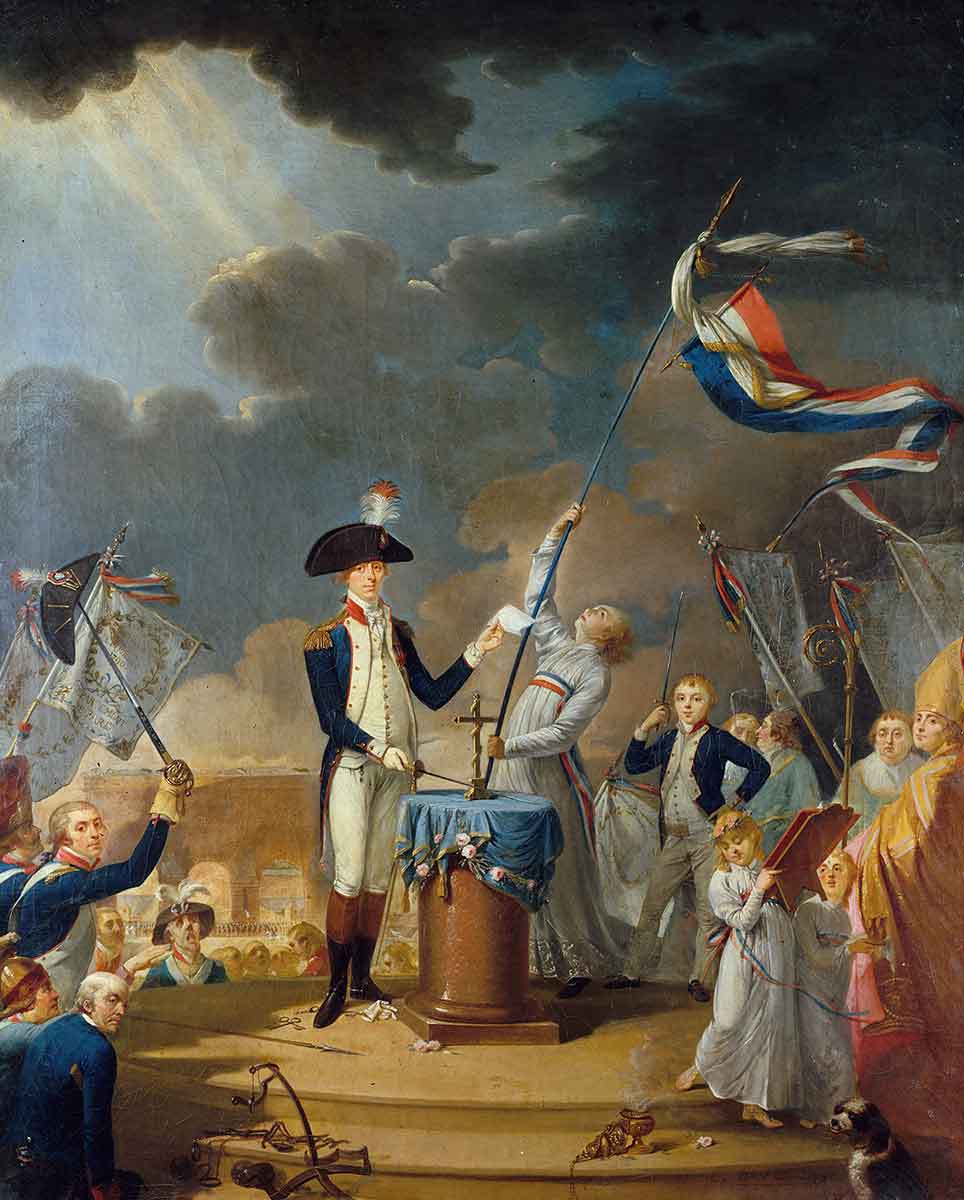
As historian Michael Fitzsimmons points out, the Fête de la Fédération (Festival of the Federation) was first celebrated throughout France on July 14, 1790 (2003, 189). The holiday was designed to symbolize peace and unity in France. While the date marked one year since the storming of the Bastille, its observance was not meant to be anti-monarchical or pro-republican.
For example, the main celebration occurred on the Champ de Mars in Paris and included a mass led by France’s future leading diplomat, Charles-Maurice de Talleyrand. Moreover, King Louis XVI, the Marquis de Lafayette, and other prominent royals and aristocrats took an oath to the country’s new constitution. The festivities also included a massive four-day feast.
In other words, this celebration was far from the anti-monarchical, pro-republican tradition we tend to associate with French Bastille Day today. It was commemorated one more time in 1791. Only two years later, King Louis XVI was guillotined, and France would become a republic.
According to historian Eric T. Jennings, the meaning of July 14 changed during World War II, after Nazi Germany defeated France in June 1940 and with a surprise lightning attack commonly known as Blitzkrieg. Jennings notes that Marshal Petain and France’s collaborationist government in Vichy opposed the pro-republican sentiment associated with July 14. According to Jennings, July 14 officially became a day of national mourning rather than a celebration of liberty and republican traditions (2001, 201).
Instead, Jennings points out that Vichy officials promoted several new holidays in place of French Bastille Day (2001, 201-202). Bastille Day returned as the country’s national holiday with the conclusion of World War II in 1945.
Where and How Is French Bastille Day Celebrated?
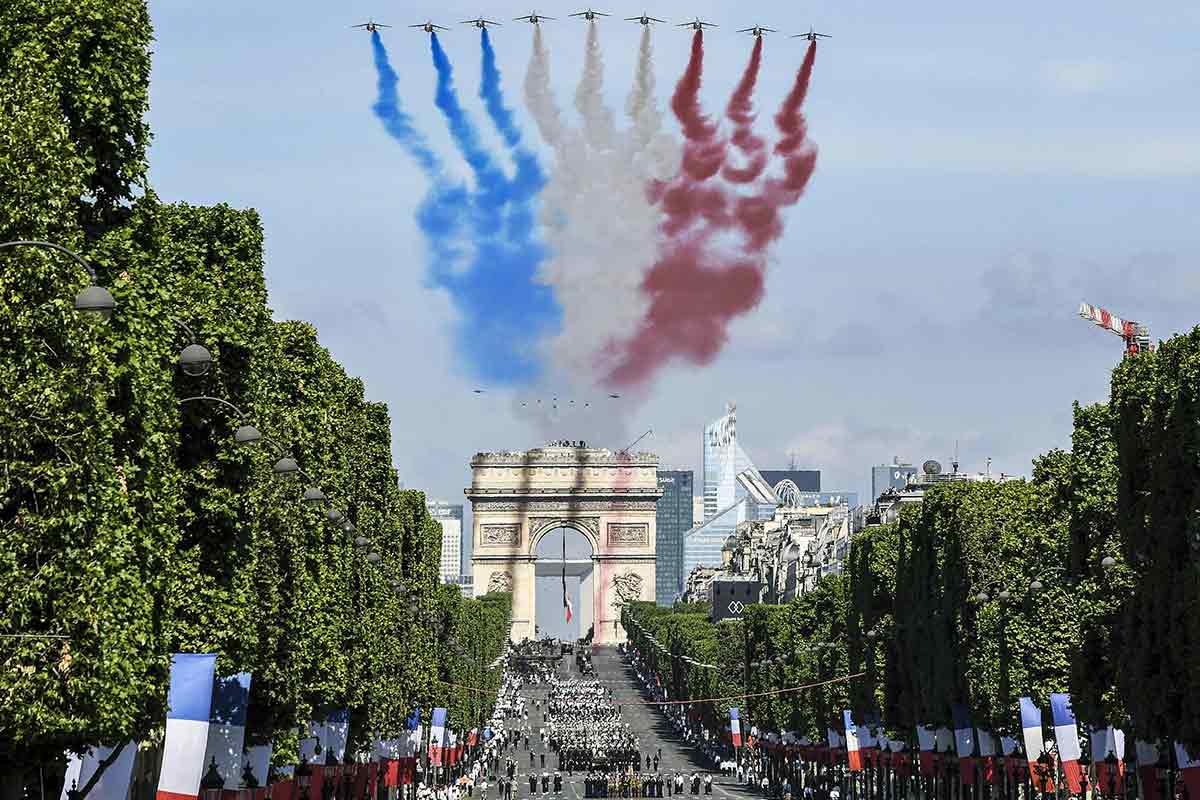
Today, French Bastille Day is commemorated across France and around the world. Many North American cities, including some with historical ties to France, hold Bastille Day festivities. For example, Milwaukee, Wisconsin, hosts a four-day festival commemorating Bastille Day each July.
In France, Bastille Day is commemorated with a mix of solemn and celebratory events. On the morning of July 14, for example, many dignitaries from around the world attend a massive military parade in the heart of Paris, passing down the Avenue des Champs-Élysées to reach Place de la Concord and ending with a parachute display.
Popular social events include the Bals de Pompier (Fireman’s Balls) and the fireworks display at the Eiffel Tower in Paris. Moreover, many museums across France offer free admission on French Bastille Day.
References and Further Reading
Doyle, W. (2001). The French Revolution: A Very Short Introduction. Oxford University Press.
Fitzsimmons, M.P. (2003). The Night the Old Regime Ended: August 4, 1789 and the French Revolution. Pennsylvania State University Press.
Furet, F. (1993). Revolutionary France: 1770-1870. (A. Nevill Trans.). Blackwell. (Original work published 1988).
Hobsbawm, E.J. (1983). Mass-Producing Traditions: Europe, 1870-1914. In E. J. Hobsbawm & T. Ranger (Eds.), The Invention of Tradition (pp. 263-307). Cambridge.
Jennings, E.T. (2001). Vichy in the Tropics: Pétain’s National Revolution in Madagascar, Guadeloupe, and Indochina, 1940-44. Stanford University Press.
Lüsebrink, H-J & Reichardt, R. (1997). The Bastille: A History of a Symbol of Despotism and Freedom (N. Schürer Trans.). Duke University Press. (Original work published 1997).
Schofield, H. (2013, July 14). Bastille Day: How peace and revolution got mixed up. BBC News. https://www.bbc.com/news/world-europe-23280120.