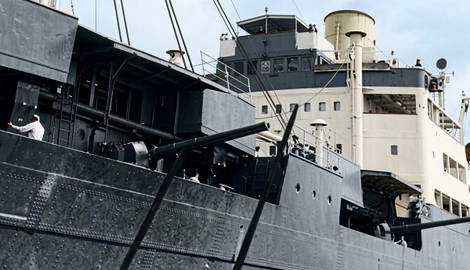

At the beginning of World War II, the Allies imposed a naval blockade, cutting off Axis access to foreign trade and essential materials. Neither European Axis power could slug it out with superior Allied navies. Where brawn wouldn’t work, stealth, speed, and surprise would. Converted to semi warships, merchantmen received concealable big guns, a floatplane, and torpedo tubes to overpower any non-naval opponent. Their silhouettes were altered to avoid recognition.
The first raiders slipped away even before World War II began on September 1, 1939, relying on friendly ports for help. These early raiders took full advantage of the lull before Allied war preparations built up to protect their trade routes.
These converted merchantmen, or Hilfskreuzer, made up most of the Axis raiding fleet, though several warships, like the Admiral Graf Spee, participated.
The Rise of the Hilfskreuzer: Converted Merchant Raiders
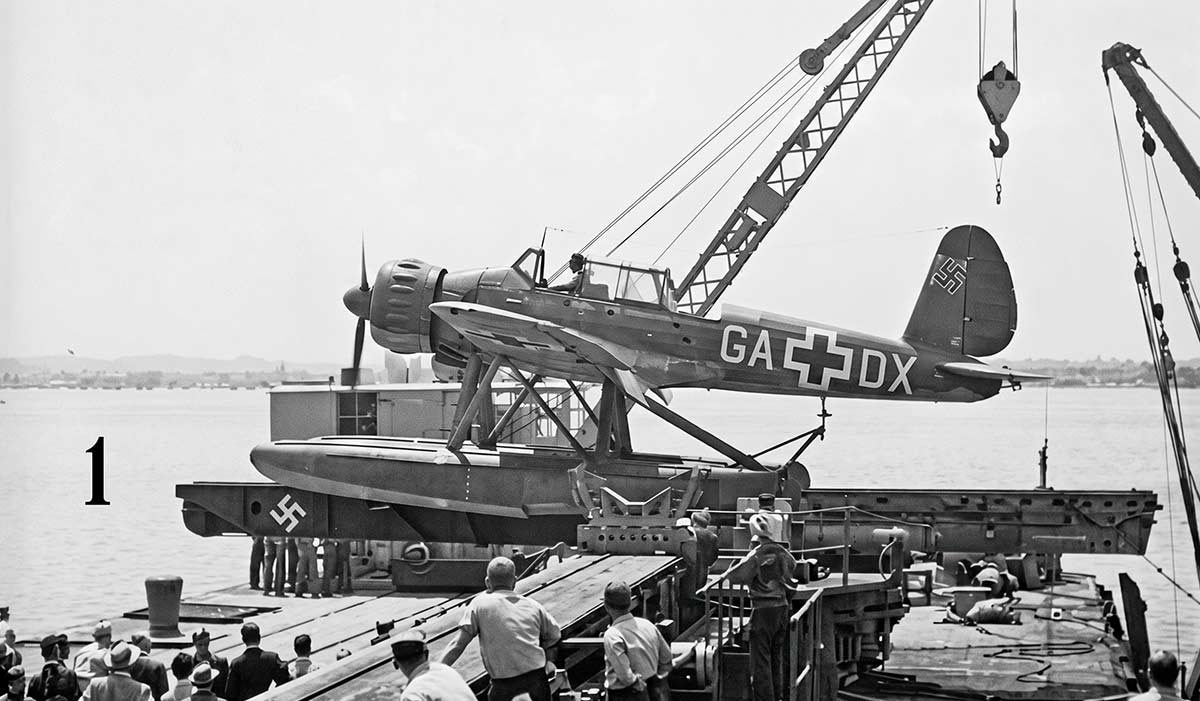
Kriegsmarine cruiser Admiral Graf Spee, already out in the Atlantic, attacked merchant ships on September 30, 1939. Capturing or sinking nine ships, the British cornered the naval raider near Uruguay. Knowing the Graf Spee’s position to be hopeless, the captain scuttled his ship to save his crew’s lives.
The first converted merchant Axis raider, the KMS Atlantis, slipped past the British around March 11, 1940. The Atlantis possessed centralized gun control, so range, wind, etc., were calculated- a feature few raiders had. With this tech, the Atlantis’s guns fired more accurately. The Atlantis found no targets until May 3, 1940, in the South Atlantic – sinking the British Scientist. After sinking another in June, the Atlantis entered the Indian Ocean, striking Allied shipping.
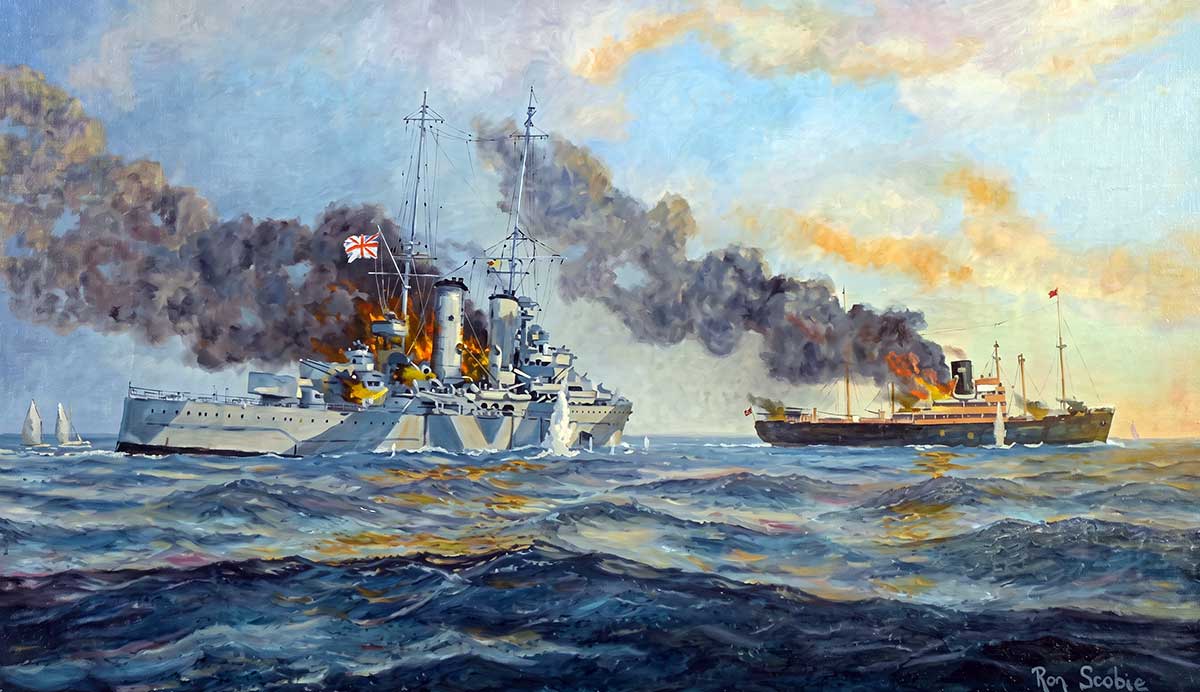
Despite distress calls, the corsair remained elusive. On November 11, 1940, northwest of Sumatra, the Atlantis took the Automedon. Here, in a locked safe opened with explosives, the Germans found an unexpected treasure trove – reports describing all British defenses in SE Asia, including Singapore, in a weighted bag meant to be tossed overboard. Upon reaching Japan, the Atlantis’s captain handed the tidbit to their Axis ally. This information, in 1941, aided Imperial Japan immensely when it seized Singapore in a masterly campaign.
The Atlantis’s career ended in the South Atlantic on November 22, 1941. Located by a suspicious British cruiser, after a short fight, the Atlantis crew sank the ship with explosives. In a 602-day cruise, the Atlantis sailed over 100,000 miles, capturing twenty-two Allied ships for 144,000 tons.
The most successful Axis pirate, KMS Pinguin, designated “Raider F,” sailed from Germany to occupied Norway on June 30, 1941. Once among the icebergs, the Pinguin refueled a U-boat and sailed south disguised as a Greek freighter. With the ultimate goal of interrupting British and Norwegian sailing fleets, the Pinguin sank a British freighter on July 30 off Ascension Island.
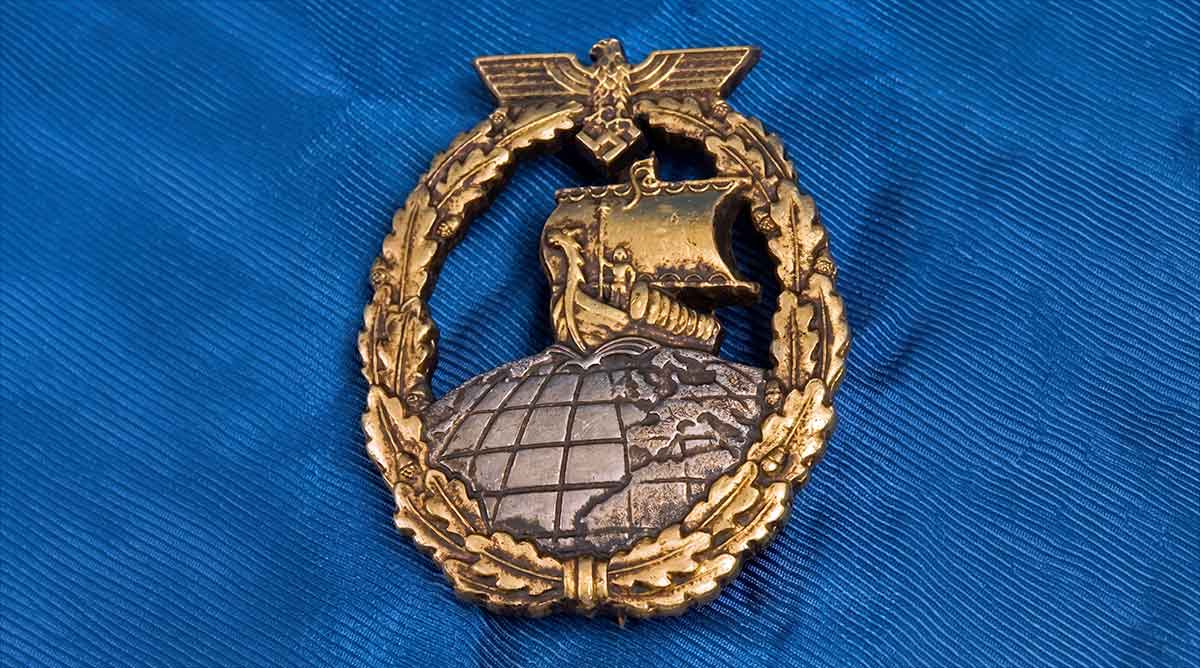
For the next 357 days, the Pinguin sailed the South Atlantic and Indian Oceans. Through disguises, luck, and clever tactics, the raider sank twelve and captured sixteen vessels totaling 136,000 tons. At one point, the Pinguin met with fellow raider Kormorant, resupplying it with food, water, and fuel oil.
During a highly successful part of its voyage, the Pinguin fulfilled its original purpose. On January 14, 1941, near Antarctica, it surprised the Norwegian whaling fleet. Using only a few shots from its 7.5-centimeter gun, the Pinguin captured fourteen vessels.
The captured ships with prize crews sailed to Occupied France, but the Pinguin crew converted a suitable boat into a mine layer.
Like Atlantis and others, the Pinguin’s fate caught up on May 8 in the Indian Ocean. Cornered by the HMS Cornwall into a fight, a lucky 8-inch shell shot hit the Pinguin’s stored naval mines. The raider exploded, killing 532, including prisoners.
False Flags and Chameleons: The Tactics of Axis Raiders
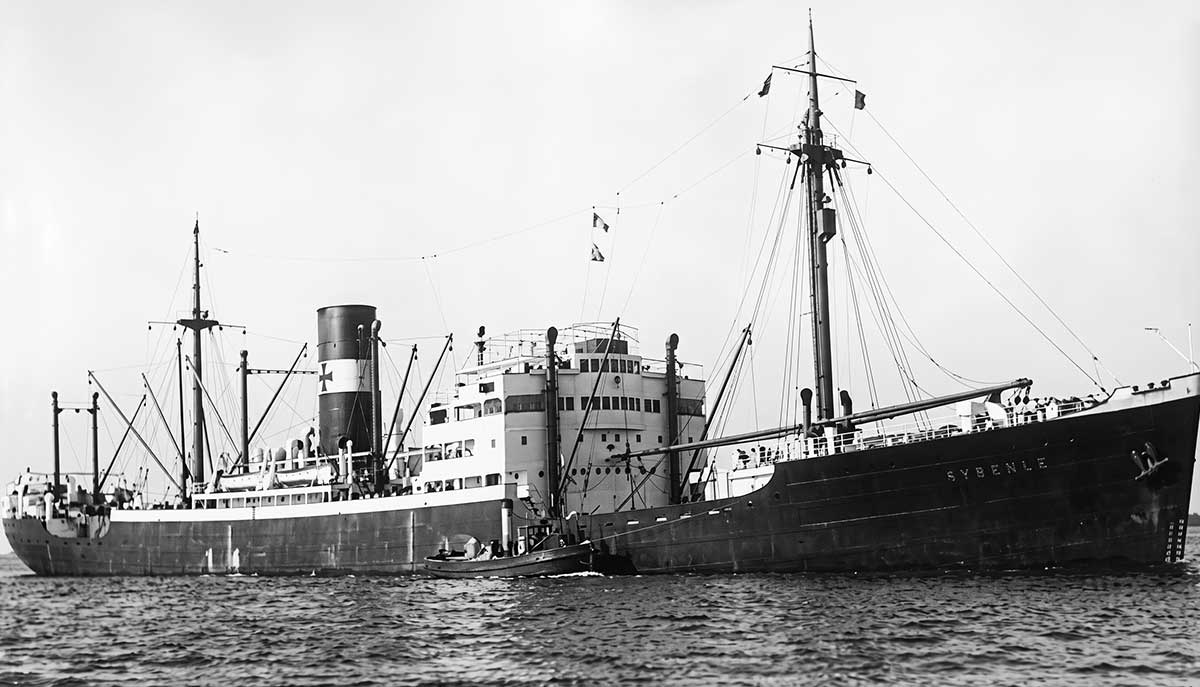
The Germans launched nine commerce raiders in total. These innocuous-looking boats sailed to empty areas, sinking Allied ships. Their success partly came from their chameleon abilities- repainting and renaming the ships, false smokestacks, and even masts. To catch their prey, the Germans used false radio call signs to lull their enemy, sneaking close. They only fired if a target refused to stop.
The raider’s biggest successes before the Allies coordinated their war efforts between 1939 and 1941. By 1943, the airtight Allied blockade prevented any sailings. The commerce raiders became unconventional terrors like the U-boats. In roughly three years, they sank 140 ships for 700,000 tons.