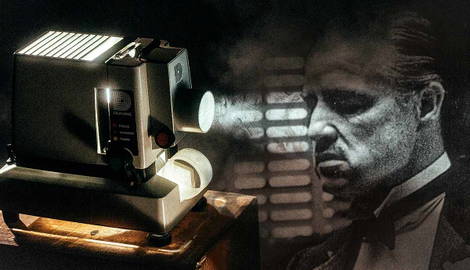

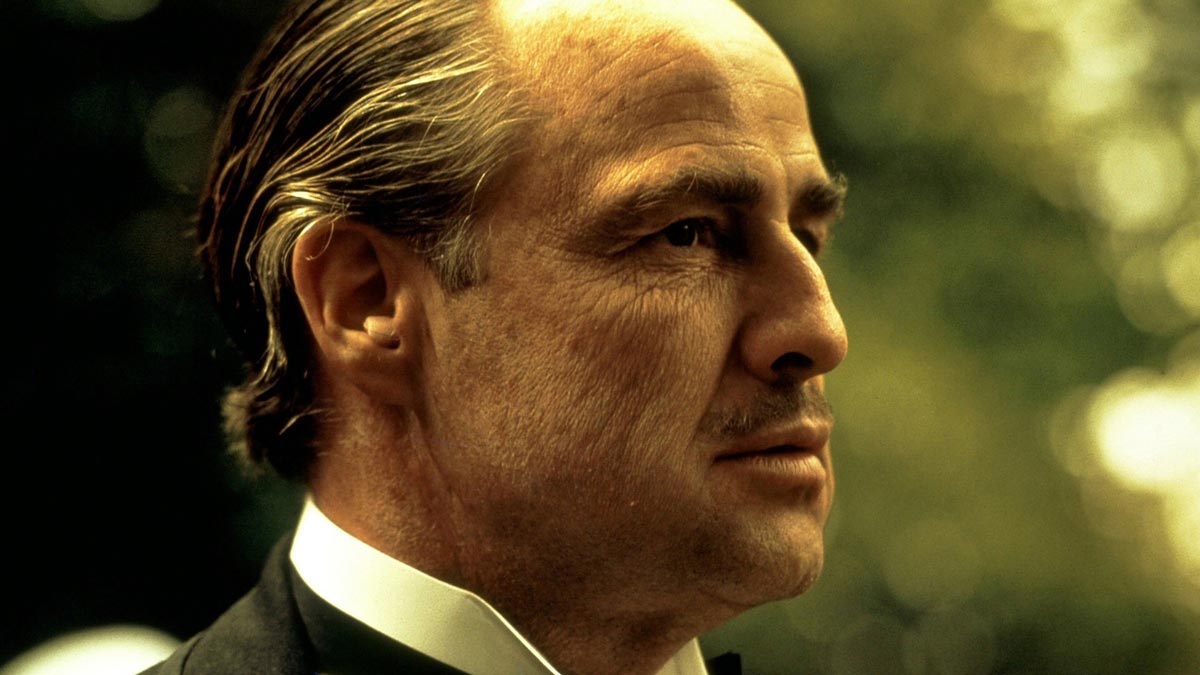
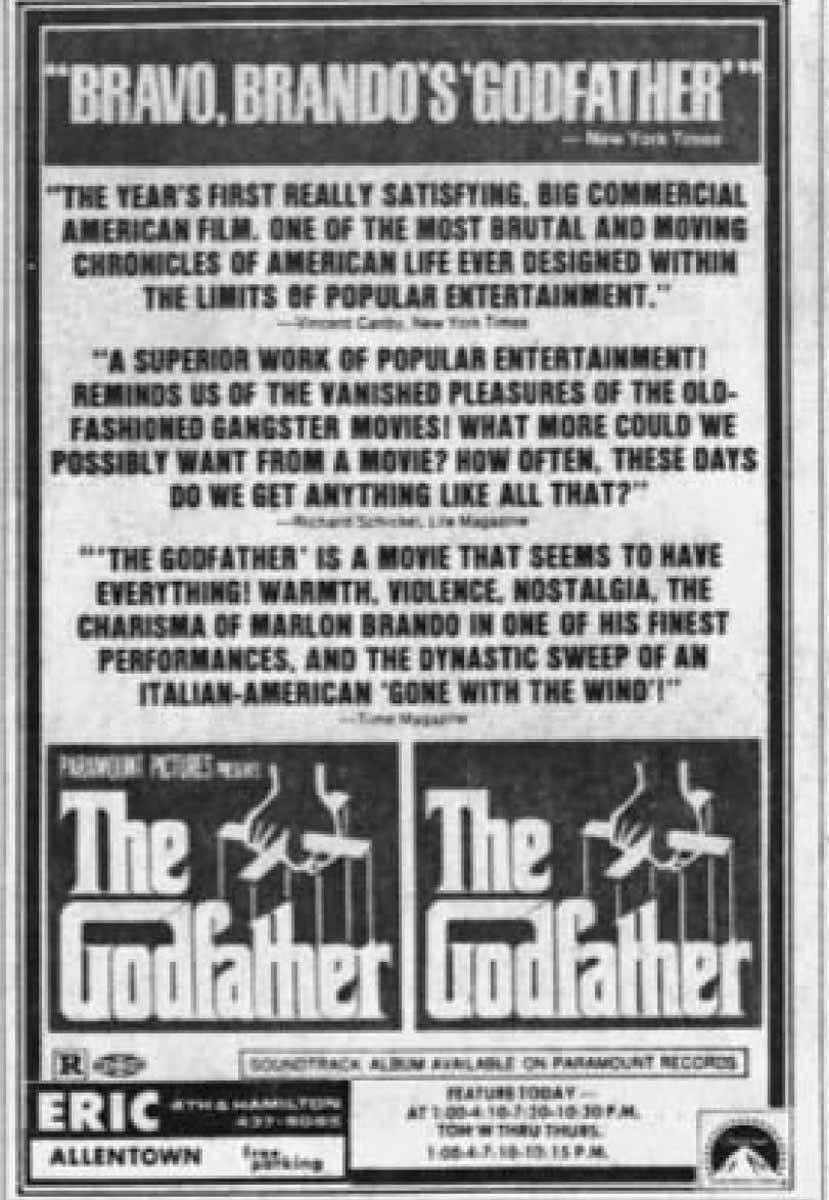
Not only did The Godfather sire the breakout stars of Al Pacino, Robert Duvall, James Caan, and Diane Keaton, it resurrected the dimming career of Marlon Brando. Only 47 at the time and a previous Oscar winner (for 1952’s On the Waterfront), Brando was considered such “box-office poison” that the movie studio insisted that Coppola give him a stealth screen test at Brando’s own Hollywood Hills home. Only when he passed with flying colors did Paramount Pictures make Brando a contract offer he couldn’t afford to refuse.
“The Godfather” Script
It was Paramount’s initial writing/directing offer that Coppola refused. When the producers courted him to adapt the best-selling gangland potboiler by novelist Mario Puzo, Coppola was gun-shy, especially owing to the blowback from Italian-American booster organizations the project was bound to receive. But after a string of financial hits that bumped off his fledging San Francisco production company, Coppola was in no position to be picky. He was further convinced by his protégé, friend, and new business partner George Lucas, who was still light years away from launching his own phenomenal “New Hollywood” blockbuster—1977’s Star Wars.
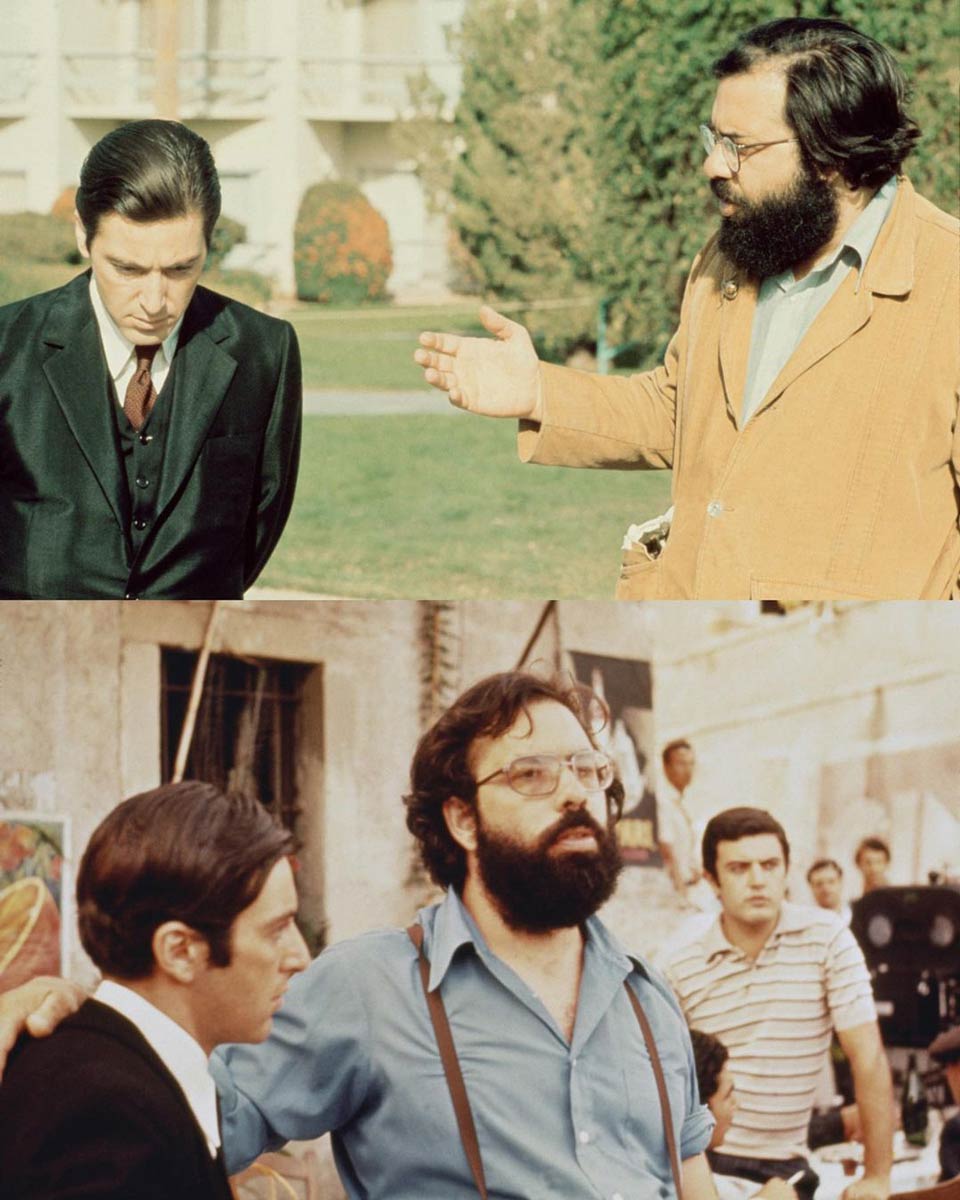
Even as Coppola was given the green light, his almost daily head-on collisions with his producers had him expecting a pink slip at every turn. His battles with the slick and arrogant Robert Evans are now the stuff of Hollywood lore. An Italian-American himself, Coppola, above all, wanted to ensure a unique authenticity with regard to the film’s cast, dialogue, and period ambiance. Historically, Hollywood gangster films were shot on generic studio back lots, not real city streets, on modest budgets, and usually with interchangeable actors lacking either ethnic “looks” or their milieus.
To save money on locations and sets, Paramount originally wanted to re-set the story in the contemporary 1970s and reportedly in St. Louis of all places. Coppola and his team held out for New York City, with actual locations (like Staten Island and Manhattan’s Little Italy) painstakingly made-over and “dressed” as post-World War II America looked, even down to the wartime gas-ration decals on the vintage automobiles.
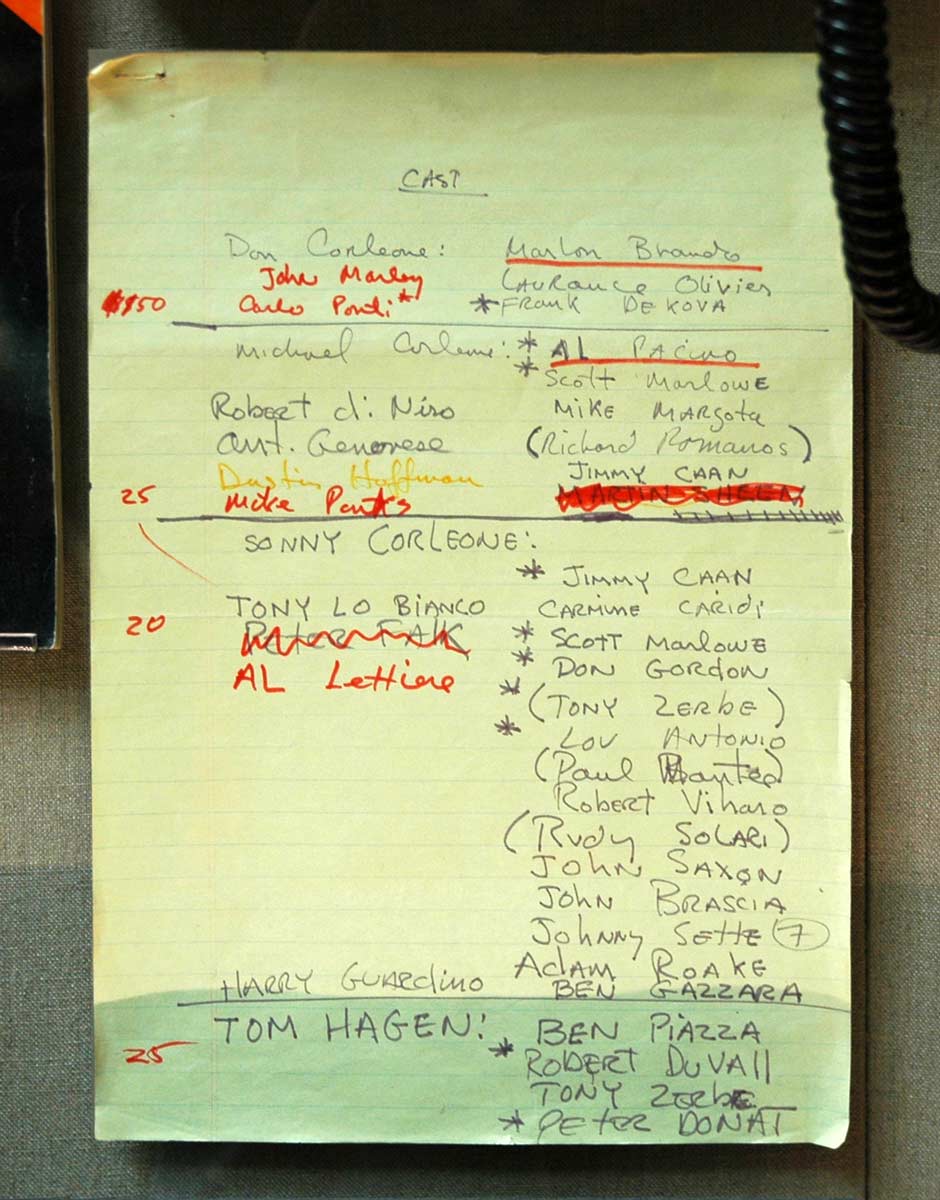
Coppola had another fight on his hands in filling out his cast. While Brando was at least a known, bankable star, Al Pacino was bankrupt in comparison. In retrospect, his casting as Michael, Vito Corleone’s youngest son—who essentially becomes the lead halfway through—amounts to one of the greatest long-shot gambles in movie history. Of course, the world now knows Pacino as an Oscar-winning screen and stage icon, but in 1971, he was just another ambitious actor, albeit with a Tony award and one low-budget starring feature to his name.
While the studio envisioned a WASPy matinee idol like Robert Redford in this pivotal part, Evans would cut down the dark, short-of-stature Pacino behind the scenes, calling him the midget. It’s a testament to Pacino’s self-confidence and artistic grit that he hung in during the production when, early on, even his director was having doubts if he could cut it. Coppola’s eye and ear for realism also extended to the lesser roles, such as Don Vito’s ill-fated, sleeps-with-the-fishes enforcer, Luca Brasi. Burly, 6-foot 6-inch Lenny Montana, perfect for part but no professional actor, was a former pro wrestler from Brooklyn with loose Mob ties.
All in the Family
Studio swipes at Coppola for his directorial choices continued throughout the production, and that included answering for cinematographer Gordon Willis’ unorthodox shooting style during the justly famous opening wedding sequence. The Godfather as a whole is brilliantly anchored around three Corleone family religious rituals: first daughter Connie’s long wedding celebration, later the Don’s brief cemetery service, and finally, the climactic baptism of Connie and husband Carlo’s infant child.
Lasting a full 30 minutes, the epic wedding sequence not only introduces the major (and many minor) characters but also tips off the audience to those characters’ fatal flaws that will eventually lead to their undoing. For instance, Don Vito’s eldest son, Sonny (James Caan), is the family’s vengeful hothead, whose reckless temper will later send him speeding out of the Corleone compound alone, without bodyguards, to his bullet-ridden doom. Or the weak, liquored-up middle son Fredo (John Cazale), whose pent-up sibling resentments will lead him to betray his own brother and the family itself. Or the venal young Paulie (John Martino), whose envious stares at the bride’s cash gifts make him look like a cheap hood who can be easily bought.
For another deft touch of ironic foreshadowing, consider the undertaker Bonasera’s vendetta request for Brando’s Don Vito—who, as a Mafia boss, by tradition, he’s bound to honor on the day of his daughter’s wedding. While the Don reluctantly grants the favor, he also reminds Bonasera that he may need him to reciprocate one day (“that day may never come”). To the Don’s heartbreaking sorrow, that day indeed comes, and soon.
Heart of Darkness
For all of Coppola’s directions to Willis and the other crew members that he sought to make a modern gangster film that was still “classical” in its overall plot and style, this opening shot in the Don’s office breaks nearly every rule in Hollywood book of filmmaking. After the extraordinarily brief opening credits accompanied by composer Nino Rota’s mournful main theme on horns, the scene begins in total darkness as Bonasera’s face appears, and he memorably declares, “I believe in America.” He tells of his daughter, who was “taken advantage of” and beaten up and now must be avenged and her attackers punished.
As he speaks, Willis’ camera slowly “zooms” back for almost three minutes, giving the impression that it is moving away from Bonasera, finally retreating to a place just to the right of the silhouetted figure who has been patiently listening behind his desk—“Don” Vito Corleone, a powerful, paternalistic underworld crime boss, aka “godfather.”
Surely, we can imagine the studio’s first reactions to such an audacious and risky opening shot. For starters, it was criticized as simply too dark. Even today, most feature films open with an easy-to-read “establishing shot” that quickly tells the audience the place and time, with a focus on the main characters. So why would Coppola open the story centered on a minor character and an unknown actor? Where’s our big marquee star, Marlon Brando? And where is this all happening? Won’t the audience be confused and “in the dark” for too long? Despite studio objections, Willis’ bravura “long take” stayed and is among the film’s stylistic signatures. Still, it doesn’t carry its full meaning until Coppola integrates it as a symbolic framing device in the wedding sequence.
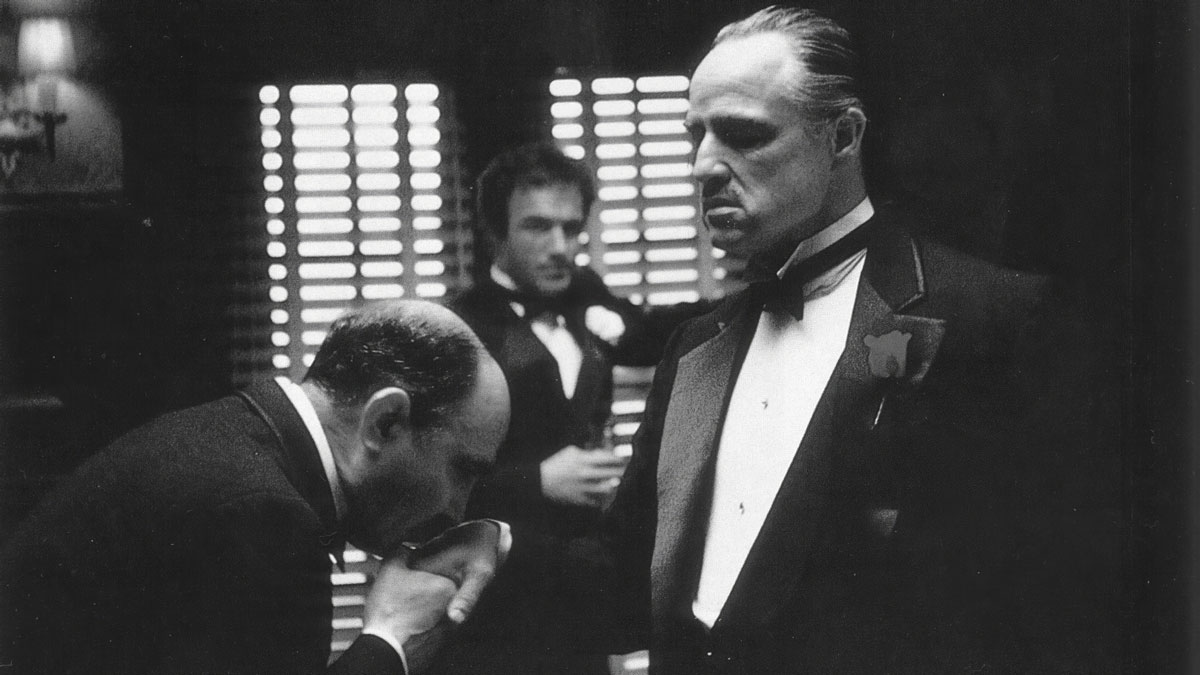
What he and Willis (and their gifted production designer Dean Tavoularis) do is set up a contrasting, almost dialectical, opposition between the somber, shadowy, clandestine scenes in the Don’s office and their bright, sunny, festive complements that occur outside during the wedding celebration. This particular cinematic mise-en-scène (i.e., visual composition and possible thematic meaning) suggests that while the public exterior of the Corleone estate is all light, joyful, and extravagant befitting a big Italian Catholic wedding, it is only made possible by what’s nefariously going in private inside, in the dark.
Another principal theme that Coppola sounds is that these interiors shroud the family’s all-male hierarchy at work, while the females are relegated to the “outside” as wives, mothers, children, and (for Sonny at least) sexual diversion. This “inside/outside” gendered opposition will, of course, be echoed in the film’s ultimate scene, when a Corleone henchman quietly closes the door on Keaton’s Kay as her husband Michael is anointed the new godfather.
Along with Puzo, Coppola must also be credited with a murderers’ row of memorable dialogue that ricocheted through pop mythology with a bang and remains there. Of course, there’s Don Vito’s “I’m gonna make him an offer he can’t refuse.” But consider these lesser hits: “Leave the gun, grab the cannoli” (Clemenza); “Women and children can afford to be careless, but not men” (Don Vito); “Don’t ever take sides with anyone against the family again, ever” (Michael); “It’s not personal, it’s strictly business” (Michael); “A man who doesn’t spend time with his family can never be a real man” (Don Vito); and “He was b—ing cocktail waitresses two at a time!” (Moe Greene).
The Devil and Michael Corleone
For a deeper sociological and cultural view, Coppola has often commented that “Michael is America.” What might he mean? Look at Michael’s character’s arc. He begins as a decorated World War II veteran who enlisted against his family’s wishes as a patriotic idealist. Indeed, he is first seen at the wedding celebration outdoors with Kay while the Don and company are doing their shady business inside. Slowly and irrevocably, Michael takes his place in the insider seat of power as the family’s head, inheriting his father’s crown through murder, Machiavellian machinations, and mayhem. (It’s a bit of a riff on Shakespeare’s King Lear.) From a young man of relative innocence, he’s transformed into a cold, ruthless, near-satanic underworld figure, embittered by one personal tragedy after another, including the murder of his bride while hiding out in Sicily.
Without presuming too much, perhaps this is Coppola and Puzo’s caustic observation on America’s own national arc from the high-minded, democratic, and triumphant wartime idealism embodied in President Franklin Roosevelt’s New Deal era down a slippery, sleazy slope of crime, violence, corruption, conspiracy, and national discord that hit bottom during the Nixon presidency from 1969-74.
“Near-satanic” is not an exaggeration, considering the movie’s renowned montage climax. It begins solemnly in a cathedral where Michael receives baptism benediction to make him the literal godfather of Connie’s baby. (Trivia alert: The infant is Coppola’s daughter, future director Sophia Coppola). At the same time—in ironic, blasphemous contrast—Corleone hitmen are getting into positions around the city to assassinate leaders from the four rival crime families.
Pointedly, just as the background organ music reaches a gothic crescendo, and while Michael declares to the priest that, yes, he renounces Satan (“I do”), there is a flurry of editing “cross-cut” shots that, in turn, show the cold-blooded killings of the four mobsters. Obviously, Michael’s simultaneous oath is not only horrific Christian hypocrisy (and capital Catholic sin) but the sequence’s construction and tone depict him as a dapper demigod who has dispatched his squad of modern demons to do his bidding.
The Godfather: A Box-Office Hit
Not only was The Godfather the biggest box-office hit of 1972, hauling in twice as much as the second-place Deliverance, but it also rubbed out its rivals for the Academy Award for Best Picture. As for Brando, his unsurprising second Best Actor Oscar was very much an award he could—and infamously did—refuse in his in absentia protest against Hollywood’s historic stereotyping of Native Americans. Shockingly, and shucking tradition, Coppola lost out on the Best Director prize (to Bob Fosse for Cabaret), though he would take one home two years later for Godfather II.