
In 2009, a metal detectorist in a quiet English field got a signal that would change British archaeology forever. What he pulled from the mud was a glittering mass of nearly 4,000 gold and silver fragments. However, as scholars began to clean the dirt away, a fascinating pattern emerged. What they found was not just jewelry or household wealth. Rather, it was war gear. From sword hilts to helmet bands, the Staffordshire Hoard was a treasure of the battlefield, and its discovery has forced us to rethink much of what we thought we knew about the legendary Anglo-Saxon warriors.
The Discovery of the Largest Hoard in British History
In July 2009, a metal detectorist named Terry Herbert was investigating the recently plowed field of a farmer named Fred Johnson. This was in Hammerwich in Staffordshire. On July 5, the metal detectorist informed the farmer that he had discovered some gold Anglo-Saxon objects. Over the course of the next few days, they recovered 244 gold items from the ground. After this, the farmer gave his permission for a full archaeological dig on his land. The full Staffordshire Hoard was soon uncovered.
This was not the first hoard of Anglo-Saxon treasure to be discovered. Many hoards of varying sizes have been found across Britain from the Anglo-Saxon period, some of which include a greater number of items than the Staffordshire Hoard. For instance, one hoard known as the Saint Leonard’s Place hoard contained about 10,000 Northumbrian stycas, or pennies. Nevertheless, those are just small coins. By weight, the Staffordshire Hoard is the largest Anglo-Saxon treasure ever discovered, and it is also significant for other reasons.
What Makes This Hoard So Special?
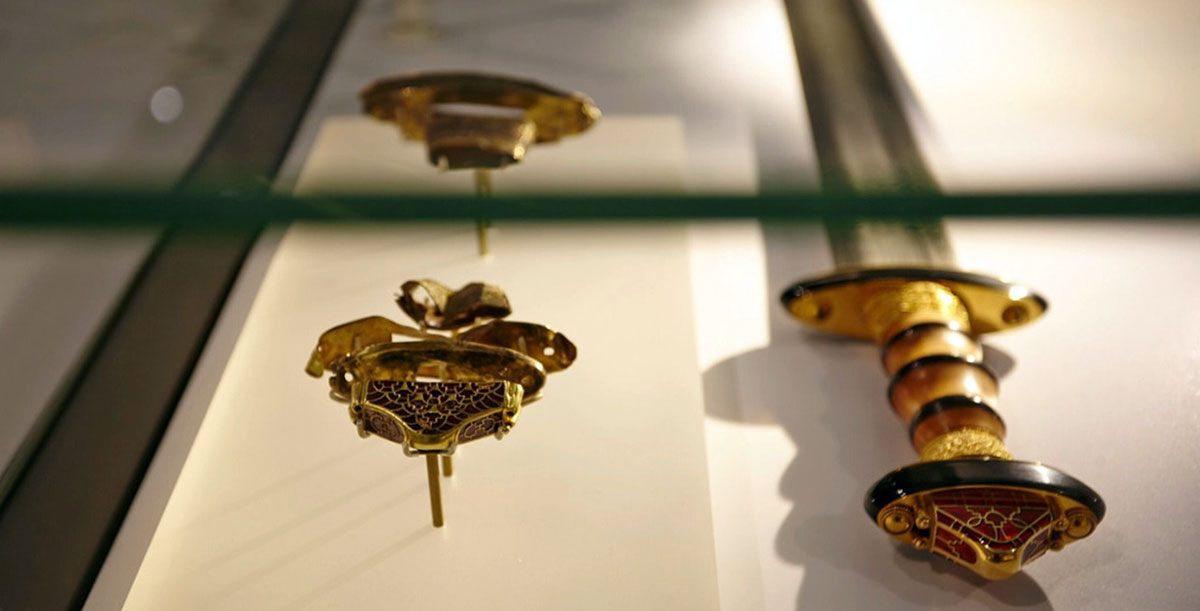
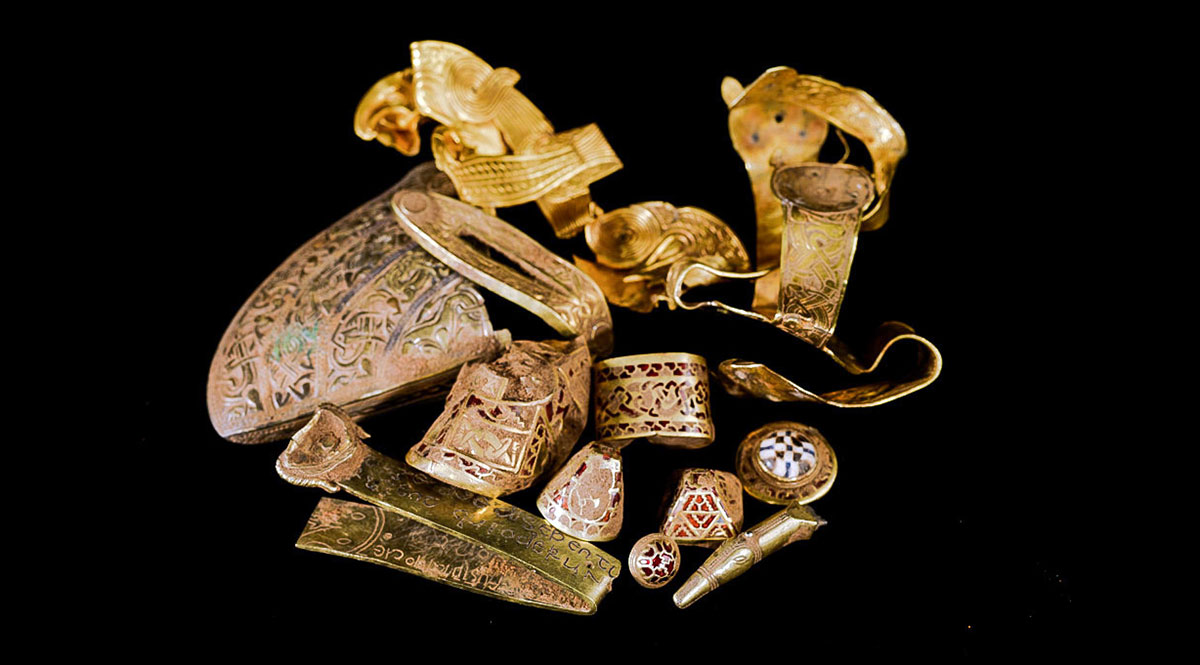
What is particularly noteworthy about the Staffordshire Hoard is that it is not merely composed of precious objects. In fact, it contains no objects that can be classed as simple jewelry, nor are there any objects used specifically by women. Rather, the hoard is almost entirely martial in nature. It is composed of warrior gear, such as a helmet, as well as gold and silver fittings for swords. While there are some buckles, which could potentially have had a non-military use, the context suggests that they were for weapons too. There is nothing in the hoard that clearly fits in the context of daily life, like a pin or a brooch. This is what makes the hoard so fascinating.
Why would there be such an immense collection of war equipment? If this was simply a hoard of treasure, like many other hoards found in ancient Britain, then we would expect to see all sorts of different precious items. We might expect to see gold brooches, glass beads, and perhaps expensive imported pottery, as we do at other sites across Early Medieval Britain. Yet bizarrely, the Staffordshire Hoard contains none of those things.
An Overview of the Staffordshire Hoard
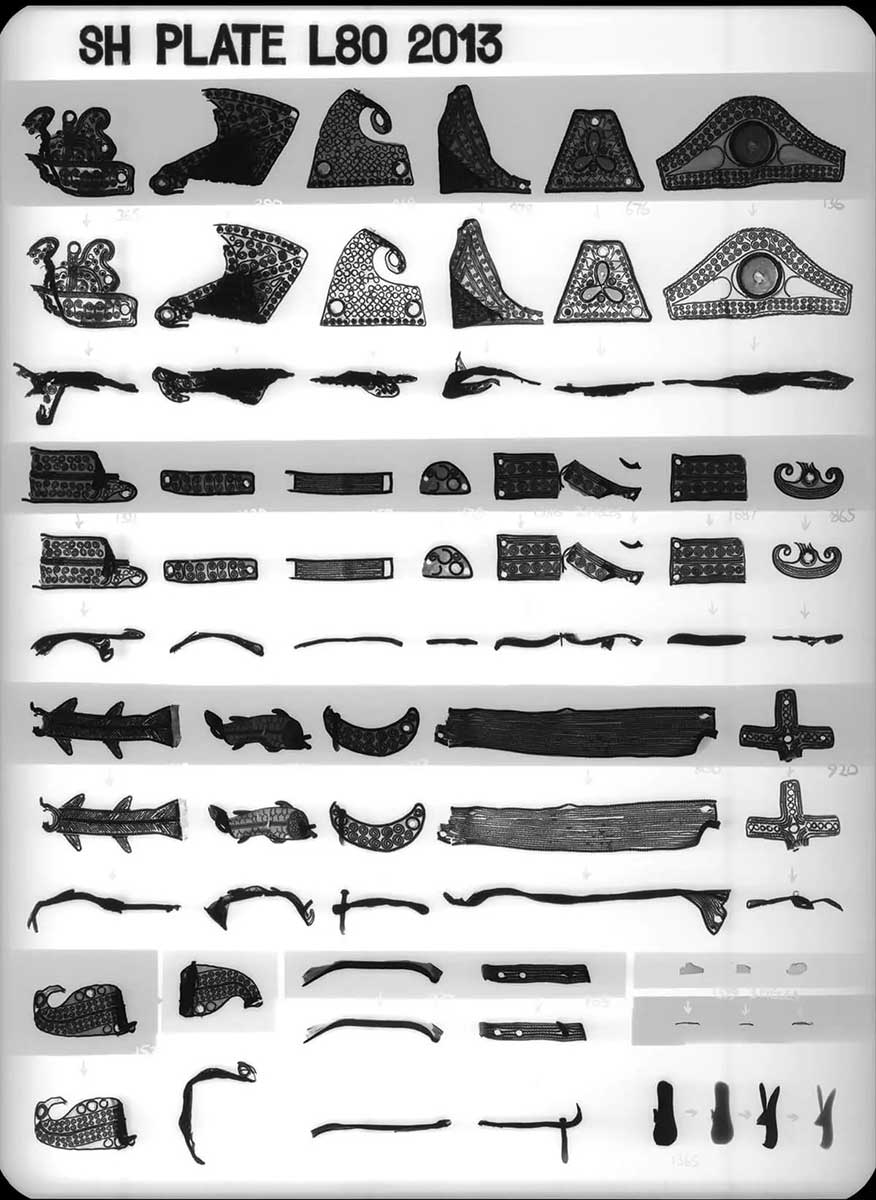
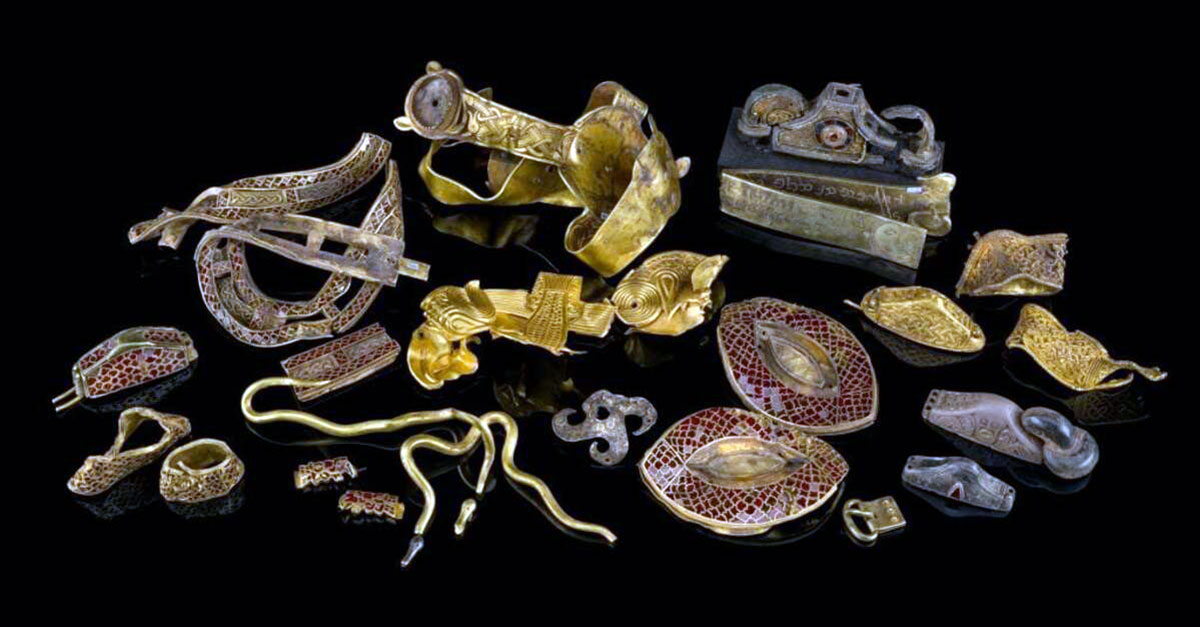
The Staffordshire Hoard is made up of over 4,000 fragments, the majority being gold. A relatively small portion is silver (1.4 kilograms of silver compared to 5.1 kilograms of gold). Garnet fittings also make up a small part of the hoard. These precious metals and other items primarily come from weapons, military equipment, and religious items, totaling about 700 individual objects. About 100 of these are weapons, most of which were swords. The religious items include crosses and decorations from books and reliquaries.
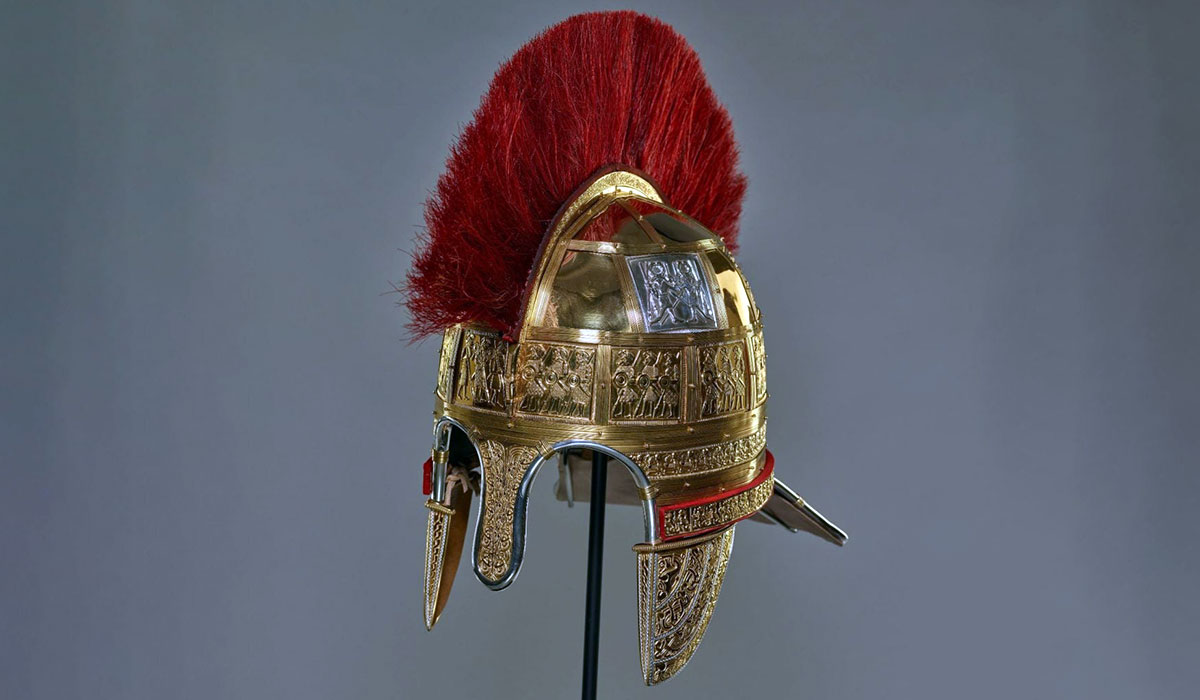
One of the most extraordinary finds from the Staffordshire Hoard are the fragments a single helmet. This helmet was reminiscent of a Roman helmet, with cheek pieces and a plume along the top. Unlike a Roman helmet, however, it was intricately decorated with images of human and animal figures.
Chronologically, archaeologists have grouped the items in the Staffordshire Hoard into several distinct time periods. The first group is from the 6th century, represented mainly by silver fittings for weapons. The second group is from c. 570 to c. 630, mainly comprised of gold sword fittings. The final group dates from c. 630 to c. 660 and is made up of silver weapon fittings that were decorated with gold. These display a style of Early Medieval artwork called the Early Insular style. Overlapping these last two periods is another distinct group dating to between c. 610 and c. 650, which includes Christian objects and saddles.
The Staffordshire Hoard in Its Historical Context
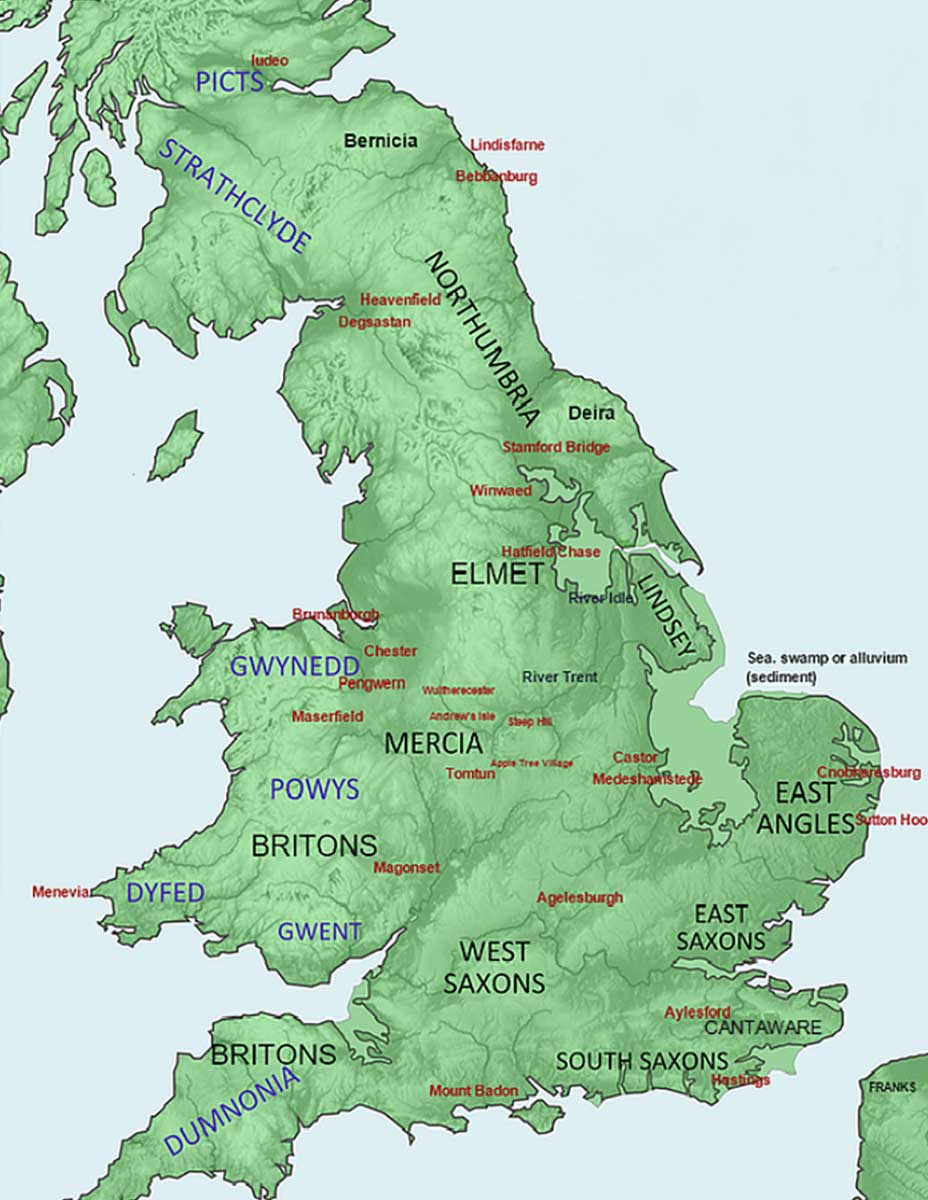
Archaeologists believe that the Staffordshire Hoard was buried all at once, between 650 and 675, rather than being buried gradually over the decades. What was going on in this area at that time? In the 7th century, modern-day Staffordshire was part of the kingdom of Mercia. This was one of the most powerful kingdoms at the time.
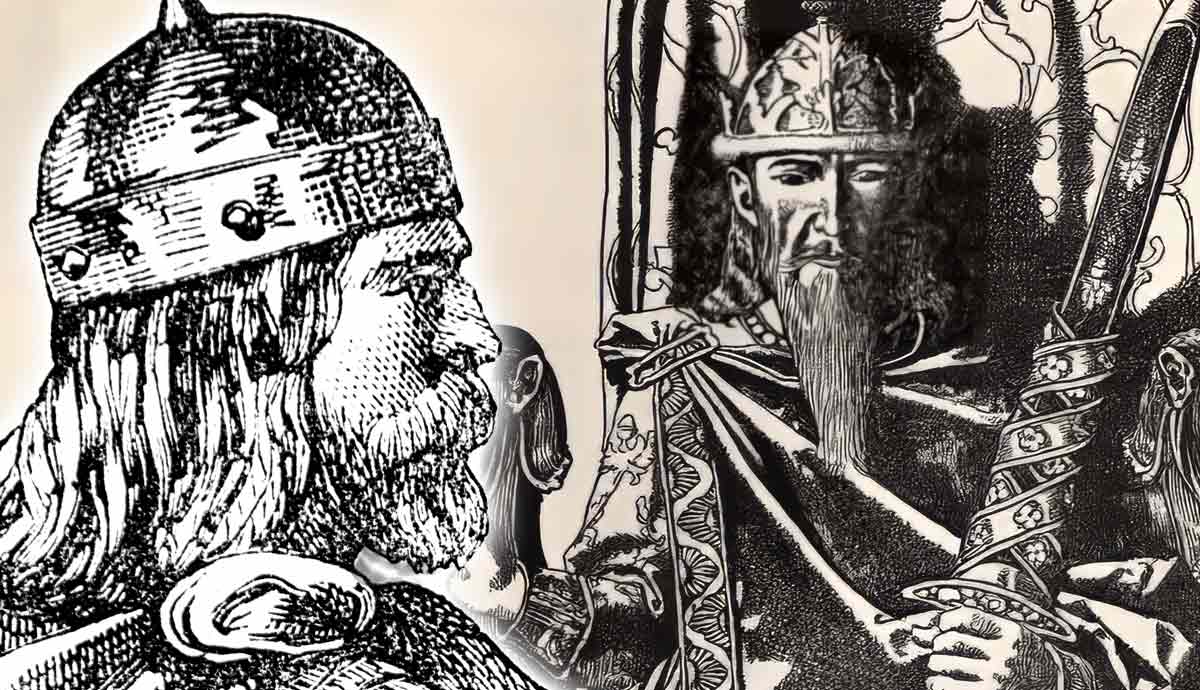
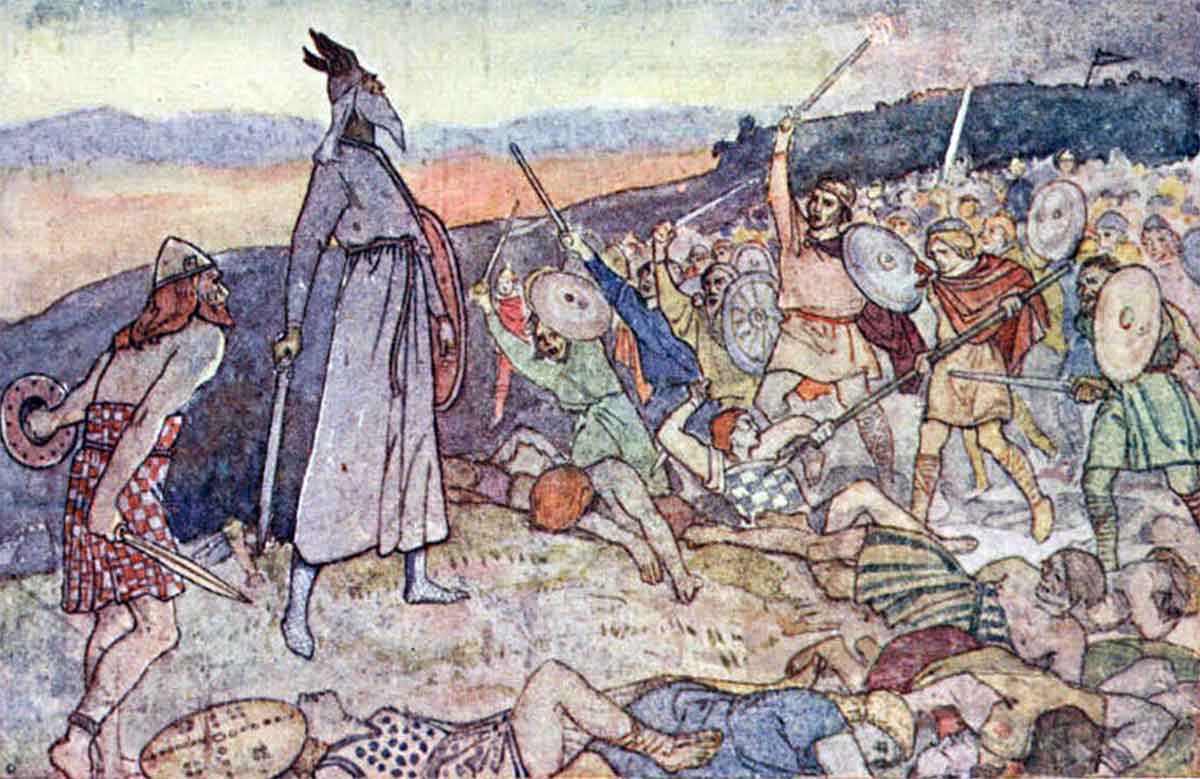
In the middle of the century, around the time this hoard was buried, the kingdom was ruled by Penda. He is notable for being the last major pagan king of the Anglo-Saxons. During his reign, the Northumbrians were increasing in power and posed a threat to Penda. He led an alliance of Anglo-Saxon and Welsh kings against Oswiu of Northumbria and was killed in battle in 655. This was followed by several decades of turmoil for the kingdom of Mercia, in which Penda’s descendants repeatedly tried to free themselves from the yoke of Northumbria.
How does this historical context shed light on the Staffordshire Hoard? There is admittedly a small chance that it was buried before Penda died in 655, when Mercia was flourishing. However, it is more likely that it was buried at some point within the two decades after his death, when Mercia was in turmoil. Nevertheless, the chronology suggests that most of the treasure was accumulated during the reign of Penda and his predecessors, when Mercia was powerfully expanding.
Why Was This Gold Buried?
We know that the hoard was most likely buried when Mercia was facing serious pressure from Northumbria. We also know the items in question are so rich, prestigious, and plentiful that the hoard could only have belonged to a dynasty, not to a common person or even a warrior. No intact weapons were found in the hoard, only gold and silver fittings that had been stripped from weapons. There were only a handful of buckles and only a single helmet. As for the Christian items, they only date from the 610s onwards, even though the hoard is comprised of items going back to before 570. With these clues in mind, one possible scenario is the following:
The treasure making up the Staffordshire Hoard was accumulated by the ruling dynasty of Mercia gradually, made up almost exclusively of plunder won directly from the battlefield. We find a description of one warrior stripping loot from a defeated warrior’s equipment in Beowulf. In the narrative, that warrior then gifts these precious items to the king. This practice would go a long way to explaining the Staffordshire Hoard.
Mercia lost its powerful king Penda in 655 and was under constant threat from Northumbria in the years that followed. Consequently, we could speculate that its king decided to bury this large quantity of treasure, perhaps along with his own helmet, as a gift to the gods to implore them for help. Christian items were included as a means of appealing to the Christian god as well. While we will likely never know the answer, this is one possible scenario.
What Does the Staffordshire Hoard Reveal About Anglo-Saxon Britain?
The Staffordshire Hoard discovery is fascinating to archaeologists for what it reveals about this era of British history. As the popular name for the period suggests, the Dark Ages are commonly associated with poverty, a breakdown of society, and tribal kings squabbling for supremacy. Yet the immense wealth making up the Staffordshire Hoard points to a different picture.
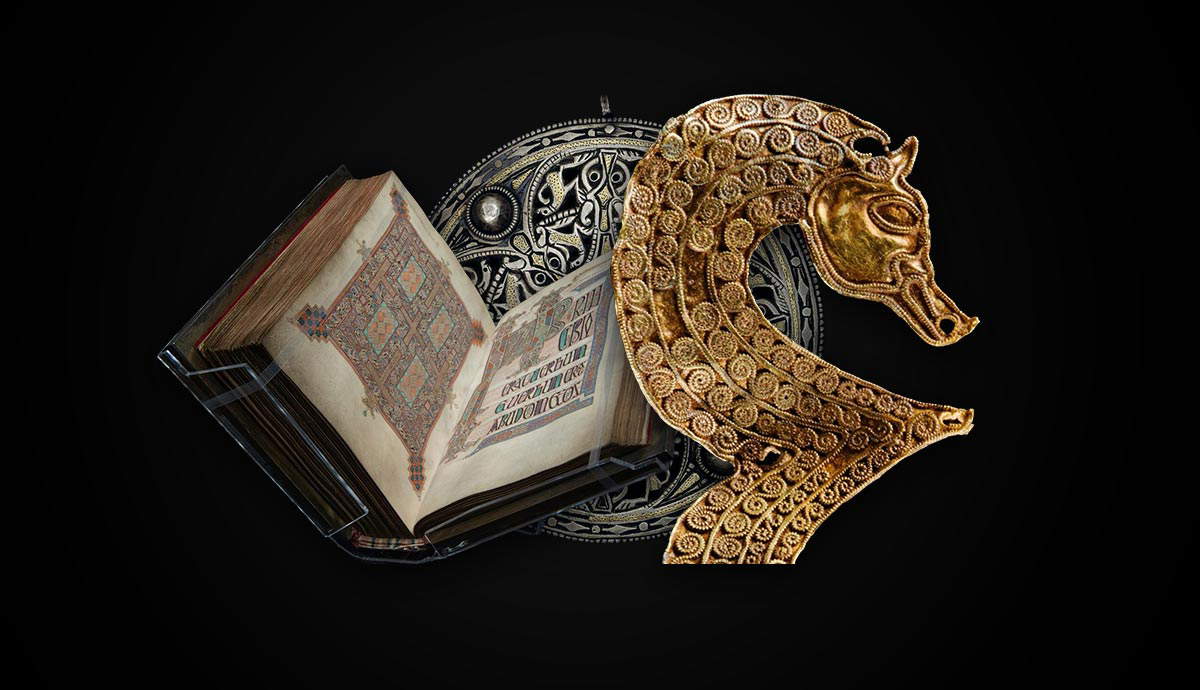
Many of the items are decorated with filigree, which is thin wires of gold or silver twisted and arranged into intricate patterns. This goes beyond merely demonstrating that much of Dark Age Britain was wealthy. It suggests a Britain in which sophisticated metalworking and craftsmanship were prevalent. This discovery laid to rest the idea that the Anglo-Saxon kingdoms in the 7th century were mere barbarian tribes living in a primitive society.
While it contradicts some previous notions of what early Anglo-Saxon Britain was like, it is fully consistent with what the medieval written sources have always suggested. The 8th-century historian Bede, for example, describes a Britain in which the kingdoms rule over vast swaths of land and armies move from one side of Britain to the other. The Staffordshire Hoard validates the credibility of these medieval accounts by revealing an advanced and wealthy society.
A New Window Into the So-Called Dark Ages
The Staffordshire Hoard is a fascinating discovery that raises many intriguing questions and sheds considerable light on a dark period. This hoard of thousands of gold fragments, along with hundreds of other precious items, has revealed the scale of wealth possessed by the kingdom of Mercia in the 7th century. Since Mercia was not even the largest or most powerful kingdom of that era, this has massive implications for what the rest of Anglo-Saxon Britain was like.
Given the evidence from Beowulf and the military nature of the hoard, it is likely that it was mostly the result of spoils from warfare over many decades. Was it buried as a plea to the gods to save them from the yoke of Northumbria? We will likely never know for sure, but this is certainly one possibility.