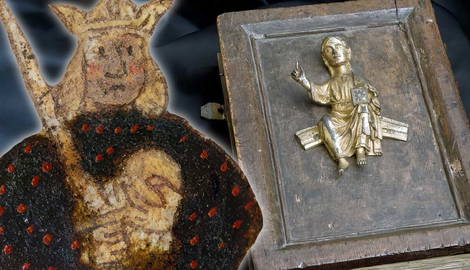

For centuries, the history of Britain in the 5th and 6th centuries was buried under layers of romantic myth, populated by legendary wizards and an elusive high king named Arthur. Because the retreating Roman Empire left behind a literary vacuum, this obscure era earned the moniker of the “Dark Ages.” However, modern archaeology has begun to pierce the gloom. By pulling back the turf at rugged clifftop forts and deciphering weathered stone inscriptions, excavators have uncovered undeniable physical proof of three genuine flesh-and-blood monarchs who ruled post-Roman Britain.
1. Does the Yarrow Kirk Stone Map the Legend of Nudd Hael
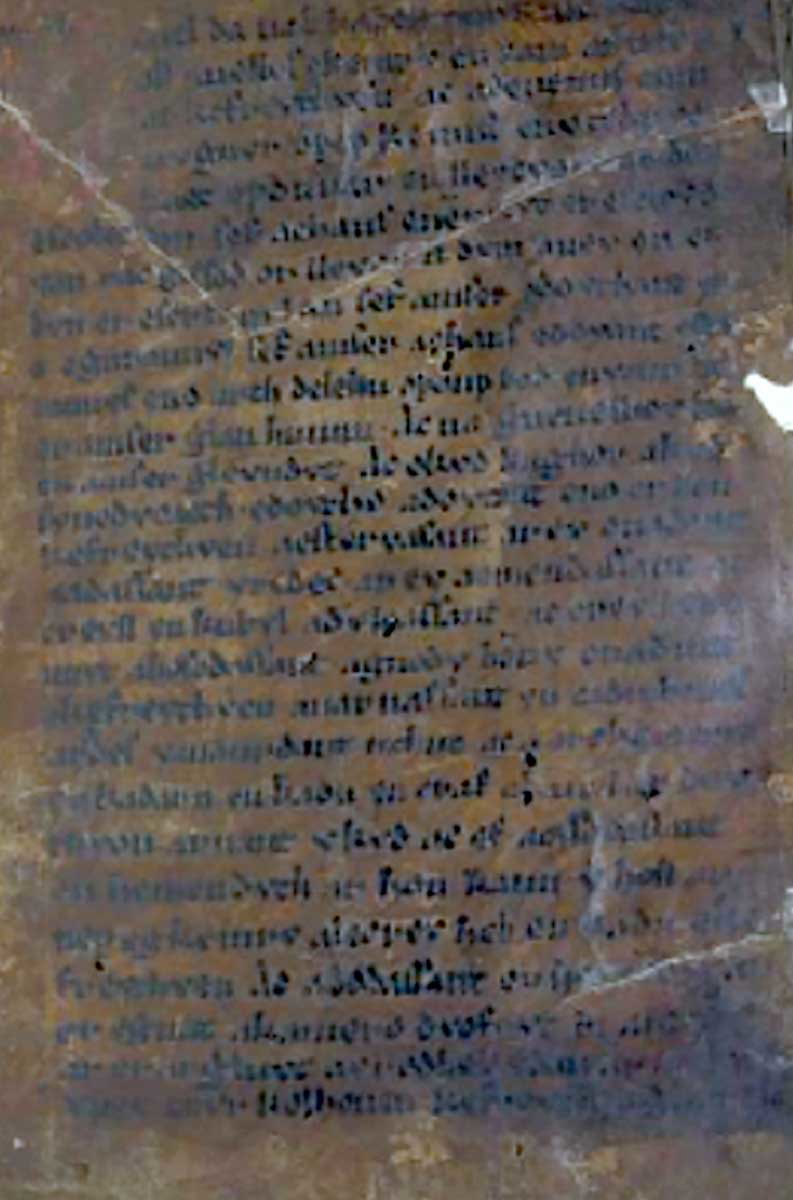
This first is a king who is not particularly famous but whose historicity most scholars accept, even without the archaeological evidence. Nudd Hael was a king who lived in the latter half of the 6th century. He ruled somewhere in the north of Britain, between the border of England and Scotland, although his exact territory is unknown. His epithet “Hael” is Welsh for “Generous.” Thus, his name was Nudd the Generous.
He appears in several late records, such as the collection of medieval Welsh traditions known as the Welsh Triads, dating to around the 13th century. He also appears in a document known as the Black Book of Chirk, which dates from c. 1200. This book contains a story about Nudd Hael and several relatives engaging in an attack against the Kingdom of Gwynedd in North Wales. He also appears in several medieval Welsh genealogies. Although the manuscript evidence for his existence does not appear very strong, there is a reference to him in a very early Welsh poem. Thus, most scholars accept him as probably historical.
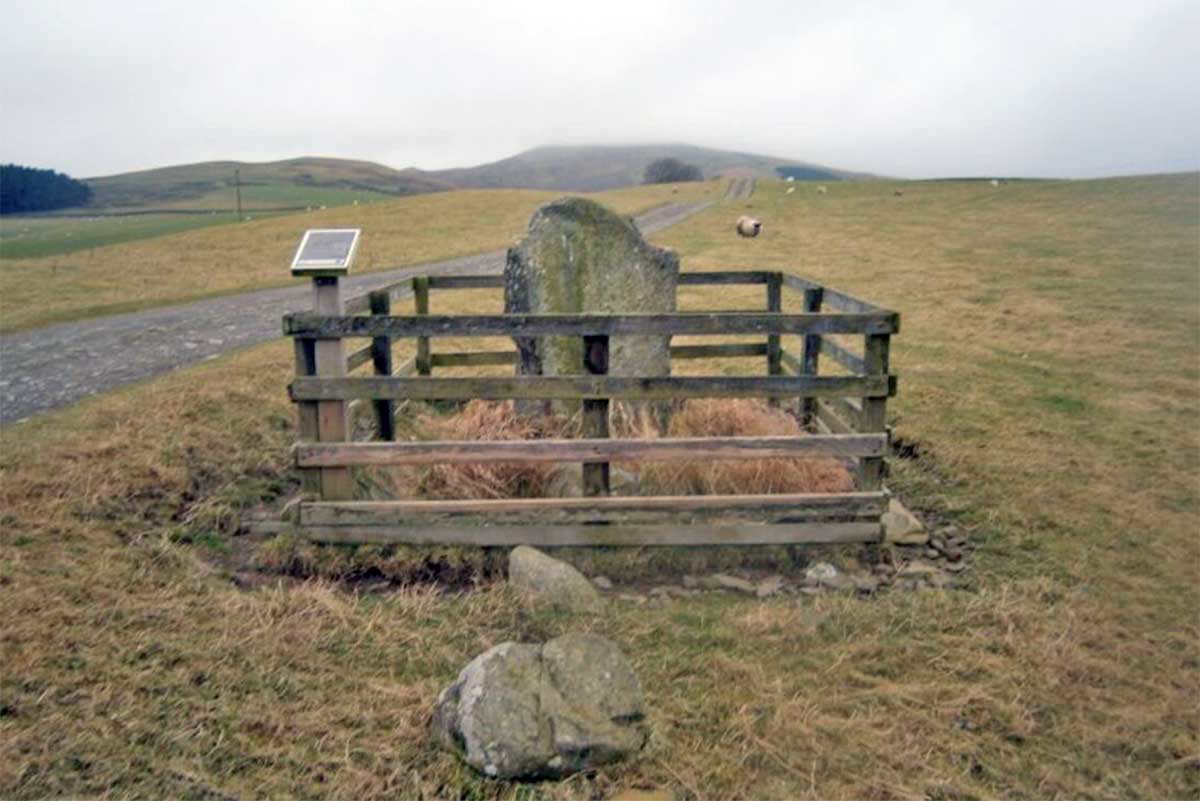
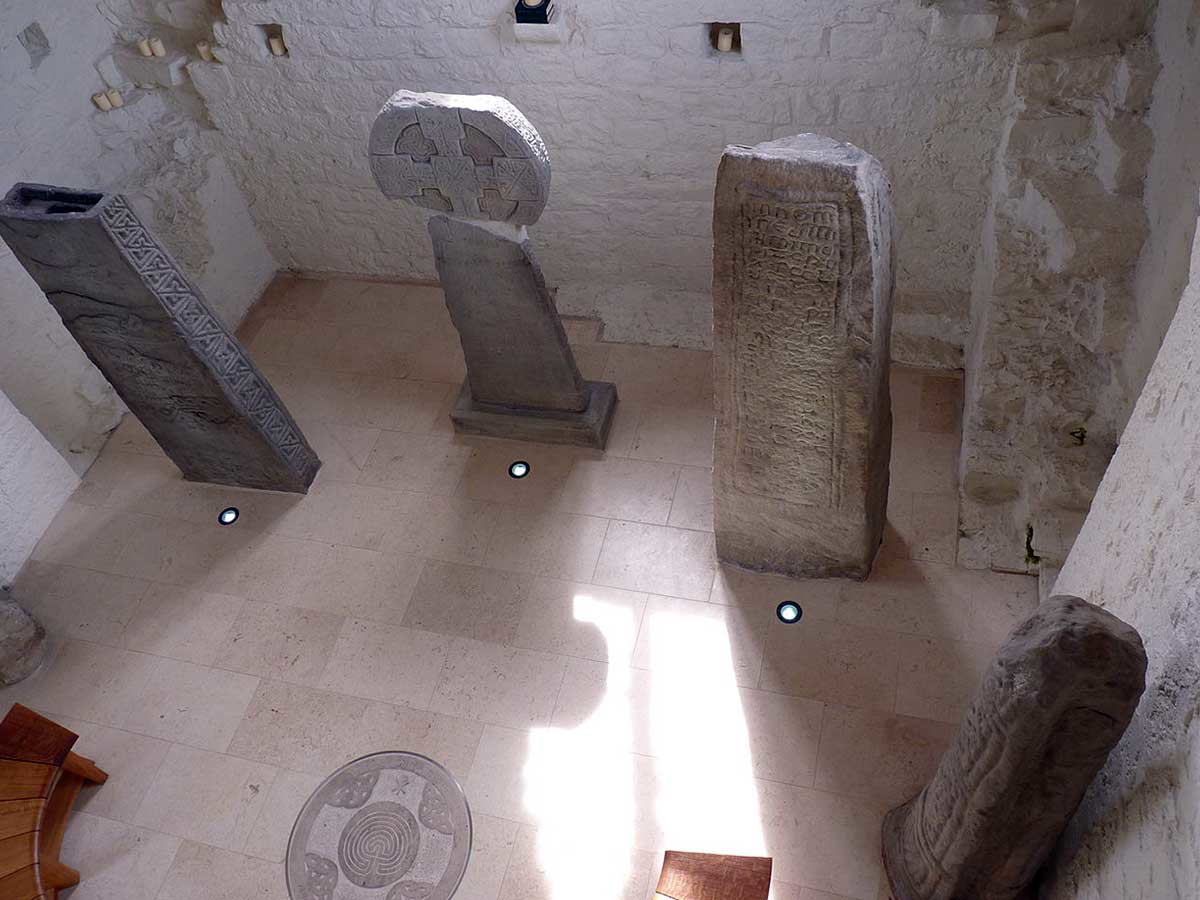
There is a very interesting archaeological discovery that was made in the late 19th century in Selkirkshire, southern Scotland. It was a stone that contained the personal name “Nudus,” widely accepted as the early version of the name “Nudd” that we see in medieval Welsh manuscripts. It also contains the word “liberalis,” the Latin word for “generous.” Therefore, when this stone inscription was originally discovered, it was immediately believed to be a reference to Nudd Hael. However, scholars subsequently revised this interpretation. It is now accepted as reading:
This is the everlasting memorial: in this place lie the most famous princes, Nudus and Dumnogenus; in this tomb lie the two sons of Liberalis.
On this basis, the idea that this is a reference to Nudd Hael has largely been abandoned. It has also been abandoned on the basis that this inscription appears to date from the early 6th century, whereas Nudd Hael was a king of the late 6th century. However, are these objections valid?
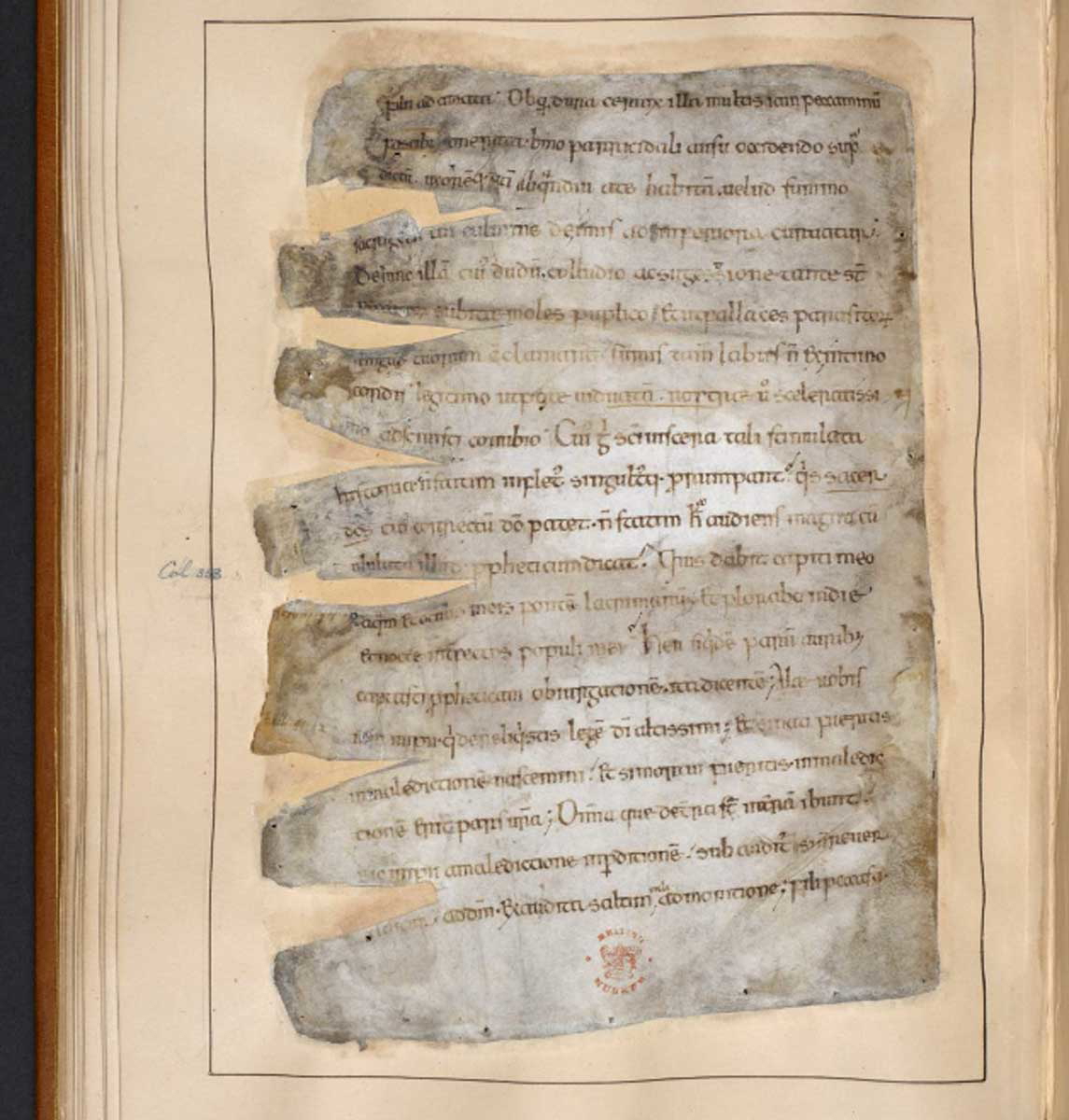
Regarding the date of the stone, it seems that most commentators have been misled by assumptions regarding how precisely inscriptions from this era can be dated. The only way of dating inscriptions precisely is by having an extensive corpus of other inscriptions, which are, themselves, securely dated. Failing that, we could use a corpus of securely dated literature to see how the language evolved over time. In the case of 6th-century Britain, we have neither. Therefore, we cannot really date this inscription any more precisely than to the 6th century in general.
The issue of the parentage of “Nudus” is more interesting. The inscription calls him the son of “Liberalis.” As a personal name, this is very strange. What appears to have been overlooked by most commentators is the Biblical use of the term “son.” The Bible regularly refers to people as the “sons” of a certain quality or characteristic that particularly defines them. For example, we see expressions such as “sons of the East,” “sons of the exile,” and “sons of disobedience.”
Gildas’ 6th-century De Excidio proves that this specific Biblical terminology was used in 6th-century Britain. Therefore, the inscription calling Nudus the “son of Liberalis” may simply mean that generosity was his defining quality. Therefore, this inscription absolutely could be the memorial of Nudd Hael.
2. Is the Tristan Stone Proof of King Cunomorus of Dumnonia
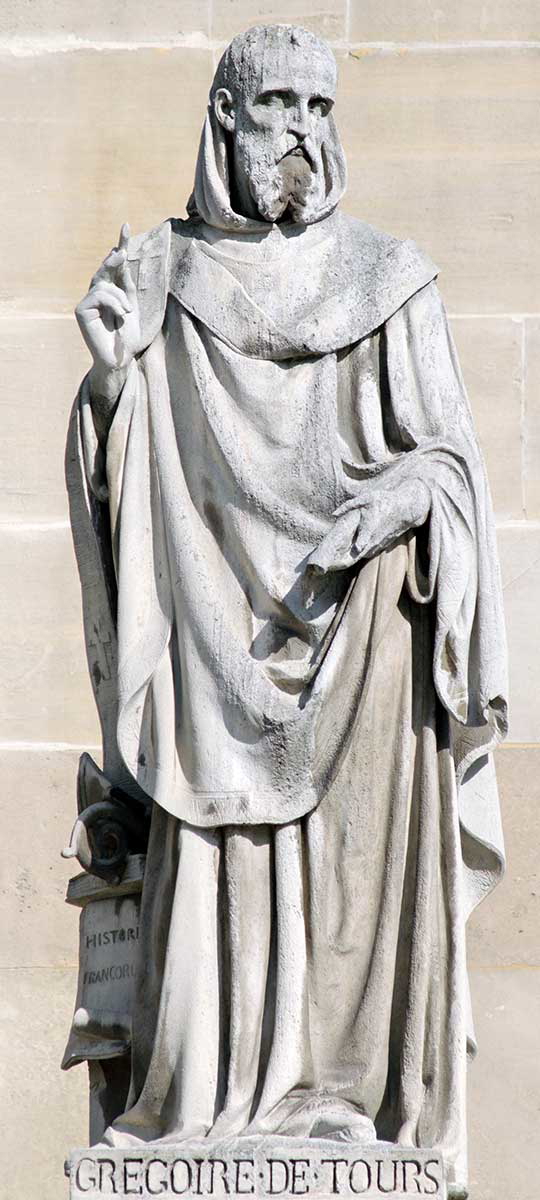
A more straightforward example is Conomor. Like Nudd Hael, he is accepted as a historical figure based on literary evidence. He is mentioned by Gregory of Tours, a 6th-century writer from France. Conomor was known as a tyrant. He was the king of part of Brittany, having arranged the death of King Jonas. He was eventually overthrown by an alliance of kings, including Judwal, the son of Jonas.
There is a large inscribed stone in Cornwall, variously known as the Tristan Stone, the Conomorus Stone, or the Longstone. It dates broadly to the 6th century, with some margin for error. The correct reading of the short inscription is subject to debate, but there is near-universal agreement about one of the names: Cunomorus. The name is identical to the ruler documented by Gregory of Tours. Furthermore, the chronological match is excellent. For these reasons, many scholars have sought to identify the Cunomorus of this inscription with Gregory’s Conomor from Breton history.
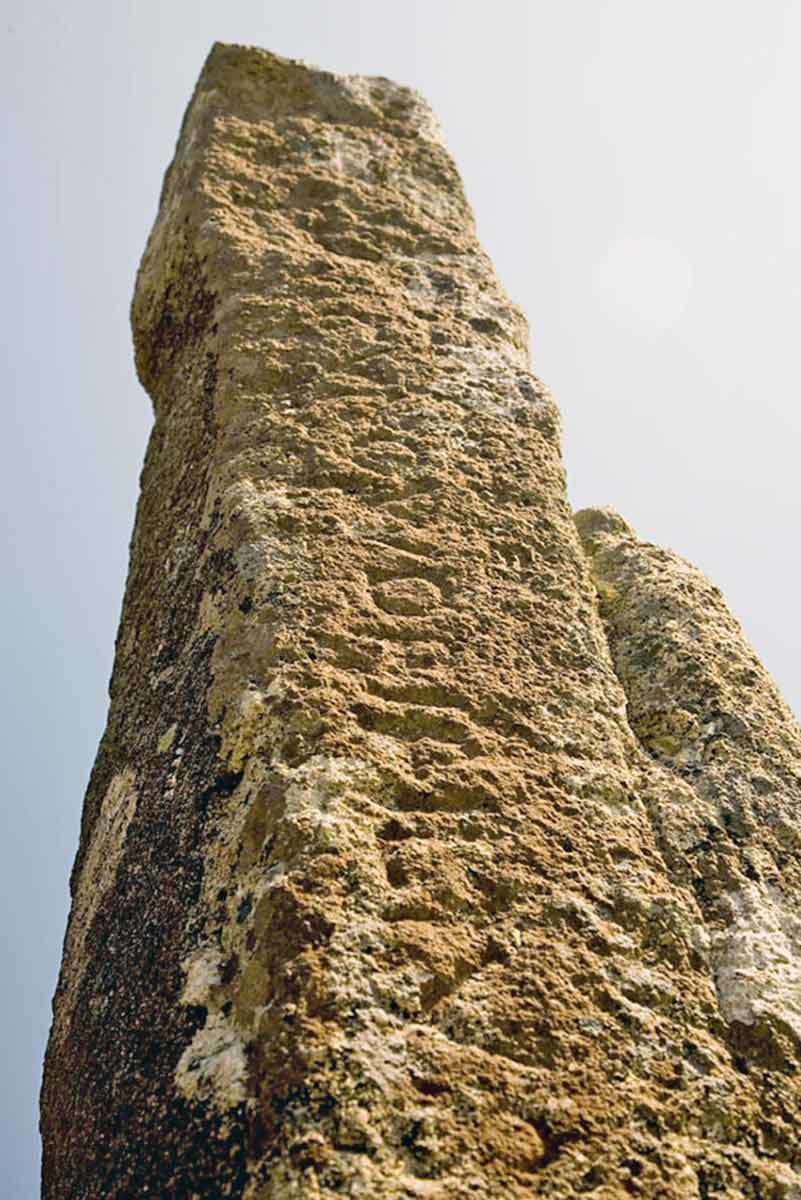
One obvious objection to this identification is that Conomor was a ruler of Brittany, whereas this stone inscription is from Cornwall. However, there is evidence that Conomor was indeed one of the kings of Britain, as well as Brittany.
There is a 9th-century record called the Life of St Paul Aurelian. In this account, based in the 6th century and set in the southwest of Britain, there is a reference to a king named Marc. The account claims that he was also known by the name “Quonomorius,” which is clearly a form of the name “Conomor.”
This supports the conclusion that Conomorus was one of the kings of Britain, not just of Brittany. Furthermore, the 9th-century account says that King Marc, or Qunomorius, ruled over peoples of four different languages. This indicates that he ruled over more than just one area, which is consistent with making Conomor a ruler of part of Cornwall as well as Brittany. Furthermore, the Dark Age kings of Britain in the southwest, by all accounts, had a strong connection with Brittany. Therefore, there is every reason to believe that the Cunomorus of this inscription really was King Conomor.
3. What Did the Samson Pillar Reveal About King Ithel
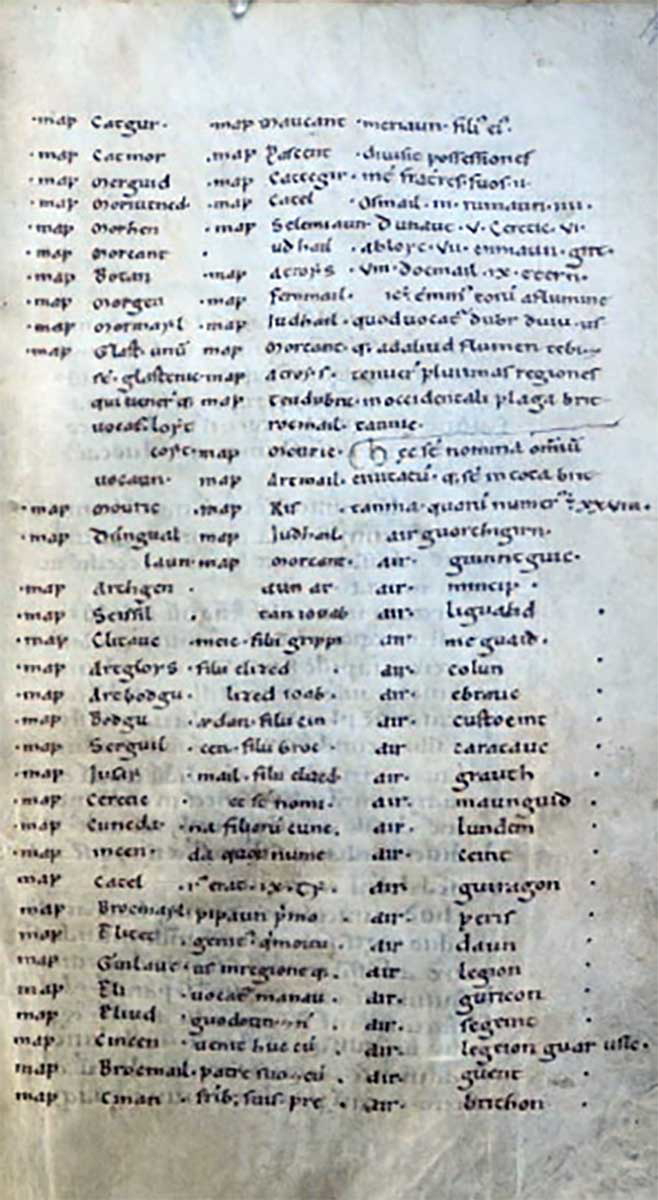
Another king of Dark Age Britain was King Ithel. He was the king of Glamorgan and Gwent and the son of King Morgan. He likely lived in the 7th century, although some modern sources place him in the 8th century. King Ithel is mentioned as a very prominent king in the 12th-century Book of Llandaff, which records numerous land grants made by kings to the church. At the town of Llantwit in southeast Wales, there is an inscribed stone known as the Samson Pillar that reads:
In the name of the most high God. Begins the cross of the Saviour, which Samson the Abbot prepared for his own soul and for the soul of Ithel the king and for Arthmail and Tecan.
There is good reason for identifying the King Ithel of this inscription with King Ithel of the Book of Llandaff, the son of Morgan. Some of the evidence comes from the Book of Llandaff itself, and other evidence comes from another collection of records, the Llancarfan Charters.
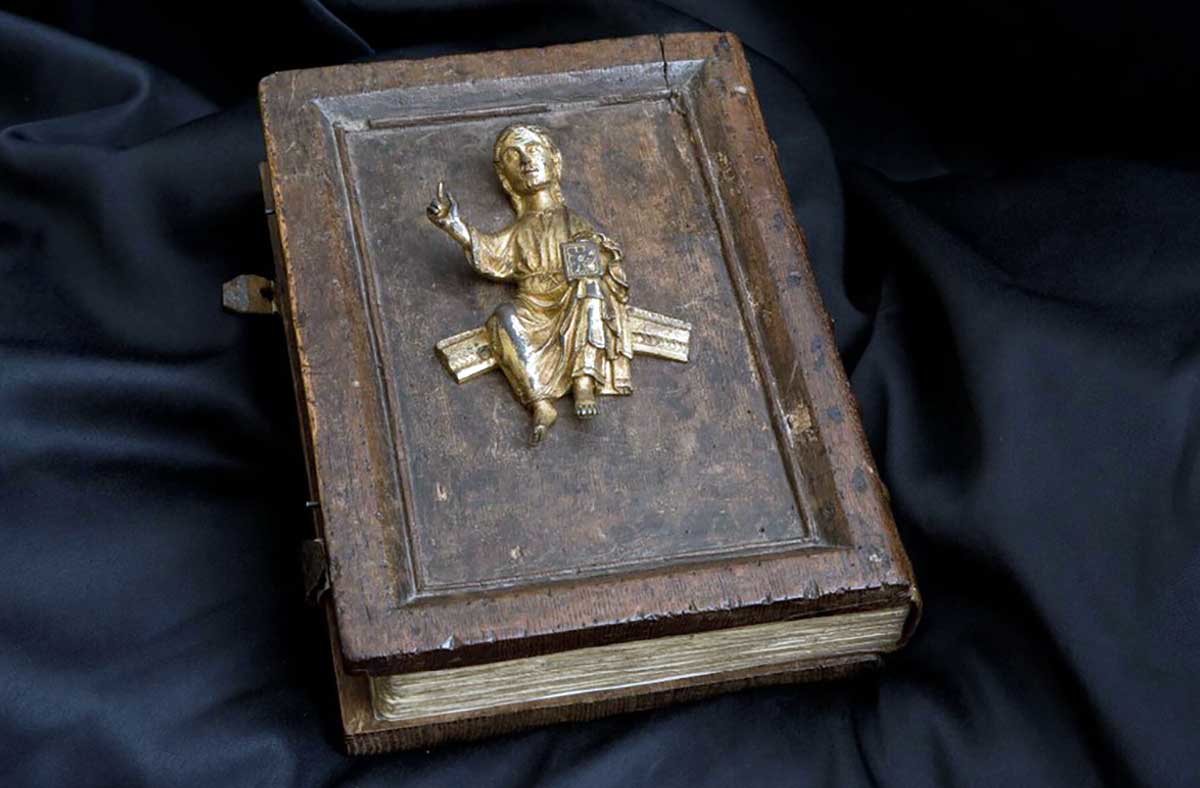
These records show that there was a religious figure named Samson who was active just after the death of King Ithel. One record from the Llancarfan Charters specifically identifies him as an abbot, just like on this stone inscription. In the same era, in a charter dated to the reign of one of the sons of Ithel, we also find a “Teican.” This figure likely matches the Tecan of the inscription. Since this inscription says that the cross was prepared “for the soul of Ithel the king,” this supports the idea that this inscription was made after Ithel had died. Thus, both Abbot Samson and Teican from the charters are of the correct generation to be the figures from this inscription. Furthermore, Ithel had a grandson recorded as “Arthmael,” who could easily be the “Arthmail” mentioned on the stone.
Traditionally, this stone has been dated to the 9th century. However, a more recent analysis by historian Brian Davies provided good reasons for dating it to the seventh century, or perhaps about 700. This means that it is near-contemporary with King Ithel himself.
Why Are There So Few Literary Sources for the Dark Ages?
As can be seen, most of the surviving evidence for Dark Age Britain comes from fragmentary sources. These are difficult to date with precision and are difficult to connect with specific individuals due to the lack of context.
There are many reasons why so few written texts survive from the Dark Ages, including a reduction in literacy, the loss of administrative infrastructure to copy texts that was provided by the infrastructure of the Roman Empire, and disruption to the papyrus trade, which forced people to turn to more expensive materials such as parchment and vellum. This didn’t mean that texts weren’t being written, copied, and preserved, but they were being done so more selectively.
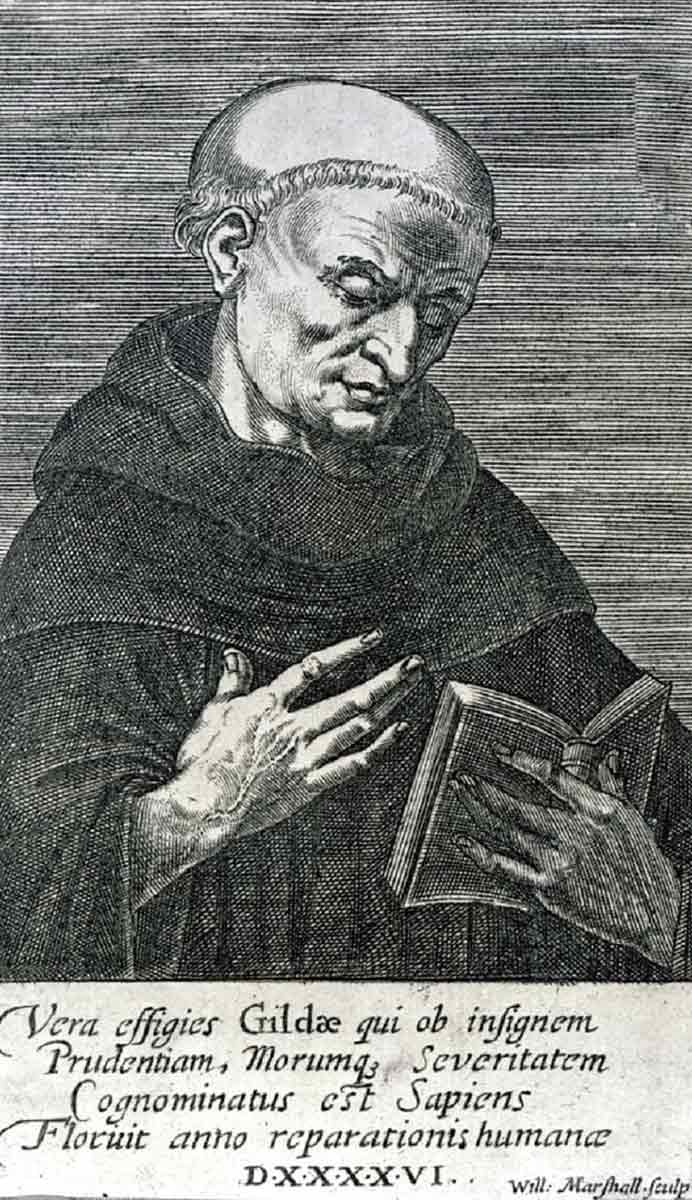
We have some valuable works from the Dark Ages. Gildas’ De Excidio et Conquestu Britanniae, or On the Ruin and Conquest of Britain, was written by the prominent religious figure Gildas in the 6th century. However, the earliest surviving copy dates back to the 10th century. But this was not a work of history. It is a polemical sermon that paralleled the devastation of the Anglo-Saxon conquests of England with the punishment of God as described in the Old Testament, telling a vivid but not always historically accurate story.
Similarly, Bede produced his Ecclesiastical History of the English People in the early 8th century. Again, while he reports to tell a history of the English people from the time of Julius Caesar to his own day, it is a vehicle for sharing his thoughts on politics and religion.
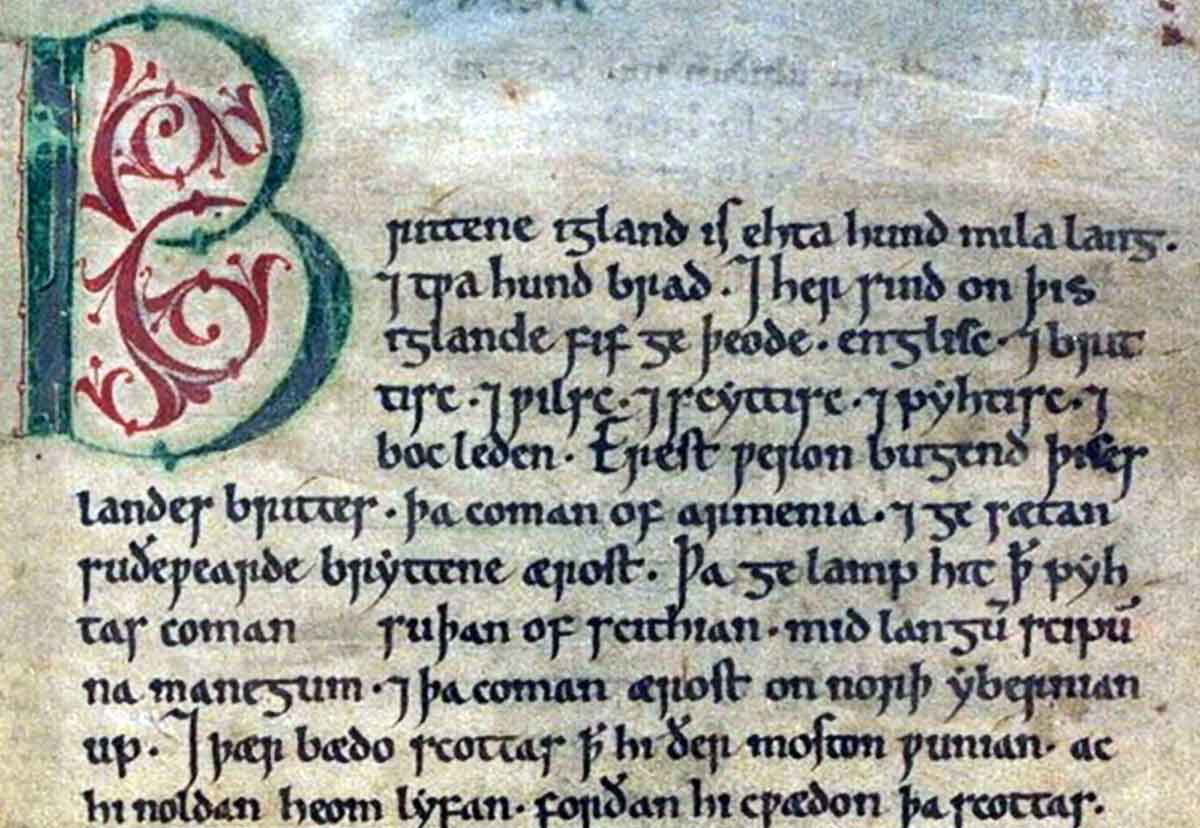
The Anglo-Saxon Chronicle is one of our most important sources for Dark Age Britain. It was initially compiled by a group of scholars in the Kingdom of Wessex in the 890s during the reign of King Alfred the Great. It also looks back to Roman Britain and attempts to chronicle the history of the country into contemporary times, with a focus on the development of the Anglo-Saxon kingdoms from the mid-5th century onwards. As might be expected, much of the information recorded for the early centuries is legendary. It becomes more accurate as it approaches the 9th century.
The nature and paucity of literary sources are why confirming, where possible, with archaeological evidence is so important.