
Paintings in Japan are often different from what many Western visitors expect. Although they are nowadays considered decorative almost to a fault, they were not always made to hang permanently on walls, to be simply admired. Keeping that difference in mind makes the works below easier to appreciate on their own terms.
What Makes Japanese Paintings Unique?
To understand how different approaches to painting developed in Japan, it helps to start with what paintings were expected to do.
Buddhist images, for example, were created to function inside temples, where they needed to be legible from a distance. They also had to follow a few clearly established visual rules. Christian paintings in Japan, on the other hand, followed a very different path. They circulated openly only briefly before Christianity was banned, after which they were pushed into private hands and survived only through secrecy and discretion.
Hand-painted folding screens, those stunning artworks for which Japan is most loved abroad, belonged in private homes instead. Yet even here, they were never meant to be permanent fixtures, but rather moved into place, repositioned when needed, then stored away again until next time.
Oil paintings didn’t arrive in Japan until much later, introduced through government-backed art schools in the late 19th century, at a time when the country was on a mission to modernize. They entered a traditional painting world that was already well-established, so rather than replace established techniques, they simply existed alongside them.
That separation matters a lot when admiring paintings in Japan, as it is understanding that every piece speaks volumes about the time it was created, why it was created, and even how it was meant to be admired.
Here are eight gems you ought to know about.
1. Wind God and Thunder God Screens, Kyoto National Museum
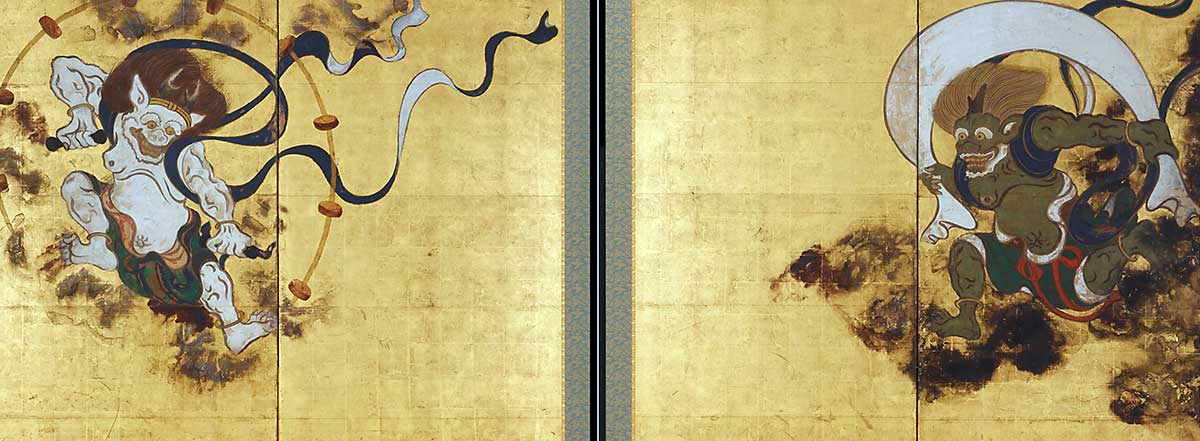
These paired folding screens were made for the homes of Japan’s elite, where paintings helped organize expansive rooms rather than fill them. The Wind God and Thunder God would face one another across an open floor space, their exaggerated poses suspended against gold leaf with no landscape to ground them. From a distance, the figures read instantly, yet up close, the brushwork remains spare and controlled.
Screens were meant to move and be moved, so one could manage what could be seen from different points in the room.
2. Red Fuji, Sumida Hokusai Museum
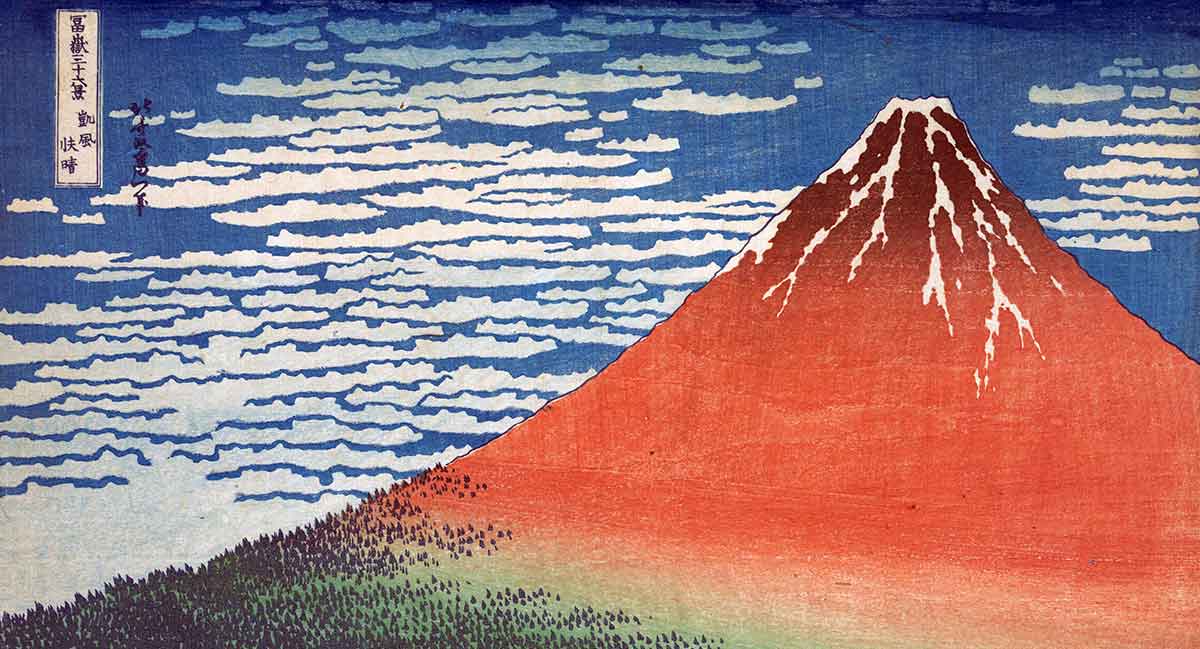
This image by Hokusai captures Mount Fuji at a specific moment, when early morning light briefly turns its slopes a deep red before the color drains away. The composition is pared back almost to bluntness; Fuji dominates the frame, while the sky does very little.
The print was produced as part of a series, and the museum leans into that by showing multiple impressions side by side. The red comes from iron oxide pigment, chosen even though imported Prussian blue was already circulating widely. Slight variations between prints were expected and accepted, and many are shown in museums all over the world.
3. Self-Portrait Series, Fujita Tsuguharu, Modern Art Museum, Tokyo
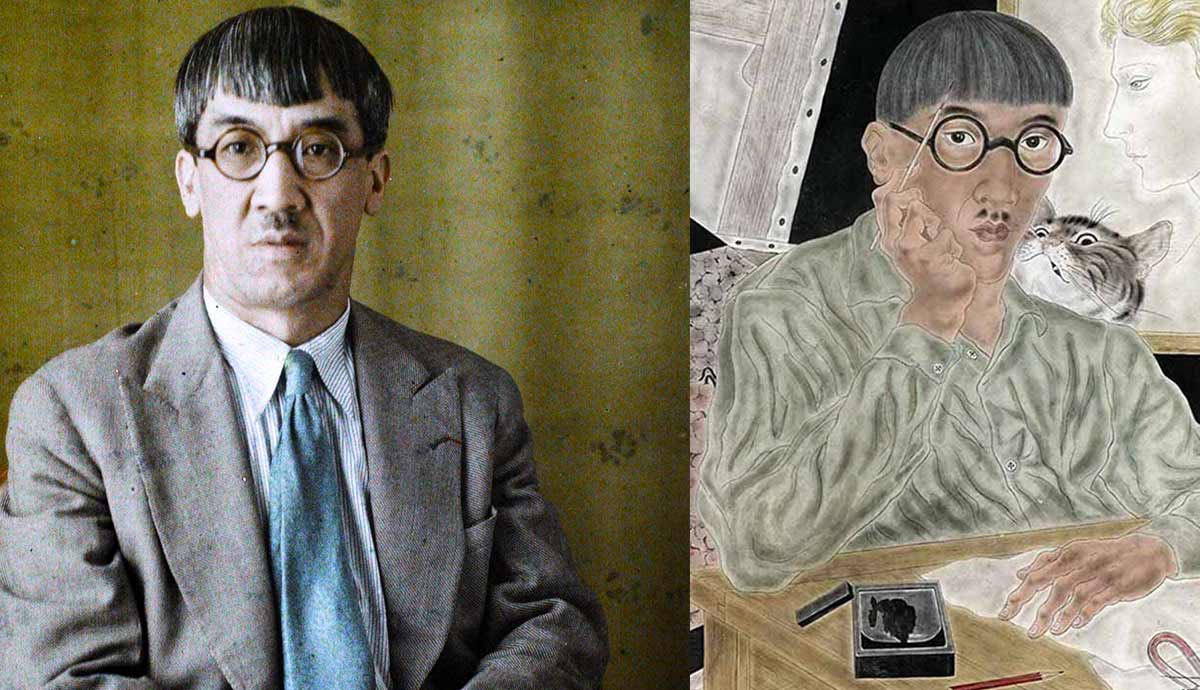
Fujita was born in Tokyo in 1886 and trained initially in Japan before leaving for Paris in 1913. He arrived at a moment when European artists were actively seeking non-Western influences, and his understanding of how to tap into that curiosity and make it work in his favor was almost instantaneous.
Fujita presents himself with his signature bowl-cut hair, wide eyes, round, thin-rimmed glasses, and a pale surface that reads almost like translucent skin. He became associated with this distinctive style built around pale, chalky white surfaces, achieved by mixing oil paint with unusual binders. The technique became his signature and was widely read by European critics as something uniquely “Japanese.” Ironically, he had actually developed the style specifically for his new, Western audience. The paint is applied thinly, letting the canvas texture show through, while the background offers no setting or context. Western oil technique is present, but deliberately stripped of gloss and illusion.
4. Portrait of a Woman, Adachi Art Museum
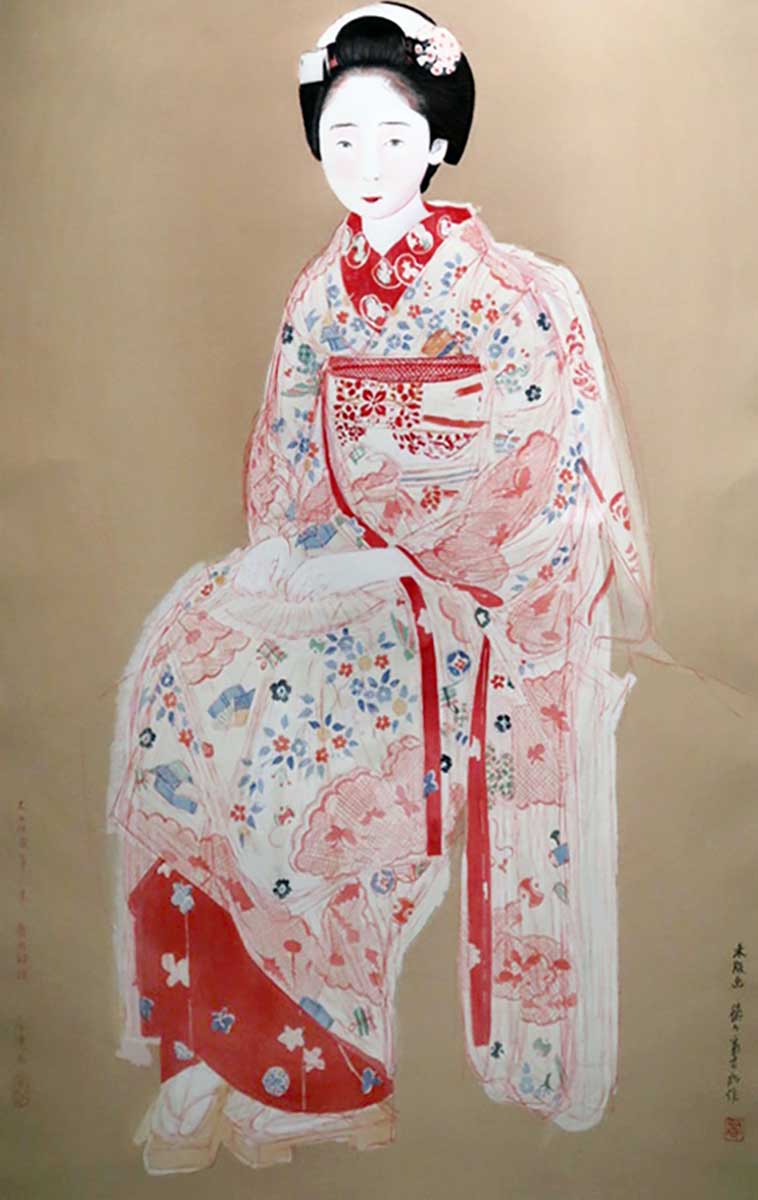
Yamashita Shunkyo was born in 1871 and, as a painter, became closely associated with nihonga, a modern painting movement that set out to preserve Japanese materials and formats while selectively incorporating Western realism.
On Portrait of a Woman (translations of the title vary), you see the face created from fine ink lines and soft mineral pigments, set against a pretty, muted background. There is no setting to read into and no gesture to latch onto, and that restraint was not simply a personal quirk but an inherent trait of the nihonga tradition. State exhibitions and art schools heavily regulated how nihonga paintings were made, even down to dictating the choice of materials.
5. Naban-Era Christian Paintings, Kobe City Museum
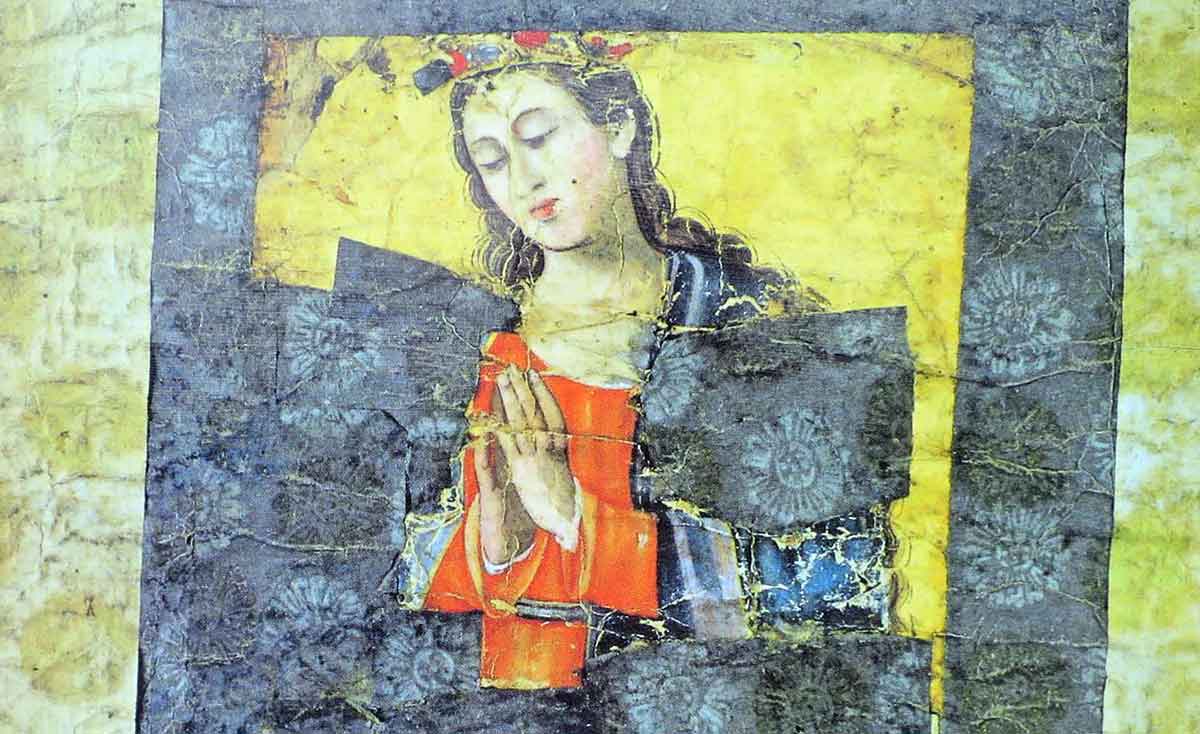
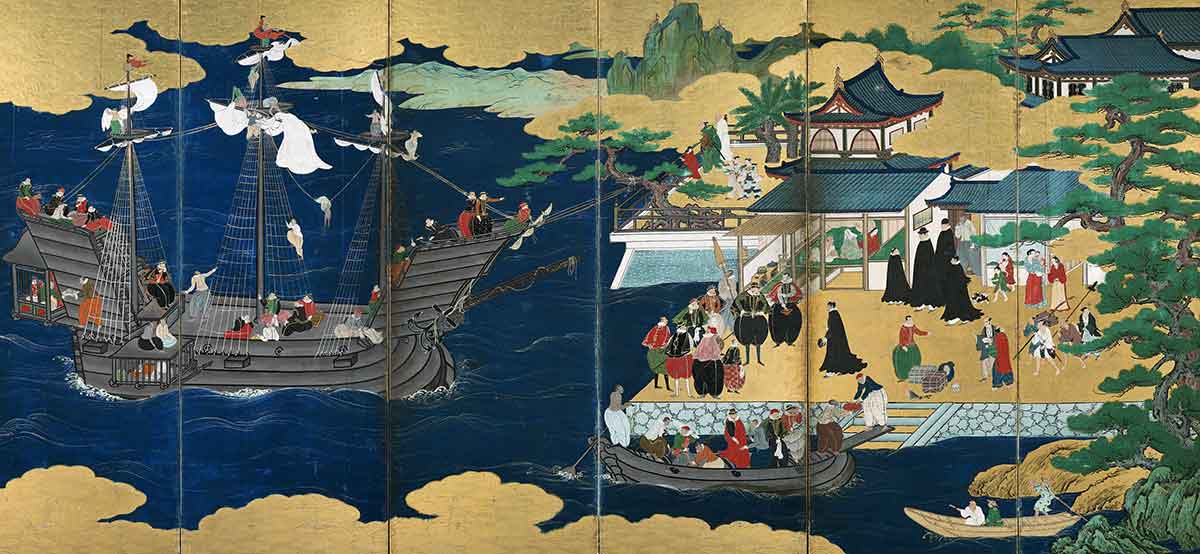
Christian paintings are rare in Japan, not because few were made, but because most simply did not survive. Marian images circulated in Japan during the late 16th and early 17th centuries, often adapted from European devotional models but with a distinct Japanese convention.
After the Tokugawa ban (sakoku), images like this could no longer be shown openly, so many were folded, remounted, or hidden inside homes to avoid destruction. The worn edges and surface marks here are not signs of neglect but, alas, come from repeated handling and concealment. The Kobe City Museum famously holds several related Nanban-period Christian works, and that is your best bet for seeing paintings related to the one pictured above.
6. Seasonal Floral Screens From the Edo Period, Okada Art Museum
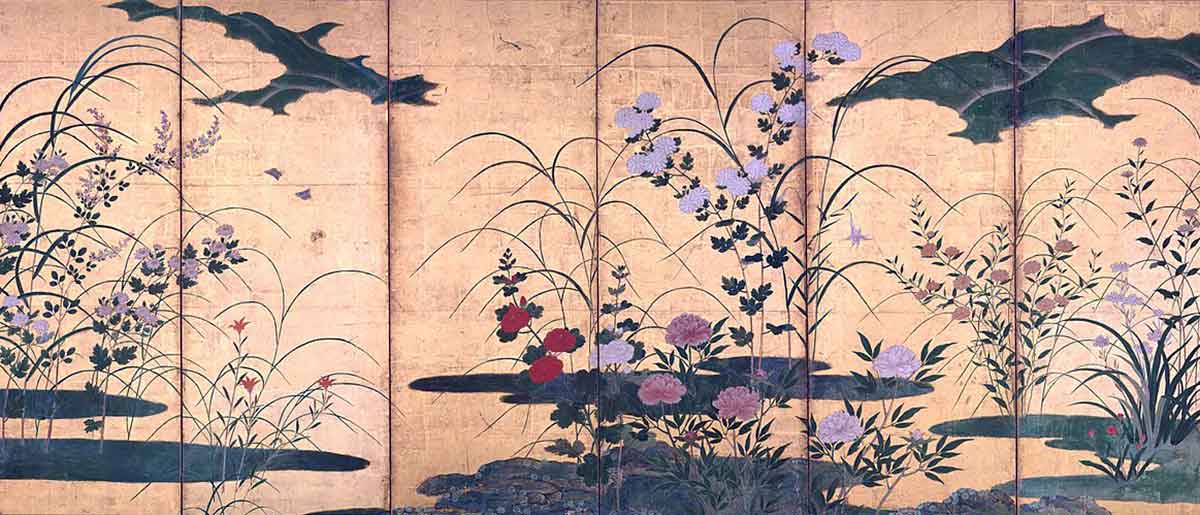
Trained within the Kanō school’s court painting tradition, Mitsunobu created these folding screens to be viewed slowly, and gradually, one section at a time. Seasonal plants move across the panels without horizon lines or set scenes. Some areas are thick with pigment, others thin and open, encouraging the eye to keep moving. The effect is beautifully cumulative, and moving from screen to screen can feel similar to passing through a garden, where attention shifts from one plant to the next rather than settling in one place.
Interestingly, that kind of slow progression mattered a lot in paintings in Japan, as even the act of showing the screens in the wrong season would have been frowned upon. It would not have been seen as a scandal or an offense in a moral sense, but it would have definitely registered as a social misstep, especially in elite circles. The Okada Museum in Japan boasts a large permanent collection of decorative screens on long-term display.
7. Seated Buddha Amida, Tokyo National Museum
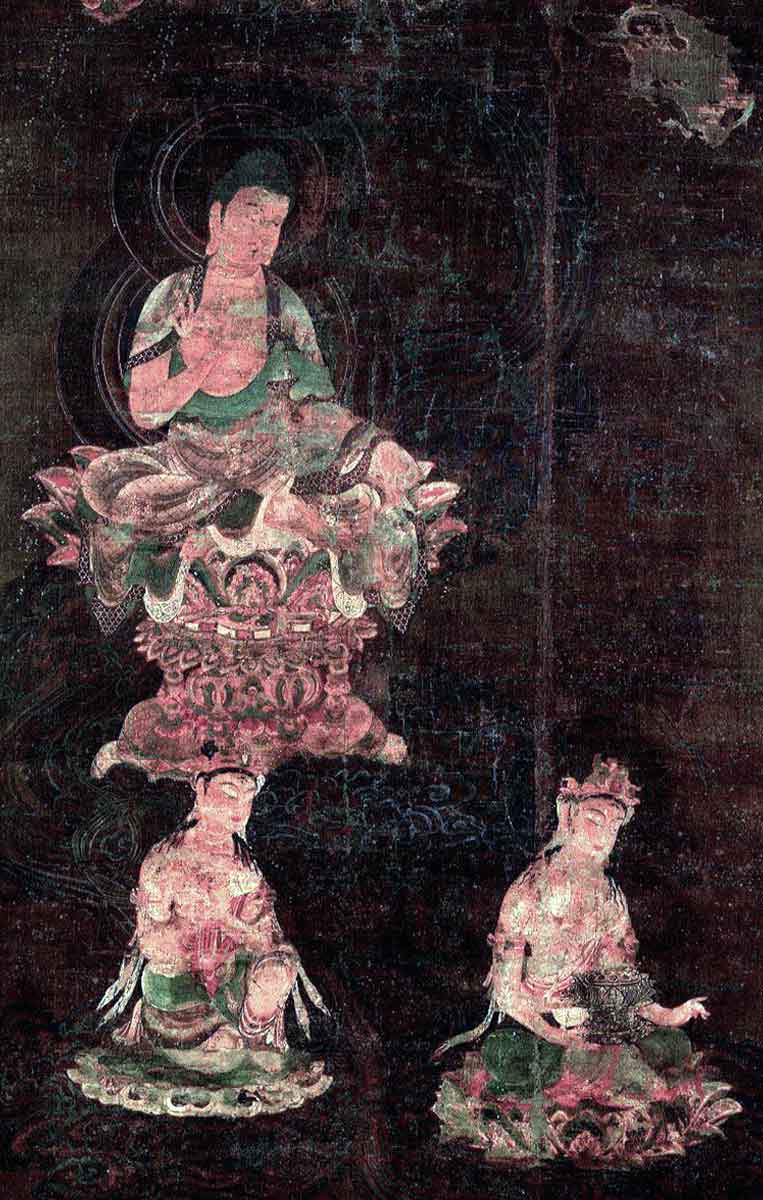
Buddhist paintings in Japan were designed to be installed in a busy temple setting, admired by a long and continuous line of people. Amida appears elevated above two attendants, his gestures clearly visible from a relative distance. Well… at least they were when the painting was freshly made, around the 11th-12th century.
During the Heian Period, Buddhist images were increasingly standardized so teachings could reach large groups at once. For many worshipers, paintings like this were the primary way Buddhist teachings were encountered, standing in for texts and teaching, especially for those who could not read. Incense was burned in front of the image during daily rituals, and over time, the smoke settled onto the surface.
8. ANY Painting by Tarō Okamoto, Okamoto Memorial Museum
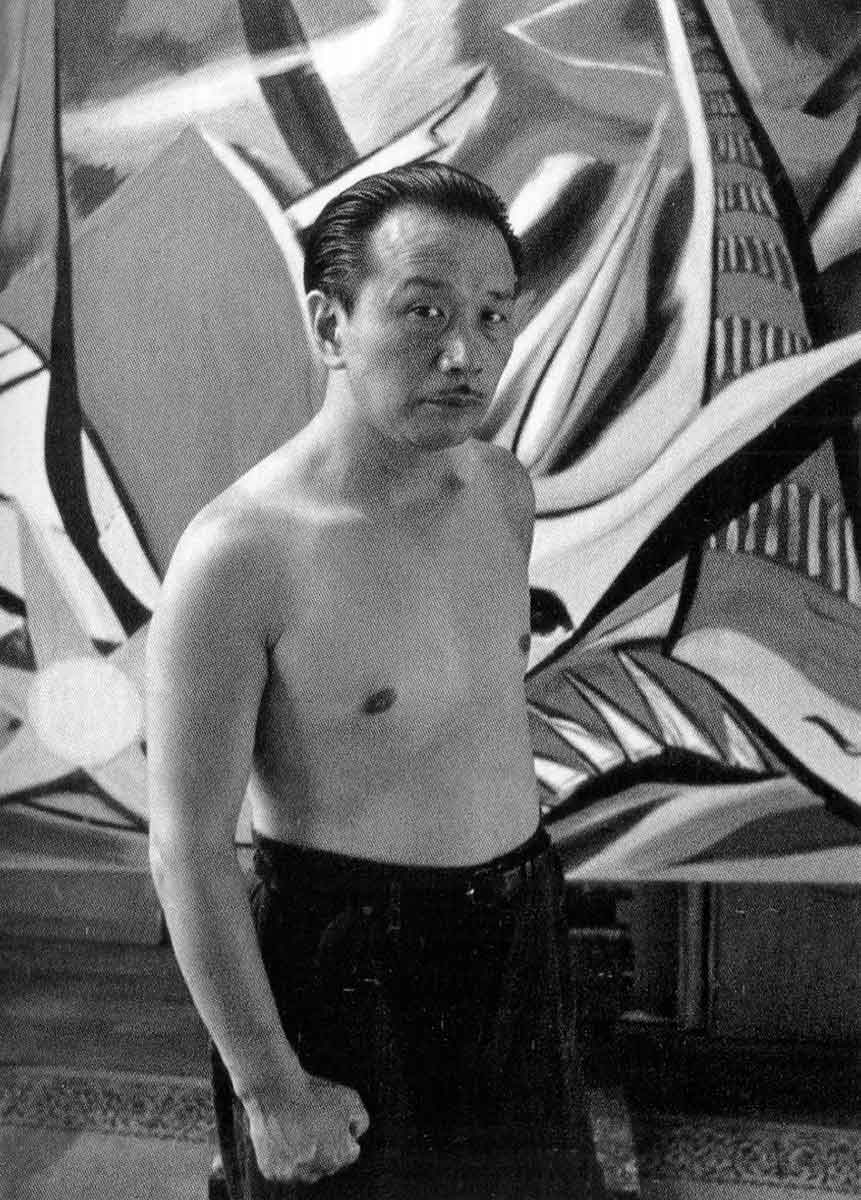
Bold, confronting, and a breaker of molds, Tarō Okamoto worked across several media, including painting, sculpture, writing, and public art. He used bold colors, fractured forms, and blunt imagery that deliberately pushed against what many people associate with traditional Japanese aesthetics.
Some of his work can be unsettling, or at least dark and mysterious. All of it was quite deliberate, as Okamoto fought back against the idea that art should soothe or oblige.
Critics believe this urge to disrupt the arts scene likely emerged from Okamoto’s own personal trauma. He had spent several years imprisoned in China during World War II, and he returned deeply distrustful of beauty used as shallow comfort. In his writing, he argued that beautiful art had helped make violence easier to accept. So consider this unique artwork a rebellion, of sorts.