
If there were ever a museum that perfectly captures the spirit of its contents, it would have to be the Centre Pompidou in Paris. It is one of the most striking buildings you will ever see, and the largest modern and contemporary art museum in Europe. The jaw-dropping collection spans from Matisse and Picasso to Pollock and Duchamp, each work representing a different turn in 20th-century creativity. The museum is currently being renovated, yet when it reopens, you can look forward to once again feasting your eyes on extraordinary art.
The Most Unmissable Highlights at the Centre Pompidou
At the time of writing, many Centre Pompidou pieces are on loan to various other museums around the world while the museum gets a makeover. When it does eventually reopen, note that exhibits are shown in rotation, so no singular piece is guaranteed to be on display. Nevertheless, the exhibits featured here are the museum’s most celebrated works of art. (And PS, there are over 140,000 of them.)
So why not begin with three highlights you’ll definitely see, no matter when you visit?
1. The Museum Itself
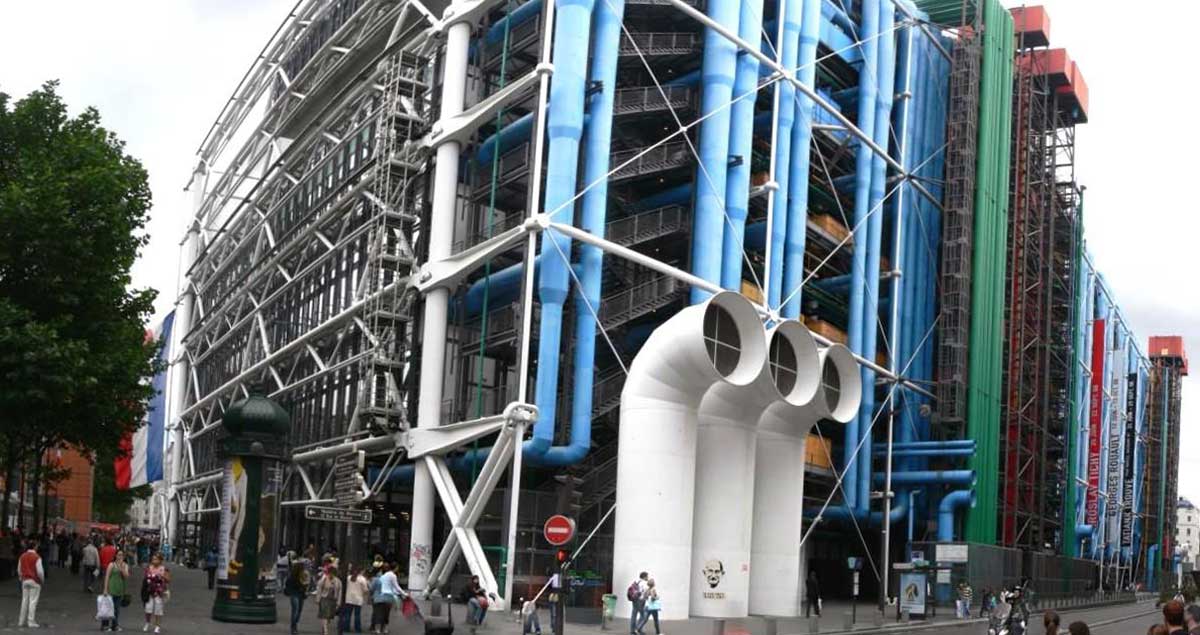
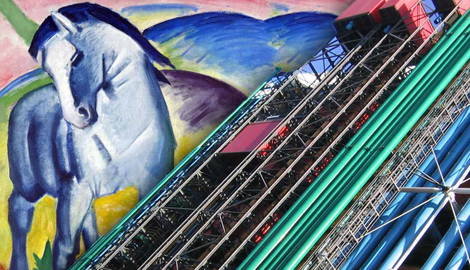
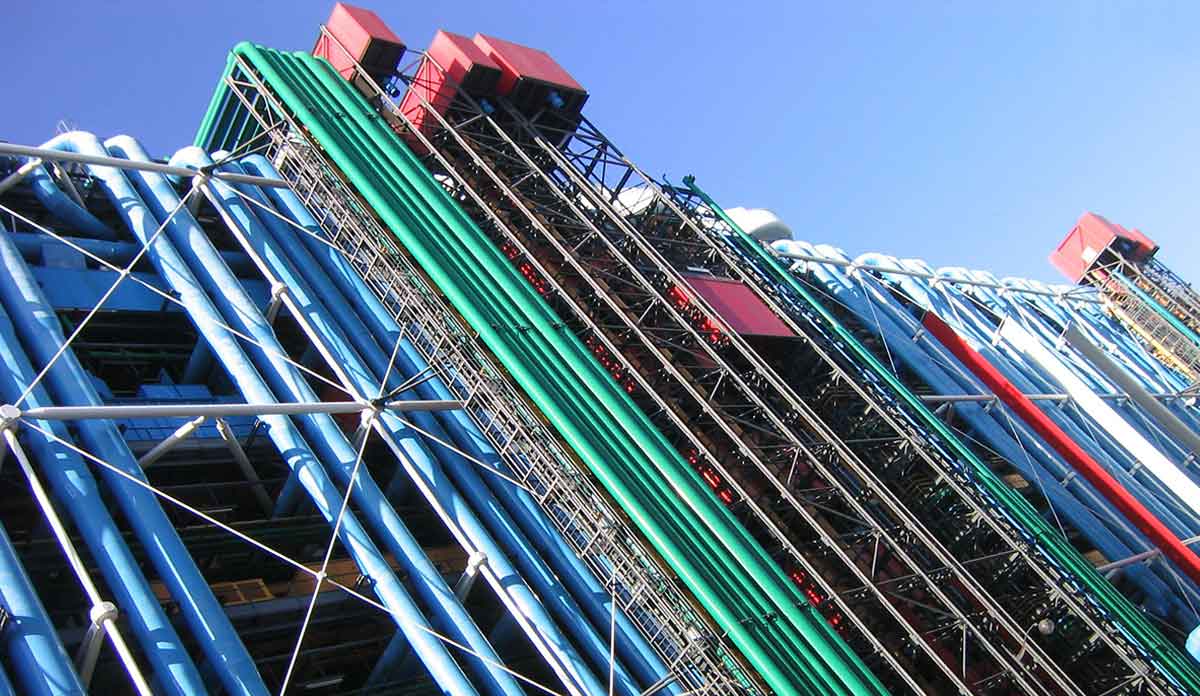
Before even stepping one foot inside the museum, you’re already looking at one of the most radical architectural works of art in Paris. Designed by Renzo Piano and Richard Rogers and opened in 1977, the Centre Pompidou flipped architectural convention on its head, literally. The interior structure, pipes, and escalators, typically placed inside a building, were instead installed on the outside, as a way to leave the interior spaces open, accessible, and flexible.
Each color-coded pipe serves a function: blue for air, green for water, yellow for electricity, and red for movement. Critics once called the design an awful eyesore, much as they did the Eiffel Tower. Yet today, Centre Pompidou is considered a beloved icon of Paris’s modern and avant-garde culture.
2. The Stravinsky Fountain
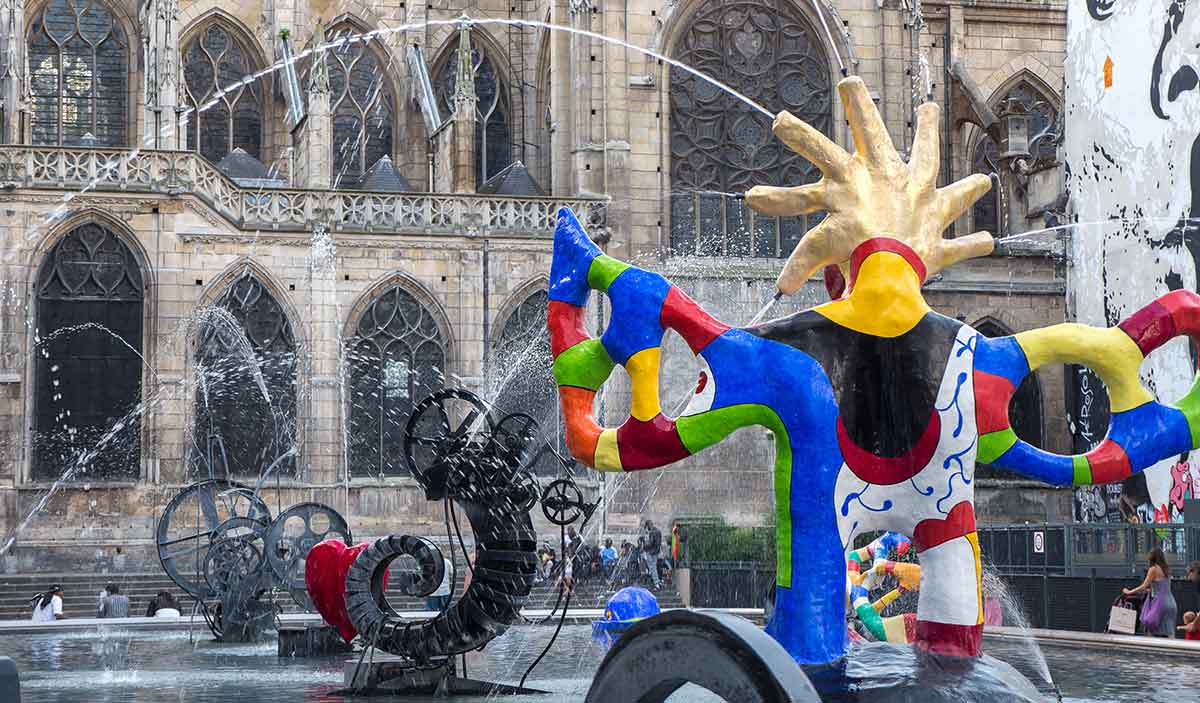
Just outside the museum’s main entrance is the phenomenal Stravinsky Fountain, usually bursting with color and sound. It was created in 1983 by Jean Tinguely and Niki de Saint Phalle and features sixteen sculptures that spin, spray, and clatter, each inspired by the music of composer Igor Stravinsky.
Tinguely built the mechanical structures, while Saint Phalle added her signature whimsical forms. A work of art in its own right, the fountain is a bustling gathering spot and embodies the creative vibe of the Pompidou, spilling out onto the streets.
3. The View From the Top Floor
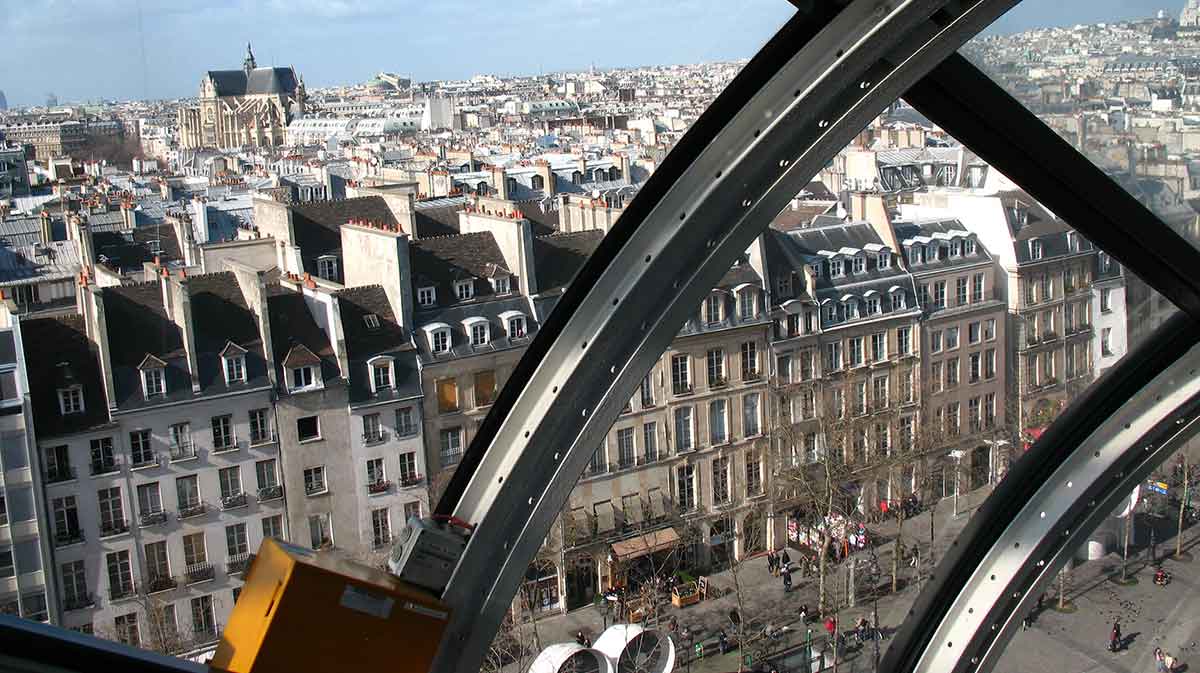
Even if you were to visit the museum blindfolded and see nothing at all, do take the glass-enclosed escalators up to the top floor. From there, you get one of the best panoramic views of Paris with the Eiffel Tower, Notre-Dame, and Sacré-Cœur taking over the skyline. It is gorgeous nearer sunset, when the light hits the rooftops.
4. Fountain (1917) by Marcel Duchamp (1964 replica)
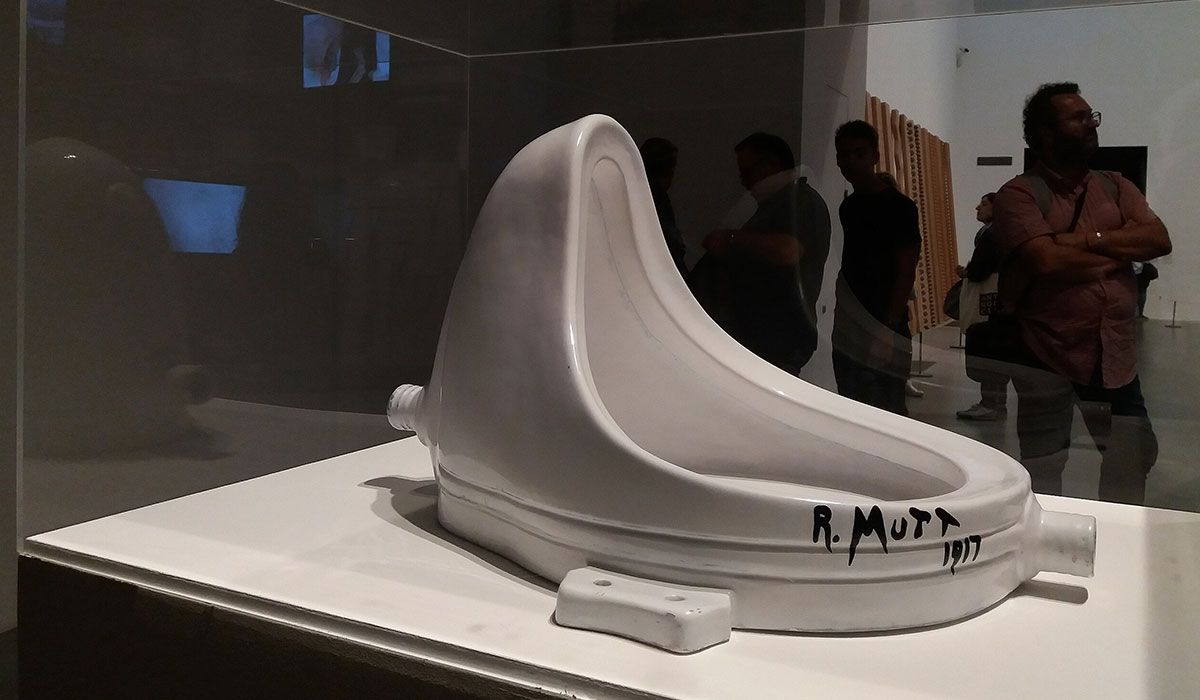
A porcelain urinal turned upside down and signed “R. Mutt” doesn’t sound all that radical now, but back in 1917, it caused an absolute scandal. Duchamp’s Fountain is also credited with changing the course of art and starting a debate that still keeps coming up in the artwork periodically.
At the time, Duchamp wasn’t out to deliberately shock anyone; he was asking a very simple question: Can something utterly ordinary become extraordinary if the artist declares it so?
The piece was initially submitted to an exhibition in New York that claimed to accept every entry, and was promptly rejected. The rebuttal highlighted the exhibit even better than the artist ever could.
While the original was lost, over a dozen authorized and artist-signed replicas make sure to keep the argument alive. It feels right that one such replica lives here at the Centre Pompidou, a museum built on the same spirit of questioning and reinvention. Without Fountain, it’s hard to imagine Joseph Kosuth’s conceptual works, Tracey Emin’s My Bed, or even Maurizio Cattelan’s taped banana; all continuing Duchamp’s idea that meaning can matter more than making.
5. Blue Horse I (1911) by Franz Marc
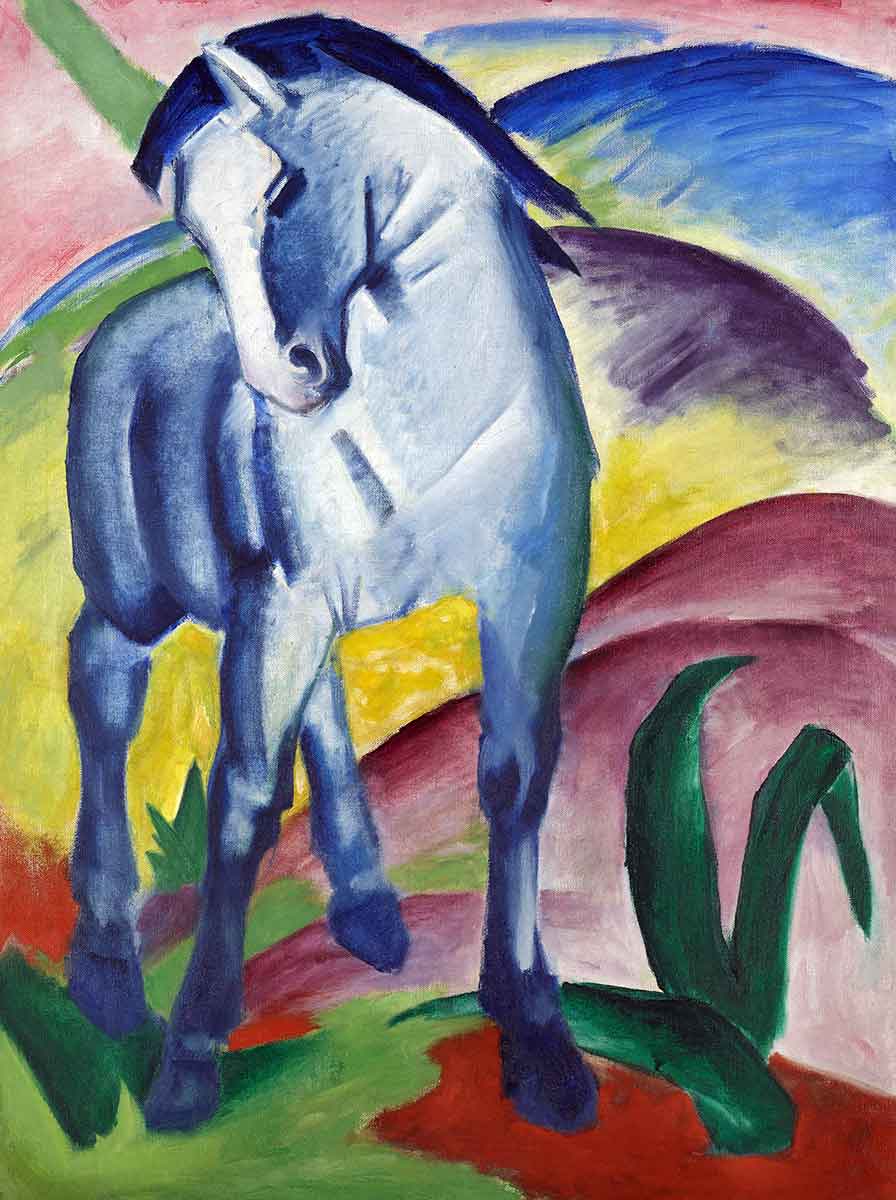
Franz Marc was one of Germany’s Expressionist pioneers, a man who believed animals were purer than people, and that colors can carry and convey emotion. To him, blue meant calm and masculinity, while yellow stood for warmth and femininity.
Horses were a recurring theme for Marc; he saw them as symbols of freedom and innocence in a fast-industrializing world. Alongside Kandinsky, he founded Der Blaue Reiter (“The Blue Rider”), a group devoted to exploring spirituality in art.
When World War I broke out, Marc volunteered, convinced that the war might somehow renew humanity afresh. He was killed by shellfire near Verdun in 1916, just weeks before the German army ordered that artists of his stature be pulled from the front. He was 36.
6. Les Constructeurs (1950) by Fernand Léger
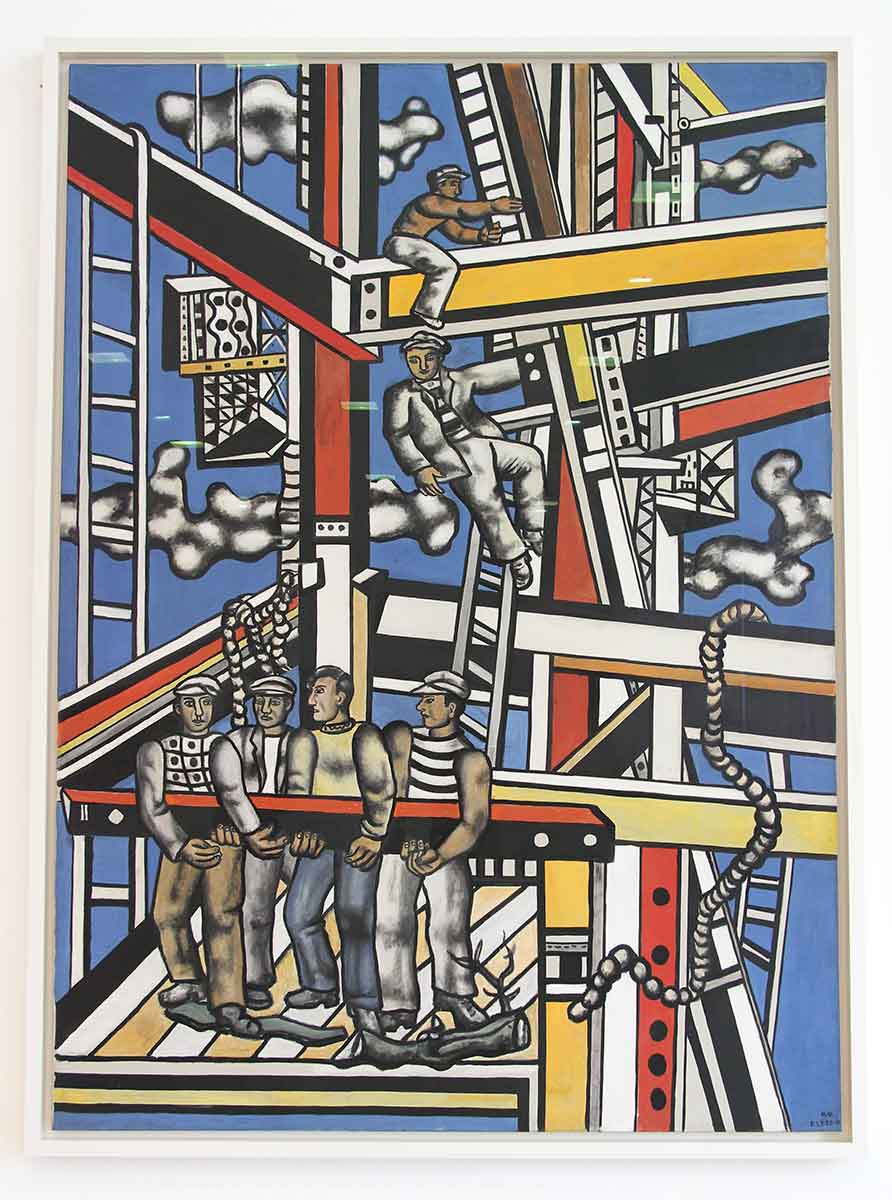
Léger spent much of his life exploring the relationship between people and machines, and nowhere is that clearer than in Les Constructeurs.
Painted after the Second World War, it celebrates the new industrial age with figures of steelworkers suspended high above the city. Their bodies and the metal beams around them share the same bold geometry, as if human and machine were part of a single design.
Léger admired the rhythm of construction and advancing technology but remained aware of what progress might cost us all. His bright shapes and strong outlines turn labor into something almost musical; a vision of modern life built by the marriage of man and machine.
7. Large Red Interior (1948) by Henri Matisse
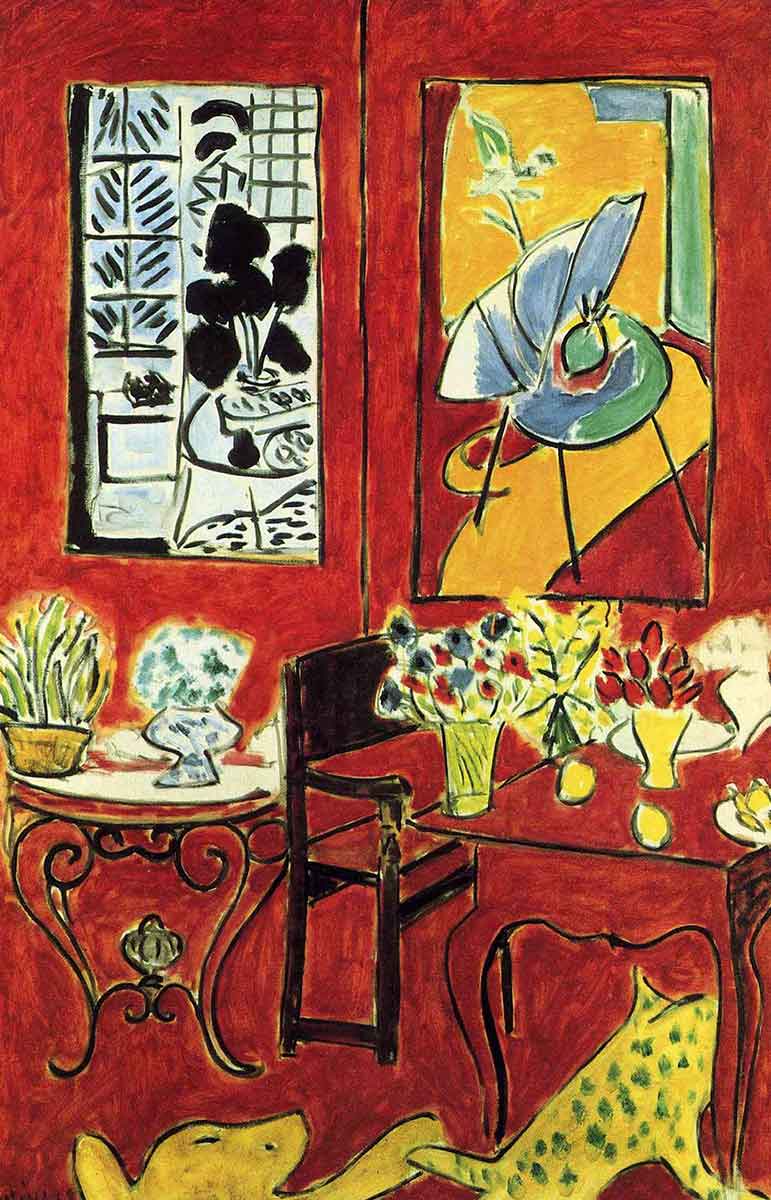
Henri Matisse was nearly 80 and long established as one of the defining figures of modern art when he painted Large Red Interior. He was known for leading the Fauvist movement and his dynamic use of color, and he continued to paint even after illness limited his mobility.
Large Red Interior belongs to this final period of his career. It shows his studio in Nice, transformed into an expanse of deep red, with furniture, plants, and framed artworks arranged in perfect balance.
8. The Deep (1953) by Jackson Pollock
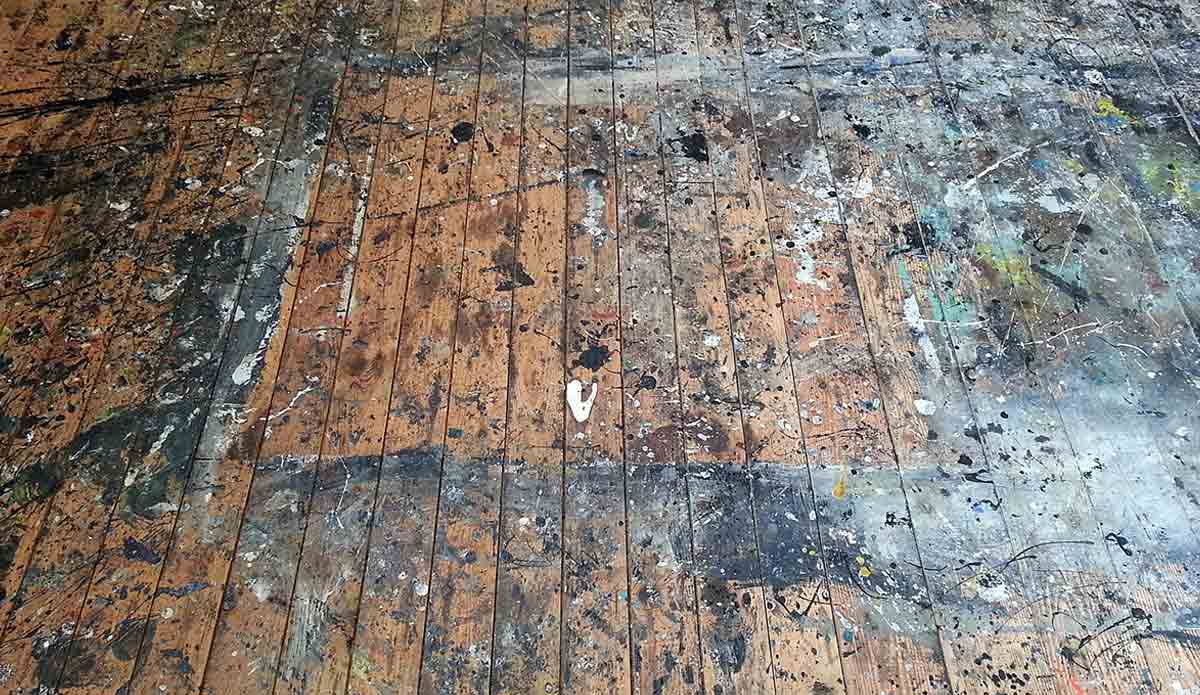
Pollock’s paintings often seem chaotic up close, but step back and the rhythm starts to appear. The Deep belongs to his final years, when success had become a burden and his health was beginning to falter. He was deeply depressed, drinking heavily, and painting less, yet the few works he produced carried a raw and dark honesty not seen in his earlier work.
Working on the floor of his barn studio, he poured and flicked paint with sticks and stiffened brushes, moving around the canvas as if caught in thought. Here, his color is stripped away, replaced by a void that feels both calm and unnerving. The Pompidou’s wide, open rooms give The Deep the space it needs and deserves, letting you sense the restless man behind the motion.
9. La Coiffeuse (1911) by Pablo Picasso
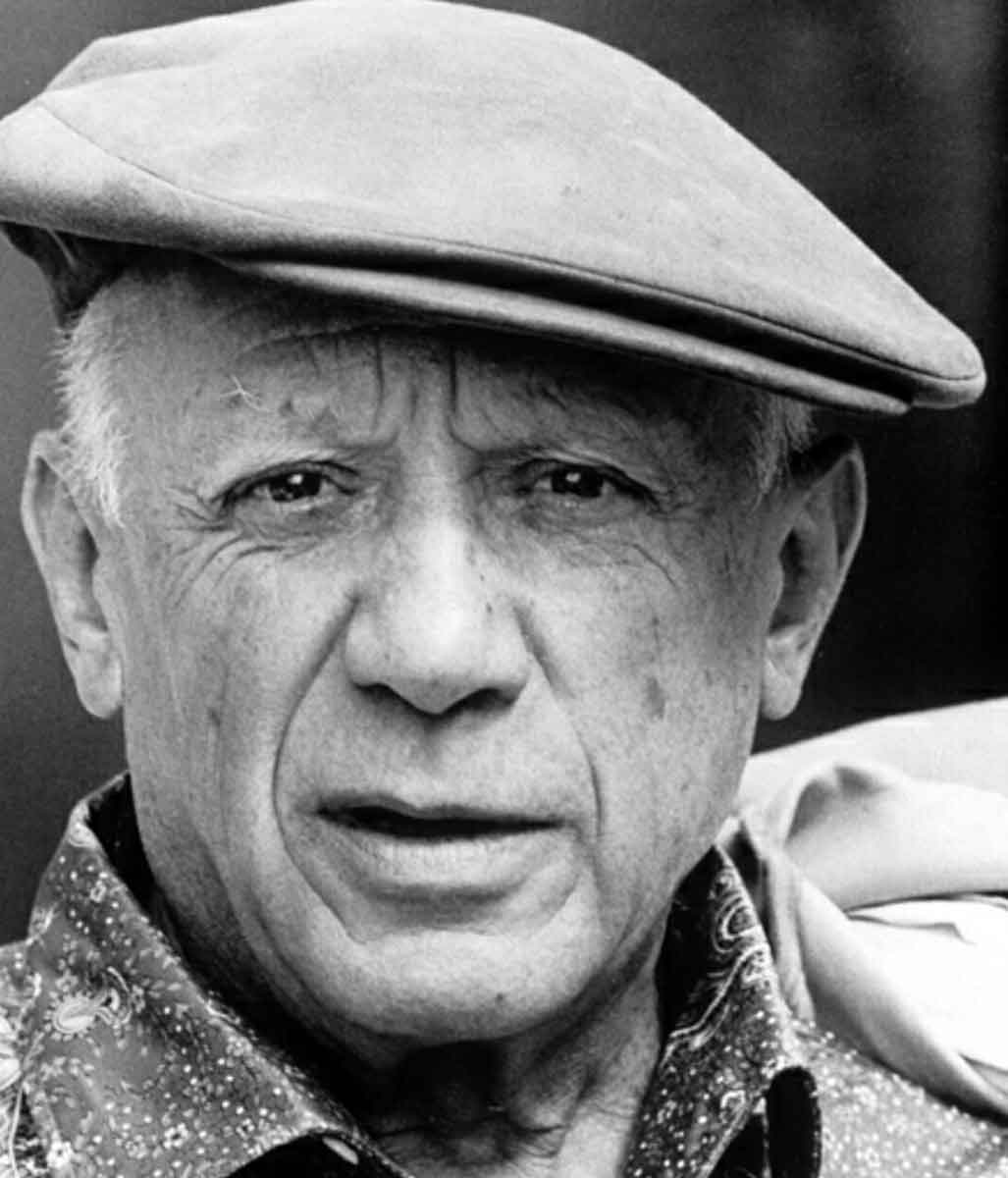
The Centre Pompidou holds several works by Picasso, showing the full arc of his career from early Cubism to his later, more colorful years. La Coiffeuse, or The Hairdresser, is one of the most intriguing.
Painted in 1911, it belongs to his early Cubist period, when he was breaking familiar objects into shifting planes to explore how we really see the world. The painting was stolen from storage in 2001 and resurfaced 14 years later in a package marked “art craft toy.” Returned to France in 2015, it became one of the Pompidou’s most talked-about recoveries and a symbol of how fragile, precious, and coveted modern art can be.
10. Black and White II (1959) by Pierre Soulages
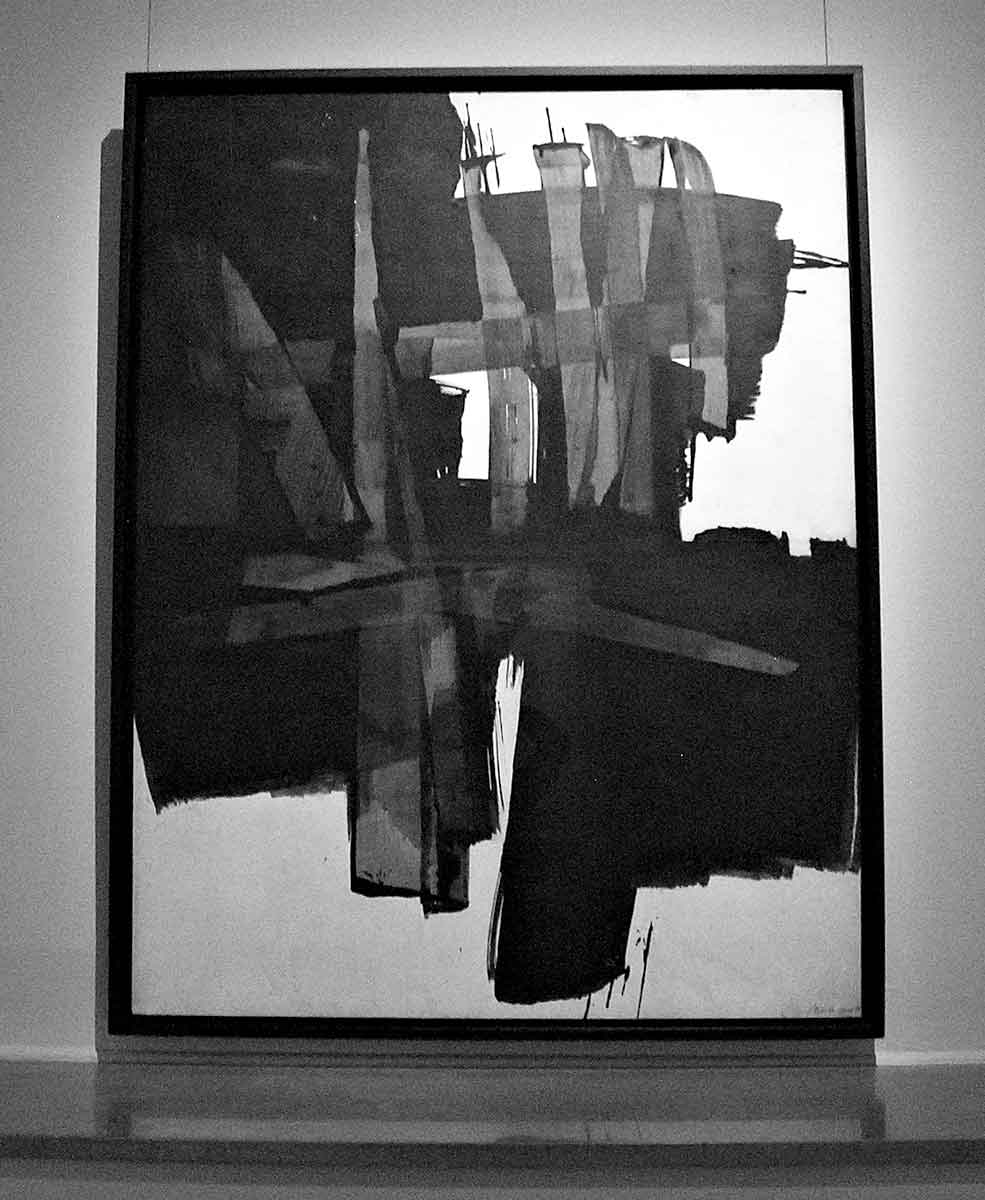
Pierre Soulages built his entire career around the color black, which he saw not as emptiness but as a source of light. In Black and White II, you see thick layers of paint catching surprising reflections, turning that darkness into something that is almost luminous. He called this idea outrenoir, or “beyond black.”
Soulages lived to be 102 and was so respected in France that the city of Rodez, his birthplace, opened a museum dedicated entirely to his work. At the Centre Pompidou, the lighting reveals every ridge and brush mark, showing that even a single color can hold infinite depth.