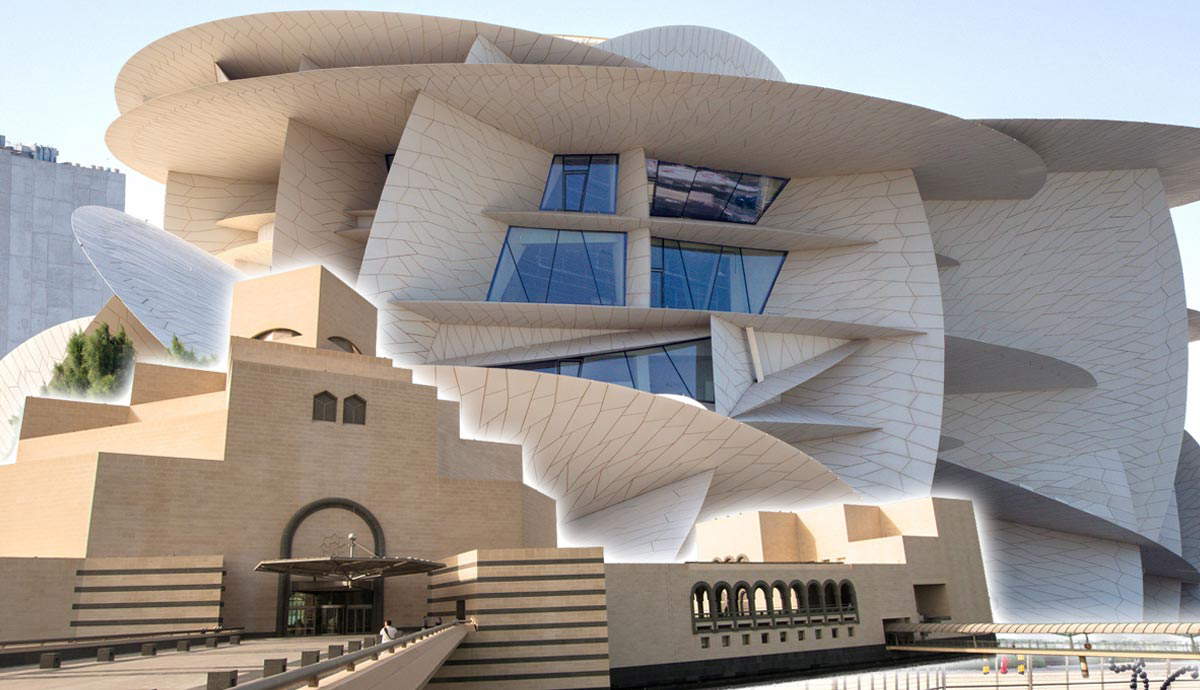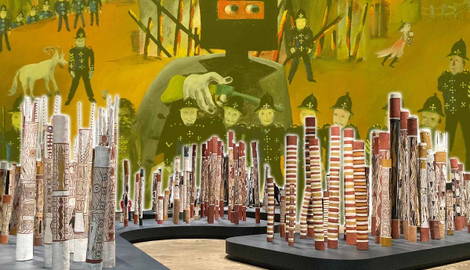

The National Gallery of Australia doesn’t try to impress you from the outside, and its low-key design is part of the point. It sits on the shores of Canberra’s Lake Burley Griffin, and feels open, airy, and modern, a place built not to show off but to record and share stories. Inside, local art is shown alongside pieces from all over the world, with key highlights telling of important moments in Australian history, from the search for a modern identity to the lasting impact of colonialism.
1. Sidney Nolan, Ned Kelly Series
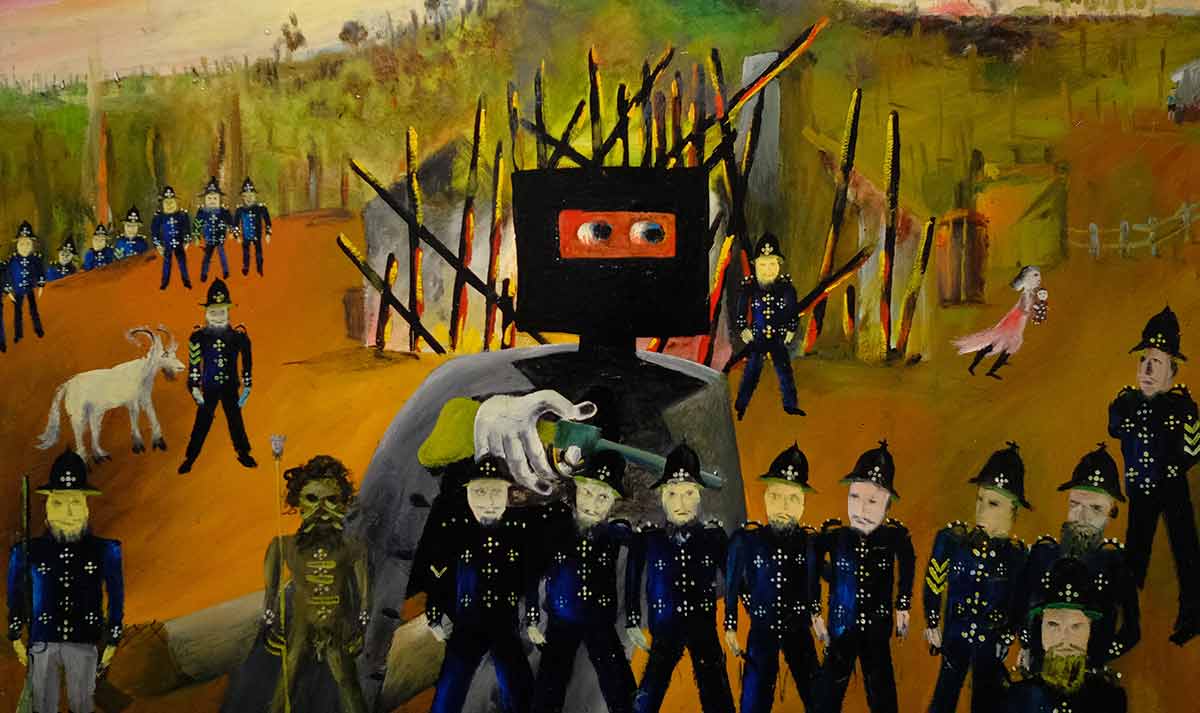
Any art representing Ned Kelly has become as inseparable from Australia’s cultural identity as the subject himself. Painted in the late 1940s, Nolan’s collection takes its subject from the real-life outlaw Ned Kelly, who was executed in 1880 and has since become one of the country’s most contested historical figures. To some, Kelly was a criminal, but others see him as the ultimate symbol of resistance against colonial authority and social injustice.
Nolan stripped Kelly down to a stark visual language: a black, box-like helmet set against wide, often barren landscapes. The simplicity is deliberate. By reducing the figure to an almost cartoonish outline, Nolan transformed Kelly from a historical person into a broader symbol, one that could carry ideas of rebellion, isolation, and defiance.
2. The Aboriginal Memorial

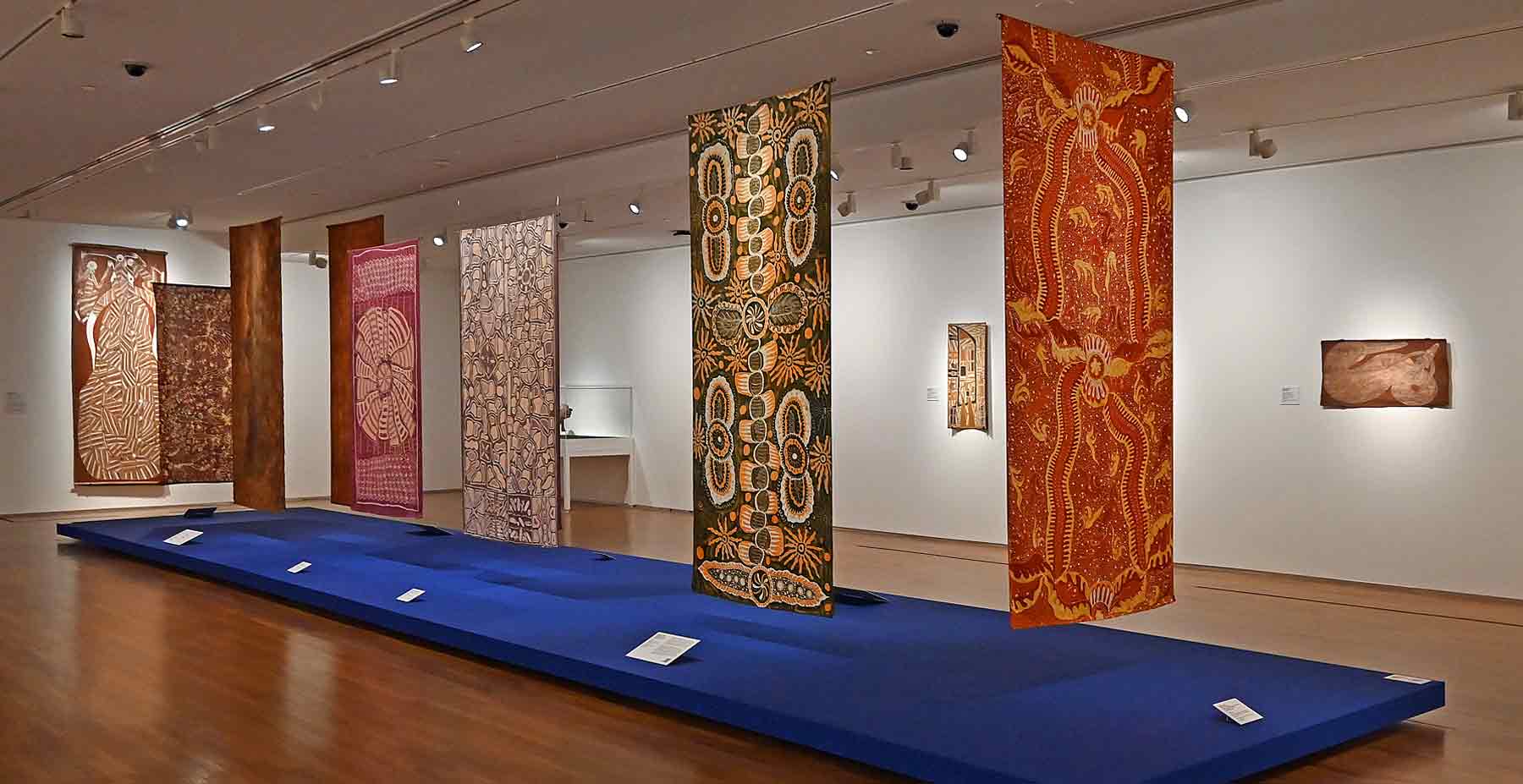
The Aboriginal Memorial was created in 1988, at a moment when Australia was still deeply divided over how, or even whether, to confront its colonial past. That year marked the Bicentenary of British settlement, officially framed as a national celebration. For many Indigenous Australians, though, it was anything but. Protests were widespread, and public debate around dispossession, violence, and survival was just beginning to break into the mainstream. A formal national apology was still 20 years away at this point.
Created by artists from Ramingining in Arnhem Land, the memorial consists of 200 hollow log coffins, each traditionally used in burial ceremonies. The number is deliberate, marking the years since colonization and honoring Indigenous people who died defending their land. The installation offered a jarring and stark counterpoint to the Bicentenary narrative, which was altogether much more jovial. Walking through it nowadays is a must for any visitor wanting to gain a comprehensive overview of Australia’s history through art.
3. Jackson Pollock, Blue Poles
When the gallery purchased Blue Poles in 1973, the reaction was explosive to say the least. Critics balked at the exorbitant price, and many questioned why an American abstract painting deserved such prominence in a national collection. Yet the gallery, intent on positioning itself as a world-class space, doubled down and kept on investing in both local and international artists. Decades later, the controversy has become part and parcel of the work’s story.
Painted at the height of Pollock’s career, Blue Poles is not chaotic in the way it is often described. Up close, the layers are quite structured, with vertical blue elements anchoring the surface. Its presence in the NGA reflects a moment when Australia was asserting itself as a serious participant in international cultural conversations, wanting to loudly state that it could, and was willing to, invest in art that challenged public taste rather than coddle it.
4. Australian Photography Collection
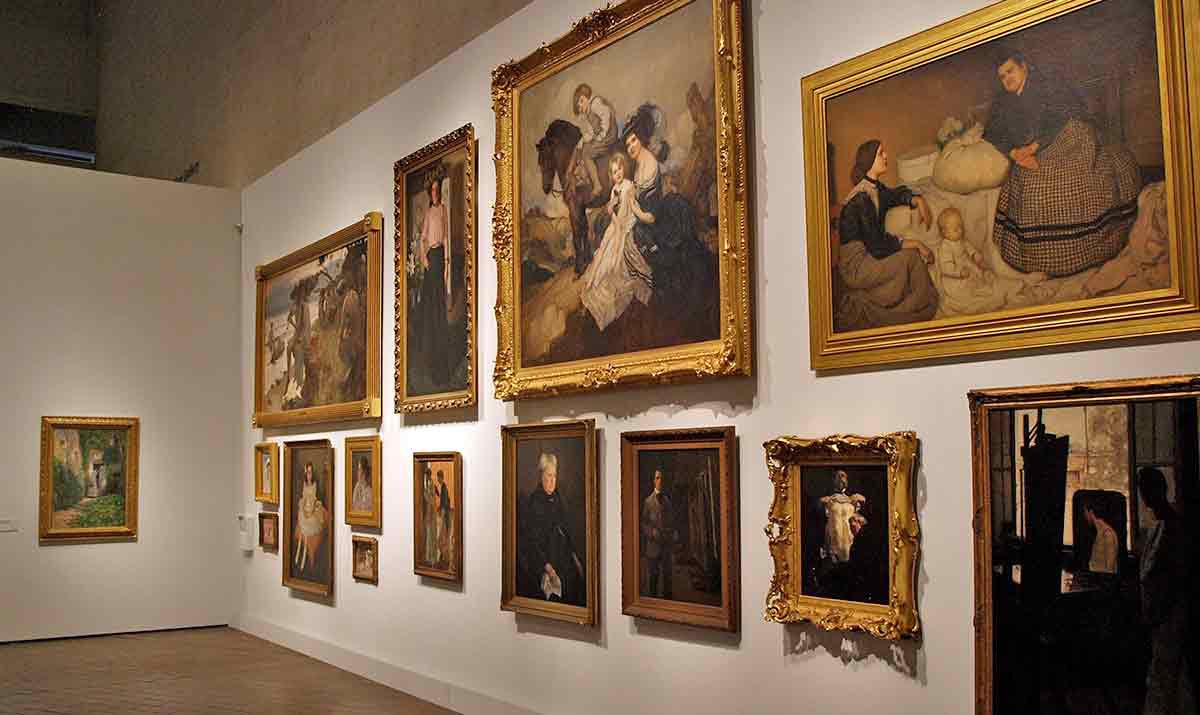
Photography has played an important role in how Australians have tried to understand themselves, partly because so much of the country’s recent history has been recorded through images rather than long traditions of painting or sculpture.
In the NGA’s collection, photography often turns its attention to everyday places and constructed scenes that sit outside official or polished narratives of Australia.
The gallery holds works by Indigenous and non-Indigenous photographers, including Tracey Moffatt, whose photographs are carefully staged and often resemble film stills. Her images feel deliberate and controlled, with lighting, color, and composition used to build tension rather than document reality. Artists such as Bill Henson approach the medium differently, working in low light and shadow to create images that feel unsettled and incomplete. Together, these works show photography being used not to explain Australia, but to question it, and to leave space for discomfort, ambiguity, and interpretation.
5. Clifford Possum Tjapaltjarri, Warlugulong (1977)
Although not always on display, Warlugulong is one of the most significant Indigenous paintings held by the National Gallery of Australia. Painted in 1977, it brings together multiple Dreaming (or Dreamtime) stories connected to the artist’s ancestral Country, effectively turning the canvas into a kind of storytelling map.
At 11 feet in length, Warlugulong (which you can see here) is physically imposing and was one of the largest canvases produced during the early years of the Western Desert painting movement. When the painting was sold in 2007 for AUD 2.4 million, roughly USD 2.7 million, it set a new price record for Indigenous art in Australia. At the time, sales like this were still rare, and the result drew wider attention to how these works were being valued. Clifford Possum Tjapaltjarri was already well known, but large, ambitious paintings such as Warlugulong played a big part in placing him among the most important Indigenous artists of the late 20th century, with his work held in major collections in Australia and internationally.
6. Yirrkala Bark Paintings
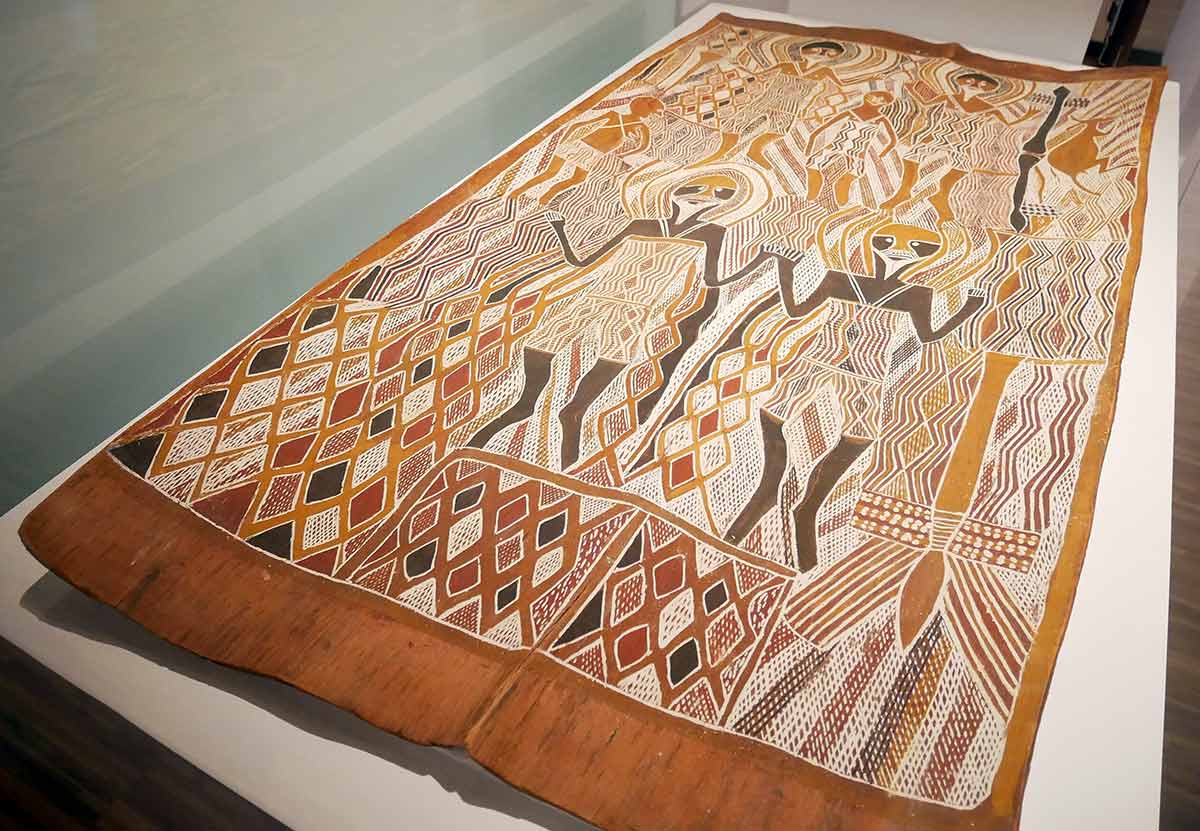
While many might mistake these works for decorative objects, Yirrkala Bark Paintings are considered documents of law, land ownership, and cultural authority. They are painted using natural pigments on sheets of eucalyptus bark and closely tied to moments of political action, including the Yolngu people’s fight for land rights in the mid-20th century.
7. What About European Masters?
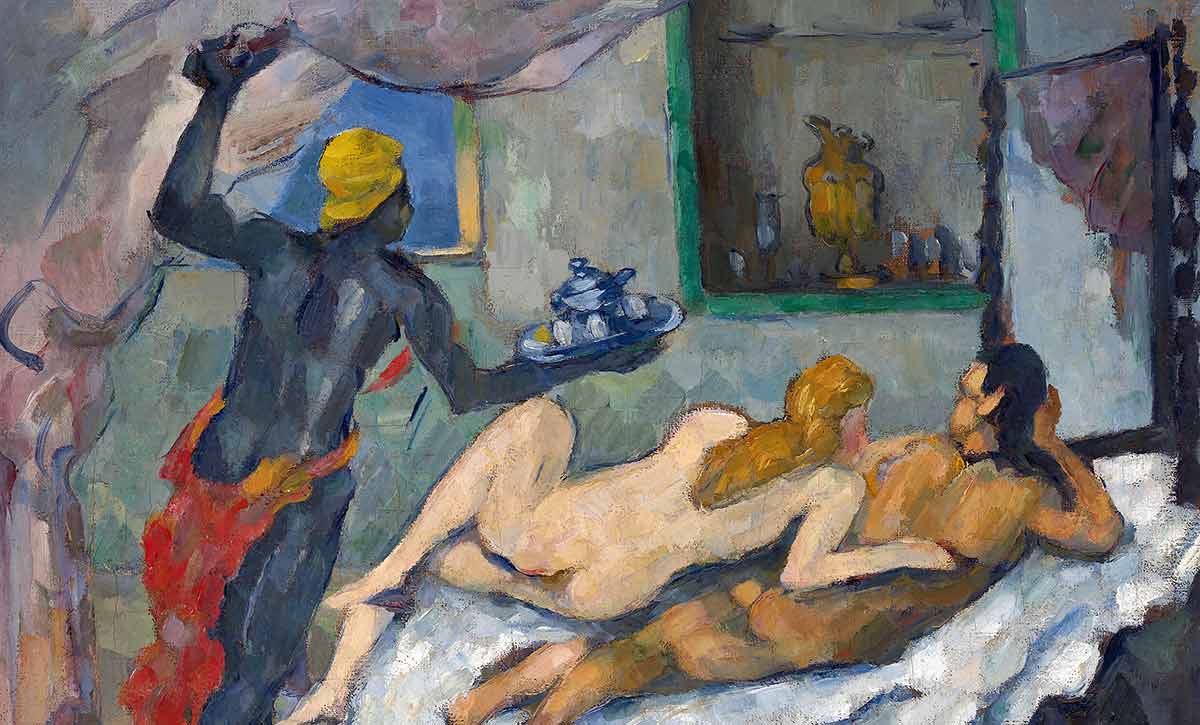
The National Gallery of Australia does not lead with its European collection, but it is still stronger than many visitors expect. Works by Claude Monet, Edgar Degas, Paul Cézanne, and Pablo Picasso appear throughout the galleries, although they never hog the limelight. One has a feeling this is a strategic move by the NGA. European masterpieces are here to provide context, contrast, and continuity, helping to frame Australian and Indigenous art as part of a wider global art history.
8. The Sculpture Garden
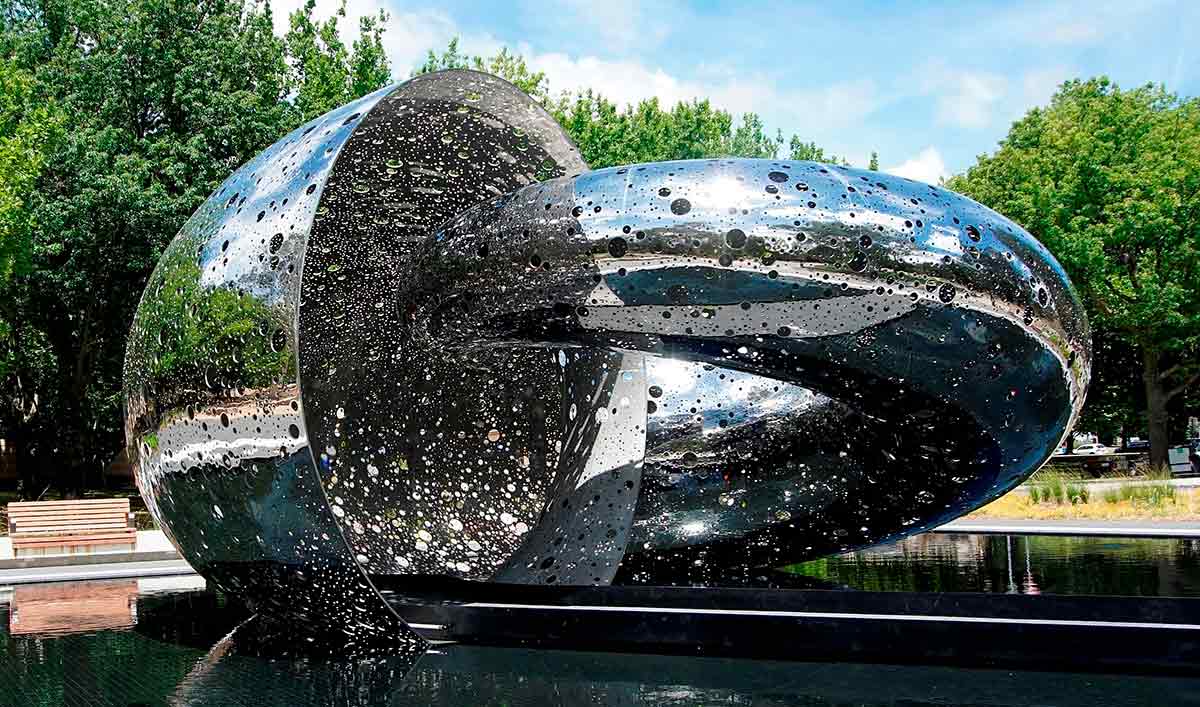
The Sculpture Garden extends the gallery’s philosophy outdoors, spread across lawns and water features, and brings together international and Australian artists.
What makes the garden successful is not just the quality of the works, but how they are spaced. Nothing feels crowded or overly explained. You are free to walk, circle back, sit down, and look again. It mirrors the NGA’s broader approach: letting objects speak for themselves and trusting visitors to take their time and come to their own conclusions.