Heroic, beautiful, graceful, sensual: these are some of the words used to describe the works of Neoclassical sculptor Antonio Canova. Canova took inspiration from the Classical Art of Ancient Greece. In 1806, in a letter to writer and theorist Antoine-Chrysostome Quatremère de Quincy, Canova wrote, “To establish one’s value as a great artist take more than simply purloining bits of Antiquity from here and there, and then undiscerningly piecing them together. You have to sweat over the great model of the Greeks day and night.”
Who Was Antonio Canova?
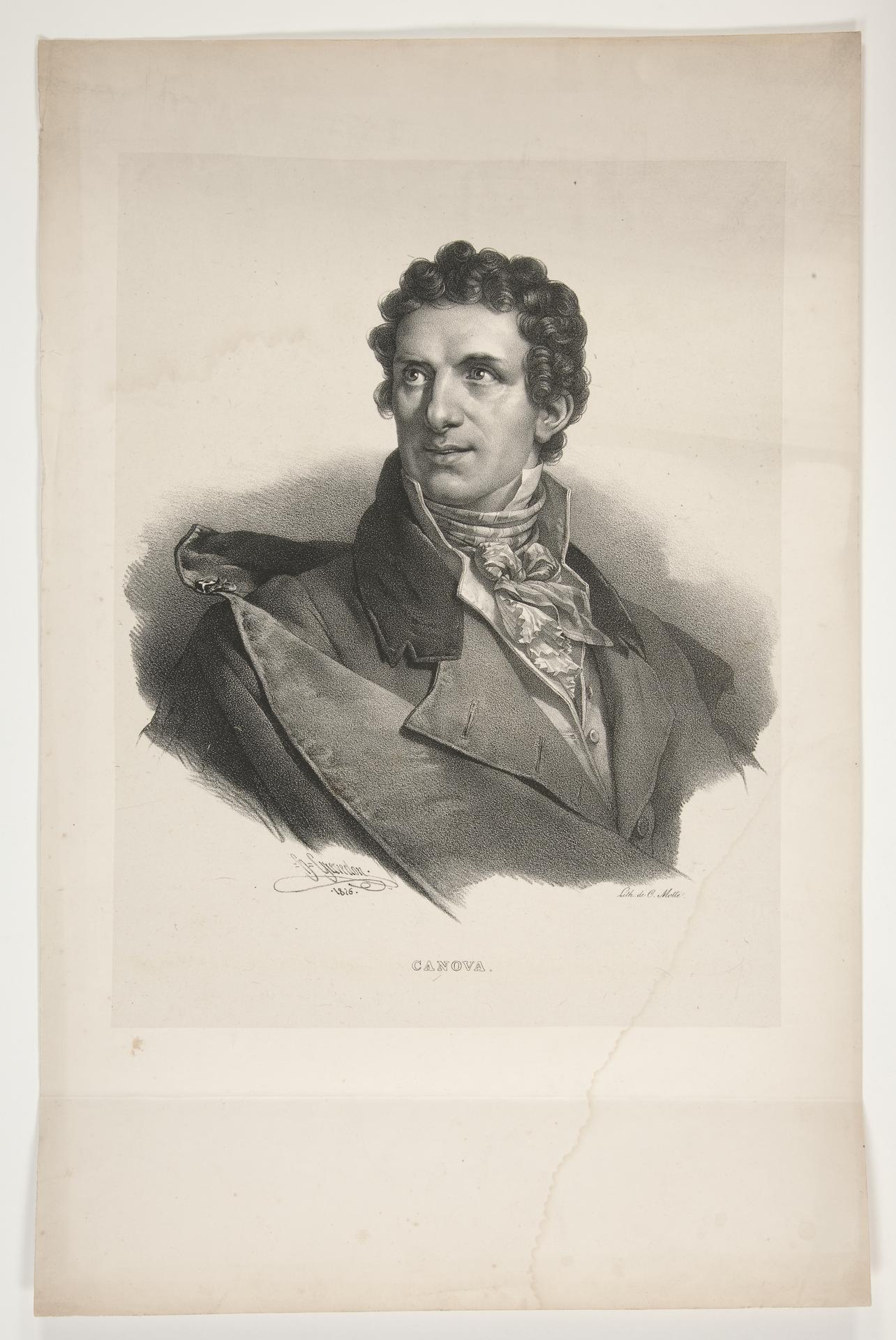
Born in 1757, Antonio Canova was a sculptor from Possagno, Italy. Neoclassicism as an artistic style did not exist yet. Canova, along with German art historian Johann Joachim Winckelmann and French painter Jacques-Louis David would help create it. The dominant artistic movements during Antonio Canova’s youth were Baroque and Rococo.
Italy, as a unified country, did not exist at the time of Canova’s birth, either. It was made up of states, kingdoms, duchies, and foreign-ruled territories. Both Antonio Canova’s grandfather, Pasino, and his father, Pietro, were stonecutters. Apprenticed to Giuseppe “Il Torretti” Bernardi’s workshop as a teen, Antonio labored in Pagnano d’Asolo and Venice. While in Venice, he opened his own workshop. After a period of traveling throughout Italy, visiting modern cities and ancient Roman ruins in Pompeii and Herculaneum, Antonio opened a workshop in Rome.
Over the course of his career, Canova’s patrons would include some of the richest and most powerful men and women in Europe. Napoleon Bonaparte, Josephine de Beauharnais, Pope Clement XIII, Russian Prince Nikolai Yusupov, and Scotsman Colonel John Campbell all commissioned sculptures by Canova. After an illustrious career spanning five decades, Canova died in 1822. He is considered one of the greatest Italian sculptors and a symbol of Italian nationalism.
Inspiration for Canova’s work came from Ancient Greek sculpture and mythology. Let’s see which myths inspired the famous artist!
1. Orpheus and Eurydice
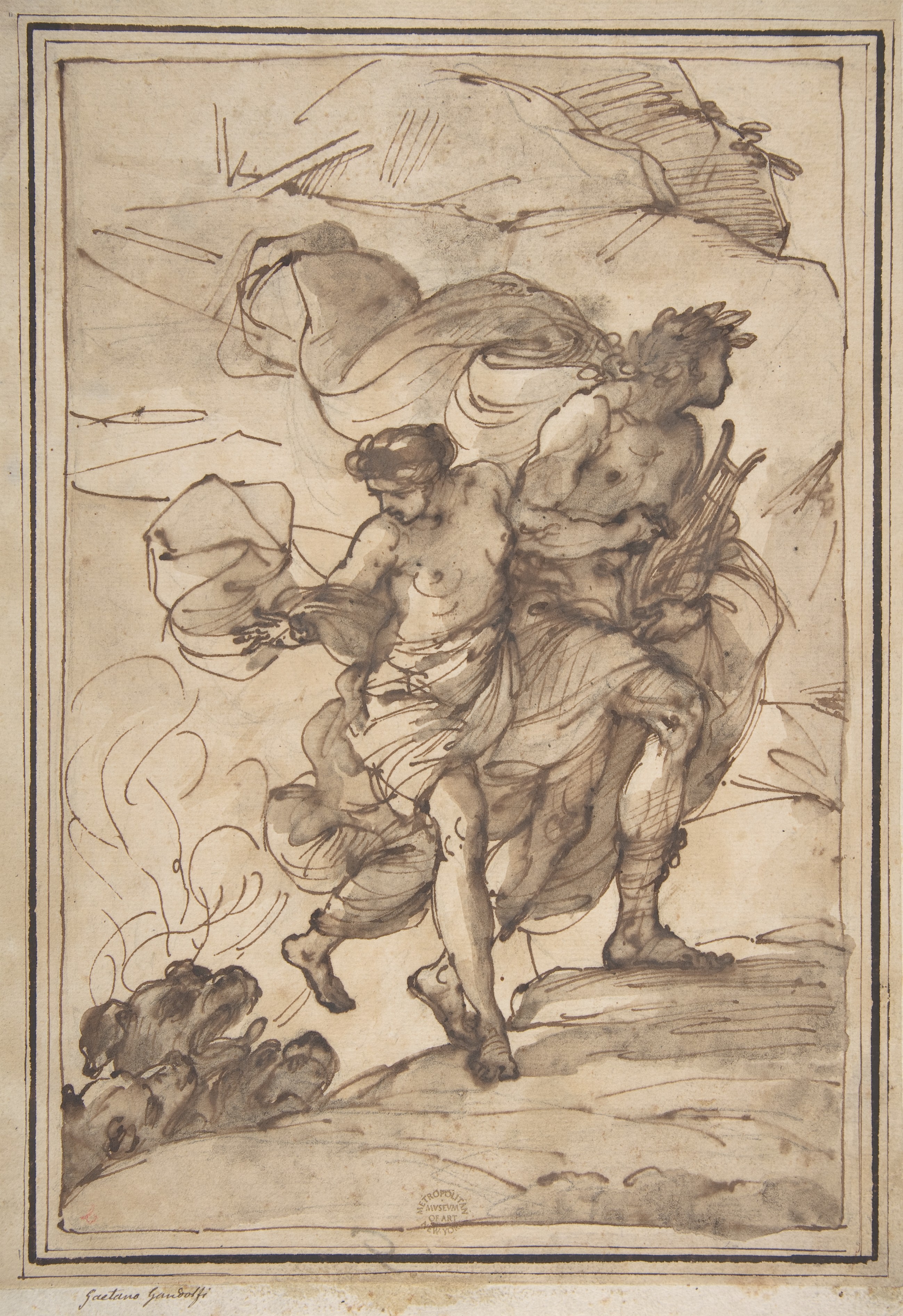
Orpheus was the son of the god Apollo and the goddess Calliope. Light, prophecy, and healing were the domains over which Apollo ruled. Apollo’s lover, Calliope, was the Muse of epic poetry. Their child, Orpheus, inherited his mother’s beautiful voice, charming wild beasts and bloodthirsty sirens with his music.
It’s often said that Orpheus fell in love with the forest nymph Eurydice at first sight. The enamored couple married, but their happiness was short-lived. While walking through tall grass, Eurydice was bitten by a venomous snake. Orpheus, the newlywed husband who had become a widower, was beside himself with grief. He could not accept the hand dealt by fate. Instead, he did something never before attempted: he traveled to the Underworld to bring Eurydice back.
Orpheus traveled through the gate of Taenarus, the entrance to the Underworld, guarded by the three-headed dog Cerberus, crossed the River Styx with ferryman Charon, and stood in the presence of Hades, Lord of the Underworld, and his wife Persephone to make one request: allow Eurydice to return to the upper world.
How did he manage all of this? Through the art of music. Orpheus sang and played his lyre for Cerberus, Charon, Hades, and Persephone. All who heard Orpheus’ music were amenable to his request.
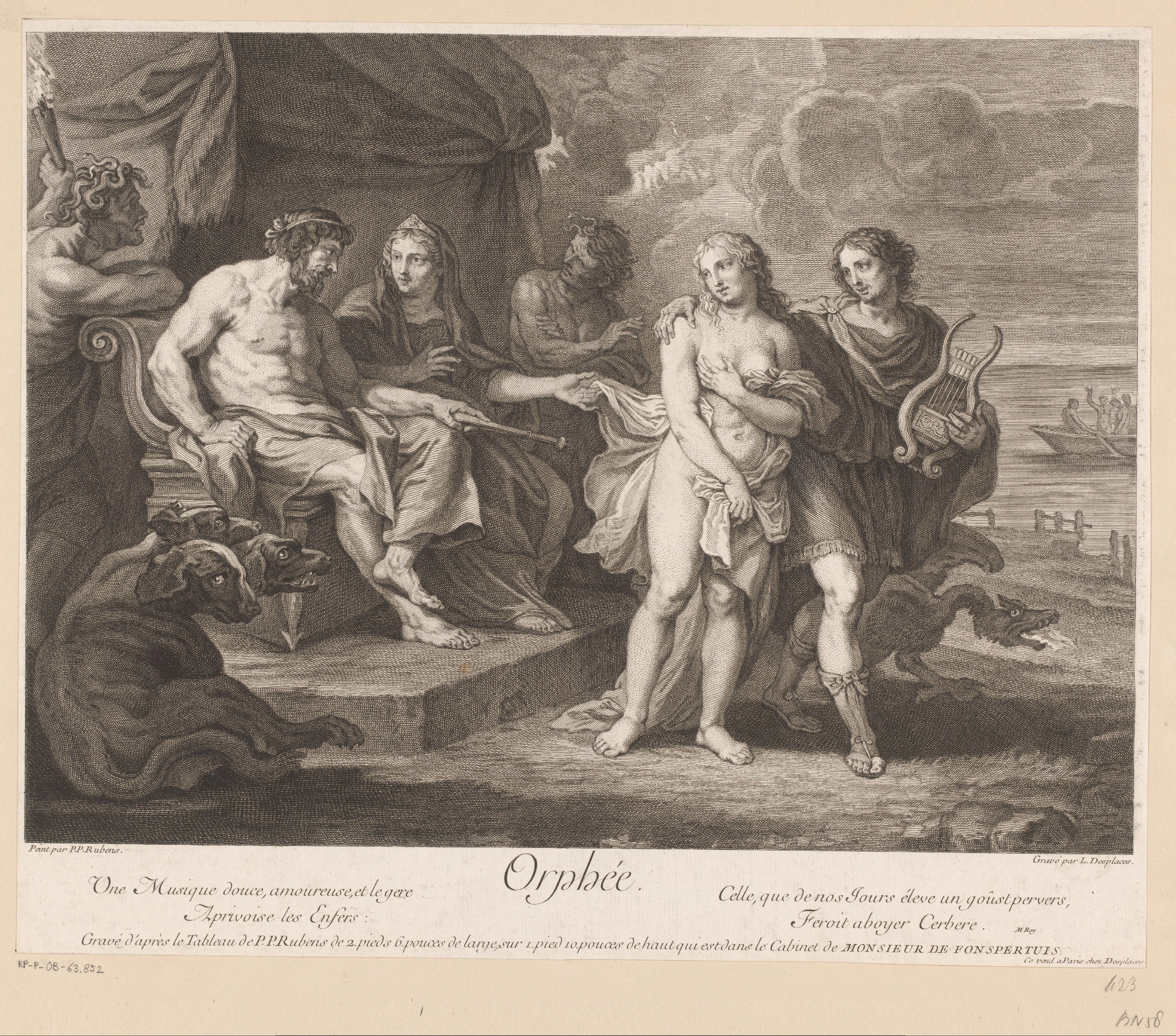
As recounted in Ovid’s Metamorphoses, Hades agreed to Orpheus’ request on one condition: on the way out of the Underworld, Orpheus was to travel in front of Eurydice, “he must not turn his eyes behind him, until he emerged from the vale of Avernus, or the gift would be null and void.” Orpheus agreed. Along the way, Orpheus, “Afraid she was no longer there and eager to see her, the lover turned his eyes. In an instant she dropped back, and he, unhappy man, stretching out his arms to hold her and be held, clutched at nothing but the receding air. Dying a second time, now, there was no complaint to her husband… She spoke a last ‘farewell’ that, now, scarcely reached his ears, and turned again towards that same place.”
In two separate sculptures, Canova captures Orpheus’ anguish as a helpless Eurydice is dragged back to the Underworld. The sculptures were made in 1776 for Senator Giovanni Falier.
2. Theseus and the Centaur
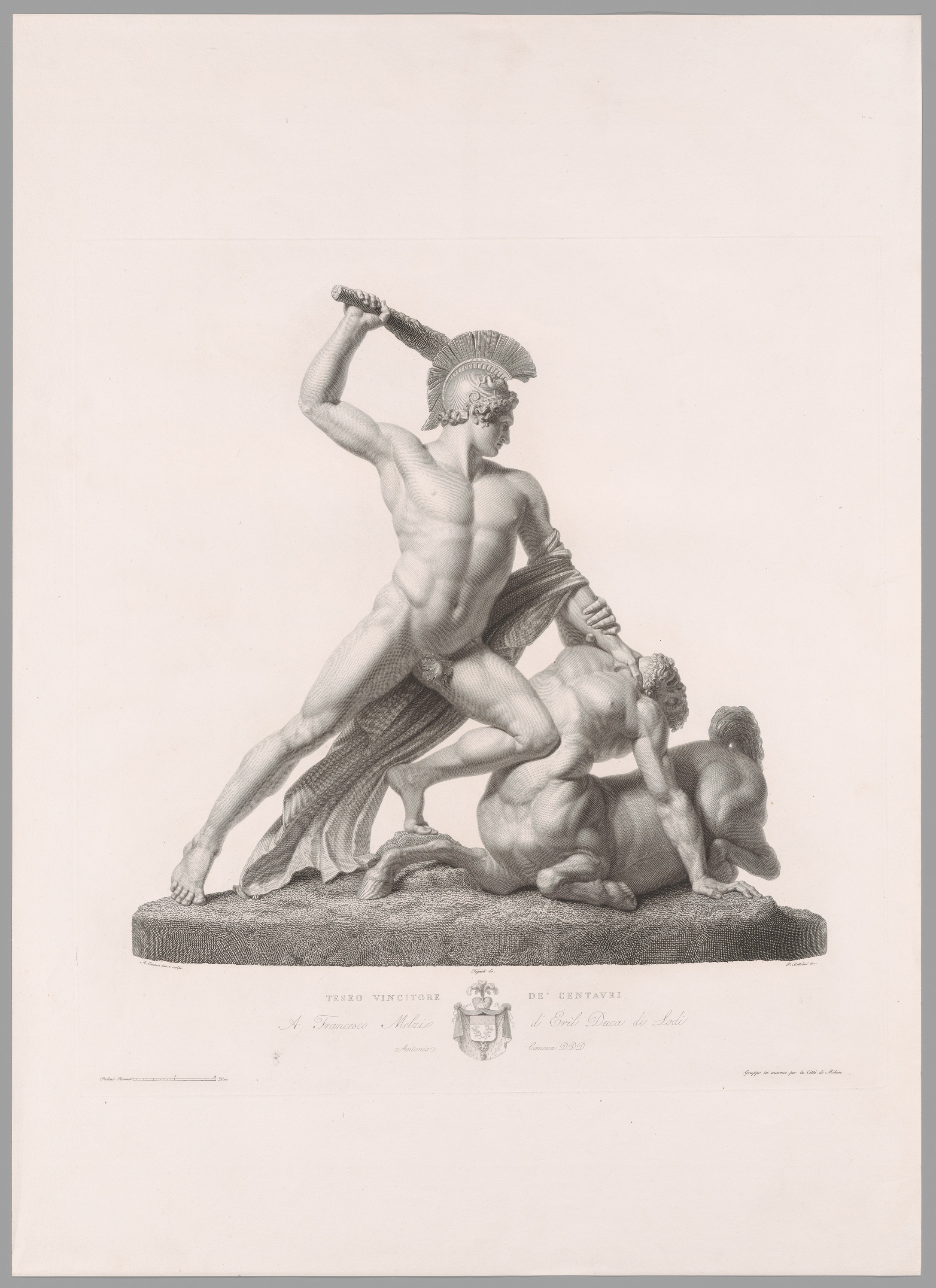
Everyone was invited to the marriage of Pirithous and Hippodame, including the centaurs. After having too much to drink, centaur Eurytus acts on a bad idea. He attempts to carry off the bride for himself. Unsurprisingly, a fight breaks out between the humans and the centaurs. The hero Theseus, who is a friend of the groom, joins the fray. Theseus Defeating the Centaur depicts the hero clasping the centaur by the throat with his left hand. His raised right hand holds the club with which he will thrash the centaur.
The sculpture was completed by Antonio Canova in 1819. It was commissioned by the Napoleonic Italian Republic to honor Napoleon Bonaparte, though due to political upheavals it was not completed until 1819, when it was acquired by Emperor Francis I of Austria.
3. Theseus and the Minotaur
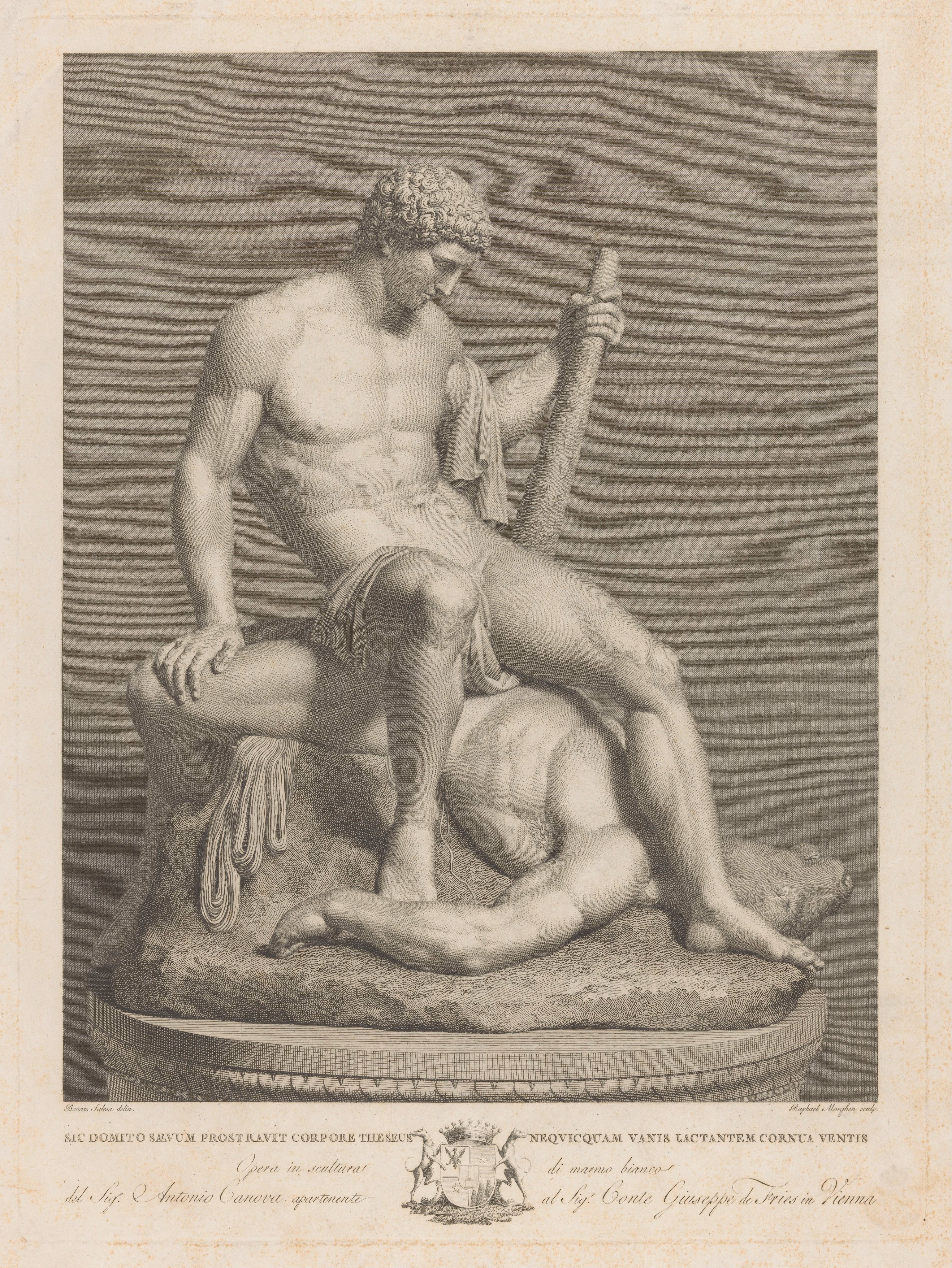
The son of King Minos’ wife and a bull, the Minotaur was a half-human and half-bull monster. King Minos, embarrassed by his wife’s affair, had the master craftsman Daedalus create an inescapable maze to trap the Minotaur in. Every nine years, Athenian men and women were chosen by lot to be eaten by the Minotaur. They died horrifying deaths within the Minotaur’s maze.
The brave Athenian Theseus had a plan. With the help of King Minos’ daughter Ariadne, he would end the Minotaur’s life. Ariadne provided Theseus with a ball of thread and an idea. Unwinding the thread as he traveled through the maze, Theseus would use it to find his way out again. The idea worked. Theseus slew the Minotaur and escaped with his life.
The tale of Theseus and the Minotaur is told in Ovid’s Metamorphoses, Book VIII.
Antonio Canova’s sculpture depicts a calm and triumphant Theseus sitting astride the body of the slain monster. The sculpture was completed in 1783 for Venetian Ambassador Girolamo Zulian.
4. Daedalus and Icarus
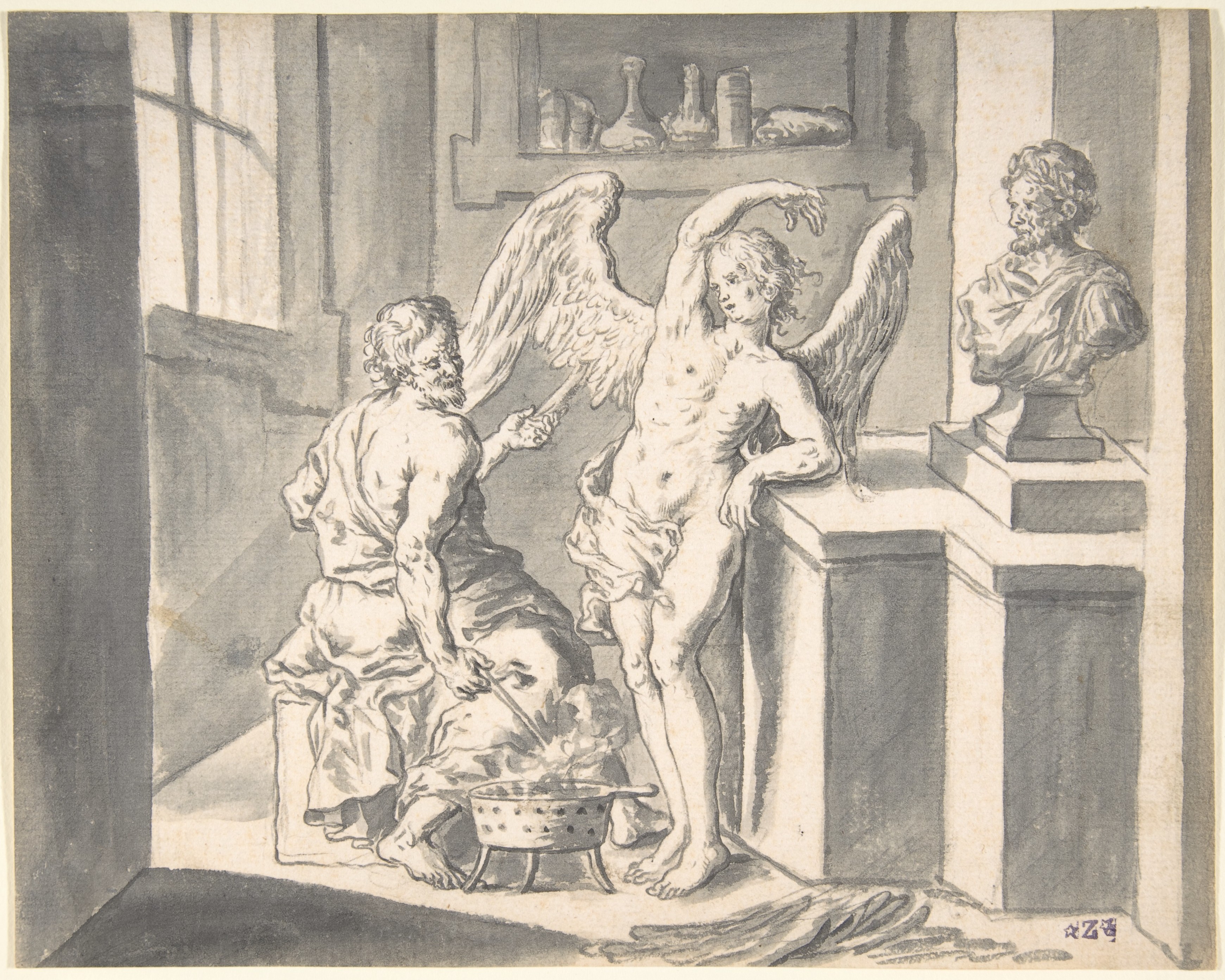
The Ancient Greek myth of Daedalus and Icarus is preserved in written form for posterity in Book VIII of Ovid’s Metamorphoses, and it is preserved in stone by Antonio Canova. According to Ovid, Daedalus was a master architect and craftsman. King Minos of Crete ordered Daedalus to create an inescapable maze to trap the monstrous Minotaur within. After completing the task, King Minos exiled Daedalus and his son Icarus on the island of Crete.
The homesick Daedalus was determined to escape. So, he created a pair of wings, one for him and one for his son. Modeled after those of birds, they were made with feathers and beeswax. According to Ovid’s Metamorphoses, Daedalus instructed his son, “Let me warn you, Icarus, to take the middle way, in case the moisture weighs down your wings, if you fly too low, or if you go too high, the sun scorches them. Travel between extremes.”
Daedalus flew ahead of his son, continuing to issue instructions along the way. “… when the boy began to delight in his daring flight, and abandoning his guide, drawn by desire for the heavens, soared higher.” Just as his father forewarned, the wax melted. According to the text, “…[Daedalus] caught sight of the feathers on the waves, and cursed his inventions.”
The sculpture of Daedalus and Icarus was completed by Antonio Canova in 1779. It was commissioned by Venetian Procurator Pietro Vettor Pisani.
5. Paris
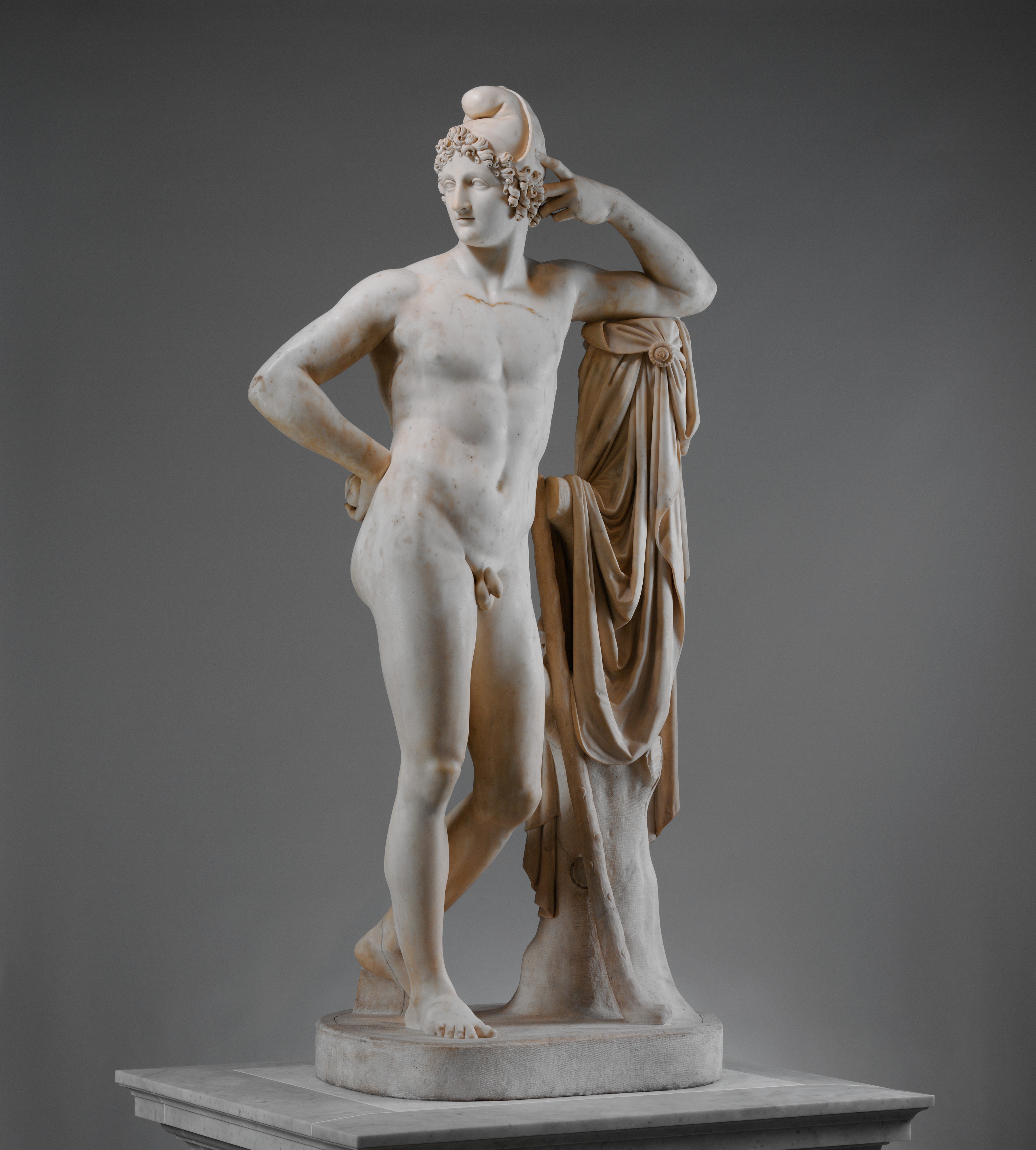
The Judgment of Paris is recounted in Ovid’s Heroides. Paris, the son of Trojan Prince Priam, is informed by Hermes, messenger of the gods, that Zeus has a demand of him. Paris must judge a beauty contest between the goddesses Hera, Athena, and Aphrodite. Each goddess attempts to win Paris’ favor through bribery. Hera offered Paris kingdoms. Athena offered him valor, power, and bravery. Aphrodite promises Helen of Troy, the most beautiful woman in the world, to Paris. But that Helen happens to be married to another man, King Menelaus of Sparta, which doesn’t concern Aphrodite at all. Ultimately, Paris chooses Aphrodite, goddess of love, as the most beautiful.
In Canova’s sculpture, Paris holds an apple in his right hand. This is the goddess Eris’ Apple of Discord. Feeling slighted because she did not receive an invitation to the wedding of Peleus and Thetis, Eris tossed an apple inscribed with the words “To the fairest” into the crowd. Hera, Athena, and Venus fought over the apple. To settle the dispute, Zeus called upon Paris to judge who was the most beautiful goddess. Canova’s sculpture was completed for Josephine de Beauharnais in 1812.
6. Venus Victrix
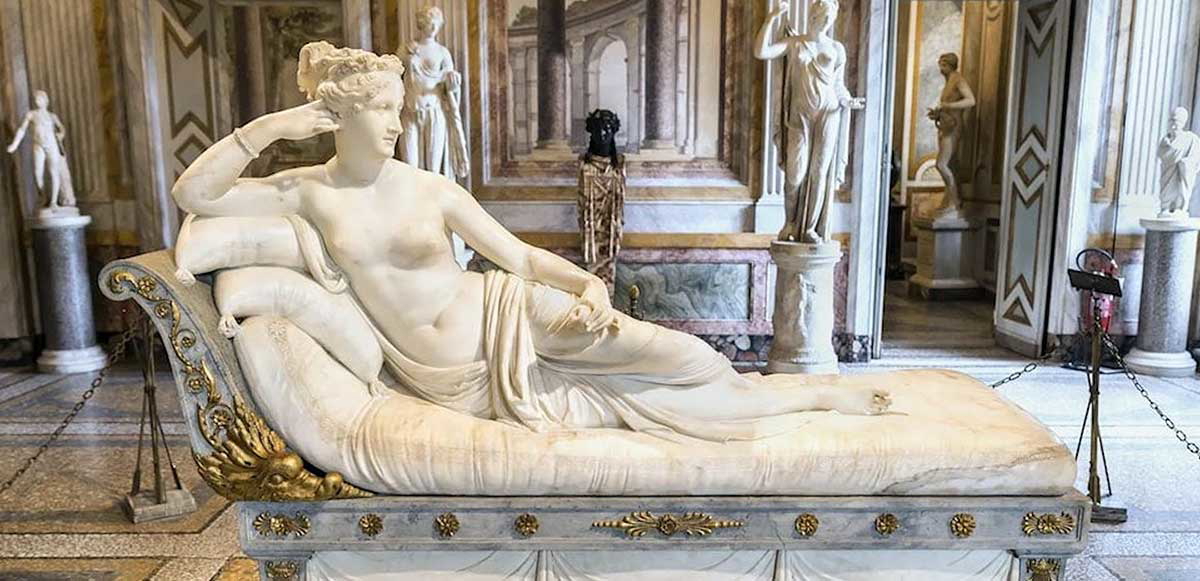
Venus Victrix, or “Venus Victorious,” is an epithet of the goddess of love. In Antonio Canova’s sculpture, a reclining nude-from-the-waist-up Venus holds an apple. The apple alludes to the Greek myths of the Apple of Discord and the Judgment of Paris. Napoleon Bonaparte’s sister, Pauline Bonaparte, posed as Venus. Venus Victrix was completed in 1808 for Camillo Borghese, Pauline Bonaparte’s husband.
7. Apollo Crowning Himself
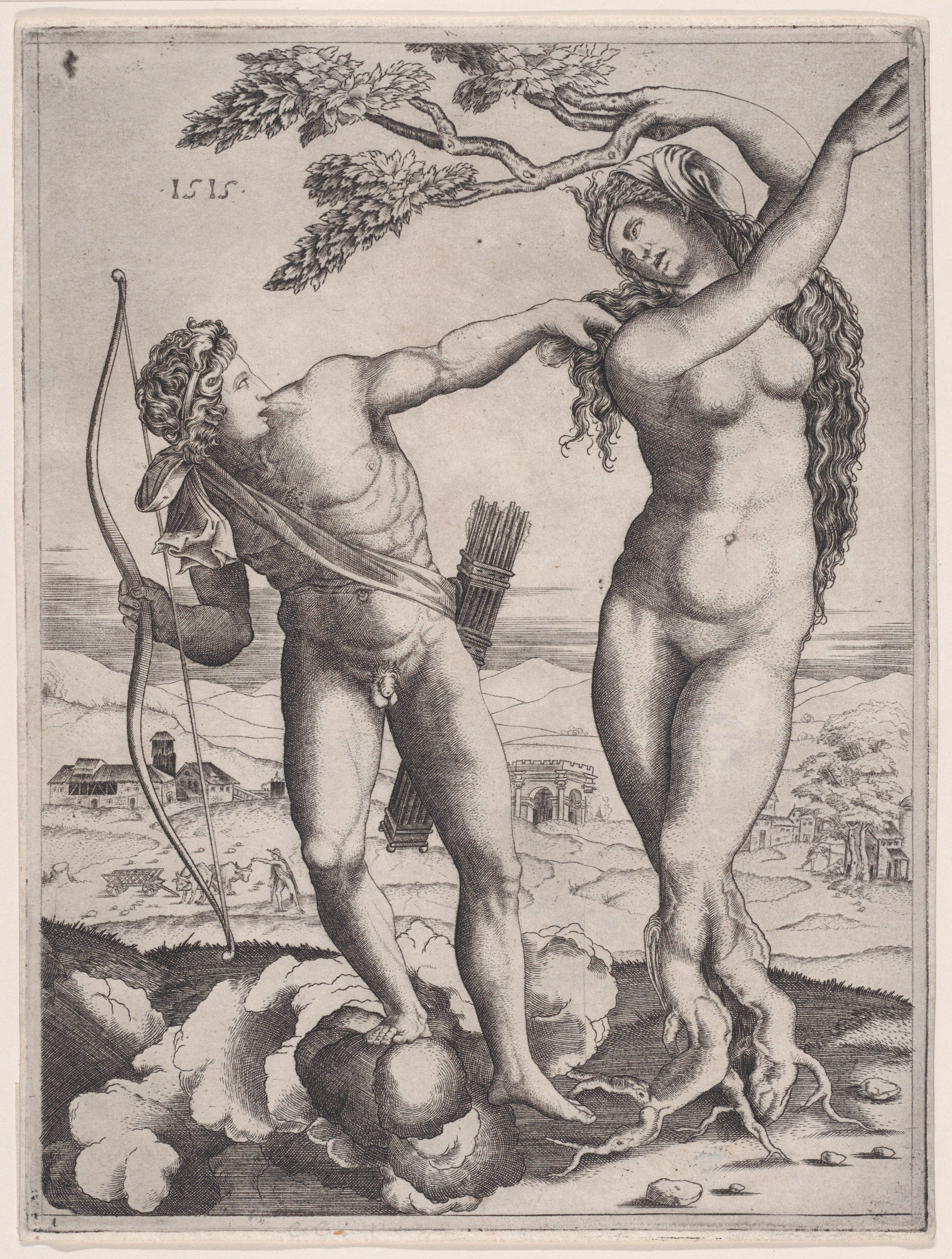
Antonio Canova’s sculpture Apollo Crowning Himself could allude to a myth found in Book I of Ovid’s Metamorphoses. Phoebus Apollo insults Cupid. Cupid retaliates by striking him with a gold-pointed arrow. Apollo will fall in love with the first person he sees. Cupid shoots Daphne with a lead-pointed arrow, which causes her to be repulsed by the idea of love. The first person Apollo sees after being struck is Daphne.
Apollo pursues Daphne. Daphne runs away. Just before Apollo catches her, Daphne cries out for help. Her prayer was answered. The beautiful young woman is transformed into a laurel tree. Apollo declares in the Metamorphoses, “Since you cannot be my bride, you must be my tree! Laurel, with you my hair will be wreathed, with you my lyre, with you my quiver.”
Canova’s sculpture depicts Apollo crowning himself with a laurel garland. The sculpture was commissioned by Prince Don Abbondio Rezzonico. It was completed between the years 1781 and 1782.
8. Adonis and Venus
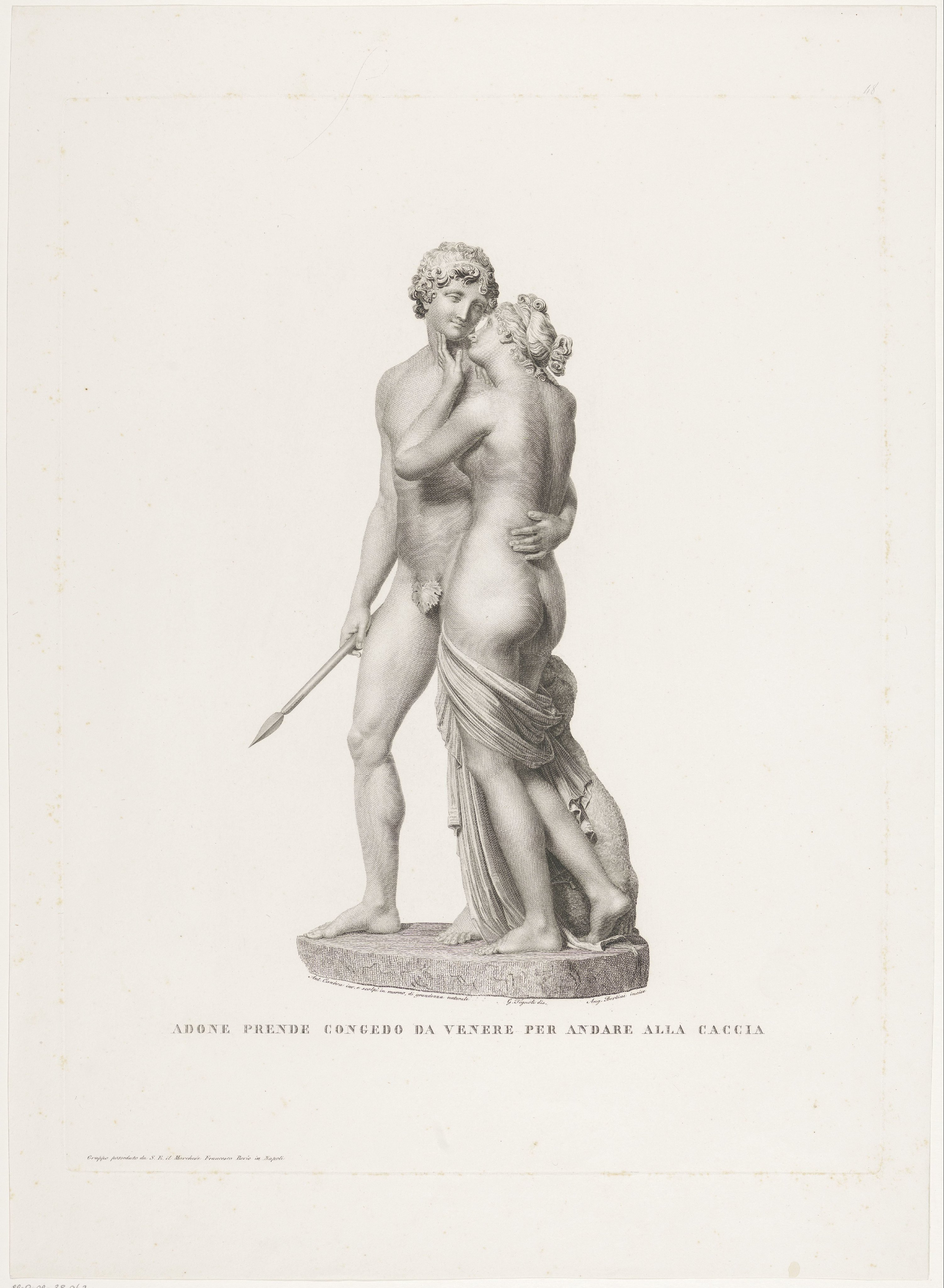
One of Orpheus’ songs tells the love story of Venus and Adonis. Ovid wrote in the Metamorphoses that Venus was with her son and, “… while the boy, Cupid, with quiver on shoulder, was kissing his mother, he innocently scratched her breasts with a loose arrow.” When someone is struck by Cupid’s arrow, s/he falls in love with the next person s/he sees. Venus saw the most beautiful man in the world, Adonis.
Canova’s sculpture depicts Venus and Adonis in love. It was completed in 1794 for Marquis Francesco Berio.
9. Hercules and Lichas
In Book IX of Ovid’s Metamorphoses, we learn the tale of Hercules and Lichas. Hercules, with his new bride Deianira, seeks to cross the River Euenus. He enlists the help of Nessus, having the fierce centaur carry Deianira on his back. Nessus betrays Hercules by attempting to kidnap Deianira. In retaliation, Hercules shoots the centaur with an arrow dipped in the poison of the Lernean Hydra. The dying centaur’s final thoughts were set on revenge. Removing his blood-soaked tunic, he gives it to Deianira. He lies to Deianira, telling her that the tunic is a love charm with the power to revive affections.
Years pass. Deianira hears a rumor that Hercules has fallen in love with another woman, Iole. Deianira weighs her options. She could cut the woman’s throat. Or she could give Hercules Nessus’ tunic, charming him into falling in love with her. She chose the latter option, commanding her servant Lichas to deliver the tunic to Hercules, but Deianira does not realize that the tunic has been poisoned by the Hydra’s venom.
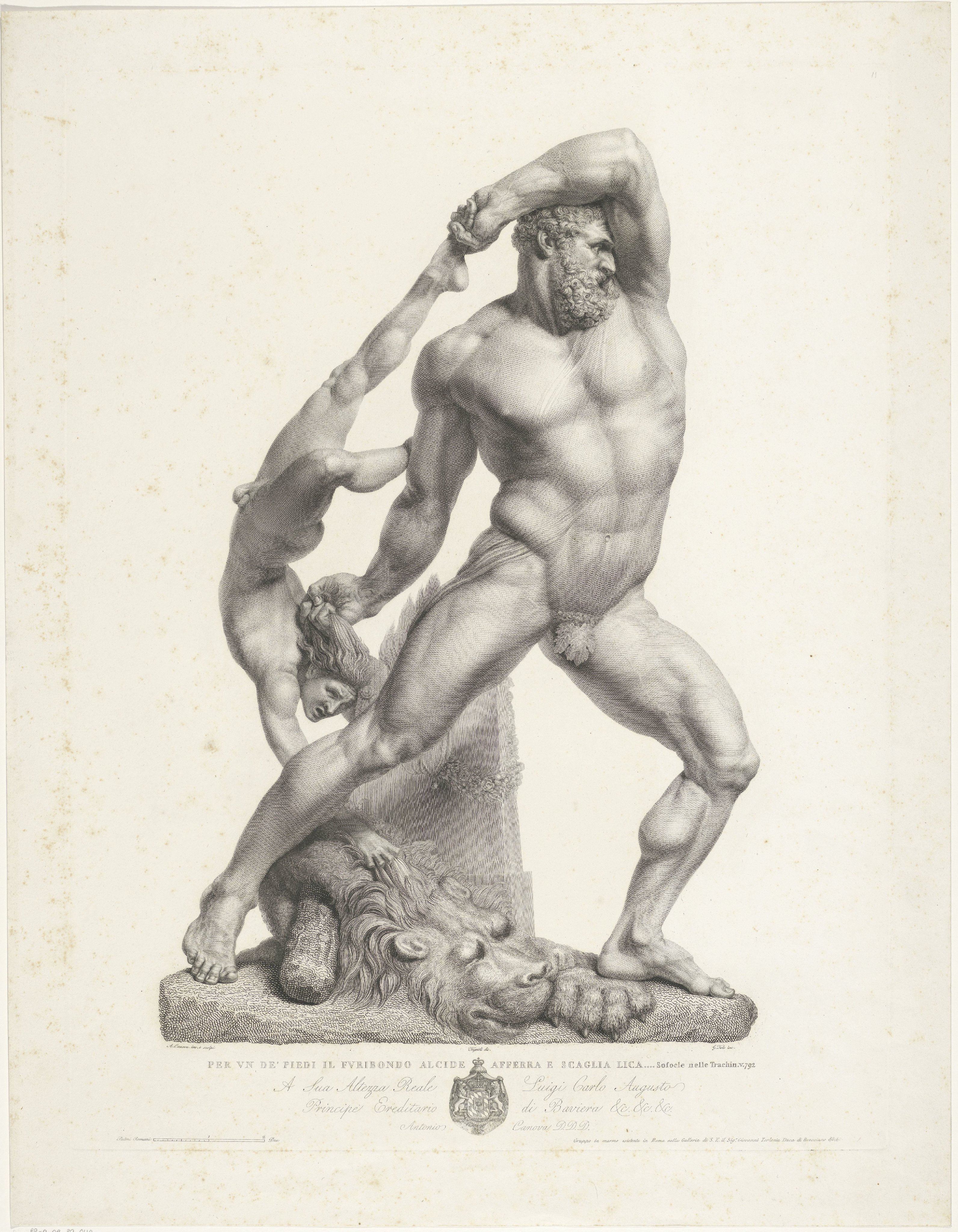
Immediately after putting on the tunic, Hercules’ flesh begins to burn. He cannot remove the tunic without removing pieces of his own skin. Driven mad by the pain, Hercules blames Lichas for his suffering. The demigod takes hold of the mortal “… and, swinging him round three or four times, hurled him, more violently than a catapult bolt, into the Euboean waters,” Ovid shares in the Metamorphoses.
Antonio Canova’s sculpture depicts the muscular Hercules as he swings the helpless Lichas through the air. It was commissioned by Aragon Prince Onorato Gaetani and completed in 1815.
10. Psyche Revived by Cupid’s Kiss
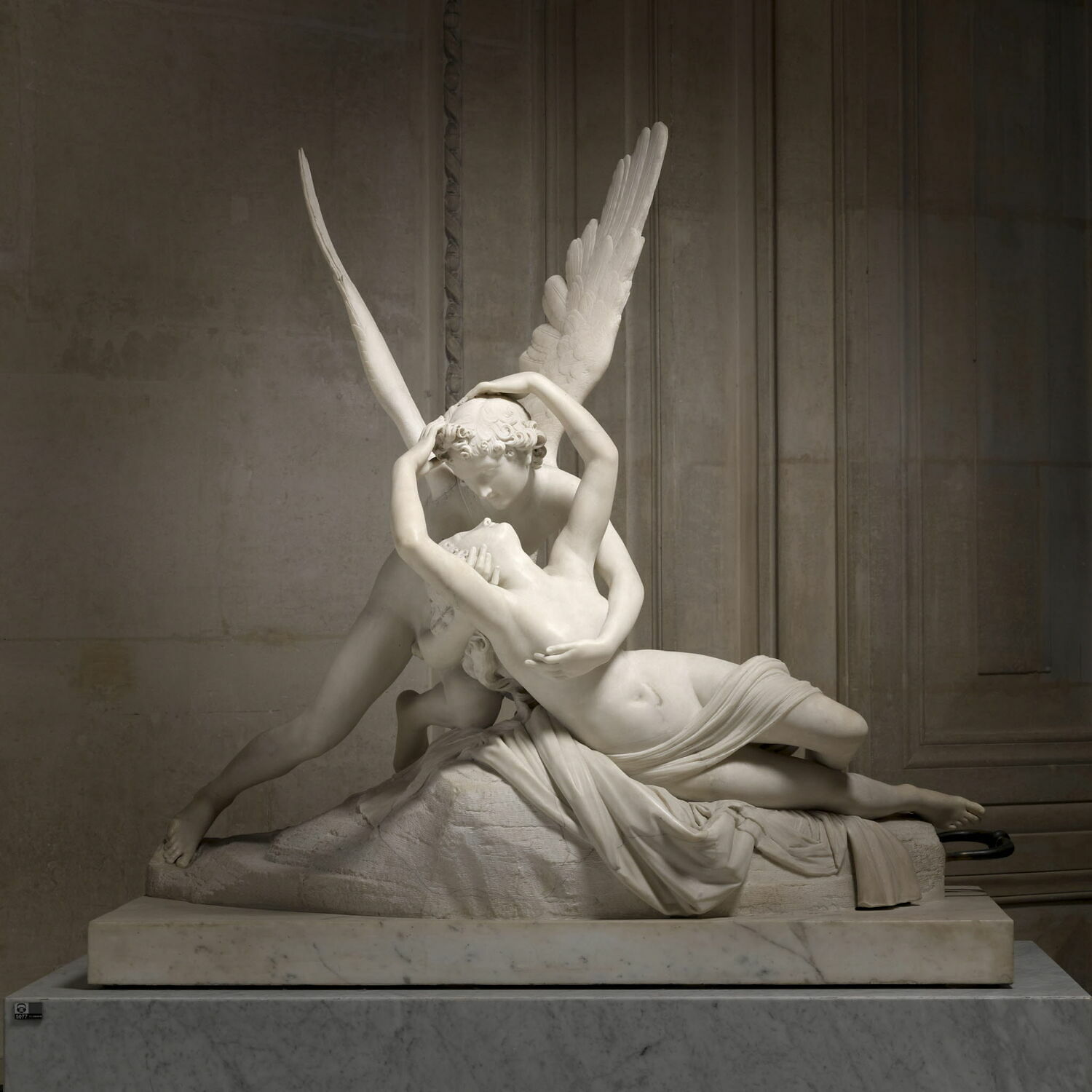
Psyche Revived By Cupid’s Kiss is Antonio Canova’s embellishment on the myths of Cupid and Psyche found in Lucius Apuleius’ The Golden Ass.
Cupid fell in love with Psyche, a mortal woman whose beauty rivaled that of the goddess of love, Venus. Knowing that his mother would not approve of the relationship, Cupid is determined to keep it hidden. In secret, he becomes Psyche’s husband. He also has a peculiar rule for his wife. Psyche must never see her husband’s face. She agrees to the rule, but over time, influenced by her wicked sisters, Psyche breaks it.
Her actions tear the couple apart. Venus is determined to punish Psyche. She places a bounty on Psyche for her capture. Psyche, desperate to reunite with her husband, willingly travels to her mother-in-law’s home despite her fears. Venus cruelly beats the pregnant woman. Then she challenges Psyche to complete four impossible tasks. Thankfully, natural and supernatural creatures take pity on Psyche and help her complete them.
During the course of completing the fourth task, Psyche’s curiosity gets the better of her. The task is to retrieve a day’s worth of beauty from Proserpine, goddess of the Underworld, for Venus to use. Psyche leaves the Underworld with the jar. Believing Venus won’t notice if a drop is missing, Psyche unseals the jar. Rather than beauty, the jar contains Stygian sleep. Psyche “…collapsed where she stood… and deep slumber overcame her. She lay there motionless, like a corpse but fast asleep,” wrote Apuleius in The Golden Ass. Cupid came to her rescue. He revived Psyche “…wiped away the sleep with care and returned it to the jar where it belonged.” According to Apuleius, “Then he roused her with a harmless touch of his arrow.” In Canova’s version of the story, Cupid revives Psyche with a kiss.
The sculpture was commissioned by Colonel John Campbell and completed by Canova in 1793.
11. Perseus With the Head of Medusa
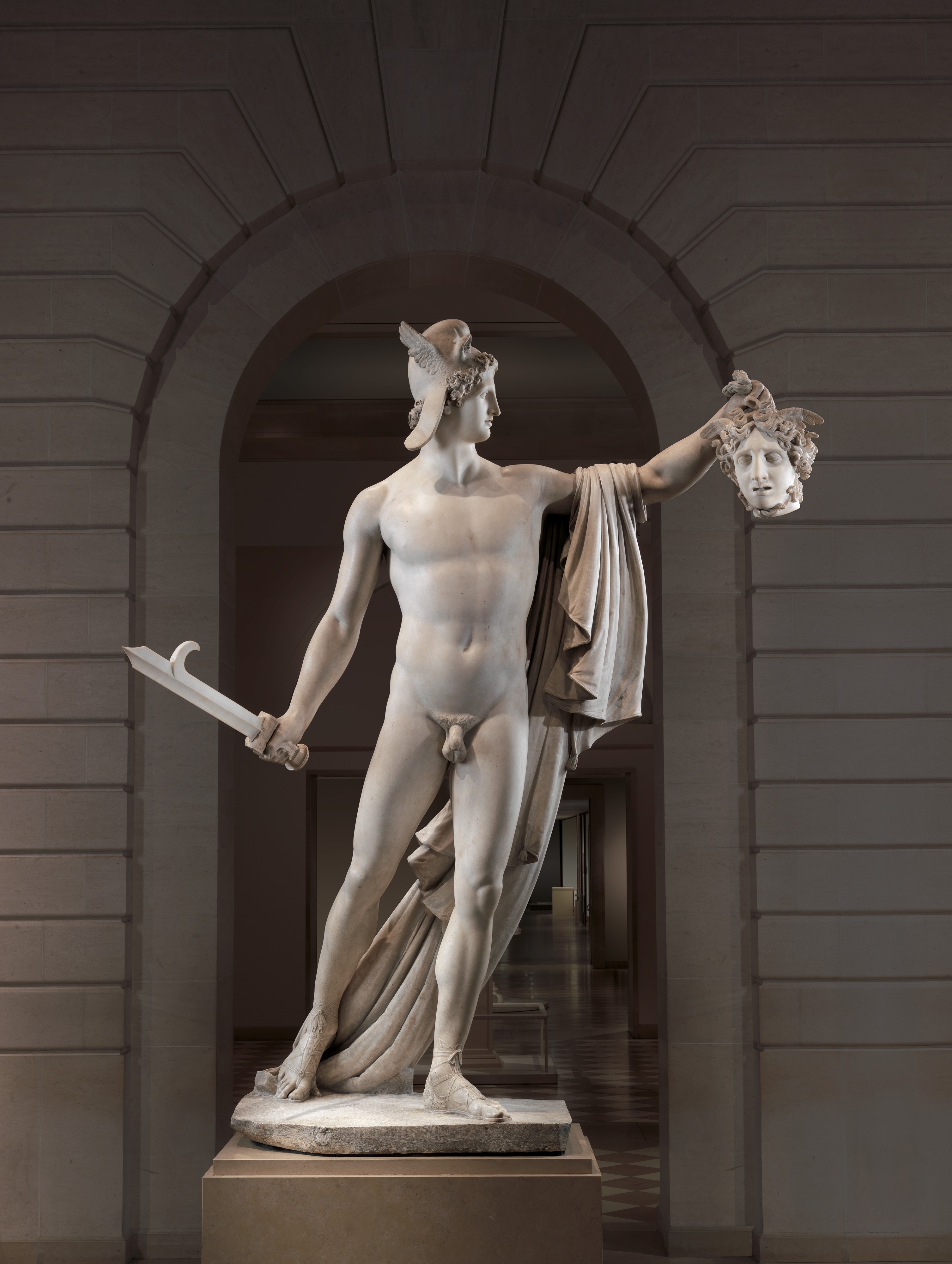
According to Ovid, Medusa was once a beautiful and sought-after woman. Drawn to her beauty, the god Poseidon raped her in the temple of Athena, violating the sacred space as well. Medusa’s sad tale takes another sad turn when Athena punishes Medusa by transforming her into an ugly woman with hair full of snakes. Now, a glance from Medusa will turn any living creature into stone.
The hero Perseus traveled far to kill Medusa. On the journey, he finds the stone bodies of those who crossed the Gorgon’s path. To avoid the same fate, Perseus, “…looked at the dread form of Medusa reflected in a circular shield of polished bronze that he carried on his left arm. And while a deep sleep held the snakes and herself, he struck her head from her neck.” This gory scene is described in Book IV of the Metamorphoses.
The sculpture was commissioned by Onorato Duveyriez, a French prosecutor. However, it was purchased by Pope Pius VII. Perseus with the Head of Medusa was completed between the years 1800 and 1801.
12. Sleeping Endymion
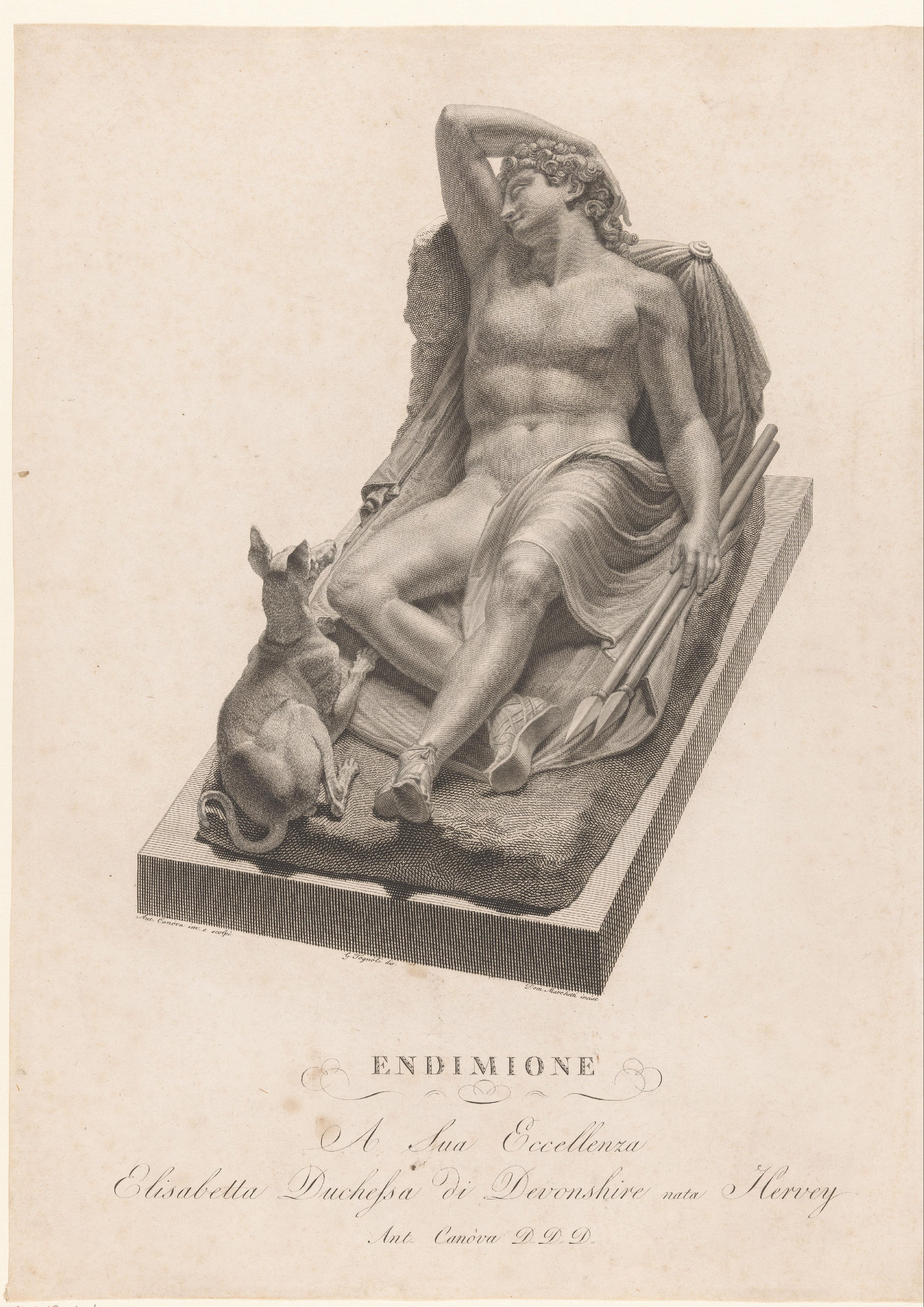
In Apollodorus’ Bibliotecha, Endymion is described: “As he was of surpassing beauty, the Moon fell in love with him, and Zeus allowed him to choose what he would, and he chose to sleep for ever, remaining deathless and ageless.” In Canova’s sculpture, a beautiful and serene young man lies asleep. Resting at his feet is an attentive dog. The sculpture was commissioned by William Cavendish, the 6th Duke of Devonshire, and completed in 1822.