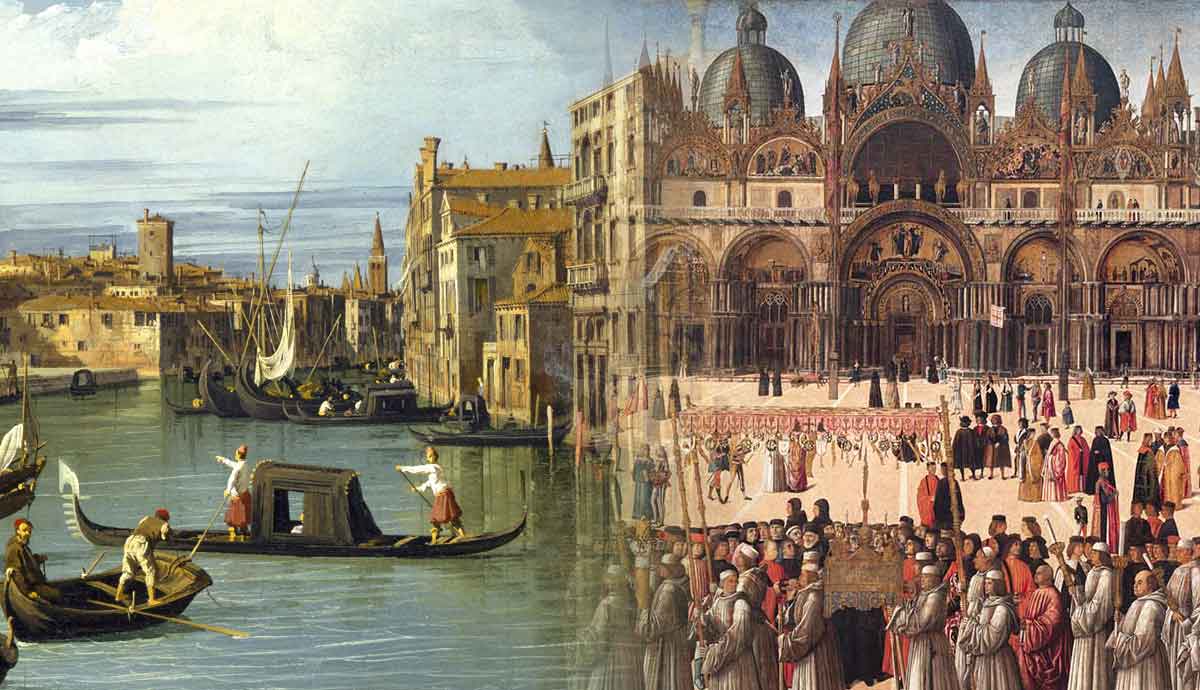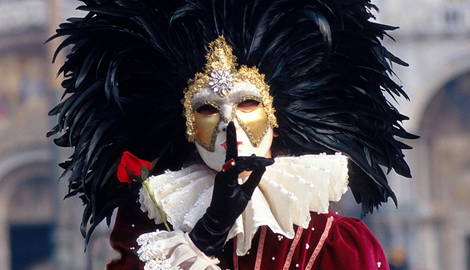
Since the 12th century, the Carnival of Venice has remained one of Europe’s most renowned festivals. Once a year, all class hierarchies were suspended in the Venetian Republic. To release all tensions and temptations in the weeks before Lent, attendees were encouraged to embrace their vices like gambling, partying, and having affairs. Street spectacles of human pyramids, contortionists, and fireworks heightened the festival’s decadence. Though Carnival was banned after Napoleon’s defeat of the Venetian Republic in 1797, it has since returned and continues mystifying millions of visitors each year.
Origins & History of the Carnevale di Venezia
The Carnevale di Venezia (Carnival of Venice) can be dated back to 1094. In an official document, Doge Vitale Falier allowed Venetians to host public celebrations and feasts from December 25 until mid-February. The festival ended on Ash Wednesday, when the Christian season of Lent began a 40-day period of fasting, restriction, and reflection before Easter. The word carnival is believed to have originated from these celebrations popular throughout Italy, derived from the Latin phrase carne vale, meaning farewell to meat.
Over time, the festival became less of a Catholic ritual and more of a celebration of the Venetian Republic’s military supremacy, maritime domination, unique artistry, and culture.
The boisterous iteration of Carnival emerged in 1162 after the Republic’s defeat of the Patriarchate of Aquileia. Attempting to encroach on Venetian territory, Patriarch Ulrich II was defeated by Doge Vitale Michiel II’s forces and taken hostage by Venice along with 700 soldiers and twelve landlords. After a petition from the Pope, the Doge released Ulrich II and his men in exchange for an annual tribute of one bull, twelve pigs, and 300 loaves of bread.
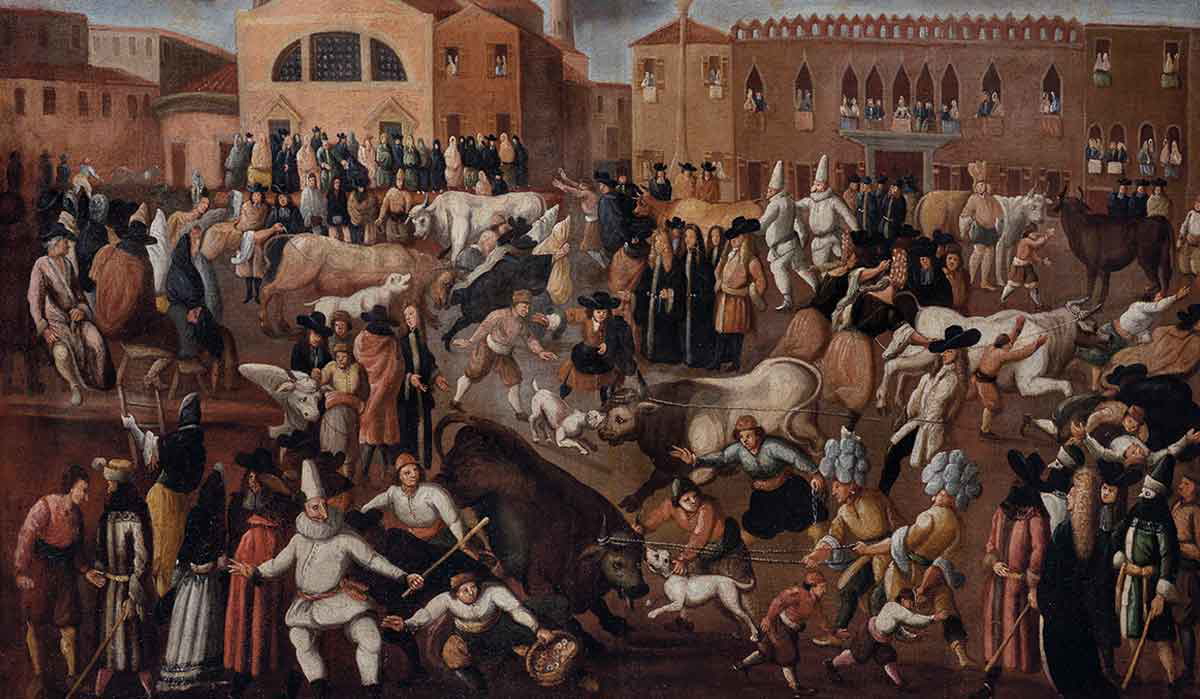
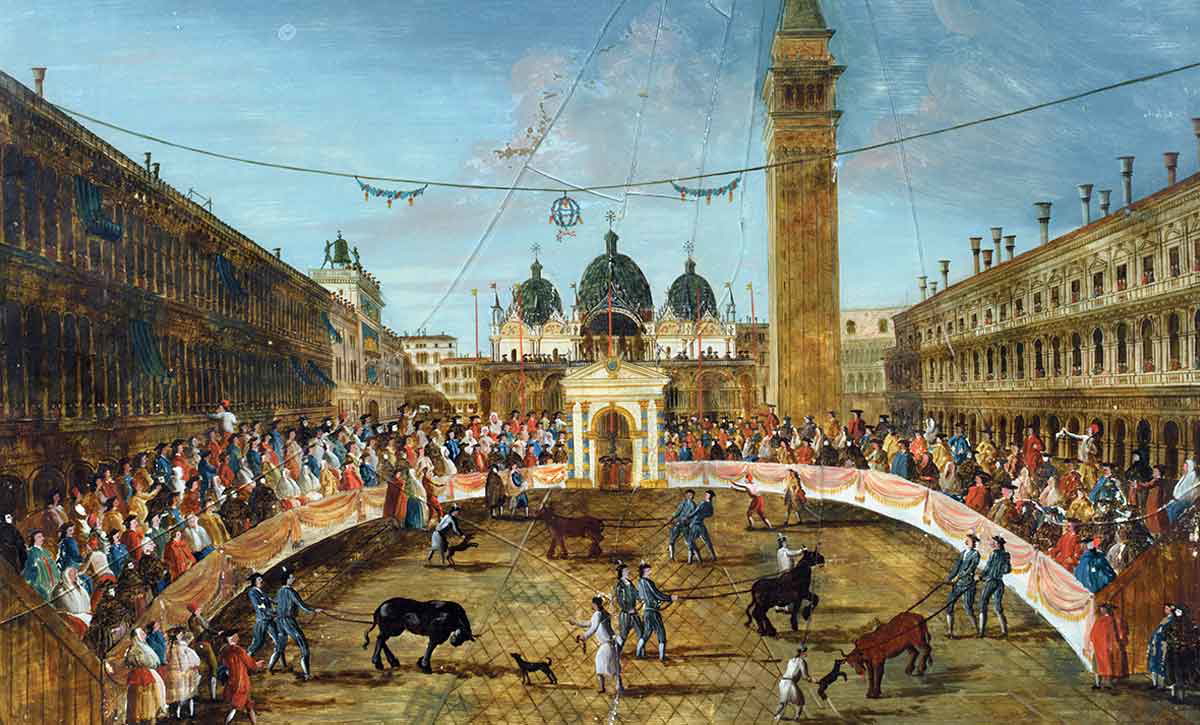
The last Thursday before the start of Lent, Giovedi Grasso (Fat Thursday), became the official feast day commemorating this military victory. The animals sent from Aquileia were paraded throughout the streets in bull hunts, then herded into the city’s central squares. Venetian nobles beheaded the animals to reenact Venice’s military triumph before cooking the meat and throwing a spectacular feast full of music, dancing, drinking, and street shows.
Recognizing the public zeal and rowdiness of these military commemorations mixed with the indulgence of pre-Lenten celebrations, in 1296, the Venetian Senate declared Carnival an official public holiday.
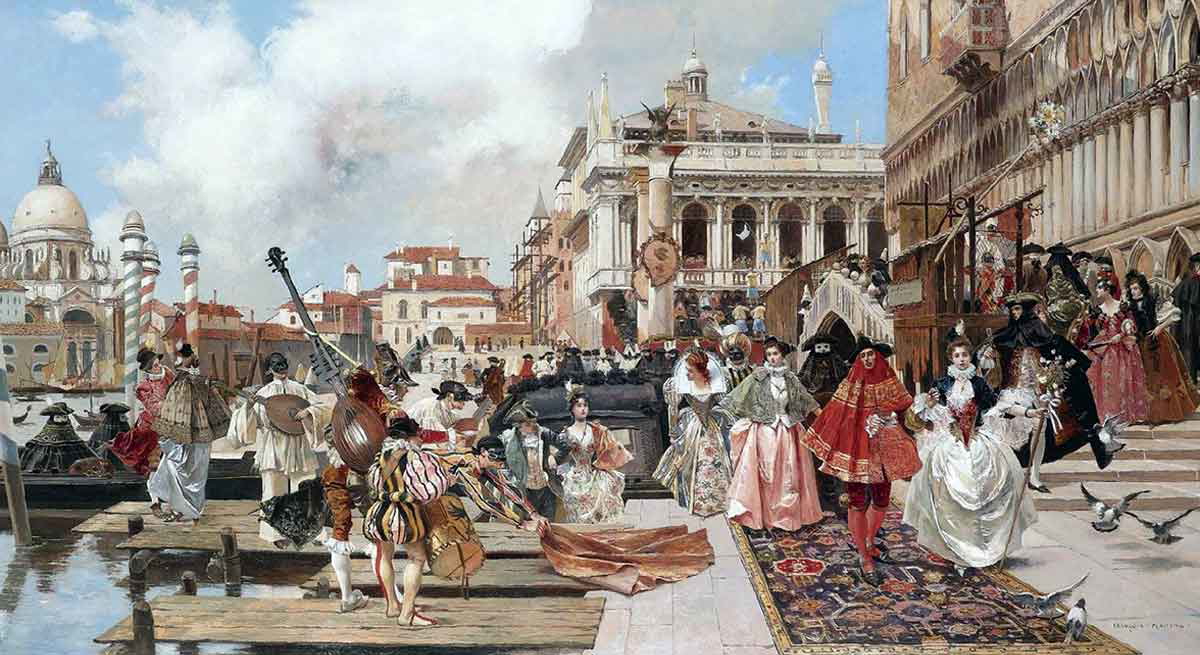
Only during Carnival were the exclusive and rigid class hierarchies of the Venetian Republic suspended, encouraging all Venetians to release any pent-up tension, restlessness, and concerns. Everyone was free to speak their minds, dress, party, and interact with people from different faiths or ranks that they were usually not permitted to engage with. This enabled Carnival events to evolve into the masked, grand, and scandalous nature they became famous for by the 18th century.
By then, the Carnival of Venice had become a spectacular event for international tourism, attracting thousands of Europe’s elites each year to partake in masquerades, feasts, and debauchery.
The Tradition and Use of Masks During Carnival
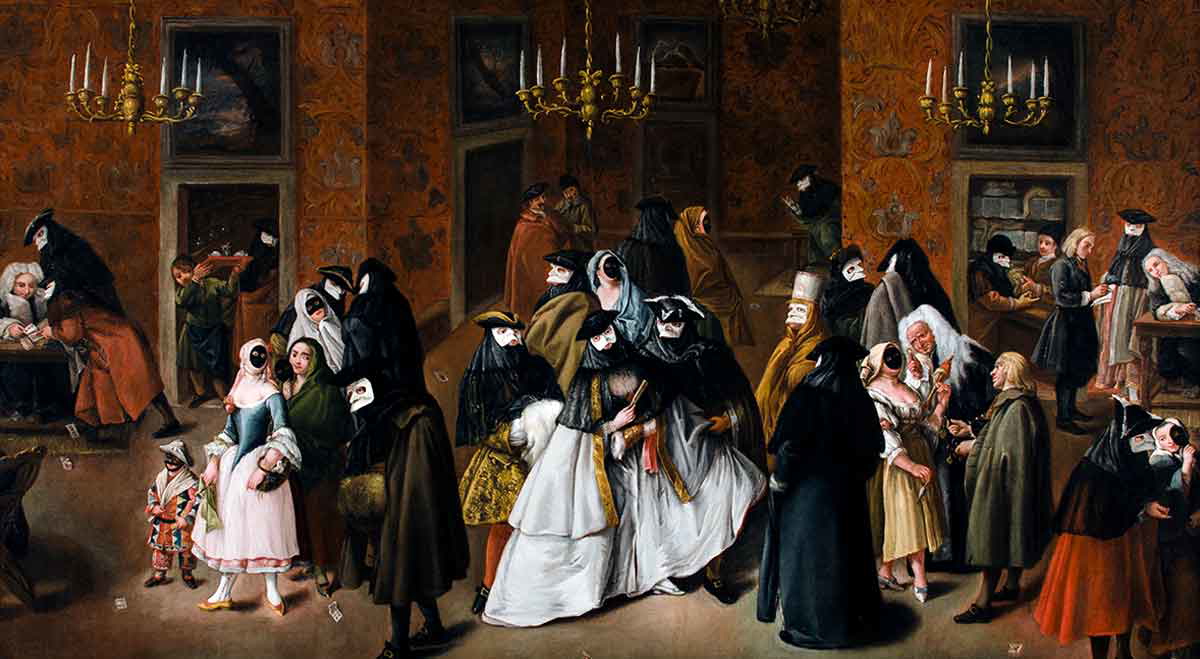
From the 13th century onwards, masks became the quintessential costume and symbol of Venetian Carnival. Masks were popular accessories to help participants avoid arrest or accountability for their festival antics. Most preferred to hide their identities before feasting, gambling, dancing, and seducing people from all backgrounds.
Masks thus added an element of mystery to the already rambunctious nature of the festival, heightening curiosities about the taboo and unknown. They were in such high demand that by 1436, mascherari (mask-makers) became their own artisan profession with a guild.
Mask makers crafted their pieces from leather, porcelain, glass, or papier-mâché. While some remained plain, others were decorated with gold leaf, jewels, feathers, and handmade lace.
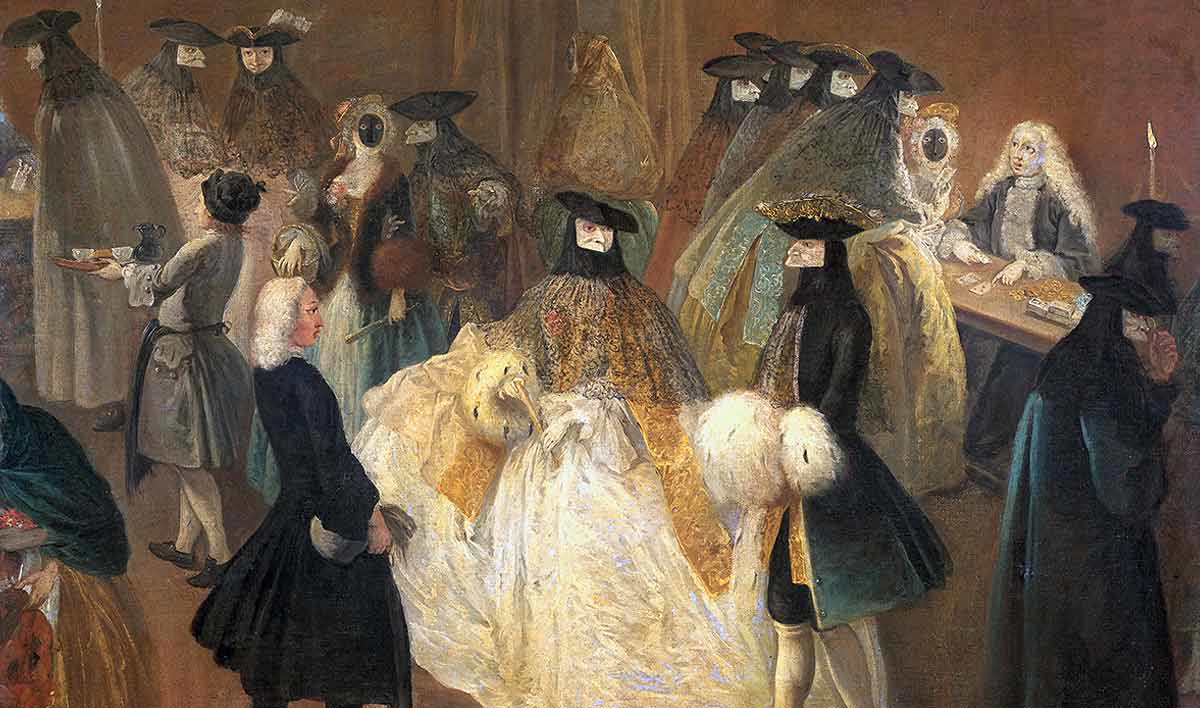
The bauta was the most traditional and popular mask during carnival. Made from porcelain, the mask covered the wearer’s entire face with an enlarged nose and jutting chin. Often paired with a tricorn hat and black coat, this costume was used by all social classes because it fully hid their identities to safely criticize the government, gamble, or attend secret parties.
Similarly, the larva mask covered the entire face with black or white porcelain, resembling a skeleton or ghost. This mask was worn with all black clothing to spook others or hide in the background when participating in morally ambiguous activities.
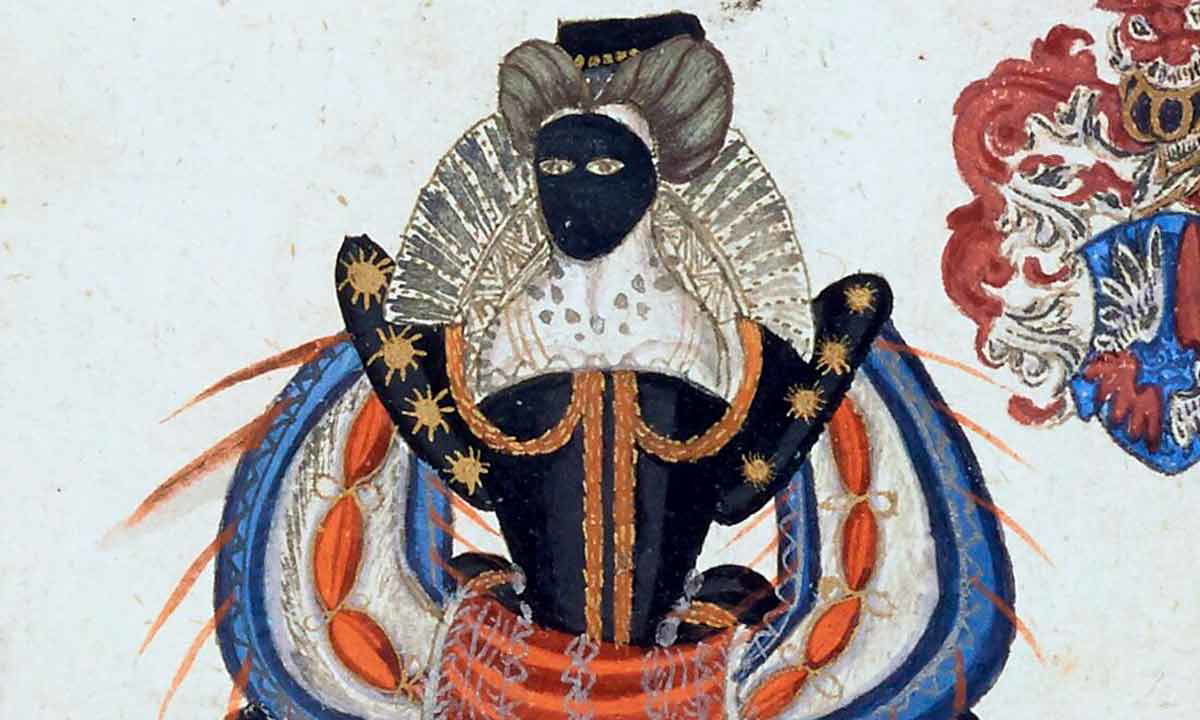
The most popular mask for women was the moretta. Originally used in France to protect a woman’s face while travelling, the mask was often used by noblewomen. A black velvet circle concealed the wearer’s face except for their eyes, secured by biting into a button sewn on the inside. The stark nature of the mask was meant to cause intrigue and allure, as only the eyes could be used to communicate while wearing it.
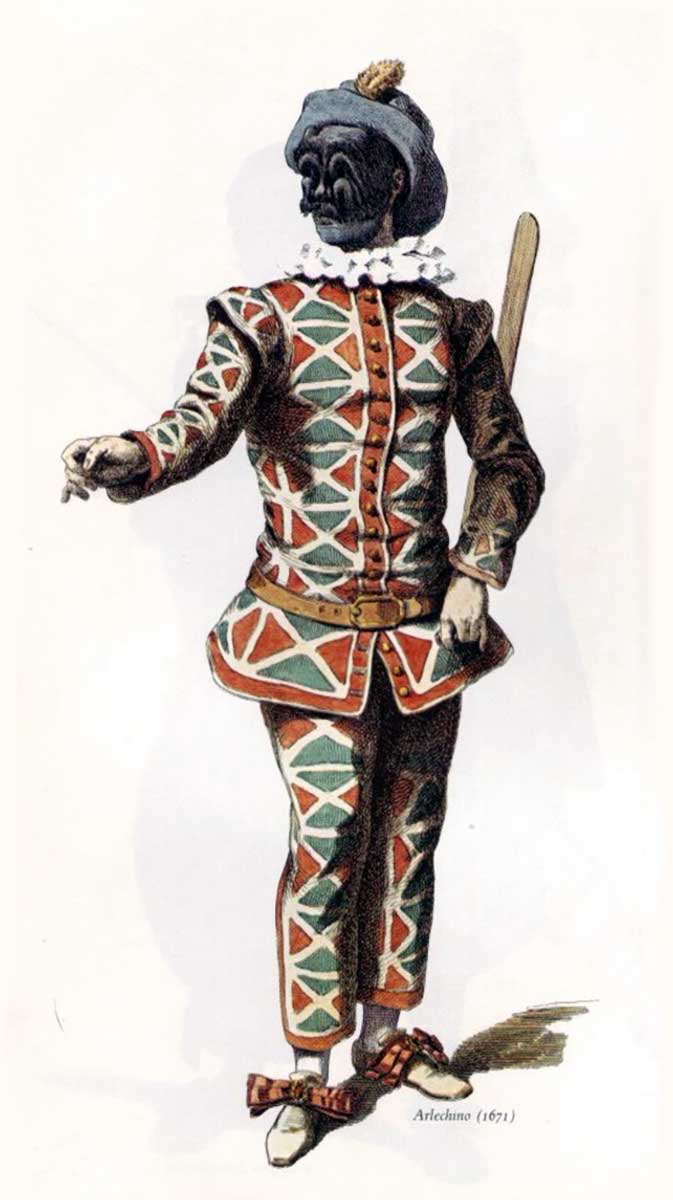
Theater masks became popular in the 16th century with the spread of Commedia dell’Arte. Masked actors in traveling companies performed witty and scandalous shows related to adultery, class scandals, and master-servant affairs.
Carnival participants often wore theater masks of their favorite comedy characters. For example, some women wore the colombina, an elegant half-length mask with brightly colored cheeks covered in feathers and jewels. The arlecchino (harlequin) mask was also popular. Made from leather or wood, this half mask had bulging eyebrows with massive eye sockets to reflect the trickster, silly, or idiotic nature of the court jester, perfect for Carnival attendees up to no good. Likewise, the zanni mask was commonly worn, covering the wearer’s forehead and extending into a long beak-like nose made from leather.
Carnival Events, Celebrations, and Rituals
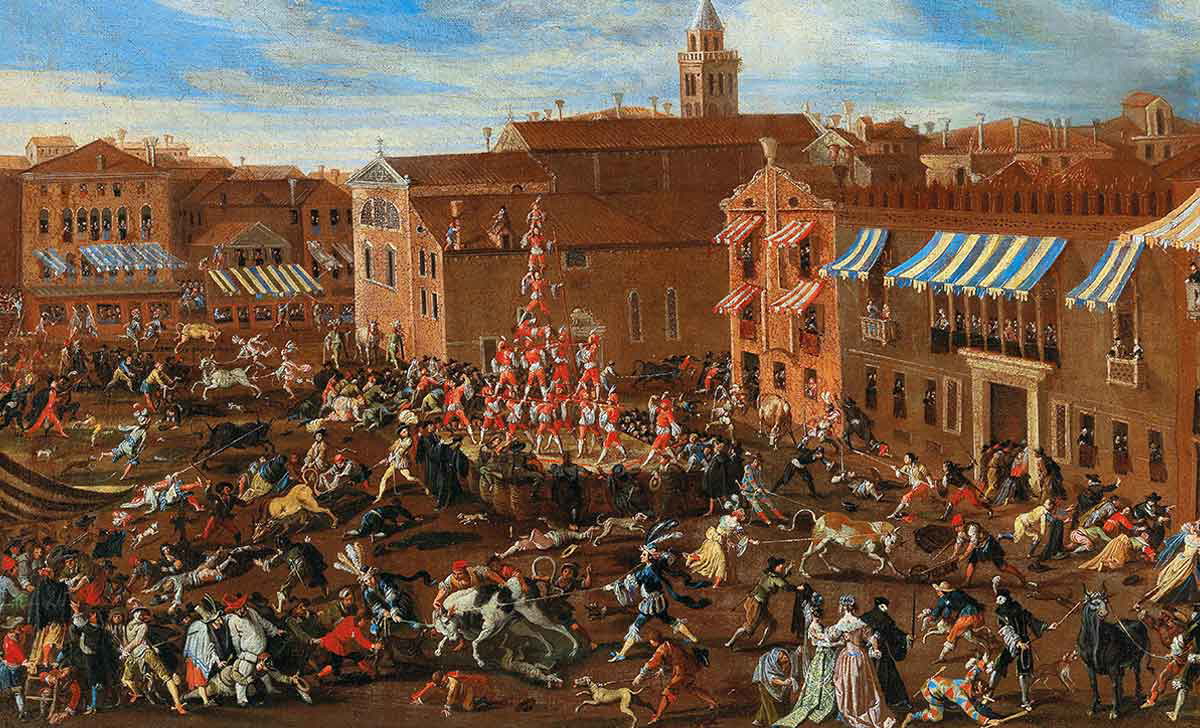
The festival ran from late December until early spring with the start of Ash Wednesday. This date changes every year based on the Christian calendar.
Public spaces were full of fire shows, regattas, fortune tellers, masked gondola rides, parades, circus acts, contortionists, and exotic animals on display. Acrobats climbed on top of one another to form human pyramids. Performers tied to a rope were slowly lowered down bell towers and dressed as angels returning to earth to give blessings. Artworks were displayed across the city in the piazzas, theaters, palaces, churches, and convents.
Annual events included a bull hunt ritual on Fat Thursday, where the animal tributes from Aquileia were chased through the streets and beheaded in the squares. Additionally, each year, twelve maidens from the poorest families were selected to participate in La Festa delle Marie. These young women were dressed like royalty and escorted to the San Marco Basilica to receive a special blessing from the Doge.
It was also common for some to commit pranks, mild crimes, and petty theft during the chaos of events. For example, in the 13th century, men would fill eggshells with rose water and throw them at women they wished to court. However, some would fill eggs with ink or foul liquids to pelt those they did not like or owed money to.
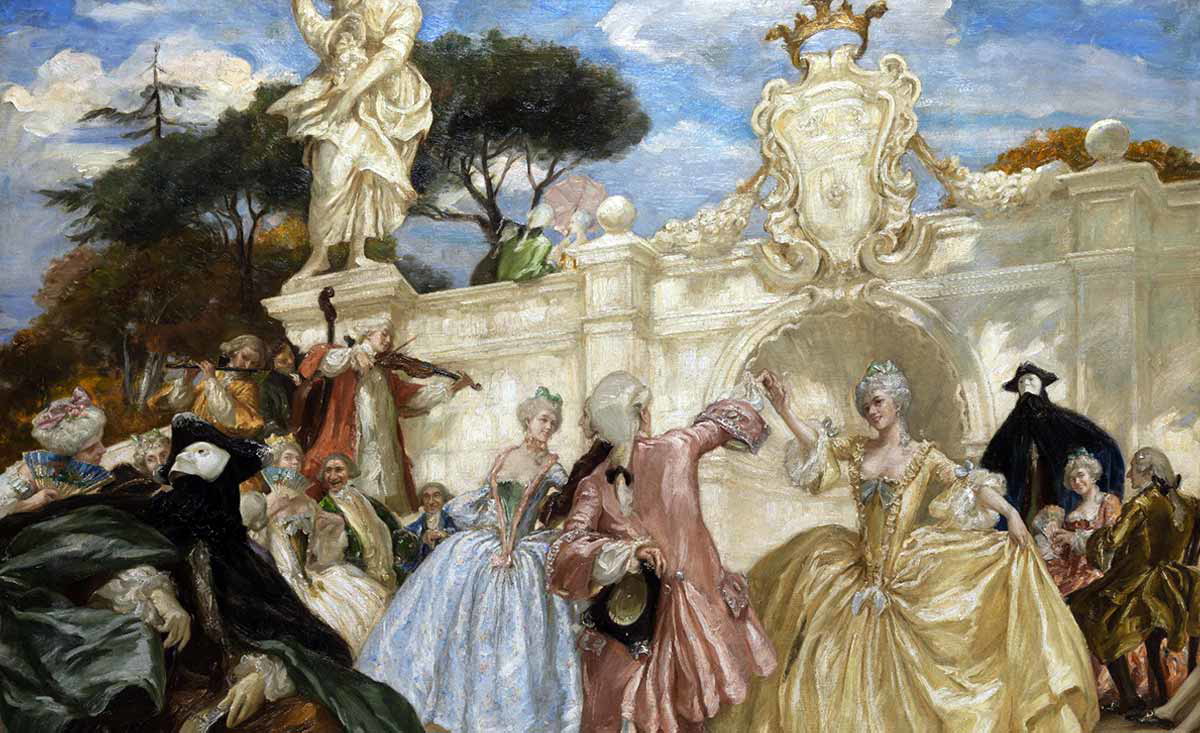
Capitalizing on Venice’s fame as one of the most diverse art, fashion, and music capitals, Carnival became the playground for European elites over the centuries. Alongside Venetian aristocrats, wealthy patrons from all over funded and hosted events, dances, and performances that pushed conventional norms with new art, fashion, and musical scores. Behind closed doors, they also hosted private gambling tournaments, operas, banquets, casinos, and masquerade balls.
By the 18th century, the Venetian Carnival had become more like a Las Vegas for wealthier tourists, merchants, nobles, aristocrats, and royals across the early-modern world. Concerts, costumes, and street performances became more commercialized, overseen by business managers and event coordinators.
Famous Scandals and Attendees of Carnival
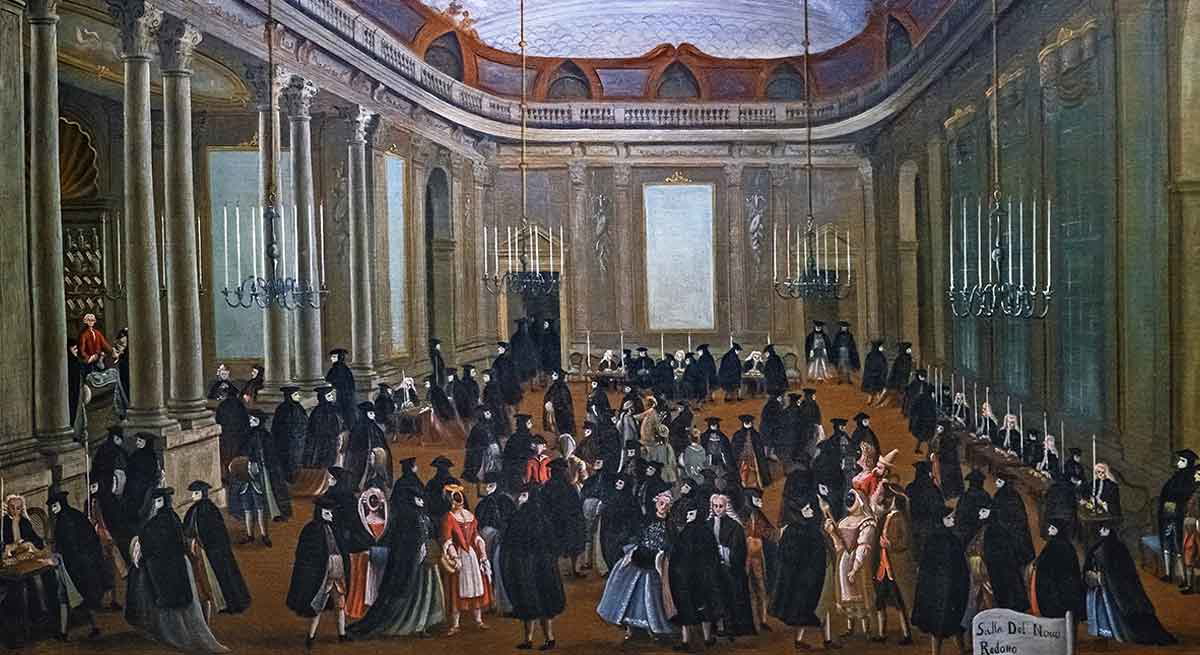
The unfiltered access to vices free from public scrutiny granted by the privacy of masks created centuries of legends and scandals. Tales of sordid love affairs, duels, and ghostly encounters further captivated attendees. Accounts included stories of masked men wearing dresses to sneak into convents and seduce nuns, servants having affairs with married noblewomen, and gamblers murdering debt collectors in the misty canals.
One of the most infamous Carnival attendees shrouded in scandal was Giacomo Casanova (1725-1798). Born in Venice, Casanova was an 18th century writer, traveler, philosopher, and diplomat made famous for his romantic trysts detailed in his memoirs. Many of his sexual exploits with married aristocratic women are believed to have occurred during the Venetian Carnival under the disguise of a bauta mask. Accounts record his ability to trick and distract wealthy husbands to whisk their wives away for a night of fun. His legendary passion for art, freedom, and romance became so intertwined with the spirit of Carnival that in 2025, he became the festival’s theme. In honor of his 300th birthday, Venice named the 2025 Carnival Season, In the Time of Casanova, with balls, performances, and concerts held in his honor.
Despite these scandals, by the 18th century, Venice was one of the most influential capitals for European opera, theater, and art. Some of the most famous composers of this period attended or found inspiration from the Venetian Carnival. For instance, the famous baroque composer Antonio Vivaldi drew much inspiration from Carnival productions. A Venetian himself, many of his pieces were composed specifically for Carnival season or sought to capture the revelry and merriment of these celebrations, like his composition La Folia (1705). Likewise, Wolfgang Amadeus Mozart was most excited to celebrate in Venice during Carnival after the success of his debut opera, Mitridate, re di Ponto (1770) in Milan.
Napoleon Ends the Carnival
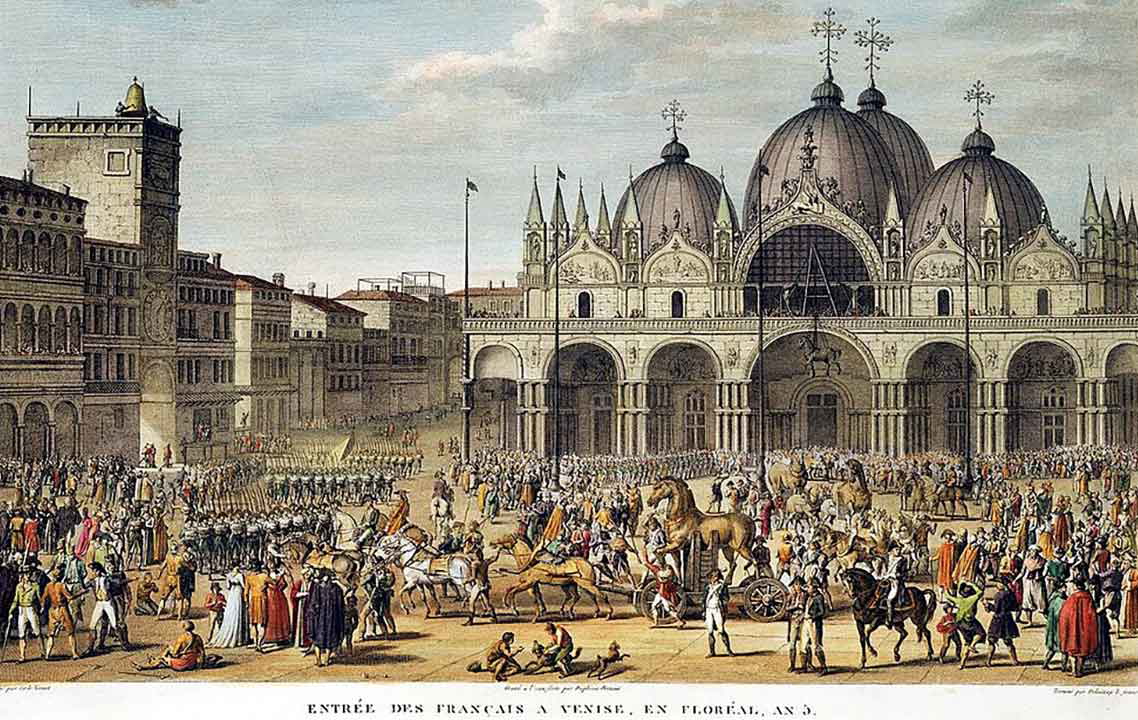
On May 12, 1797, Napoleon Bonaparte’s forces entered Venice and ended the 1,100-year-old Republic by dissolving the Great Council and forcing the abdication of Doge Ludovico Manin. Napoleon ceded control of Venice to Austria at the Treaty of Campo Formio on October 17, 1797. Despite his forces briefly re-occupying the city from 1805 to 1814 during the Napoleonic Wars, Venice remained under Austrian rule as part of the Kingdom of Lombardy-Venetia until the unification of Italy in 1866.
Carnival festivities largely ceased with the fall of the Republic of Venice. French and Austrian occupation forces forbid large communal gatherings related to celebrations of Venetian identity. Masks were also forbidden to prevent secret gatherings of political enemies or dissenters wishing to restore Venetian independence.
While massive public events stopped, Carnival parties continued in private with small feasts and balls between families and the wealthy. However, even these small-scale Carnival festivities were banned in the 1930s under the fascist regime of Benito Mussolini. Thus, for nearly 200 years, political pressure forced the Venetian Carnival out of public life and celebration.
Modern-Day Revival of the Carnevale di Venezia
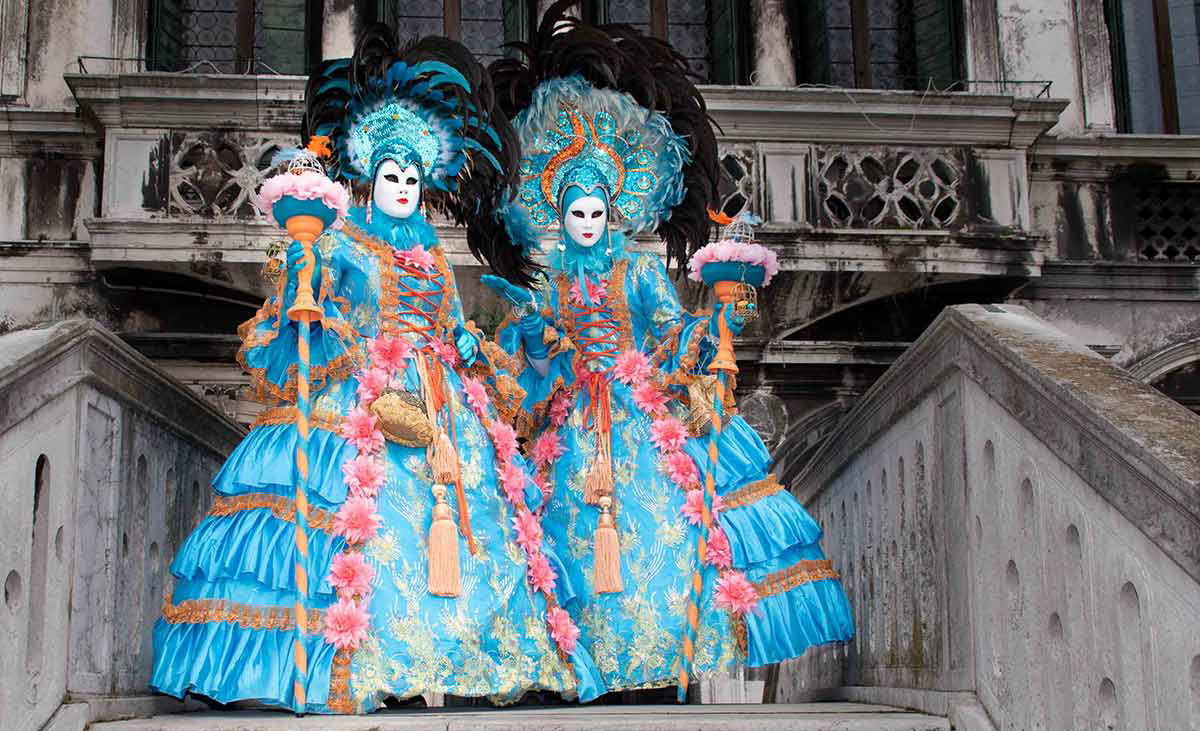
In the 1950s, wealthy art collectors, architects, film directors, and fashion designers began reviving luxurious artistry inspired by the Venetian Carnival. In 1951, eccentric millionaire Carlos de Beistigui, with the help of his friends Christian Dior, Emilio Terry, and Salvador Dali, hosted “La Bal Oriental,” also known as “The Party of the Century,” at his Venetian residence at Palazzo Labia. Beistigui stunned his guests by providing an 18th century Carnival experience with couture masked costumes, acrobatic performances, human pyramids, and art shows.
In the decades that followed, festivities began to re-emerge, leading the Italian government to officially recognize the Carnival of Venice as a public holiday in 1979. Since then, state and local governments have fostered the return of Carnival to boost local tourism and highlight Venice’s illustrious cultural heritage.
Today, over three million people attend the Carnival of Venice annually for a ten-day period before the start of Lent. A new theme is selected each year and showcased with a historic boat parade down the Grand Canal that officially starts the festival. Over 1,000 performances are hosted across the city’s piazzas, theaters, churches, and palaces.
Flamboyant reinterpretations of 18th century fashion in the Rococo style fill the narrow streets with bright dresses, cloaks, and masks covered in elaborate fabrics, lace, feathers, and gems. Some original events remain, such as the private balls, operas, masquerades, and best mask competition.
While the salacious nature of the original celebrations has dwindled, the extravagance of these events in one of Italy’s most historic cities maintains the popularity of this 900-year-old festival.