
A sophisticated, fully developed civilization with no palaces, temples, monuments, or elite dwellings! Does absolute standardized urban design indicate equality, collective decision-making, and peaceful cooperation rather than top-down centralized rule?
The Indus River Valley Civilization
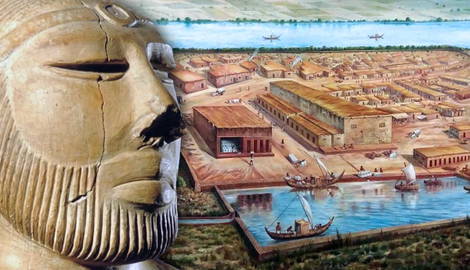
Our only source of information about the Harappa or Indus Valley Civilization (IVC for short) comes from archaeological evidence. Two identical features are strikingly evident in these cities. Firstly, there are no monuments, palaces, elite dwellings, temples, or statues honoring individuals or elite classes. Secondly, identical, standardized grid pattern designs are obvious in all cities, from urban dwellings, communal facilities, and sophisticated water management systems, to industry facilities, and paved streets. How was this implemented and maintained throughout so many centuries, even though many cities were rebuilt several times after severe flood damage?
The interpretation of IVC ruins and artifacts today remains a controversial, highly debated subject, partly influenced by political considerations. Despite the application of advanced modern technology, including dating methods and specialist cooperation from other scientific disciplines, the structure and organization of their society, governance, and religious beliefs remain an enigma.
Overview of the Mature Phase of the Indus Valley Civilization
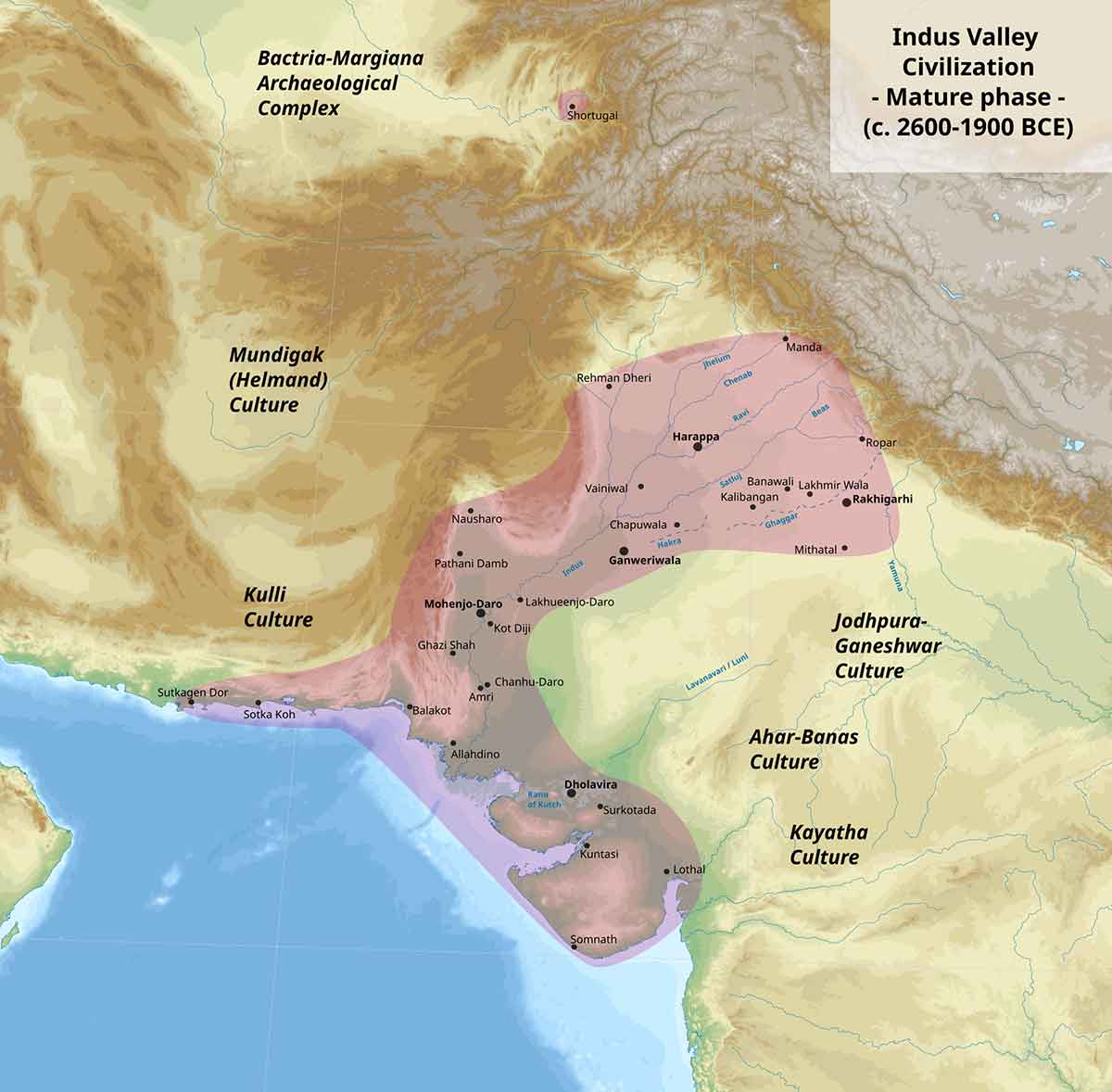
This civilization appears to have developed (mostly) in isolation. There is a marked archaeological difference compared to other contemporary civilizations that placed a high value on majestic buildings for kings or priests as privileged rulers. While the Indus script remains undeciphered, Mesopotamian cuneiform records from the Sumerian and Akkadian eras speak of trade with a wealthy eastern land they called Meluhha, which modern scholars identify as the Indus Valley Civilization.
The absence of royal and religious monuments, palaces, and elite houses indicates a definite difference in beliefs, lifestyle, and culture from their contemporaries. This is further implied by the emphasis on neatness and hygiene (personal and public) in the abundance of bathrooms, public baths, covered sewage systems, and more. This has been confirmed in every IVC city that has been excavated so far.
Discovery
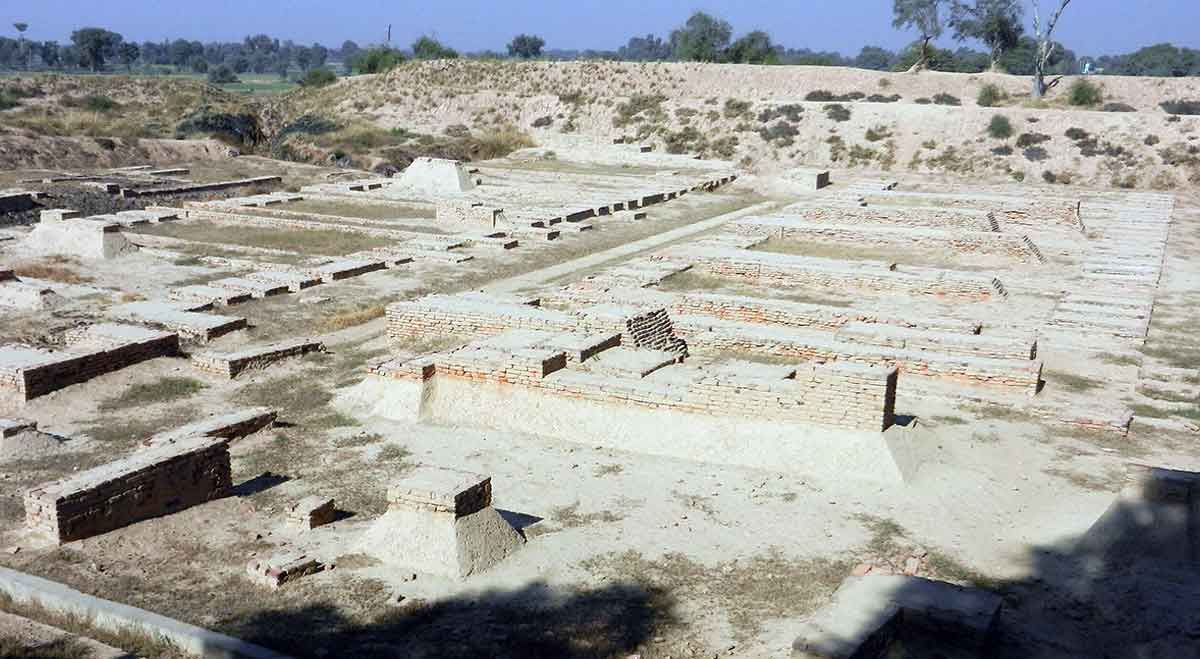
British engineers and surveyors were pleased when they discovered ruins made of strong, identical rectangular baked bricks at Harappa and Mohenjo-Daro during the 19th century. These bricks were perfect for use in their construction of railroads across the Punjab, a province in Colonial India. They realized that the ruins were old but assumed the identical, perfectly preserved bricks could not be older than a few hundred years at most. This free use would only come to an end in the 1920s when archaeologists got involved.
On September 20, 1924, Sir John Marshall, Director General of the Archaeological Survey of India at the time, published an article with images in The Illustrated London News, showcasing archaeological finds from Harappa and Mohenjo-Daro. He asked the paper’s readers for help in dating the discoveries. The article was headed “A Forgotten Age Revealed.” He wrote that two Indian archaeologists, Daya Ram Sahni and R. D. Banerji, had been excavating at the ancient sites of Harappa in Punjab and Mohenjo-Daro in Sindh since 1921 and 1922, respectively, under the supervision of the ASI.
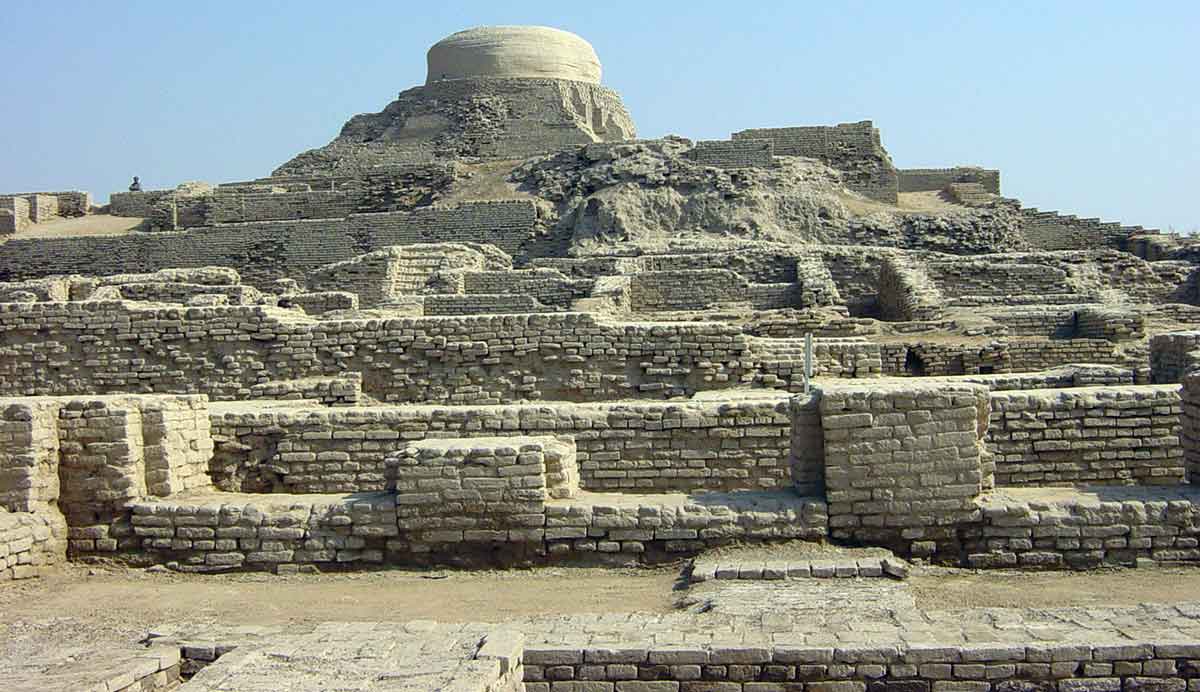
To the editors and Marshall’s surprise, Oxford Professor A. H. Sayce tentatively identified the ruins and artifacts in the photos as dating back to the 3rd millennium BC, the era of the ancient Egyptian and Sumerian civilizations. He was only partially right because he incorrectly identified some of the artifacts as Mesopotamian in origin.
Marshall’s headline was right, though. An unknown or forgotten ancient civilization had indeed been discovered. The generally accepted dates were eventually refined through modern dating methods to c. 3300-1300 BC, with the mature phase dating to c. 2600-1900 BC. These dates vary across the many sites that have been excavated over the years. Nevertheless, the IVC is considered one of the oldest known fully developed complex civilizations in the world. It is larger than its better-known contemporaries, ancient Egypt and Sumer in Mesopotamia. However, it remains the most mysterious, in part because the IVC script remains undeciphered.
The Enigma of Power in the Indus Valley Civilization
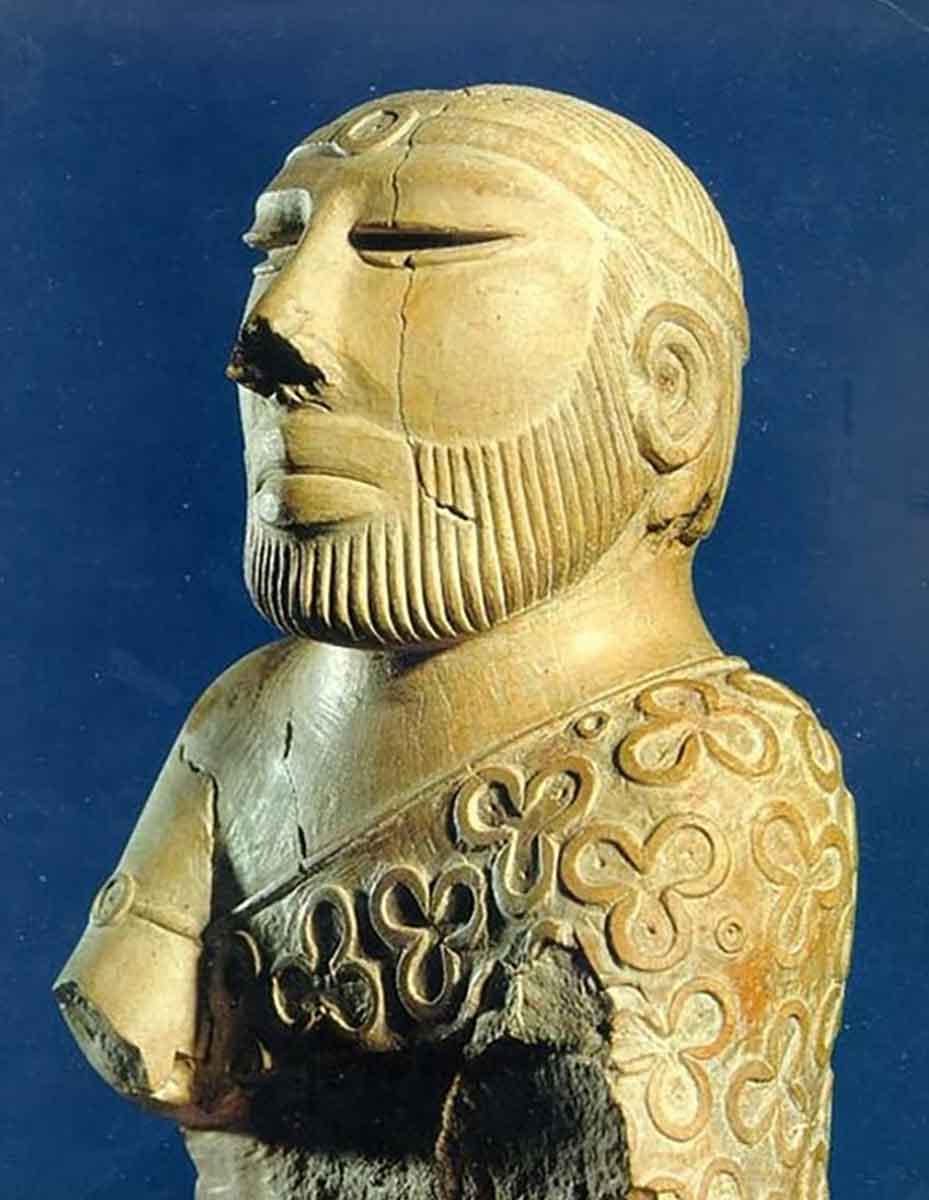
The baffling absence of key royal or religious class markers and the absolute standardization of living, working, and communal facilities return us yet again to consider the possibility of a state equality among all citizens. To date, no royal burials, no royal residences or palaces, no temples, and no single person depicted in monumental commemorative or glorifying statues or artworks have been discovered. The only depiction that could pass for a single king or high priest is a small 17.5 cm (6.89 inches) tall bust of a bearded man with a headband found at Mohenjo-Daro in 1925/26.
The degree of standardization achieved and followed for centuries in urban design and water management may indicate an advanced form of civic governance in a heterarchical format.
Mature IVC Cities
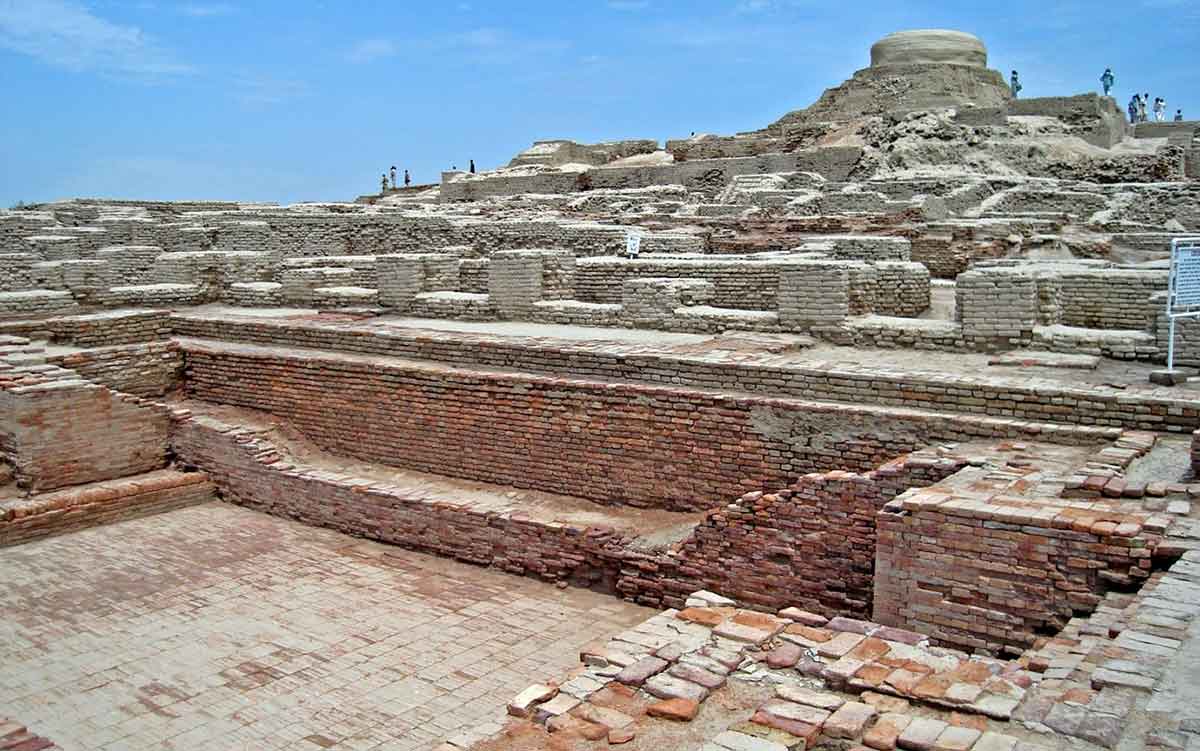
Cities were neatly laid out in north-south/east-west grid patterns. They had separate residential, industrial, and communal areas. City blocks were near identical in size and laid out across two areas or mounds. It appears as if cleanliness was one of the major driving forces in the outlay of both mounds. Public institutions and communal facilities, including the grain storage facilities, large halls for gatherings (religious or other), or administrative functions, and recreational, bathing, or purifying pools/baths, were on the “citadel” mound.
Residential and industrial facilities were on the other mound, or in the so-called “lower” city. Industrial factories and workshops were designed to suit the specific needs of particular industries or crafts and were situated close to the residential areas of their workers. Most specialized industries were located in cities conveniently near the areas of their raw materials and special activities, like coastal cities for shell jewelry, and Lothal for shipbuilding and maritime trading.
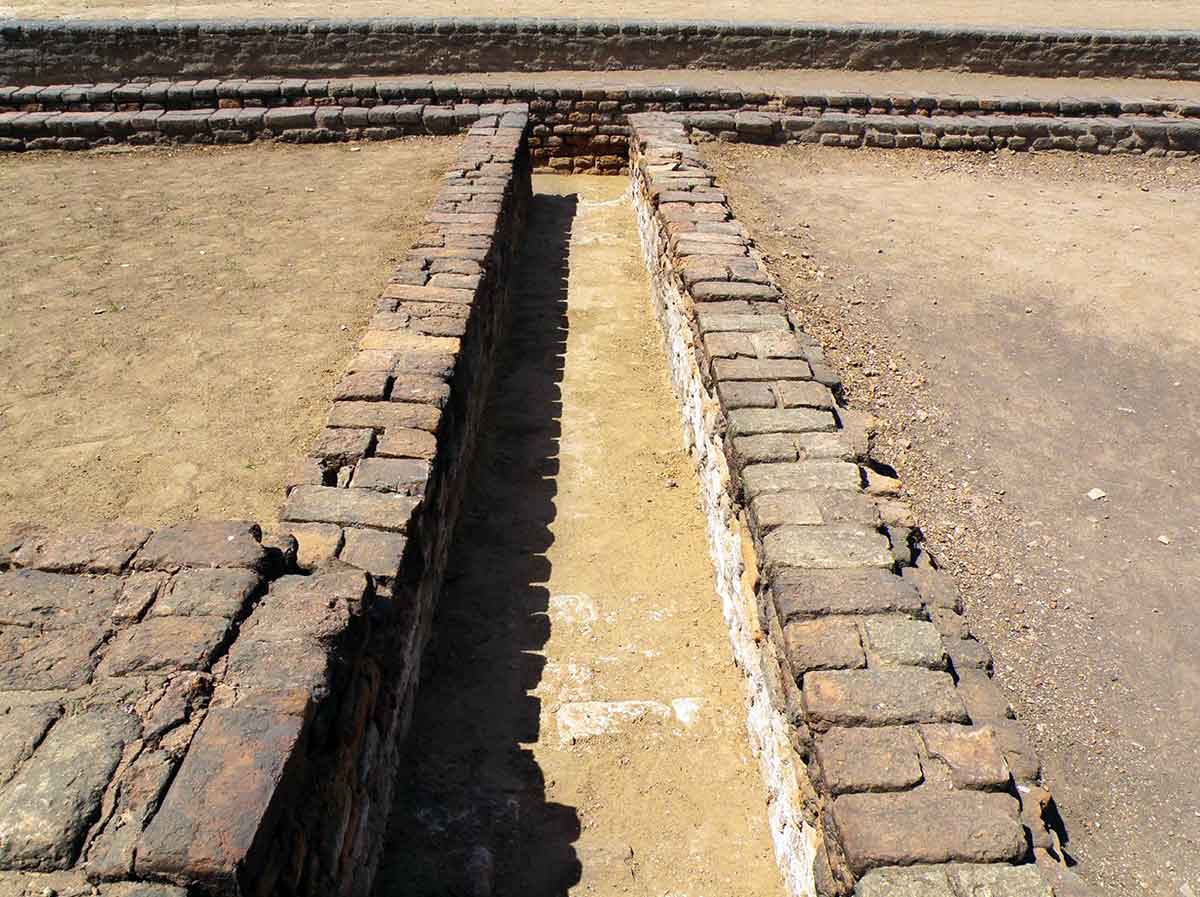
Residential areas were filled with identical houses opening onto smaller side streets, with their back walls flush against the wide main streets. The paved main streets even boasted built-in garbage bins at convenient intervals. All houses had built-in bathrooms, with drainage facilities embedded in the back walls emptying into covered pipes ending in covered drains under the paved main streets. Most houses had their own wells for fresh water. Those without wells were connected to freshwater reservoirs.
The major, region-wide layout and standardization of building materials, buildings, and artifacts in all the cities across centuries point to an equal and peaceful society of stable, shared administrative values and agreements. Citizen contributions, responsibilities, and commitments were likely driven by the consensus of individuals rather than by a “boss’s orders” based on the changing whims of successive monarchs.
Archaeological excavations have been ongoing since the early 1920s. New sites are constantly being discovered as the years pass, but much of what is known is based on conjecture. This obviously leads to fairly significant differences in interpretations of archaeological data and iconography by scholars. There are even suggestions that the IVC had colonies in various countries, where they obtained raw materials and traded finished goods, based on relatively flimsy evidence like the discovery of IVC jewelry and seals in Mesopotamia, and ongoing raw material mining operations in other areas.
Governance
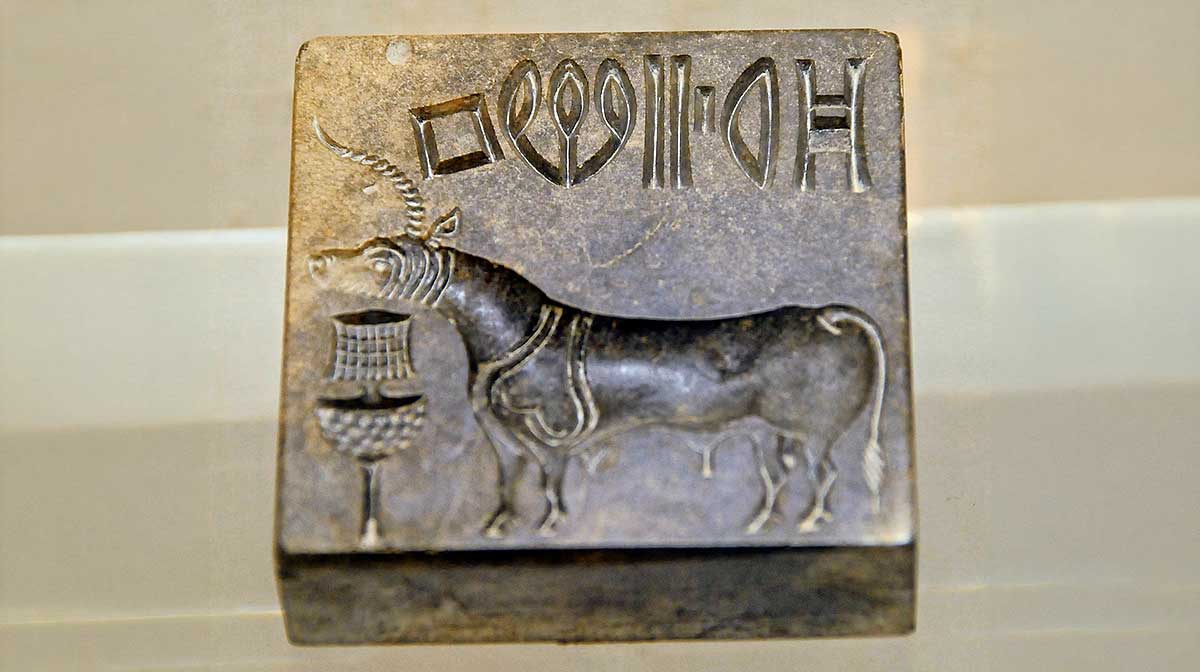
The IVC’s standardized urban design, water management systems, standardized weights and measures, and communal grain storage facilities required wide-ranging planning, surveying, labor division, man-power coordination, and centuries of maintenance and labor oversight. As no indication of power vested in some form of political, central authority has yet been discovered, some scholars suggest an equal society governed by collective decision-making processes that benefited all citizens equally, rather than supreme religious or political centralized rule. Others hypothesize that a sophisticated binding system of civic planning and control, and consensus-based authority led by groups of intellectuals or merchants, may have been the driving force.
We have to accept that, although there is no evidence of an authoritative, centralized governing person, council, or institution, the existence of some kind of national system of governance and control, or strong leadership, is suggested by the absolute uniformity. The urban planning, communal granaries, signs of inter-city (and foreign) trading, and standardized weights and measurements found in excavations all indicate a well-organized, well-functioning administrative system responsible for civic management.
How this management and control were achieved peacefully and cooperatively remains elusive in the absence of translated written records. One conclusion could be that the order in this society sprang from individual life satisfaction flowing from perfect equality in the collective sharing of rights, responsibilities, necessities, and luxuries. Civic management could have rotated among successive groups of citizens representing their industries, residential areas, and communal resources through collective decision-making processes, rather than authoritative centralized rule.
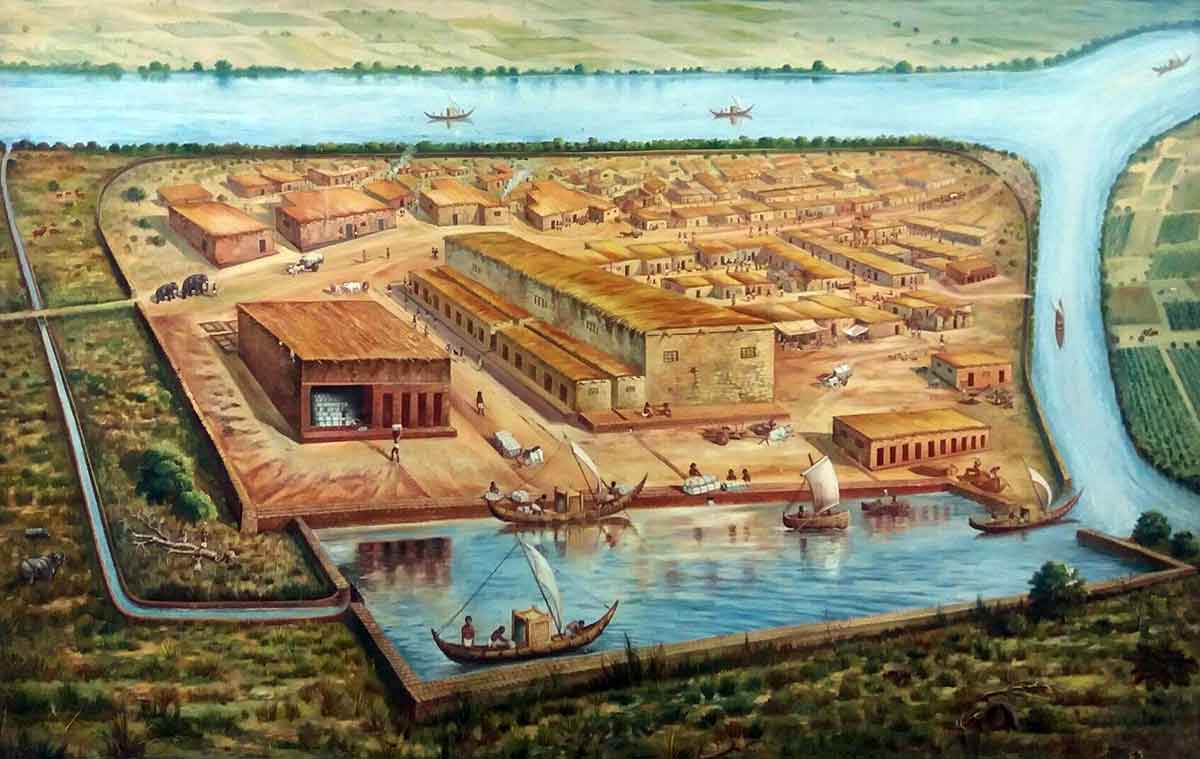
No matter how impossible it sounds to our modern minds, this cooperative, uniform, highly sophisticated society thrived for centuries, seemingly without a king, privileged class, or hierarchical government. However, some scholars are convinced that there is evidence of class structures and even discrimination, especially between rural and urban populations. They even suggest that this discrimination became the root of the later Indian caste system.
Others posit that the difference between rural (farming) and urban (manufacturing) living should rather be ascribed to natural differences flowing from the needs, comforts, and lifestyle requirements of each population. These groups would have mixed freely at the communal marketplaces in the cities to trade their wares and produce.
Incidentally, there is almost as much speculation about trading spaces, shopping areas, and marketplaces as there is about the IVC government! The IVC cities were kept exceptionally clean, and one might wonder if urban populations, so meticulous about cleanliness, would be interested in trading for food from people they looked down upon.
In addition, all indications are that the IVC was a peaceful civilization. Cities had no defensive walls or structures as protection against attacks from each other or from foreign enemies. The position of fortified walls dating to the mature phase of the IVC discovered so far clearly indicates that they were erected for protection against monsoon flooding. There are no signs of internal rebellions or punishment centers either. Weapons recovered from the sites are limited to hunting and fishing instruments.

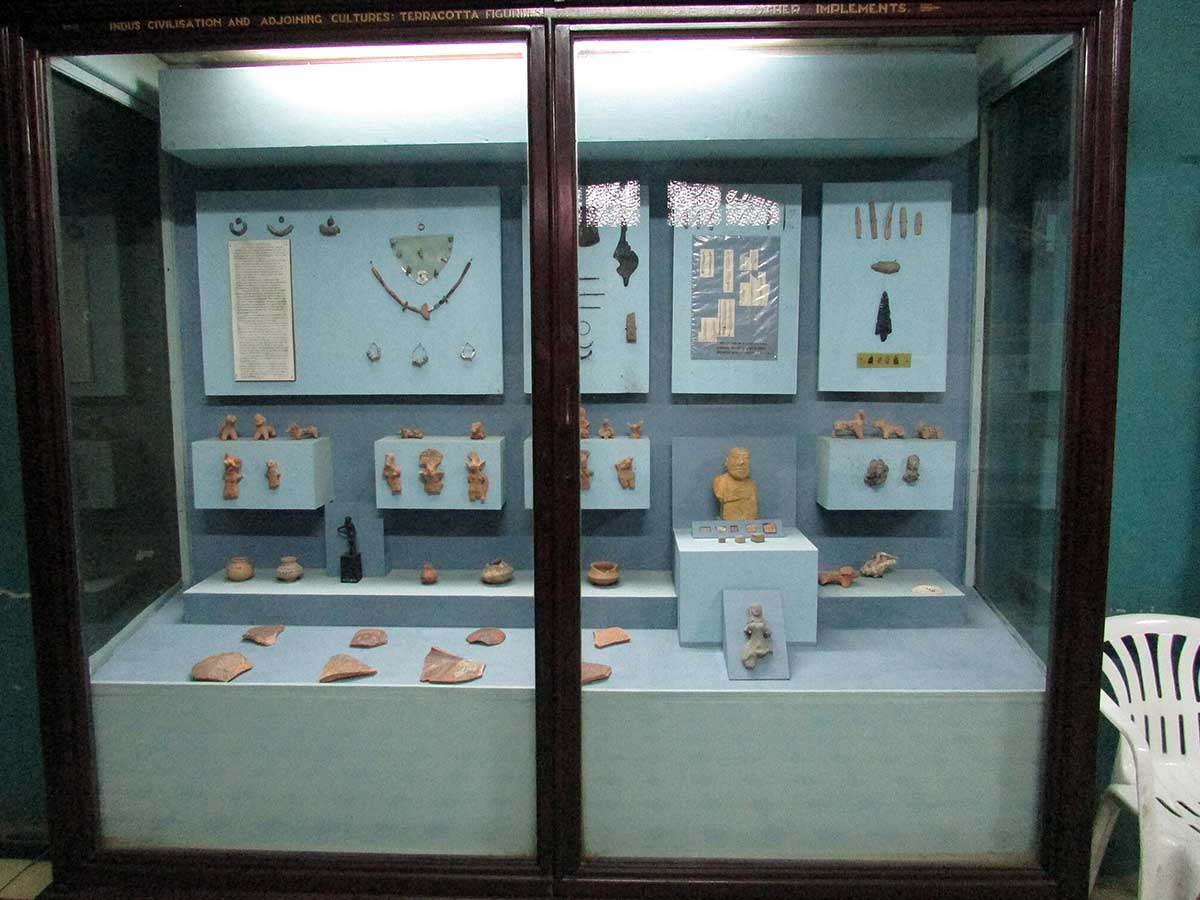
Other hypotheses about the government include a theocracy, an oligarchy, or a fusion of several tribal formats melted into one central government to account for the degree of standardization across this very large civilization. In the end, all have some merit, but none account for the absence of royal, elite, or religious markers, barring the widespread presence of figurines in a variety of shapes and poses of humans and animals. The oldest and most common of these figurines represent the ancient universal, roughly fashioned, so-called mother-goddess.
In conclusion, the equality and consensus-based version of IVC rule throughout the development and peak of their existence may appear to be nothing more than a romantic utopian dream. On the other hand, archaeologists and other scholars have not yet found any concrete evidence to prove otherwise, and plenty to indicate that at least some of it is based on firmly rooted facts. If such a harmonious and equal society, with:
Liberty: Freedom from oppression and tyranny to live freely and express oneself.
Equality: Equal rights, responsibilities, and opportunities.
Fraternity: Brotherhood, solidarity, and collective responsibility for each other and their environment.
…could ever have existed, then this was it!
The IVC’s standardized urban design, hygienic water management, and uniform culture suggest a cooperative society where the true governing force was not a single King, but a sophisticated binding system of Consensus-Based Authority and Civic Planning with a common goal—perhaps the original sprouts of an unadulterated, uncorrupted democracy!