
The Silk Road is one of the world’s most famous trade routes, connecting distant eastern civilizations with Eurasia. It stretched from China through Central Asia and Persia to the Mediterranean. But it was much more than just a trade route. While silk, spices, and jewels were transported, so were customs, myths, religions, and legends. One important myth that traveled along the Silk Road was about dragons. This is how Chinese ideas about dragons influenced European dragon lore, along the Silk Road.
What Was the Silk Road
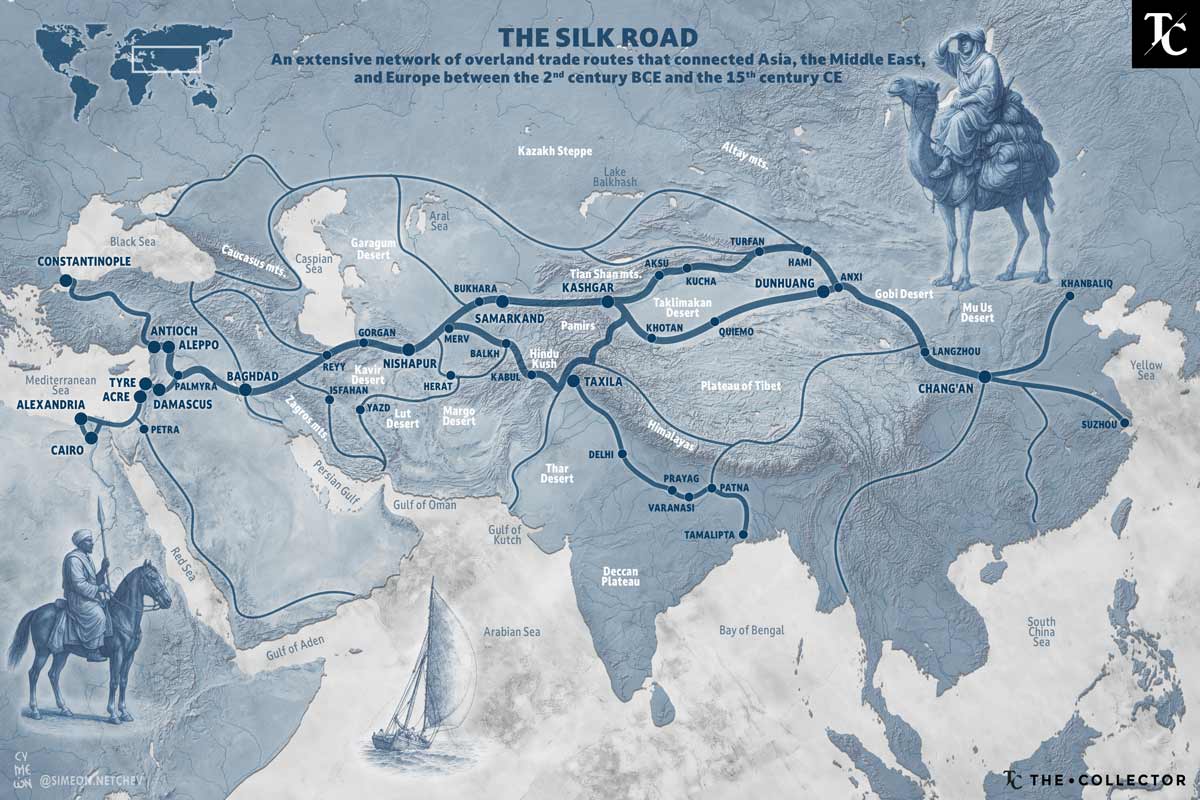
The Silk Road was not a single road that led from China to Europe. It was a network of interconnected trade routes that meandered between the two continents until a standard route was established. The people who used this network did not call it the Silk Road, a term that was coined in the 19th century by the German geographer Ferdinand von Richthofen. Historians believe that the beginnings of the Silk Road can be traced back to the 2nd century BC during China’s Han dynasty, when the diplomat Zhang Qian was sent to establish alliances with western lands and bring his knowledge and observations back to China. During his journey, he saw great trading potential for China, which primarily exported silk.
The Silk Road stretched for thousands and thousands of kilometers, beginning in northern China and passing through important oasis cities such as Dunhuang and Kashgar before reaching the desert regions and mountains of Central Asia. From there, caravans would travel west to Samarkand and Bukhara, continue into Persia, and eventually reach the Mediterranean through cities such as Antioch. Along this route, one of the biggest challenges was navigating complicated terrains such as the Taklamakan Desert and the Pamir Mountains. If there were signposts at all, there were not many of them. Along the way, merchants often founded smaller trading towns and colonies that served travelers.
The Silk Road was most commonly used for transporting Chinese silk, Central Asian horses, spices from South Asia, and precious metals, glass, and ceramics. However, the Silk Road was not used only by merchants but also by pilgrims, diplomats, poets, artists, and adventurers. It was often these travelers who transported ideas, including myths about dragons.
China’s Benevolent Dragons
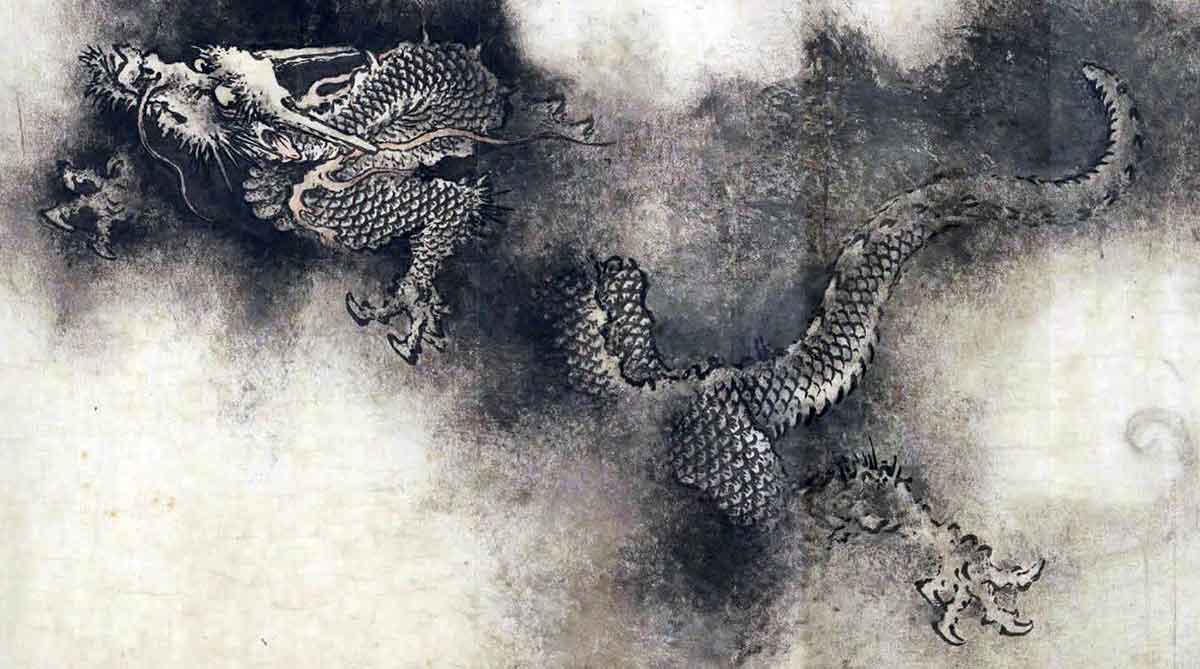
Dragons did not have a single origin, but appeared independently in different cultures. The most familiar are those from China, where it is called a Lóng. Archaeological evidence indicates that dragon motifs began to appear there as early as the Neolithic period, around 3000 BC, especially in the Yangshao and Hongshan cultures. During the Shang and Zhou dynasties, around 1600–1046 BC, the dragon became a central symbol in Chinese mythology, associated with water, land, fertility, and later with imperial authority. According to legend, the Han Dynasty founder, Liu Bang, was conceived after his mother dreamt of a dragon. This established the “Mandate of Heaven,” which was the idea that the Emperor ruled because the heavens and the dragons willed it. The emperor was then conceived of as a dragon.
In China, dragons were not destructive beings but rather divine protectors. They embody wisdom, vitality, and cosmic order. Masters of the water element, they are believed to reside in deep lakes or the high heavens, commanding the rain and the transition of the seasons. They were petitioned through rituals and festivals to ward off evil spirits and bring prosperity.
Early Dragons in Mesopotamia and India
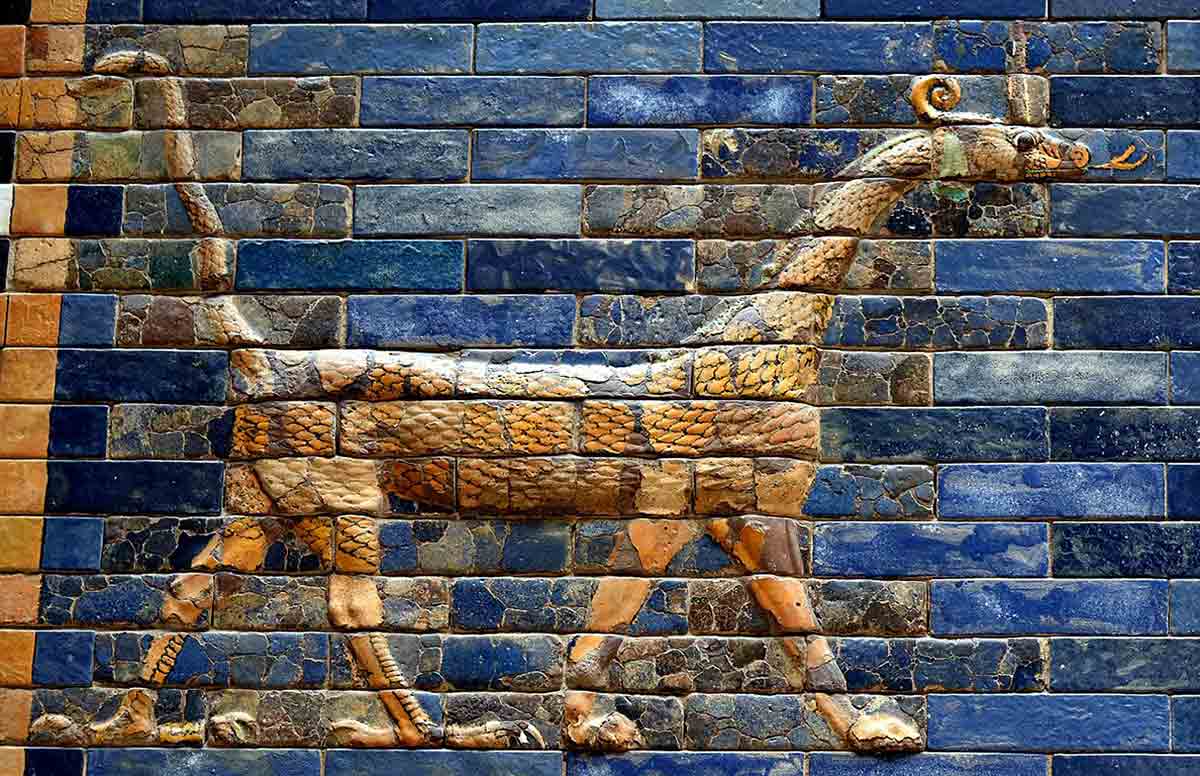
In other ancient cultures, dragons had a different role and were not always benevolent. In Mesopotamia, for example, serpentine monsters represented the embodiment of chaos that threatened order. The most famous example is the Babylonian epic Enuma Elish, where the storm god Marduk defeats the sea dragon Tiamat.
However, dragons were not always forces of chaos. An alternative example from Babylon is the creature Mušḫuššu, which is associated with the god Marduk and depicted on the Ishtar Gate of ancient Babylon. This dragon represents divine authority and protection.
On the Indian subcontinent, dragons were also known as Naga. In early Hindu and Buddhist traditions, Nagas were snake-like beings connected with water, fertility, and the underworld. They were generally benevolent and considered guardians of rivers and lakes as well as sacred spaces.
Trade Carried Dragon Images Across Eurasia
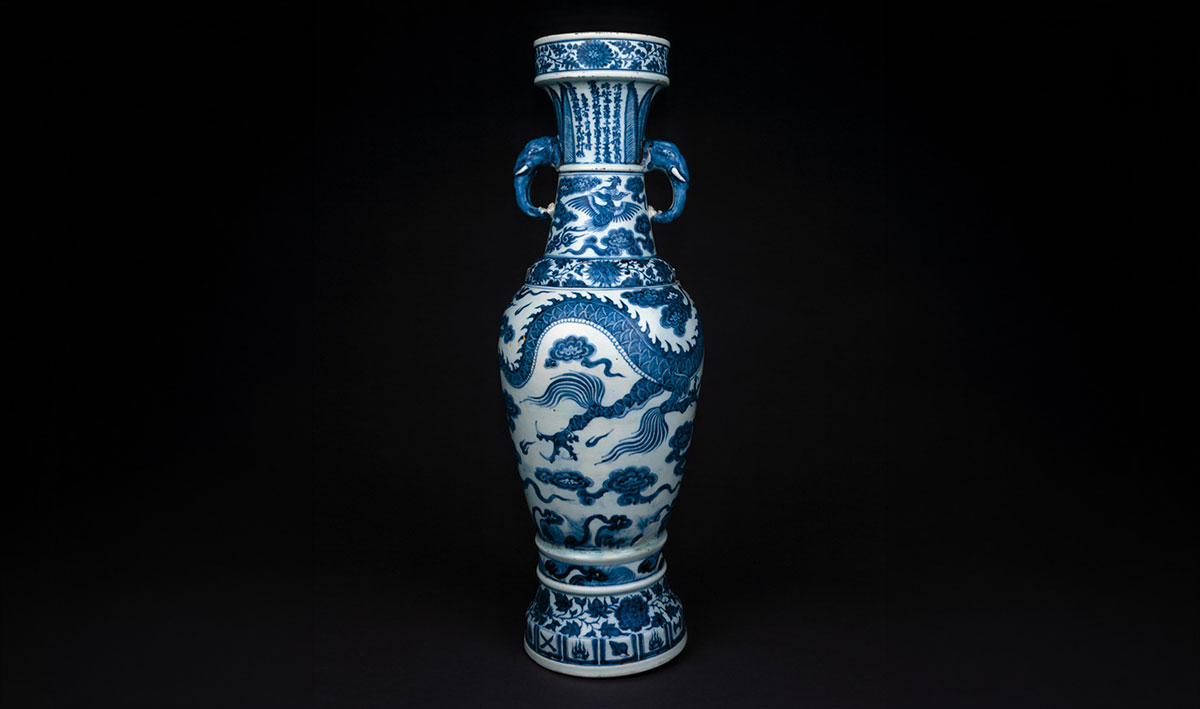
The spread of dragon myths along the Silk Road was closely linked to trade. As Chinese silk, ceramics, tableware, and other handicrafts reached the West, they sometimes contained dragon motifs. For example, it was very common for images of dragons chasing pearls to be woven into Chinese silks. Dragon iconography, together with oral traditions and explanations of these images, traveled along the Silk Road and spread legends from one land to another.
Major caravan cities like Samarkand, Kashgar, and Bukhara in Central Asia offered unique settings where different cultures and religions met, exchanging ideas and spiritual beliefs, which then reached Europe. In this way, Persia acquired its own dragons. For example, they mimicked Chinese dragon patterns to create new Sino-Persian dragon motifs. After its conquest by Alexander the Great, Persian merchants also carried different objects with dragon motifs. These were items such as temple murals, manuscript illustrations, and statues.
Dragons in Persian Mythology
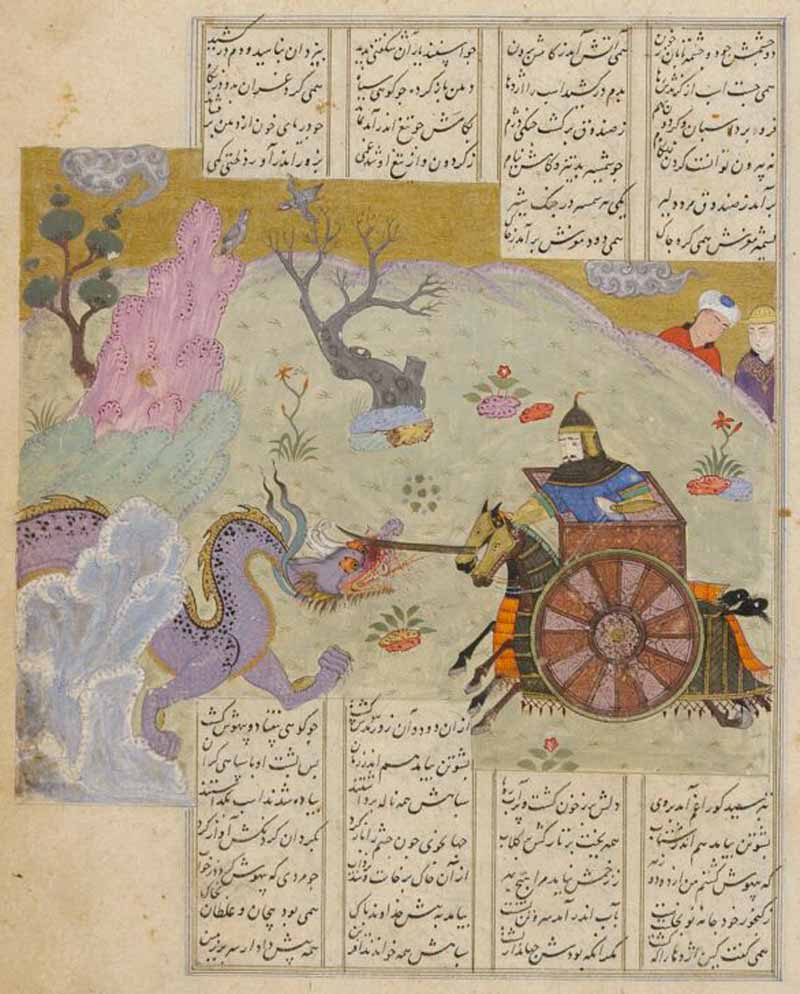
In Persian mythology, dragons were not benevolent but represented chaos, destruction, and an obstacle to the divine order; the complete opposite of Chinese dragons. It is believed that Persian dragons were influenced by the Babylonian epic Enuma Elish and the sea serpent Tiamat.
In later Persian literature, especially the epic poem Shahnameh by Ferdowsi, written in the 10th or 11th century AD, dragons gained a more concrete role. They were described as adversaries to heroic figures and guardians of earthly treasures.
The most famous dragon in Persian mythology was Aži Dahāka, also called Zahhak. He was a three-headed serpent or dragon figure that represented chaos, tyranny, and evil. Zahhak was eventually defeated by the hero Fereydun. In Persian visual arts, dragons sometimes appear with wings or leonine features, indicating hybrid characteristics.
Dragons in Europe Before Christianity
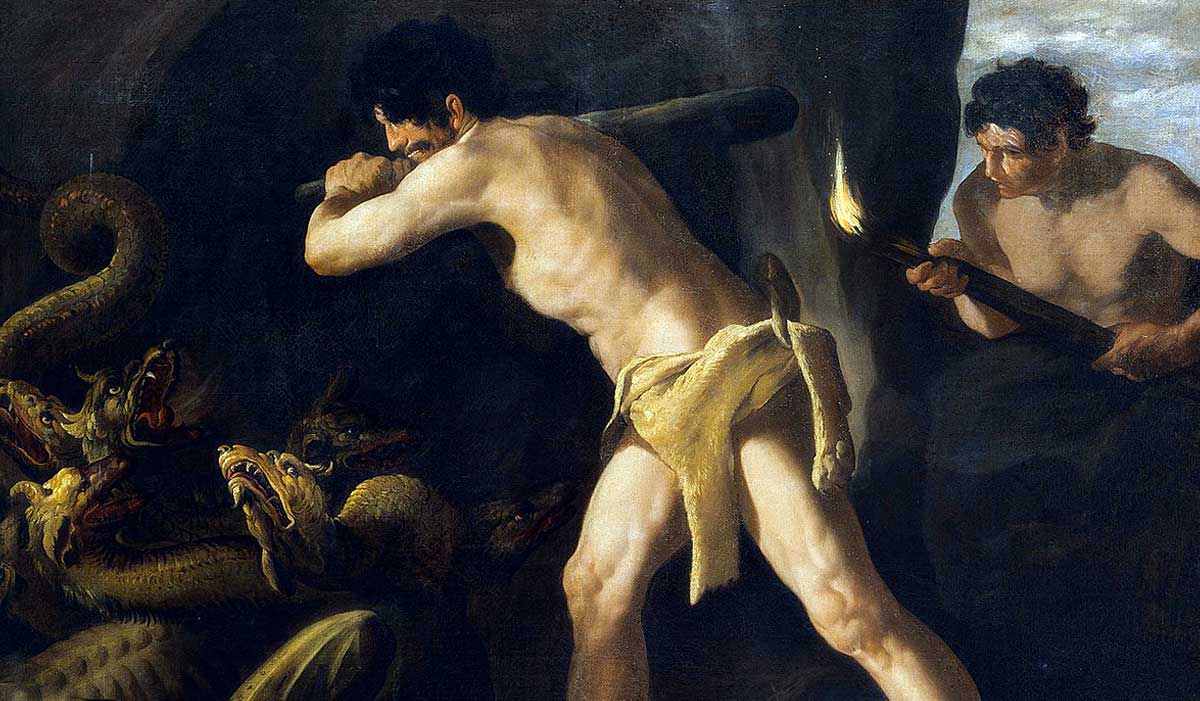
Before Christian iconography popularized a certain type of dragon, other dragons appeared in other Mediterranean civilizations. These dragons seem to have emerged independently, though they may have incorporated elements from the east.
In classical Greek mythology, there was the creature Ladon, a hundred-headed being that guarded the golden apples in the Garden of the Hesperides. According to some versions of the myth, each head spoke a different language. He was immortal, extremely strong, and never slept, which made him the perfect guardian. Ladon was killed during the eleventh labor of Heracles, when the hero had to retrieve the golden apples. Heracles shot him with an arrow dipped in the blood of the Lernaean Hydra, which was able to penetrate the otherwise impenetrable skin.
The Lernaean Hydra, a multi-headed water serpent with poisonous breath and blood that lived in the swamps of Lerna in Argolis, was also a dragon-like creature. It was known that when you cut off the head of a Hydra, two new ones grow in its place, making it nearly impossible to kill. It too was slain by Heracles as one of his labors.
Dragons also existed in other European mythologies, especially Norse mythology. One was Fafnir, a dwarf who, because of immense greed, transformed into a fearsome dragon. As a dragon, Fafnir occupied a cave where he guarded stolen treasure, spreading poison around him. The legendary Midgard Serpent, Jormungandr, was also probably a dragon, as the Norse did not differentiate between giant serpents and dragons. He lives in the water surrounding Midgard, the realm of men, where he is so enormous that he can encircle the whole world and hold his tail in his mouth. He will emerge from his waters at Ragnarok, the Norse apocalypse, to fight to the death with the god Thor.
Dragon Legends in Medieval Europe
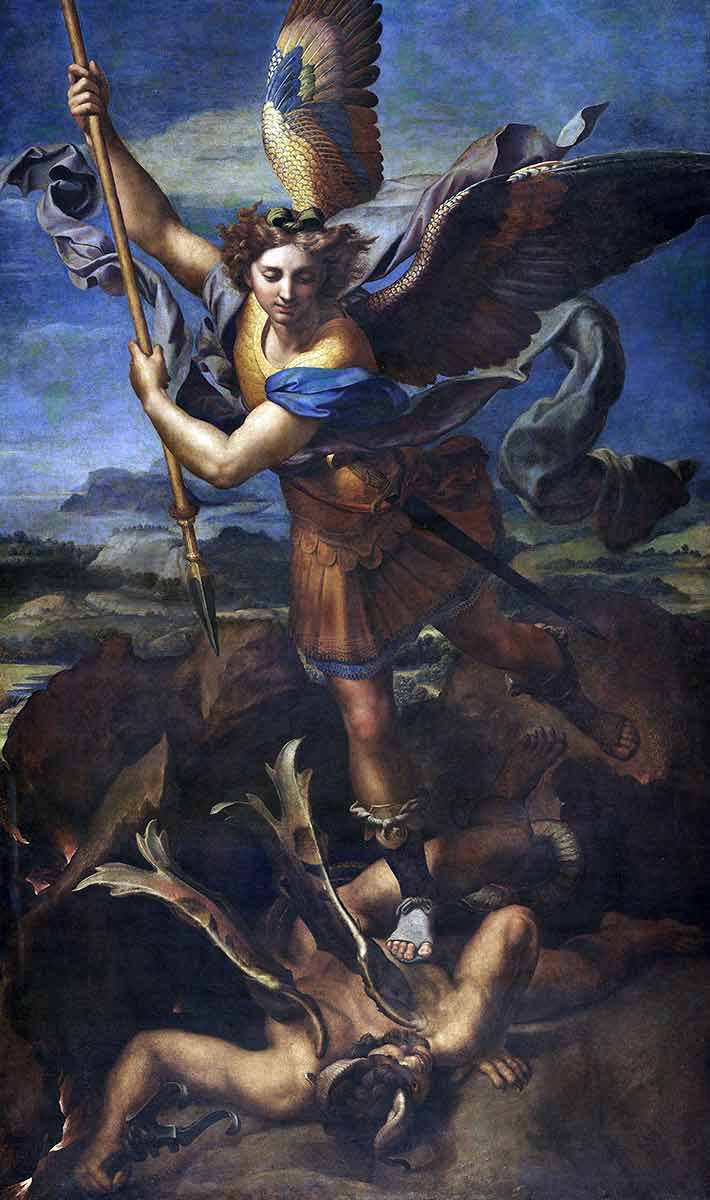
Stories and legends about dragons became even more common in Europe in the Middle Ages. The Church closely tied them to religion and portrayed them as direct servants of Satan. Dragons are also directly mentioned in the Bible, specifically in the Book of Revelations. The great red dragon with seven heads and ten horns is depicted as a monster that wants to turn the world away from the right path. It adopted aspects of the Chinese dragon, which had become familiar through trade contact, such as the scaled body and leonine head.
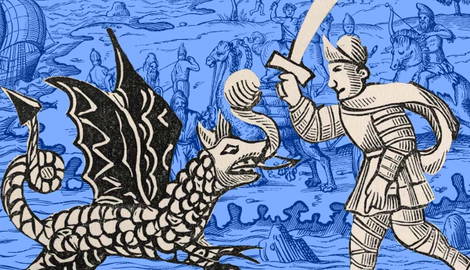
But much more akin to Persian dragons, in stories about Christian saints, dragons often take the role of the main enemy. The most famous is the story of Saint George, who killed a dragon that was terrorizing a Christian town. Archangel Michael led the angels to fight a dragon, who was Satan, and drive it out of heaven. Another interesting story from this period is about Saint Margaret the Martyr, who was swallowed by a dragon. The cross around her neck irritated the dragon, which then spat her out.
Therefore, the dragons of east and west look very different, with Chinese dragons acting as benevolent divine protectors, and Medieval European dragons usually acting as the antagonists in the stories of heroes. In places like ancient Mesopotamia, Persia, and Greece, dragons were something between the two: powerful supernatural beings capable of both good and evil. But despite the clear void between eastern and western dragons, it is unclear whether western dragons would exist in their now-familiar form if not for the cultural exchange facilitated by the Silk Road.