
Jean-Michel Basquiat was one of the brightest American artists of the 20th century who had a tragically short life. Basquiat, the great Neo-Expressionist artist, died in his home at the age of just 27. During his life, he struggled with dysfunctional family dynamics, imposter syndrome, pressure from the art world, and severe drug addiction. Read on to learn more about Jean-Michel Basquiat’s death and the circumstances that led to it.
Jean-Michel Basquiat’s Rise to Fame
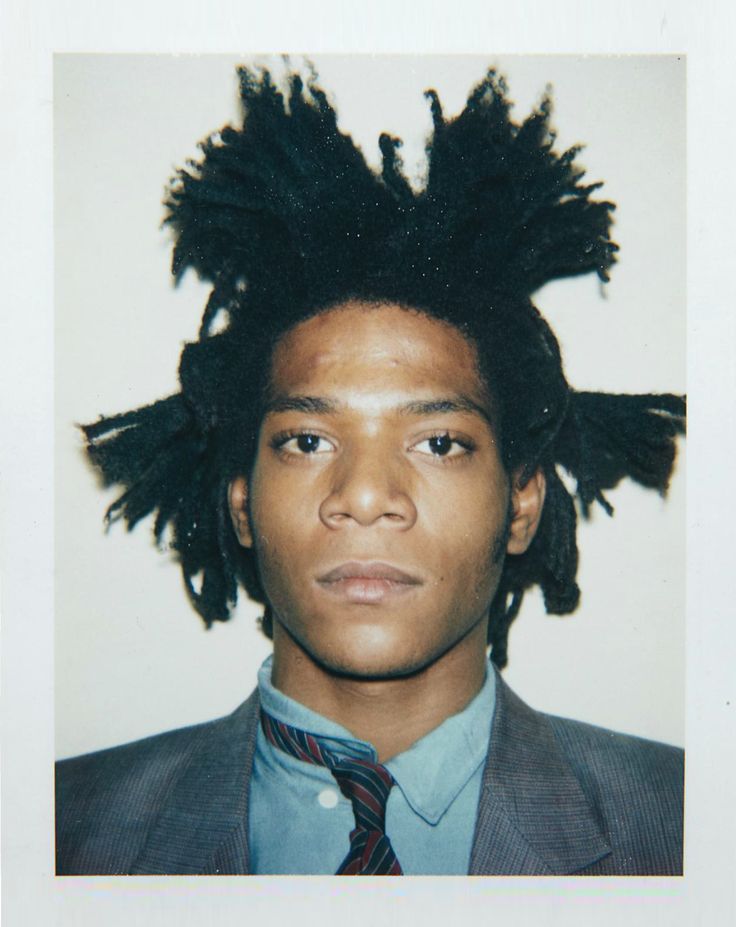
Born into a Haitian-Puerto Rican family in 1960, Basquiat was a troublesome child who nonetheless had a profound interest in art. His family never supported it, the only exception was his mother who was institutionalized due to severe depression when Basquiat was still a child. Generally, his relationship with the rest of the family was tense due to his father’s physical and emotional abuse.
Despite Basquiat’s claims of growing up in a ghetto, his family led a middle-class life with stable income and property. However, he never felt truly connected to their lifestyle. At the age of 15, he was kicked out of his home for unknown reasons. He quit school and soon turned into a street artist and performer.
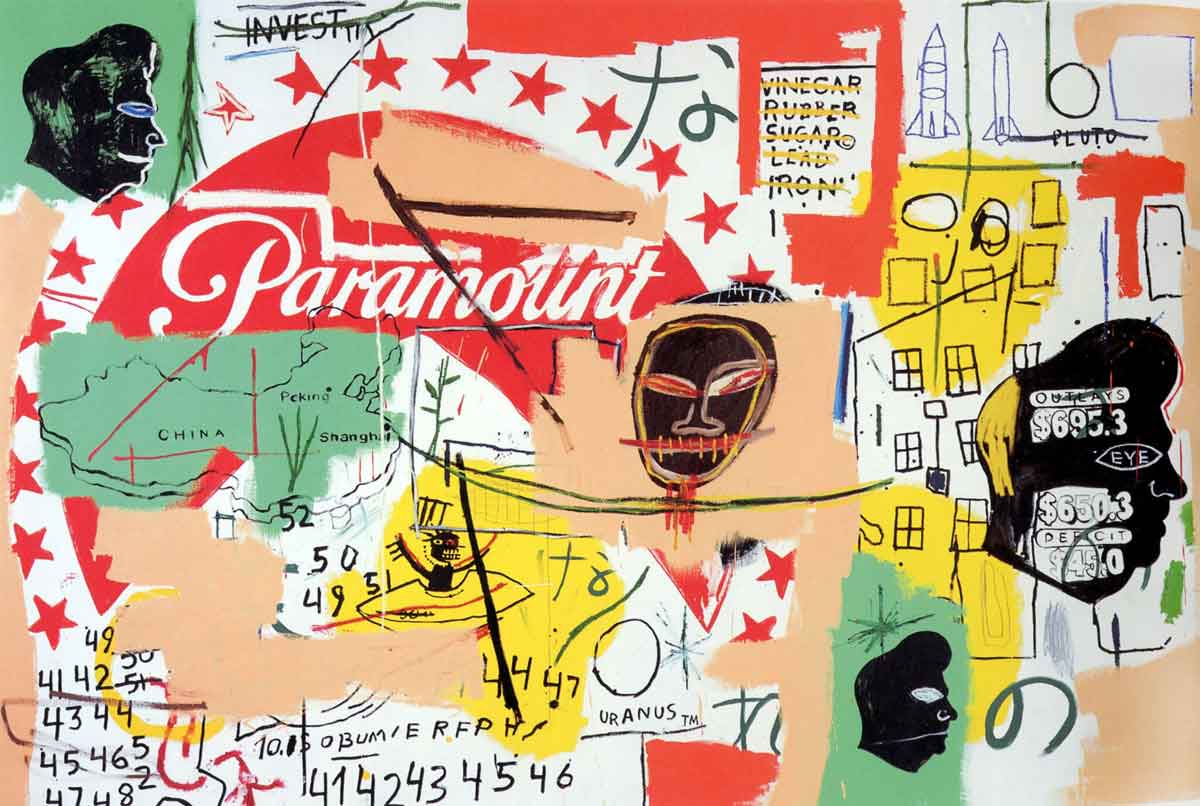
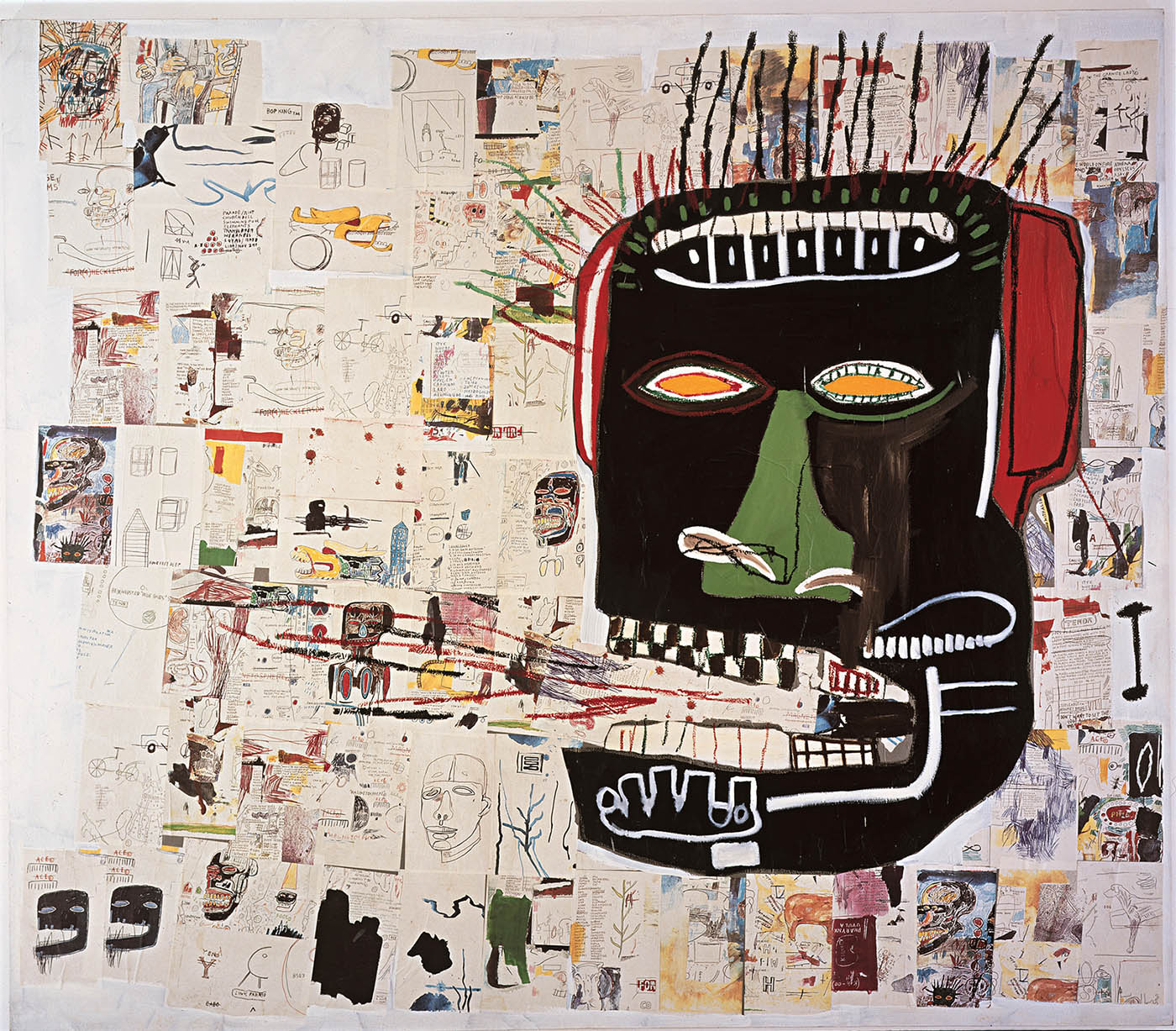
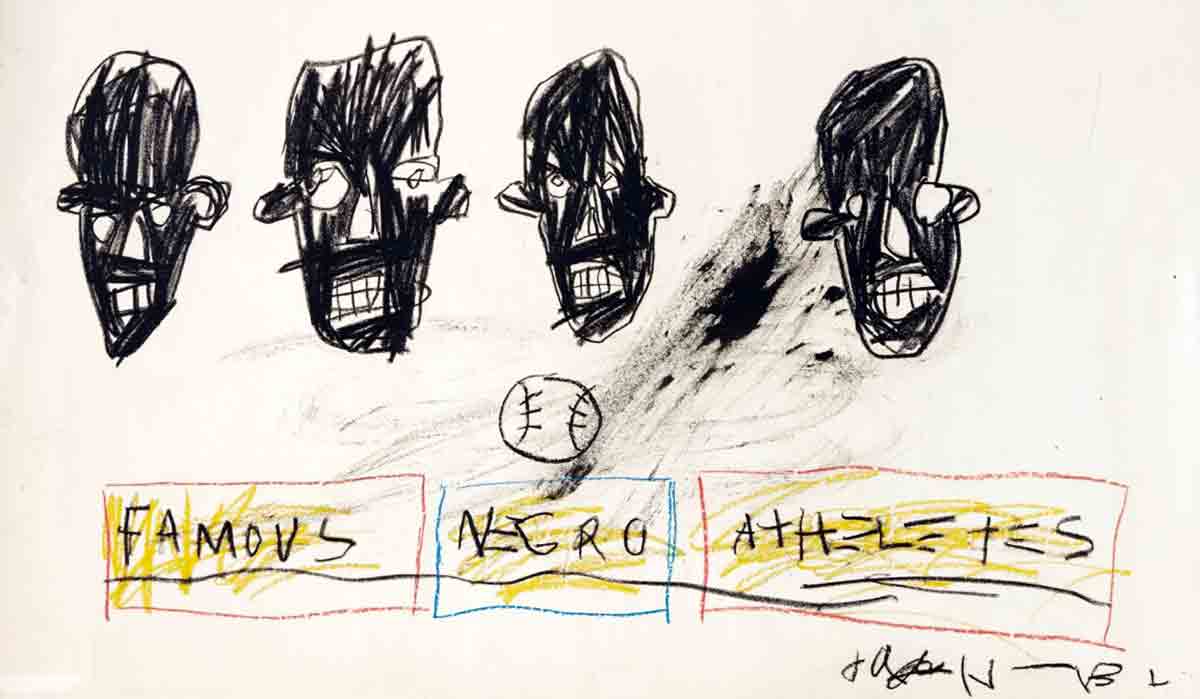
His unique artistic style blended graffiti, references to art history and politics, cartoons, social commentary, and many other influences. He became a star almost instantly when he was 21 years old, and he did not handle this well. The pressures of celebrity and expectations of continuous performance affected his mental health and led him to a heroin addiction. Basquiat died in his New York loft at 27, leaving hundreds of works that now go for millions of dollars.
Basquiat & Andy Warhol
Andy Warhol was perhaps the most prominent influence in Basquiat’s life. The two met when Basquiat had already gained a reputation as a promising artist, and Warhol was slowly losing his relevance in the art world. The two artists revived each other’s work and directed each other. Once, Basquiat told his father that he made Andy take a brush into his hands for the first time in twenty years.
In February 1987, Andy Warhol suddenly died while recovering from a rather simple gallbladder removal surgery. His heart failure was a surprise even for the doctors, as they noted that the artist had reacted to the surgery well. Basquiat was devastated by Warhol’s death. Apart from grief, he felt guilty for breaking their relationship two years before. Most art historians believe that the great Pop Artist’s death was the final blow to the already fragile psyche of Basquiat.
Warhol’s death was devastating for Basquiat even though the relationship between the two had gone sour after a joint art show in 1985. Some saw the unfavorable exhibition reviews as a primary motive for their fallout but most likely, the cause was Basquiat’s drug addiction that had spiraled out of control.
The Artist’s Addiction
Jean-Michel Basquiat had a long history of drug use and addiction that began before his rise to stardom. However, those who knew him well noticed that sudden access to unlimited funds was the catalyst for his destructive behavior. He spent recklessly on both drugs and useless luxurious items. Nonetheless, high-end consumerism was unable to fill the void in his soul, which was created by the pressures of the art world and drug use.
In some late conversations, Basquiat stated that he had begun using heroin only after Warhol’s death. This was never true, as Warhol himself reflected his concern with Basquiat’s use of heroin in 1983. Moreover, a friend saw Basquiat under the influence for the first time in 1980. The artist also said that he began using heroin to unlock his creativity like Jimi Hendrix, Janis Joplin, and Charlie Parker. He even stated he was ready to die if it was necessary to leave great art behind.
Basquiat’s Rehabilitation Attempts
For a long while, Basquiat sabotaged all attempts to get clean. His mood swings became unbearable even to those who were used to his character, his appearance changed drastically, with his skin covered in sores, and his teeth falling out. Basquiat acknowledged the symptoms but not the cause: he went to see a dermatologist to heal his skin, but verbally and sometimes physically attacked those who tried to instill the idea of quitting heroin into him. He once complained to a friend that, while the art critics spoke of drugs killing him, they also degraded art he made in a sober state.
In the summer of 1988, Basquiat retreated into his Hawaii home to get away from the art world and social pressure. He came back energized and seemingly ready to change his life. Enthusiastically, he told his friends he was going to quit the artworld and focus on becoming a writer or maybe, ditch the creative domain altogether and open a tequila business in Hawaii. He also felt a re-established connection to his African roots, and booked a ticket to the Ivory Coast in order to unwind and cure his addiction using the help of local traditional healers.
Jean-Michel Basquiat’s Last Show
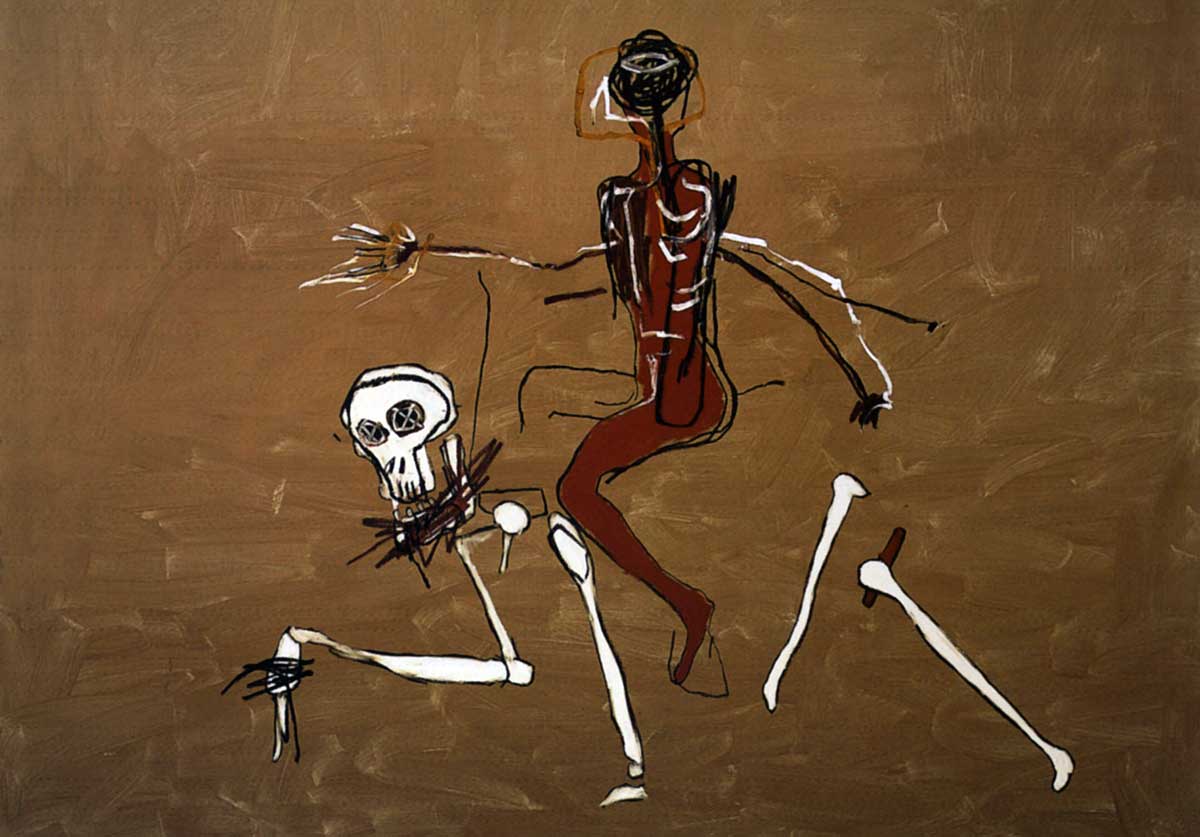
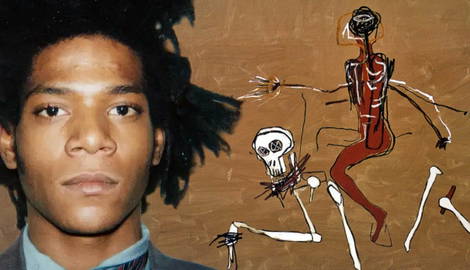
Jean-Michel Basquiat’s last art show went on from April to June 1988 in the Vrej Baghoomian Gallery in New York. Baghoomian was quite a character: he was an Iranian with suspicious CIA ties, dubious reputation, and an art dealer cousin mostly known for defacing Picasso’s Guernica. Most of Baghoomian’s colleagues believed there was nothing to be shown, as Basquiat almost completely stopped painting, rapidly losing a battle with his addiction. Still, one work in the show looked as an omen to what was to come. A painting titled Riding with Death showed a dark-skinned figure riding a skeleton like a horse.
In 1994, Vrej Baghoomian attracted the FBI’s attention for selling five Basquiat fakes at an art fair in Paris. It was never stated if Baghoomian himself was aware of the forgery. The dealer also claimed 50% of the Basquiat estate as his last representative, but lost it to the Basquiat family and went bankrupt. For several years, Baghoomian was deemed missing, as he was hiding from his creditors, until he suddenly died in 2003.
August 12, 1988
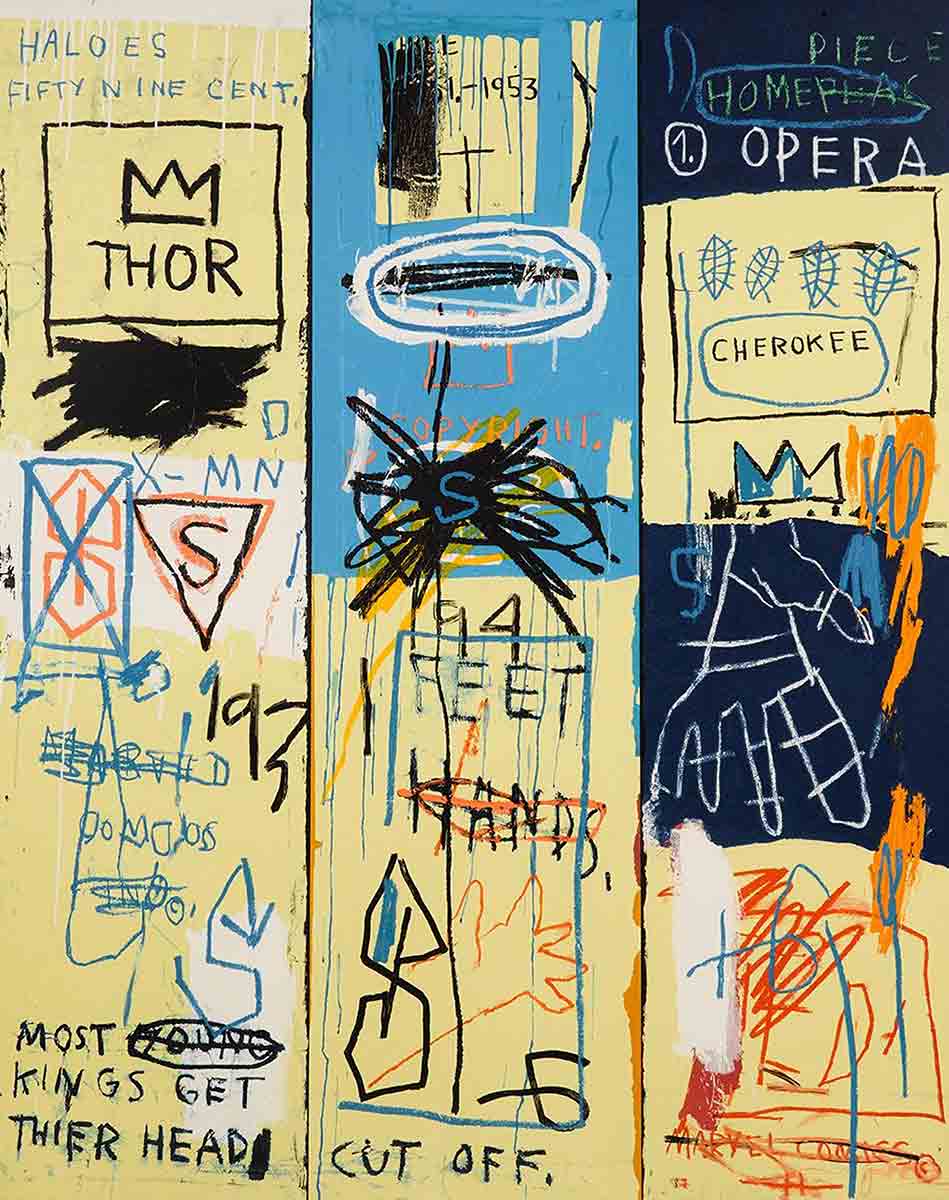
During the last months of his life, Basquiat became a recluse. Still, those who were close to him made attempts to integrate him back into social life. Around 1 a.m. on August 12th, he was seen in a nightclub, having been almost forcefully brought there by his girlfriend, Kelly Inman. Kevin Bray, a close friend of Basquiat and future film director, noticed that the artist was under the influence despite his claims that he was avoiding drugs. Their last conversation ever was a short note that Bray left Basquiat before leaving. It stated: I DON’T WANT TO SIT AROUND HERE AND WATCH YOU DIE. At 5:30 PM, when Bray called Basquiat’s apartment, Kelly Inman went to check on the artist and found him unresponsive. Inman remembered feeling oddly relieved by the fact that all the suffering and anxiety were finally over.
The autopsy report listed the cause of death as a cocaine and heroin overdose. According to research, during his last attempt to quit heroin, Basquit lowered his body’s tolerance level. Thus, his usual high dose became lethal to him.
After Jean-Michel Basquiat’s Death
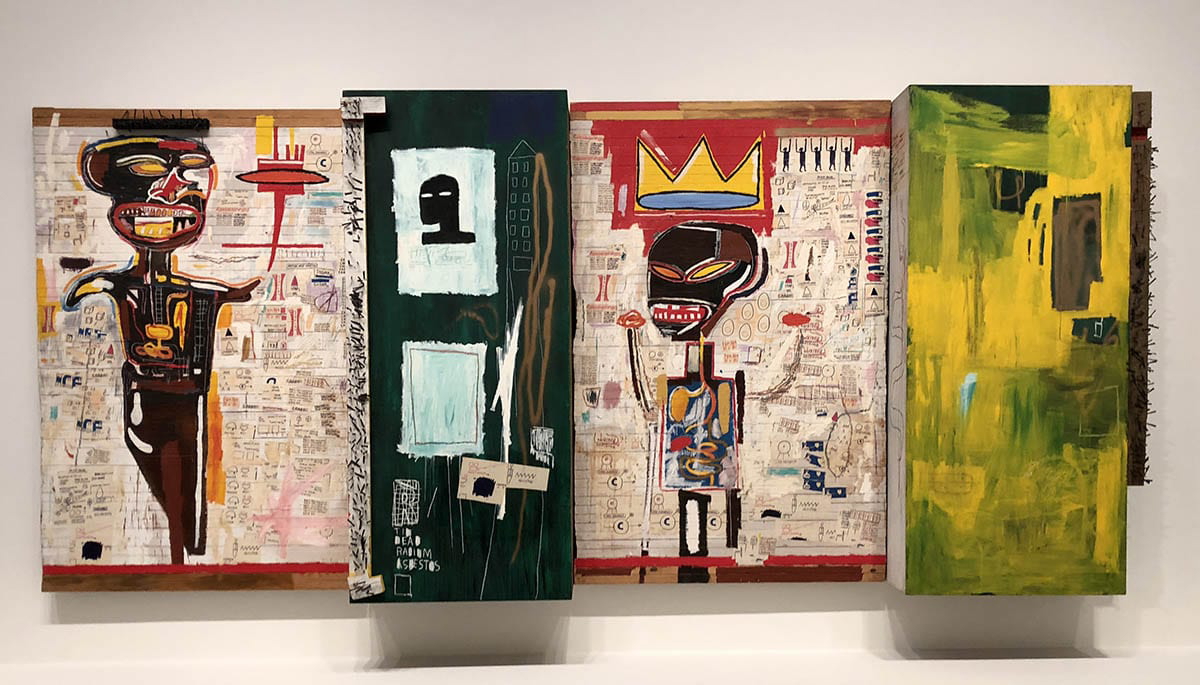
Basquiat’s death was not entirely unexpected for those who knew him, given his deteriorating state. Still, the short and tragic life of the artist and his steady path of self-destruction horrified the artistic community. Basquiat’s family, including the artist’s father who kicked him out of their family home, became responsible for Basquiat’s legacy, the authentication of works, sales, and copyright issues.
In 2009, a former Williamsburg drug dealer addressed the Basquiat’s estate claiming he used to sell heroin to the artist without knowing who he was. Allegedly, Basquiat introduced himself as Mike and, during one of his last visits in summer 1988, offered to paint the steel front door of the shop that served as coverage for the dealer’s main business. The dealer reluctantly agreed, and “Mike” left behind a strange red painting of a figure with devil’s horns. A decade later, the dealer recognized “Mike’s” face in an art book.
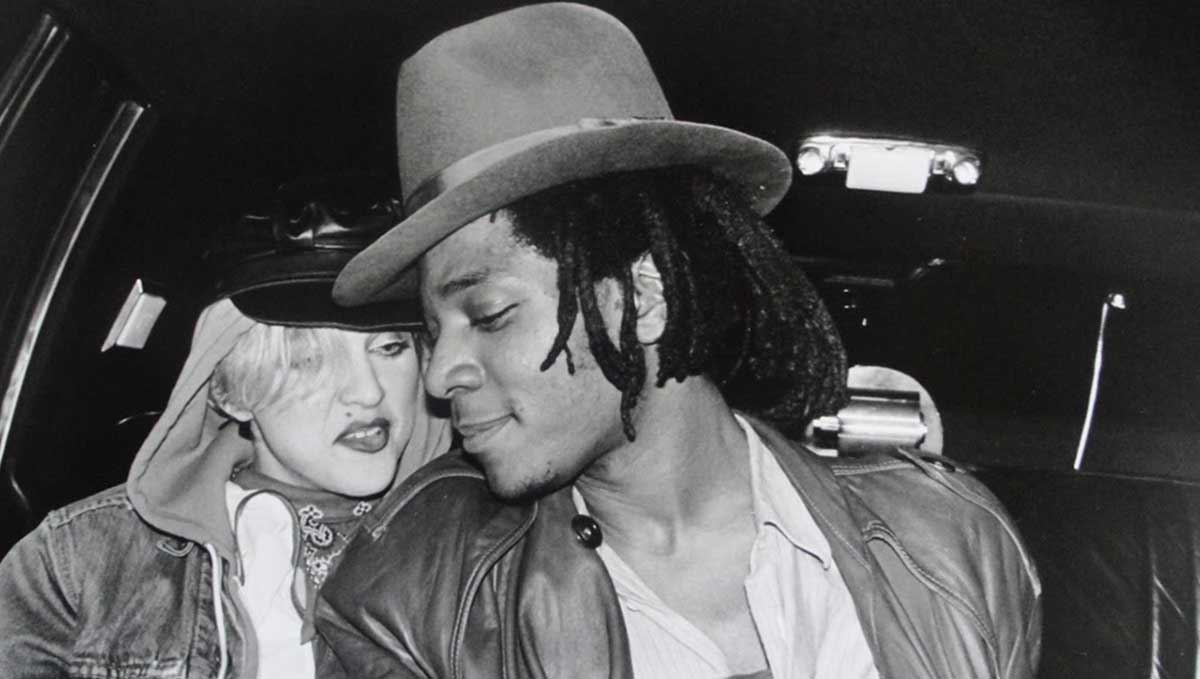
The dealer then approached Basquiat’s relatives to ask for authentication of the door painting. After long deliberation, the family and a group of experts ruled out that they did not believe the piece was a genuine Basquiat. Most likely, one of the reasons for refusal was the ethical side of the issue, as the family did not want the person indirectly responsible for Basquiat’s death to profit from his death. Several years later, famous artist Shepard Fairey, who, like Basquiat, originated from the street art scene, stated that the painting was an unfinished piece by painter Phil Frost.