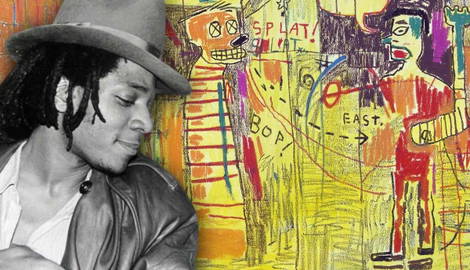

Jean-Michel Basquiat’s complex cultural background later manifested itself in painted works, as he frequently addressed scenes from African American and African history, mythology, and popular culture. Another influence that came from his childhood was the narrative structure of children’s cartoons and comic books that he would later reenact in his art. Read on to learn more about the Neo-Expressionist painter Jean-Michel Basquiat and his short but remarkable life.
1. Jean-Michel Basquiat Had Complex Ethnic Roots
Neo-Expressionist painter Jean-Michel Basquiat was born in December 1960 in New York. His father was Haitian, and his mother Puerto Rican. As a result, Basquiat spoke and read fluently in English, Spanish, and French since his childhood. For his entire life, he remained an avid reader and quick learner, easily picking up knowledge of everything, from philosophy to good wines.
2. He Was Obsessed With Human Anatomy as a Child
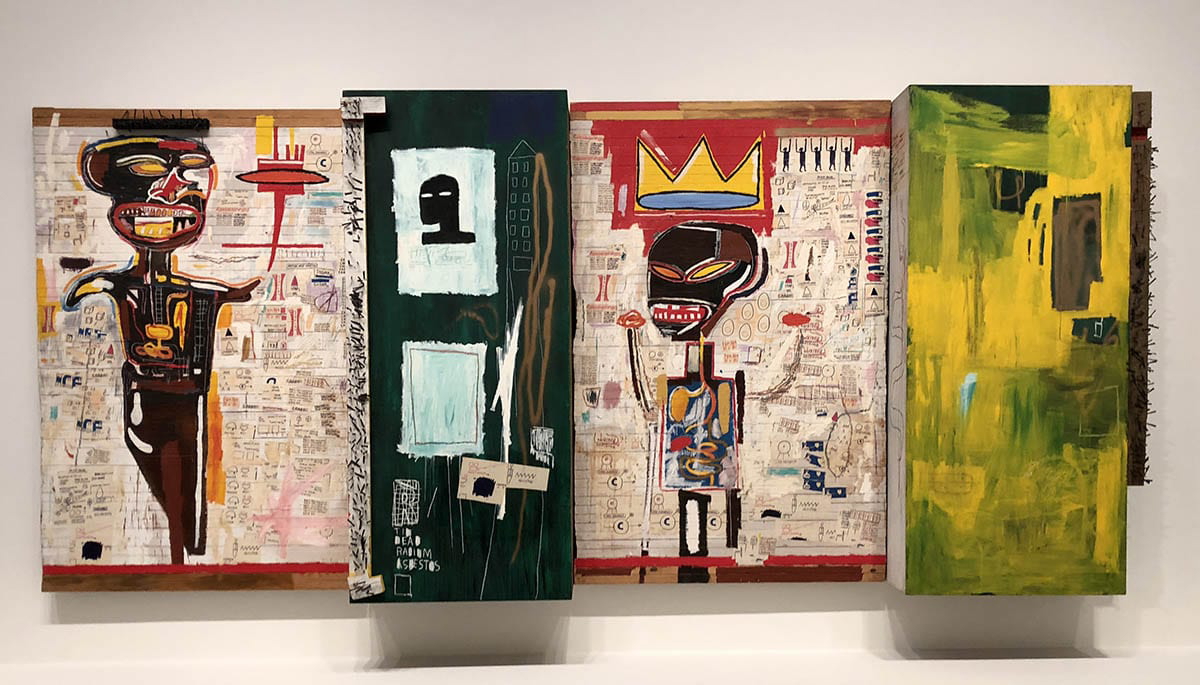
As a child playing outside, Jean-Michel Basquiat was once hit by a car and sustained serious injuries. Among other medical procedures, he had his spleen surgically removed, which forced him to stay confined to bed for a while. To occupy the boy with something productive, Basquiat’s mother Matilde gave him a copy of the famous anatomy atlas Gray’s Anatomy that is still considered a quintessential reference book for doctors despite being more than 150 years old. The drawings of human organs and bones fascinated Basquiat so much that he would incorporate their elements into his later painted works during his entire career. In a way, Basquiat’s anatomical depictions of the human body bridged the gap between him, a former street artist, and the artists of the past who studied anatomy on real cadavers.
Basquiat’s mother generally had a profound influence on her son. She encouraged him to visit museums and attend art classes. Unfortunately, Matilde suffered from a severe mental illness, which led to her being institutionalized in the mid-1970s. This made a devastating impact on young Jean-Michel Basquiat, and possibly could have triggered his later mental health issues and drug use.
3. Jean-Michel Basquiat Was Homeless for Several Years

As a teenager, Basquiat was kicked out of his home by his father. Reasons for such a decision vary from source to source, and refer either to Basquiat’s expulsion from high school, or to his habit of smoking marijuana in his room. In any case, for several years Basquiat lived on his friends and girlfriends’ couches and occasionally on the streets. Through his school friends, he joined the young artistic underground of Downtown New York, and soon began leaving strange and complex slogans on the city walls under the tag SAMO.
Although today Basquiat is often called a graffiti artist, his friends and SAMO collaborator Al Diaz actually reject this term. In his view, Basquiat’s way of interaction with space and text was radically different from their contemporary graffiti scene. Instead, it was conceptually closer to Ancient Roman graffiti that consisted of a person’s name and an action performed by said person. Others compared it to text art of artists like Jenny Holzer—simple yet meaningful pieces that provoked further conversation and were closer to poetry than to visual art.
4. He Used to Date Madonna
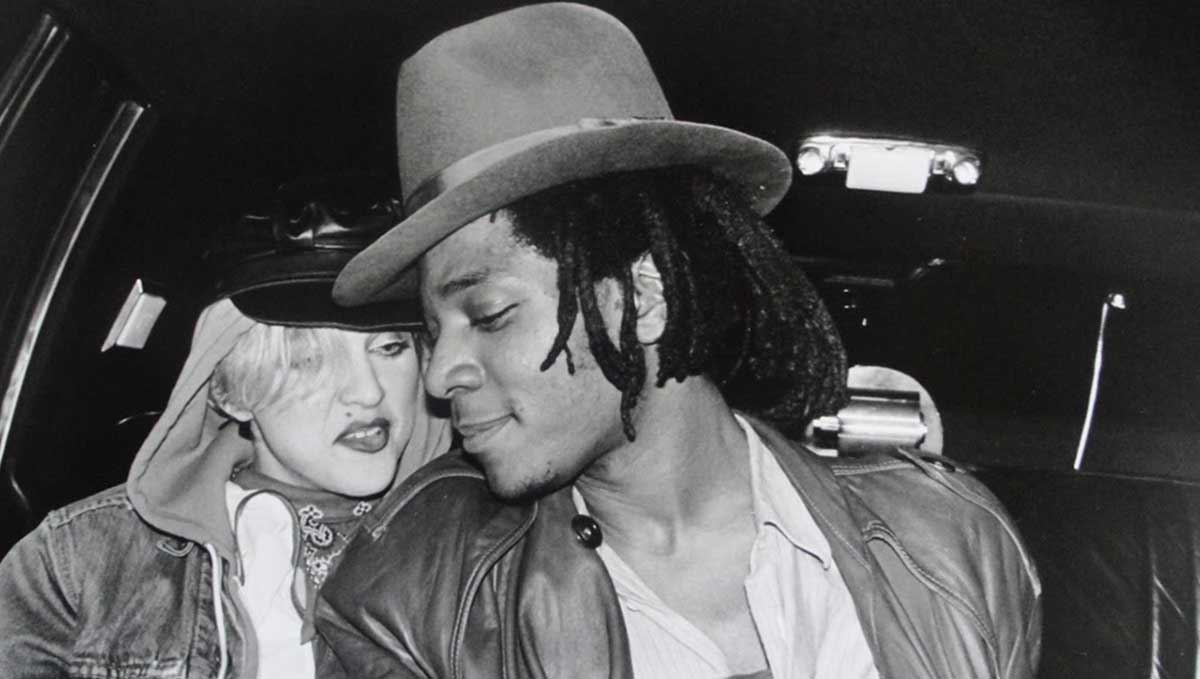
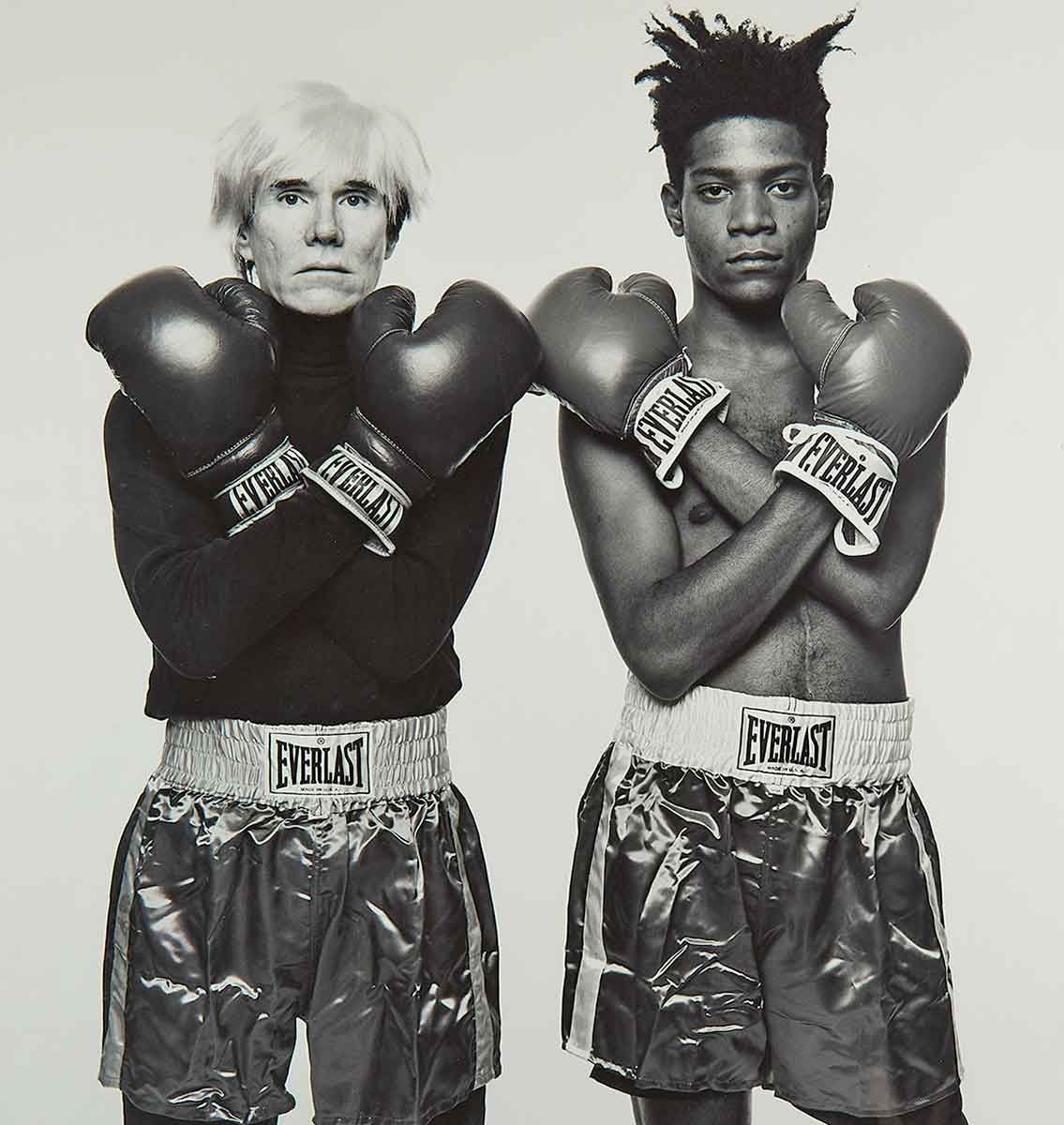
Basquiat was part of a unique and complex cultural landscape that featured some of the most famous artists of his generation. He was a friend of Keith Haring and a protege and collaborator of Andy Warhol. Basquiat’s relationship with Warhol remains a subject of debate even today: some see a genuine friendship between the two different artists of different generations, and others, a commercial enterprise arranged by Warhol. By the 1980s, Warhol had already passed his peak success and needed associations with young, fashionable artists to stay relevant.
Basquiat, on the contrary, was only beginning his career and needed a powerful figure supporting him.
Another remarkable person from Basquiat’s close circle was his then-girlfriend Madonna. The singer was just two years older than the painter, and at the time had not yet achieved her global success. However, Basquiat recognized her potential and envisioned her future fame. Perhaps, the relationship was based on the mutually felt artistic originality and celebrity potential. However, the emotional romance lasted only a few months, ruined by Basquiat’s heroin addiction.
5. Basquiat Became the Only Black Star in a White Environment

Despite all the success he achieved, Basquiat never allowed himself to forget what dangers he faced as a Black man and how shaky the ground that he stood on was. In 1983, Basquiat’s acquaintance, a street artist Michael Stewart, was killed by police officers after being detained for graffiti painting in the subway. According to Basquiat’s friends, the artist was deeply shocked by the tragedy and realized that it could have easily been him in Stewart’s place.
Over his short career, Basquiat created several works that reflected upon the struggles of African Americans, police brutality, and racial stereotypes. He frequently exploited and ridiculed the stereotypes surrounding Black people in the entertainment and arts industry. During parties with art collectors and businessmen, he introduced himself as a McDonald’s employee. He realized how unforgiving the public mind was to a non-white artist and how easily he could transform from a star into a scapegoat.
6. He Was a Difficult Person to Work With

Despite his charming demeanor and charisma, Basquiat was notoriously difficult to work with, as he refused to respect any deadlines and set rules. He changed galleries often as he got annoyed with the dealers’ attempts to discipline him. He had no concept of reasonable pricing, and demanded to sell works made in 10 minutes for the same high price as his large-scale complex works that took weeks. Basquiat frequently interfered with the exhibition montage process and rearranged the works as he liked, bringing immense frustration to show curators.
Basquiat’s continuous drug use similarly did not make him a more punctual and responsible person. In Andy Warhol’s diary entries concerning Basquiat, the famous pop artist frequently mentioned his altered state of consciousness and slow reactions, typical for heroin use. Moreover, Warhol was worried that someone gave Basquiat his home address, citing his potentially dangerous behavior not only for Basquiat himself but to others and their privacy.
7. He Studied the Mechanisms of Fame and Power
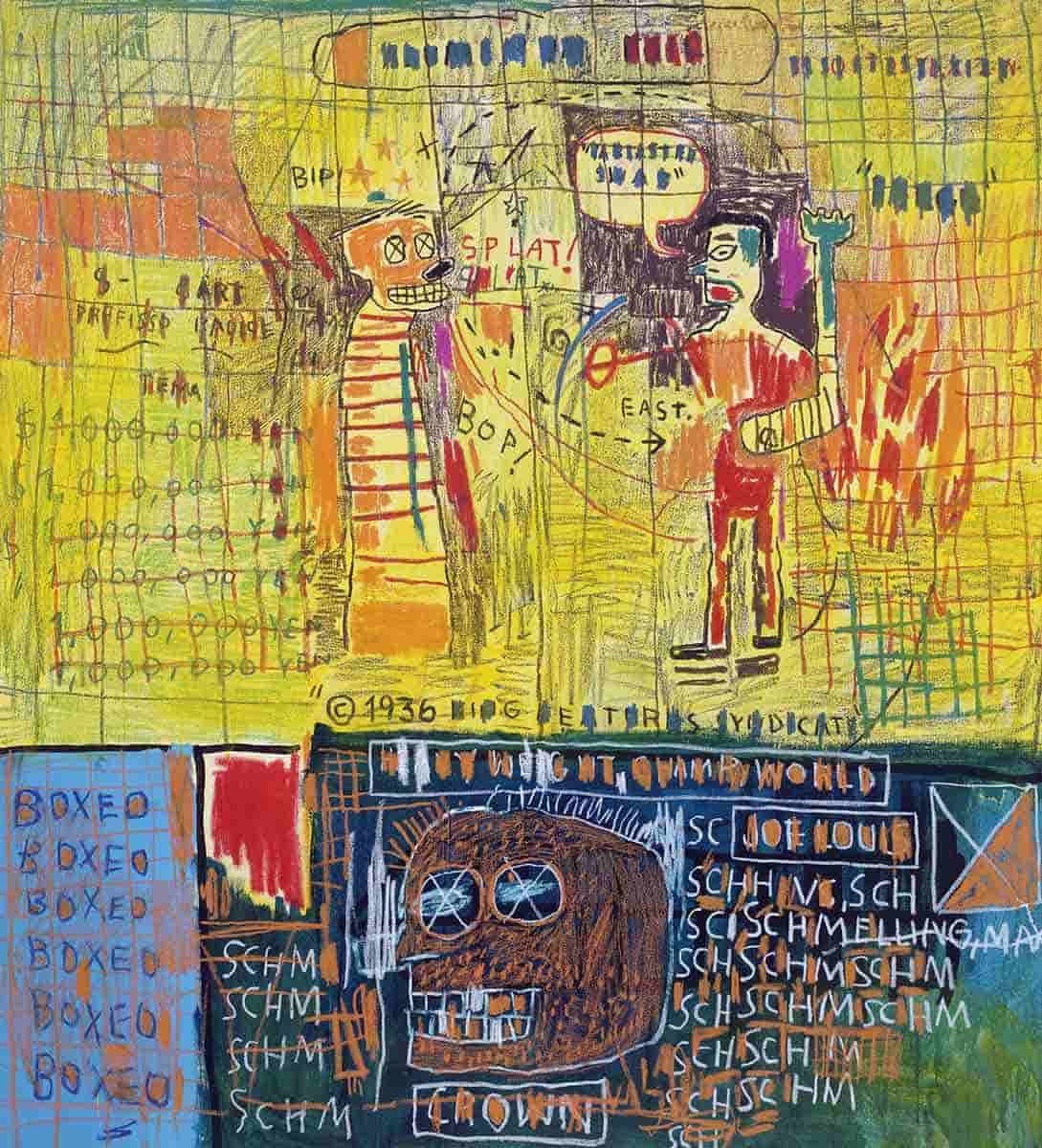
Fame, celebrity status, and fall from grace were perhaps the most important subjects in Basquiat’s work and thinking. He studied his contemporary celebrities and historical figures, interested in the darker side of glory and the expectations from a person achieving certain status. In a dramatic theatrical level, he possibly saw the fall as the integral part of one’s rise to fame. The ideas of power that corrupts and pride that blinds its bearer frequently appeared in his work.
For the same reason, Basquiat was interested in the lives and careers of famous Black figures in American history like jazzmen and athletes. He realized that their success was part of the unspoken social contract that allowed Black men a limited field for accomplishment and appreciation. One of the significant historical events that Basquiat examined in his works was the 1938 boxing match between an African American Joe Louis and German Max Schmeling. The crowd cheering for Louis was the first instance of widespread support of a Black athlete over a white one. The main reason for that was that Schmeling represented Nazi Germany, and the Nazi officials aimed to use his expected victory as proof of racial superiority.
8. Jean-Michel Basquiat Shaped Contemporary Painting
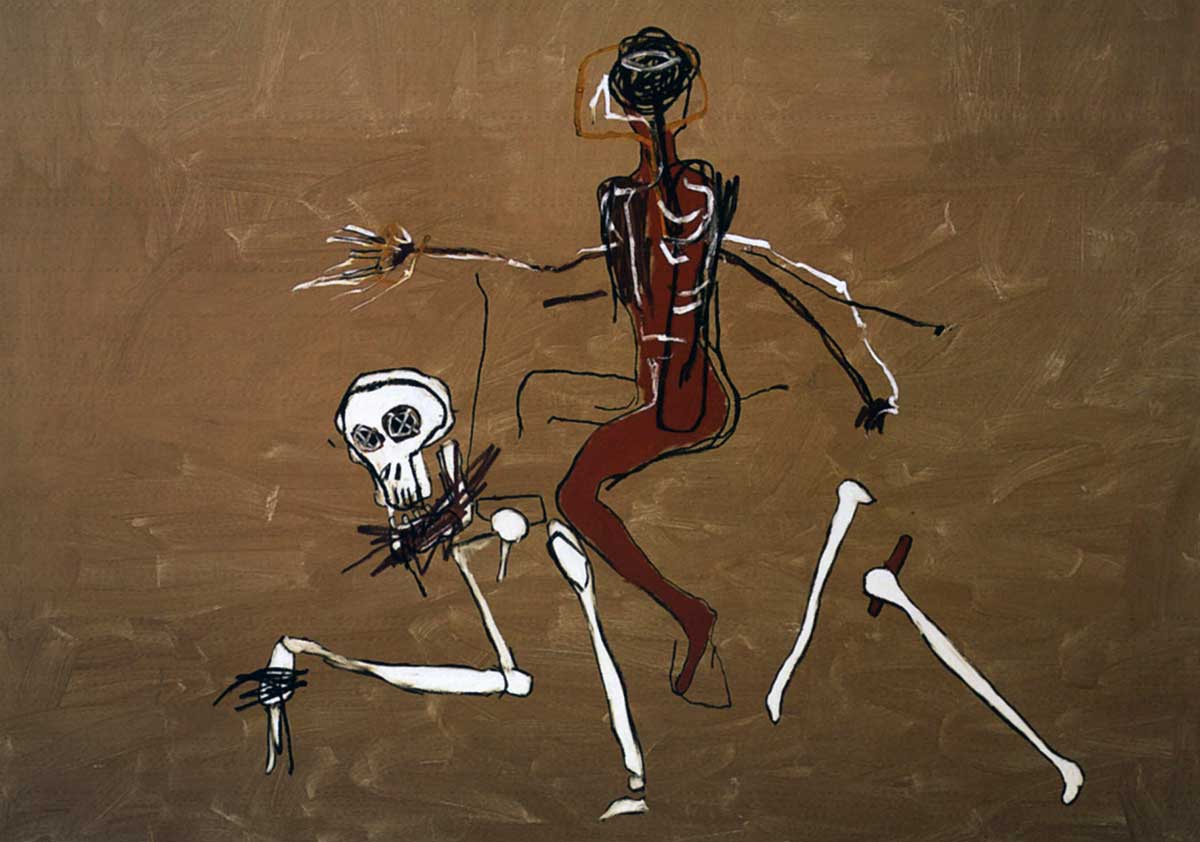
With a twist of bitter irony, Basquiat himself was the one who did not survive his fame. Suffering under pressure from the art world to create more and more work, to stay relevant, and to abide by the scene’s rules, he developed a heroin addiction. He attempted to quit drugs by booking himself a flight to the Ivory Coast and staying there for an indefinite period of time, recovering and creating art. Unfortunately, he did not make it. A few days before his flight, Basquiat was found dead of a heroin and cocaine overdose in his apartment.
Despite his relatively short career and untimely passing, Basquiat managed to create a complex and multifaceted oeuvre that inspired future generations of artists. His signature style featuring bold colors, chaotic small images and childlike lines can still be found in contemporary art galleries, recreated and adapted by young painters.