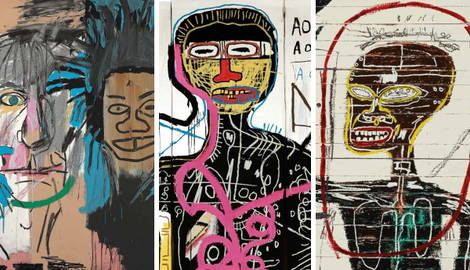

Jean-Michel Basquiat was an incredibly prolific and famous artist, who left behind hundreds of paintings. Some of them were executed in a matter of hours, and some took days to make. Basquiat’s art featured recurring symbols related to urban culture, African history, and the history of art. Read on to learn more about Jean-Michel Basquiat’s most famous paintings and the meanings behind them.
1. Cadillac Moon: Jean-Michel Basquiat’s Famous Early Painting
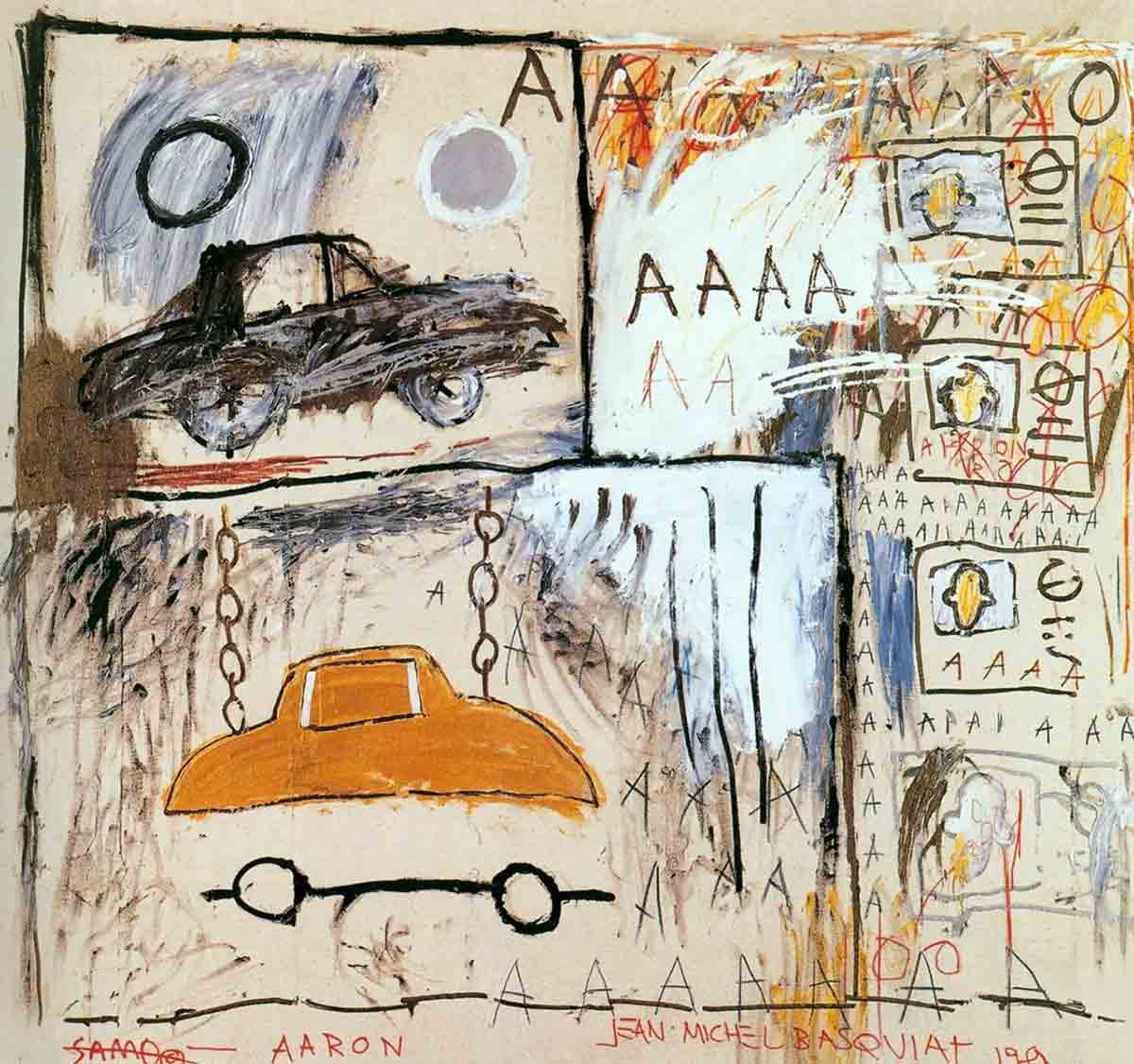
Cadillac Moon was the first painting that Jean-Michel Basquiat ever sold in his life. Previously, he was a homeless street artist who sold hand-painted t-shirts and postcards, and lived on friends’ couches. Surrounded by young artists, writers, and musicians, Basquiat participated in many art projects, including starring in a 1981 film Downtown 81, telling a semi-biographical story of a young artist trying to become famous. One of Basquiat’s co-stars was the Blondie frontwoman Debbie Harry. Cadillac Moon was one of the paintings done by Basquiat specifically for the film and addressing the subjects of dynamic urban life. Harry was so impressed by it that she bought the work immediately after filming for $200.
2. Dos Cabezas
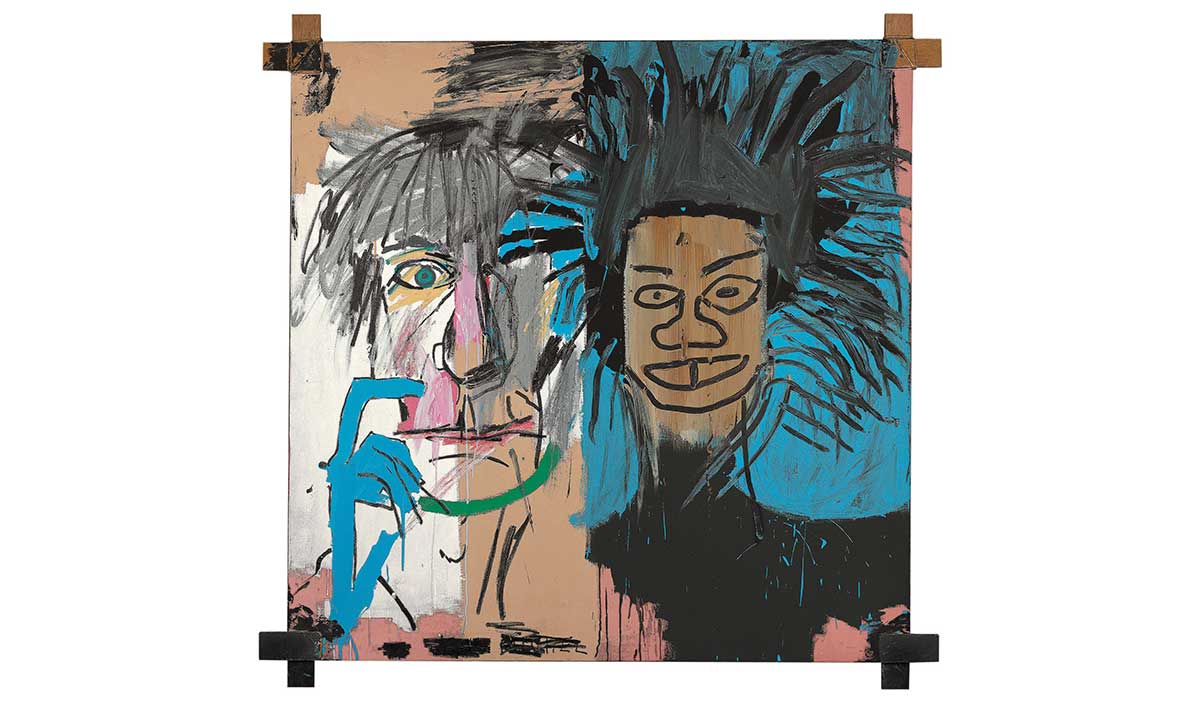
In 1982, Basquiat met his longtime idol Andy Warhol. Technically, the two had already contacted each other before, as Warhol bought a few hand-painted postcards from Basquiat in the years before his great breakthrough. Still, in October 1982, Basquiat’s art dealer arranged a lunch to introduce the two artists properly. Basquiat was obsessed with Warhol, and, according to the latter’s diary entry, left the meeting only to come back in two hours with a freshly painted portrait of him and Warhol together. In the following years, Warhol would mentor Basquiat and collaborate with him on several projects. However, some colleagues and art historians believe that the relationship was not genuine and relied mostly on Warhol exploiting Basquiat’s talent.
3. Boy and Dog in a Johnnypump

Basquiat had his great breakthrough in 1982. Approached by art dealer Annina Nosei, he finally began showing his work in galleries and even arranged a studio in Nosei’s gallery basement. At that time, he was enthusiastic about new opportunities and later evaluated his 1982 works as his best. Boy and Dog in a Johnnypump is a reflection of a happy urban childhood, with a boy and his dog playing next to an open fire hydrant. The intense orange color suggested the New York summer heat, relieved only with cold hydrant water.
4. Crown Hotel (Mona Lisa Black Background)
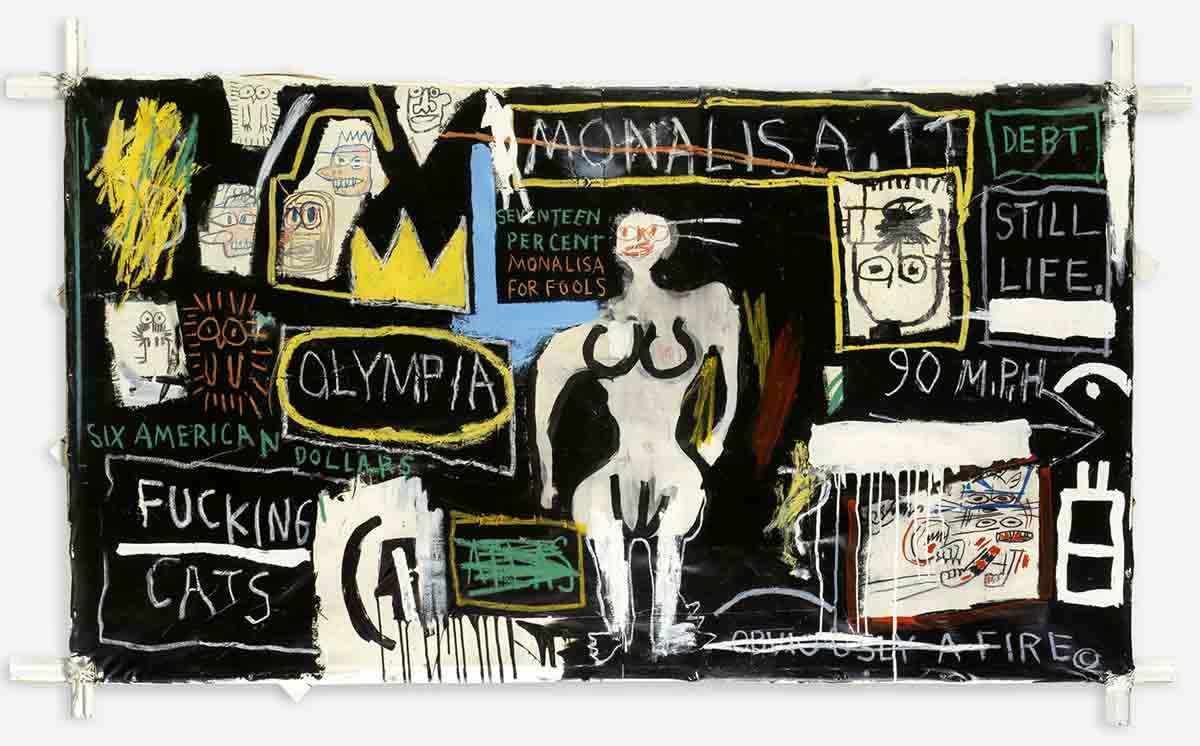
Basquiat was an incredibly knowledgeable artist, deeply aware of the transformations of artistic styles and symbols throughout the centuries. Crown Hotel contains references to famous artworks like Edouard Manet’s Olympia (explored by Basquiat in many of his other paintings), and Leonardo da Vinci’s Mona Lisa. Da Vinci was one of the most important artists in Basquiat’s personal hierarchies. He studied Leonardo’s anatomical drawings, treatises, and paintings, attempting to grasp his all-encompassing way of thinking and the influence lasting for centuries. Crown Hotel is a cryptic study of beauty standards, race, sexuality, and commodification of art.
5. Charles the First
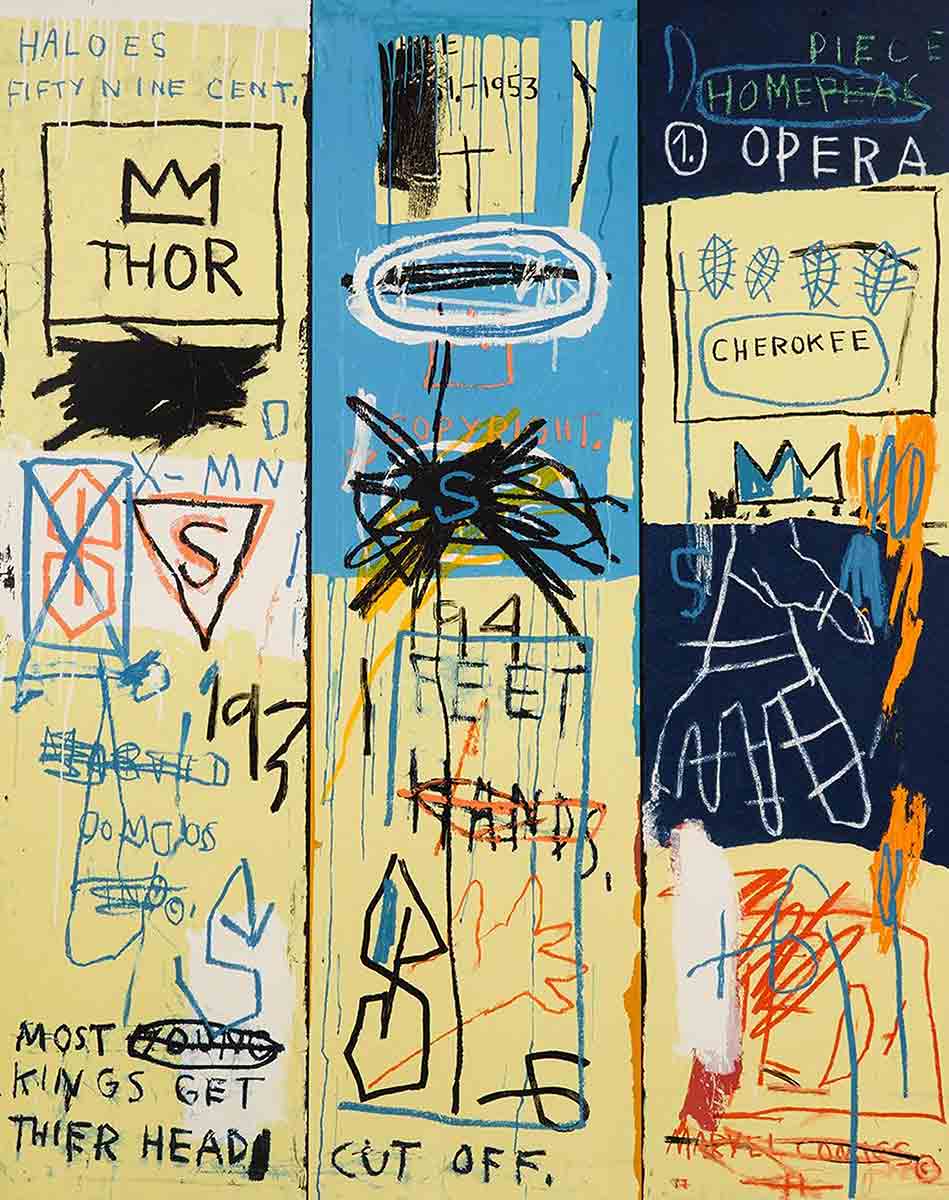
Charles the First was a tribute to the legendary jazz musician Charlie Parker. In the painted work, Basquiat again explored the concept of celebrity. According to his friends, even before his rise to fame, the artist was sure he would become a star one day. By studying the biographies and works of other famous figures, he also explored the limitations and dangers of celebrity status. The most prominent and famous fragment of Charles the First is the inscription in the bottom of the canvas MOST YOUNG KINGS GET THEIR HEADS CUT OFF. This statement of power leading to destruction would play a tragic and ironic role in Basquiat’s own fate. Unable to cope with the social and creative pressure, he developed a strong heroin addiction and died of an overdose at the age of only 27.
6. Versus Medici
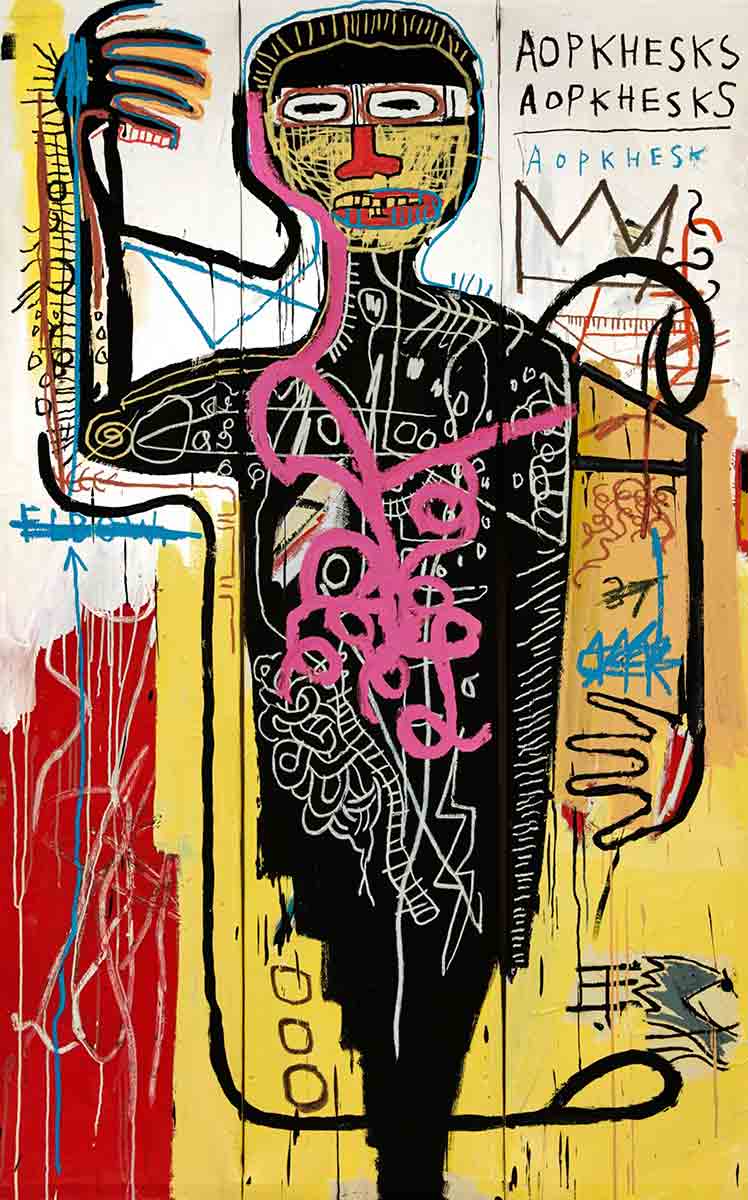
In 1982, Basquiat was just 21 years old, yet already had solo shows in Italy and a spot in the prestigious Documenta contemporary art exhibition in Cassel, Germany. During his trips to Italy, he revived his interest in Renaissance Italian culture and the famous figures from that time. Versus Medici referred to the figure of Girolamo Savonarola, a Dominican friar who managed to overthrow the omnipotent Medici clan. Savonarola strictly opposed secular art and culture, and rejected the attributes of luxurious life, so prominent with the Medici. Savonarola’s reign was short, and ended with his execution after just four years in power. Basquiat was obsessed with the transformation of a powerful figure into a scapegoat and a cautionary tale of the dangers of power and glory.
7. A Panel of Experts
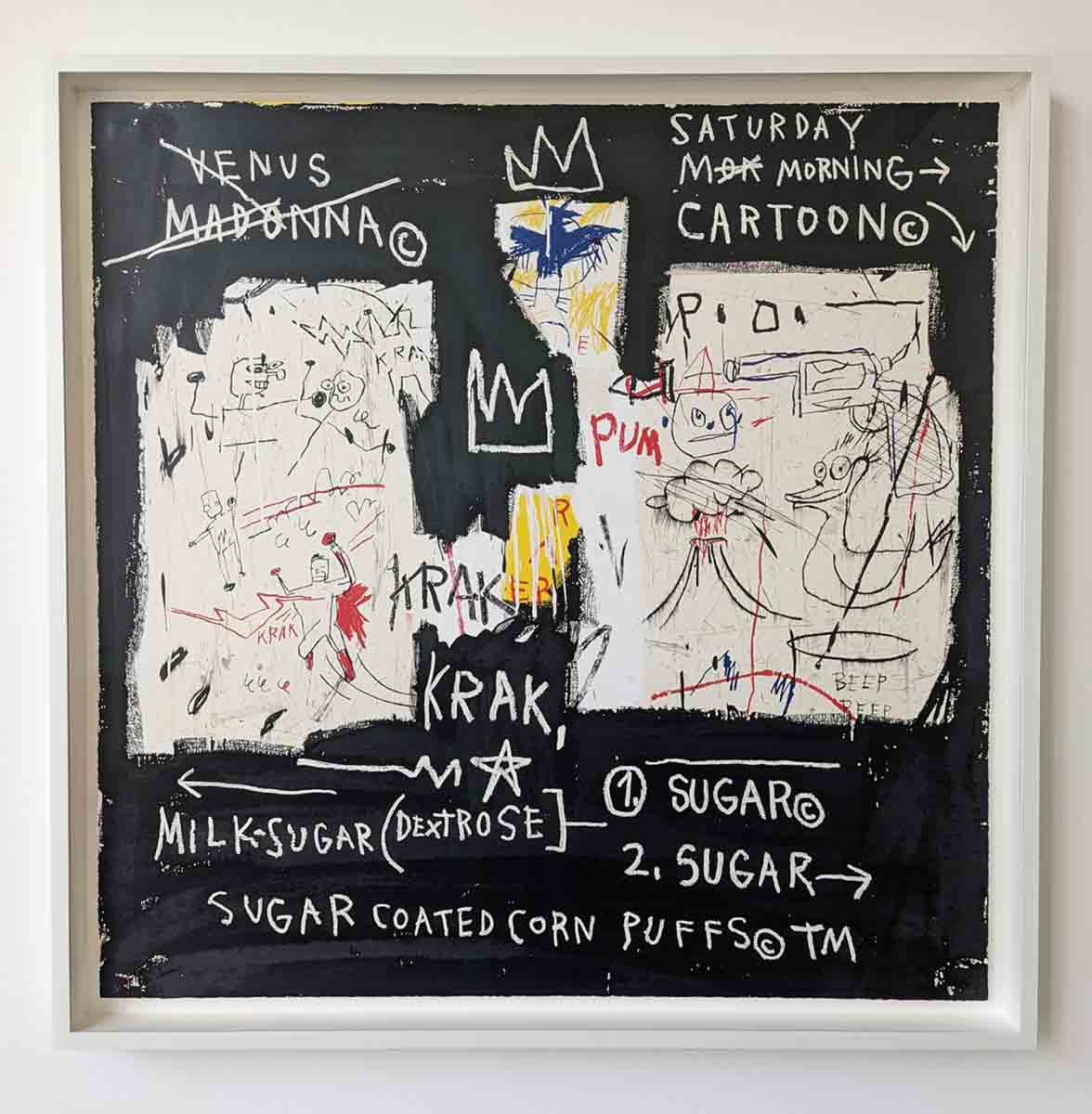
The 1982 painting A Panel of Experts referred to Basquiat’s tumultuous personal life at the time when he simultaneously dated aspiring artist Suzanne Mallouk and pop singer Madonna, who had not yet achieved widespread fame. According to friends, when Basquiat introduced Madonna to art dealers, he specifically mentioned that she would become the greatest pop star in the world. Still, the painting is less concerned with Madonna’s potential stardom and more with her fight with Mallouk. Suzanne accidentally spotted Basquiat and Madonna in a nightclub and attacked her. Basquiat was genuinely amused with the situation, and congratulated Madonna for winning the fight. Later, Mallouk would burn a collection of Basquiat’s paintings he left in her apartment. The style of the painting referred to Basquiat’s interest in comic books and cartoons from his childhood.
8. Napoleonic Stereotype Circa 44
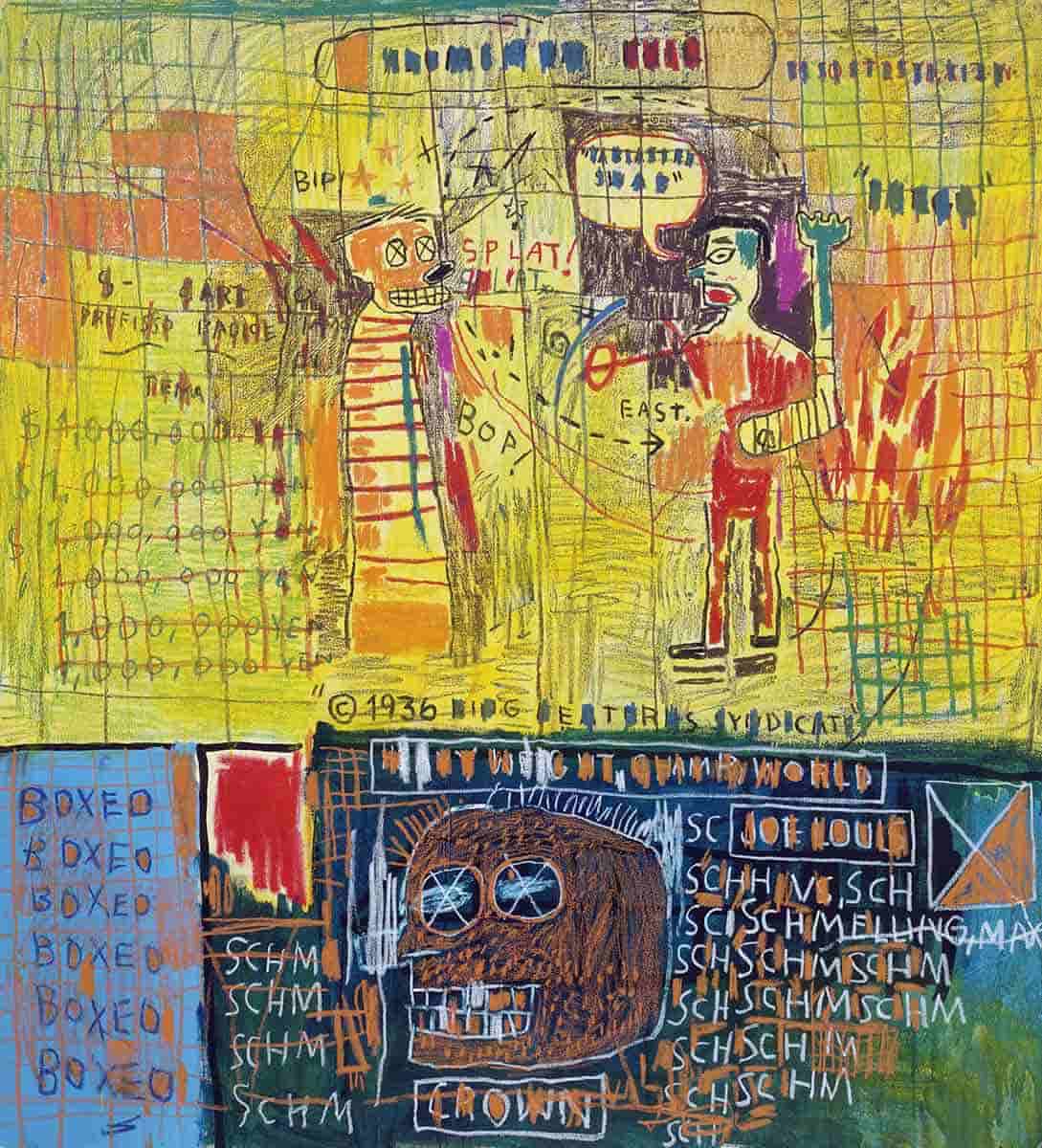
Basquiat was deeply interested in celebrity figures and the mechanisms of their fame. He was particularly interested in how African American public figures were limited in their opportunities for success and appreciation. For a long time, sport was the only domain Black men were allowed to excel at—however, only until they had to face a white opponent.
Basquiat’s 1983 painting refers to the famous 1936 and 1938 boxing matches between Max Schmeling, representing Nazi Germany, and Joe Louis, an African American athlete. In Germany, Schmeling’s initial victory was framed as the proof of Aryan racial superiority (the boxer himself, however, did not share this view, and later hid two Jewish children in his apartment to save them from death in a concentration camp). Two years later, Louis won the second match. This was the first time in history when the American public openly cheered for a Black athlete against his white opponent.
9. Hollywood Africans
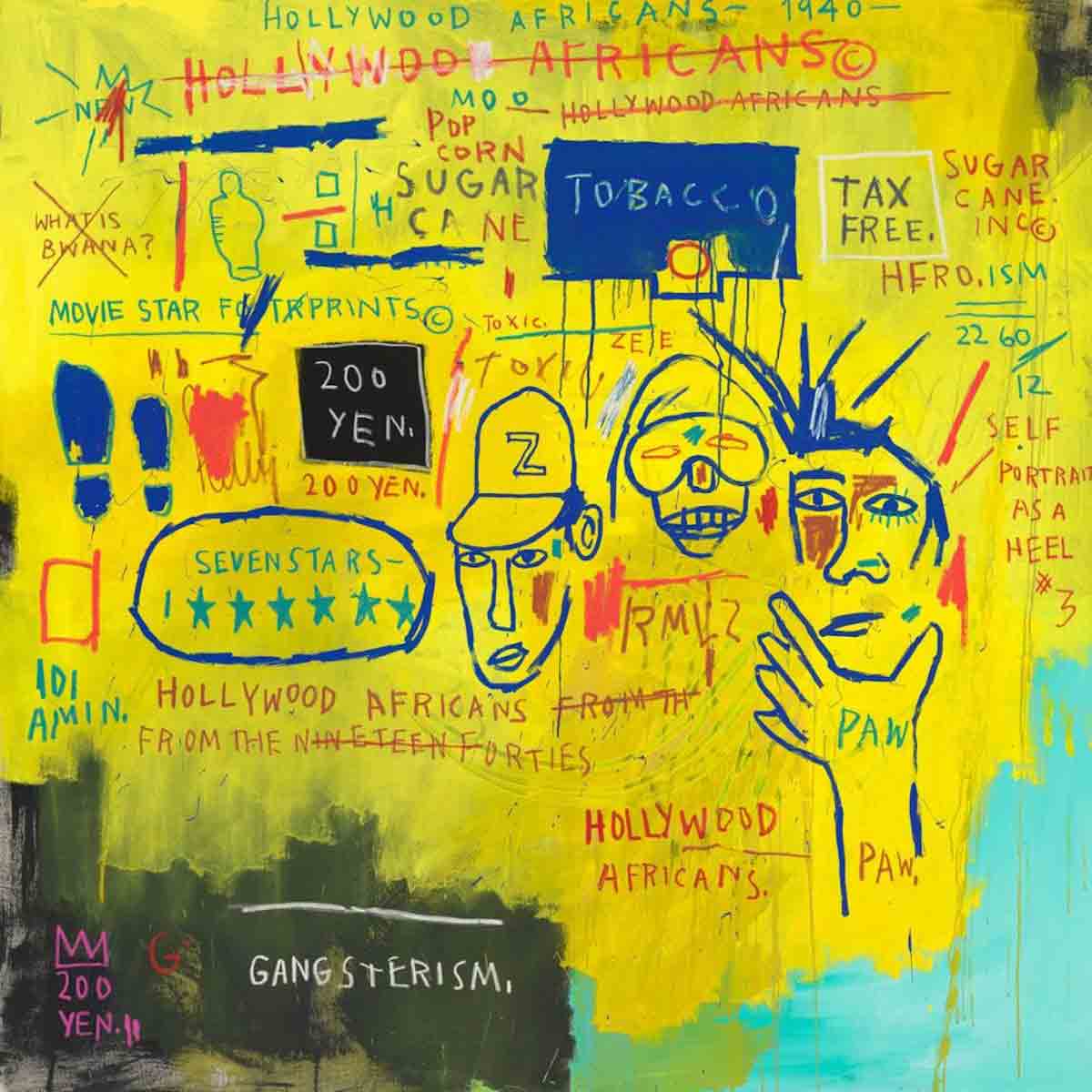
In September 1983, a young street artist Michael Stewart was arrested for writing graffiti on a New York Subway wall, and subsequently admitted to the Bellevue Hospital less than an hour after his arrest. Thirteen days later Stewart died from the side effects of strangulation. No police officer was held responsible despite numerous accounts of witnesses and Bellevue Hospital staff who saw Stewart arriving at the hospital with cuts, bruises, and severe trauma. Stewart’s death was one of many cases of police violence targeted at Black people. Jean-Michel Basquiat knew Stewart and was deeply shocked by his murder, clearly understanding he could possibly suffer the same fate.
Basquiat was well aware of his position as a single Black man in the all-white world of gallerists and collectors. Hollywood Africans was one of the works where Basquiat explored and ridiculed the stereotypes around Black people in the art and entertainment industry. At the time, Black actors had a severely limited range of roles, and Black artists, like Basquiat, were expected to create art within a specific racially-determined aesthetic.
10. Flexible: Basquiat’s Famous Painting of an African Poet
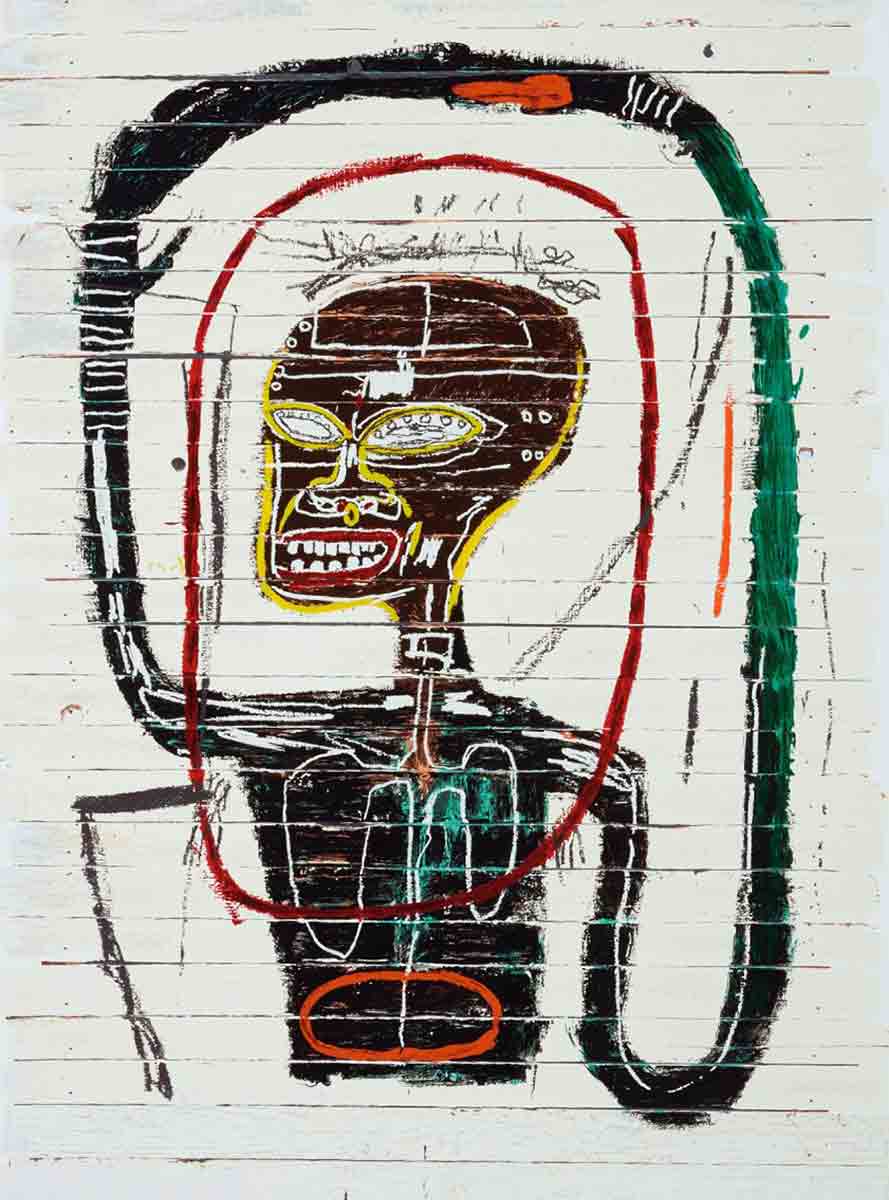
Basquiat had a longstanding interest in African cultures and myths. His famous Flexible painting featured a figure of griot, a specific type of West African singer, performer, historian, and keeper of cultural traditions. Griots were a separate professional group needed to preserve the oral traditions of a community, and were highly respected. The occupation had no age or gender limitations, but required a long training. They were musicians, storytellers, and also keepers of peace, as they were expected to solve conflicts between families and clans. Perhaps, Basquiat considered himself a type of urban griot, preserving folk traditions.