Summary
- Sparta was ruled by a unique dual monarchy, known as a diarchy, with two kings reigning simultaneously.
- The kings’ primary roles were as hereditary generals leading the army and as chief priests for the state.
- Royal power was not absolute and was checked by the Ephorate, a council that could prosecute and even execute kings.
- King Agis IV was executed by the Ephors for attempting to enact debt and land reforms, a unique event.
- Inspired by Agis, Cleomenes III successfully implemented reforms by first assassinating the Ephors who opposed him.
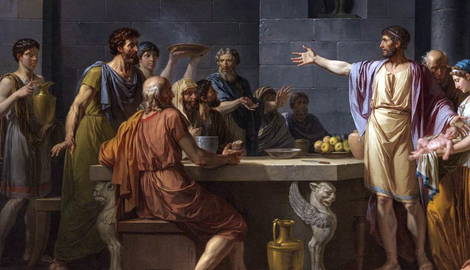
The name Sparta has gone down in history as a military state, with every aspect of male life constructed around military service. One would be forgiven for assuming that Sparta was ruled with an iron fist by an autocratic military dictator king. But contrary to expectations, Sparta has a unique dual monarchy, known as a diarchy, with two independent kings who had relatively limited influence over public life. That did not stop many of them from making their mark on history. Meet the kings of Sparta.
Origins of the Spartan Kings
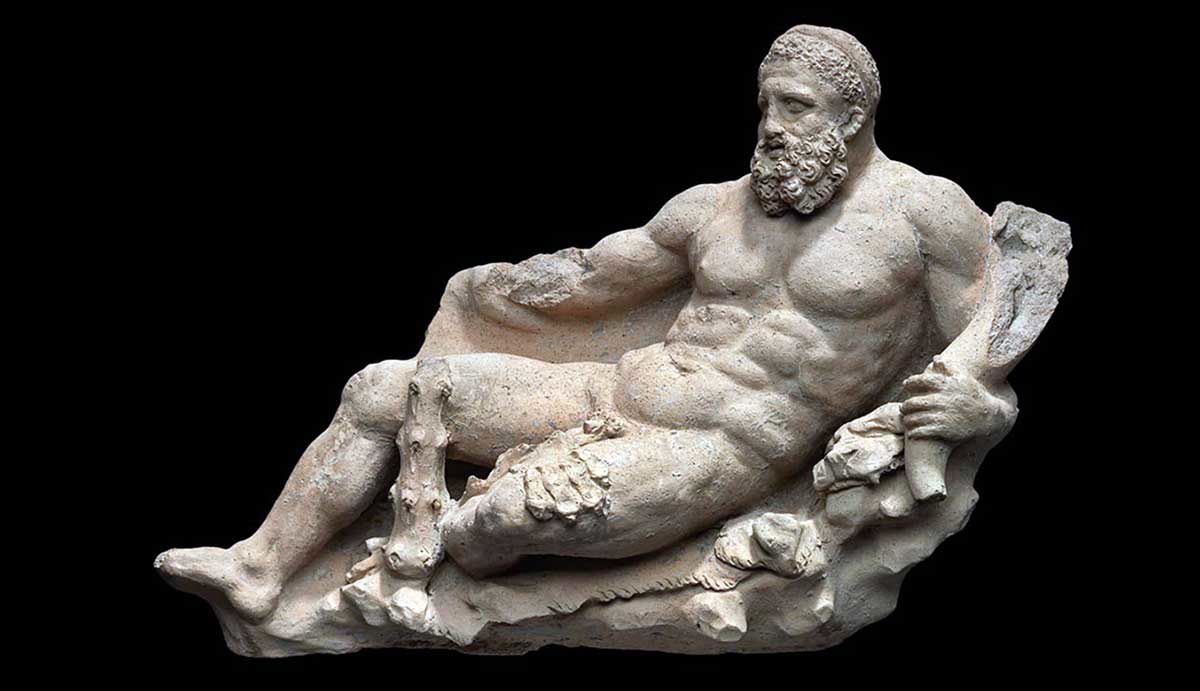
According to mythological tradition, the royal dynasties of Sparta were descended from Heracles, the demigod son of Zeus who achieved immortality. The kingship originated when the Heracleidae, the descendants of Heracles, conquered the Peloponnese. They divided the kingdoms among themselves, with Eurysthenes and Proclus receiving Sparta. This is the mythic origin of the fact that Sparta had two kings. Therefore, there were two royal lines in Sparta: the Agiad line descended from Eurysthenes, and the Eurypontid line descended from Proclus.
Modern scholars believe that this form of kingship emerged in Sparta during the 9th or 8th centuries BC, when Greece was undergoing a process of urban fusion called synoecism, in which villages would come together to form a larger community. As a compromise between tribal leaders, the diarchy was set up so that no singular tribe had more power than the rest.
Dual Kingship
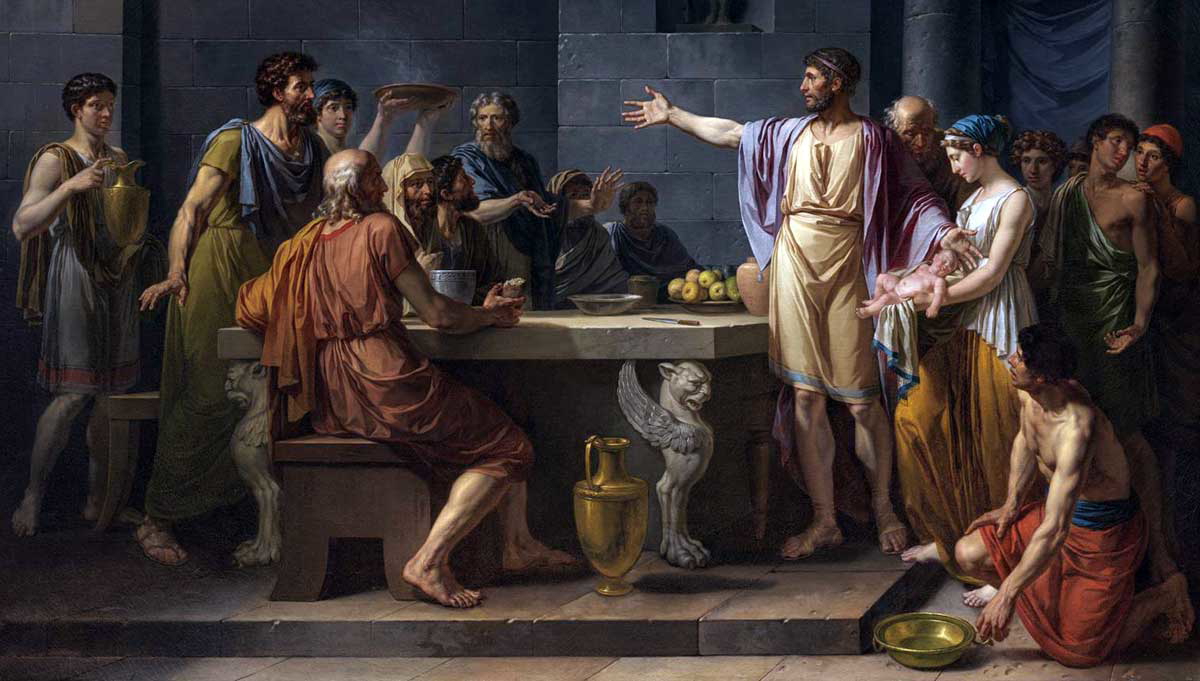
In Sparta, the two kings ruled at the same time in a system known as diarchy. This can be either asymmetrical or complementary, with each king having his own function, such as a military leader and a religious leader, or symmetrical, with both kings having equal powers and functions. Sparta’s diarchy was principally complementary.
In the archaic and classical periods, the kingship had symbolic ties with the Dioskouroi, the divine twins Castor and Polydeuces. These were the twin sons of Leda, except that one was fathered by a mortal king and the other by Zeus. They were the embodiment of fraternal piety, and eventually, the pair would share Pollux’s immortality. A connection with the pair offered a religious legitimacy for the idea of having two kings rule at the same time.
By the Hellenistic period, as power became more centralized, symbolism for the kingship shifted to Heracles. While both royal lines claimed descent from the hero, Heracles represented an ideal role model for the single ruler, representing a significant ideological shift.
Roles and Responsibilities
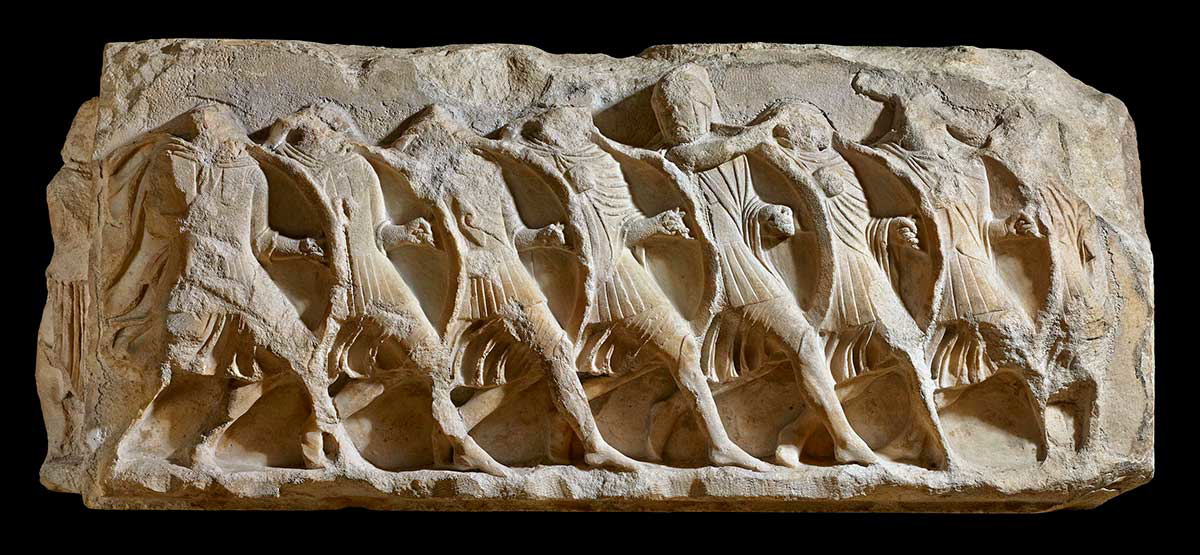
The main role of the kings was as military leaders. In this way, Spartan kings were essentially hereditary generals. During war times, one of the kings led the armies while the other remained in Sparta to oversee domestic affairs. The kings also held religious roles, acting as the chief priests to certain public cults, like those of Zeus Lakedaimonia and Zeus Ourania. They were in charge of offering sacrifices on behalf of the Spartan people and the army while it was on campaign.
The kings were also part of the Gerousia, the council of elders, which conducted the affairs of the state. While the kings did not hold any more power than the other men on the council, their presence acted as a rudder to steer the direction of the state. Given that the other men on the council were elders, there was greater turnover among the other members than there was among the kings. In this way, the kings could gain and exert more influence, given their longer membership on the council. They could also leverage their role as military leaders to exert influence in the Gerousia, provided they had a record of military accomplishment.
Limits of Royal Power
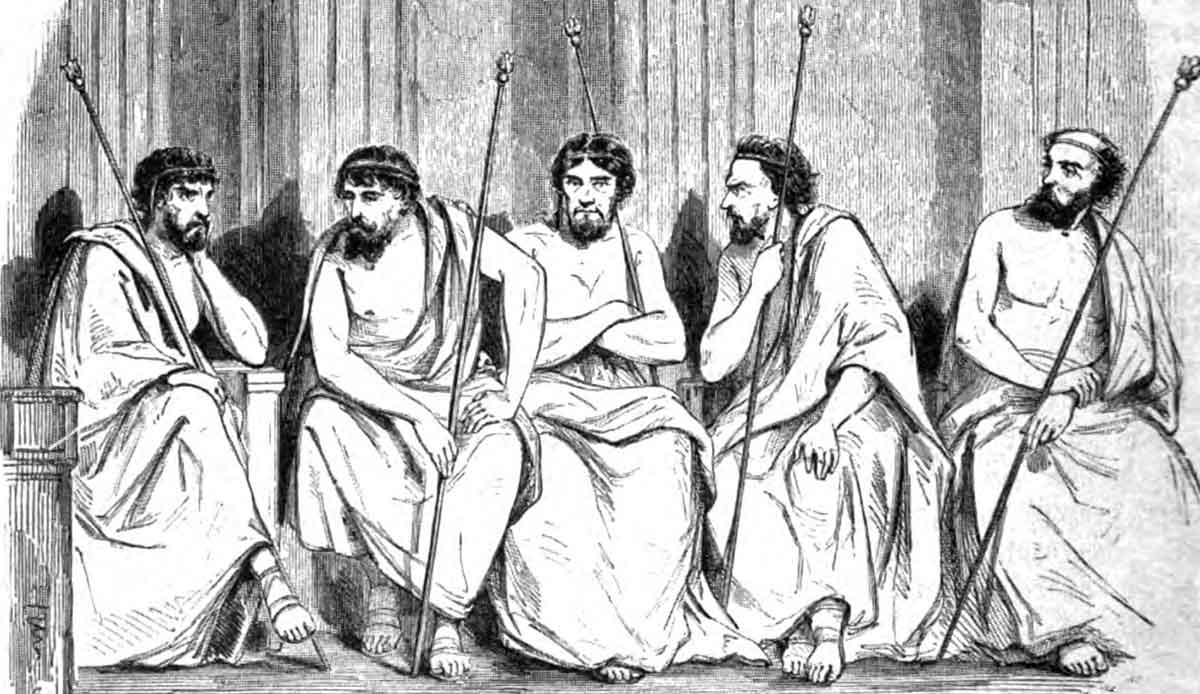
However, the kings did not have absolute power in Sparta. Their power was checked by the Gerousia and the Ephorate, a council of five men selected to oversee the affairs of the kings. The Gerousia was the council of 28 elders, all aged 60 and above, and the two kings. They prepared and debated legislation that was then presented to the citizen body, and they could also veto proposals from the assembly. The kings were equal members of this council, but could leverage their military accolades to exert more influence.
The Ephorate specifically excluded the kings. The council was selected on a yearly basis, and no man could serve more than once in his life. There was some overlap in judicial functions with the Gerousia, but the Ephorate was a more direct check on the kings’ powers. While on campaign, one of the Ephors would accompany the king to ensure that the king remained accountable. They had the power to fine the kings for improper conduct and could even bring them to trial. One Spartan king, Leotychidas, was tried and exiled by the Ephors on charges of bribery. Another, who will be discussed below, was even sentenced to death.
Cleomenes I
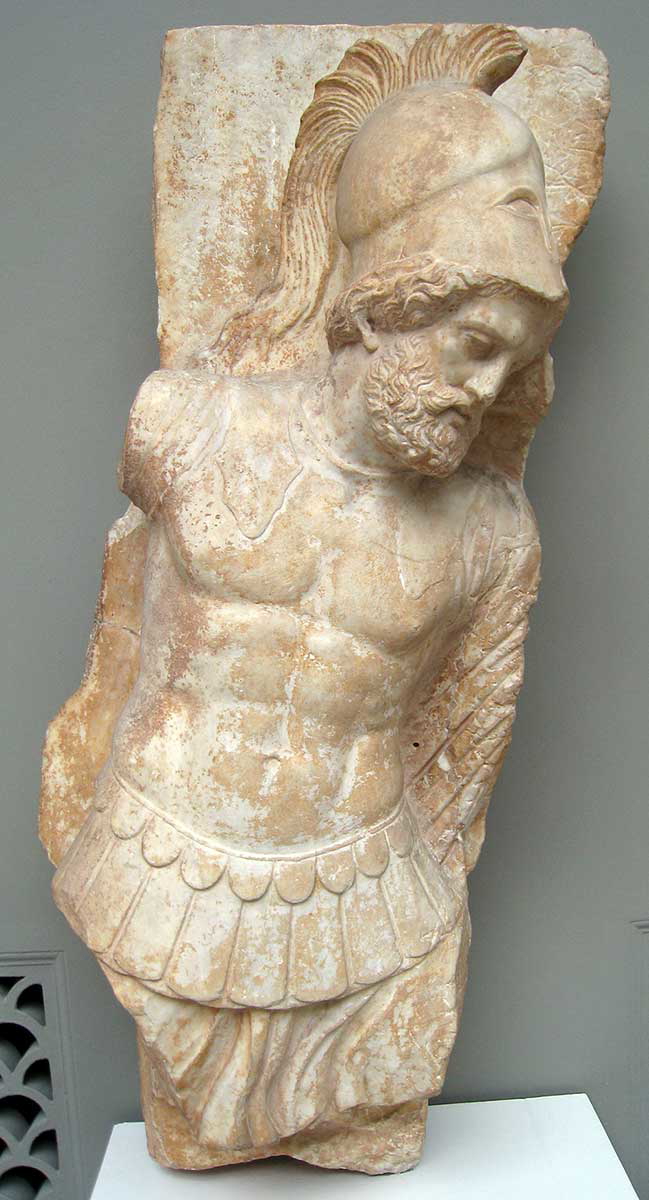
Cleomenes I was of the Agiad line, the son of Anaxandrides II by his first wife. He ruled from approximately 520-490 BC. He was involved in the political turmoil in Athens during the time of Cleisthenes before Athens’ democratic reforms. He helped to expel the tyrant Hippias from the city, but later tried to install Isagoras in a similar way and dissolve the Athenian council to make Athens a Spartan-controlled oligarchy. His efforts were thwarted by a popular uprising among the Athenians, who besieged Isagoras and the Spartans on the Acropolis for two days. On the third day, the Spartans departed under a truce.
Cleomenes was eventually exiled by the Ephors. As recounted by Herodotus, Cleomenes conspired to have his co-king deposed. Together with Leotychidas, who became the new king, they claimed that his co-king, Demaratus, was illegitimate. They even bribed the Oracle at Delphi into supporting their claims, leading to Demaratus being ousted from the kingship and Leotychidas taking his place.
Leotychidas was eventually deposed as well for taking a bribe. Cleomenes’ conspiracy against Demaratus eventually became known, so he fled the city and went to Thessaly and then to Arcadia, where he attempted to rally cities against Sparta. When the Spartans realized what he was doing, they recalled him to Sparta to rule as he had before.
After his return from exile, Cleomenes became increasingly erratic or, as Herodotus put it, he was struck by madness. It was said that he hit any Spartan he happened to meet in the face with his staff. His family eventually had him tied up in the stocks. He threatened one of his guards to give him a dagger, and then went about mutilating and flaying himself. And thus he died. There were different reasons given for why he became mad. The Athenians said it was because he attacked Eleusis; the Argives claimed it was because he burned their sacred grove; while the Spartans themselves claimed that it was because he had become an alcoholic.
Leonidas I
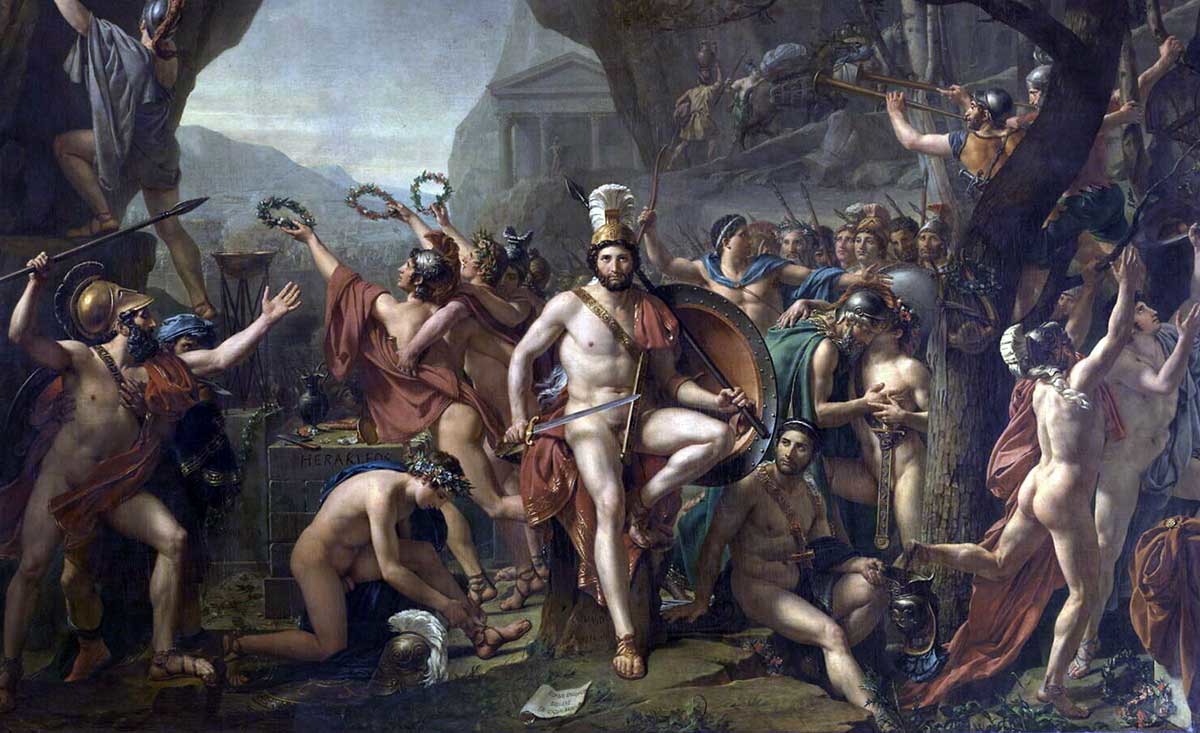
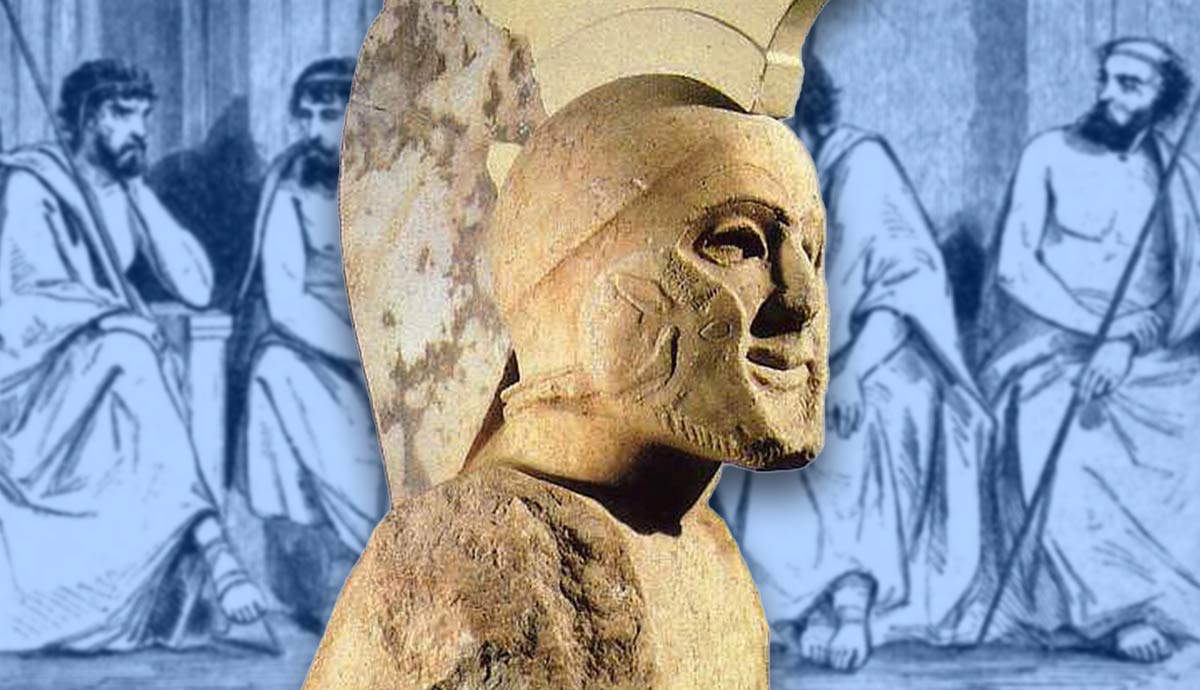
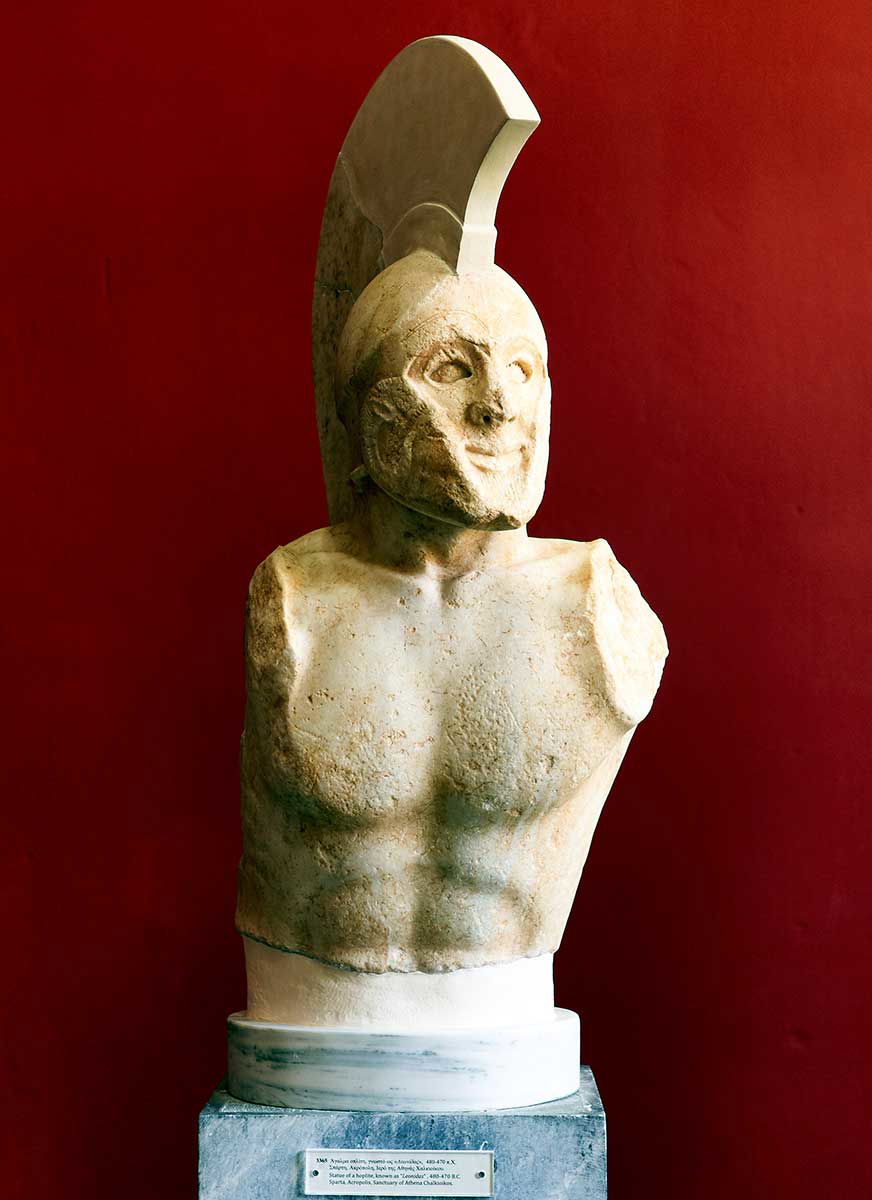
Leonidas I is possibly the most famous Spartan king for modern audiences. His stand at Thermopylae against the Persian invasion of Xerxes is one of history’s most famous last stands and has inspired anti-authoritarian and democratic ideals for centuries. Leonidas was of the Agiad line. He was never supposed to be king, having had two older brothers. Yet the eldest brother, Cleomenes I, died without a male heir. His other brother, Dorieus, died earlier in Sicily. Leonidas assumed the throne in 489 BC. He married his brother Cleomenes’ daughter, Gorgo, and by her had one son, Pleistarchus. None of his speeches survive. Most of what’s known of him comes from later tradition and apocryphal sources.
His greatest claim to fame was his heroic stand at the pass of Thermopylae to delay the Persian advance into Greece. He marched with 4,000 men: 1,000 Lacedaemonians, among whom were 300 Spartiates and 3,000 Thebans and other Peloponnesians. They fought for several days, fighting back against overwhelming numbers and giving no ground. They were eventually betrayed by Ephialtes, who led the Persians through a mountain pass to surround the Spartans.
The Greeks took counsel, with some arguing to retreat and others to stay. Leonidas chose to stay and sent all the other Greek allies away. The 5th-century BC historian Herodotus wrote that Leonidas had received an oracle from Delphi that foretold that either Sparta would be destroyed or its king would be killed. Wanting to win glory for himself and for Sparta, Leonidas and the Spartans remained to fend off the Persians and give the other Greeks a chance to escape. Leonidas died in the following Persian assault, and fighting broke out over possession of his body. Xerxes had his body decapitated and the head placed on a spike.
Agis IV
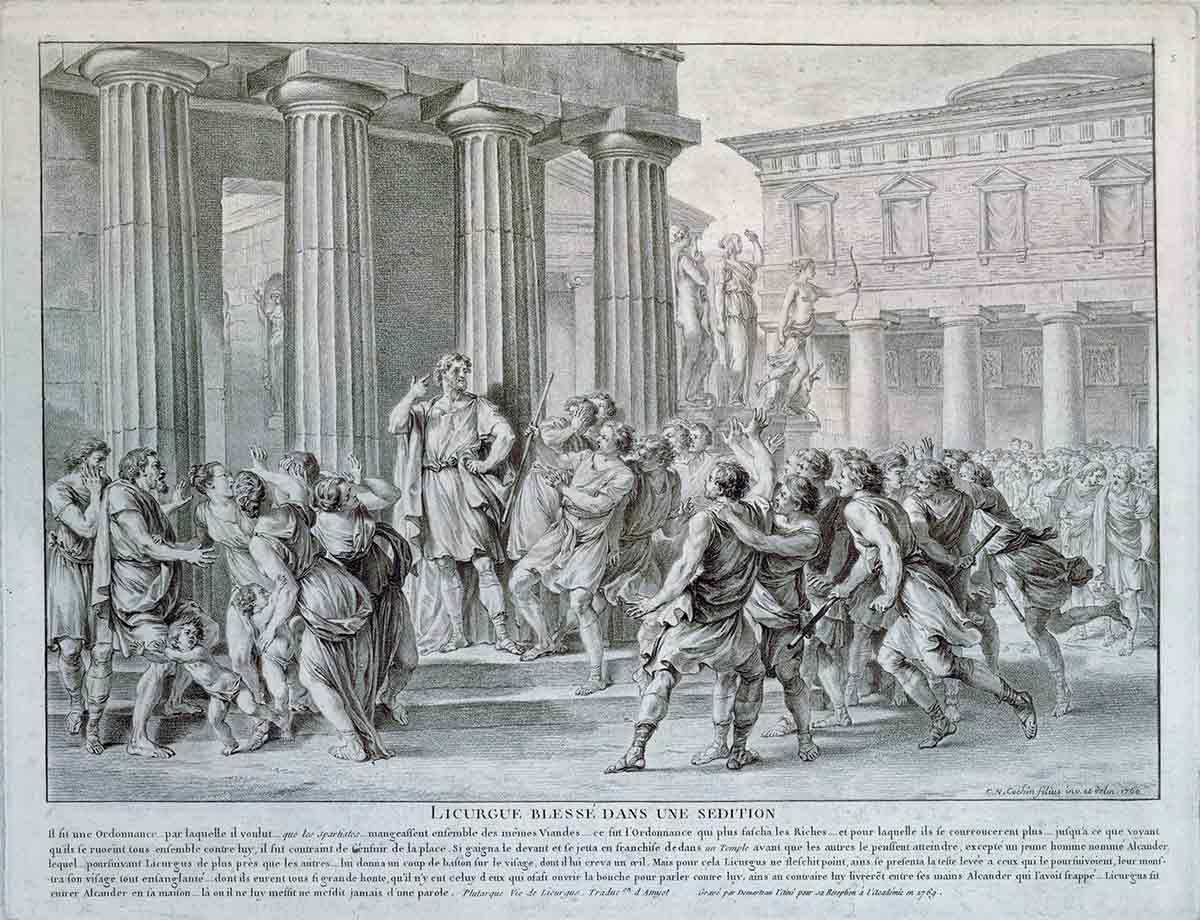
Agis IV was of the Eurypontid line and ruled from 244 to 241 BC. At the time of his reign, Sparta had begun to decline. Citizenship was dwindling, debt was high, and land had been concentrated into the hands of the wealthy few. The austerity that had usually defined the Spartans was being replaced with Hellenistic extravagance. Agis’ co-king, Leonidas II, embraced the extravagance and was not well-loved by the people. Agis, however, despite being raised among the richest family in Sparta, embraced the traditional austerity and turned away from the adornment that characterized Hellenistic royalty.
Agis sought to enact reforms in the style of the legendary Spartan lawgiver Lycurgus. He called for debt cancellation and land redistribution, leading by example as one of the first to give up his own estates. His co-king, Leonidas, and most of the elder elites were opposed to the reforms and slandered Agis. Leonidas spread rumors that Agis’ intentions weren’t as noble as he claimed. Instead, he was trying to install himself as a tyrant by essentially buying the loyalty of the poor. Agis was able to cancel debts, but when the time came to redistribute land, he was often delayed by the Ephors.
Agis was called away to war, and in his absence, Leonidas and some of his supporters managed to turn public opinion against him. After his return, he was seized and imprisoned by the Ephors. Agis was sentenced to death on charges of using the reforms to disrupt the social order. When given the chance to denounce his reforms, Agis refused. He was executed by hanging, and Agis IV remains the only Spartan king to be put to death.
Cleomenes III
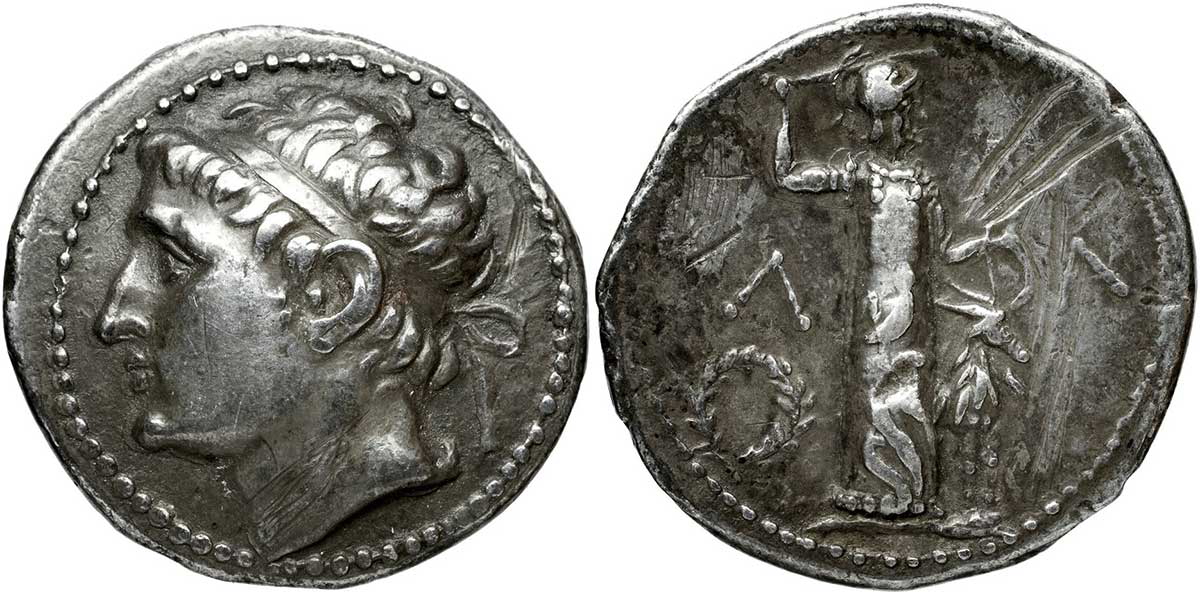
Cleomenes III was the son of Leonidas II of the Agiad dynasty. He came to power in approximately 235 BC and ruled until 222 BC. Cleomenes was still very young when Agis IV died, but his father married him to Agis IV’s widow, Agiatis, because she was from a very wealthy family. Despite being against the marriage, Agiatis proved to be a good wife to Cleomenes, and he grew to care for her. He would often ask her about her late husband’s career and ambitions, and these discussions would come to shape his own aspirations for Sparta.
Cleomenes was inspired by Agis’ actions. He agreed that the rich had become too engrossed in material wealth and less concerned with traditional Spartan values, and that the poor had become too disillusioned with the state of affairs that they no longer maintained their battle readiness.
Cleomenes sought the same things as Agis, but realized that the Ephors would always be a hindrance to his ambitions, and so had them assassinated. All but one of the five were killed. He abolished four of the five seats in the Ephorate, intending to sit the last one himself to conduct public business, claiming that this change more closely resembled the constitution of Lycurgus. He then canceled debts and redistributed land among the people, succeeding where Agis IV had failed.
Cleomenes also resumed the agoge, the system of training young boys to become Spartan soldiers. Cleomenes’ reign ultimately came to an end when he was defeated by Antigonus of Macedonia at Sellasia. Of the 6,000 full Spartans who fought in the war, only 200 survived. Cleomenes himself fled to Egypt, where he eventually committed suicide.
Decline of the Kings

During the reign of Cleomenes III, the dual kingship of Sparta was essentially abolished as Cleomenes installed his brother on the other throne. After the death of Cleomenes, Sparta came to be ruled by tyrants. First was Machanidas, then came Nabis. Nabis tried to expand Spartan power in the Peloponnese by seizing Argos, but was pressured by Rome to surrender the city.
In 195 BC, Rome and its allies in the Achaean League waged a war against Nabis. Sparta was defeated and forced to surrender all the territorial gains it had acquired, as well as disband its navy, though Rome left Nabis in charge in Sparta. The Aetolians eventually betrayed Nabis, assassinating him and throwing the city into political turmoil. As a result, Sparta was forcibly incorporated into the Achaean League and never again regained its independence.
Select Bibliography
- Miller, D. A. (1998). “The Spartan Kingship: Some Extended Notes on Complex Duality,” Arethusa, 31(1), 1–17.
- Palagia, O. (2006). “Art and Royalty in Sparta of the 3rd Century B.C.” Hesperia: The Journal of the American School of Classical Studies at Athens, 75(2), 205–217.
- Thomas, C. G. (1974). “On the Role of the Spartan Kings,” Historia: Zeitschrift Für Alte Geschichte, 23(3), 257–270.