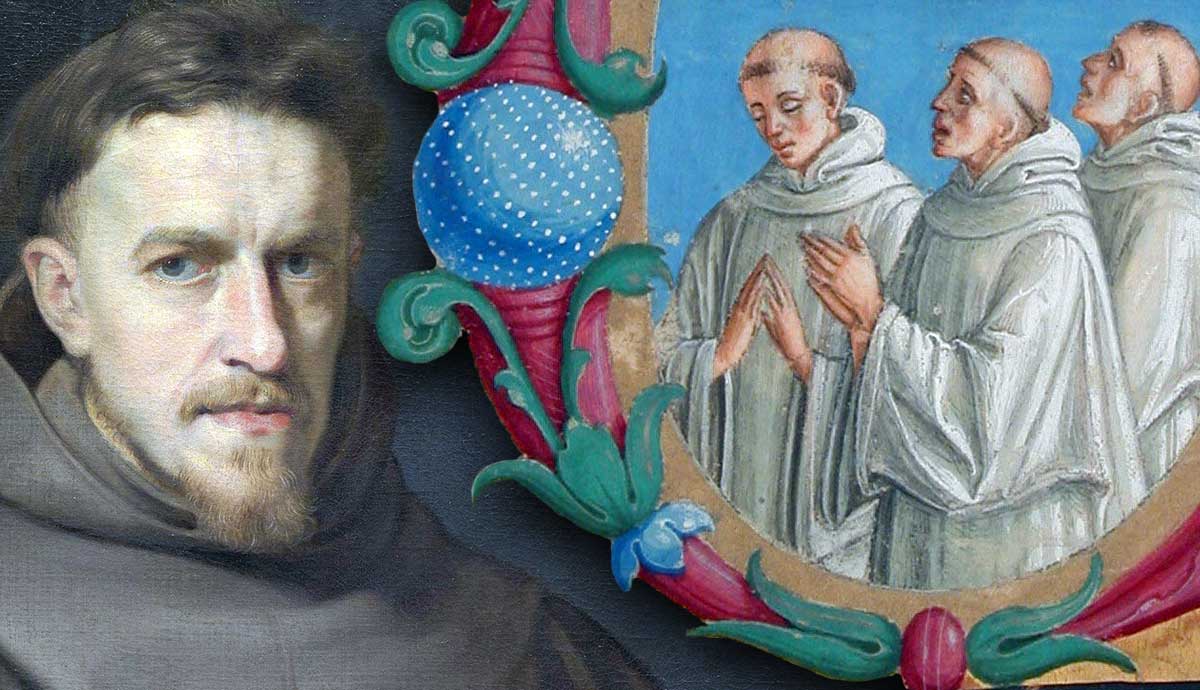

Only measuring 3 by 1.5 miles, the island of Lindisfarne resides in the tempestuous North Sea off Great Britain’s northeast coast. Remote and craggy, it may at first glance appear to be a forbidding place. Between the 7th and 9th centuries AD, however, the island was a place of retreat and worship for a steadfast Christian community of monks and missionaries. An 8th-century illuminated manuscript produced here, known as the Lindisfarne Gospels, serves as a testament to the devotion and faith of the monks who worshiped at Lindisfarne during this period of the island’s history.
The History of Lindisfarne
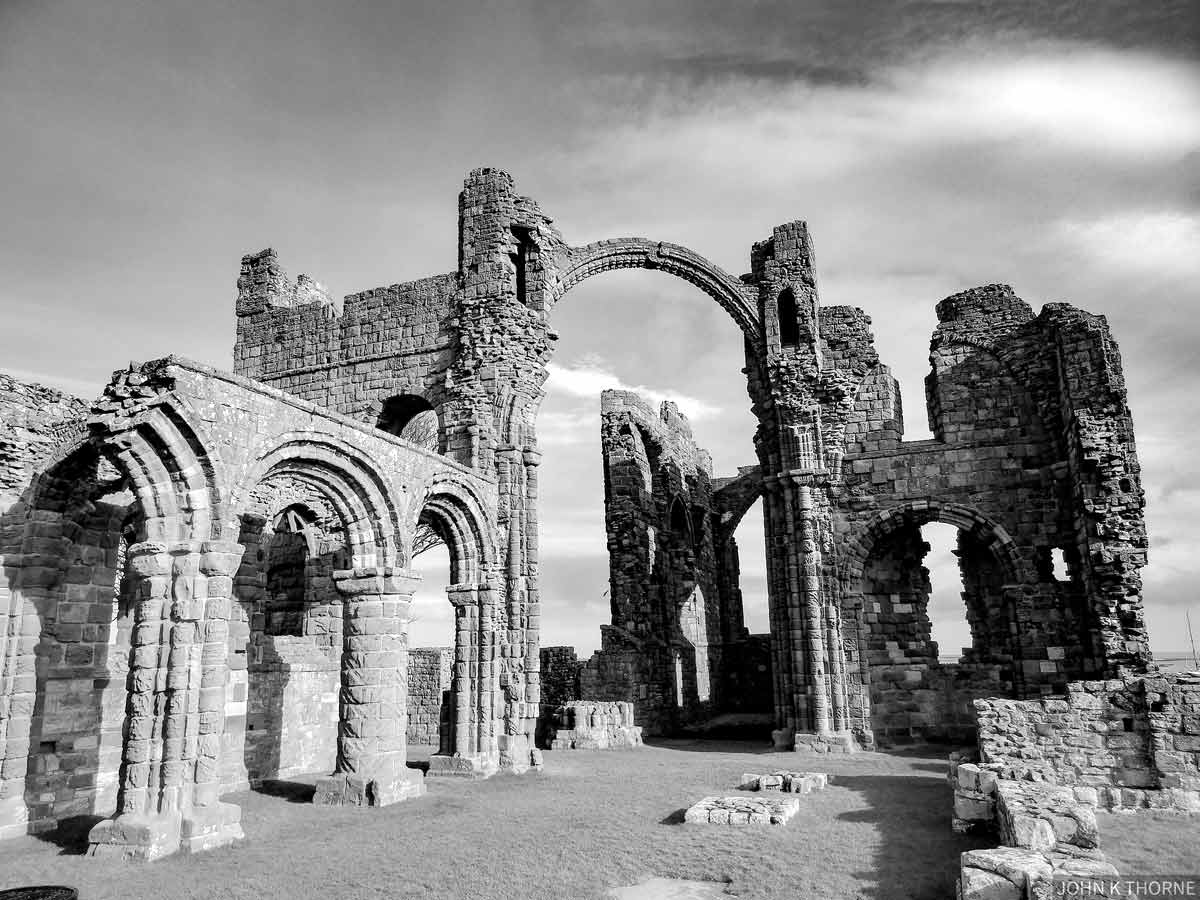
Lindisfarne’s history as a major religious center of medieval British Christianity begins with Saint Aidan. Under the leadership of the deeply religious King Oswald of Northumbria, Saint Aidan was commanded to convert the pagan population of this region of England to the Christian faith.
One of Aidan’s most important undertakings under Oswald was to open a monastery at Lindisfarne in the mid-630s AD. There was likely a strategic element to Aidan’s focus on Lindisfarne, as it was not far from Oswald’s royal residence at Bamburgh, making the saint accessible to the king. Aidan himself acquired the title of Bishop of Lindisfarne, and converted the island (which came to include a school as well as a monastery) into a center of religious study and of greater intellectual curiosity.
Lindisfarne became even more renowned through its connections to Saint Cuthbert. The title of Bishop of Lindisfarne remained after Saint Aidan’s death in 651 AD, with a variety of other venerated leaders following after him. However, Saint Cuthbert became the most famous among these, becoming renowned for his commitment to missionary work, his unfailing charity to the needy, and the miracles his faith was believed to have accomplished. So admired was Cuthbert that, towards the end of his life, he was even called out of a period of seclusion as a hermit to resume his post as a bishop.
After his death in 687 AD, Saint Cuthbert continued to draw attention to Lindisfarne. Over ten years after his passing, Cuthbert’s remains, which were interred on the island, were supposedly revealed to be flawlessly maintained. This discovery was perceived as a miracle that resulted in a shrine being dedicated to Cuthbert, with many admirers coming to pay their respects and worship there. He is known today as the patron saint of Northumbria.
Bishop Eadfrith
The creation of the Lindisfarne Gospels was closely intertwined with the bishopric of Lindisfarne. Indeed, according to the colophon, or scribal note, added to the manuscript in the 10th century AD by the priest Aldred, four men are credited with its production, including Aldred himself. The others are Billfrith the Anchorite, credited with creating the book’s cover; Bishop of Lindisfarne Eadfrith, credited with the writing and illustration of the manuscript; and Eadfrith’s successor in the position, Aethilwald, credited with the binding. While all of these figures were instrumental to the book’s creation, it is Eadfrith in particular whose role seems to have led the way for the book’s creation.
Eadfrith became Bishop of Lindisfarne in 698, in the aftermath of the elevation of Saint Cuthbert’s body and Lindisfarne gaining wider recognition as a pilgrimage site. Eadfrith actively promoted Saint Cuthbert’s legacy during his tenure, commissioning an anonymous monk to write the first Life of Saint Cuthbert (c. 705) and encouraging the Venerable Bede to compose his famous prose biography of the saint around 721.
Eadfrith also probably played a major role in the celebration of Saint Cuthbert’s legacy on the island, preserving relics related to the saint and helping to maintain the saint’s shrine. This devotion to Saint Cuthbert seems to have played a role in the creation of the Lindisfarne Gospels, as not only is the text dedicated to God, but also to Saint Cuthbert. In this way, Eadfrith very much seems to have wanted to assert the manuscript’s identity as being shaped by the religious culture of Lindisfarne at the time when it was being written.
The Production of the Lindisfarne Gospels
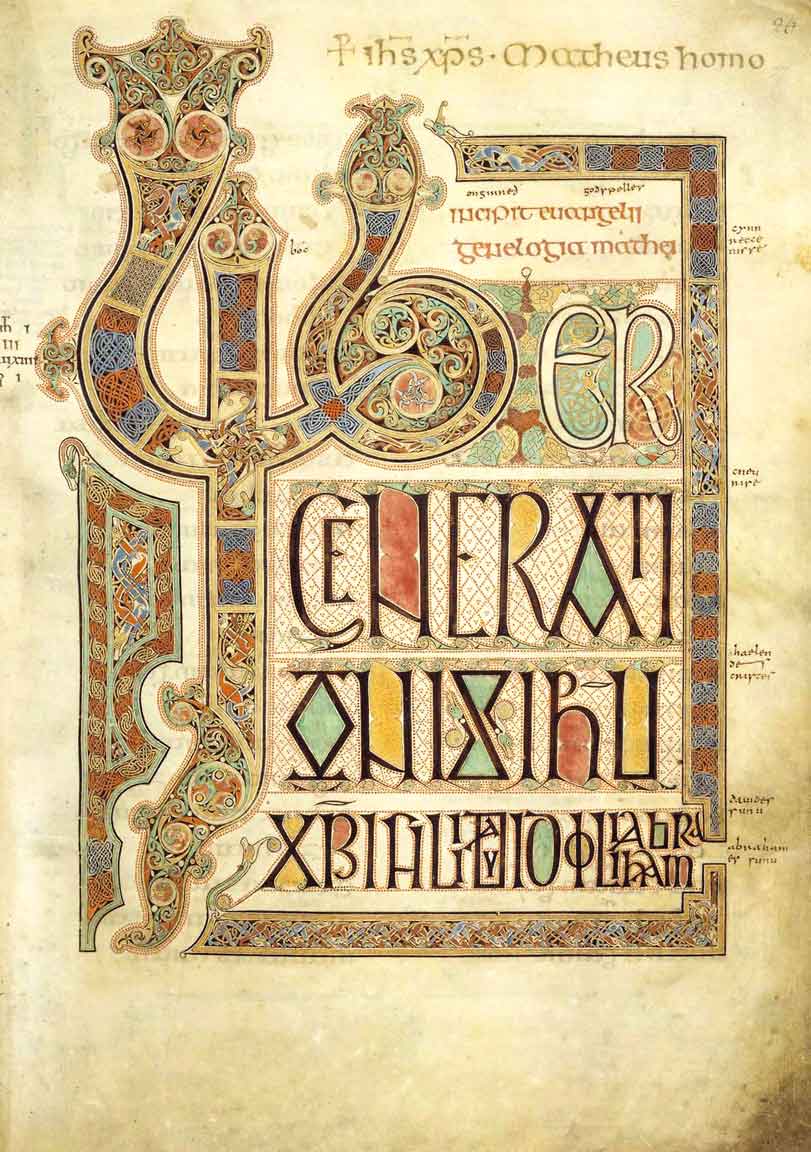
The process of creating the Lindisfarne Gospels would have been extremely complex. While Eadfrith appears to have led the project, he would have needed help from other monks in the monastery to prepare materials for it and to help keep the process going. For example, the inks and colors used for the manuscript were created from natural materials located across the island of Lindisfarne. Natural elements used included various minerals, clay, soot, and even arsenic.
This task could only have been completed with the cooperation of the numerous monks who resided at the monastery with Eadfrith. Furthermore, the vellum used for the pages of the book would also have required extensive labor. Indeed, it seems likely that around 130 to 150 cattle skins were used to create the pages illustrated by Eadfrith. This assistance would not only have been in terms of labor, but in terms of money as well.
Creating the Lindisfarne Gospels was not only time-consuming, comprising an estimated ten years, but was also exorbitantly expensive. The dedication required from the entire monastery to complete the project demonstrates a commitment to perfecting the manuscript for the sake of monks’ faith, but also for the reputation of the community as well.
For Eadfrith personally, the process of creating the Lindisfarne Gospels would have been intensely spiritual. His approach to creating the illustrations would have varied based on the contents of each page. For example, for some pages, images were created using mathematical tools such as compasses for assistance. Important aspects of an illustration could be created through piercing specific designs into the page for the sake of precision. Other pages, however, seem to have been illustrated mainly by eye, with little to no help from tools. For Eadfrith, this process would have allowed him to put into tangible form his faith and dedication to God.
The Lindisfarne Gospels and the Insular Style
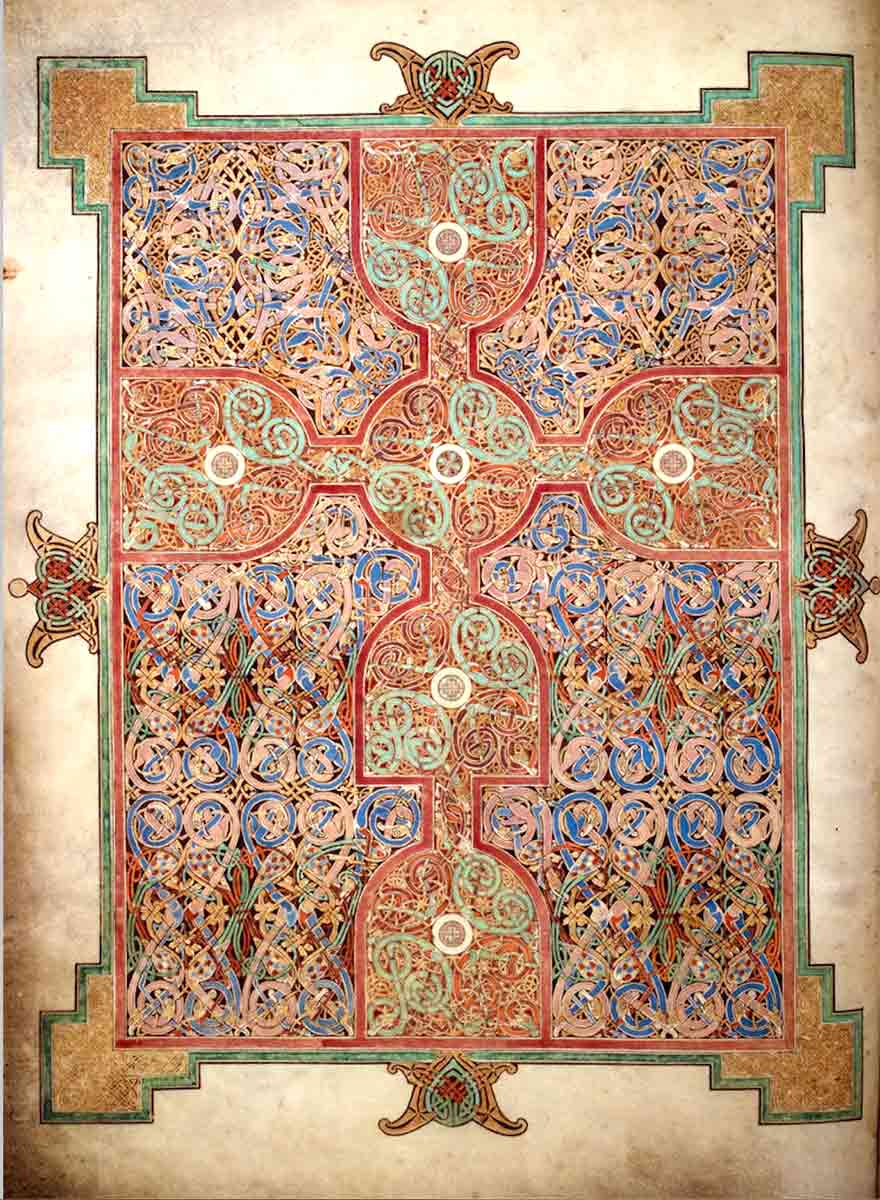
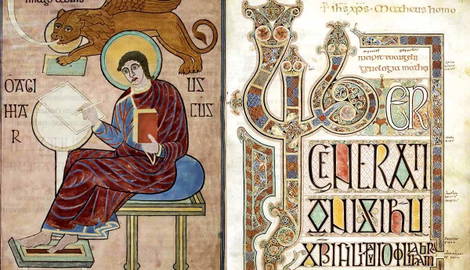
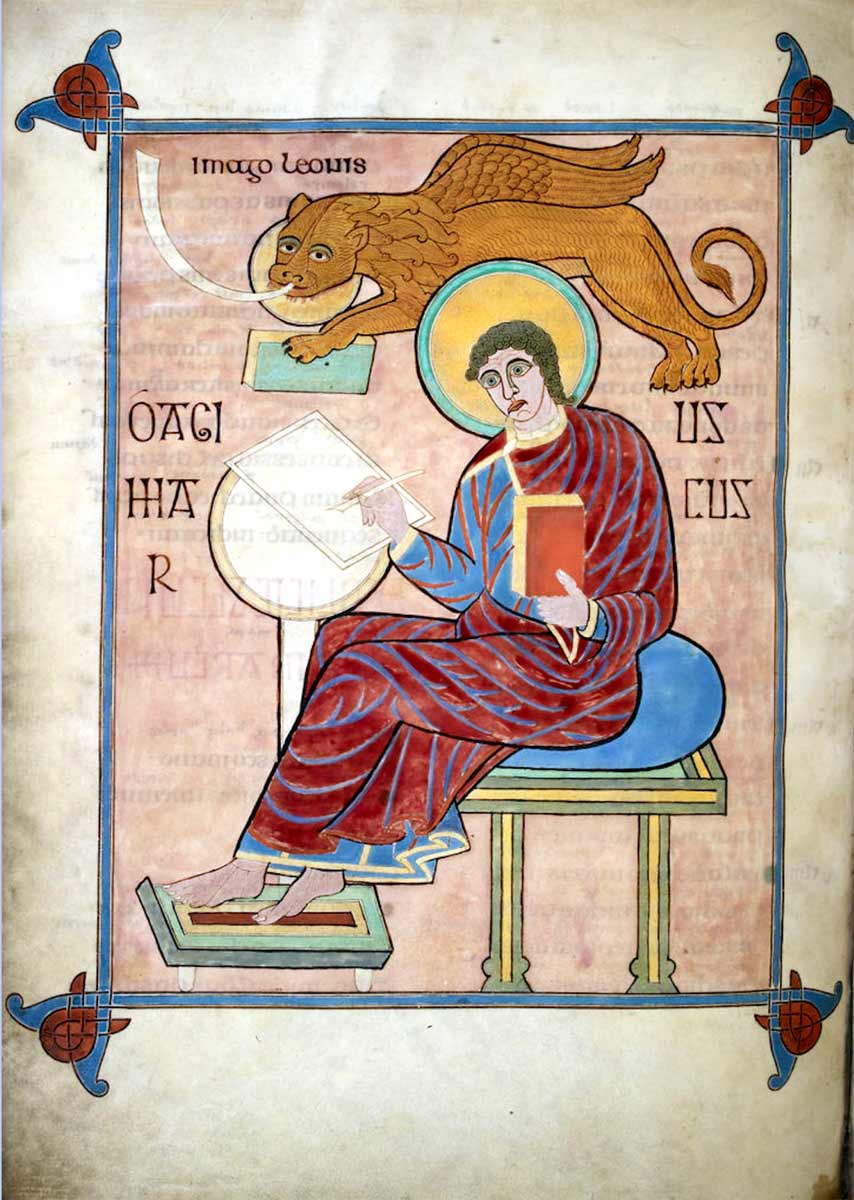
Eadfrith’s dedication to creating the Lindisfarne Gospels is evident on every page. Each of the illustrations that he created is rife with detail, taking readers on a journey rich with ornate scrolls, precise patterns, and dazzling colors. The specific artistic style of the illuminated manuscript can be attributed to the Insular, or Hiberno-Saxon, style of art that was popular during the Middle Ages in Great Britain. This style owes much to the Celtic and Saxon art that had taken root in the British Isles. At the same time, it incorporates elements from other cultures, such as the Byzantine Empire.
This wide range of influences can be strongly felt throughout the different illustrations in the Lindisfarne Gospels. For example, multiple influences can be felt in the carpet pages, the almost purely abstract pages at the beginning of each book of the Gospels. The intricate, detailed designs contained within each rectangle found in these carpet pages easily remind readers of rugs from the Middle East, which may have been circulating in Europe at this time through trade.
The illustration also evokes the detailed precision of Roman mosaics. Roman influences can be seen in the depictions of the disciples, as their garments and curly hair echo common motifs seen in Roman mosaics, sculptures, and illustrations.
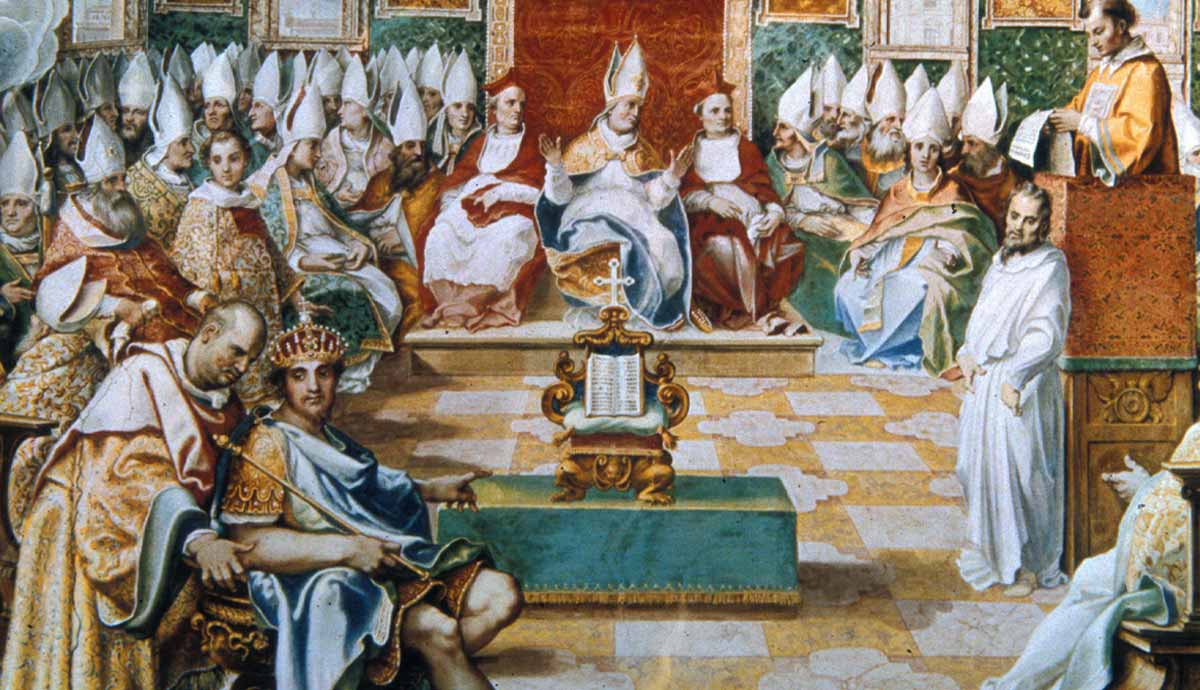
Dynamic Celtic imagery also plays a role, with Celtic knots and swirls appearing regularly throughout the pages. This Celtic influence points back to tensions taking place within the Catholic Church at the time of the manuscript’s production. In 664, at the Synod of Whitby, the Northumbrian Catholic Church had decided to administer its teachings in the style of the Roman Church, and cease the Celtic traditions from which many Lindisfarne monks claimed their roots. By continually adorning the Lindisfarne Gospels in such blatantly Celtic imagery, Eadfrith and the monks who assisted him seem to have been searching for a way to elevate Celtic traditions in a sophisticated and reverent way, in spite of the dictates of the Synod.
What Happened to the Lindisfarne Gospels?
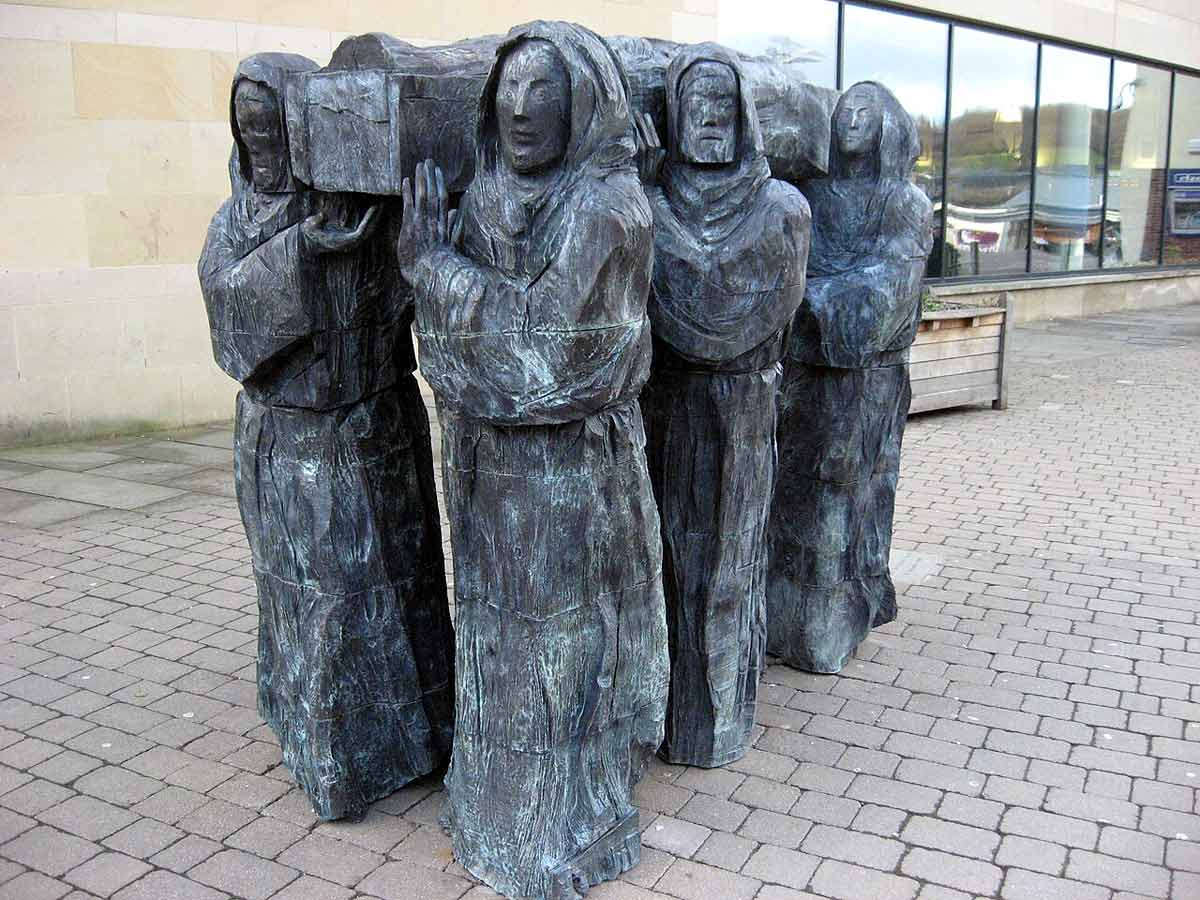
While the Lindisfarne Gospels were deeply representative of the culture and history of Lindisfarne, they were ultimately not destined to remain there. In AD 793, Lindisfarne was attacked in a Viking raid, which left many of the monks dead and many of their possessions stolen. As Viking activity continued throughout Britain in the following century, the monks of Lindisfarne eventually decided to move away from the island permanently in AD 875.
After a long bout of unsettled traveling that lasted for years, the monks finally decided to deposit the Lindisfarne Gospels, as well as the remains of Saint Cuthbert, at Durham Cathedral. Following Henry VIII’s Dissolution of the Monasteries in 1539, the manuscript was removed from Durham Priory and preserved in private hands. In the early 17th century, it was acquired by the renowned collector Sir Robert Cotton, whose possessions were donated to the British Museum long after he died. Today, the manuscript resides in the British Library.
The history and production of the Lindisfarne Gospels recount a fascinating narrative. The pages of the manuscript reveal a complex history in which local traditions of religious devotion at Lindisfarne clashed with the dogmas of the wider church. What is also apparent through the study of the manuscript is the deep faith of Eadfrith and the monks who helped him to create the Lindisfarne Gospels.
The process of creating this text was time-consuming and expensive, yet the monks who created it persevered. Their efforts, combined with the later generations of monks who protected it from Viking raids and vandalism, succeeded in creating and preserving one of the most magnificent of all medieval illuminated manuscripts.