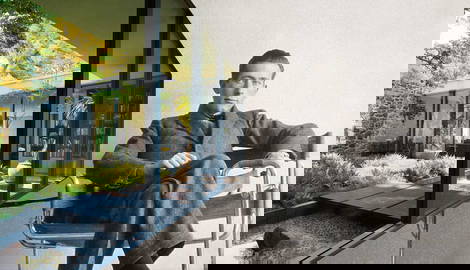
Marcel Breuer became known for his furniture and architectural designs. Breuer’s signature style is characterized by clean lines, minimalist forms, and the use of materials such as tubular steel and reinforced concrete. His whole oeuvre embodies the Bauhaus objective of integrating art and industry.
Early Life in Pécs: The Roots of a Modernist
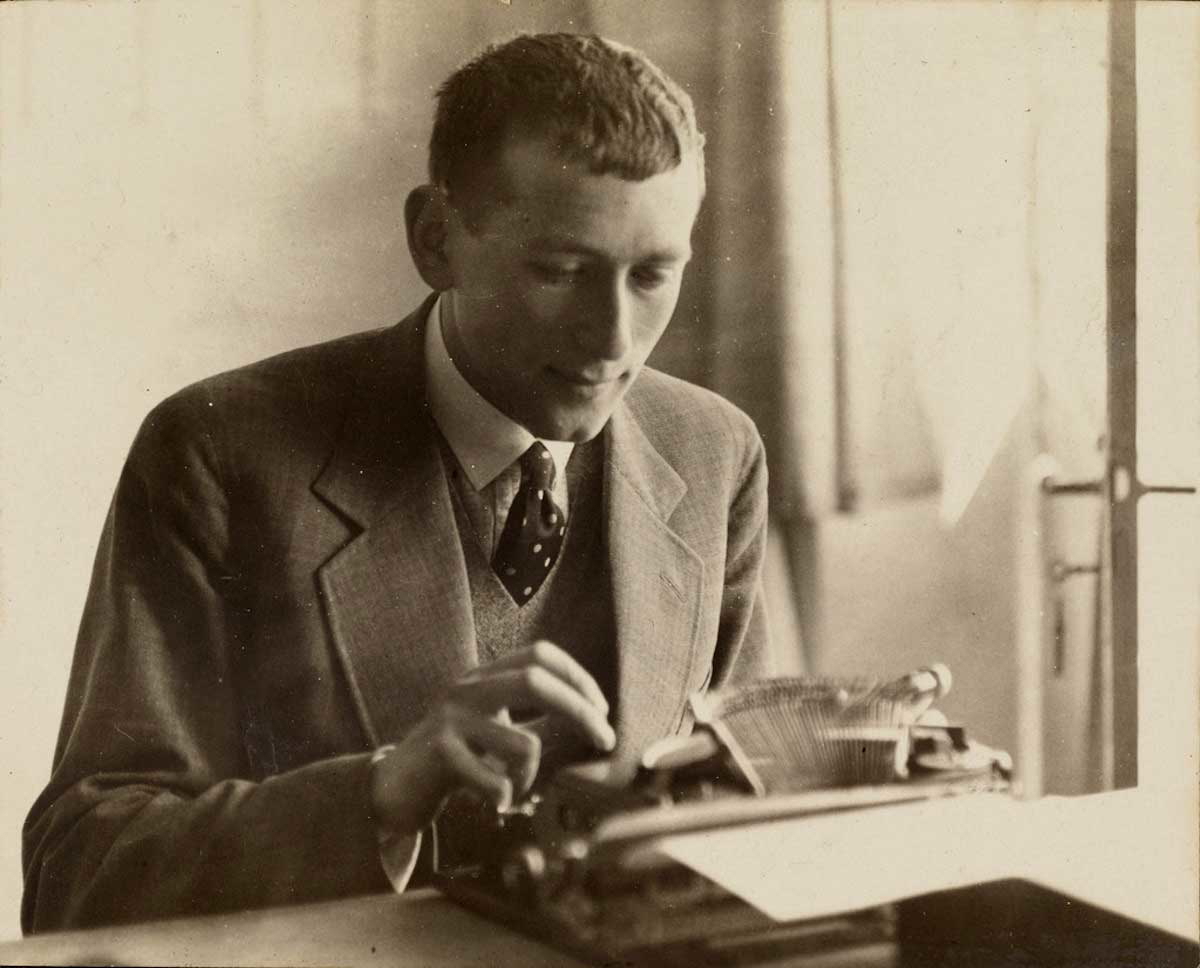
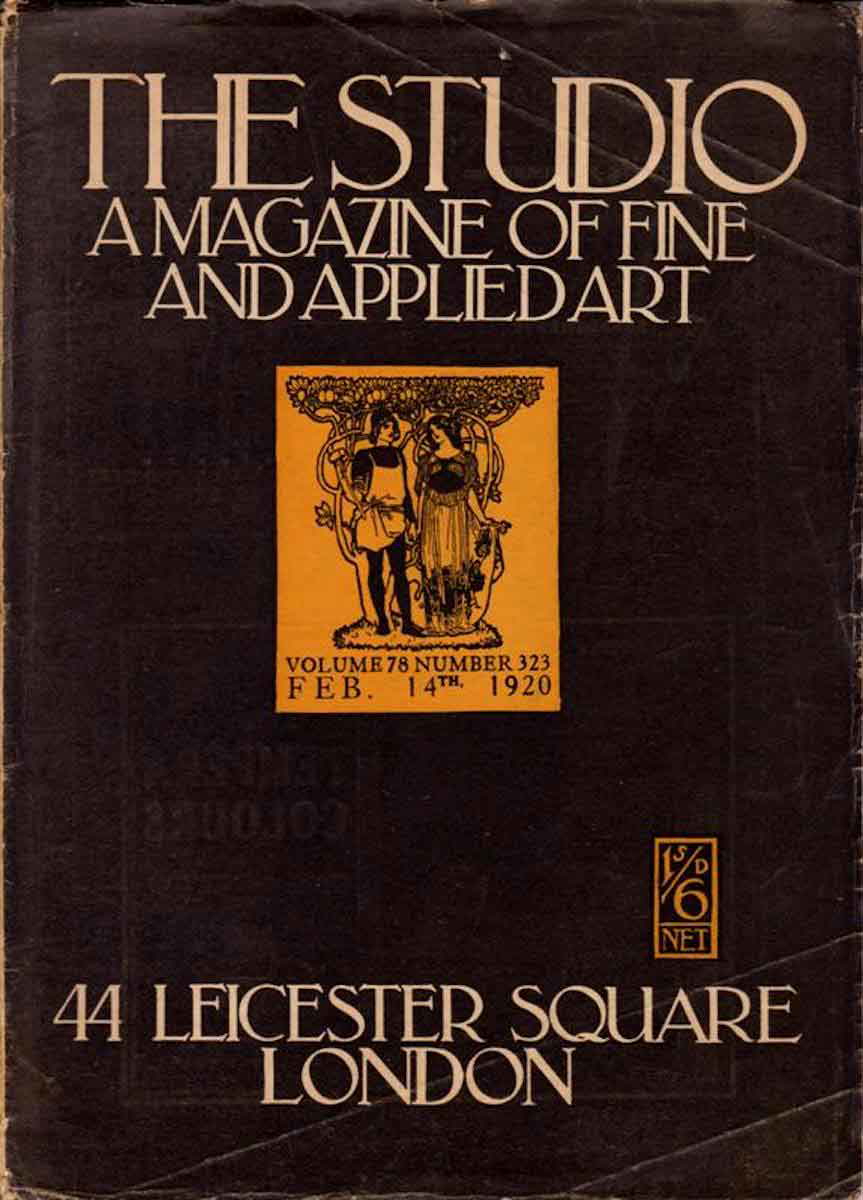
Marcel Lajos Breuer (1902-1981) was born in Pécs, Hungary, to Jakab Breuer and Francisca Leko. Breuer’s parents encouraged their children to take an active interest in culture and the arts. They subscribed to various art periodicals, including The Studio, a magazine that covered current developments in both fine and applied arts, as well as architecture. Breued found The Studio particularly inspiring, and it piqued his interest in becoming an artist himself. In secondary school, Breuer excelled in both the arts and mathematics. He graduated summa cume laude and received a scholarship to attend the Academy of Fine Arts in Vienna in 1920.
Vienna to Weimar: The Path to the Bauhaus
Marcel Breuer moved to Vienna for his studies in the late summer of 1920, as Europe was still rebuilding after World War I. However, he withdrew from the Academy soon after starting classes. He felt the classes focused too much on aesthetic theories rather than on the fundamentals of drawing, painting, and sculpting. Instead, Breuer took an apprenticeship in the shop of a local cabinetmaker named Bolek. Soon, he found out about the Bauhaus School of Design, Building, and Craftsmanship in Weimar.
At the Bauhaus: Gropius’s Apprentice, Klee’s Student
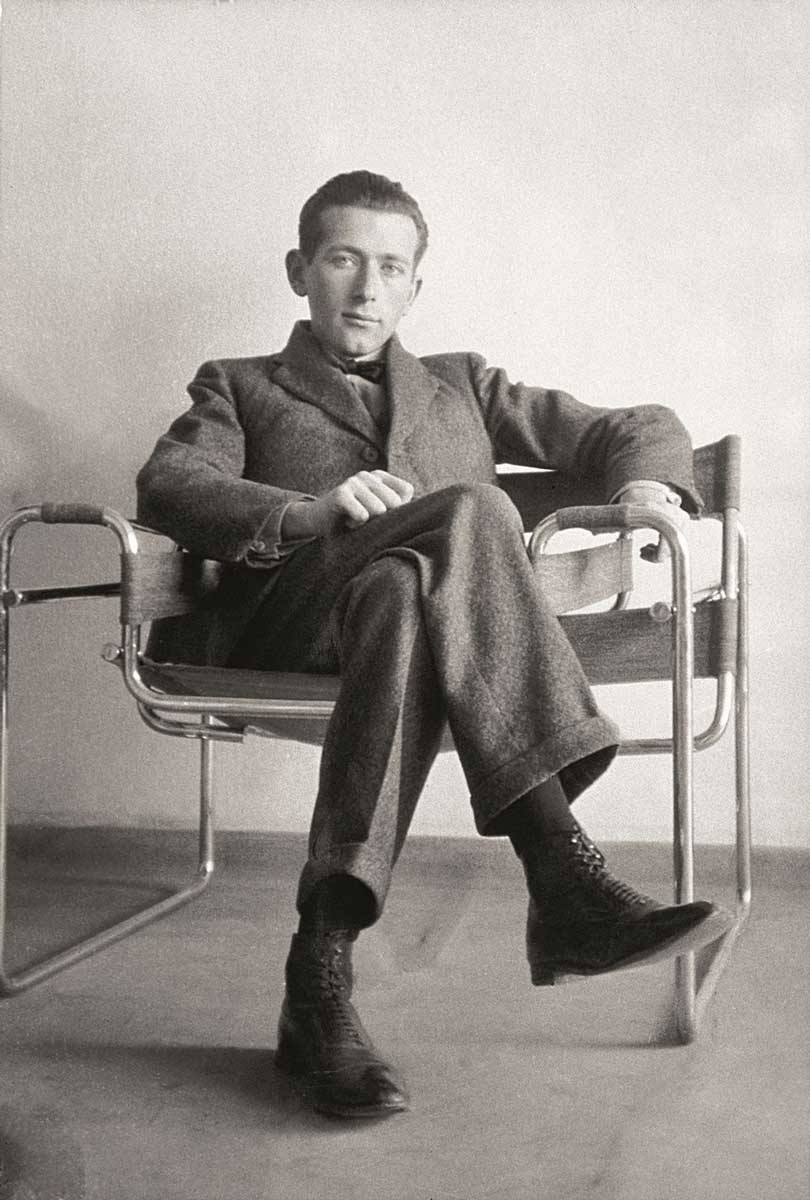
Breuer studied at the Bauhaus for four years, during which he apprenticed under Walter Gropius. After a carpentry workshop under Gropius’ leadership, the two became close. Another important source of inspiration came from his painting teacher, Paul Klee, who taught him that a painting was built up in the same way as an architectural structure with repetitive, geometric units.
After completing his studies at the Bauhaus in 1924, Breuer spent a short while in Paris, where he worked at the office of Pierre Charreau. He was soon asked to return to Weimar as head of the Bauhaus furniture and carpentry workshop. When the Bauhaus moved from Weimar to Dessau the following year, Breuer got involved in the interior design plan for the new school.
In 1926, he established the Standard Möbel Company, through which he started marketing a full line of steel furniture. He also married Marta Erps, who was studying weaving at the Bauhaus workshops. Breuer and Erps met each other while collaborating on the Dessau project. However, their relationship only lasted a few years, and they officially divorced in 1934.
After the Bauhaus: Berlin Practice and London Experiments
Towards the end of the 1920s, the Bauhaus faced internal political issues and the increasing pressure from Germany’s rising Nazi regime. As a result, many people left the Bauhaus, including Marcel Breuer. He went to Berlin, where he founded an architectural practice with a former student. By 1932, he had received his first independent architectural commission for a modern house.
The disturbing political atmosphere ultimately led Breuer to leave Germany altogether. With the help of Gropius, he secured papers to relocate to London, where he, as a Jewish citizen and modern artist, would be safer. In London, Breuer independently developed a line of bent plywood furniture.
Arrival in America: Harvard, Houses, and Recognition
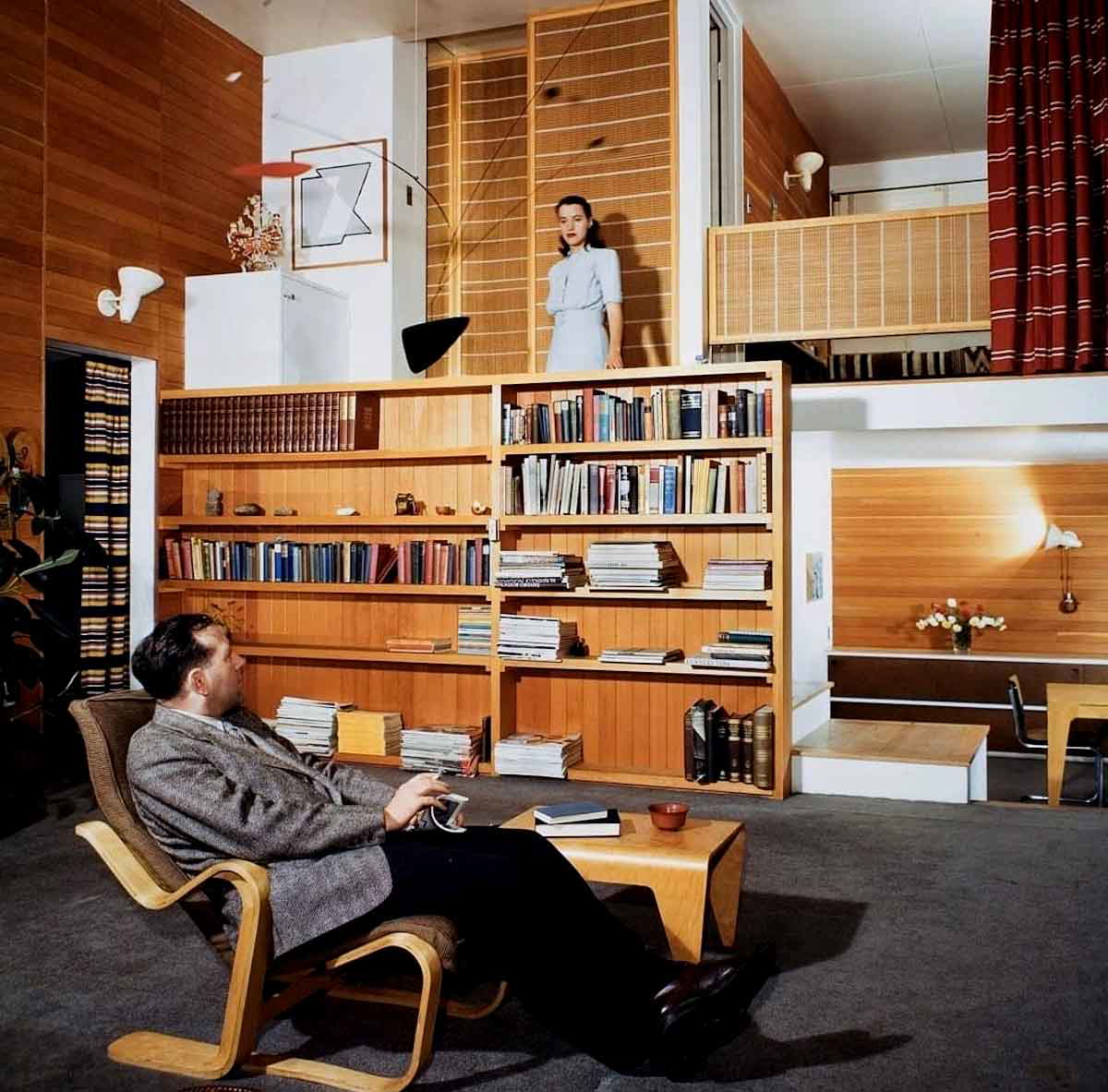
Because of limited building prospects in England and rising threats of war, Breuer decided to move once again in 1937. This time, his destination was the United States, where Gropius secured him a position at Harvard University’s Graduate School of Design. Breuer was drawn to the structural transparency and efficient design of American industrial buildings and inspired by the traditional architecture of America’s New England region.
Inspired anew, Breuer and Gropius formed a partnership and together produced several iconic houses. Starting from the mid-1940s, Breuer established his own practice, initially in Cambridge and later in New York, where he relocated to in 1946. In 1940, he married his second wife, Constance Crocker Leighton. Connie, who had studied at the Brimmer School, worked as his secretary, business manager, and accountant. Together, they had two children.
Marcel Breuer designed several iconic homes that formed the pinnacle of his domestic architectural work. Thanks to the success of these projects, he received international recognition during the 1950s as one of the key figures of modern architectural design, alongside Mies van der Rohe and Frank Lloyd Wright.
Breuer & Associates: UNESCO, Whitney, and a Global Practice
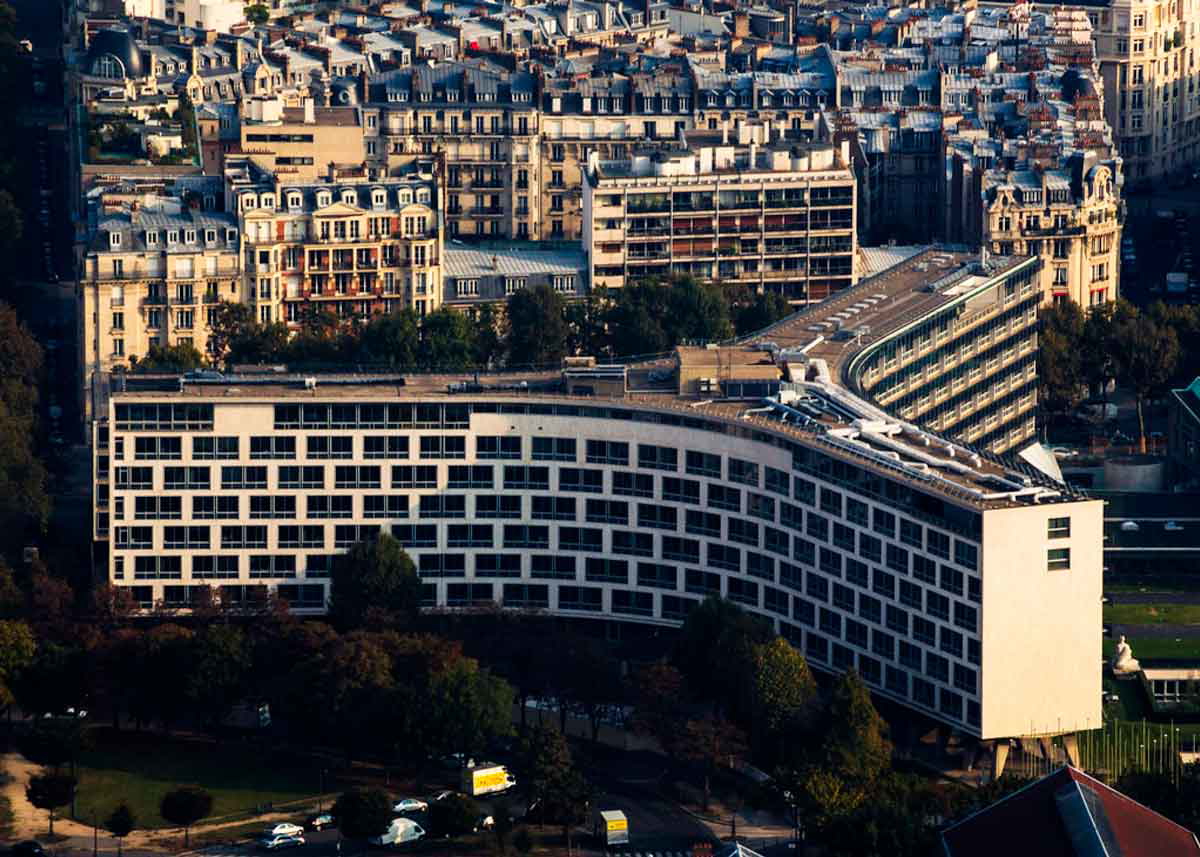
Breuer would also design many important public buildings, like the UNESCO headquarters in Paris and the Bijenkorf department store in Rotterdam. In 1956, Breuer formed a partnership with several young architects who had worked for him, operating under the name Marcel Breuer and Associates. Together, they designed impressive and diverse works like the Armstrong Rubber Building and the Whitney Museum of American Art in New York.
Years of hard work eventually took their toll. During a trip to Afghanistan, Breuer suffered from a nearly fatal heart attack, after which he was forced to slow down and take a step back from the central role in his company. However, despite his weakened health and the difficult economic climate of the period, Breuer continued to design buildings throughout the 1970s. During the last decade of Breuer’s life, he also received several honors. Exhibitions of his works were held at the Bauhaus-Archiv Museum in 1975 and at the MoMA in 1981. Breuer passed away on July 1, 1981, having reached the status of an architectural genius.
The Wassily Chair: Tubular Steel and Modernist Logic
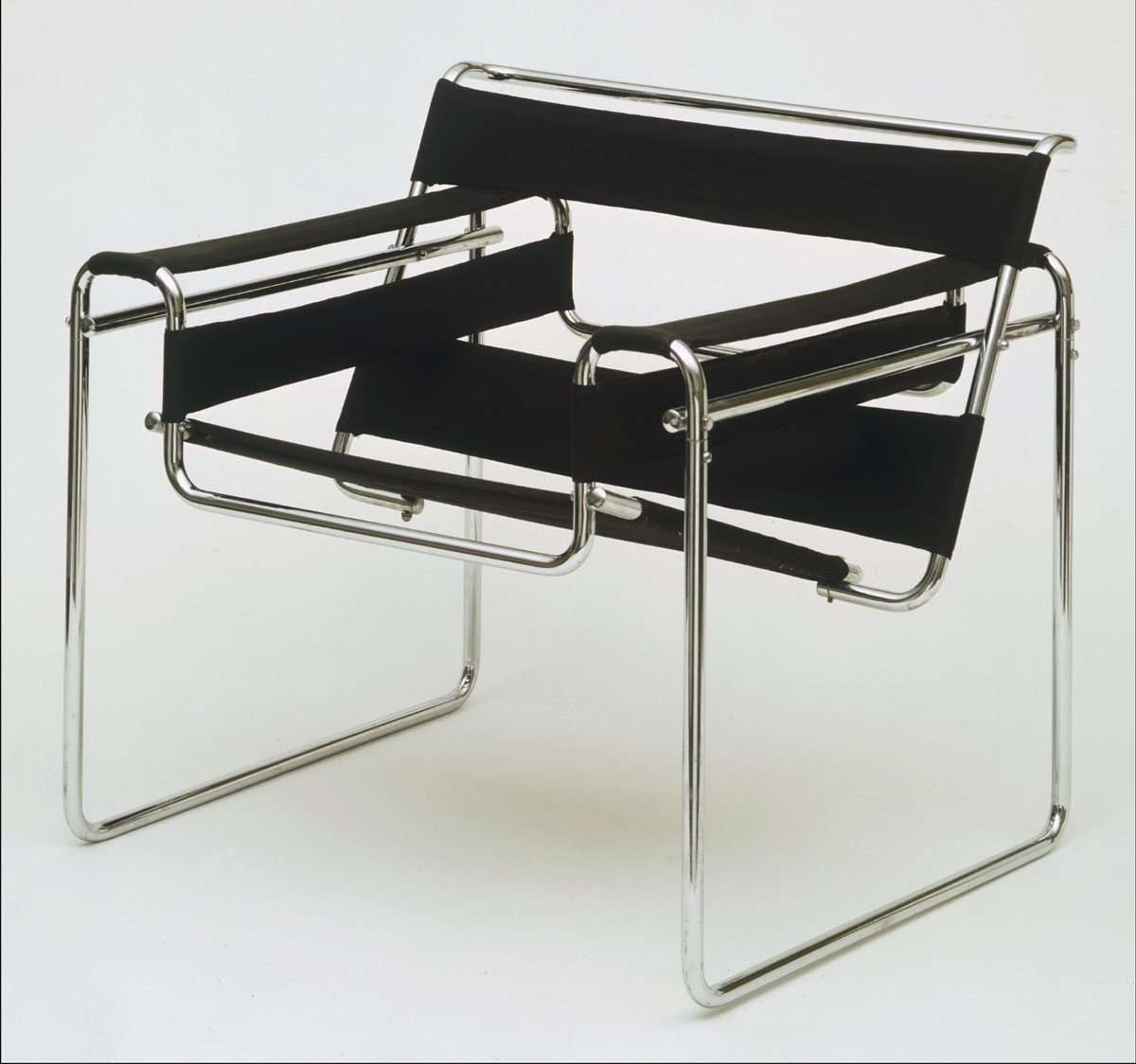
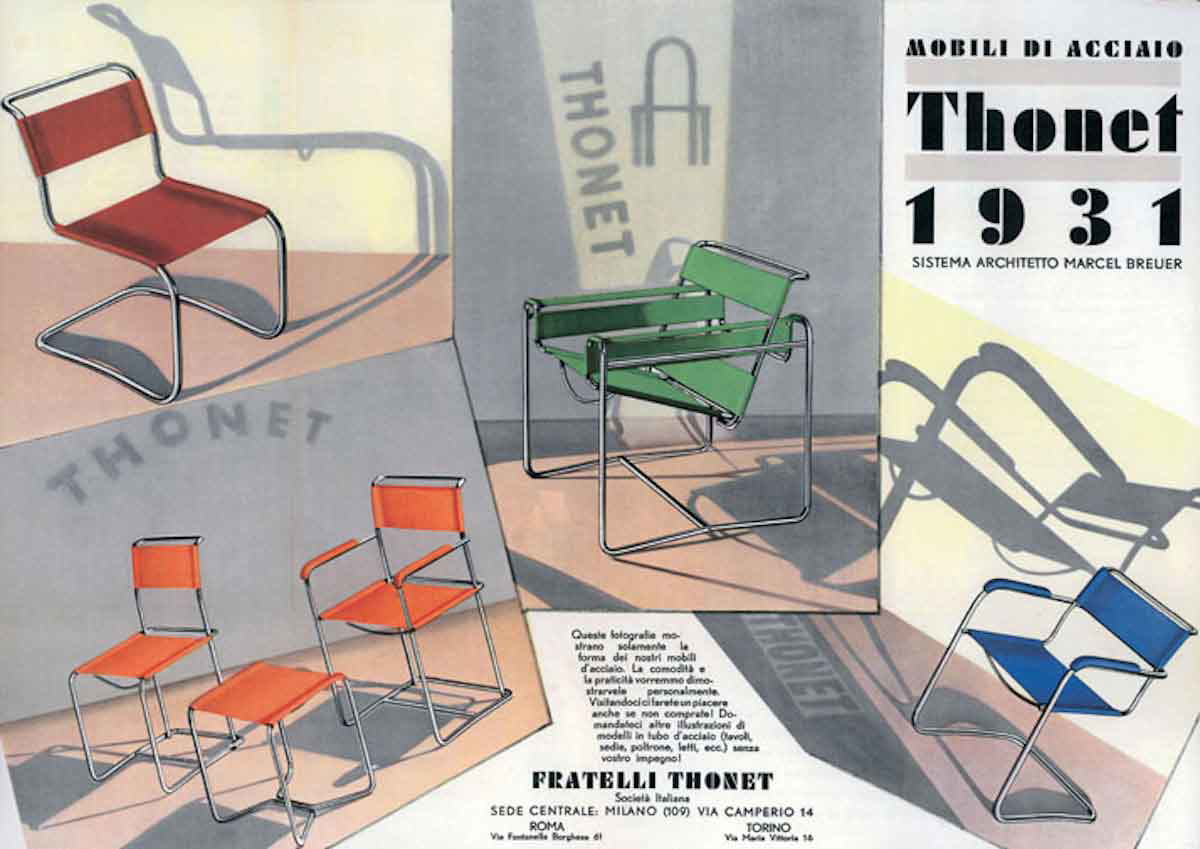
During Breuer’s second period at the Bauhaus, from 1925 to 1928, he began experimenting with bent tubular steel furniture. The iconic B3 Chair was first developed in 1925. The chair would later be called the Wassily Chair, after the artist Wassily Kandinsky, who was Breuer’s friend and fellow Bauhaus instructor. The chair is made out of a tubular steel frame and leather panels.
When designing the chair, he was inspired by the tubular steel handlebars of his bicycle. These were strong, lightweight, and mass-produced. The Wassily Chair is a prime example of modernist design, which focused on functionality, minimalism, and the use of new materials and new manufacturing techniques.
The Cesca Chair: Cantilever Innovation and Craft-Industry Fusion
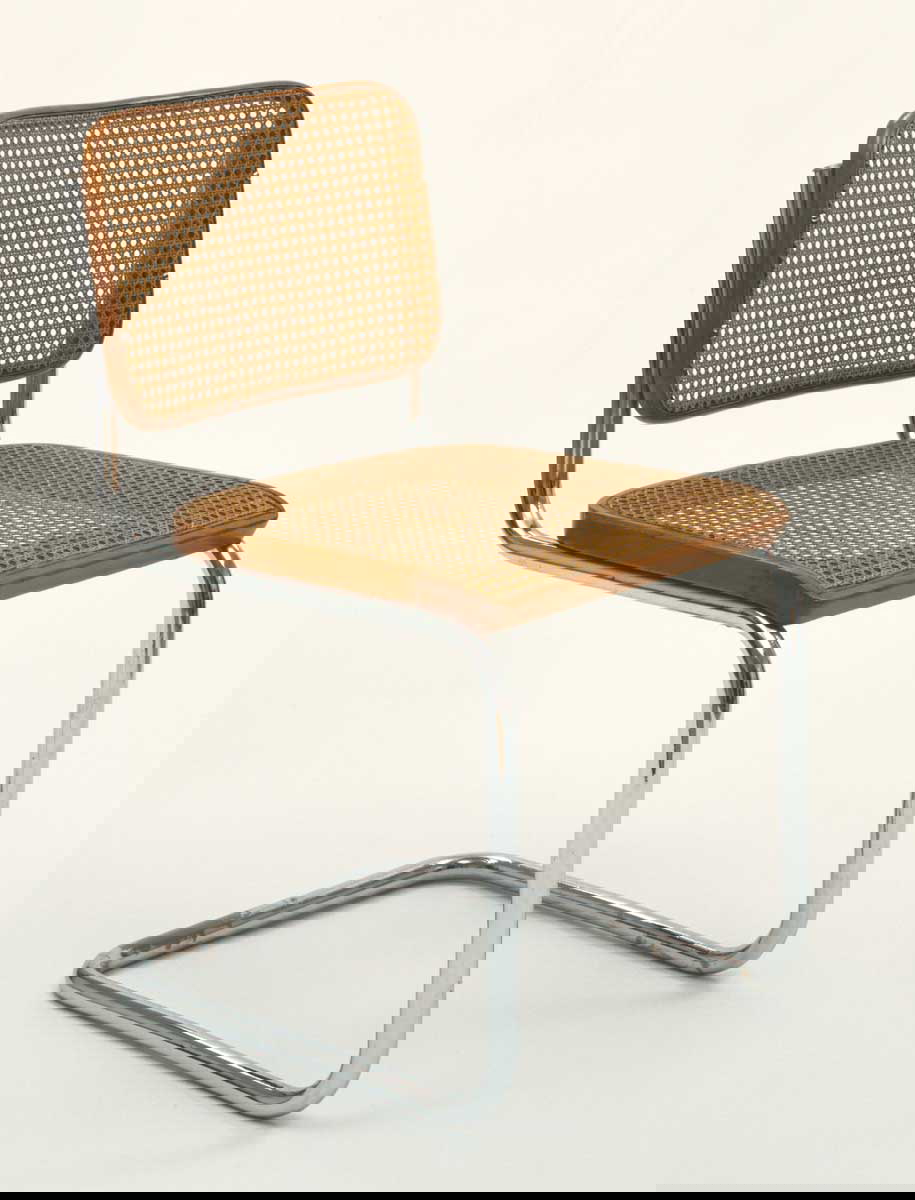
Shortly after finishing the Wassily Chair, Breuer continued experimenting with tubular steel. This led to his design of the B32 Chair, also known as the Cesca Chair. This chair is made of a single tubular steel frame and two wooden frames, with webbing for the seat and backrest. By combining mass-produced steel with handwoven jute webbing, Breuer integrated the industrial realm with craft. The Cesca Chair, named for Bruer’s daughter, was the first ever cantilever chair.
Hooper House: Binuclear Plan in Stone and Glass
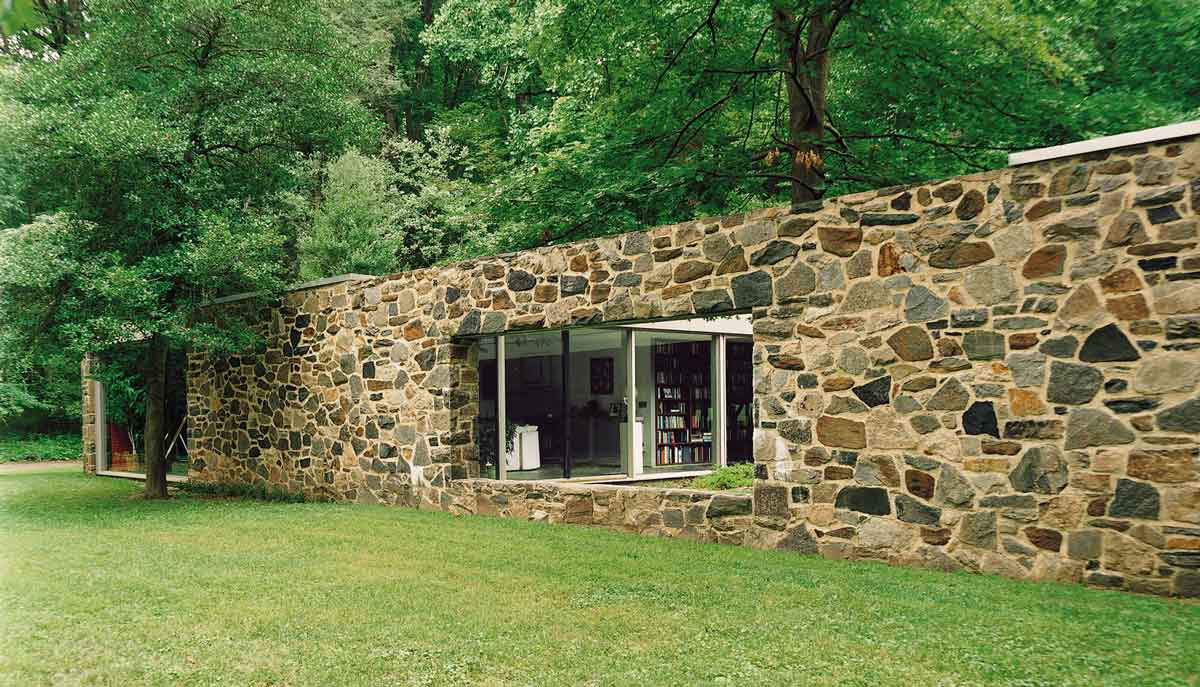
The Hooper House, also known as the Hooper House II, was the second house that Marcel Breuer designed for the wealthy philanthropist Edith Hooper and her husband. Built in Baltimore in 1958, the Hooper House has a single-story, binuclear design. The house is divided into two wings. One wing consists of living, kitchen, and dining areas, while the other one features a sleeping area. The Hooper House also has separate areas designed especially for children.
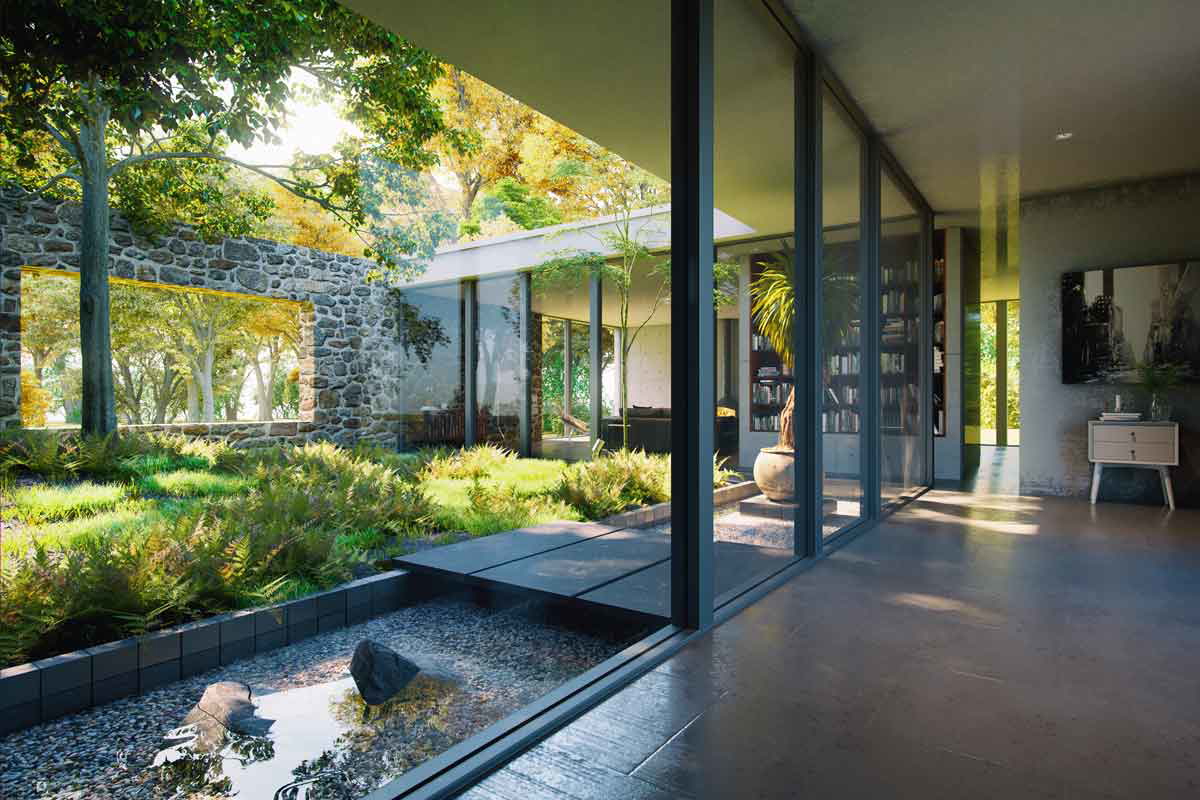
Thanks to the open plan, the many windows, and the inner courtyard, residents could still feel connected to one another. The Hooper House also allowed its residents to stay connected with the surrounding nature. With its Maryland fieldstone façade on the west and many glass walls, the building blends into the forest around it. Thanks to the use of steel and glass, the Hooper House is considered a great example of modernist architecture.
Gagarin House I: Fieldstone, Steel, and Light
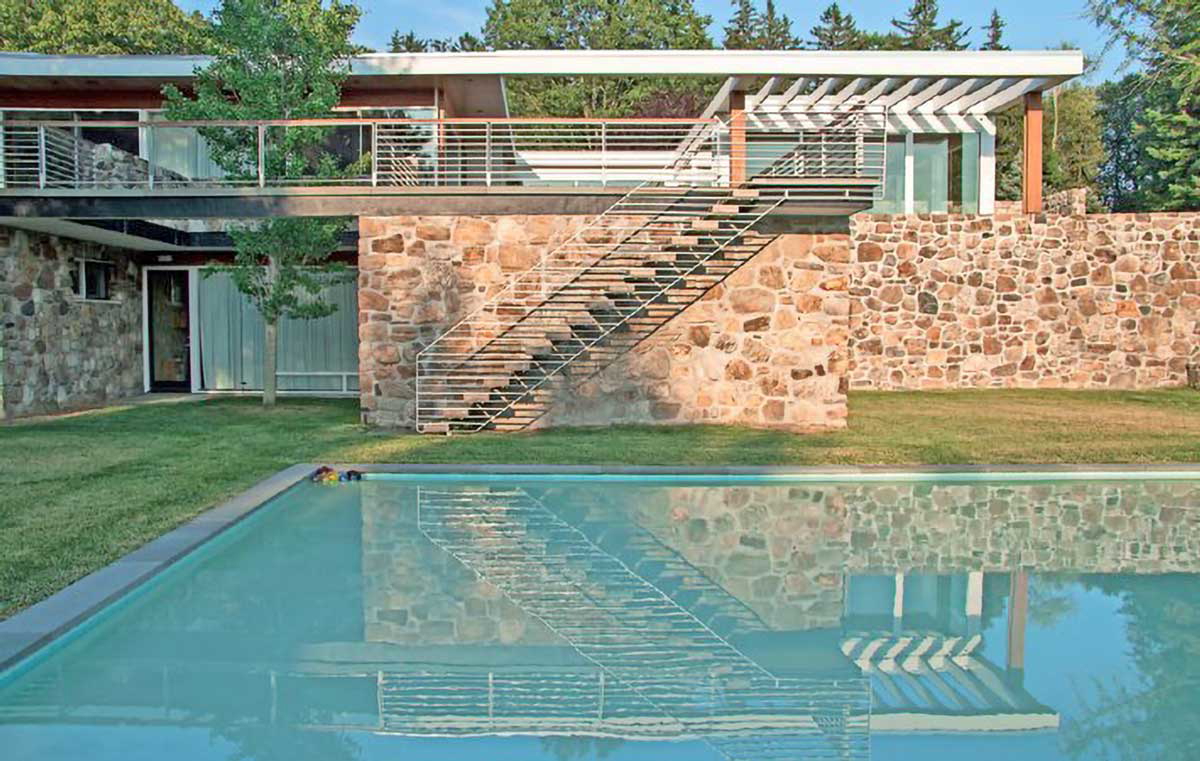
In 1956, Breuer designed the Gagarin House I for Andrew and Jamie Gagarin. The house, built in Litchfield, Connecticut, features a steel frame and a reinforced concrete structure. On the outside, the structure is made out of the same Maryland fieldstones as the Hooper House. There are also many glass walls, a long terrace, and a pool area. Outside, one can find Breuer’s signature metal railing and floating stairs. Just as in his design of the Cesca Chair, Breuer used strong steel to create these seemingly floating, lightweight stairs.
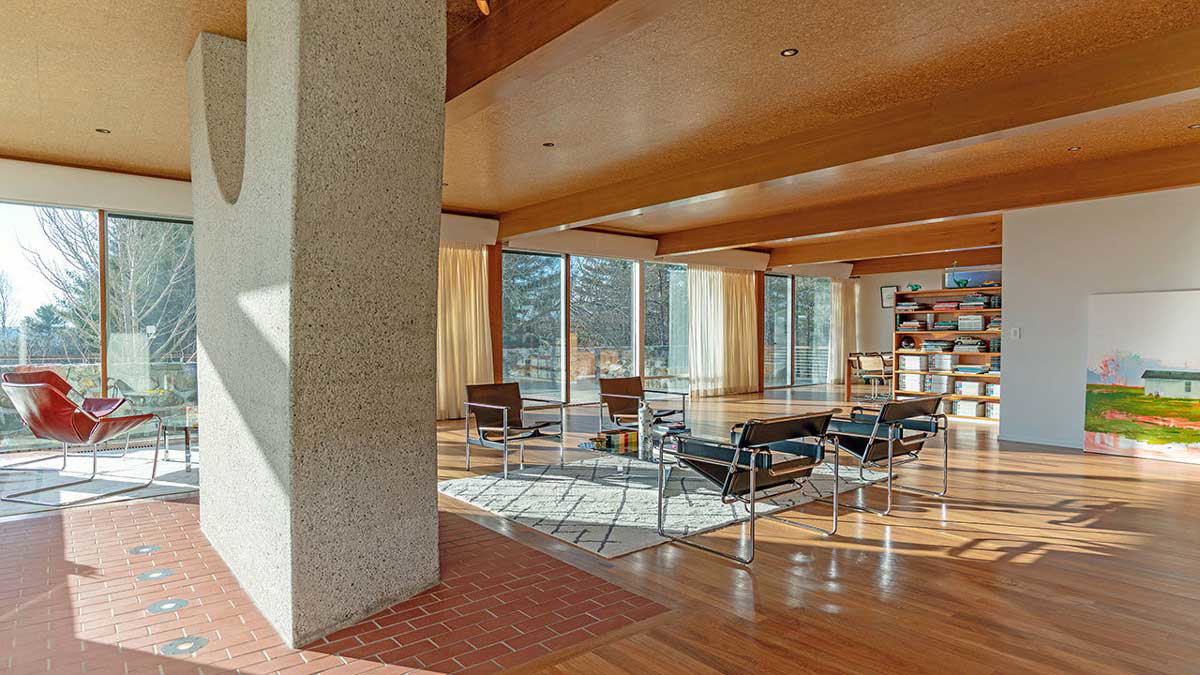
For the interior, Breuer used a variety of materials like wood, concrete, and brick. Children’s bedrooms and playrooms were designed for the lower floor, along with storage rooms, while the upper floor featured additional rooms and the master bedroom. In this design, Breuer again chose to separate the children’s rooms from adult-oriented spaces.
The Breuer Building: Concrete Monument on the Upper East Side
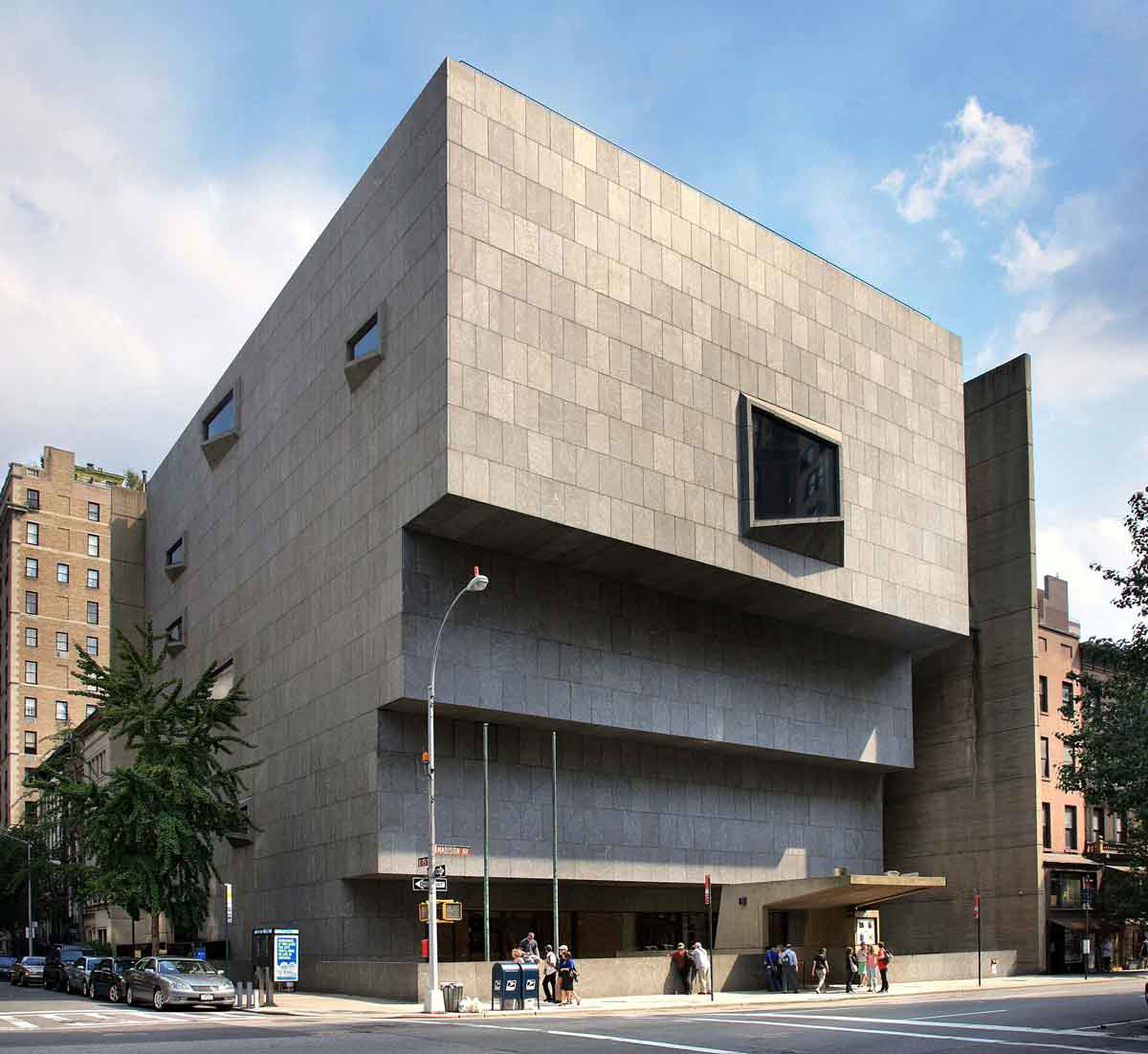
Breuer designed a new building for the Whitney Museum of American Art on Manhattan’s Upper East Side. The building, also known as The Breuer Building or 945 Madison Avenue, consists of a massive structure. For the exterior, Breuer used reinforced concrete and grey granite cladding. The use of these materials made the Whitney Museum stand out from nearby buildings made with traditional limestone, brownstone, and brick. Thanks to its shape and the use of concrete and granite, the Breuer Building was considered somber and heavy at the time of its completion. However, it is now viewed as strong, daring, and innovative.
Inside the Breuer Building: Program, Materials, and Afterlives
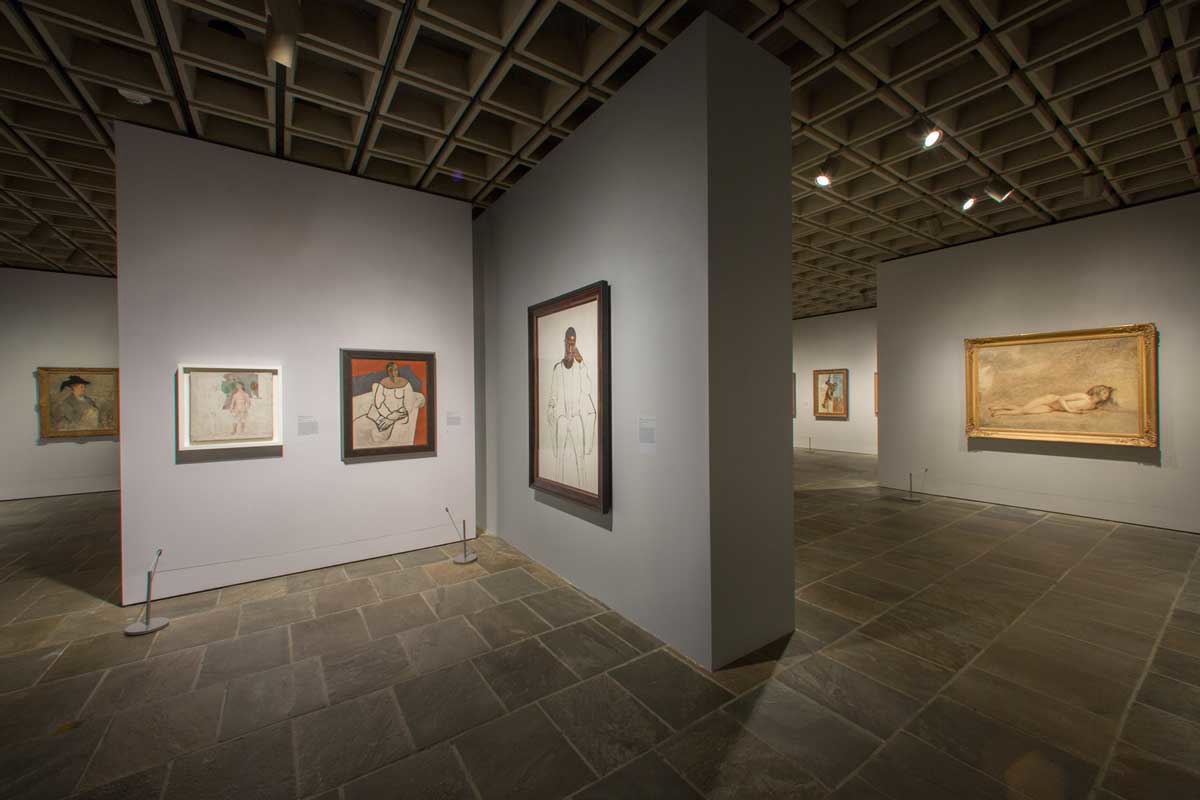
The first floor of the Breuer Building’s interior is made out of terrazzo (a composite material of marble chippings set into cement), board-formed and bush-hammered concrete, bluestone floors, and walnut parquet. Many of the exhibition spaces’ ceilings were coffered, giving them an interesting sense of depth. With the absence of daylight in the exhibition spaces and the use of heavy materials, Breuer aimed to give the Whitney Museum the feeling of a sanctuary for modern art.
After 48 years, the Whitney Museum of American Art moved out of the Breuer Building in 2014. It served as the Met Breuer from 2015 through 2020. From 2021 through 2024, the building became the Frick Madison, housing the Frick Collection during renovations of the Henry Clay Frick House. The Breuer Building is now owned by Sotheby’s.
Armstrong Rubber Company: Breuer’s Brutalist Design and Structure
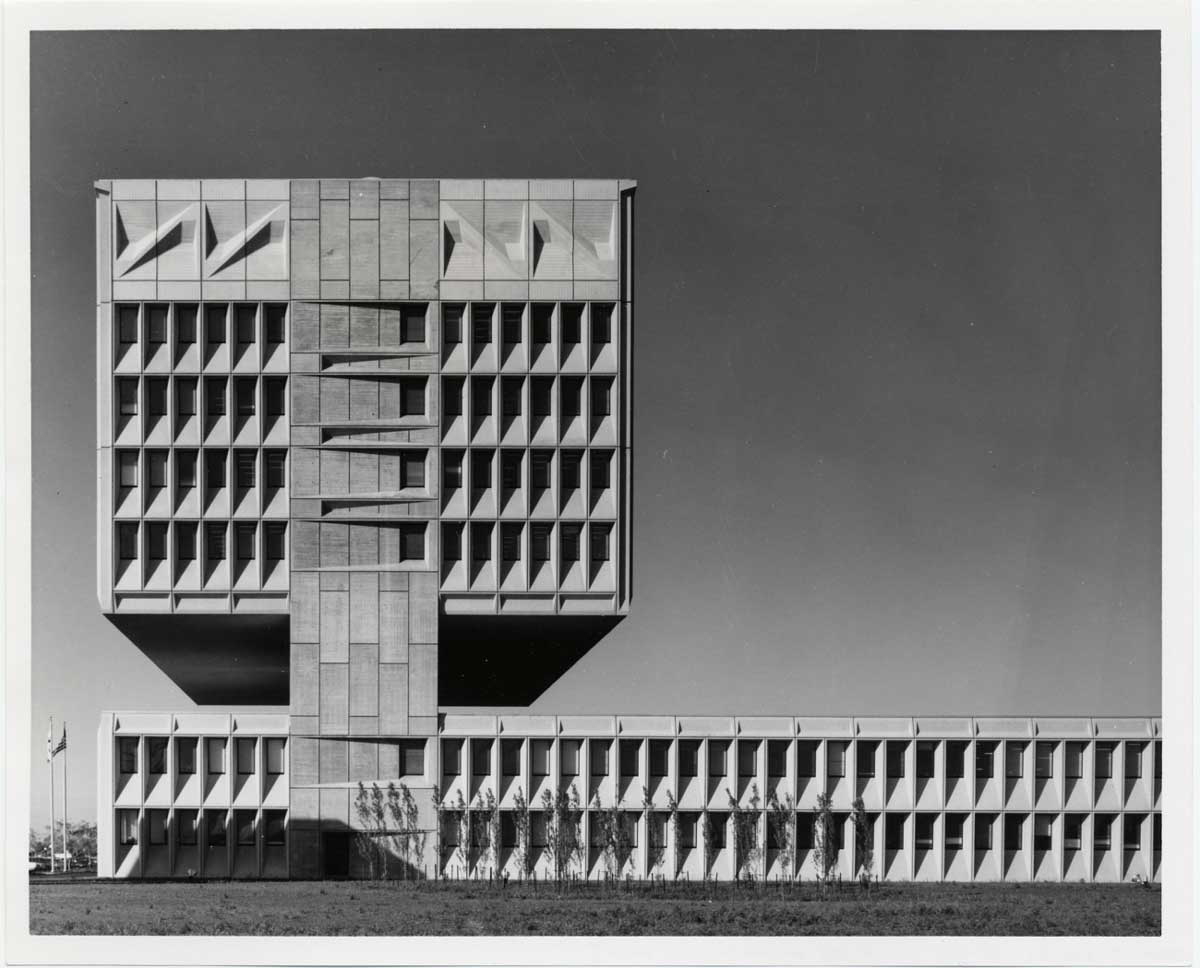
The Armstrong Rubber Company, also known as the Pirelli Tire Building, was one of Marcel Breuer’s most significant architectural projects in the United States. The building was commissioned by the Armstrong Rubber Company in 1966.
Breuer’s design is now a key example of Brutalist architecture. Breuer used reinforced concrete as his main material here. The Pirelli Tire Building was one of the first buildings to use suspended floor framing supported by overhead cantilever trusses. Each of the fifty-ton trusses supports the steel frame blocks below them. What makes the structure remarkable is that it appears both heavy and light at the same time.
From Pirelli to Hotel Marcel: Demolition, Restoration, and Net-Zero Reuse
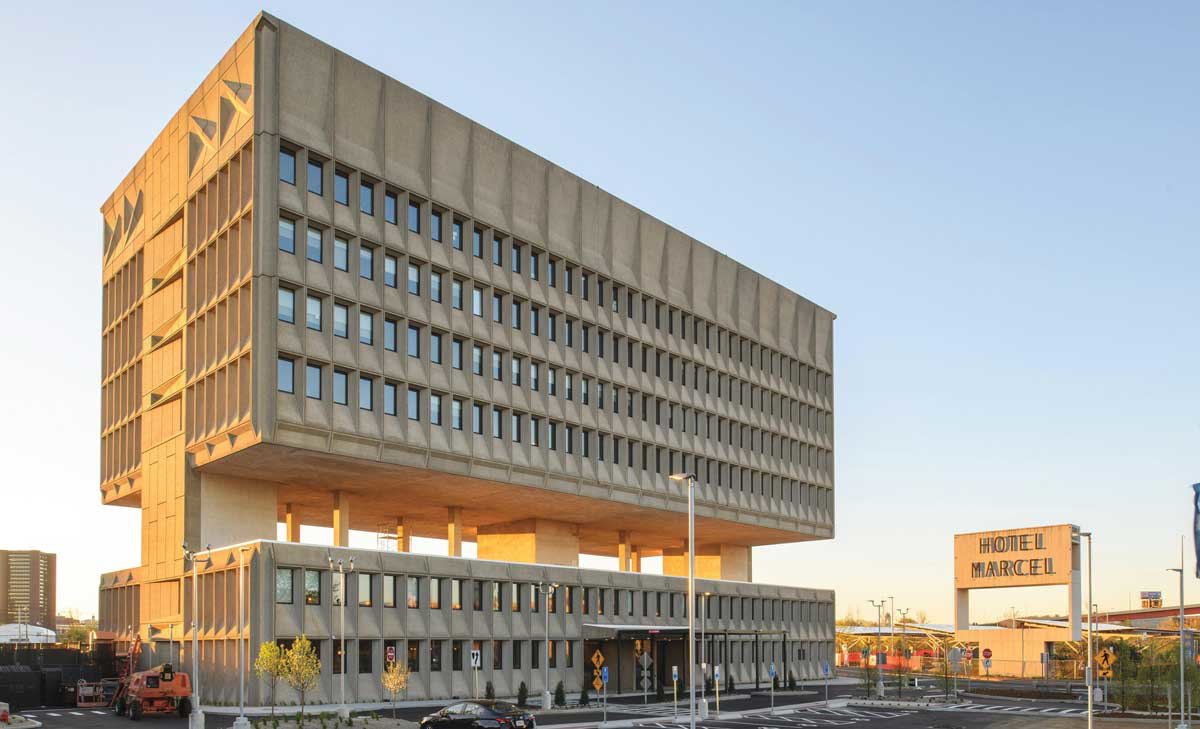
In 1988, the Pirelli Tire Company bought the building and briefly used it as its North American headquarters before leaving it unoccupied for a few years. In 2003, the Swedish furniture manufacturer IKEA purchased the site and announced plans to build an adjacent store. Many of the low-rise sections of the structure were then demolished.
In 2019, the architecture studio Becker & Becker bought the building from IKEA. Becker & Becker repaired the original façade and transformed the interior into a hotel with 165 rooms. In May 2022, the Armstrong Rubber Company was officially reopened as Hotel Marcel, the first NET-Zero Energy hotel in the United States.