Mariam Ghani is a diaspora artist who places her multiple identities at the forefront of her practice. Her video works deal with concepts like place, memory, history, language, loss, and reconstruction. Mariam Ghani introduces us to specific times and places just as a translator introduces us to new languages. Read on to learn more about the artist and her fascinating video artworks.
1. Mariam Ghani’s Landscapes of New Mexico
We live in a world that is well-connected and accessible, but there are still places we haven’t seen yet or that we haven’t experienced. And more importantly, there will always be different times we haven’t had access to. We all have moments in history we’d like to experience, especially world-changing events, such as Martin Luther King Jr.’s historical speech or Mahatma Gandhi’s Dandi March, for example.
In her video works, Afghan-American artist Mariam Ghani frequently examines places, spaces, and moments where politics and culture take on more pronounced forms. As a diaspora artist, Mariam often associates identity with space. This allows her to explore the meaning of multiple identities produced due to dislocation.
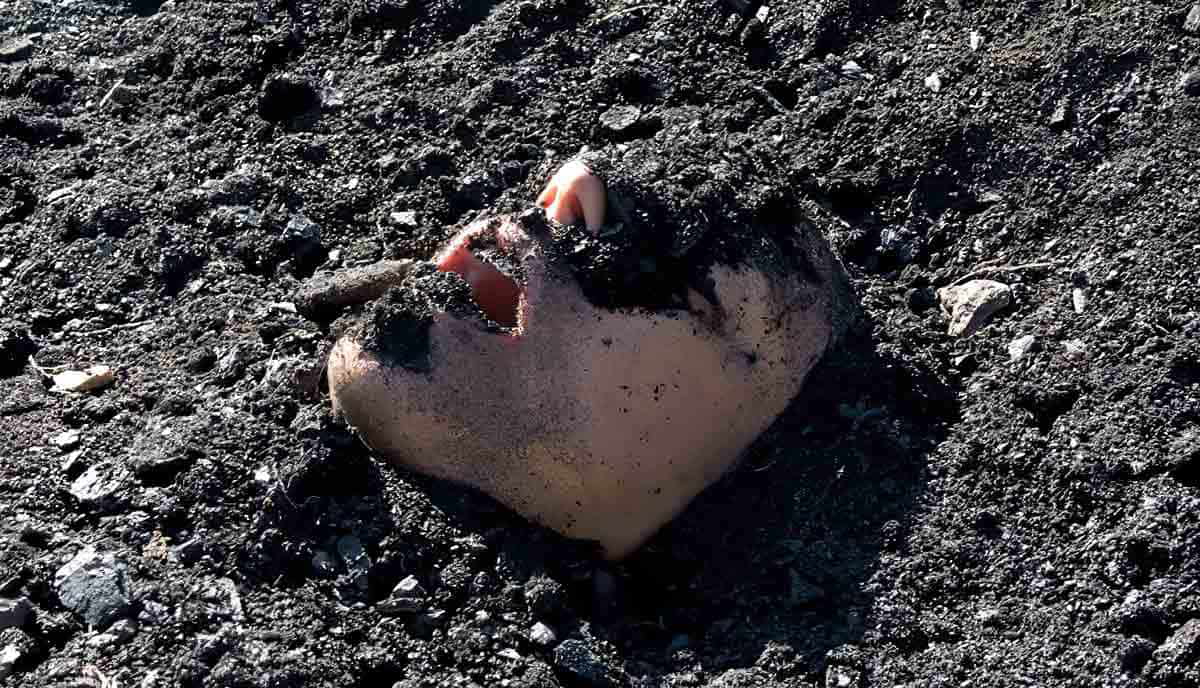
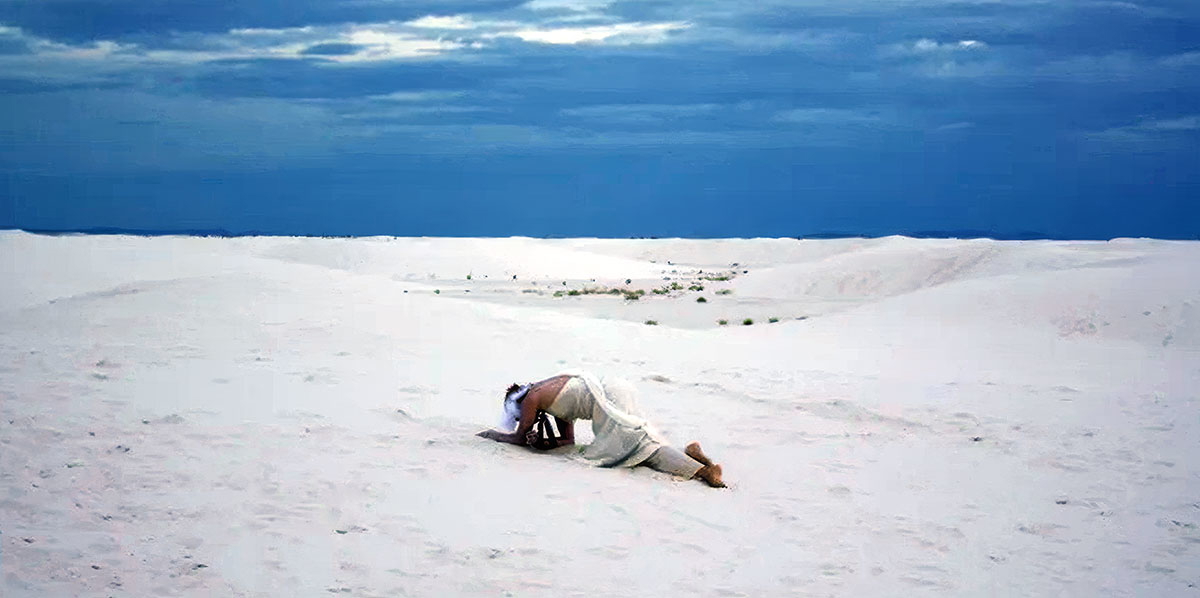
In Landscape studies: New Mexico, Mariam Ghani takes us to New Mexico to experience the region’s history of exploration, conquest, rodeos, revolts, mining, missile tests, and ethnography. Ghani takes us to various locations in the rugged and partly damaged landscape of New Mexico. The video centers on Pueblo theories about the meanings of colors, clouds, and directions. Human figures in curious poses move through dramatic weather patterns, providing a surreal experience for the viewer.
2. “The City & The City” in St. Louis
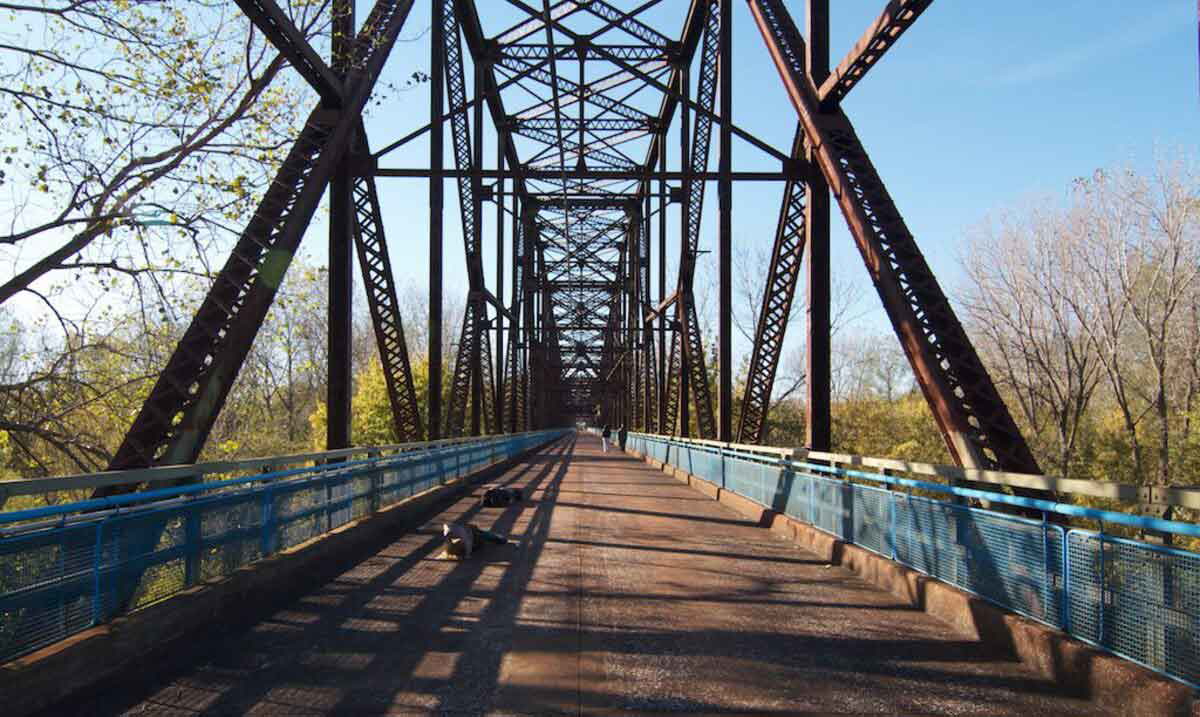
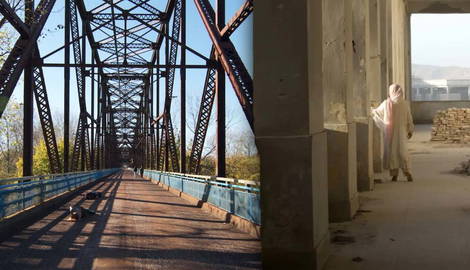
In The City & The City, Ghani takes us to St. Louis during the month of protests known as Ferguson October. Ferguson October is a social movement that protests and opposes police violence in the United States. This video takes us around locations significant to the urban development of St. Louis. These include places filled with memories of displacement, abandonment, and failures of justice.
Ghani’s video was influenced by China Miéville’s 2009 sci-fi novel named The City & The City. Miéville’s novel is about a divided city that eventually turns into two separate countries. Mariam Ghani takes this premise and documents it in the world as we know it, mapping and deconstructing the divisions between the City and Country, the North and the South. This video work reminds us of the divisions in the world and why we must continually strive for equality and justice.
3. Kassel and Kabul in “A Brief History of Collapses”
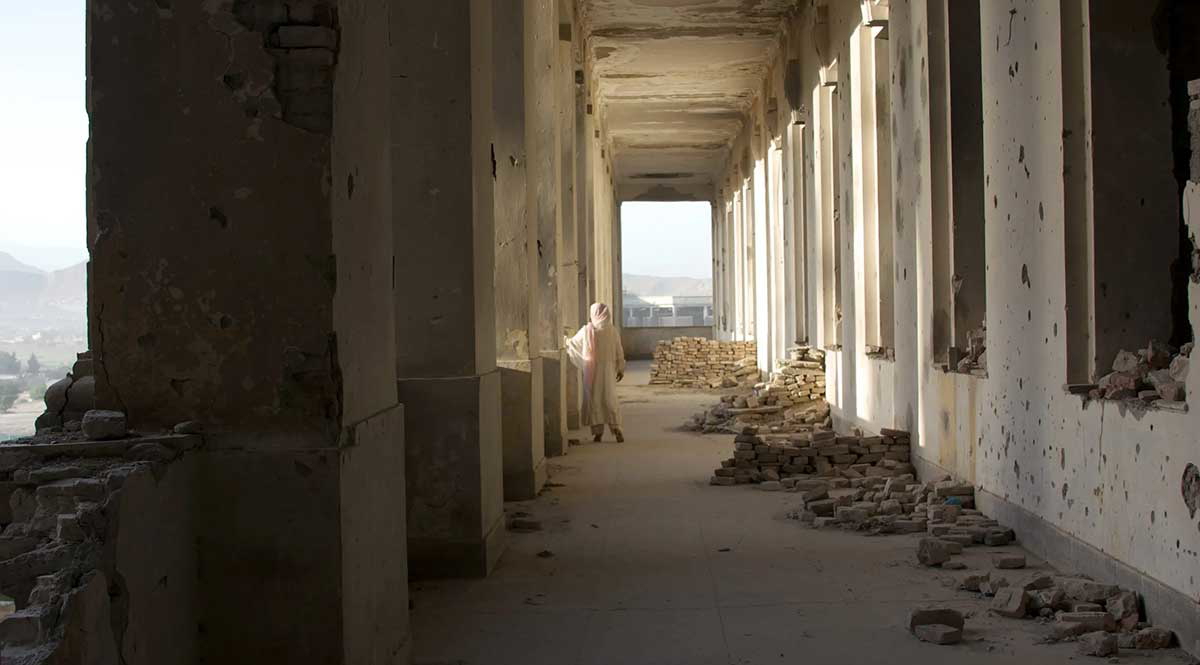
As our understanding of the world expands, we begin to notice uncanny similarities in both places and events. Similarly, in A Brief History of Collapses, Mariam Ghani traces the architectural and ideological similarities between two distinguished buildings—the Museum Fridericianum, built by Simon Louis Ry in Kassel, Germany, in 1779, and the Dar ul-Aman Palace, built by Walter Harten in Kabul, Afghanistan, in 1929.
Despite being separated by two centuries and an entire continent, these two buildings share striking similarities. The Dar ul-Aman Palace is now a ruin. It once represented a crucial part of King Amanullah’s plan to build a new kind of city. On the other hand, the Museum Fridericianum was once a ruin, but it now fulfills its purpose as a museum after undergoing restoration. Both of these places, in two distinct cultures, represent a similar idiom or the impulse to open and modernize society. They also represent a shattering of those ideals in the form of collapsing buildings and dreams. Each of these places can be understood as the past or the future of the other.
4. “Like Water From a Stone” in Rocky Norway
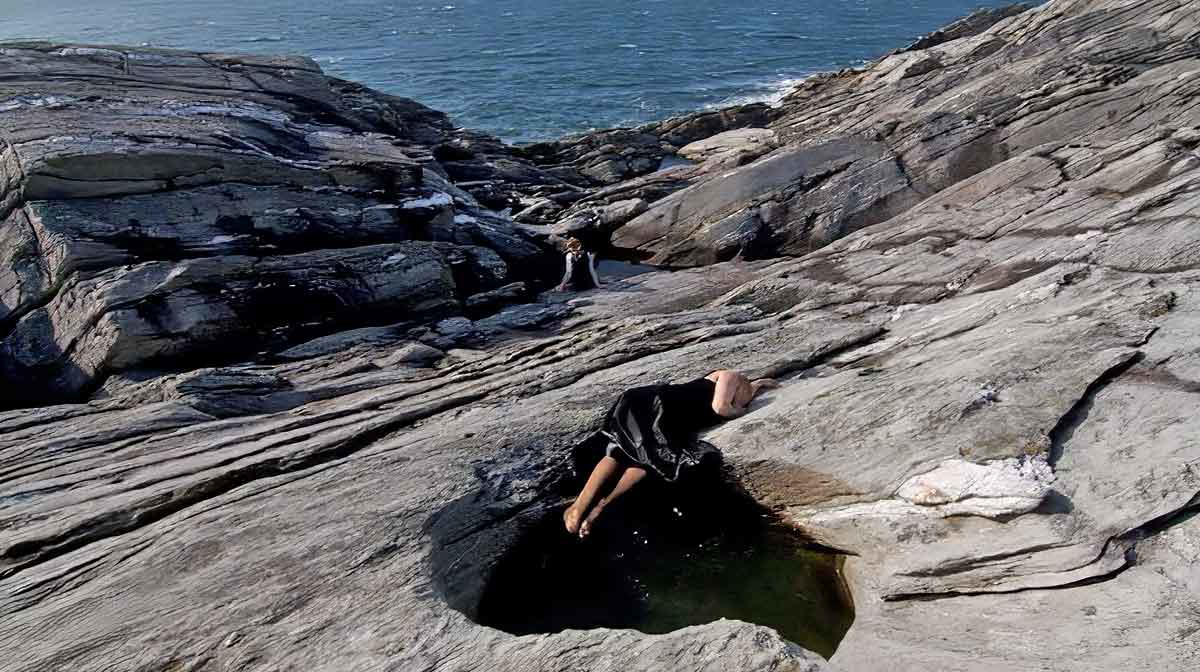
Made during the summer of 2013 in southwestern Norway, Like Water From a Stone was named after the English idiom like blood from a stone. This play on words highlights the challenges of oil extraction, which plays a significant role in the Norwegian economy. The video work also highlights pastures full of stones, and a cold, unruly, unforgiving sea. During her time spent in Norway, Ghani came to the realization that stones and the sea seemed to be the twin pillars of existence in the region before the discovery of oil.
Ghani’s video work takes us to the pre-oil period in Norway. It takes us to the period of rock formations shaped during the Ice Age. She also shows caves inhabited during the Stone Age. We are also introduced to figures from Norse mythology and World War II bunkers. Ghani’s video shots refer uncannily to the paintings of the Norwegian Romantic Nationalists, who helped establish the idea of Norway as a nation in the 19th century, after centuries of being governed by larger empires. Like Water from a Stone reminds us that the sublime can also simultaneously be troubling. It makes us aware that landscapes exist on a scale that overpowers most human endeavors.
5. “Going, Going, Gone” in New York

The Great Recession of the United States, which began in 2007, has become a part of the collective memory of contemporary history for all of us. It marked not only the collapse of the American Dream but also the longest recession since World War II. Mariam Ghani’s Going, Going, Gone (2009) takes us to the time of the recession in New York. The video work features abandoned warehouse buildings, foreclosed houses, demolished schools, and restaurants closing down. The video also includes sound bites aired on TV and streamed on radio news from 2009. Even the title of the work references a sign seen in US store windows during clearance sales. Going, Going, Gone is an ode to the ever-widening economic gap in the world, where the rich keep getting richer and the poor become even poorer.
6. Kabul in “Kabul 2, 3, 4”
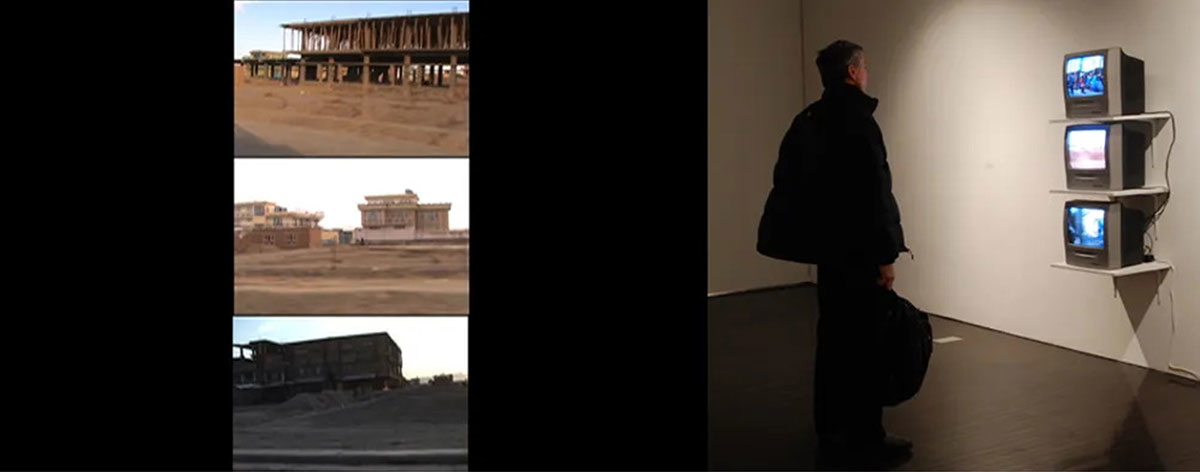
In an uncertain world, it becomes even more important that we lend an ear to artists who seek to broaden our understanding of these places and their complex dynamics. On August 15, 2021, the Taliban once again gained control of a majority of Afghan territory and captured the city of Kabul. The world watched in confusion over the uncertainty of Afghanistan’s future. In Kabul 2, 3, 4, Mariam Ghani presents three parallel timelines to explore Afghanistan’s capital city of Kabul during December 2002, 2003, and 2004. Ghani developed this work to track the city’s reconstruction during the post-conflict intervention. During this period, more than 2 million refugees returned home, a parallel economy began to grow, and so did political idealism, disillusionment, monuments, graffiti, and riots.
Ghani often communicates with places in a way that exposes the landscape’s subconscious memory. Here, too, by giving us three Kabuls, lined up together, following the same geographical route, the city narrates its own stories. We observe which structures readily adapt to change, which resist, and which remain invisible. We get to see a Kabul that not many people have had the chance to see and even fewer have had the time to ponder.
7. 11 Countries in Mariam Ghani’s “Permanent Transit”
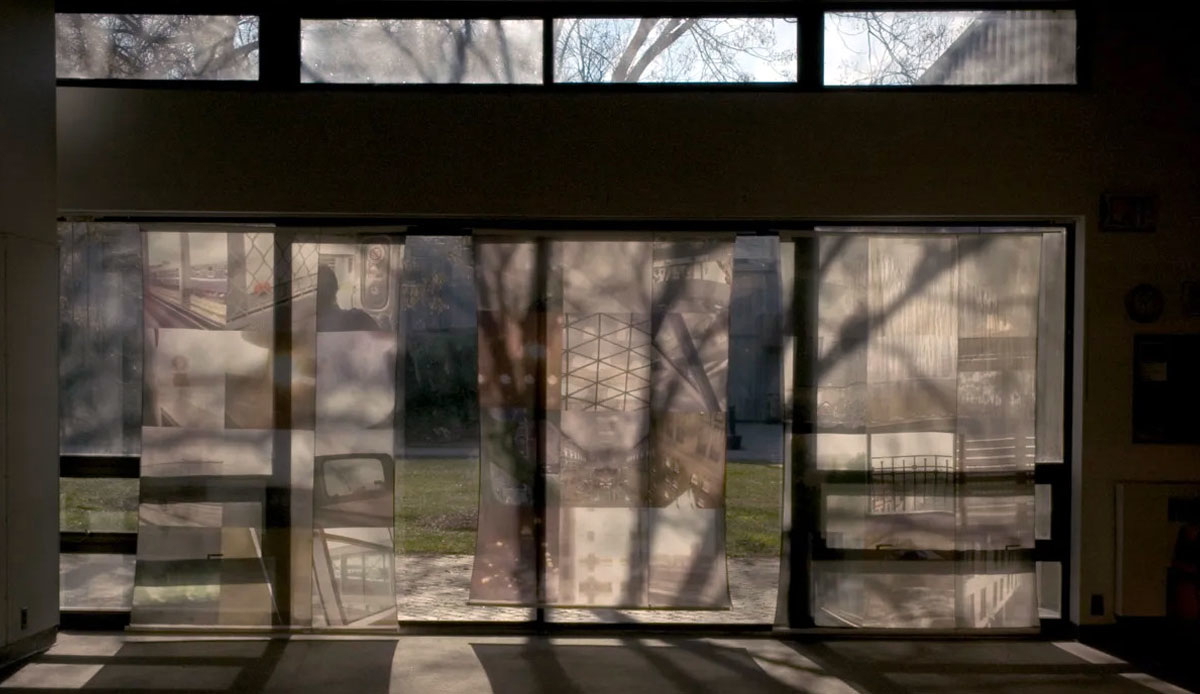
In Permanent Transit, Mariam Ghani takes us not just to one place, but on a journey spanning 11 countries between the East and the West. This video work brings to the surface the identity of the diaspora artist and citizens. It also centers on ideas about migration and the collision of different cultures. Ghani takes us through Lebanon, Syria, Jordan, Palestine, Turkey, Armenia, Italy, the Netherlands, Russia, the United Kingdom, and the United States. In this work, every shot is taken through a window, showing landscapes that are constantly changing. The sounds woven together for the creation of the video include stories from the lives of exiles, children of immigrants, children of divorce, and refugees.
All of these elements come together in the storyline of a traveler who becomes trapped in a place between two borders and must find a way to find a home there. The work functions as an experimental documentary. Permanent Transit dislocates us from our ordinary lives and places us in hybrid in-between zones, stripping us of the notions of fixed territories and identities.