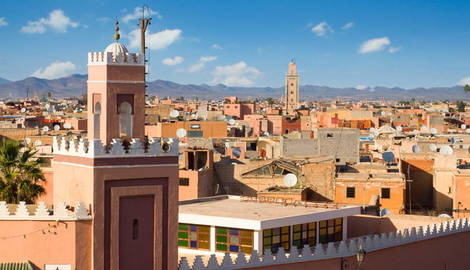
Once a powerful imperial capital, Marrakesh remains Morocco’s cultural heart and is today the most visited city in the country. The bustling hub blends Berber traditions with Arab, Andalusian, and French influences, and is revered for its lively atmosphere, bustling medina, and historic landmarks. Rather than trying to shape the city to your expectations, let yourself go with the frenetic flow. It might sound kitsch, but if you dive into Marrakesh’s chaotic street life with no expectations, your visit will be all the more memorable.
A Brief History of Marrakesh
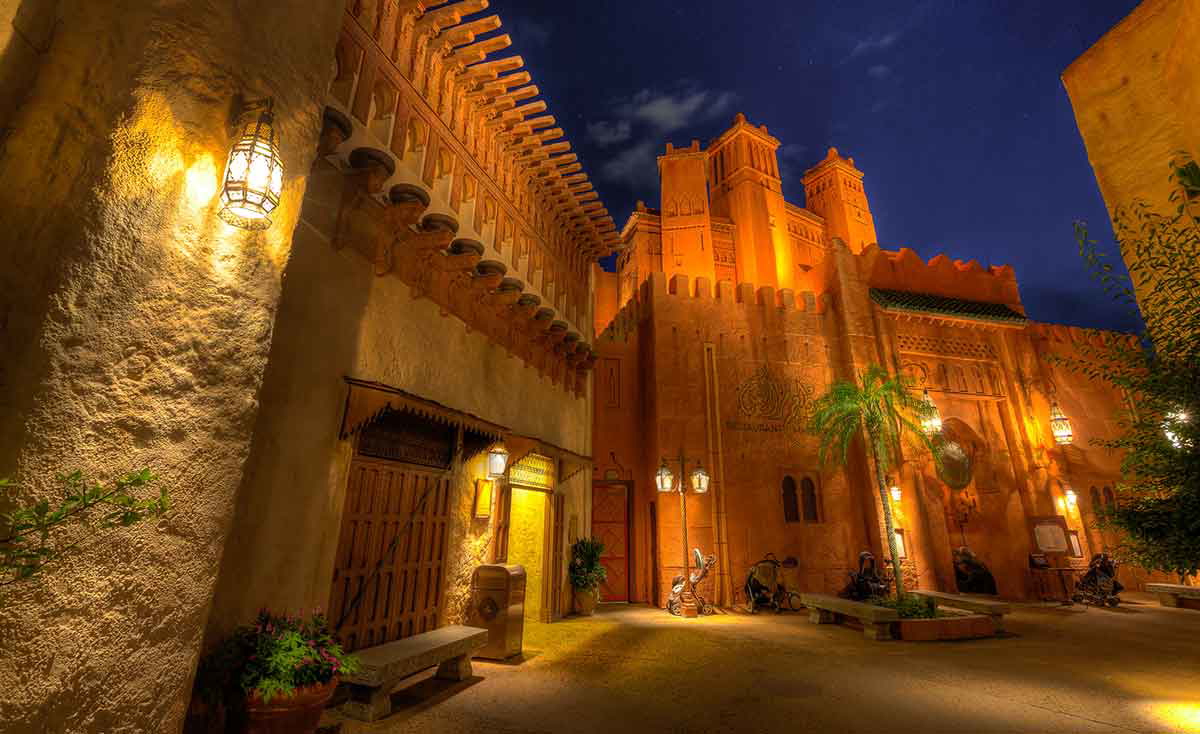
Marrakesh was founded in 1070 by the Almoravid Dynasty and was designed to be a grand capital with impressive palaces and mosques. Its prime location along the trans-Saharan trade routes helped it thrive as a center for trade, science, and culture, attracting craftsmen, thinkers, poets, architects, and artists from across the broader Islamic world. In the 12th century, the Almohads came in and gave the city a fresh, bold architectural look. Later, the Saadians and Alaouites each left their own unique imprint, adding to the city’s fascinating history.
Today, the city is a UNESCO World Heritage site, a living museum of its imperial past.
Morocco: Arab or Islamic?
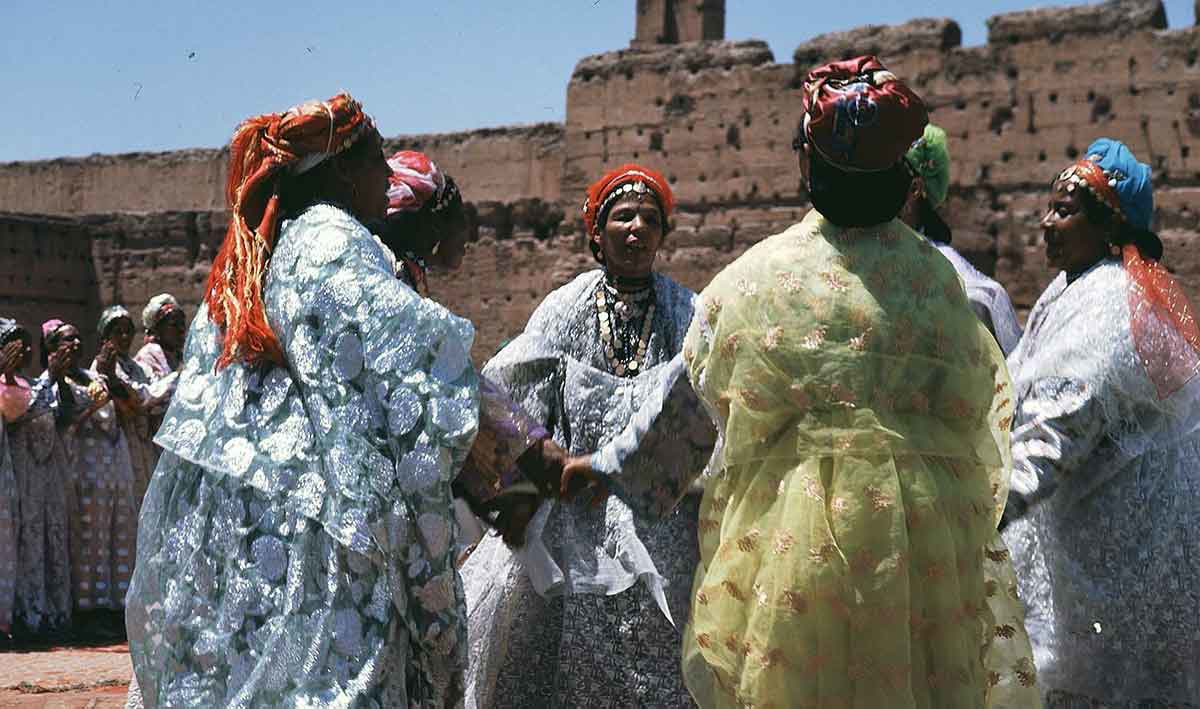
When talking about Morocco, it is easy to classify it as an Arab country rather than an Islamic one. Yet, the differences between the two are important to understand. While Morocco is part of the Arab League and Arabic is widely spoken, the country has a significant Berber (Amazigh) population, and many aspects of its culture, including dress, and traditions, are influenced by several pivotal historical and cultural factors that surpass Arab identity. The term “Islamic” is much more accurate in this case, as it embraces the broader cultural and religious context that includes non-Arab Muslim-majority countries like Morocco, Iran, Türkiye, Afghanistan, and even Indonesia.
Acknowledging this difference also respects an ancient culture that has struggled to survive during countless efforts to suppress it.
Iconic Historical Sites in Marrakesh You Shouldn’t Miss
The Medina & Jemaa el-Fnaa Square
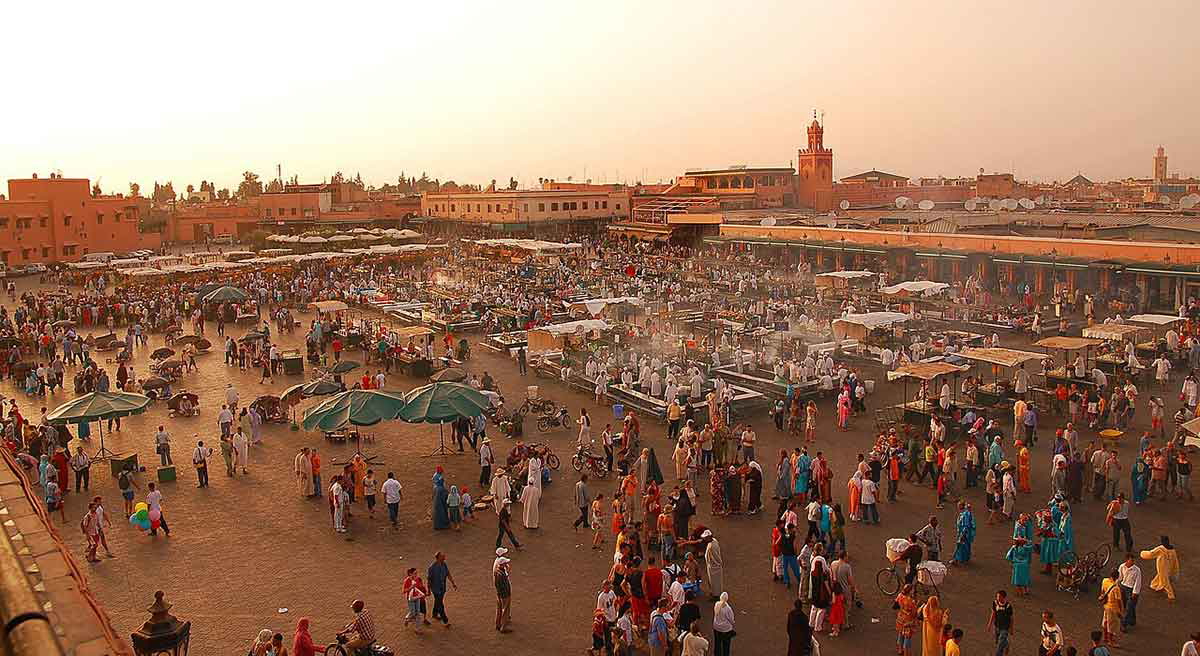
Marrakesh is a city that feels alive with history, and the epicenter of it all is found in the ancient medina.
These narrow, winding streets are filled with souqs selling everything from fresh produce, spices, and dried fruits to ceramics and textiles, juxtaposed by alleys brimming with Made-in-China clothing and shoes. It’s ancient and modern in the most alluring way possible. Hidden riads offer a peaceful retreat and old fondouks where traders once rested.
Jemaa el-Fnaa, the central square, has always been a gathering place, and it is still one of the most lively spots in the city today. You can’t miss it—it is where people have been meeting, trading, and sharing stories for centuries. The square is lively during the day but if you want to see it at its best, visit at sunset. That is when the square bursts into life. Snake charmers set up their displays, acrobats put on their shows, and food stalls start serving up mouthwatering local dishes. It is a real sensory overload, but a superbly enjoyable one.
Although the square might appear to be an ever-so-slight tourist trap, remember that snake charmers and storytellers have been visiting for centuries—traditions that are upheld for locals far more than foreigners.
The Koutoubia Mosque
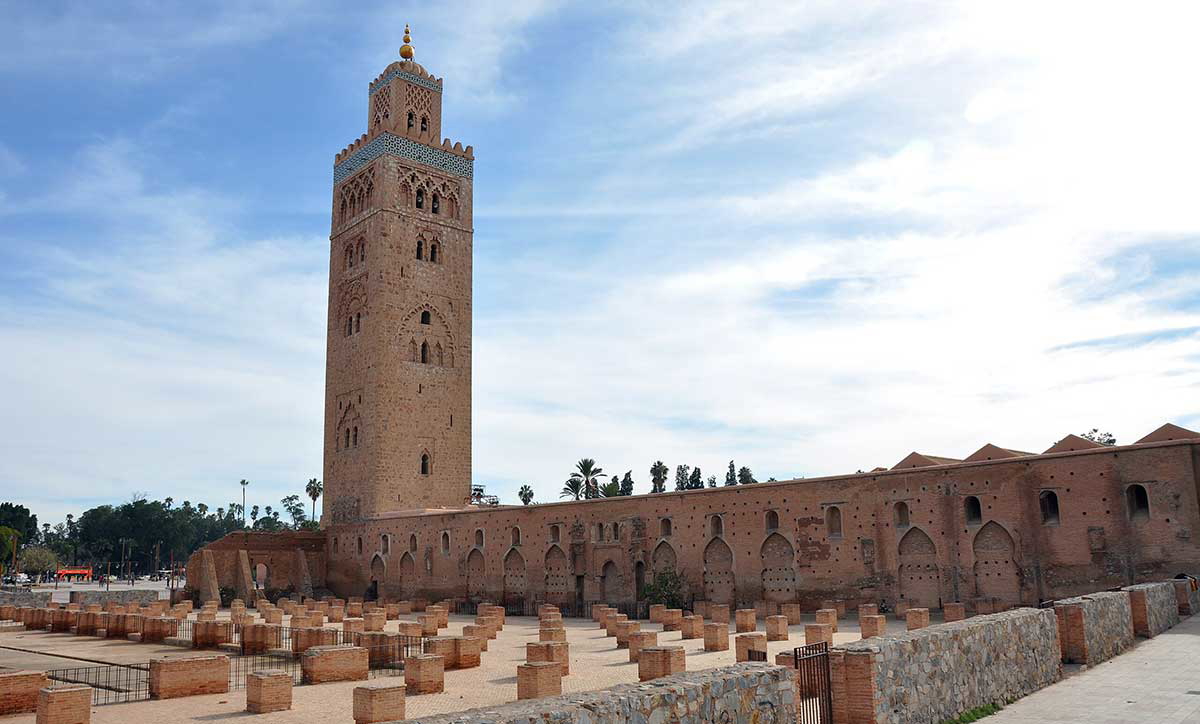
The Koutoubia Mosque is nearly impossible to miss—it towers over Marrakesh and is one of the city’s most iconic landmarks. Built in the 12th century during Almohad rule, it is a perfect example of classic early Moroccan mosque design. Unlike later Moroccan mosques, Koutoubia’s minaret lacks elaborate tilework but features classic Almohad geometric carvings and decorative arches. The site is actually two mosques in one, as the original, built in 1147, was misaligned with Mecca. A properly oriented mosque was then constructed next to it. The ruins of the first are still visible.
While non-Muslims can’t go inside, you’ll get a fantastic view of it from the outside, especially at sunset when the golden light makes its sandstone walls glow. If you want a quiet escape from the busy streets, stroll around the mosque gardens.
The Bahia Palace
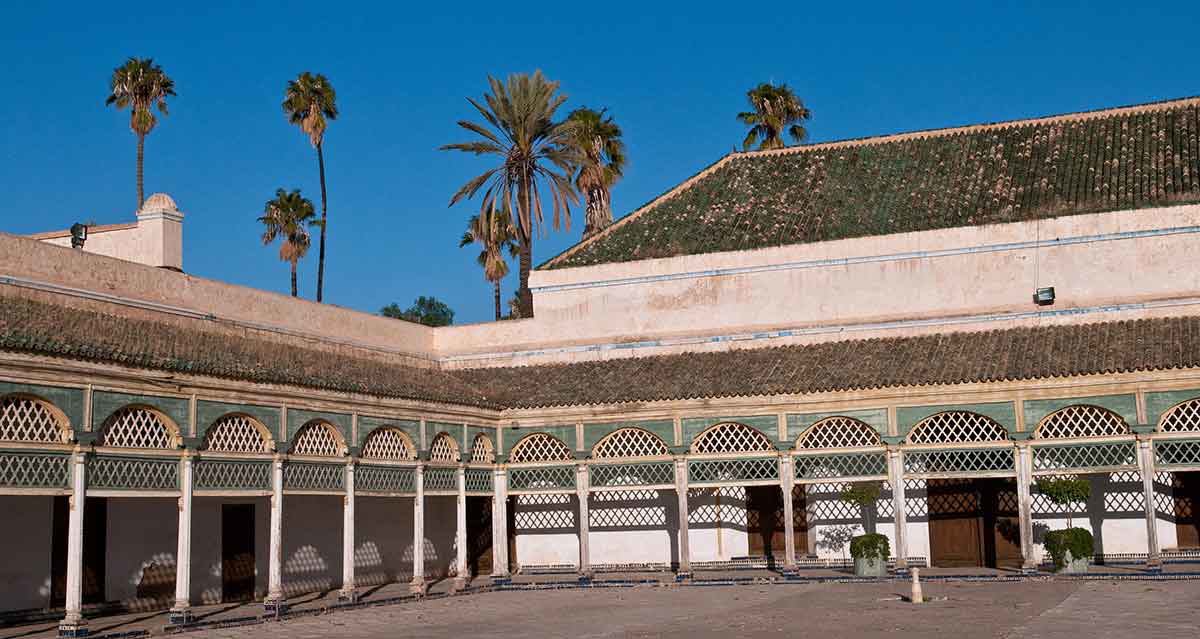
The Bahia Palace is a stunning 19th-century beauty, originally built as a luxurious home for Grand Vizier Si Moussa. It showcases beautiful Moroccan craftsmanship, with detailed wood carvings, colorful tile mosaics, and peaceful courtyards that make you want to linger and take it all in. Every corner shows incredible attention to detail. When Si Moussa’s son, Ba Ahmed, became Grand Vizier, he expanded the palace to strengthen his power, ruling Morocco while the Sultan took more of a ceremonial role. Since it was built over decades with different rulers adding their touch, the layout is a bit quirky, with winding courtyards, halls, and hidden rooms. The design mixes several architectural styles, including Andalusian and Ottoman influences.
If you want to experience it without the crowds, it is worth getting there just after dawn—a sublime time of day to explore the medina anyway. You’ll have the serene courtyards all to yourself and a quieter, more personal look at the beauty of this historical masterpiece. Note that the palace is sporadically closed to the public as parts are still used for royal ceremonies and official events.
El Badi Palace
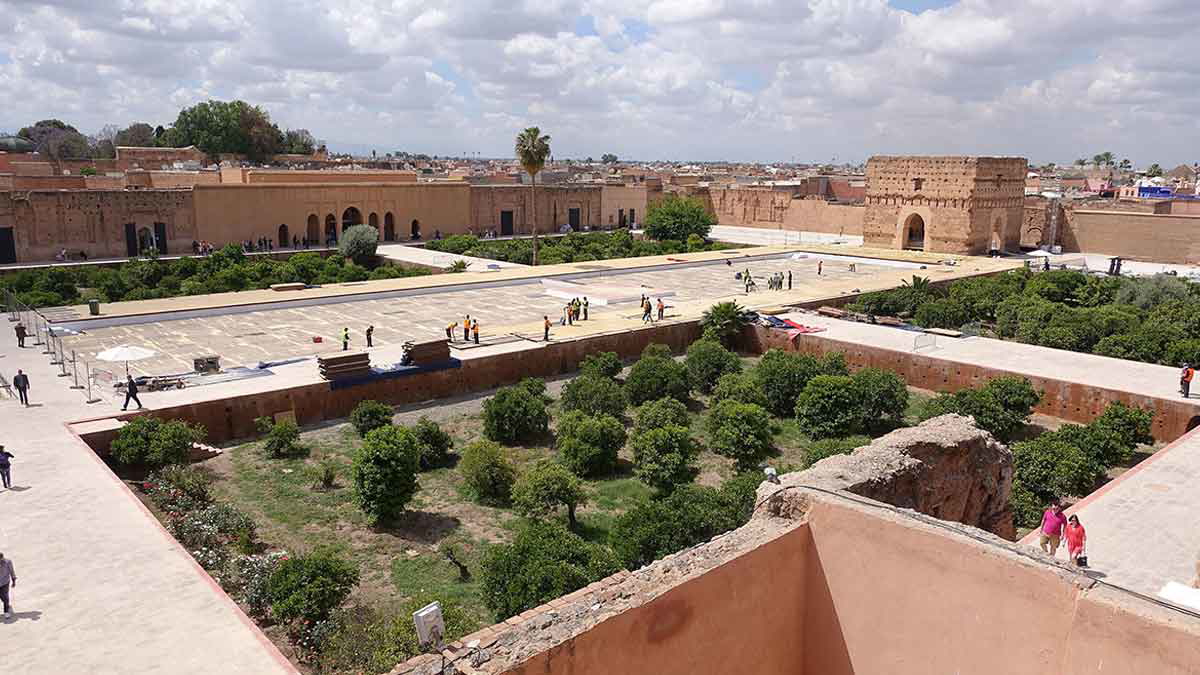
El Badi Palace is yet another visible remnant of ancient opulence, built by Sultan Ahmed al-Mansour in the 16th century after the successful defeat of the Portuguese in the Battle of the Three Kings. In the 17th century, Sultan Moulay Ismail stripped the palace of its riches to use in his own capital, Meknes.
Today, El Badi lies mostly in ruins, but you can still sense its former grandeur in the vast courtyards and the remains of its walls. Beneath the palace, a network of tunnels and dungeons still exists, once used for storage and possibly even as a prison. Storks make their home atop the ramparts seasonally. If you’re up for it, climb to the top of the walls for incredible panoramic views over Marrakesh. It is a great way to appreciate the scale of the palace and see the city from a different perspective.
The Saadian Tombs
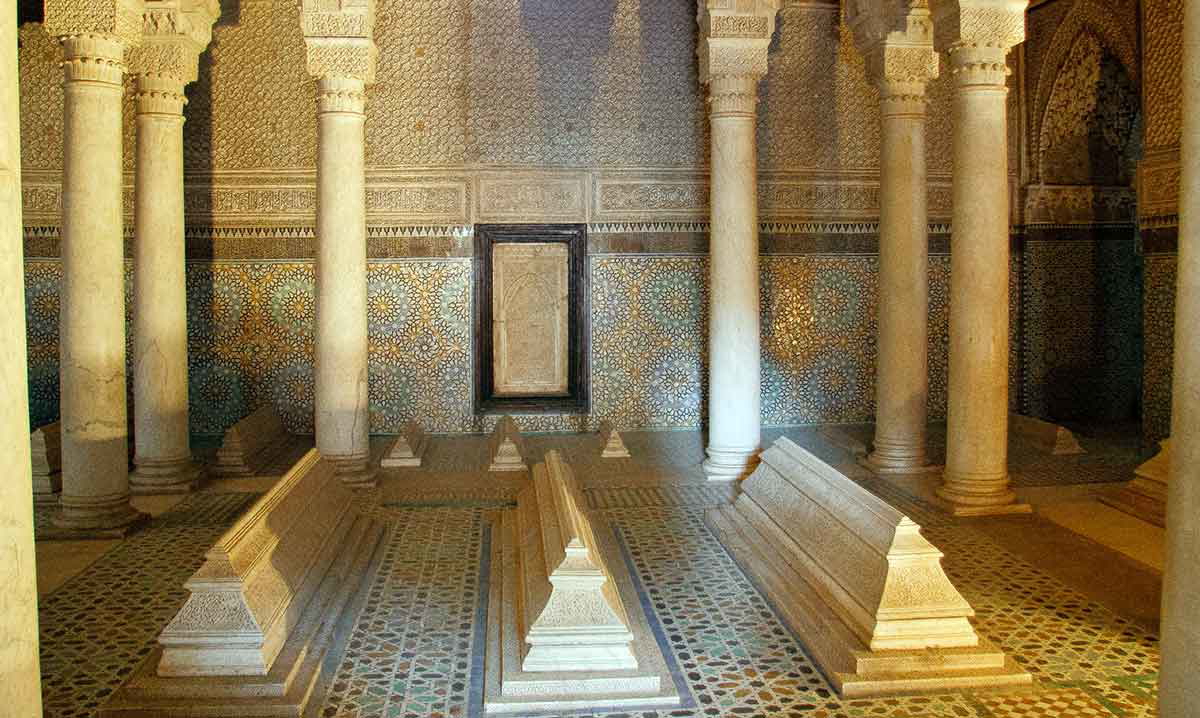
The Saadian Tombs are one of Marrakesh’s hidden treasures, tucked away for centuries until they were rediscovered in 1917. These tombs date back to the 16th century when the Saadian Dynasty was at its peak. The site contains the graves of sultans, princes, and advisors, including Sultan Ahmed al-Mansour, who built El Badi Palace. The tombs were sealed off by Sultan Moulay Ismail (who looted the Saadian palace) in the 18th century and remained forgotten until their rediscovery by French aerial surveys.
The mausoleums are beautifully carved from Carrara marble, and the stucco details and cedarwood ceilings are just breathtaking—real testaments to an era of great wealth and prosperity.
The Ben Youssef Madrasa
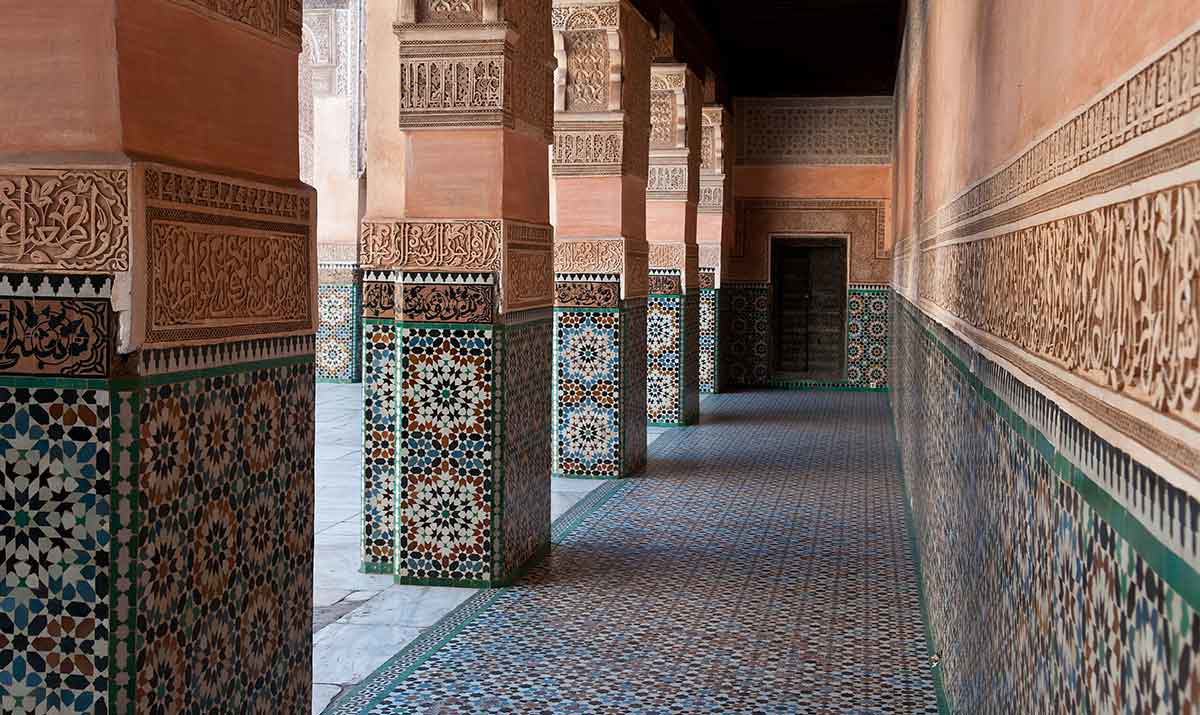
The Ben Youssef Madrasa is one of the largest and most impressive Islamic colleges in North Africa. Founded in the 14th century and expanded in the 16th, it is another spectacular example of Islamic architecture, with multi-hued zellij tiles, detailed stucco designs, and the ubiquitous, always-welcomed peaceful courtyard. While you’re looking around, don’t forget to glance up to the upper floor, and the small student rooms. It is astonishing to think about the little private space brilliant minds had to study.
Hidden Historical Gems
Tiskiwin Museum
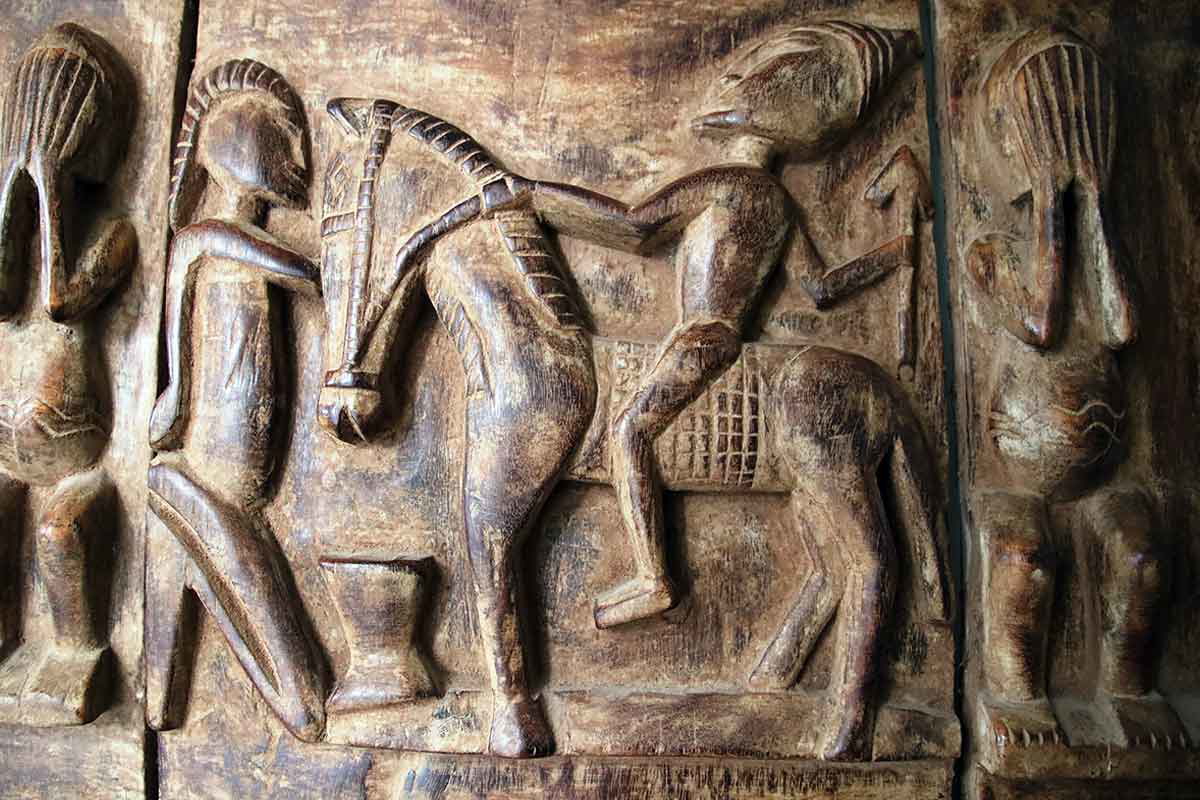
Tiskiwin Museum is one of Marrakesh’s hidden historical gems and serves up a fascinating glimpse into the trans-Saharan trade routes that once linked North Africa to the rest of the continent. It is curated by Dutch anthropologist Bert Flint, and the collections include Berber artifacts, traditional textiles, and handicrafts from Morocco, Mali, and beyond. Each room takes you on a journey (and trade stopover) along these ancient routes, making it ideal if you want to understand Marrakesh’s role in North African trade history.
The Jewish Quarter (Mellah)
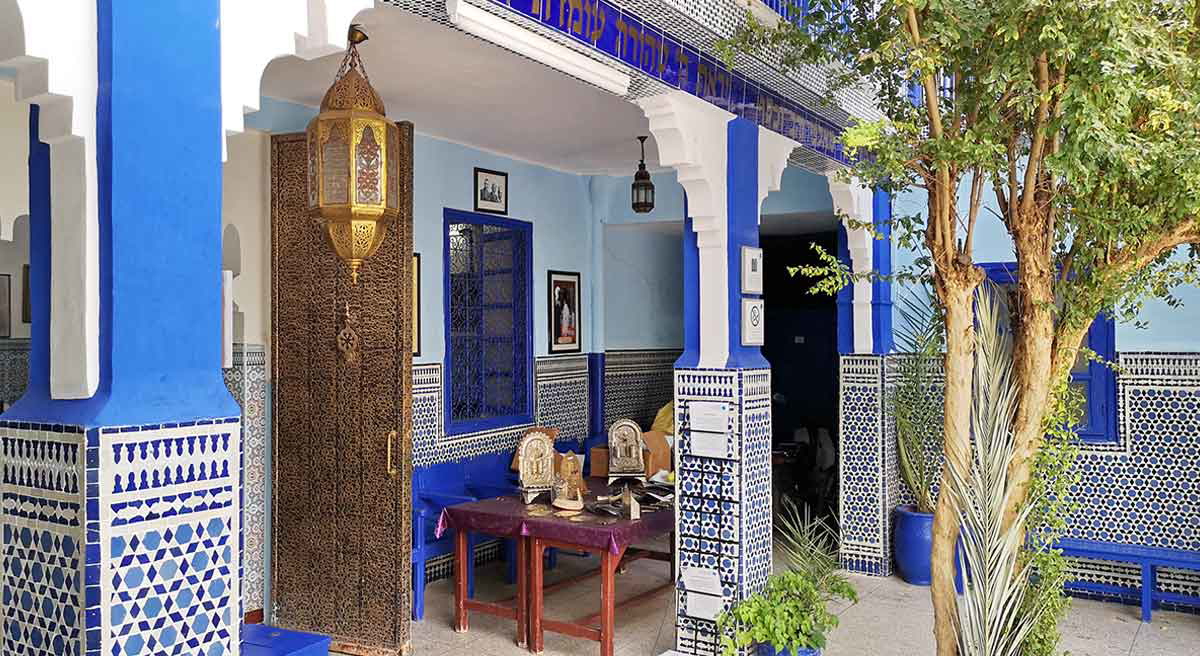
Marrakesh’s Mellah, the old Jewish quarter, is an interesting and eclectic part of the city, enriched with glimpses of a once-thriving Jewish community.
It was founded by Sultan Abdallah al-Ghalib in 1558, to house the blossoming Jewish population escaping persecution in the Iberian Peninsula. The Sultan recognized that Jewish artisans were highly skilled in metalwork, jewelry-making, and tailoring, and sought their help in building Marrakesh’s reputation as a center of craftsmanship.
Today, traces of this history remain in places like the wonderfully preserved Lazama Synagogue. Just a short distance away, the Jewish Cemetery stands as one of the oldest in Morocco, its weathered white tombs stretching into the horizon. After Morocco’s independence in 1956, and after the creation of Israel, many Jewish families emigrated abroad—to Israel, France, and Canada, primarily. Before the exodus, Marrakesh was home to almost one-quarter of a million Jews. After, only a few hundred remained.
Wandering through the Mellah feels different from the rest of the medina—its history and character are visibly distinct. While you are there, stop by a local bakery to try some traditional Jewish-Moroccan pastries: they’re a delicious reminder of the community’s lasting influence.