Despite the obviously patriarchal culture in which it was written, women play a surprisingly prominent role in many of the Bible’s most important stories, and married women often interact with their husbands in ways that one might expect husbands and wives to interact in marriages today. At the same time, however, aspects of the marital relationship continue to feel both foreign and antiquated to modern readers. Meanwhile, other questions about what might be called the “biblical view” of marriage—how the Bible’s authors and first readers saw marriage—continue to be open for inquiry by scholars.
Biblical Assumptions About Marriage
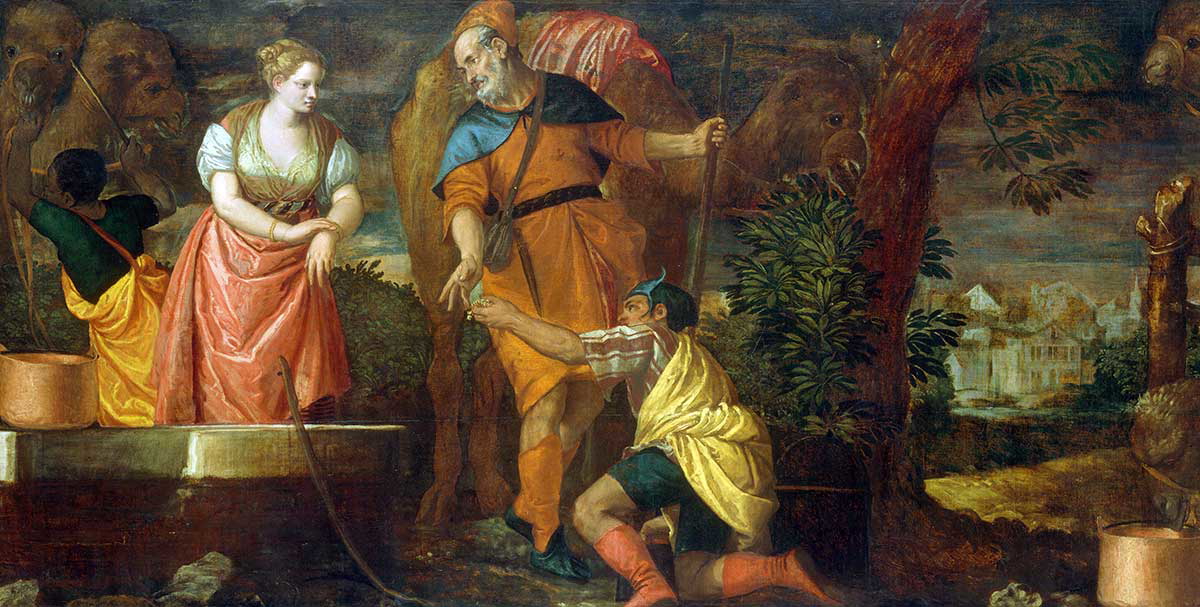
While references to a “biblical” understanding of marriage are common today, the Bible does not talk about marriage systematically. Instead, the Bible presupposes that its readers hold to a shared set of assumptions about the responsibilities, privileges, and rules that marriage relationships entail. It then proceeds to tell stories and to build regulations on these assumptions while, at times, pushing their boundaries. This presents a challenge for modern interpreters for the simple reason that today’s assumptions about marriage are very different from what ancient peoples thought about it.

For example, while romance is an expected or even central feature of the ideal marriage for many people today, it was not considered a necessary condition for a good marriage in the biblical worldview. Similarly, while most today think of marriage as monogamous, the Hebrew Bible was written in contexts in which men routinely had more than one wife. The Bible neither encourages nor discourages this practice; it merely assumes that some men would engage in it.
Another assumption that modern folk tend to make about marriage is that all marital relationships are of equal weight. Modern societies tend to offer only one type of marriage license. One can be either married or single; no other option is possible. In the Bible, however, different types of marriage are possible. A man might be married to both wives and also concubines, for example.
Furthermore, with notable exceptions, women are assumed in the Bible to belong to their fathers or other older male relatives. These, thus, are able to “give” their women relatives to men as wives.
Did Biblical Law Regulate Who Could Marry Whom?

Scholars disagree both about the dating of biblical law and about how it relates to the moral ideals of the ancient Israelites. If one comes to biblical law assuming that all the laws featured are meant to reflect moral ideals, it can seem strange that there is a law against marrying one’s half-sibling since Abraham and Sarah, the founding couple of the Israelite nation, were themselves half-siblings!
It appears that Israel’s legal tradition, as it is preserved in the Bible, reflects a mixture of its moral ideals along with laws that were created for practical and regulatory purposes. It should not be assumed that all of these laws were followed or enforced at any point in Israel’s history. All we can know is that they were preserved for posterity in the Bible for reasons that were important to its readers.
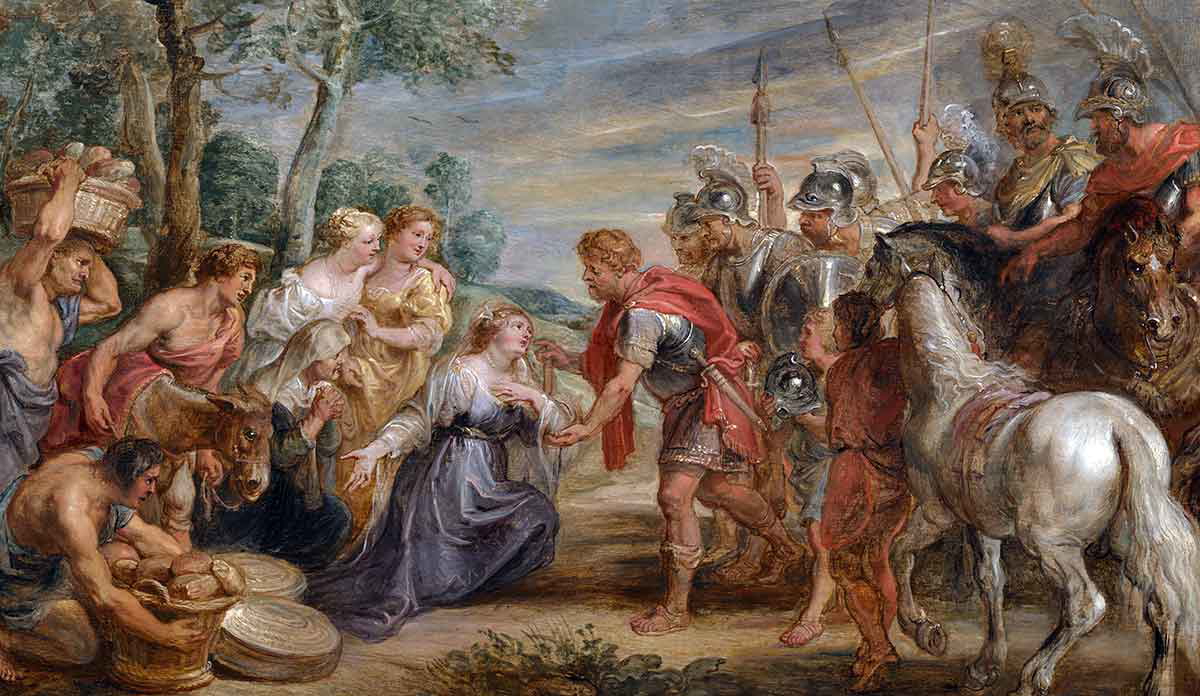
Some biblical laws specify who is and is not eligible for marriage. On the one hand, some laws forbid marriages between close family members. On the other hand, intermarriage with certain groups considered to be corrupted by idolatry was forbidden. Thus, there were laws that encouraged marriage outside of a certain circle of family relationships, but within a wider circle of national relationships.
Laws that encouraged marriage within the Israelite nation, however, never forbade marriage with all foreigners outright. Instead, they appear in specific settings and are usually only meant to govern Israel’s policy temporarily. In fact, one set of laws regulates what Israelite men were to do when they took wives as part of the spoils of war after conquering foreign cities. Because nationality was passed down to a child through the father’s side alone in the Bible, it was common for Israelite men to marry non-Israelite women during much of Israel’s history. This began to change, however, either before or during the Babylonian Exile, when Israelite intermarriage with non-Israelites fell out of favor.
What Else Does Biblical Law Say About Marriage?

Biblical law is harsh on those who step outside of marital norms. Adultery, whether committed by a man or a woman, was punishable by death, as were sexual relations outside of marriage in some other specified situations. As noted above, however, even though adultery features in many narratives in the Bible, including among Israel’s founders, no death penalty is served in those stories for the crime. It is unclear exactly how, when, or even if these laws played a direct role in the life of ancient Israel.
Biblical law also governed divorce. Men were permitted to obtain divorce certificates if they found something displeasing about their wives. No corresponding right is given to women. However, in cases in which a woman is divorced after her husband obtains another wife, she is entitled to certain rights. Customs demanded that a father give his daughter a dowry—something of value, such as land or jewelry—at her marriage, and this would protect her economically and socially to a limited extent if she were to be divorced later. However, biblical law does not record this as a requirement.
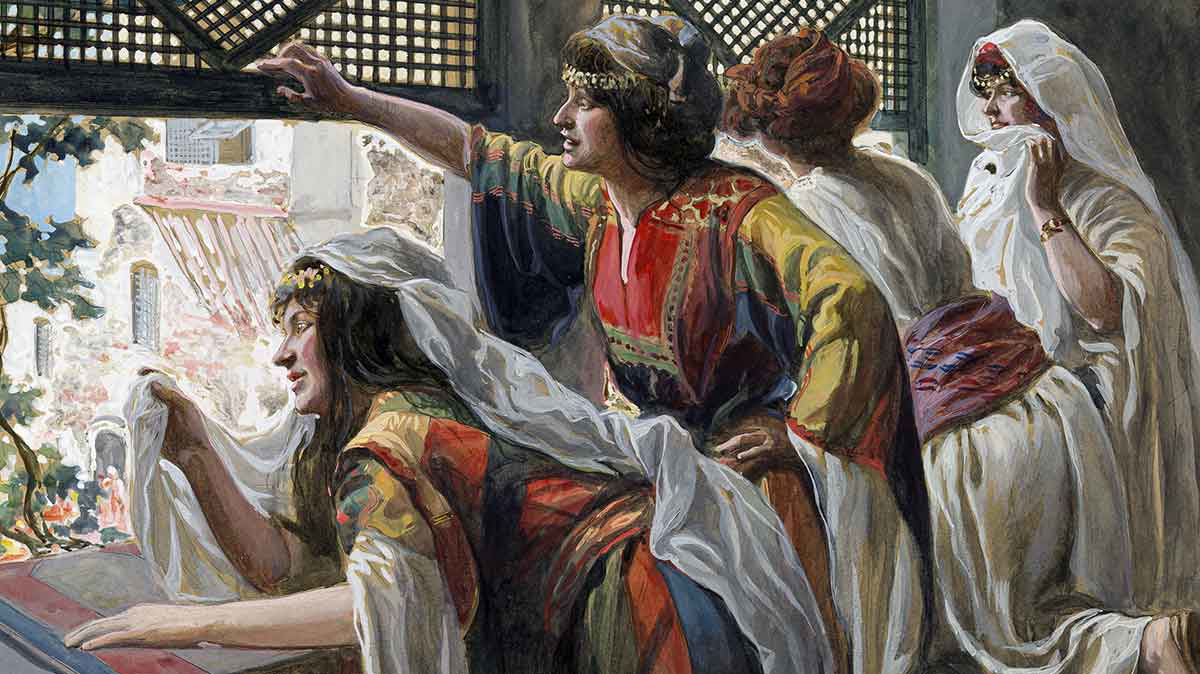
Divorce is an area of biblical law in which it is important for readers to distinguish between modern and ancient assumptions. In biblical culture, marriage was not a partnership of equal parties. Thus, divorce was not a right enjoyed by both women and men. The purpose of regulating divorce in biblical law, therefore, focuses on how a divorced woman should be treated in order to mitigate its effects on her welfare and honor. This is distinct from modern divorce law in societies that hold to egalitarian values, which tend to target the fair and equal treatment of both parties in a failing marriage.
What Are Marriages Like in Biblical Narratives?

Many of the Bible’s most prominent characters are married couples. Abraham and Sarah, remembered as the first parents of the Israelite people, are portrayed in the Bible as having a remarkably symbiotic relationship. While their story certainly portrays a culture that is heavily male-dominated, their relationship in and of itself does not appear hierarchical. Abraham asks Sarah to lie on his behalf to two kings, and she complies. But he does not command her to do this.
Similarly, Sarah asks Abraham to take her servant Hagar as a second wife, and he complies. Abraham and Sarah’s relationship is typical of marriages highlighted in biblical narratives. While the legal texts and practices such as the “giving” of daughters in marriage to men or the taking of wives as spoils of war portray a clearly patriarchal world, the individual marriages that the Bible allows its readers to view “close-up” are surprisingly two-sided, at least in terms of how decisions are made.

This is not to say that biblical marriages are harmonious, not at all! In fact, even the marriages of some of the Bible’s most celebrated characters can be deeply flawed. Lying, deception, jealousy, and competitiveness are frequent in these relationships. Arguably, no marriage in the Hebrew Bible is presented as exemplary or worthy of emulation. Later tradition upheld Abraham and Sarah as the model husband and wife, but the Hebrew Bible itself does not.
Instead, these marriages simply appear in stories whose overall narrative goal transcends the individual relationships therein. One possible exception, however, is the marriage story of Ruth and Boaz. This is the most extended story of a (romantic?) relationship in the Bible. Surprisingly, it features a Moabite woman, whom biblical law elsewhere forbids entry into Israelite society, and an Israelite man.
How Does Romantic Love Relate to Marriage in the Bible?

As noted above, while romantic love is an expected part of marriage for many today, it is not in the biblical worldview. However, this is not to say that the Bible fails to celebrate romance. One of its books of poetry, called the Song of Songs or Song of Solomon, is a series of love poems arranged to tell a romantic tale. The language is somewhat cryptic, but at points is obviously describing sensual passion using euphemism and imagery. Whether or not the lovers are intended to be married is debated, but the book’s preservation in the Hebrew Bible suggests that romance was both possible and probably encouraged in marital relationships. The Book of Proverbs also contains love poetry and joins other wisdom literature in extolling the value of loyalty and affection in marriage.
On a related note, the prophets of the Bible frequently analogize God’s relationship with Israel as a marriage and employ romantic language to describe it. While the prophets often do this while condemning Israel’s unfaithfulness to YHWH (Israel’s deity), using the notion of adultery as an analogy for the worship of foreign gods, these passages make it clear that romantic devotion within marriage was valued in ancient Israelite culture.
What Is the Difference Between Wives and Concubines in the Bible?

Solomon, ancient Israel’s third king, allegedly had a thousand wives. However, seven hundred of these are called “concubines.” Other male figures in the Bible likewise had multiple wives as well as concubines. What was concubinage, and how was it different from the standard husband-wife relationship?
The narrative that features a concubine most prominently in the Bible is the story of Abraham and Hagar. Hagar was an Egyptian slave who belonged to Sarah. When Sarah finds that she cannot have children, she asks Abraham to conceive children with Hagar instead. This practice is echoed two generations later when the two wives of Abraham and Sarah’s grandson Jacob, named Rachel and Leah, also ask him to conceive children by their respective maids. This relationship, in which a slave is made into a wife, seems to result in “concubinage”—an English word that only inadequately translates the Hebrew word behind it, “pilegeš” in the Bible.
Sometimes referred to as a “secondary wife” in biblical commentaries, these women appear to have had the status of slaves but were included in the families of their masters due to their reproductive utility. The offspring of concubines usually inherited part of their father’s wealth. However, there is also evidence that they could be excluded without legal protections. The Bible does not delineate the rights of men and women in a normal marriage relationship. Thus, there is even less information about the official status of concubines.
How Important Is Marriage in the Hebrew Bible Compared to Other Relationships?
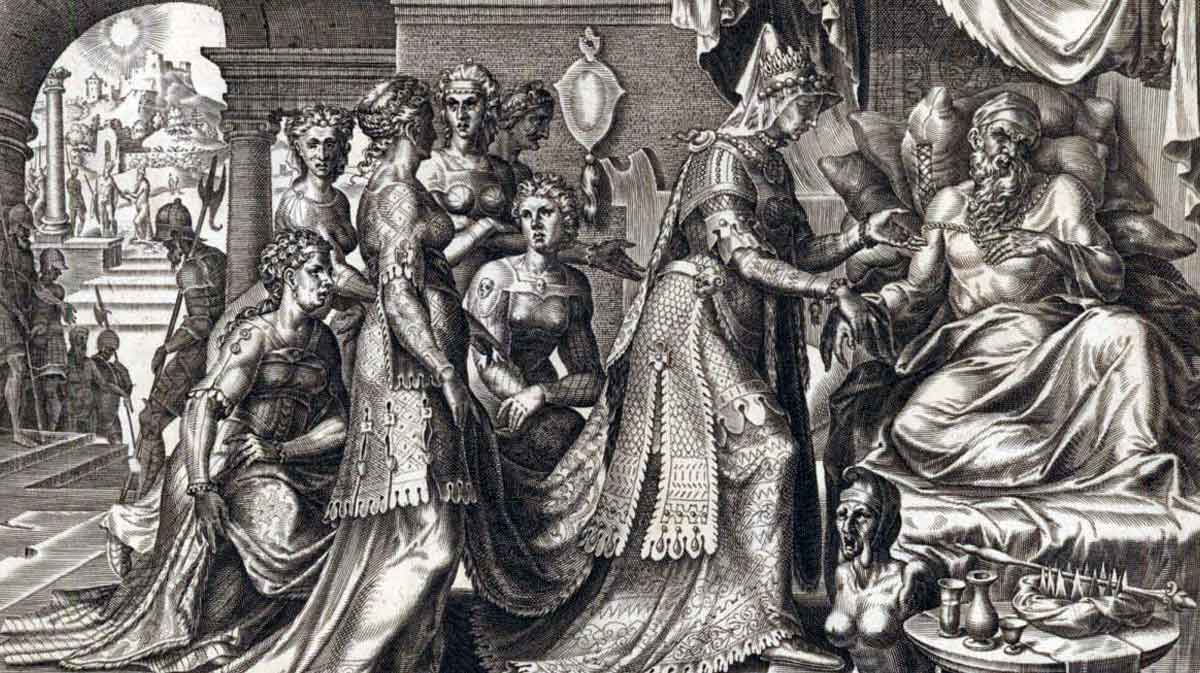
In and of itself, marital loyalty and affection are not considered of higher value than the same characteristics shared within other familial relationships or even friendships in the Bible. One of the Hebrew Bible’s most notorious couples, Ahab and Jezebel, are exemplary in their support and loyalty for each other. But because their mutual aims are contrary to the values and interests of the biblical authors, their marital loyalty is not praised.
At the same time, some of the Bible’s heroes, like David and several of the Patriarchs, had demonstrably “unhealthy” marriages (to borrow modern, clinical phraseology). While loyalty to one’s relations is a high value in the Bible, there does not seem to be an expectation that marital loyalty would trump loyalty in other relationships. Rather, devotion within marriage is to be balanced with the good of the community as a whole.

Two marriages that illustrate this overall ethic are those of the queens Vashti and Esther, who, in succession, were married to the Persian king Ahasuerus in the biblical Book of Esther. Vashti refuses to obey Ahasuerus when he asks her to display her beauty before his male party guests. He demotes her, and Esther becomes her replacement. Esther’s position as a queen positions her to later save her people, the Jewish community of Persia.
In both cases, the text suggests admiration for these wives even though they both, albeit in different ways, challenge their husband’s intentions. Thus, while biblical marriages occur in a context in which the balance of authority leans heavily toward men, the Bible’s narrators appear to have been more interested in the decisions and behaviors of individuals within those pre-determined social structures than they were in upholding the status quo.