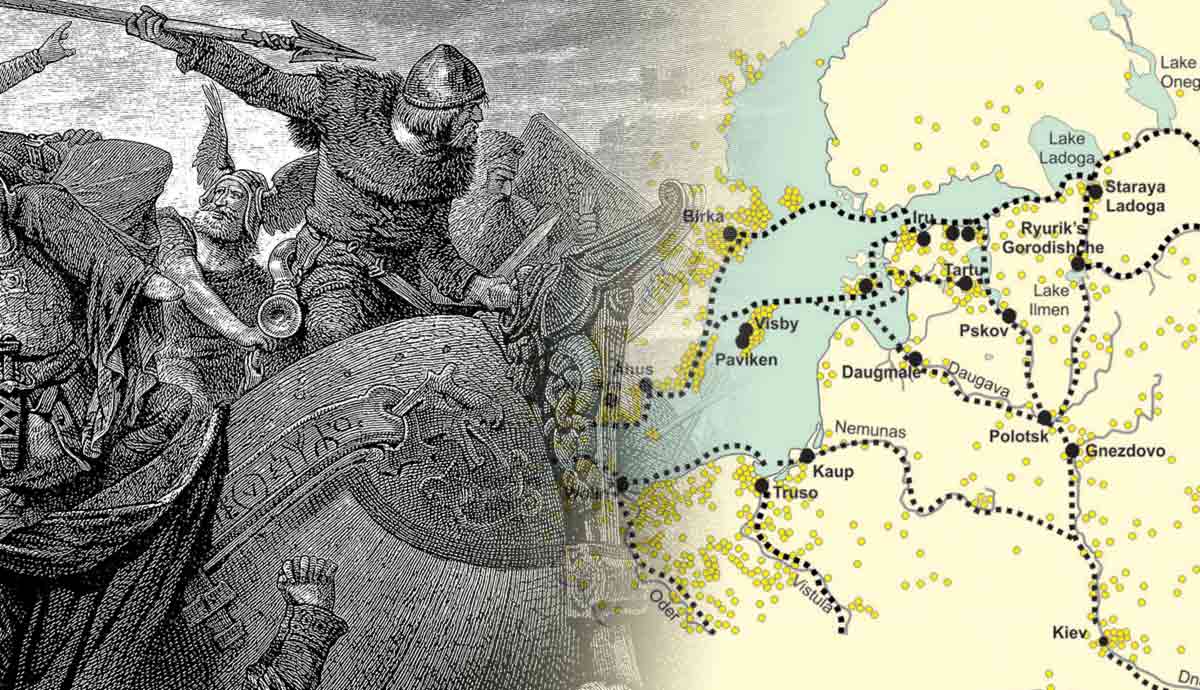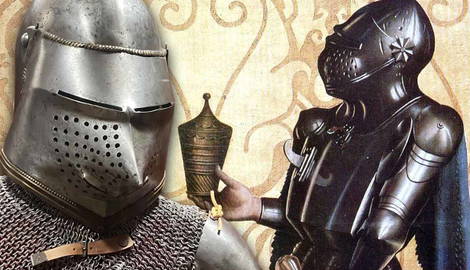
From the end of late antiquity through to the Renaissance, European helmets, perhaps the most prominent of all items of war, notably changed in truly remarkable ways.
However, though the appearance and design of medieval helmets transformed dramatically over the centuries, there was a curious circularity in the function of these transformations. Though society, technology, and military doctrine necessitated changes in head protection and style, old maxims and tradeoffs on protection versus flexibility and visual range (plus production costs) remained constant.
Helmets of the Early Medieval Period
Medieval helmets did not develop in a progressive linear fashion but arguably evolved almost like a living species. From an original type or family, different species branched off into diverging niches as warfare and technology developed. It should also be remembered that the helmets of the time were almost universally worn with a leather or cloth cap to ensure better shock absorption and a proper fit.
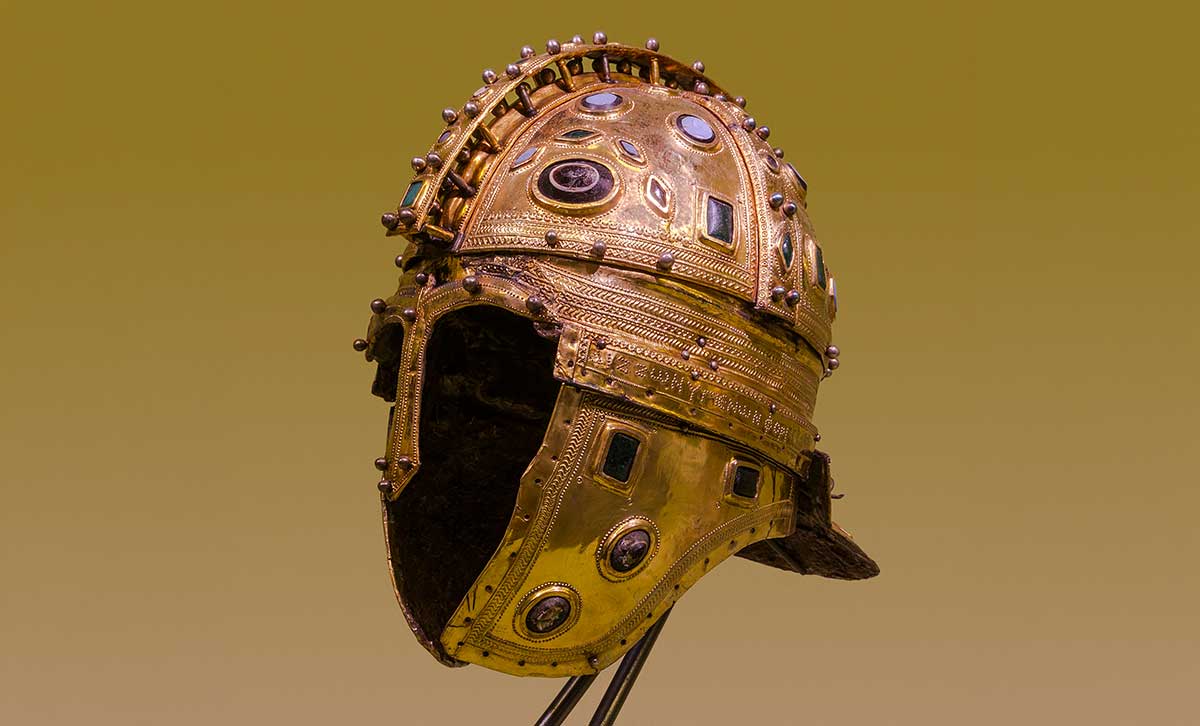
Medieval helmets began with the tumultuous transition from Late Antiquity to the Early Medieval Period and the successor kingdoms to the fallen Western Roman Empire. These were offshoots from the helmets of the late imperial army and the “barbarian” tribes who fought for and against Rome.
Most fell into three categories: ridge helmets, Spangenhelms, and lamellar helmets, defined by their style of production. All consisted of metal panels fitted respectively off a central ridge or crest, into a metal frame or braces, or in an overlapping pattern.
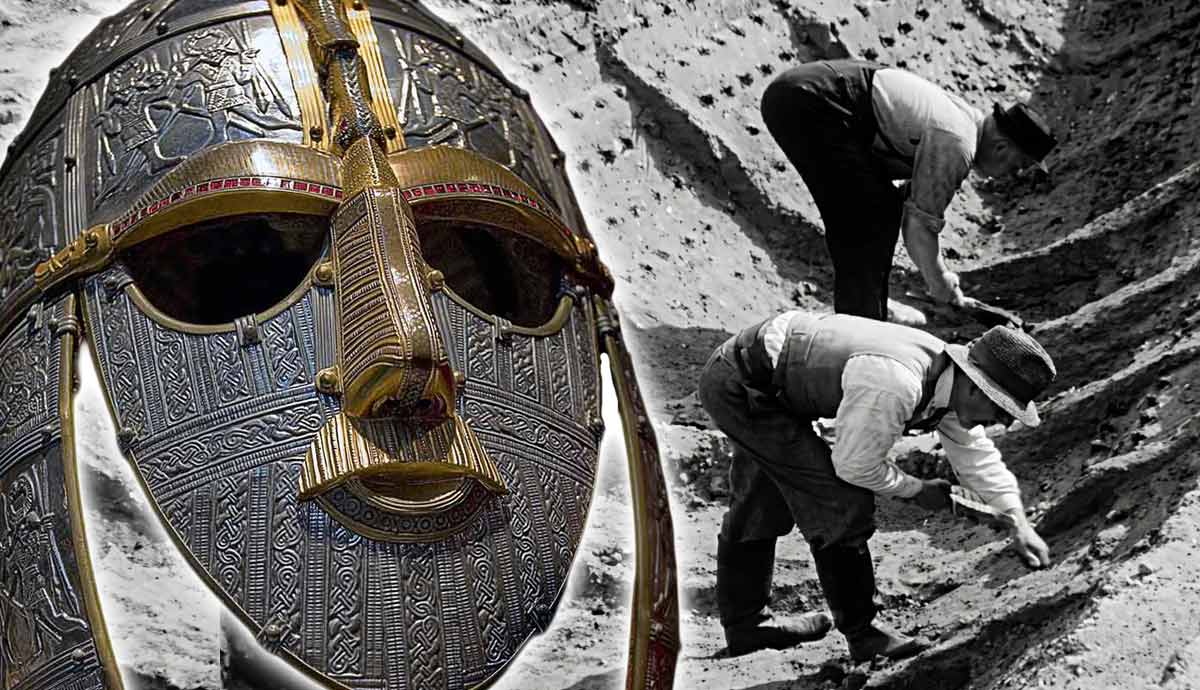
The most famous examples possessed noseguards, hinged cheekpieces, and neckguards, while some, like the Sutton Hoo helmet, had full face masks.
There were also regional variations, such as the “spectacle” helms of Vendel and later Viking-era Scandinavia, that sported an ocular guard instead of a full facemask. Some helmets also used a chainmail cover (known as camail or aventail) in place of neck or cheek guards.
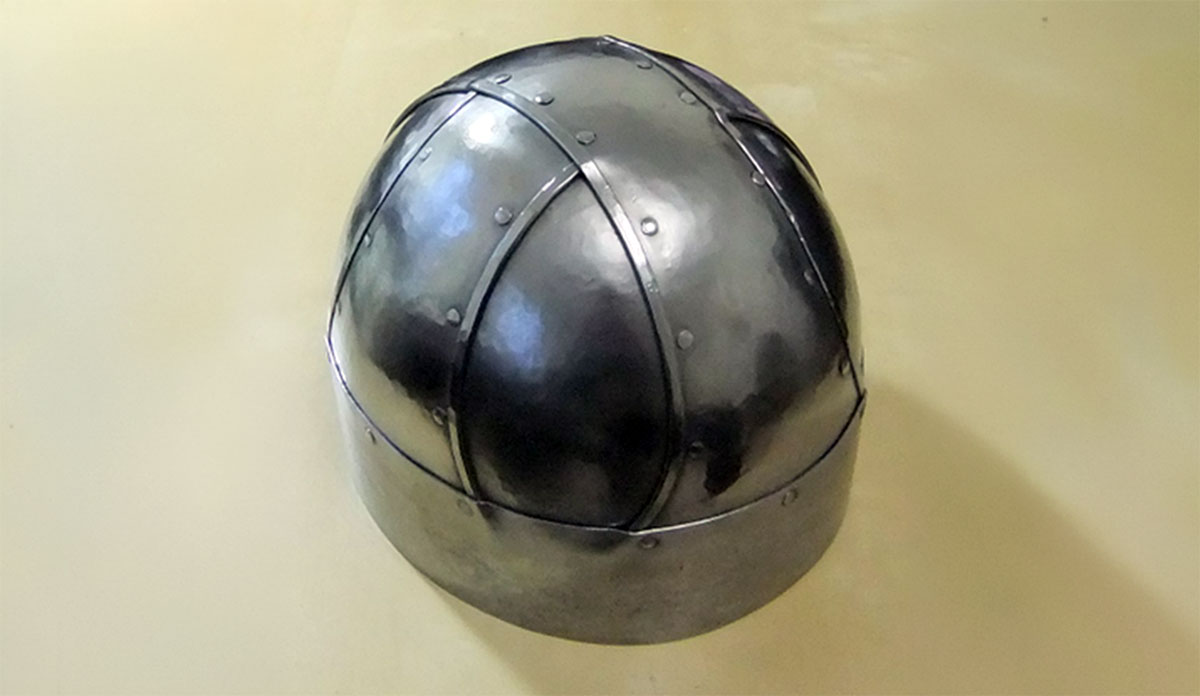
These helmets were costly in terms of resources and skilled labor, especially without the military production capacity of the fallen empire, and therefore were items of notable status. Top-of-the-range helmets, though still very much used in combat, were often finely decorated with jewels, precious metals, and engravings. Most helmets from the time were likely simple pot helmets or little more than skullcaps without fine cheek guards or facemasks. Even these types, such as the Shorwell helmet, were relatively expensive luxuries at the time.
From roughly the 6th to 10th centuries, helmets largely remained objects of the elite and high-status warriors. The rank and file fought with just rudimentary head protection, or possibly none at all, save for those in the more powerful European states like the Carolingian Empire.
The Nasal Helm
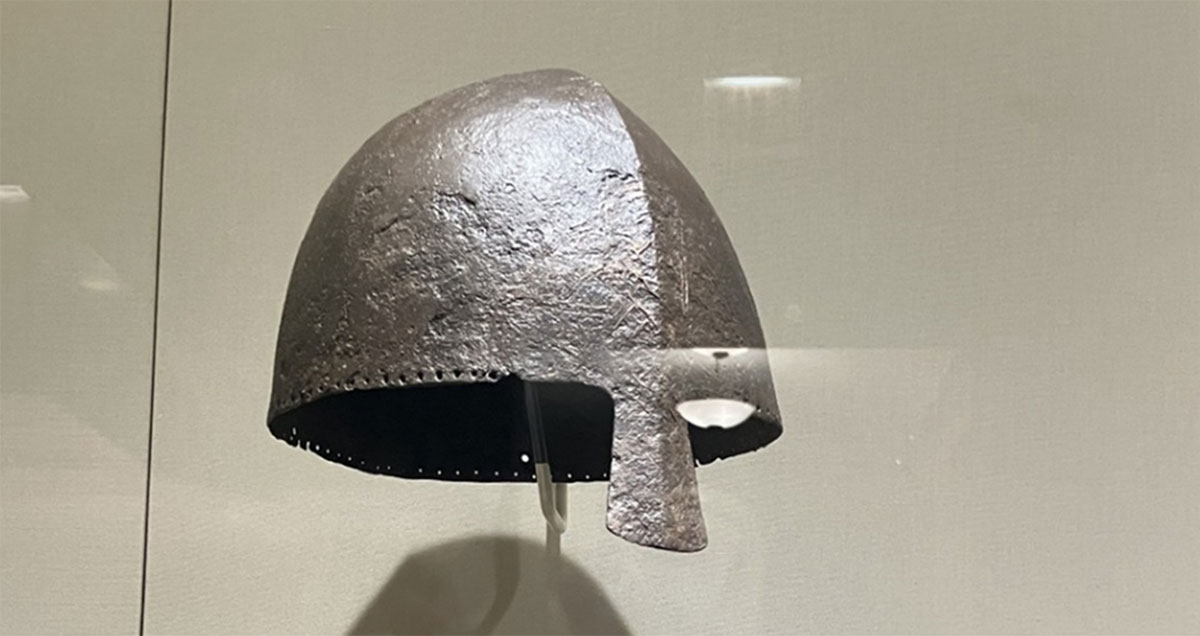
Helmets likely became more common as the years progressed. By the 10th century, a new helmet type became the staple of warriors of almost every European state and rank.
The nasal (sometimes known as Norman) helmet was forged either in pieces over a framework (in Spangenhelm fashion) or, more commonly, as a single piece of metal. Originally conical in shape, later round or square nasal helmets were developed along with variations in regional styles and quality.
At first glance, the nasal helmet appears to be a downgrade from the elite helmets of the preceding centuries. However, it was in fact a considerable evolutionary step forward, reflecting changes in warfare and European society.
Firstly, the helmet’s relatively simple design, combined with technological advances in forging, allowed for the mass production of this strong yet relatively lightweight and cheap helmet. This ensured lords and kings could have all their soldiers helmeted regardless of rank or wealth.
Furthermore, previous helmets were designed for close-quarters infantry combat in shieldwalls, which typified the warfare of the Early Medieval Period. By comparison, the nasal helm was the ideal helmet for heavy cavalry warfare that came to dominate Europe by the turn of the millennium. The nasal helm’s lightness, visual range, and maneuverability proved vital both on foot and horseback.
The tradeoff of protection versus flexibility and ergonomics was one of the most persistent dilemmas when creating armor. However, the nasal helm was certainly not totally devoid of facial or lower head protection. The noseguard alone provides effective protection from cuts or slashes to the face, yet the nasal helm almost always came paired with a vital companion, the mail coif. This simple chain-mail hood, worn under the helmet itself, provided highly effective neck, jaw, and throat protection with no limitations on movement or visibility.
Development of the Great Helm
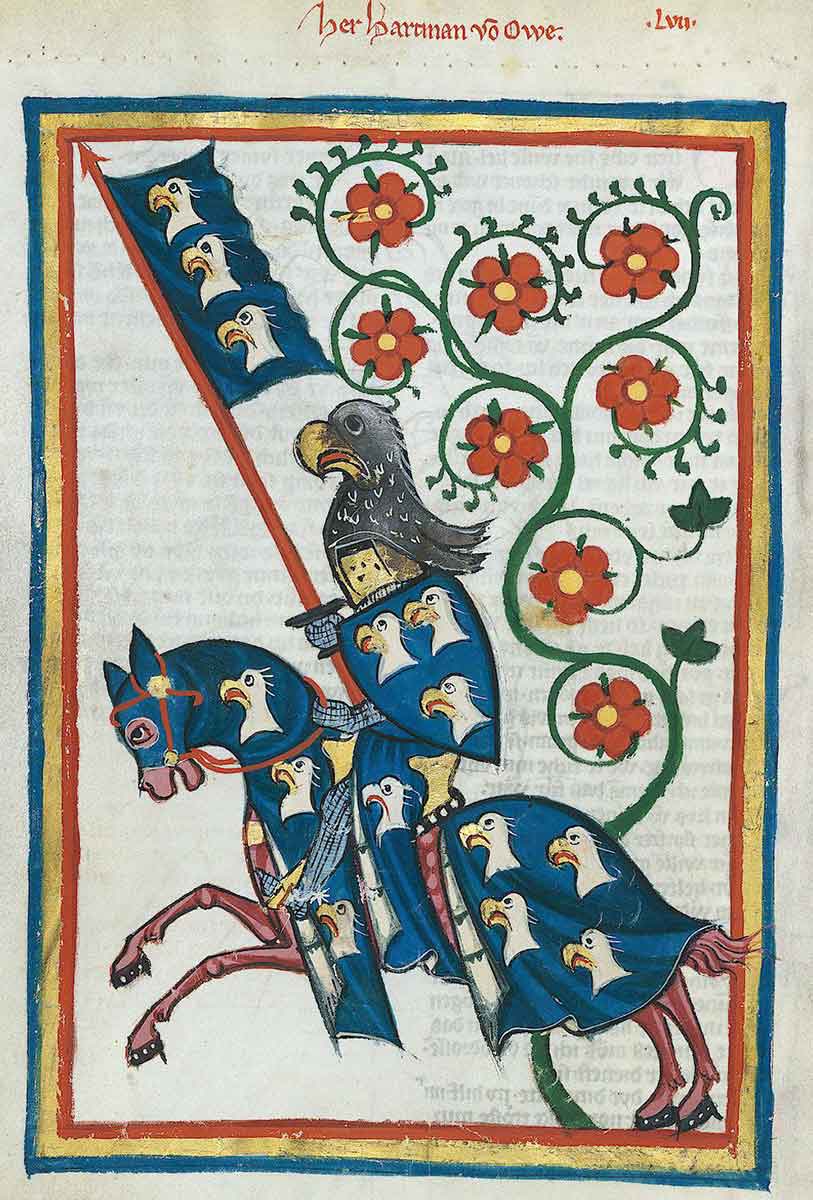
The combination of coif and nasal helmet allowed both to dominate medieval Europe for centuries, though parts of Eastern Europe and Russia preferred camails over the coif. In the late 12th century, however, doctrine swung back toward prioritizing protection over vision and mobility.
Crossbows and more powerful lances became increasingly widespread, alongside a new sporting sensation: jousting. As knights began charging one another with lances both professionally and recreationally, greater facial protection became an obvious necessity. Soon, helmets were being made with full faceplates covering the face and cheeks, known as enclosed helms.
By the mid-13th century, they evolved to completely encase the wearer’s head, with the notorious great helm or heaume, perhaps the most iconic helmet of the High Medieval Era. Their imposing design was often augmented with decorations like horns or wings, though these were often reserved for parades or jousts. Major restriction in vision and mobility was an acceptable tradeoff for greater protection, particularly during a massed lance charge and initial mounted engagement.
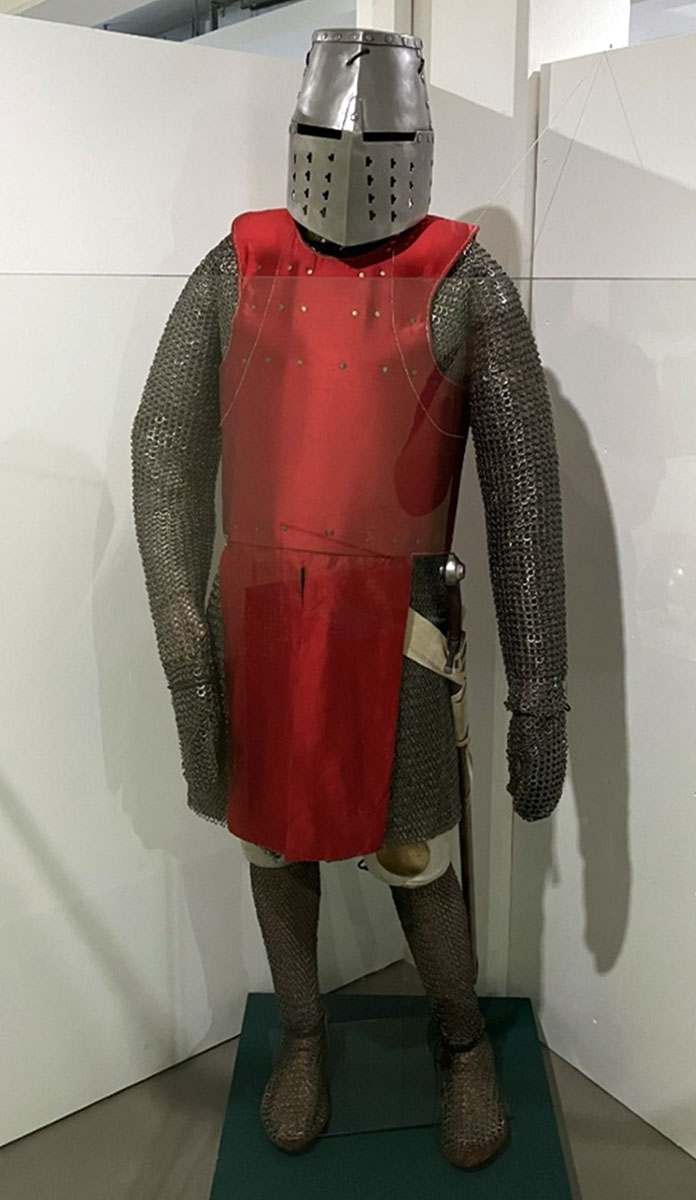
Underneath the great helm, the mail coif was still worn alongside a rounded skullcap originating from the nasal helm, known as a cervelliere. These provided extra support to the great helm against lances and heavy strikes but were also effective enough protection for dismounted combat or prolonged melees. As such, combatants in these circumstances could raise or even fully take off their great helms to gain better visibility and air and mitigate heat exhaustion.
Of course, great helms were almost exclusively used by the mounted elite. On top of their expense, the restriction of vision did not suit specialist troops, especially archers and footmen. For knights and men-at-arms also, there was a tradeoff between the more structured jousting and tournament melees versus actual military campaigns. The former suited helmets with greater protection over comfort, maneuverability, and visual awareness. For the latter, both on the field of battle or in other contexts like skirmishes, patrols, sieges, and the like, this tradeoff was less certain.
Iron Hats and Early Bascinets
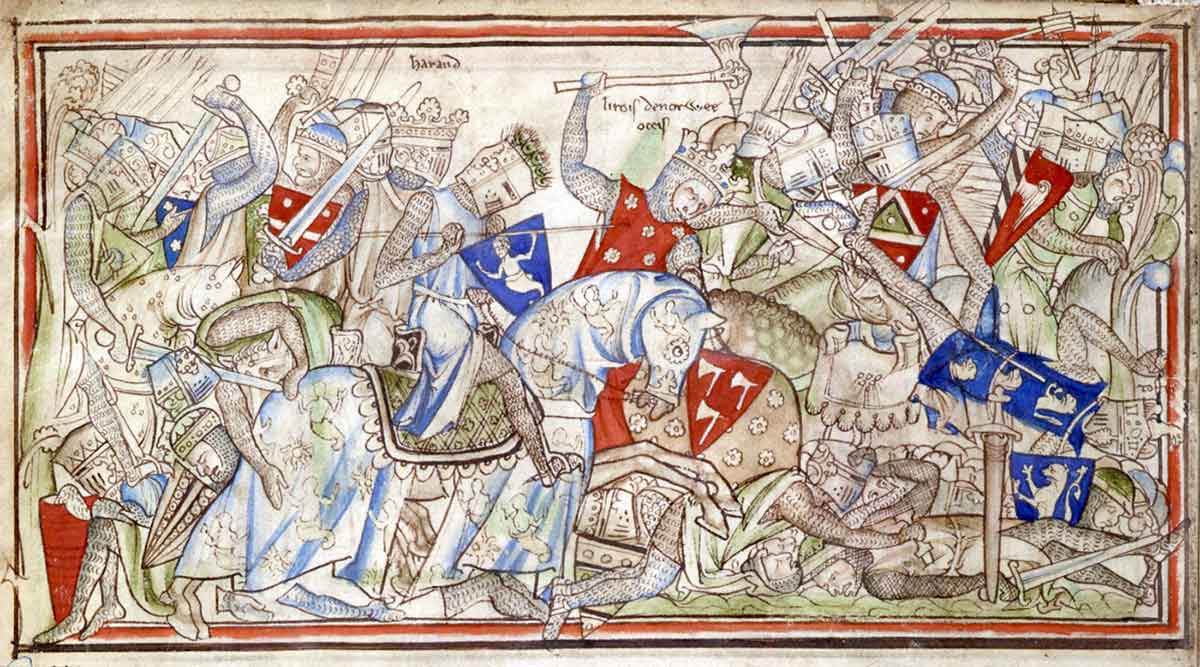
Initially, the rank and file kept the nasal helm while the knights made do with the cervelliere. However, this diversity of needs eventually led to intriguing new forms of helmets evolving as the 13th century progressed.
One of the earliest (and longest lasting) emerged possibly from the Byzantine Empire at the end of the 12th century. These were the “chapels de fers” or iron hats, sometimes today known as kettle hats. As the name suggests, they had the appearance of a broad-brimmed hat made of iron. These first iron hats were made of panels fitted to a framework in the Spangenhelm manner. They were cheap but highly effective, the brim providing solid cover from plunging arrow fire or strikes but retaining full visual coverage, particularly when worn with a mail coif.
Iron hats were ideal for specialist troops, such as archers, or the less wealthy warriors of the period. Despite popular belief, though, they still found use among knights and men-at-arms, particularly in certain military situations such as sieges. In any case, the iron hat would become a universally popular mainstay of the European medieval battlefield. Late 13th-century great helms also became larger and stronger, with angled paneling to deflect attacks more effectively.
These advances also led to stronger and larger cervellieres worn underneath these “sugarloaf” style great helms. By the end of the 13th century, the cervelliere had an angled skull like the sugarloaf helm and framed the face down to the jaw. It also had a new name: the bascinet. Though still used under great helms, advances in plate armor made the bascinet strong enough to be a standalone helmet.
Visored Bascinets
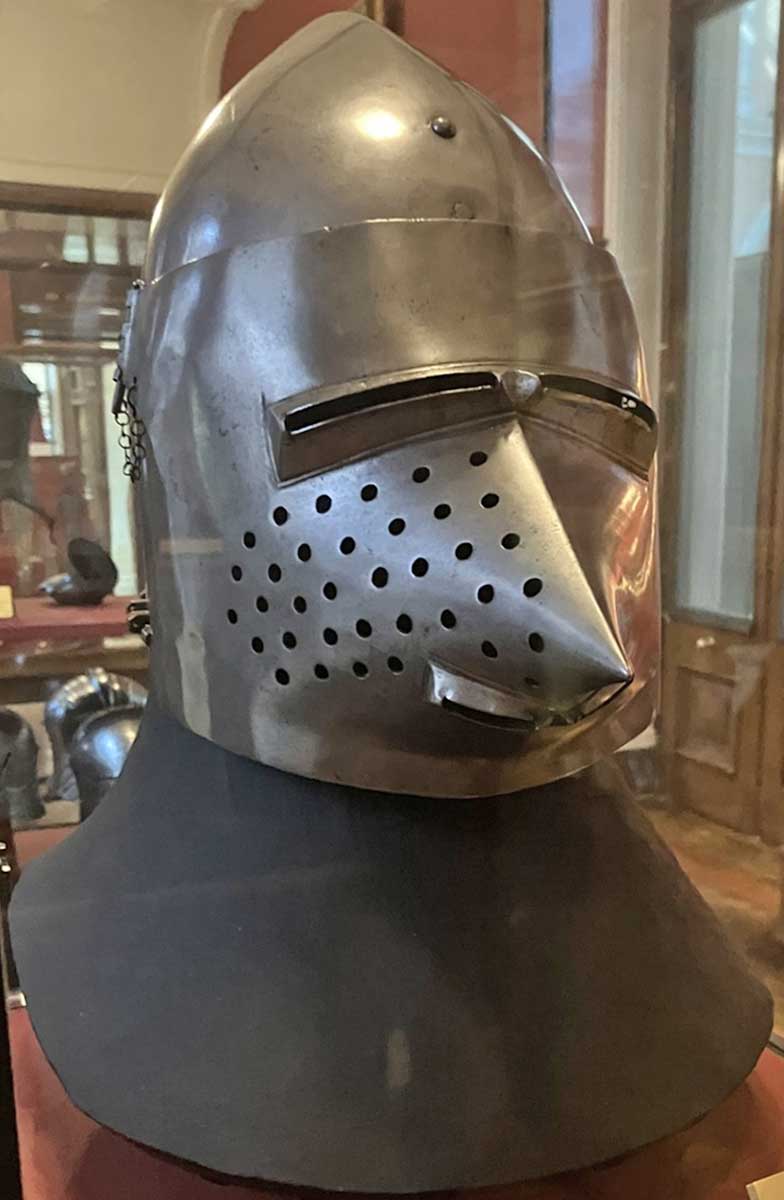
In fact, as the 14th century progressed, bascinets even removed the need for a mail coif, which was replaced with a mail camail worn under the chin to protect the throat and neck down to the shoulders.
By the early to middle 14th century, knights and mounted men-at-arms embraced a new bascinet that included the first fully movable facial visors. Visors were the perfect compromise between protection and visual restriction, allowing for an effortless switch depending on requirements. These visored bascinets were not quite as protective as great helms, but were cheaper, lighter, and far superior in movement, vision, and ergonomics.
Visored bascinets soon became the predominant elite helmet. The great helm’s encompassing protection did see it live on in jousting and tilting, eventually evolving into the frog mouth helmet by the 1400s.
Visored bascinets saw some degree of stylistic variation and design between regions (such as in the positioning of hinges on the helmet). From the later part of the 14th century, the most popular type was the famous hounskull or snouted helmets with pointed, almost beak-like, visors and skull points. In later years, more rounded visors and helmets also came into fashion.
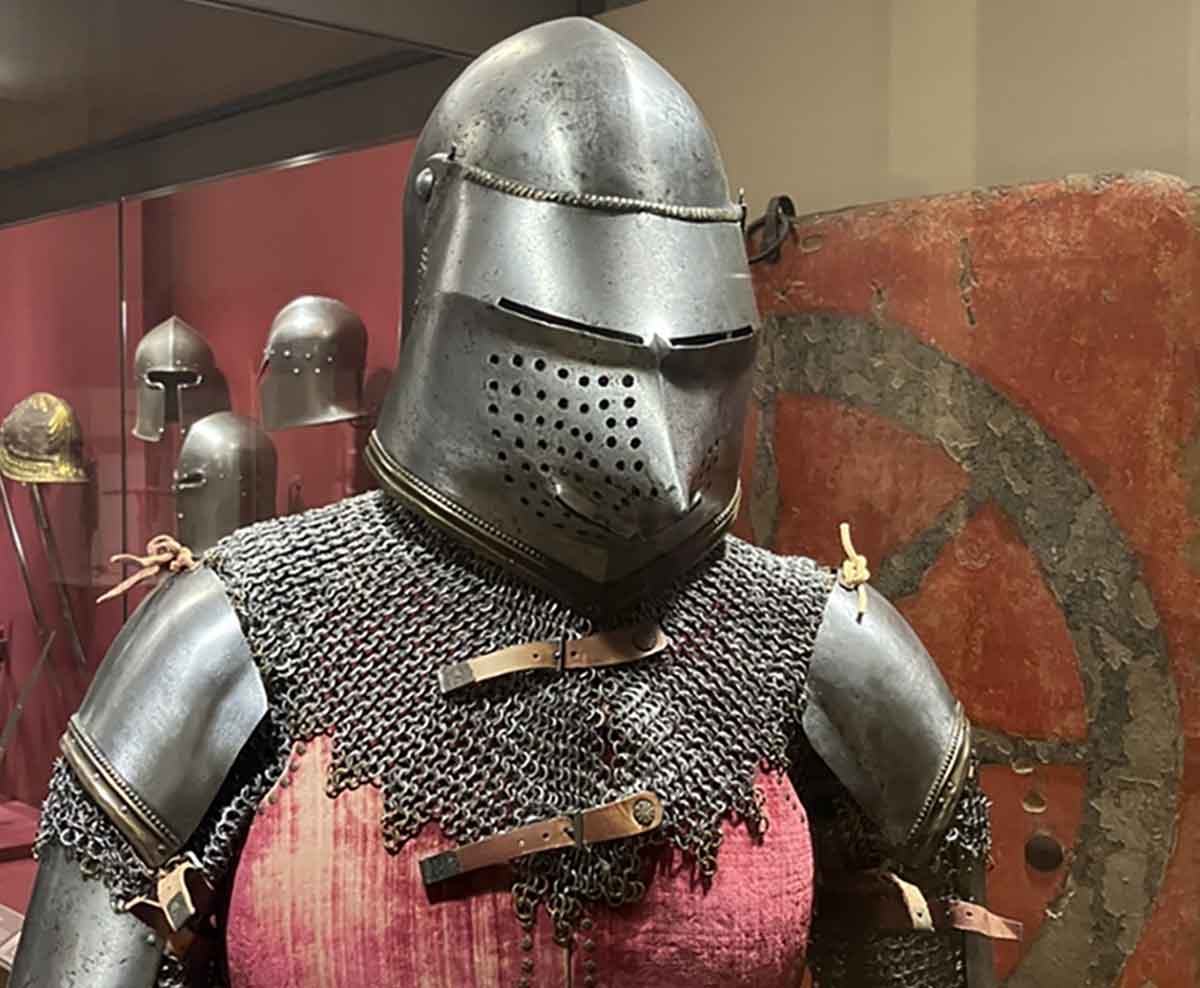
Alongside visored bascinets, their open-faced cousins still found consistent use. They too saw notable variation through the years. One of the most striking open face bascinets was the Italian Barbute, which had a T-shaped facial opening strikingly similar to the Corinthian-style hoplite helmets of ancient Greece.
Iron hats also remained popular, often still worn with a mail coif. By this time, they were largely forged as single pieces, rather than in the Spangenhelm style, and with increasing varieties of crested or pointed caps and brims.
Thus, the visored and open bascinets, as well as iron hats, provided both knight and knave with flexible and strong head protection for any occasion. Yet, in the latter half of the 14th century, developments in warfare and armor technology would drastically impact helmet design.
Great Bascinets
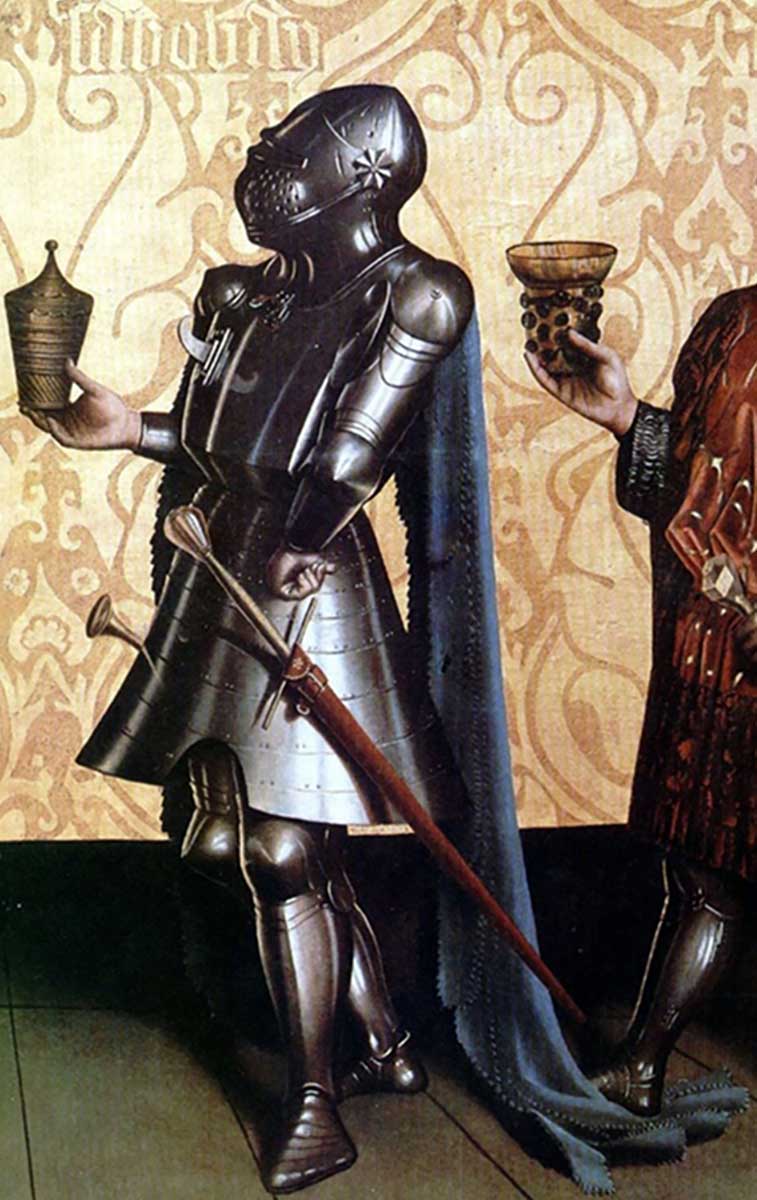
Both the development of massed heavy archery during the Hundred Years’ War and the invention of the lance rest attachment, increasing the strength of lance strikes, necessitated changes in armor. Most notably, these tactics and others exposed mail camail as a literal chink in knightly heavy armor. Thus, first French, then other European knights began reinforcing the camail with metal armor such as the bevor, a metal plate which closed flush with their helmet’s visor.
By the early 15th century, some armorers replaced the camail entirely with a bevor and a metal gorget worn across the shoulders, neck, and throat. Onto these new pieces, the wealthiest of knights adopted a larger bascinet that was either bolted to the gorget and bevor or had all three items forged as one singular armor piece. These “great bascinets,” as they were known, were immensely strong but functionally immobile, preventing the wearer from turning their head in any direction.
There was some method to the madness of sacrificing the visored bascinet’s original biggest strength. The metal armor stood up to lances and arrows far better than the camail, while a fully fixed bascinet was functionally arrow-proof.
Indeed, some historians have noted they were most popular in regions where archers (particularly longbowmen) were most prevalent, including England, France, and certain parts of Italy and Spain. Furthermore, during the early-to-mid-15th century, knights began fighting in dismounted close-quarter infantry combat, in which the great bascinet provided insurmountable protection, despite its restrictions.
All that said, the great bascinet was expensive to the point of being limited largely to the wealthiest of warriors and was only situationally beneficial. For other combat situations, the wealthy opted for helmets used by the common people. These still included the iron hat but also new types of bascinet that were becoming rapidly popular across Europe by the 1450s.
Sallets and Armets
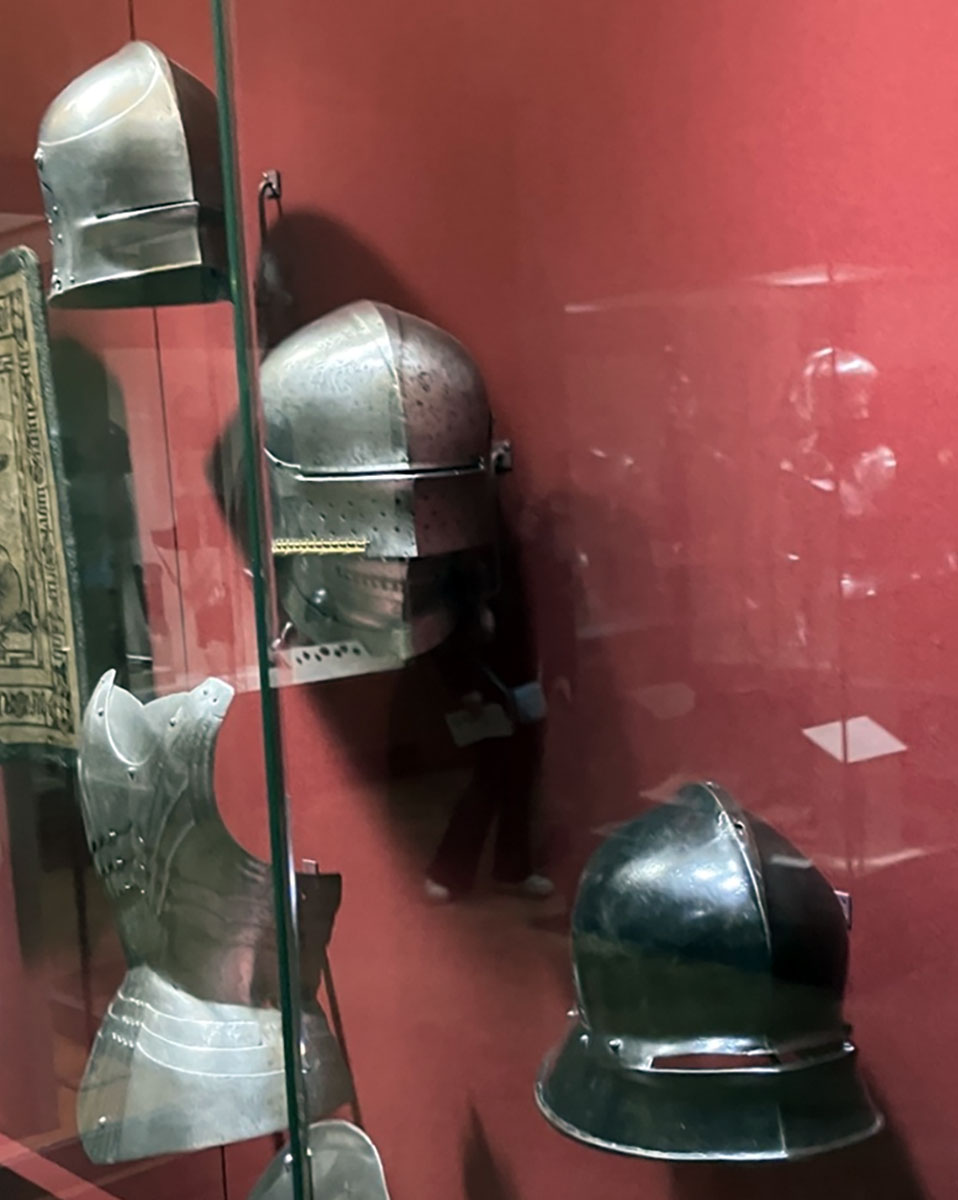
The sallet, originally descended from Italian open bascinets, was designed to be worn without a camail. They descended low to cover the brow and cheeks, but their most distinctive feature was their long tail brim that jutted out to protect the neck.
Open face sallets existed, but the most well-known sallets had large visors that rested or overlapped with the bevor, leaving only a narrow eye slit. Some opted for a fixed faceplate over a visor, requiring the wearer to tilt the whole helmet up or down for full vision or protection. This design was used in some iron hats at the time, which lengthened their fronts over the eyes, creating sallet-iron hat hybrids.
However, even the strongest, top-of-the-range visored sallets were less effective in close-quarters dismounted combat than the great bascinet. Even so, the sallet was considered enough protection for most armored knights of the time, particularly in regions where the great bascinet was less popular, like the Holy Roman Empire.
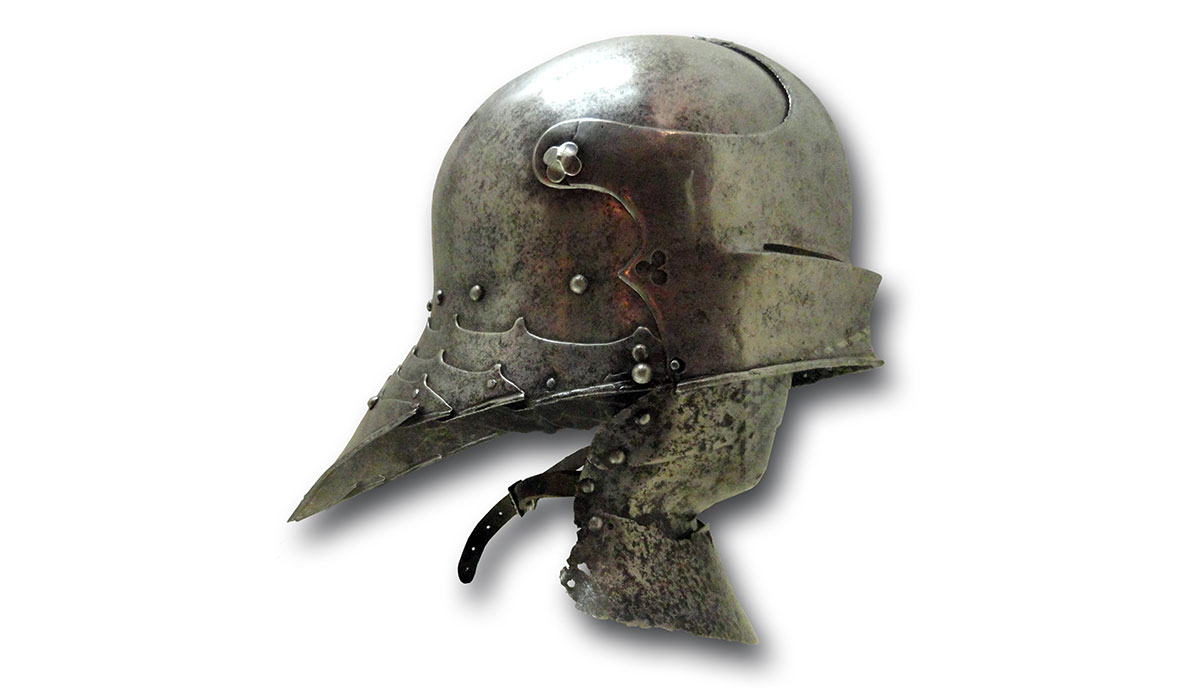
Furthermore, the sallet’s better vision and ergonomics made it more effective in mounted combat and reconnaissance situations.
As the 15th century developed, sallets became increasingly widespread throughout Europe, becoming the helmet of choice for most knights and men-at-arms, alongside another Italian helmet: the armet.
The armet was the first helmet to fully enclose the head while still retaining full mobility. Hinged pieces secured the lower head and throat under the visor, covering the head down under the bevor.
Though not quite as strong as a fixed great bascinet, the armet provided more than enough protection along with full head movement. Subsequently, the great bascinet was shunted rather suddenly out of military use around 1450, becoming, like the great helm before it, an item purely for the jousting circuit.
End of the Medieval Period
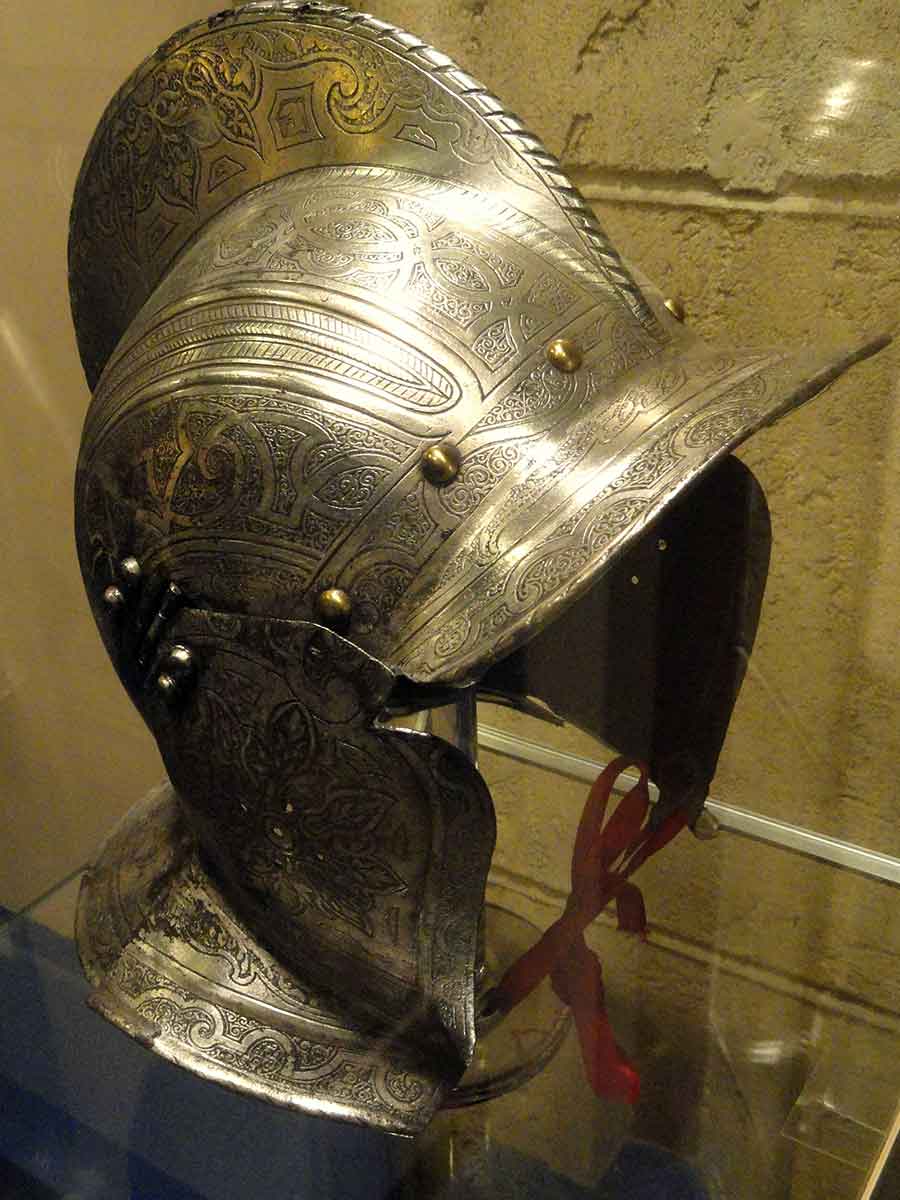
In the 16th century, as the Late Medieval Period evolved into the Renaissance and Early Modern Period, the sallet and armet would evolve into the fully protective close helmet and open-faced burgonet. The latter suited the period’s lighter cavalry and infantry, and the former the plate-armed nobility.
As European warfare slowly embraced gunpowder and firearms, plate armor and full-face helmets lost their value, and the burgonet, sometimes with a half visor opened upwards, known as a buff, became the most prominent type.
Eventually, the burgonet combined with the Ottoman-introduced çiçak to develop the lobster-tailed pot helmet, arguably the last descendant of the European noble helmets. Meanwhile, the iron hat soldiered on, taking elements from the burgonet, including cheek pieces and a deeper cover over the back of the head. It would eventually develop into such famous pieces as the Spanish cabasset and morion types or the fantastically functional pikeman’s pot.
Eventually, even the iron hat fell out of favor as musket warfare became the mainstay of combat.
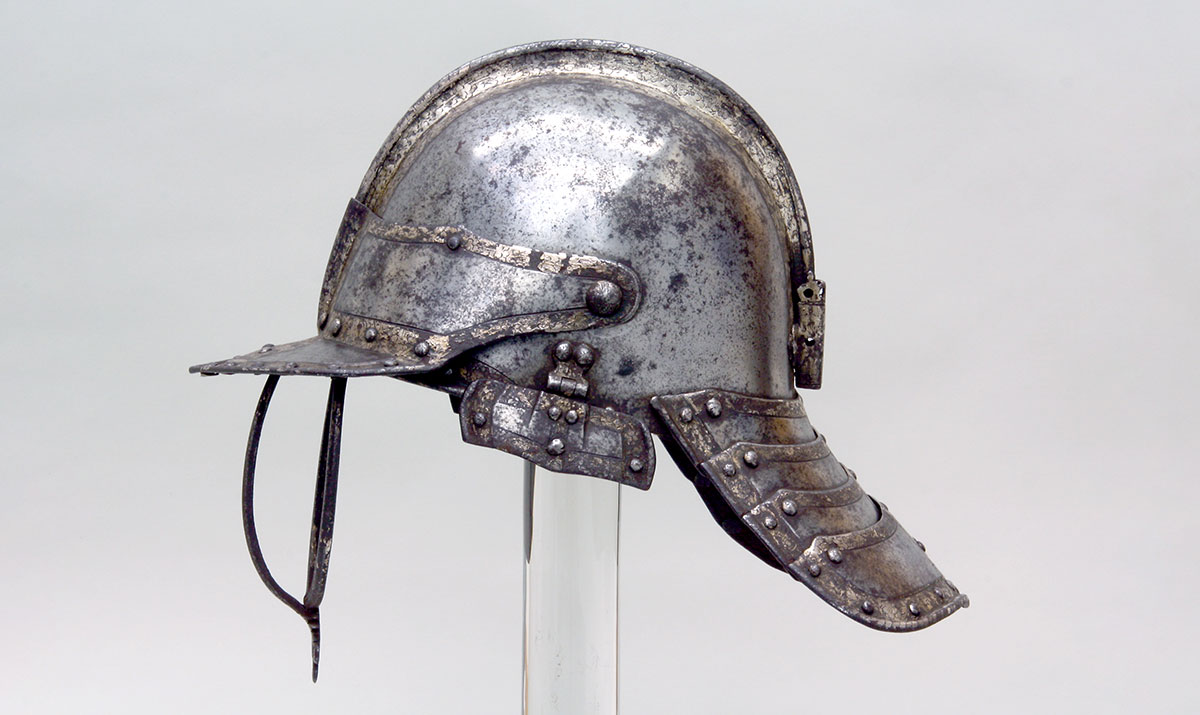
It is amusing to think that the change from close helmets into more open burgonets and lobster helmets mirrors the evolution of early medieval helmets into the nasal helm. An all-encompassing helmet designed for a heavily armored noble warrior was transformed into a more universal open-faced helmet thanks to a dramatic change in military doctrine and technology.
For even with the most dramatic change to technology and warfare, the final evolution of European medieval helmets remained the trade-off between protection versus visual restriction and ergonomics. From the Spangenhelm and early medieval helmets, down through the nasal helm, bascinets, sallets, and close helmets, it is remarkable how much changed and so much remained the same.
New helmets may have arisen to suit evolutionary niches in the changing medieval battlefield, and new technologies and materials dictated the style and scope of warrior headgear. Always, though, the overriding factor remained the same.