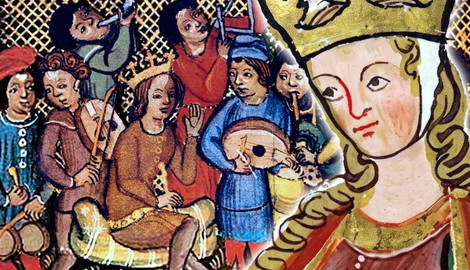

Troubadours from southern France made love a serious art. Writing in the vernacular, they defined courtly love and shaped romance’s emotional language. Their influence echoed through European literature, music, and later love stories. Today, we still owe a debt to their innovative spirit.
Who Were the Troubadours?
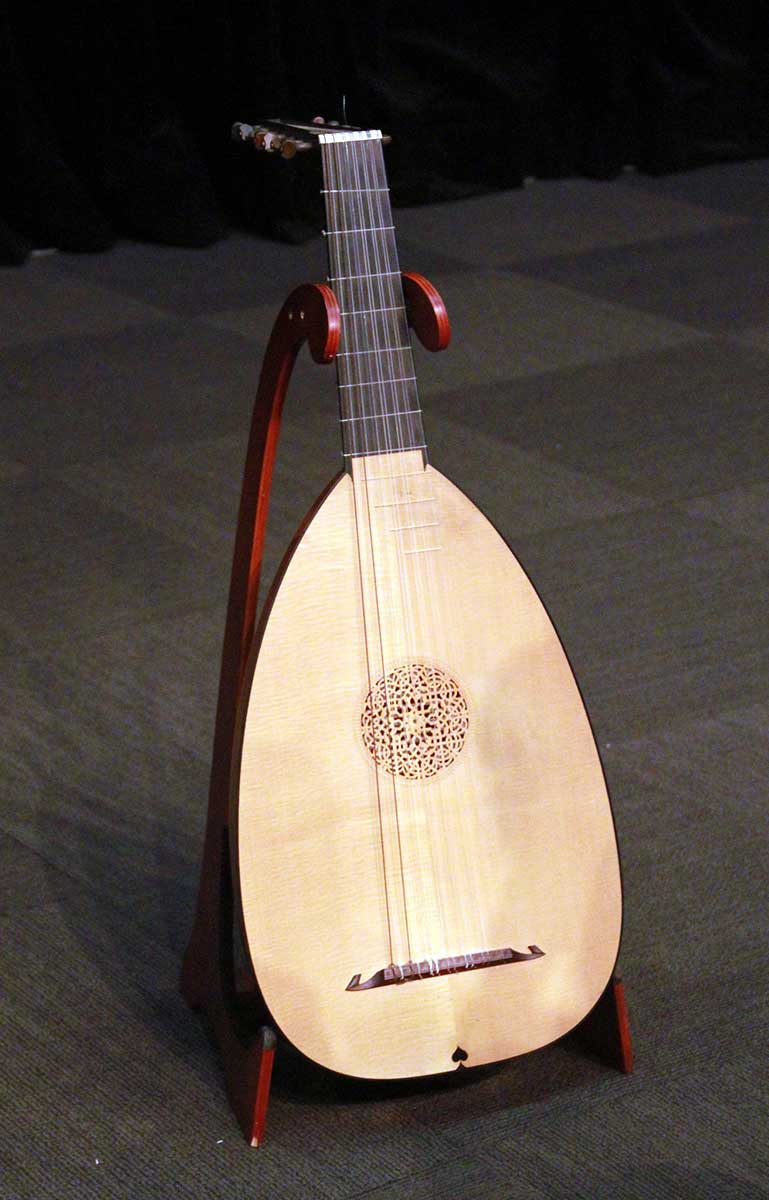
Think of the troubadour as a modern singer-songwriter. The word troubadour (female form: troubairitz) is derived from the Occitan word trobar, meaning “to find” or “to invent.” A troubadour invented new poems and set existing poems to new music. Their world was small and private castle settings.
Troubadours were predominantly male poets who wrote in the vernacular dialect langue d’oc of Southern France. Occitania was known for being more tolerant, cosmopolitan, and less socially constrained than the rest of the continent. The Catholic church and nobility had less influence in the area; combined with a less prominent social hierarchy, it provided fertile ground for the troubadours to flourish.
Troubadours were more than just singers; they enjoyed unprecedented freedom of speech, sometimes even intervening in politics. Troubadour poetry influenced all spheres of poetry later in Europe, essentially paving the way for how poetry was written forever. However, their greatest achievement was making the expression of love a theme worthy of serious art. In a time of arranged marriages, the troubadours made courtly love or fin’amor, the central theme of their work. It was a form of sensual admiration that elevated women to a goddess-like state. We could think of the Song of Solomon as the first expression of love as a serious theme in this way.
The earliest troubadour melodies were unharmonized and a single line of music, i.e., it was monophonic. However, although it may sound simplistic, the troubadours certainly reached their target audiences’ hearts.
Medieval Courtly Love
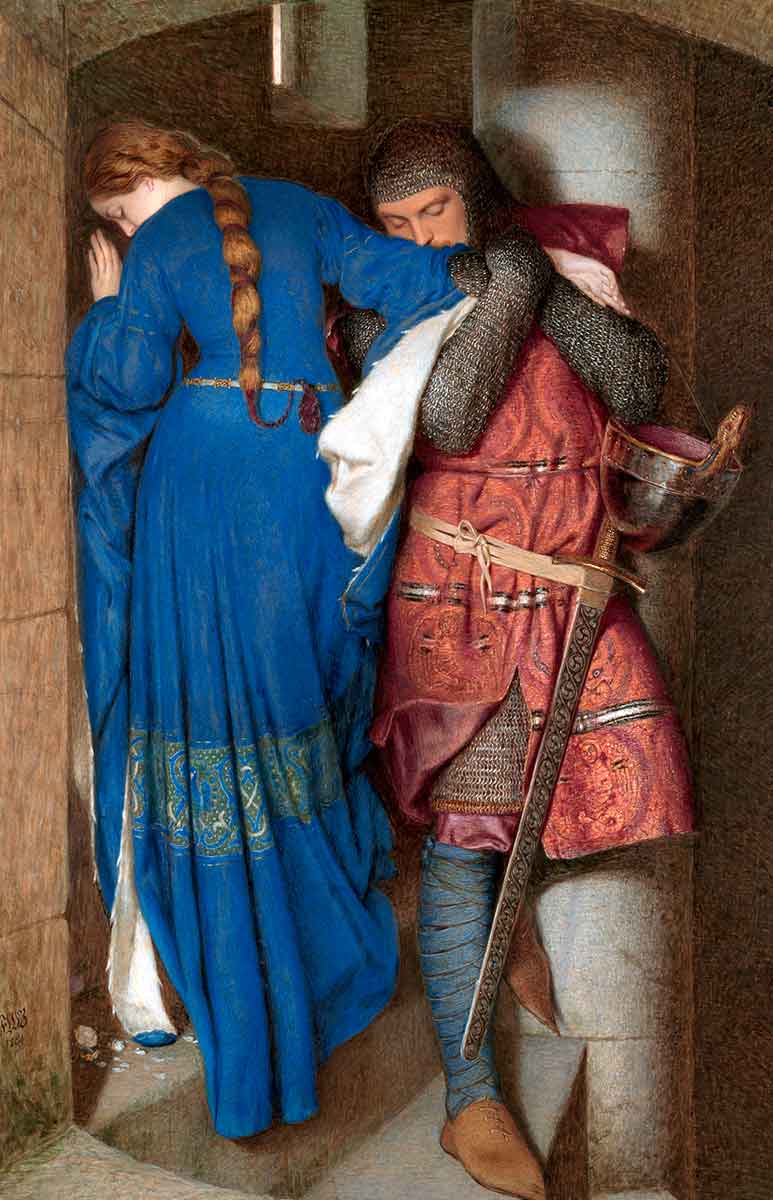
Courtly love, or fin’amors, is a nuanced and loaded concept. Today, almost 900 years later, scholars still cannot agree on a definitive definition of the term.
The term was coined by the scholar Gaston Paris in 1883, but called amour courtois. The troubadours did not have a term for courtly love, and it is a modern term. Michael Bryson and Arpi Movesian offer a detailed breakdown of the term in their book, Love and Its Critics: From the Song of Songs to Shakespeare and Milton’s Eden.
Gaston Paris uses “courtly love” to describe the illicit love of Sir Lancelot for Queen Guinevere (King Arthur’s wife). The earliest example of a King Arthur story dates to around 1177, where he is introduced as the queen’s lover and a strong warrior by Chretien de Troyes (ca. 1130-1190) in his work, Lancelot or the Knight of the Cart.
What Did the Troubadours Sing About?
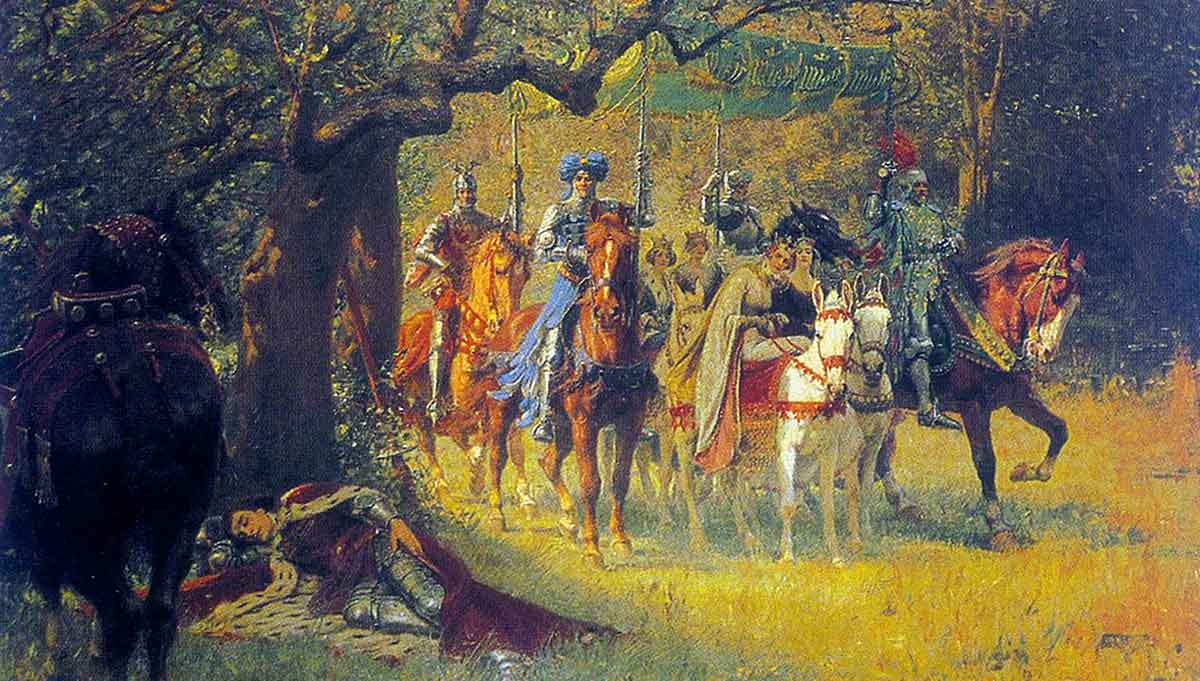
We have established that love was the central theme for the troubadours. Yet, it rested on a central paradox: the beloved is (almost) always unattainable. Usually, as with Lancelot and Guinevere, she was married to the knight’s master. Other times, the object of affection’s social status was too high above his own.
Marriages among the nobility were social contracts; one did not choose one’s beloved. Marriages sealed contracts to acquire more political power, transfer of land, or make allegiances in times of trouble. The idea of choosing a romantic partner freely and devoting yourself to them made the prospect thrilling and dangerous. The troubadours created a parallel world where true feeling meant more than social obligation.
Essentially, the troubadours’ ideas of love rested on amoral, sensual, and often adulterous expressions of love. In their poetry, they express carnal desire, as opposed to spiritualized love, through vivid erotic imagery.
According to the Church, desire and passion were dangerous states of being, and celibacy was the best cure. The “Heavenly Lady,” Mary, should be the only woman a man devotes himself to. However, the troubadours went against these ideas. To them, love was the most important thing in life, and it deserves to be acknowledged.
The lover, according to fin’amors, essentially became the feudal vassal of his object of desire. He pledged his service to her—she became his “master” or midons. A knight devoted himself to his midons, obeyed her will, and tried to make himself a better man through suffering and longing.
Serving your midons required effort and sacrifice—the more, the better! A knight’s conduct made him worthy of her love. In a sense, longing for his midons strengthened him, turned him more courteous, and more human. The idea that romantic love could make you a more moral person was unprecedented in the Western world. In ancient Greece and Rome, passionate love was seen as madness or weakness.
Troubadour Song Forms
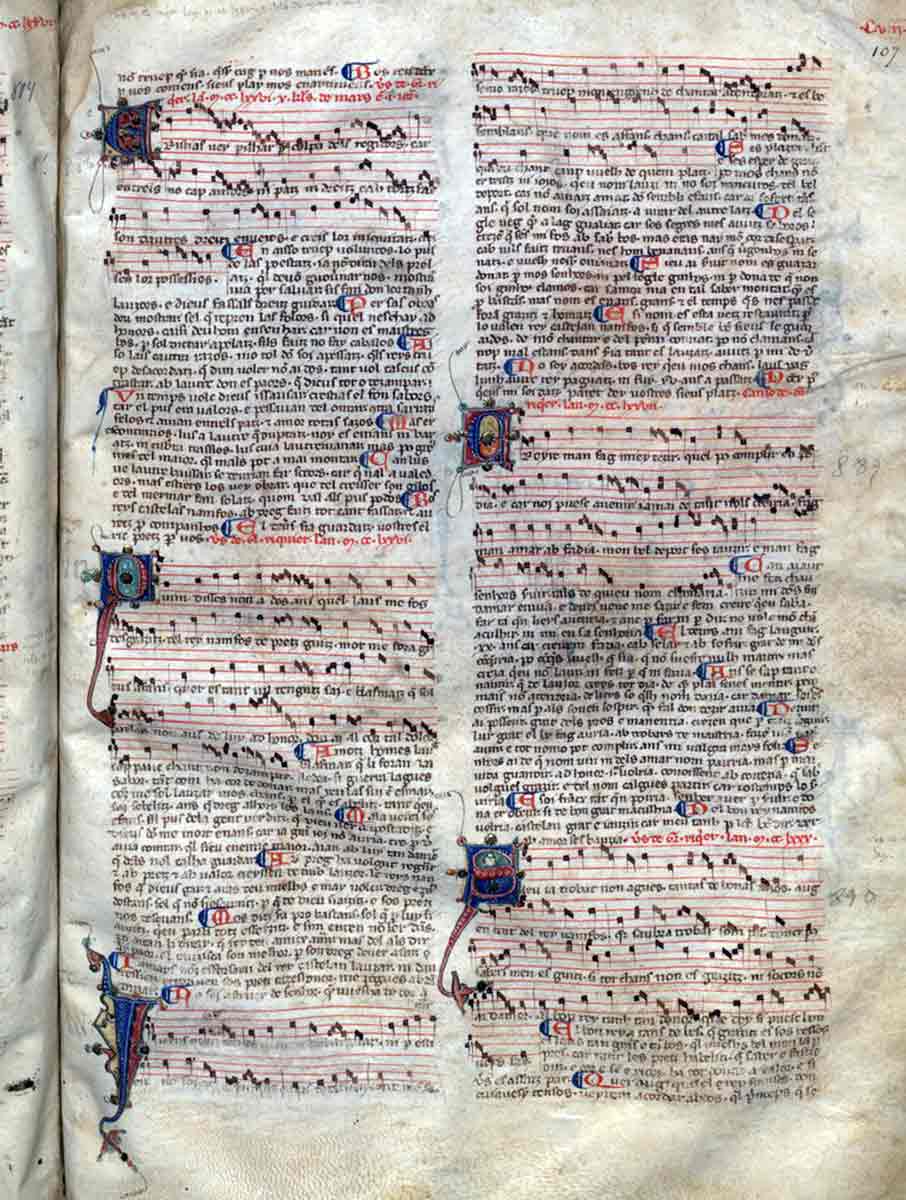
The troubadours used various forms of songs to express their feelings. Below is a brief look at some of them:
- The canso is the most sophisticated form with multiple verses. Bernart de Ventadorn’s canso, Can vei la lauzeta mover (When I see the lark), conveys emotion through the rise and fall of the melody in the example below.
- Lovers parting at dawn before anyone awakes at the court was celebrated in an alba. It is a dramatic song filled with bittersweetness and a sense of danger.
- Troubadours could speak their minds directly about affairs (mostly) without backlash in a sirventes. The aim was political and social commentary, challenging lords and bishops.
- Debating or arguing about love or ethics in front of a live audience at the court was known as a tenso/jeu parti. Think of it as a medieval panel discussion using music.
- The pastorela offered audiences a humorous, earthy song about a knight meeting a shepherdess. The resulting encounter usually had a humorous outcome, and the shepherdess outwits the knight.
Within these typical forms of music by the troubadours, we have inherited another element still present today: music and lyrics working together to amplify the meaning of the text.
Some Famous Troubadours and Troubairitz
The troubadours and troubairitz were busy poets and composers. Around 2,600 poems or fragments are by some 450 identifiable troubadours and troubairitz. Most of these poems and music are preserved in chansonniers (songbooks) produced for wealthy patrons.
The video above is the music of Guiraut Riquier de Narbona (ca. 1230-1292), one of the last Occitan troubadours. He was known for taking great care to keep his works together after writing them out himself. He is often referred to as the “anthologist” of his own works. He is also credited with inventing the genre known as the evening song (serena).
William IX of Aquitaine
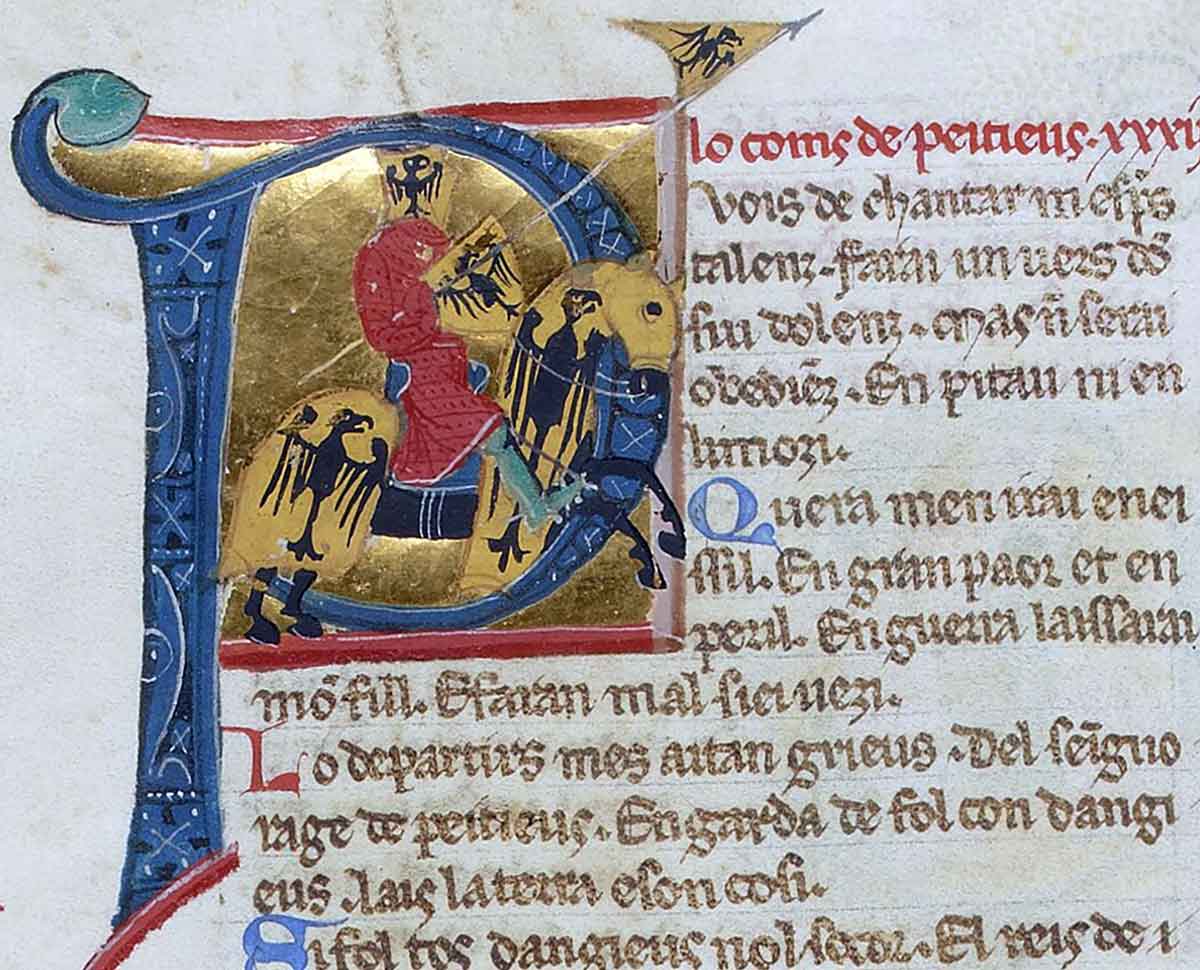
William IX, Duke of Aquitaine (1071-1126) was a man of striking contrasts: a powerful duke, a crusading soldier (with very little success), and a genius poet. He courted controversy and was excommunicated from the church twice.
However, he is perhaps best remembered as a troubadour. His poetry is frank yet witty with a dash of vivacity. William IX stands out as one of the first poets who used the vernacular Romance language in the Middle Ages.
His legacy continued through his granddaughter, Eleanor, but he also gave rise to a movement that would culminate in the works of Dante, Francois Villon, and Petrarch.
Marcabru
Marcabru, sometimes referred to as Marcrabun (ca. 1110–1150), is considered one of the earliest troubadours. In his songs, we find a mix of troubadour romance but also criticism of courtly love. Some scholars regard him as the bridge between the folk-style and later, experimental, and sophisticated style of the 12th-century troubadours.
The video above, although following the idea of a pastorale, presents anomalies. Instead of a shepherdess in the field, we have a noble lady in a garden with a fountain. Rather than being seduced, the lady is consoled by a knight. It is likely that the noble lady is referring to the Second Crusade, in which Louis VII of France and Eleanor of Aquitaine took part with all her ladies.
Jaufre Rudel
One of the central ideas of courtly love is “love from afar” or amor de lonh.
A contemporary account says Jaufre (early 12th century) fell in love with the Countess of Tripoli from afar after hearing pilgrims praise her beauty and kindness. So captivated was he that he likely joined the Second Crusade with Eleanor of Aquitaine and Louis VII of France to see her. On the voyage, however, he became gravely ill and arrived in Tripoli near death.
Moved by his devotion, the countess visited him at the inn and held him in her arms. Jaufre thanked God for letting him see her before he died in her embrace. Stricken with grief, the countess later became a nun.
Countess of Dia
Although being a troubadour was mostly a gentleman’s arena, there are a few examples of troubairitz. Although around 30 female troubairitz are known, only about 21 are named as the authors of their work. One shining example is the Countess of Dia (ca. 1155–1212).
The countess reversed the gender roles of troubadour verse and openly presented desire, grievance, and pride in her poems. Through her technical skill and lyrical compositions, she presents a rare example of female authorship in the Medieval Period. Today, she is recognized as an early example of female agency in the male-dominated world of European literature and music.
How Did Their Ideas Spread Through Europe?
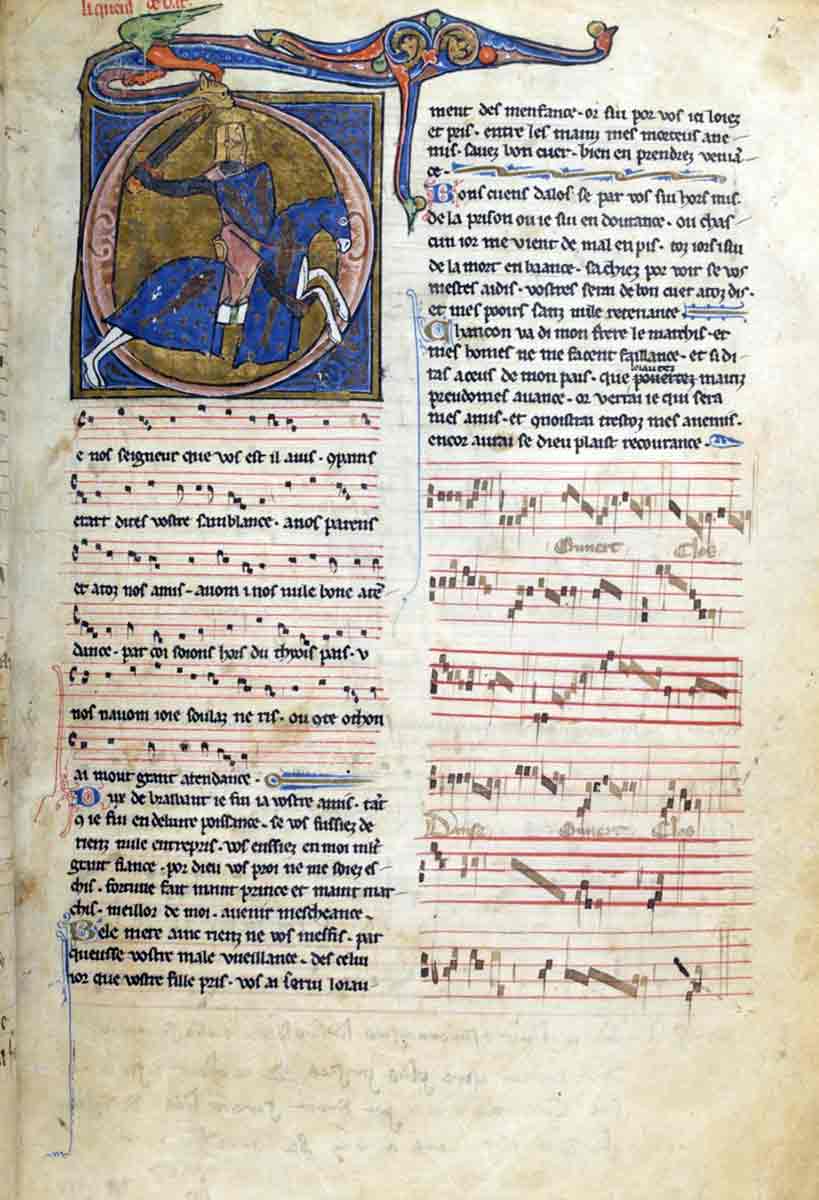
The tradition of the troubadours did not drift through Europe by chance. It followed specific routes and within 150 years of William IX composing the first troubadour songs, it reached almost every corner of Europe. The ideas of fin’amors took root in the vernacular languages where they landed. Each nation transformed the troubadour tradition according to its own traditions.
The main driving force for the spread of the ideas was the most human—these poets traveled. Some poets did not enjoy stable patronage and became itinerant performers carrying their poetry wherever they went. Courts competed to have the best performers. Thus, the performers themselves planted the seeds wherever they went. Slowly, a tradition that centered around Occitan courts spread to England, Germany, Italy, and Spain.
Although the printing press had not been invented yet, writing and binding manuscripts formed an important part of the lives of Europe’s literate community. Rich patrons would order chansonniers, or songbooks, holding the poems and music of the troubadours.
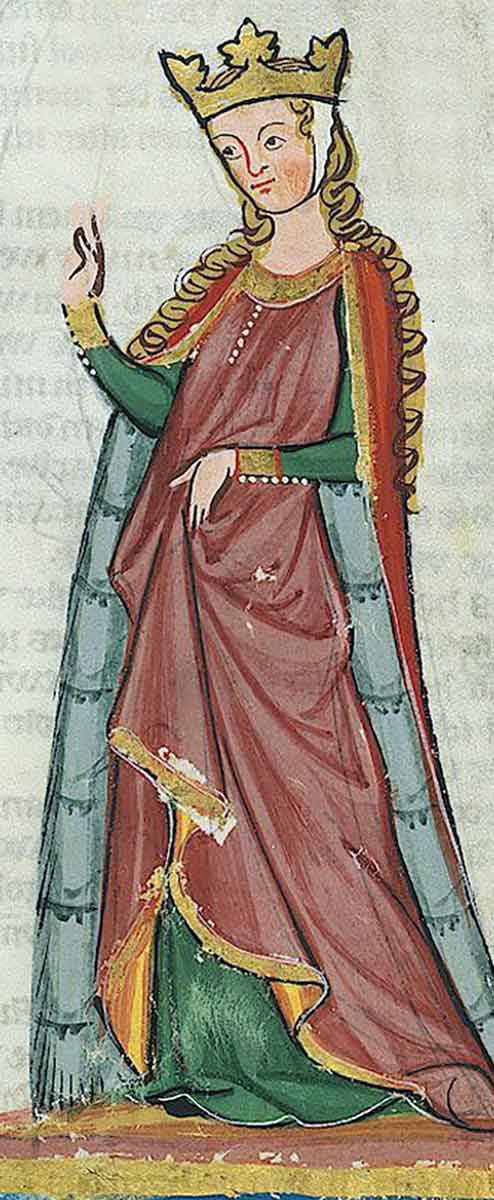
Eleanor of Aquitaine (ca. 1122-1204) can be singled out as one of the most influential figures in the Medieval Period. She was queen of France and later the (regent) queen of England. She carried the troubadour culture with her wherever she went. Eleanor was brought up in the sophisticated courts of Aquitaine, where the arts like poetry and music were central to court life. Her court at Poitiers attracted musicians and poets from across Europe. Eleanor enjoyed the company of the troubadours, made known by her funding them, sometimes debating with them, and giving them political and social legitimacy.
Through Eleanor of Aquitaine’s two marriages (first to Louis VII of France in 1137 and later to Henry II of England), the microcosm of Occitania spread north and west. Other monarchs, like Mathilda of Saxony, introduced courtly poetry in Germany, and Leonor of Spain welcomed the troubadours on Spanish soil.
The Crusades provided another unexpected highway for the troubadours. Wherever they went, cultural exchanges took place. From the beginning, the cosmopolitan world of the eastern Mediterranean opened a channel of Arabic influences, too. New instruments, ideas, and poetic ideas traveled home with the troubadours.
When the troubadour’s ideas crossed borders, they did not remain unchanged. They collided with local literary traditions and were transformed into new forms. For example, in Germany, the Minnesinger tradition sprouted, and courtly love gained a deeper mystical quality. Wolfram von Eschenbach’s epic Parzival was a spiritual epic, while Walther von der Vogelweide pushed the genre into political satire.
In Dante’s hands, the troubadour tradition lost its musical skin and became pure literature in the vernacular language. Beatrice, Dante’s unattainable beloved-from-afar, became his divine guide in the Divine Comedy.
Conclusion: The Influence of the Troubadours
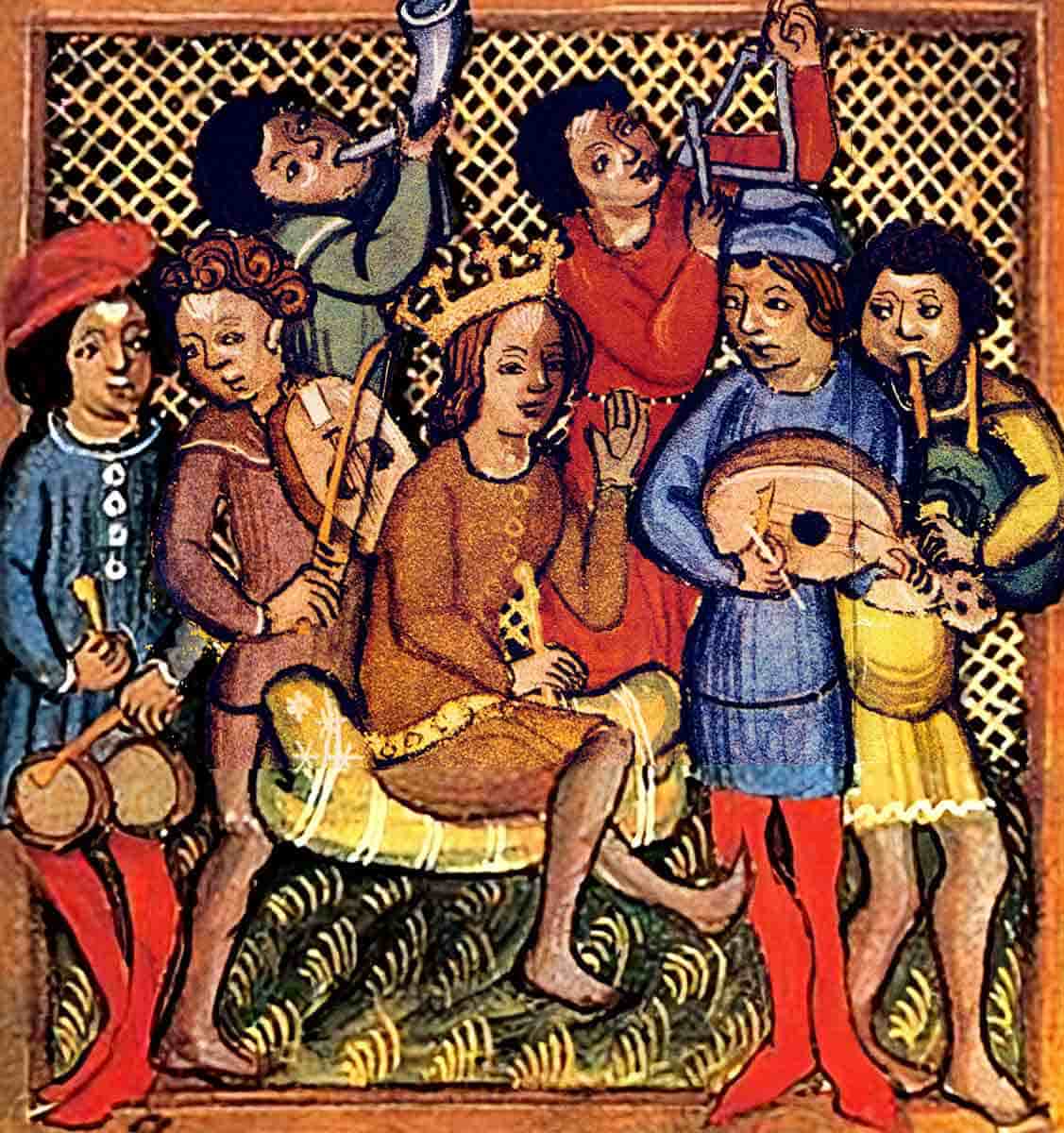
The troubadours were more than medieval court entertainers: they changed the way Europe imagined love, poetry, and song. Choosing to write poems in vernacular language brought artistic expression closer to everyday life. Through their ideas surrounding courtly love, romance achieved new emotional intensity: built on devotion, distance, and longing.
They took their ideas throughout Europe through manuscripts, patrons, and performers, and everywhere they landed, they influenced the local tradition. In the north of France, their ideas gave birth to the trouvères, while in Germany, the Minnesinger tradition sprang up. In Italy, Dante and Petrarch solidified the troubadours into their own works. Today, the modern love song and much of Western romantic storytelling still echo the influence of the troubadours.