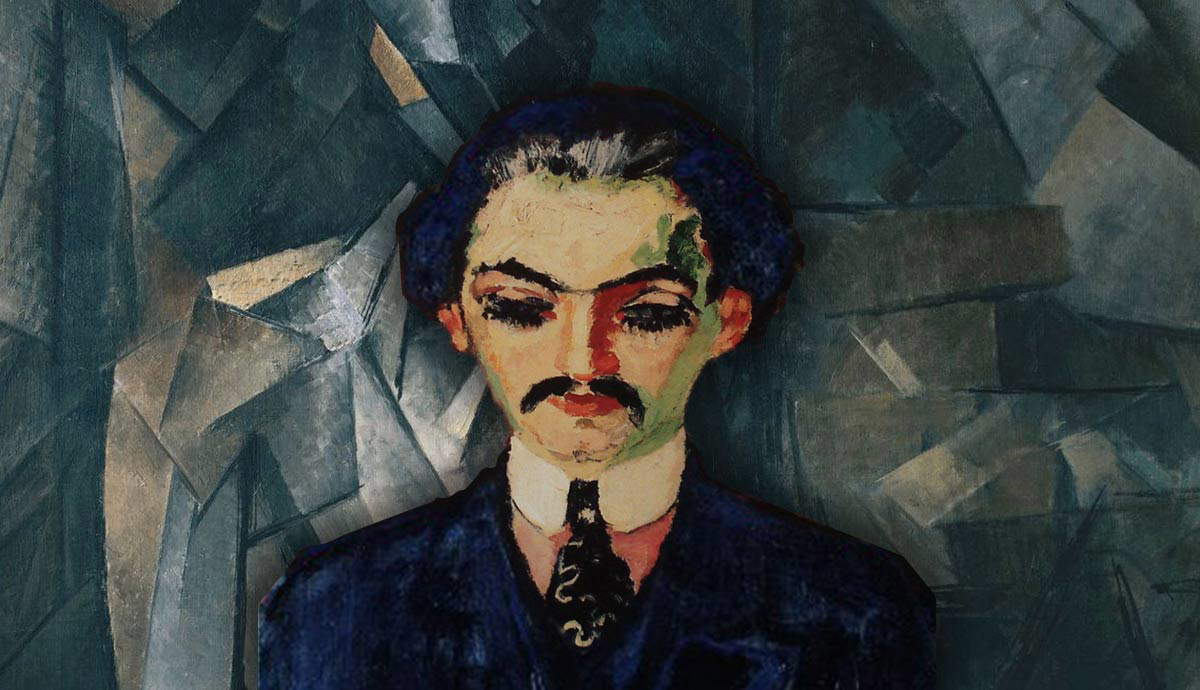

When debating whether Dimitri Shostakovich (1906-1975) was a secret dissident or a full-blood Socialist Realist, it is important to consider the milieu that people in oppressive regimes lived through because we do not share their lived experiences.
Arts in the Socialist Realist Shadow
While most artists like sculptors, painters, and writers had clear “guidelines” from the Russian government, musicians were left to their own devices to figure out the rules. It should be noted that many artists also defied the totalitarian government and had many of their works outright banned. For example, the writer Mikhail Bulgakov knew Stalin personally, but also had many of his works banned.
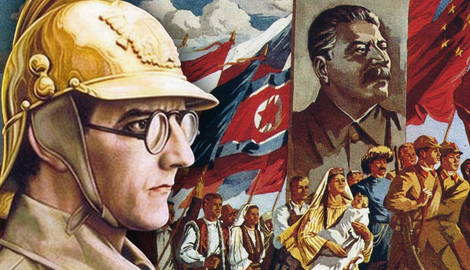
The rules, called Socialist Realism, were rather simple but draconian and anyone who stepped out of line was denounced or declared an enemy of the state. When portraying life in Soviet Russia, the arts had four core values: (i) art should apply to workers, and be relatable and understandable, (ii) the arts need to represent everyday life, (iii) representations should be realistic (so nothing abstract or unidentifiable), and (iv) art should support the aims of the State and the Party and not undermine it. Maxim Gorky, a favorite of Joseph Stalin, laid down the rules at the First All-Union Congress of Soviet Writers in 1934. The arts became Stalin’s propaganda machine and made life extremely difficult for artists.
Yet, how does a composer present these idealized ideals in their music? The short answer is to avoid formalism. But what is formalism according to the Communist Party? The main catchwords that defined formalism included atonal and twelve-tone music (pioneered in Arnold Schoenberg’s works), dissonance, and cacophony (associated with Igor Stravinsky, e.g., The Rite of Spring). Music focusing on the formal elements of music rather than the subject was deemed formalist. Most of the musical trends in Western music during the first half of the 20th century were contrary to the ideals of Socialist Realism (Tompkins, 2013). Yet, almost 300 years ago, Imperial Russia underwent a radical change under Peter the Great, who westernized the country and made it a great European state.
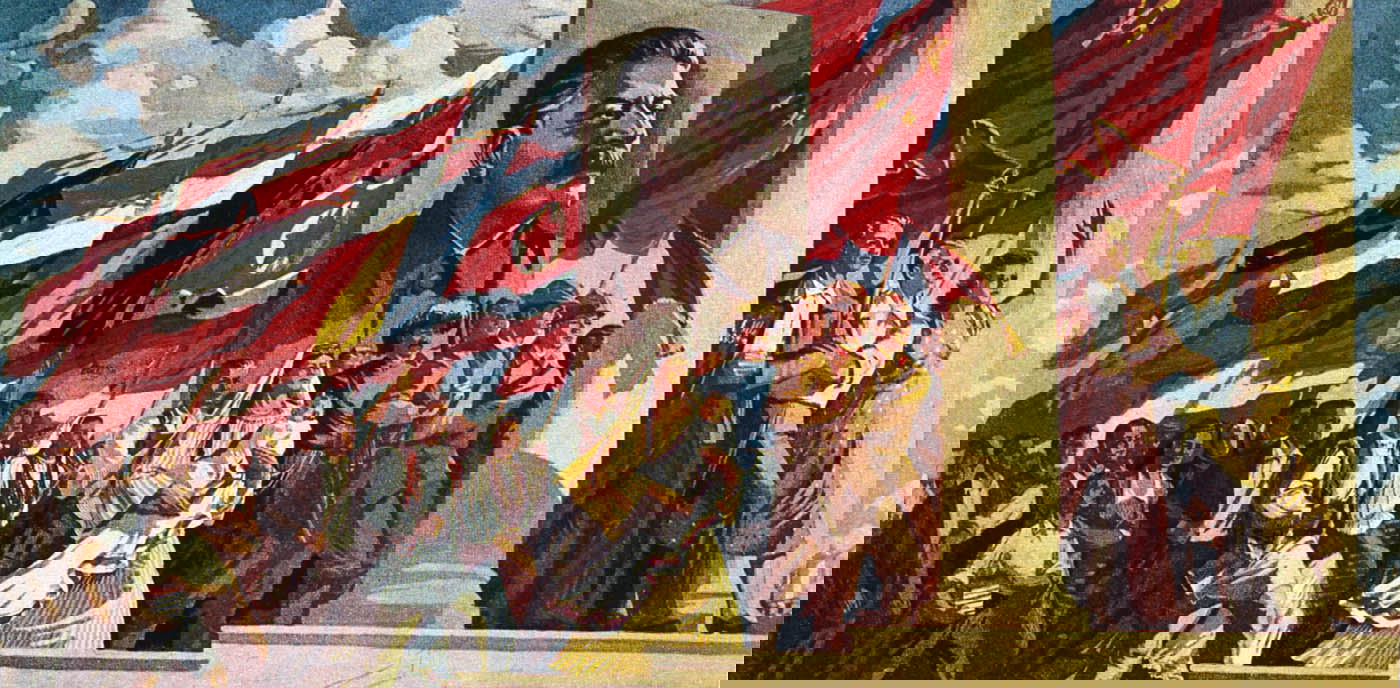
Soviet realism can be summarized in the following vague prescript from the Composer’s Union:
“The main attention of the Soviet composer must be directed towards the victorious progressive principles of reality, towards all that is heroic, bright, and beautiful. This distinguishes the spiritual world of Soviet man and must be embodied in musical images full of beauty and strength. Socialist Realism demands an implacable struggle against folk-negating modernistic directions that are typical of the decay of contemporary bourgeois art, against subservience and servility towards modern bourgeois culture…” (Steinpress and Yamplonski, 1966).
It was under these vague instructions that composers such as Dmitry Shostakovich and others had to toe the line and bend their music to the official idioms of Socialist Realism.
It is as if the Nazi and Communist Parties copied each other’s cultural policies towards the arts. In Germany, avant-garde music was degenerate and deplorable. While the Communist Party did not have a single “soundtrack” to epitomize their musical tradition, the Nazis appropriated Richard Wagner’s music as the soundtrack to their fascist German nationalist campaign. Yet, the Communist Party in Russia went a step further and censored all their artists across the board and abused their art to further the Party’s propaganda mission.
Lady Macbeth of the Mtsensk District, Op. 29 (1934)
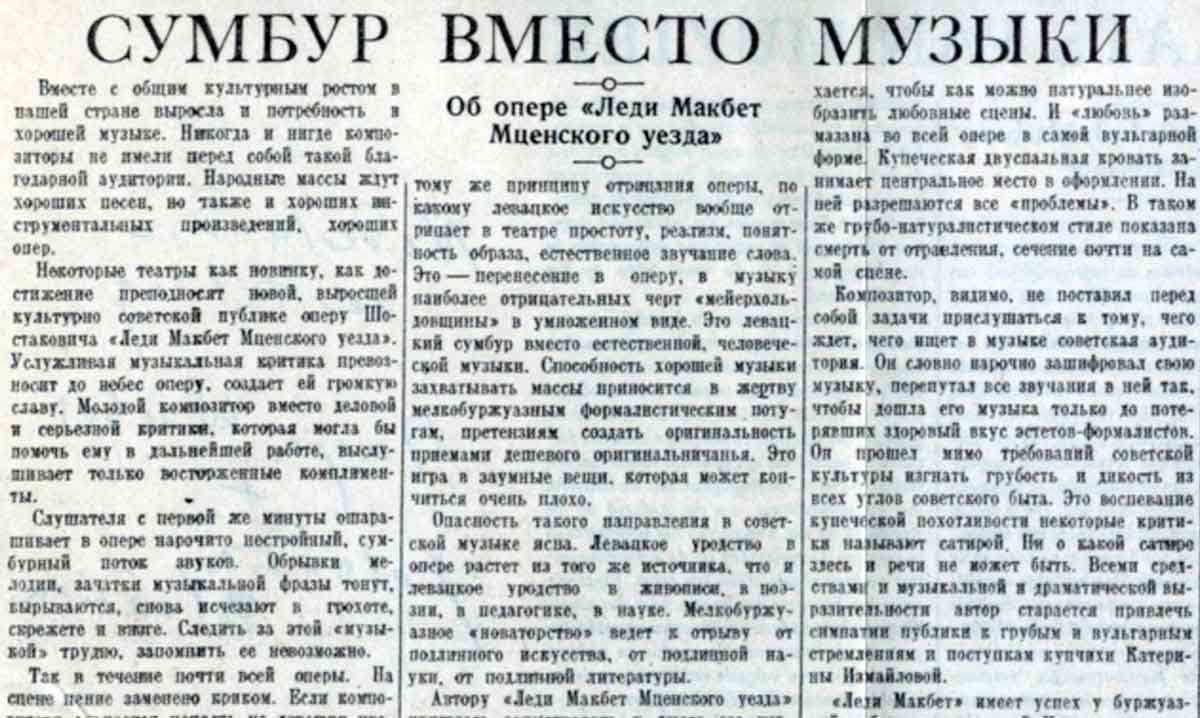
Few works in the modern history of Western music have brought so much controversy, (negative) political attention and scrutiny, and bad press to a single composer as Dmitri Shostakovich’s opera, Lady Macbeth of Mtsensk.
Despite the storms that would erupt around Shostakovich after the performance of the opera, his life was happy. Until the government began abusing him as a tool and a bad example when the Socialist Realist decrees placed all artists in a near-constant state of fear and jeopardy.
Shostakovich collaborated with Alexander Preis to produce the libretto (read the plot and program notes here). They took inspiration from Nikolai Leskov’s 1865 novella, set in Tsarist Russia. Katerina Izmailova is the titular character who is trapped in a loveless marriage to an older merchant in the countryside. Her life is filled with brutality and repression—women are regarded as the property of men. She engages in adultery and murder to escape her fate, but it is suggested that she commits suicide at the end of the opera when she is marched to a prison camp for her crimes.
Through the orchestra, the composer gives each character a unique voice while also serving as a commentator and narrator throughout the performance. While Katerina’s music is lyrical and melodic her father-in-law is portrayed by abrupt, melody-lacking music. For her husband, Zinovy, Shostakovich uses a wispy alto flute, and her lover, the womanizing Sergei, saccharine music accompanies his singing.
The first major use of the orchestra is during Katerina and Sergei’s first sexual encounter—a can-can is accompanied by suggestive trombone slides simulating the act. This “pornophony” is perhaps the most lurid and graphic depiction of a sexual act in the history of music and probably landed Shostakovich in more trouble than he could ever imagine. Here, Richard Wagner’s ideas about the orchestra possessing the ability to speak (Sprachvermögen in German) shine through. Another instance is the Priest’s “liturgical chant” that is devoid of humility and spirituality: a poke at his insincerity as a spiritual leader.
Perhaps it was the opera’s thinly veiled messages of crime, passion, repression, and poking fun at the government that broke the camel’s back. The Party adored using Shostakovich’s opera as an example of “bad” music which should be avoided to keep music in line with the prescriptions of Soviet Realism.
Symphony No 5 in D Minor, Op. 47 (1937)
After Stalin left the life-threatening and ill-fated performance of Lady Macbeth of the Mtsensk District in 1936, Shostakovich was on his radar. Lady Macbeth could have ended his career and his life, thus he had to make sure he abided by the Party’s rules regarding Socialist Realism. Additionally, the scathing review in Pravda (the official newspaper of the Communist Party) did not do Dimitri Shostakovich any favors either. His life was hanging in a balance tethered to Stalin’s whims. The Great Purge between 1936 and 1938 was a real threat to anyone who defied Stalin and Shostakovich was no exception.
Yet, the composer did not compose an ode or sycophantic cantata praising the Communist Party and their leader. With his Fifth Symphony, he offered the Party an “apology,” channeling the likes of Ludwig van Beethoven and Gustav Mahler, especially in the first two movements and the triumphant last movement. The premiere in November 1937 in Leningrad (today St. Petersburg) was a roaring success.
Dimitri Shostakovich’s Symphony No. 5 is multiple things at once, with as many interpretations as possible. Some think it is a veiled message of giving the finger to Stalin, while others read and hear deep sorrow and finally redemption in its last movement. There is also a train of thought that it is an autobiographical work that personifies Shostakovich’s personal life and how he triumphed over hardship. Of course, there is also a line of thought that suggests the symphony is a satirical portrait of Stalin—exuberance and adulation parading as a hollow shell.
Yet all the qualities that fit into a Socialist Realist composition are present: the musical language is direct, the melodies are well-shaped and memorable, and the positive fanfare in the fourth movement releases all the doubt and tension felt throughout the previous movements. However, the work is suitably complex and serious. After all, it is subtitled “a Soviet artist’s reply to just criticism.”
In the first two movements, the spirit of Beethoven and especially Mahler looms ever-present. The first movement (at 00:25) offers a magnificent interplay of despair and a call to arms. In the two aforementioned symphonic masters’ style, Shostakovich builds a narrative arc that erupts into a powerful conclusion when the recapitulation occurs. The outcome of the struggle is ambiguous and set aside when the jocular second movement enters.
Like many of Beethoven and his contemporaries’ scherzos, Shostakovich offers a stark contrast to the seriousness of the first movement. The second movement marked Allegretto (at 17:25) sounds like a forced “happy dance” where the tired workers are forced to sound happy and grateful for the opportunity to contribute to society. But there is an ironic sadness woven into the musical fabric, possibly symbolizing the overlords who are there to make sure the workers are “happy” with their lot.
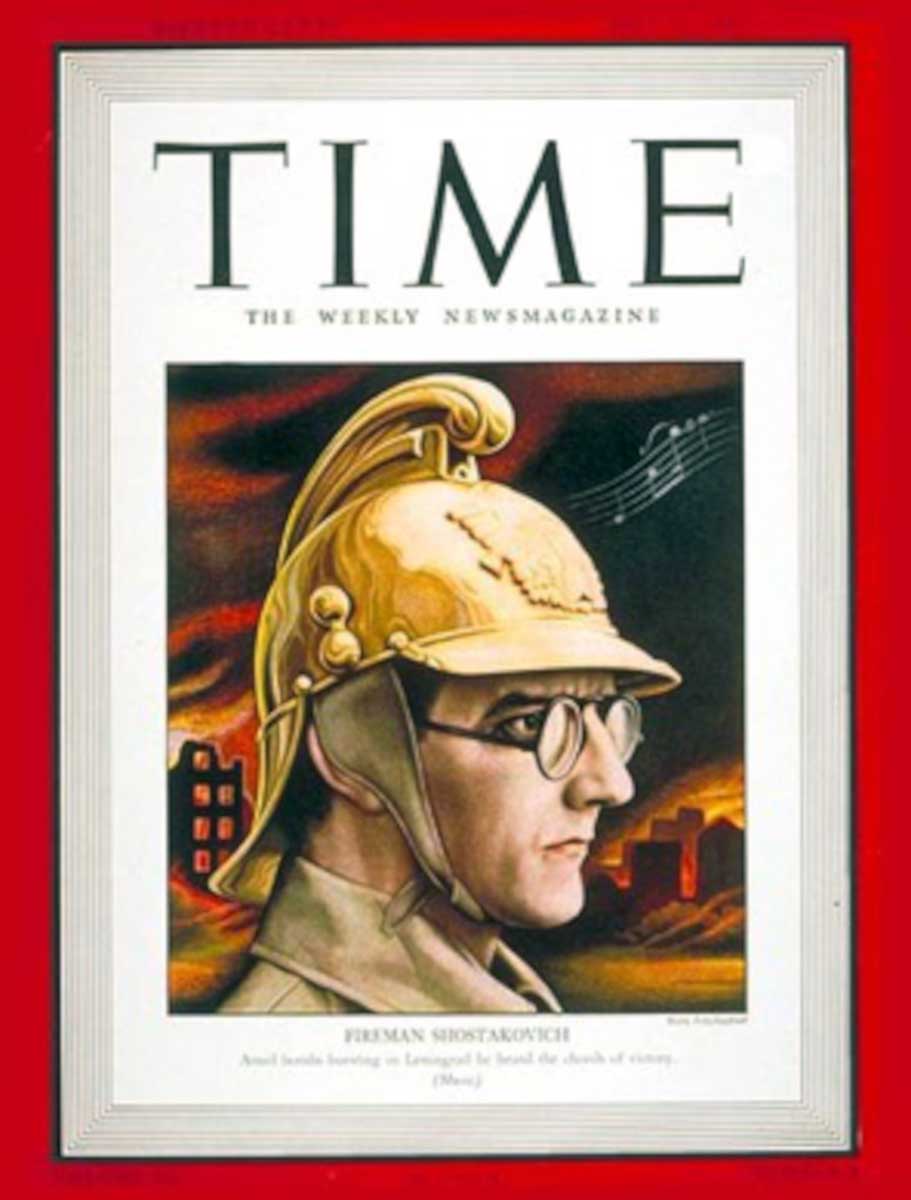
In the third movement (at 23:28) Shostakovich eschews the brass section in favor of introspective string writing filled with a range of emotions. It seems as if the hero has lost all hope and is praying for death to release him from his struggles. Melancholic melodies in the flute and oboe add to the tragic feeling hanging over this movement.
Finally, in the fourth movement (at 38:15) the brass section is back in full force with the timpani pounding away. However, the hero is not completely safe from the world’s onslaughts. Yet. The music becomes frenzied and almost cacophonous, but Shostakovich does not dare enter that realm. With a Mahlerian twist the key signature shifts from D minor to D major to have the hero emerge (at 48:56) triumphantly. Yet, it sounds (and feels) like an ironic and pyrrhic victory.
Despite adhering to the classical tradition while sprinkled with avant-garde elements, Shostakovich took huge liberties and chances in this symphony. He won over the Communist Party and showed that he was “rehabilitated” according to their standards again. Nevertheless, there are moments filled with Western formalist tendencies such as dissonance, modernism, and biting, ironic sarcasm throughout the work.
This symphony’s power lies in its rich emotional language and carefully crafted structure. Given its historical context, the symphony transcends place and time. The symphony evokes powerful emotions in the listener while it showcases the human spirit’s will to survive.
Song of the Forests, Op. 81 (1949)
In the Song of the Forests, a different side of Shostakovich emerges: a composer who is toeing the line to please the Party. The work was composed during the summer of 1949 to celebrate the reforestation of the Russian steppes after World War II carved a destructive path across the country. This was part of Stalin’s “Great Plan for the Transformation of Nature.” This was also the world’s first state-sanctioned plan against human-induced climate change. At its core, Stalin’s plan was conservative. Restoring“an imagined prehistoric state, but soon a group of radical scientists advancing untested silvicultural theories managed to take control” (Brain, 2010), and subsequently it derailed after Stalin died in 1953.
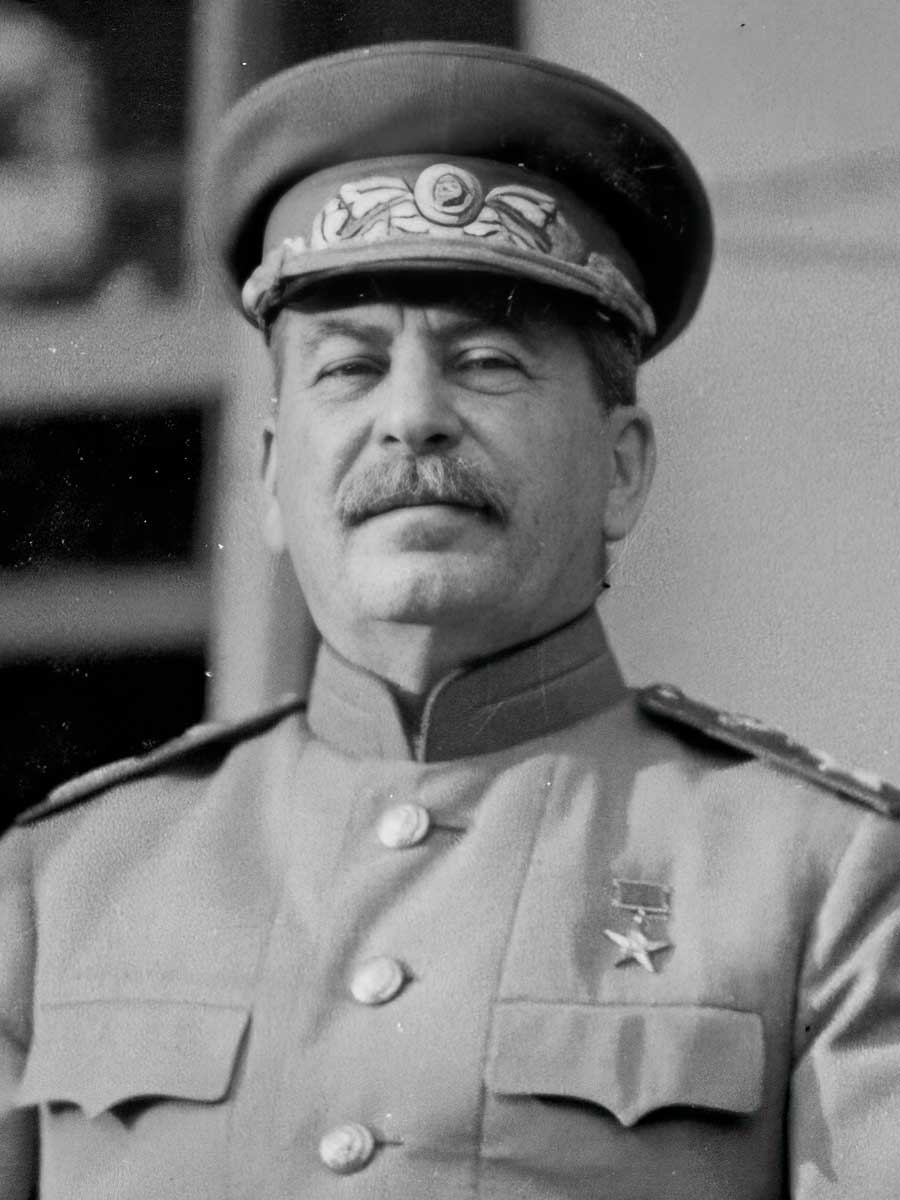
The text, by Yevgeny Dolmatovsky, praises Stalin as the “Great Gardener” feeding into Stalin’s many accomplishments and his personality cult. After Stalin’s passing, those references were erased from the text. Of course, the Party loved the work and awarded the Stalin Prize to Dmitri Shostakovich in 1950 for his patriotic effort.
The oratorio is divided into seven movements:
- When the War Was Over (0:41)
- The Call Rings Throughout the Land: Let Us Dress Our Land in Forests (07:03)
- Memory of the Past (10:14)
- The Pioneers Plant the Forests (19:43)
- The Fighters of Stalingrad Forge Onward (22:18)
- A Walk into the Future (25:53)
- Glory (34:02)
When comparing this oratorio to Shostakovich’s other compositions, it may seem overly simplistic and Party-pleasing. However, the circumstances and context of the time are important.
In 1948, the government denounced Dmitri Shostakovich along with other composers (again) as formalists who undermined the government’s Socialist Realist policies. Playing by the rules was the name of the game—but those rules were arbitrary and applied at a whim. One day, the government would praise an artist, but the next day you could be denounced. The rules were never applied fairly or with consistency.
String Quartet No. 8, Op. 110 (1960)
Among Shostakovich’s output, few works have so many extra- and inter-musical interpretations as the Eighth String Quartet. Some believe it is purely autobiographical. Others say it is a dedication to the victims of fascism worldwide: it is inscribed, “In memory of victims of fascism and war,” after all… Solomon Volkov in his book, Testimony, filled with purported “recollections” by Dmitry Shostakovich himself claims the work is not about fascism. It is the composer’s struggles against the totalitarian Stalinist government, parading as a masked personal critique to avoid official retribution from the government (again).
The version below is from Boris Barshai’s arrangement of the quartet as a chamber symphony. It is cast in four movements as opposed to the original quartet’s five movements.
The first movement opens with Shostakovich’s musical signature D-(eS)-C-H, written in the German style: D-E-flat (S)-C-B (H) k—the same system Johann Sebastian Bach used to write his name B-A-C-H.
Overall, the mood is elegiac and depressing. The DSCH theme was used previously and notably in his Tenth Symphony in E minor, Op. 93. Other themes include one from his Symphony No. 1 in F minor, Op. 10—the work that brought him national prominence and a descending theme in the first violin referring to his Fifth Symphony in D minor, Op. 47. The latter work “redeemed” him in 1937 following the denunciation of Lady Macbeth of Mtsensk.
As austere as the first movement is, the second movement, marked Allegro molto, is like a live wire lashing about with stressful and anguished energy. It is a Blitzkrieg attack, shattering the mood with variations on the DSCH theme by using varying note lengths.
The sudden shift at 06:05 after the violoncello’s struggling upward surge can be heard in his Piano Trio No. 2 in E minor, Op. 67’s last movement. Albeit with more clarity and at a less frenzied tempo.
In the middle movement, we find a typical Shostakovichian compositional technique: tonal ambiguity. The ghoulish waltz pits G minor and G major tonalities against one another. While the principal melody features a B-natural (typical of a G major scale), the viola plays an accompaniment featuring a B-flat, which is found in a G minor scale. Overall, it creates a feeling of unease because you can never pinpoint the exact key signature.
At 11:25, Shostakovich quotes the march-like theme from his Cello Concerto No. 1 in E-flat Major, Op. 107 he composed the previous year.
The penultimate movement is perhaps the most pessimistic of the entire work. It opens with the first violin’s drone carrying over from the previous movement and a rapid, banging three-note motif in the rest of the strings.
It is an easy trap to assign extra-musical meanings to the drone-and-banging theme—some suggest the violin’s drone represents a distant aircraft while the bangs are gun or cannon shots. Considering that Shostakovich composed the work in Dresden, which was heavily bombed by the Allied Forces, the likeness could easily be inferred. Others suggest it is the Secret Police knocking on doors rounding up dissidents who failed to meet the Communist Party’s rules and are being carted off to prison camps.
Further to the above, between the three-note “knocks,” Shostakovich quotes four notes from the medieval Catholic requiem mass’ Dies Irae (Day of Wrath). The composer also quotes two Russian works, namely the revolutionary song Languishing in Prison and a funeral anthem, Tormented by the Weight of Bondage, You Glorify Death with Honor. Talk about pessimistic…
An aria from his opera, Lady Macbeth of Mtsensk District, is played by the cello in the upper range too before the knock motif is heard a final time.
In the final movement, the DSCH theme is introduced again fugally—each instrument takes up the theme after the previous one introduces it. With the final movement, Shostakovich recaptures the themes heard throughout the piece and brings them together as a final, powerful musical statement.
Was Shostakovich a Socialist Realist or Secret Dissenter?
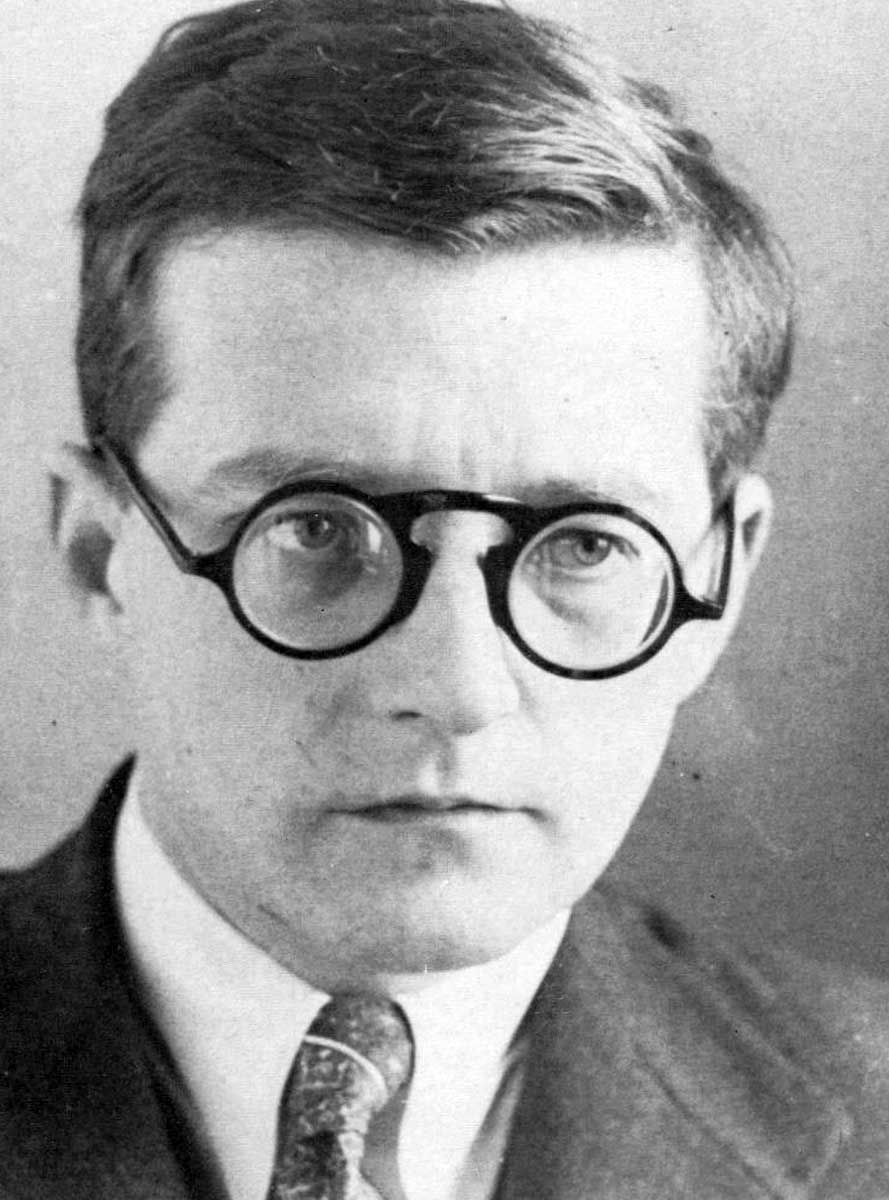
These four varying works explore Dimitri Shostakovich’s output. We started with the work that put his life and career in danger—Lady Macbeth of the Mtesensk District. A work that deeply dissatisfied Joseph Stalin.
In his Fifth Symphony, Shostakovich offers an “apology” to the Communist Party, but underneath the veneer of officialdom, he still manages to defy the rules of Socialist Realism while flying under Stalin’s radar. It is also a deeply autobiographical work that has stood the test of time for nearly 80 years as one of the staples in the Western world’s symphonic canon.
To bring balance to the equation, Song of the Forests is an “official” composition by the composer where all the prescriptions of Socialist Realism glorify Stalin’s plans to reforest the Russian Steppes.
In the Eighth String Quartet, composed seven years after Stalin’s death, Shostakovich is introspective, brooding, and self-quoting numerous of his works in one of his most autobiographical works.
In my opinion, Shostakovich was neither a secret dissenter nor a Socialist Realist. He was a champion who forged his own path during dark and troubled times and left a rich legacy behind—despite the hardships he had to endure.