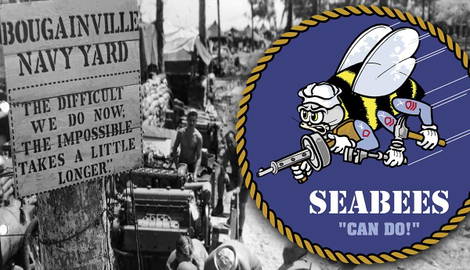

The Seabees’ crucial roles enabled the US to bring the war to the Axis. These battalion-sized units (1,000 men) tackled assigned tasks as well as the unexpected. With a primary job as combat engineers, Seabees landed with or just after the troops. They built roads, bridges, airfields, fuel depots, and hospitals, often under fire or in extreme environments. Unlike civilians, Seabees could fight and did so several times during the Pacific Campaign.
What Major Operations Did Seabees Participate In?
The Seabees went where American troops went, but mainly in the Pacific. The island-hopping campaign required infrastructure that didn’t exist. During landings, Seabees cleared beaches, built docks, and supply depots. With readily available supplies or reinforcements, logistics became routine, enabling the troops. Solving unique problems that occurred with each new battle, the Seabees’ roles expanded during the war.
Guadalcanal, America’s first island invasion on August 7, 1942, marked the Seabees’ first Pacific operation. The primary concern was rebuilding the island’s airfield. Superior Imperial Japanese naval and air might did their best to defeat the Allies, but the Seabees worked hard, using abandoned Japanese construction and their own equipment to construct Henderson Field.
On August 12, the first planes landed. The Seabees expanded the runways, facilities, and storage. On August 20, thirty-one Marine aircraft landed. Two days later, a USAAF fighter squadron landed. The Seabees kept the airfield functional despite ground attacks and naval and air bombardments. Henderson Field’s linchpin role enabled the defeat of nearly all resupplies, essentially starving the enemy. The Japanese evacuated Guadalcanal by February 1943.
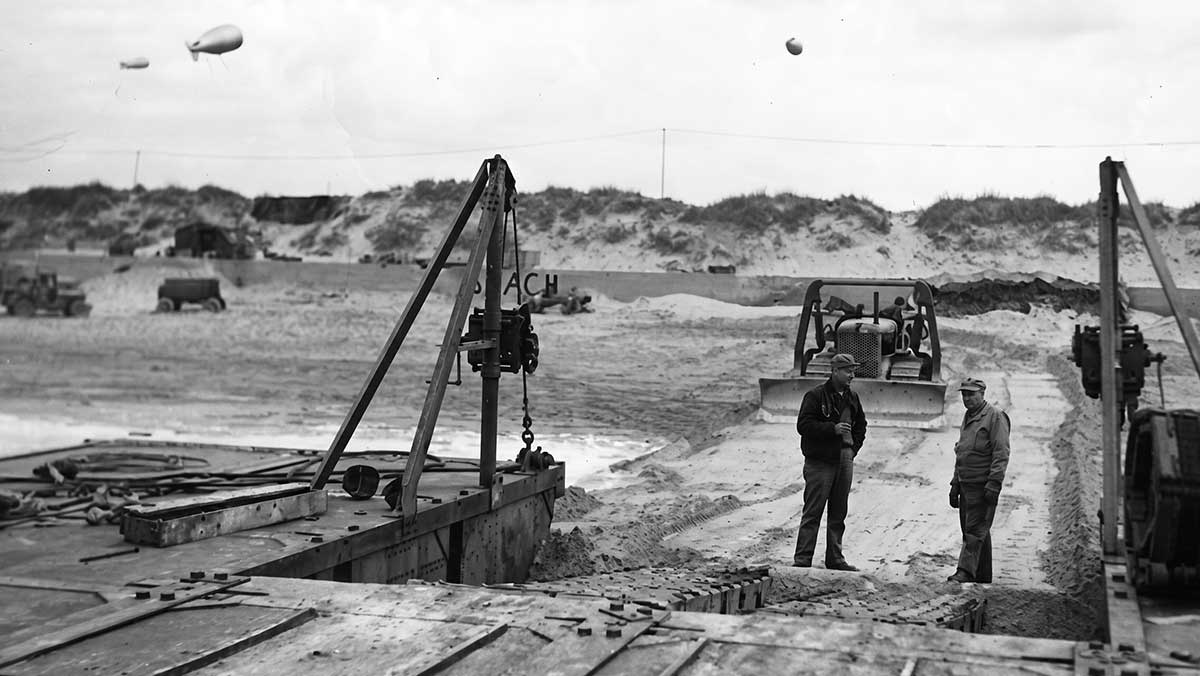
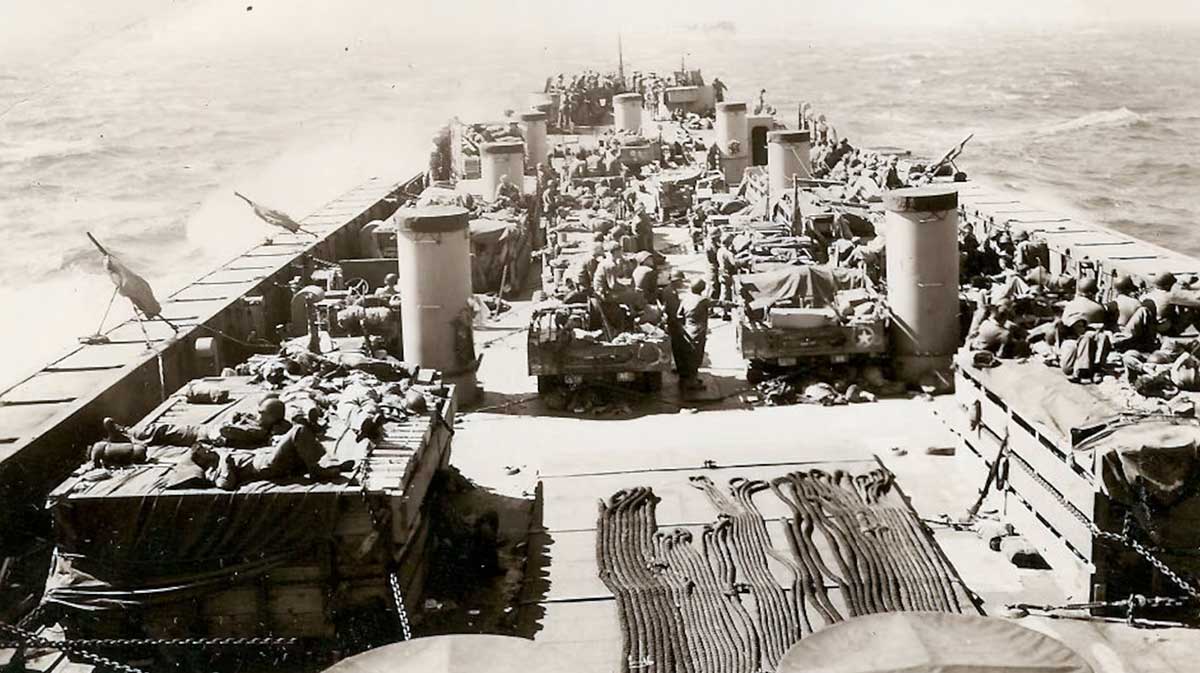
As with Guadalcanal, Seabees landed on the Normandy beaches for D-Day on June 6, 1944. Despite the intense German fire, they cleared the steel and concrete barriers.
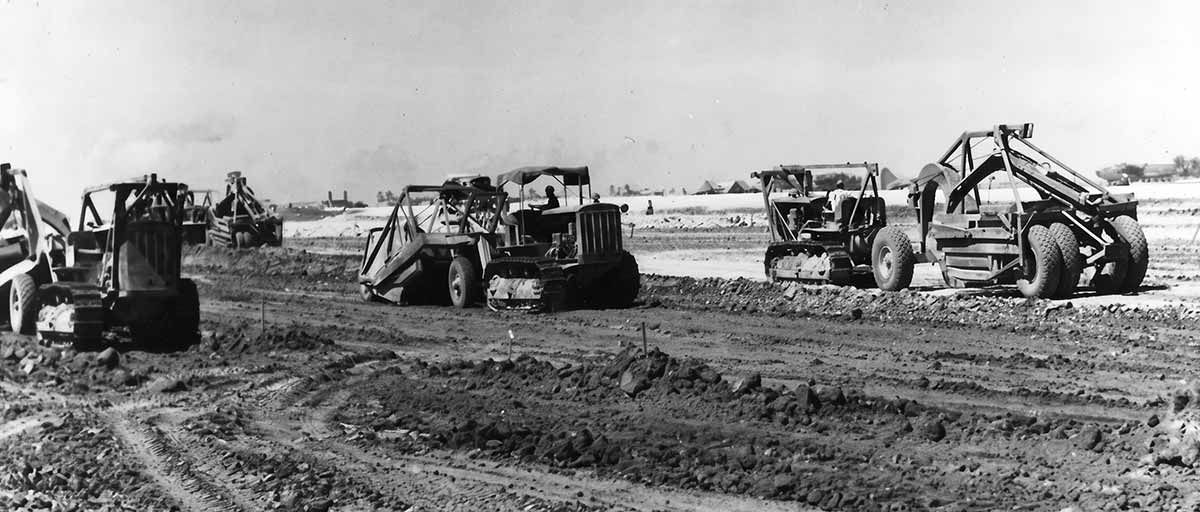
On June 7, the Seabees went to work as D-Day became a numbers contest. The Allies needed to land troops, supplies, and vehicles more quickly than the arrival of German reinforcements. 10,000 Seabees built ramps, pontoon causeways, and roads to keep everything moving. They built breakwaters, docks, and piers to form “Mulberry A”— an artificial harbor. Reliance upon these and Seabee-built infrastructure lasted until the end of July 1944.
For Okinawa, on March 26, 1945, Seabees landed with the Marines in World War II’s last invasion. As with the previous Pacific island campaign, ships and planes pummeled the island. The Japanese fought hard, too, thus leaving Okinawa a wreck. The Seabees set to work, building up a base for the invasion of Japan. Hospitals, roads, bases, airfields, and more. The port they built rivaled New York City’s port in size. Some 55,000 Seabees toiled across Okinawa, constructing needed facilities.
For example, empty fuel drums became makeshift showers or floats for pontoon bridges. Okinawa demonstrated what the Seabees could do.
What Specialized Jobs Did the Seabees Carry Out?
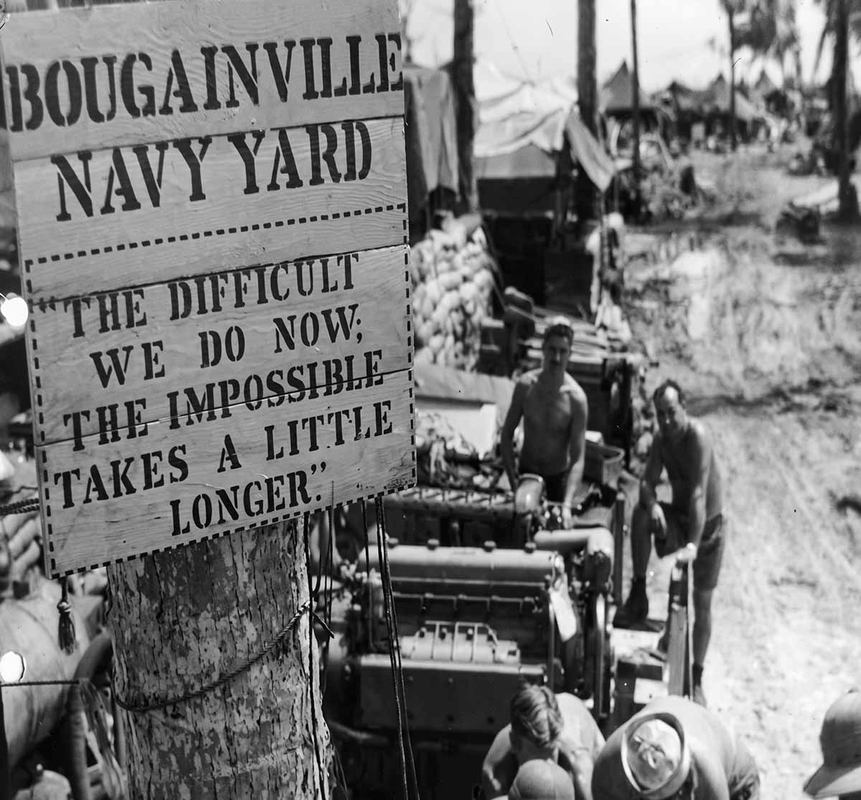
No job or assignment seemed too harsh for the Seabees. In the Pacific, coral reefs near invasion beaches impeded incoming ships. Naturally, the Seabees got the job to remove them, often under fire. Using explosives, these “Naval Combat Demolition Units” went to work. The Underwater Demolition Teams (UDT) were a more secretive branch with Seabee members. These men swam up to enemy beaches to reconnoiter defenses, get beach samples, or check for reefs.
Why Did the Seabees Become So Successful?
The Seabees evolved into a secret sauce for the US military in World War II. The first groups were highly skilled civilians from the construction industry and trades. Before the war, they’d worked on the Boulder Dam and built subways and skyscrapers. Or they’d worked in ports and highways. Later, draftees inherited their expertise to reflect their “Can Do” belief.