





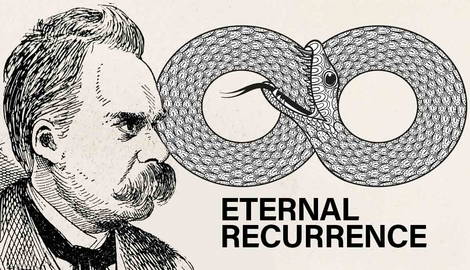

Nietzsche’s idea concerning eternal recurrence, the idea that life repeats eternally, was far from unique, but it formed the foundation of much of his philosophy. But did he mean us literally or metaphorically? And what implications does it have for his broader ideas?
The Demon’s Question: Nietzsche’s Eternal Recurrence
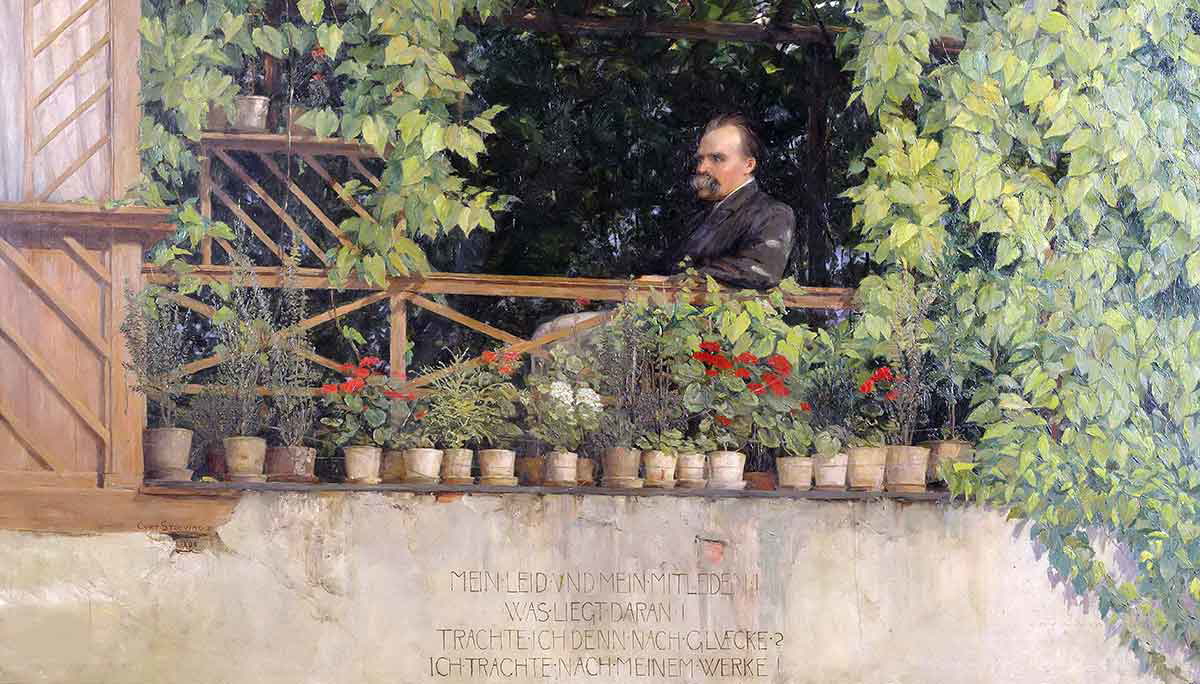
What, if some day or night, a demon were to steal after you into your loneliest loneliness and say to you: ‘This life, as you now live it and have lived it, you will have to live once more and innumerable times more; and there will be nothing new in it, but every pain and every joy and every thought and sigh… must return to you — all in the same succession and sequence.
Nietzsche, The Gay Science
Nietzsche called this idea “the greatest weight,” but it is unclear whether it is meant to be taken literally or metaphorically. Either way, its implications are extraordinary.
An Original Thought?
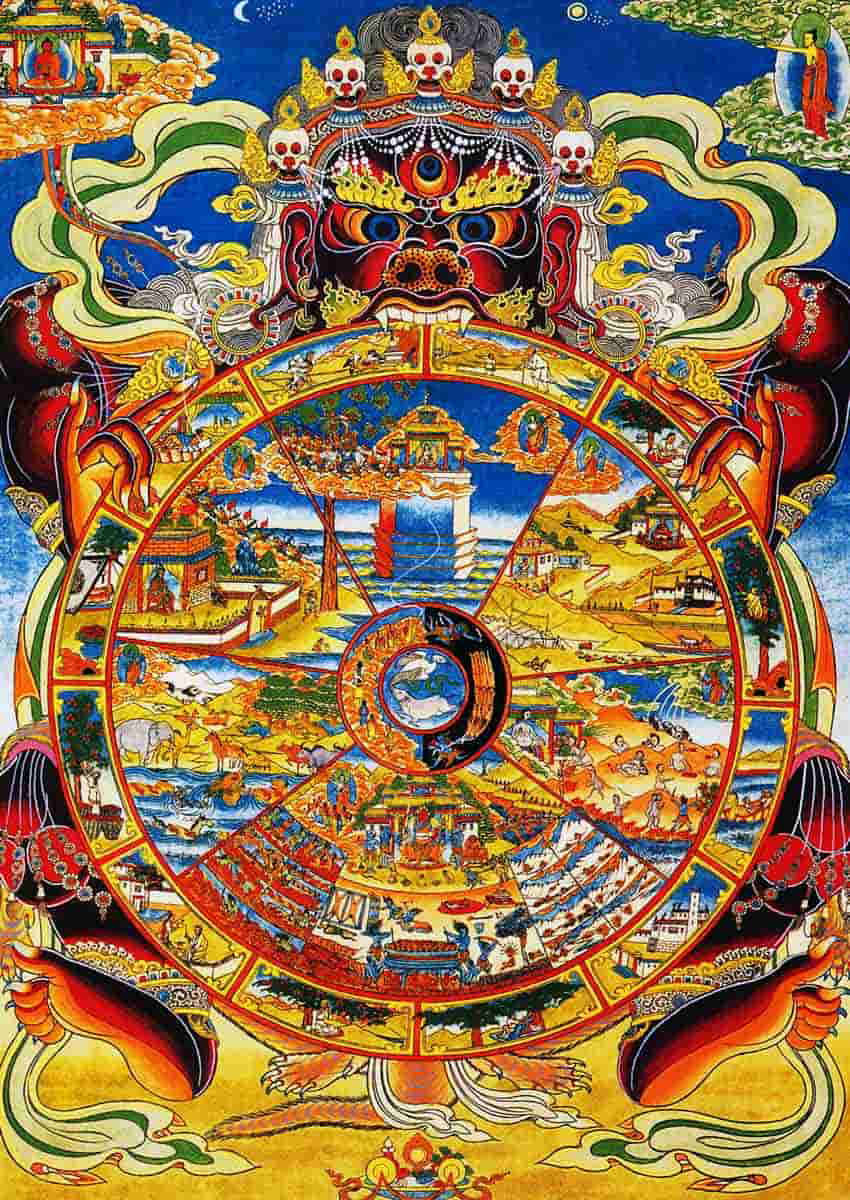
As a philologist and scholar of the pre-Socratics, Nietzsche was well-versed in the thought of early philosophers such as Heraclitus, who believed in the possibility of a cyclical repetition of all things. He was also familiar with the myth of Sisyphus, in which Sisyphus is forced to roll a boulder up to the top of the same hill, only for it to roll back again in an endlessly repeating cycle.
By Nietzsche’s time, at least in the West, such ideas had fallen out of favor due to the influence of Christianity and its linear understanding of time. However, Nietzsche would have been familiar with a cyclical model of the world through reading Arthur Schopenhauer, an expert in Eastern, esoteric religion. In the East, a cyclical view of time prevailed. Nietzsche’s eternal recurrence would not have seemed so far-fetched in this philosophical context.
Therefore, while Nietzsche’s eternal recurrence is not original, the central role it plays in his thought is interesting. For example, in his Thus Spoke Zarathustra, Nietzsche said:
‘Now I die and vanish,’ you would say, ‘and in an instant I am a nothing. Souls are as mortal as bodies. But the knot of causes in which I am entangled recurs— it will create me again! I myself belong to the causes of eternal recurrence. I come again, with this sun, with this earth.’
Nietzsche, Thus Spoke Zarathustra
A Literal Thought?
Do our lives repeat eternally? This is a cosmological question. Is it true to say that our lives are endlessly repeating themselves without any form of deviation? Is the life I am living now the same life I have lived eternally?
While several of the world’s major religions, Buddhism, for example, argue for a cyclical view of time and the recurrence of life in one way or another, Nietzsche’s idea of eternal recurrence proposes something different. There is no alteration, deviation, or possibility of change. This is not reincarnation into something better or worse. It is the same. The eternally recurring life repeats itself without any difference from what we have experienced already.
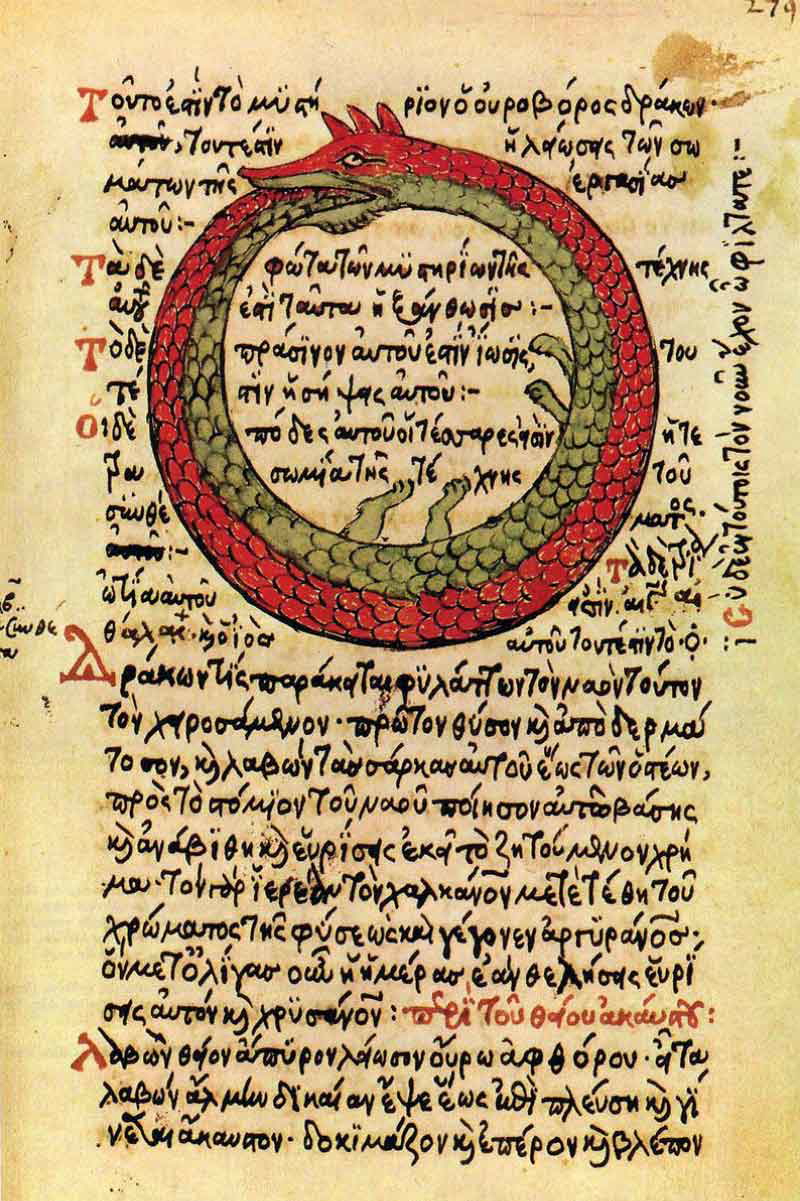
Imagine the thought for yourself. Think back to moments of supreme happiness you have enjoyed, such as your first kiss, the memory of a happy vacation, or holding your newborn child for the first time. These are all moments we might gladly repeat. But what of their opposites? No human life is devoid of suffering in some form: the loss of loved ones, the failure of our own hopes and dreams, physical ailments, and so on. In the eternal recurrence, such things would repeat into infinity, the good and the bad.
A Metaphorical Idea?
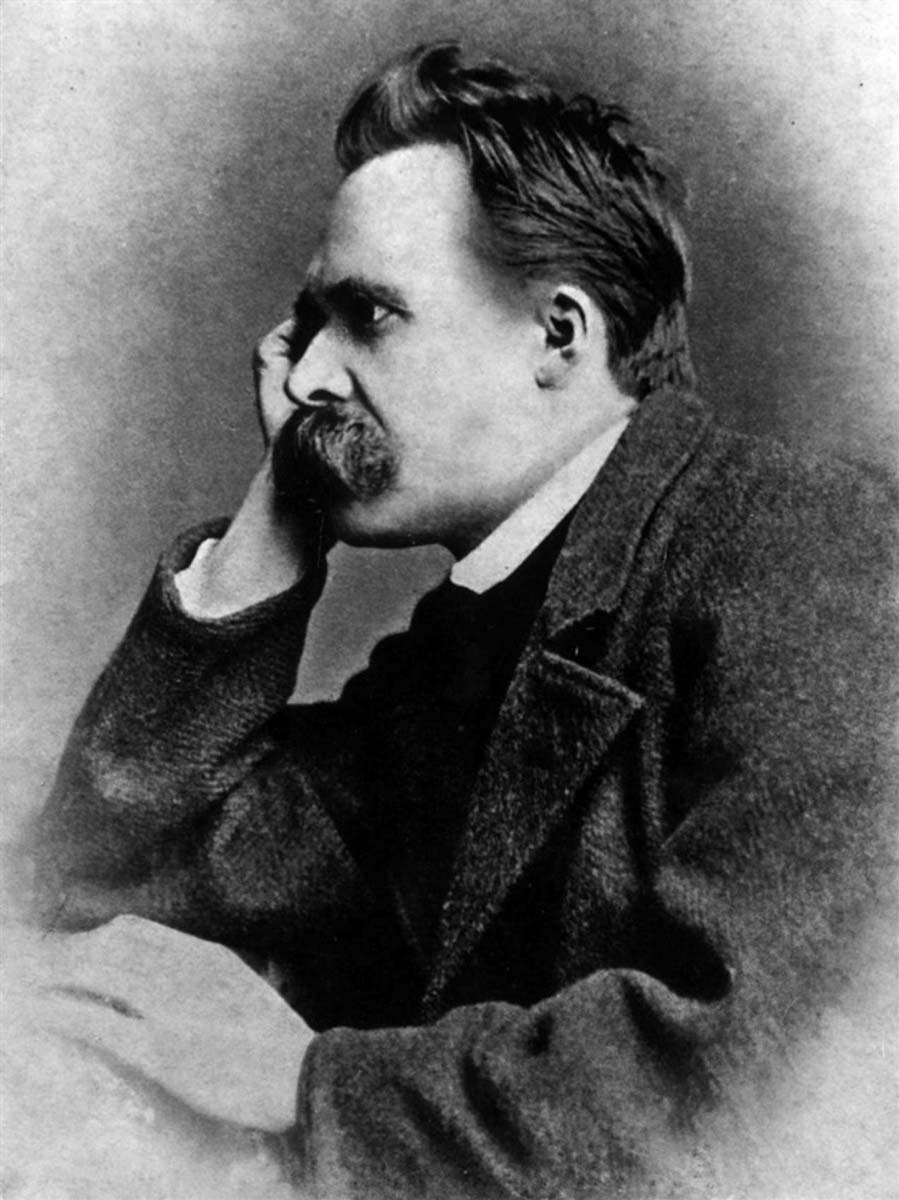
Nietzsche famously said, “God is dead,” and that rejection of religion necessitates a rejection of the afterlife. It seems unlikely that Nietzsche replaced thousands of years of theological speculation with his own theory plucked from ancient Greek philosophy and Eastern religions. There is no evidence to suggest Nietzsche took the eternal recurrence literally as a cosmological theory of how the universe operates, and any suggestion of its literal meaning would be scorned by current scientific thinking. Nevertheless, Nietzsche is sympathetic toward cyclical views of time and wanted to explore the eternal recurrence seriously. He wrote:
Fellow man! Your whole life, like a sandglass, will always be reversed and will ever run out again, — a long minute of time will elapse until all those conditions out of which you were evolved return in the wheel of the cosmic process. And then you will find every pain and every pleasure, every friend and every enemy, every hope and every error, every blade of grass and every ray of sunshine once more, and the whole fabric of things which make up your life. This ring in which you are but a grain will glitter afresh forever.
Nietzsche, The Will to Power (posthumously published notes), Note 1057
Some argue that Nietzsche sought to study science to explore eternal recurrence further, but scholarly consensus suggests such intentions were abandoned. Eternal recurrence was an idea he wanted to take seriously as a thought experiment, even as it had no literal basis. What, then, is its purpose?
Nietzsche’s Life Affirmation
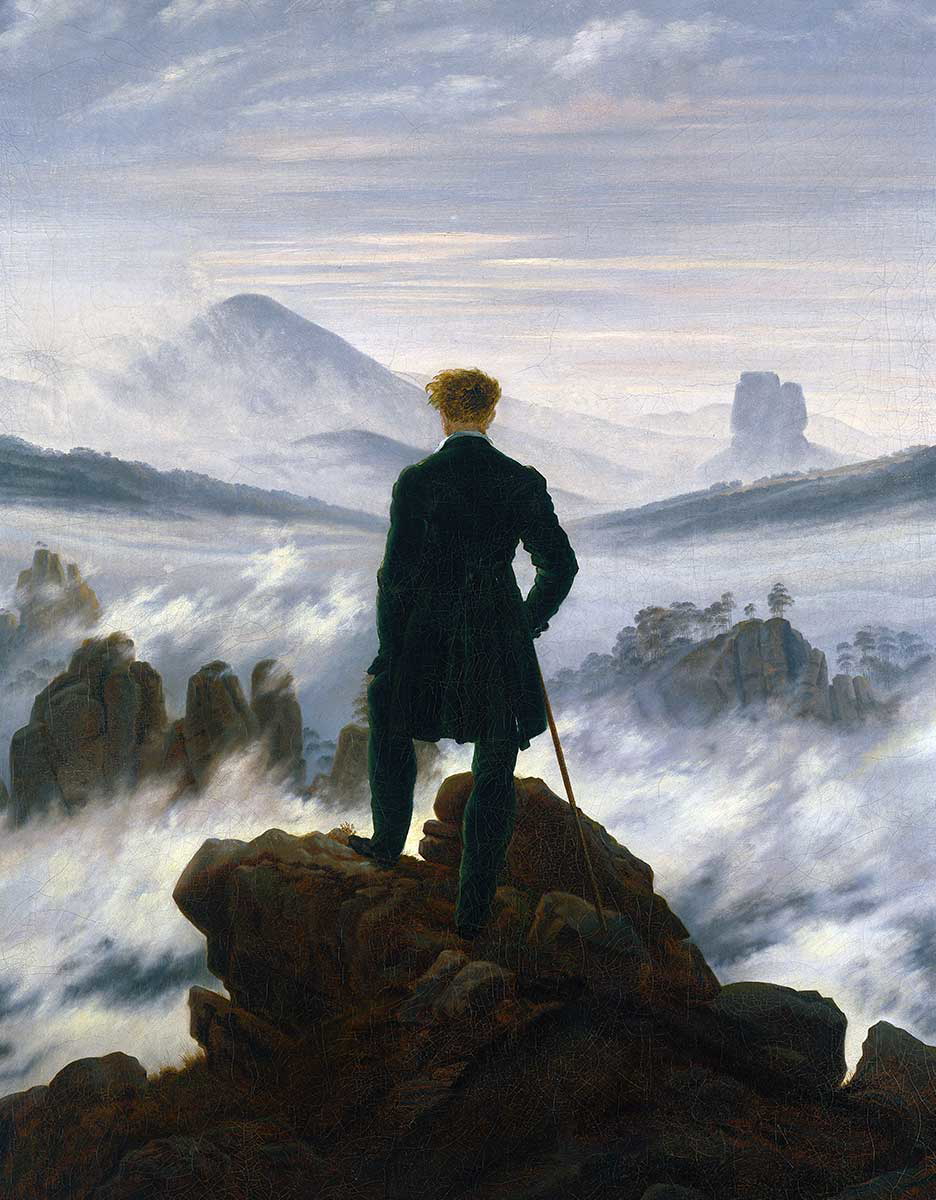
To think the thought of “the greatest weight,” to imagine our lives repeating themselves, is, for Nietzsche, an affirmation and acceptance of who we are and what it means to exist. He uses a Latin phrase to describe the ideal reaction to the thought of repetition: “amor fati” or “love of fate.” The eternal recurrence, rather than a cosmological idea, becomes an ethical one, an emotional one, a life-affirming one.
To consider one’s life as a whole, to date, or even at the end of life, is to look back on a landscape of both good, fertile land and rough, rocky soil. In Thus Spoke Zarathustra, where the thought of eternal recurrence is partly developed, the central character is the prophet, Zarathustra. He exists in an Alpine landscape of high mountains and low-lying verdant pastures, forests, and lakes. It is as though the landscape itself represents the life we are asked to look back over. To do so is both a joy and a burden, depending on the kind of life we have lived. It is a challenge to each of us.
The Cost of Joy
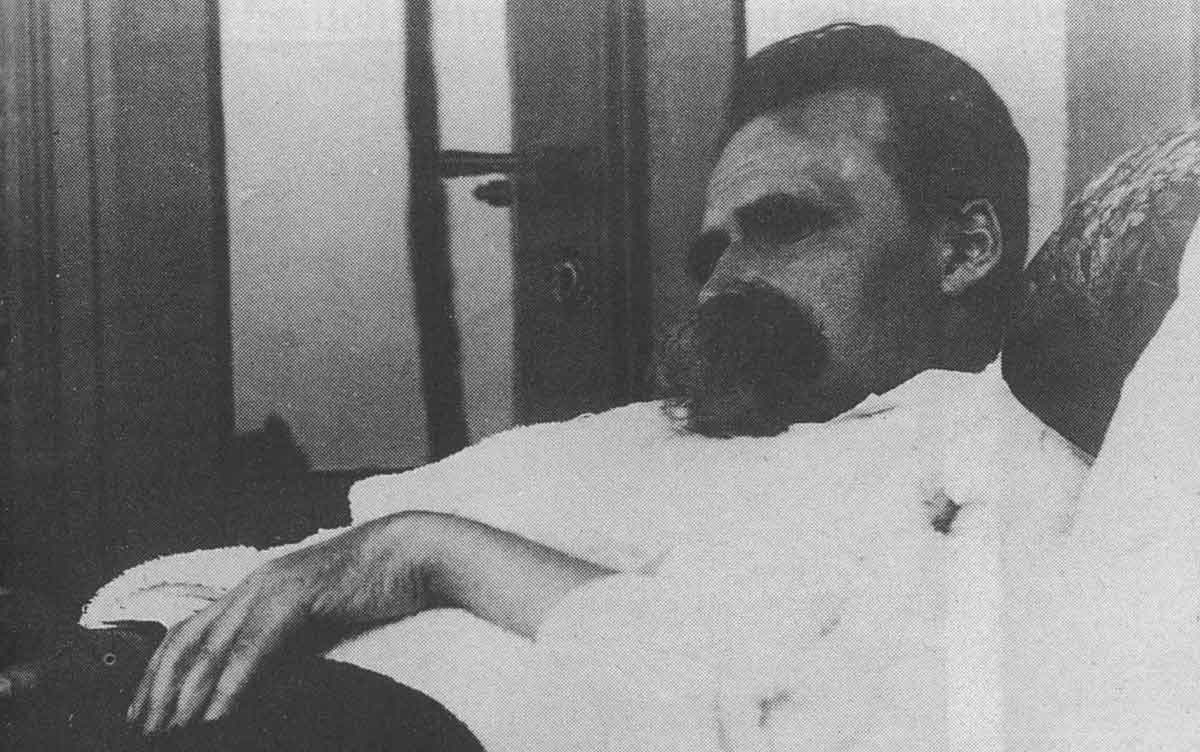
In a collection of his notes known as The Will to Power, Nietzsche writes:
The first question is by no means whether we are satisfied with ourselves; but whether we are satisfied with anything at all. Granting that we should say yes to any single moment, we have then affirmed not only ourselves, but the whole of existence. For nothing stands by itself, either in us or in other things: and if our soul has vibrated and rung with happiness, like a chord, once only and only once, then all eternity was necessary in order to bring about that one event,—and all eternity, in this single moment of our affirmation, was called good, was saved, justified, and blessed.
Nietzsche, The Will to Power (posthumously published notes), Note 1032
“Whether we are satisfied with anything at all.” This is the question Nietzsche asks us to consider. He suggests that a truly joyful moment is worth enduring and suffering. Such a thought may be impossible for some to accept. We may rightly ask how such a thought tallies with, say, the horrors of the Holocaust or other life-changing events. But for Nietzsche, the point stands. The eternal recurrence is the means by which we come to affirm—or not—our lives as they are.
Accepting Life as a Broad Canvas
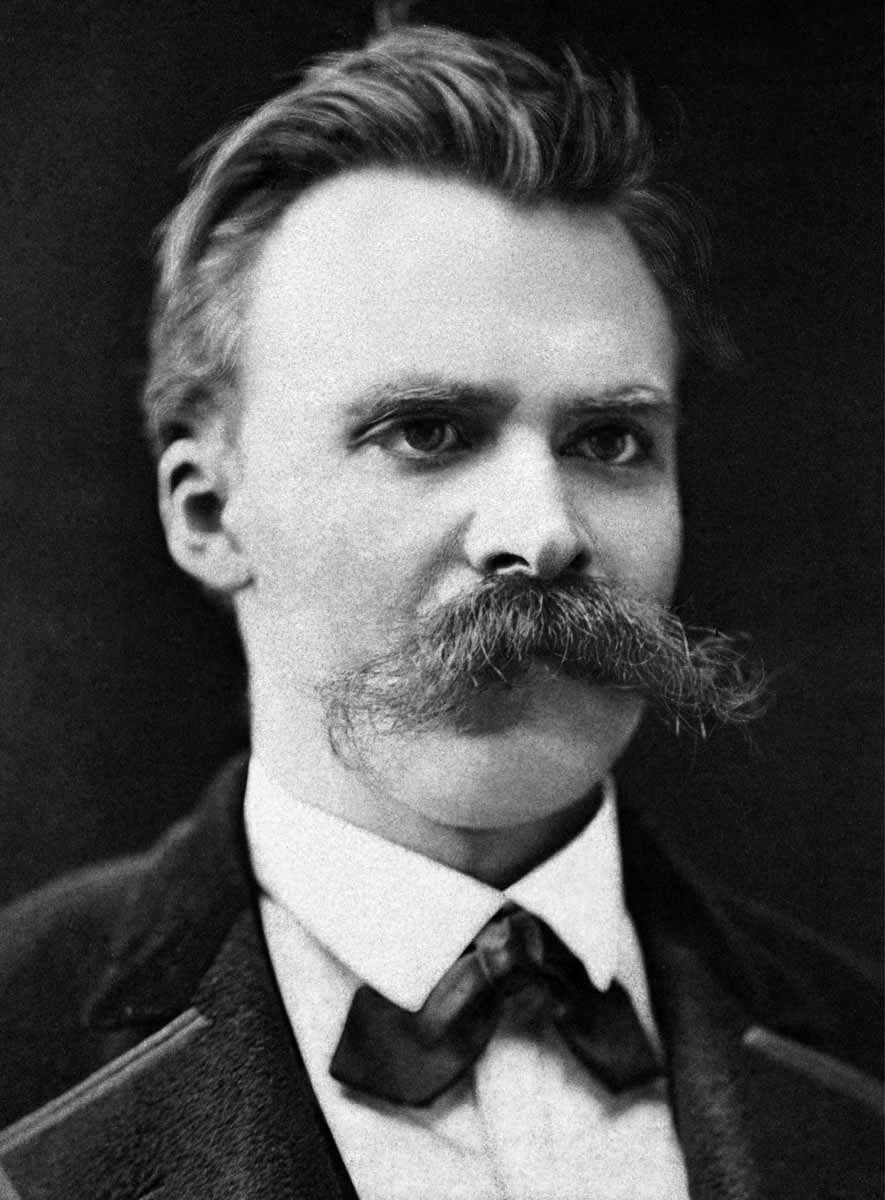
If we can look back and live that life again, accepting our sorrows as the price for our joys, then we can, according to Nietzsche, come to accept our present situation. We can see our lives not as a series of detached episodes, but as a process we are caught up in, one we can affirm. This act of life affirmation, “Bejahung” in German, is an essential aspect of Nietzsche’s thought.
In contrast, he suggests Christianity is life-denying, due to its focus on the next life, and not this one.
It is that moment that matters most to Nietzsche. The moment in which a person can say with confidence that they affirm what has brought them to that moment through a love of fate. Nietzsche’s own biography was hardly short of suffering. His father died at an early age, he suffered from poor physical health, and others failed to recognize his brilliance during his lifetime.
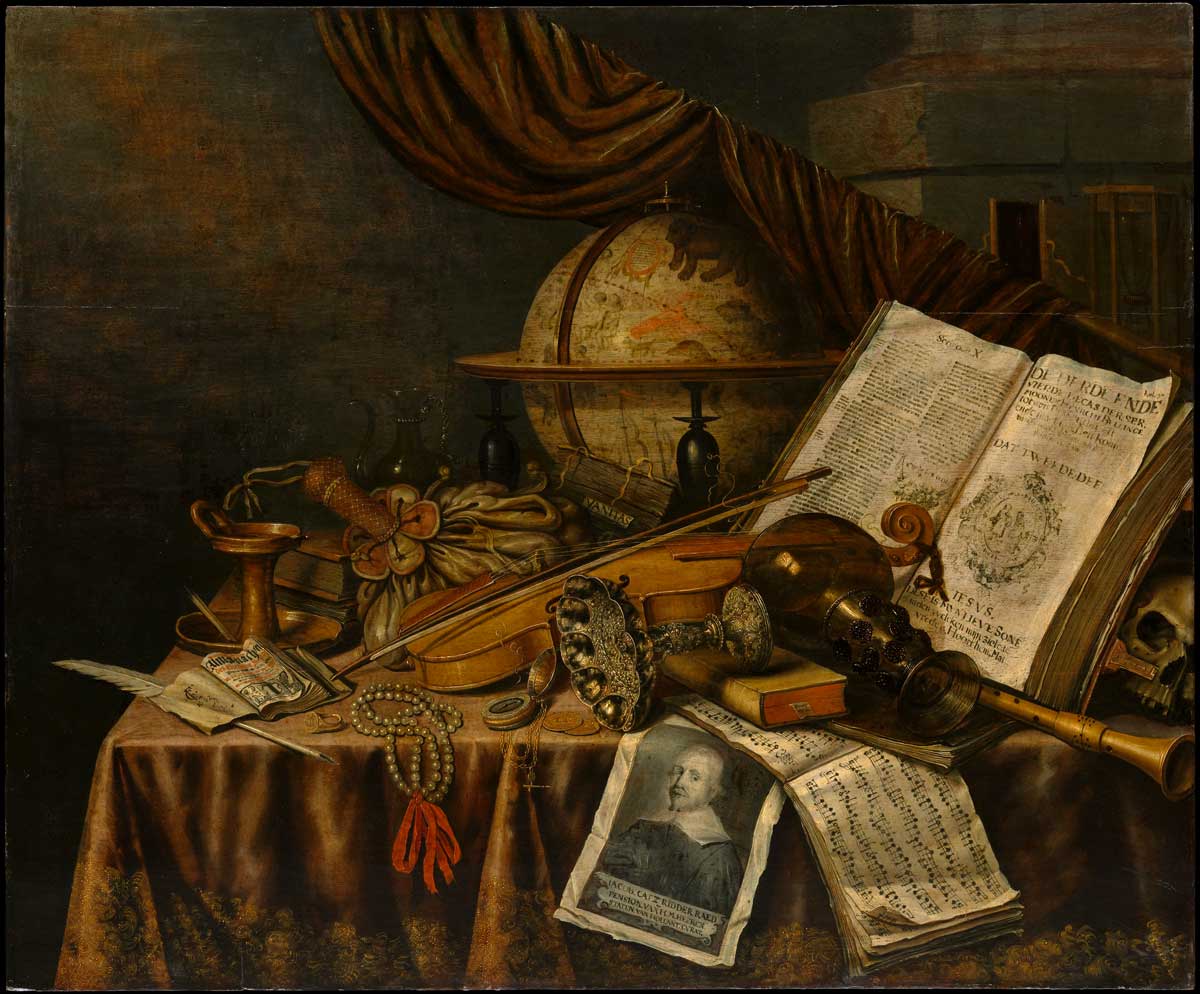
How Nietzsche viewed his own life is surely bound up with his account of eternal recurrence. He must have often asked himself the demon’s question. For Nietzsche, the eternal recurrence is both “the greatest weight” and that which has the power to set us free from the past. It allows us to accept everything in our lives as bringing us to the current moment, to embrace “amor fati” and the love of fate.
My philosophy brings the triumphant idea of which all other modes of thought will ultimately perish. It is the great cultivating idea: the races that cannot bear it stand condemned; those who find it the greatest benefit are chosen to rule…
Nietzsche, The Will to Power (posthumously published notes), Note 1053






