A character who appears early on in the Old Testament of the Bible is Nimrod. He is famous for being the first powerful king in the period after Noah’s Flood, and tradition also credits him with organizing the construction of the Tower of Babel. One aspect that makes him particularly fascinating is that many scholars argue he can be identified in the mythologies of other cultures, in particular the Greeks and Sumerians. Is there strong evidence for this, and what do we really know about Nimrod?
Who Was Nimrod in the Bible?
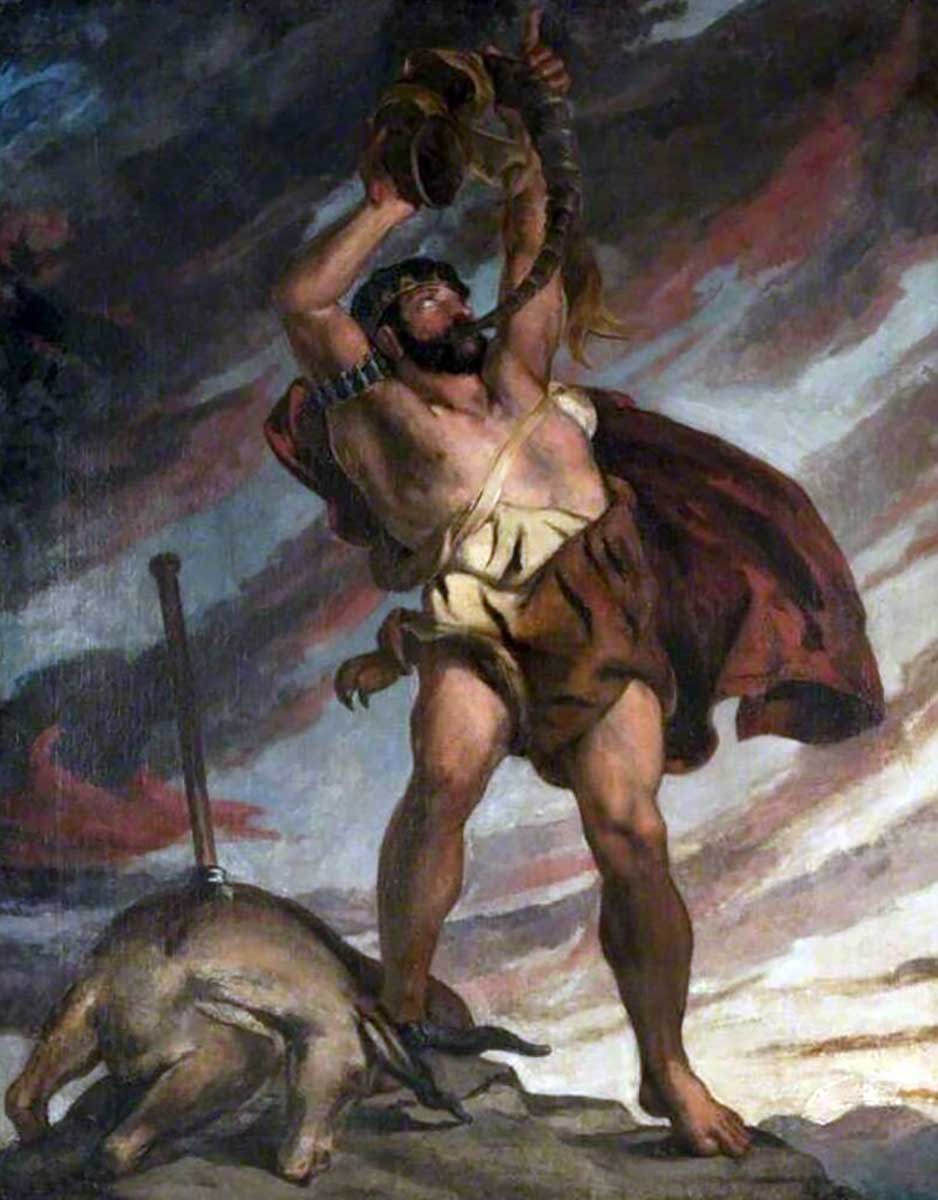
Our primary source for Nimrod is the Bible. He appears in the Book of Genesis shortly after the account of Noah’s flood. It is chapter 10, also known as the Table of Nations, that brings particular attention to him. The passage in question reads:
“Cush was the father of Nimrod, who became a mighty warrior on the earth. He was a mighty hunter before the Lord; that is why it is said, “Like Nimrod, a mighty hunter before the Lord.” The first centers of his kingdom were Babylon, Uruk, Akkad, and Kalneh, in Shinar. From that land he went to Assyria, where he built Nineveh, Rehoboth Ir, Calah, and Resen, which is between Nineveh and Calah, which is the great city.”
According to this, Nimrod was the great-grandson of Noah, since his father, Cush, was the son of Noah’s son Ham. Nimrod was a mighty hunter and the king of a vast kingdom. His territory included several prominent cities in Babylonia, including the city of Babylon. However, he also traveled north and conquered as far as Assyria, establishing cities in that region as well.
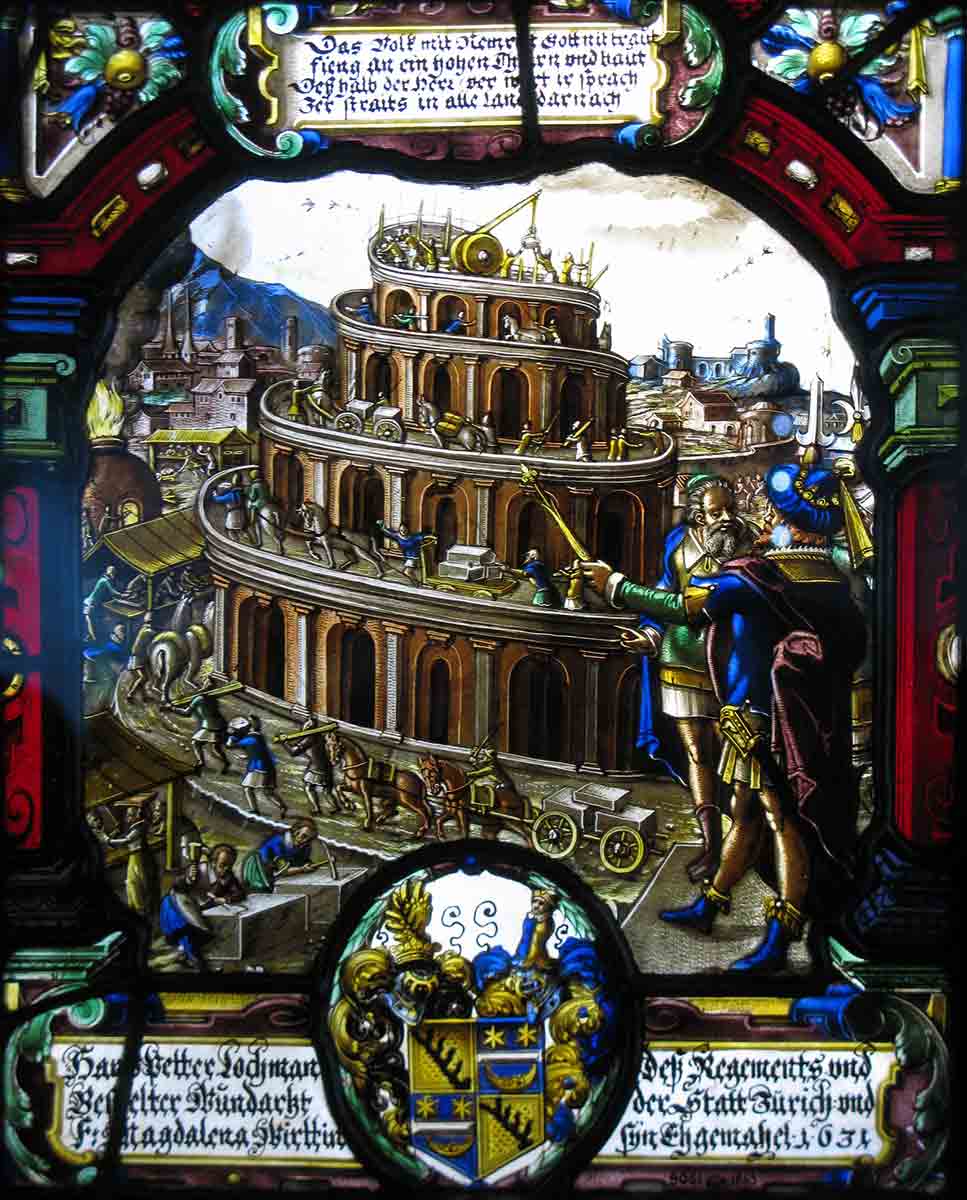
In the following chapter of the Book of Genesis, there is the account of the building of the Tower of Babel. The account does not explicitly mention Nimrod in connection with this event, but tradition holds that he was responsible for that construction project.
Nimrod in Sumerian Mythology
Given the close connection between the ancient Israelites and the peoples of Sumer in Mesopotamia, some scholars have attempted to identify the character of Nimrod in Sumerian mythology. After all, some of the earliest stories in the Bible, such as the flood myth, do have very clear parallels in the mythology of that region. Hence, in principle, it would not be unusual to find an equivalent to Nimrod among the tales of the Sumerians.
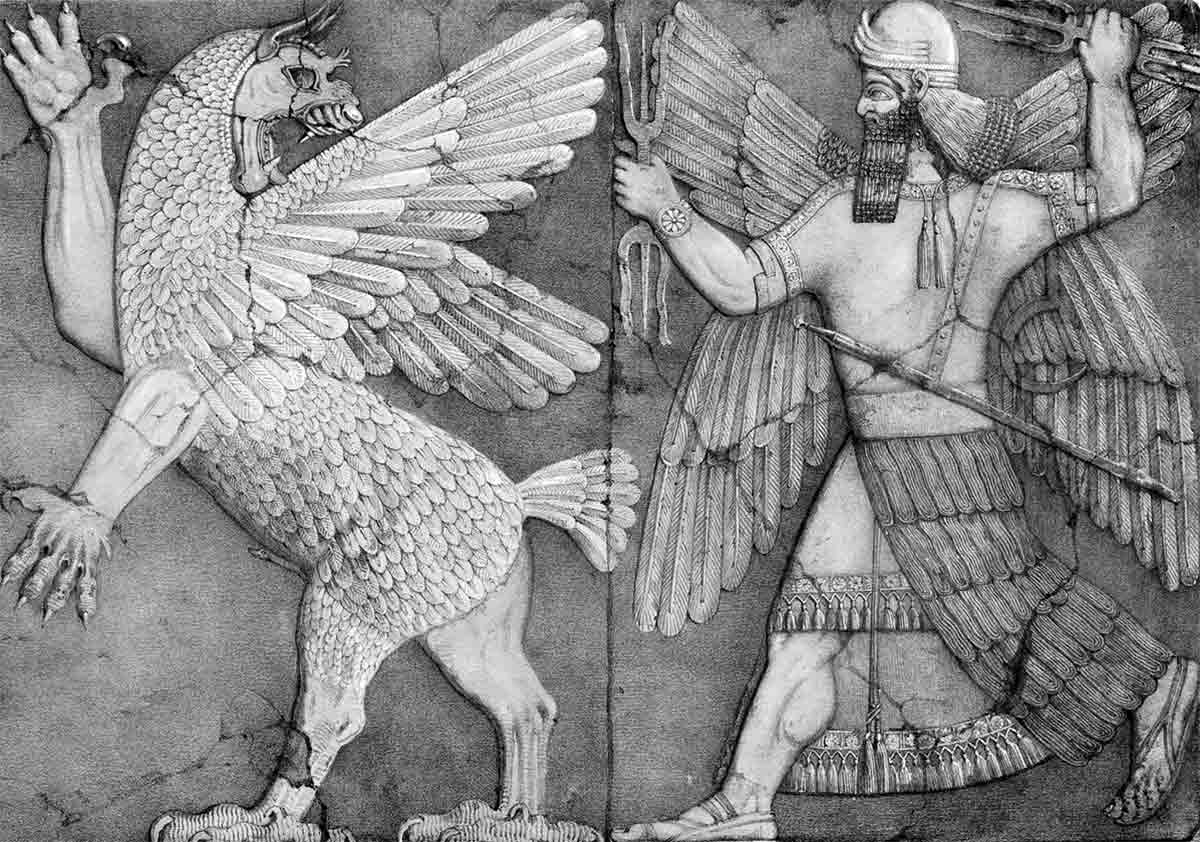
According to some scholars, the biblical figure of Nimrod can be equated with the Sumerian mythological figure of Ninurta. He was a god worshipped by the Sumerians, the Assyrians, and the Babylonians. Ninurta was the god of agriculture, hunting, and war. The connection between Ninurta and Nimrod is clear from those latter two associations, as well as their similar names. While numerous people in the Bible engaged in hunting, Nimrod is singled out as a “mighty hunter.” Hence, it would make sense for him to be equivalent to the god of hunting in Sumerian mythology. Furthermore, the detail that he created a large kingdom and engaged in conquests as far as Assyria makes it logical to connect him to a god of war. Additionally, there is very little difference between the name “Nimrod” and the name “Ninurta.” This is especially so when we remember that the ancient Hebrews did not include vowels in their writing system.
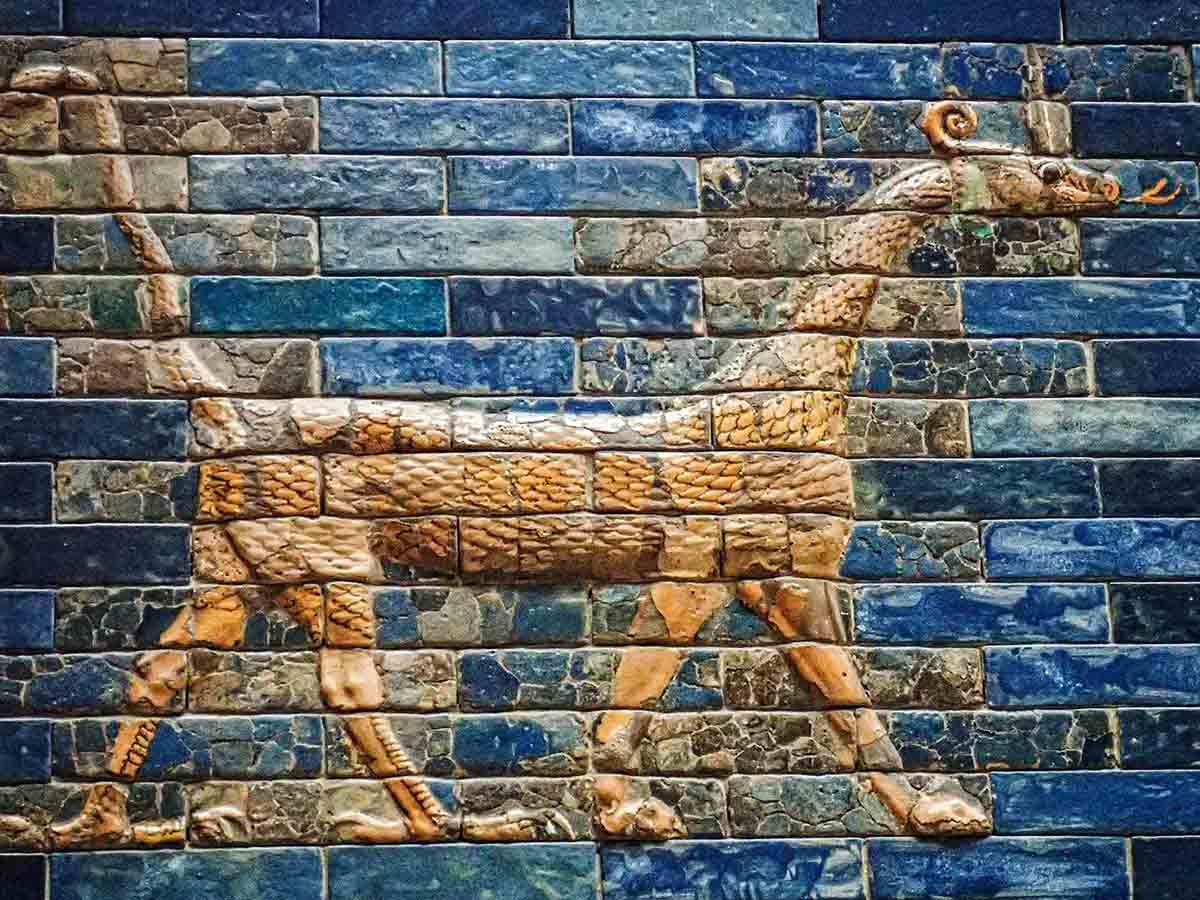
Another god with whom Nimrod has been identified is Marduk. He was the chief god of the Babylonians. Although Marduk was not directly associated with hunting or war, he was nevertheless portrayed as a powerful god who engaged in hunts and battles. Furthermore, like Ninurta, his name bears a similarity to the name of Nimrod. His name in cuneiform is “amar utuk.” Aside from the missing “N” at the beginning, this is not too far from the Hebrew “nmrd.”
However, perhaps the biggest reason why many researchers have attempted to identify Nimrod with Marduk is that a large ziggurat in Babylon was dedicated to this god. The temple was known as Etemenanki. There are various references to this enormous building in Babylon in ancient records, including an account of its restoration by the famous King Nebuchadnezzar II. As we saw earlier, tradition holds that Nimrod was responsible for the construction of the Tower of Babel. Numerous scholars believe that the story of the Tower of Babel was originally about the Tower of Etemenanki in Babylon. Given this, the logic is that Marduk, to whom Etemenanki was dedicated, should naturally be identified as Nimrod, the one who constructed the Tower of Babel.
While there is certainly some appeal to this idea, the evidence connecting Nimrod to Marduk is not especially strong. Between Ninurta and Marduk, the overwhelming consensus favors Ninurta as equivalent to Nimrod. In fact, an information board in the British Museum says, without qualification:
“Ninurta, the Assyrian god of war and farming, appears in the Bible as ‘Nimrod… a mighty warrior on the earth… a mighty hunter before the Lord.’”
Does Nimrod Appear in Greek Mythology?
What about Greek mythology? Similar to Sumerian mythology, there are some early stories in the Bible that have clear parallels in the stories told among the Greeks. Again, the story of Noah’s flood is an obvious example. Therefore, we might expect to find Nimrod in Greek mythology.
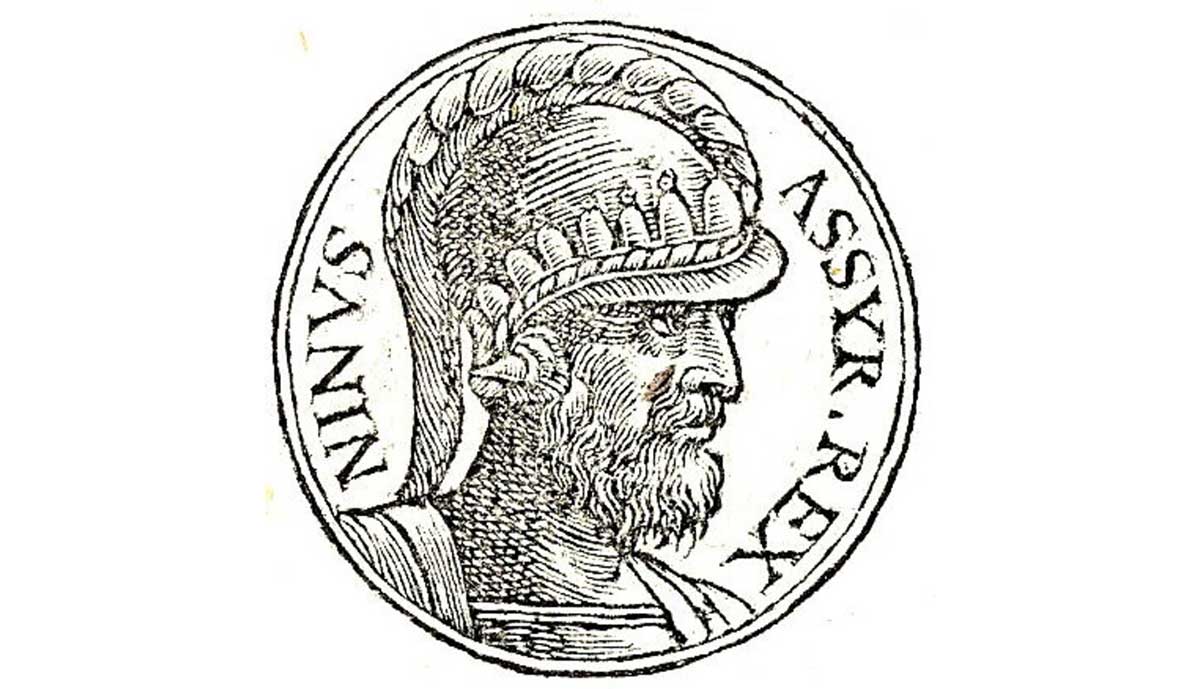
Interestingly, scholars often argue that one figure is equivalent to Nimrod. The figure in question is King Ninus. He appears in the writings of Ctesias, a Greek historian who wrote around 400 BC. Ctesias was recording Assyrian traditions, although his reliability has been called into question. In any case, according to the legend, Ninus was a king of Assyria early in its history. Ctesias’ chronology places him just before 2200 BC, which corresponds very well with when the Bible places Nimrod. Ninus was said to have conquered Babylonia, and he also engaged in conquests as far east as India and as far west as Anatolia. He even had influence over the region of Arabia to the south. Furthermore, he is said to have built a city and named it after himself, which was destroyed by the Medes when they defeated the Assyrians. This appears to be a reference to Nineveh, just as Nimrod is said to have founded Nineveh in the Bible.
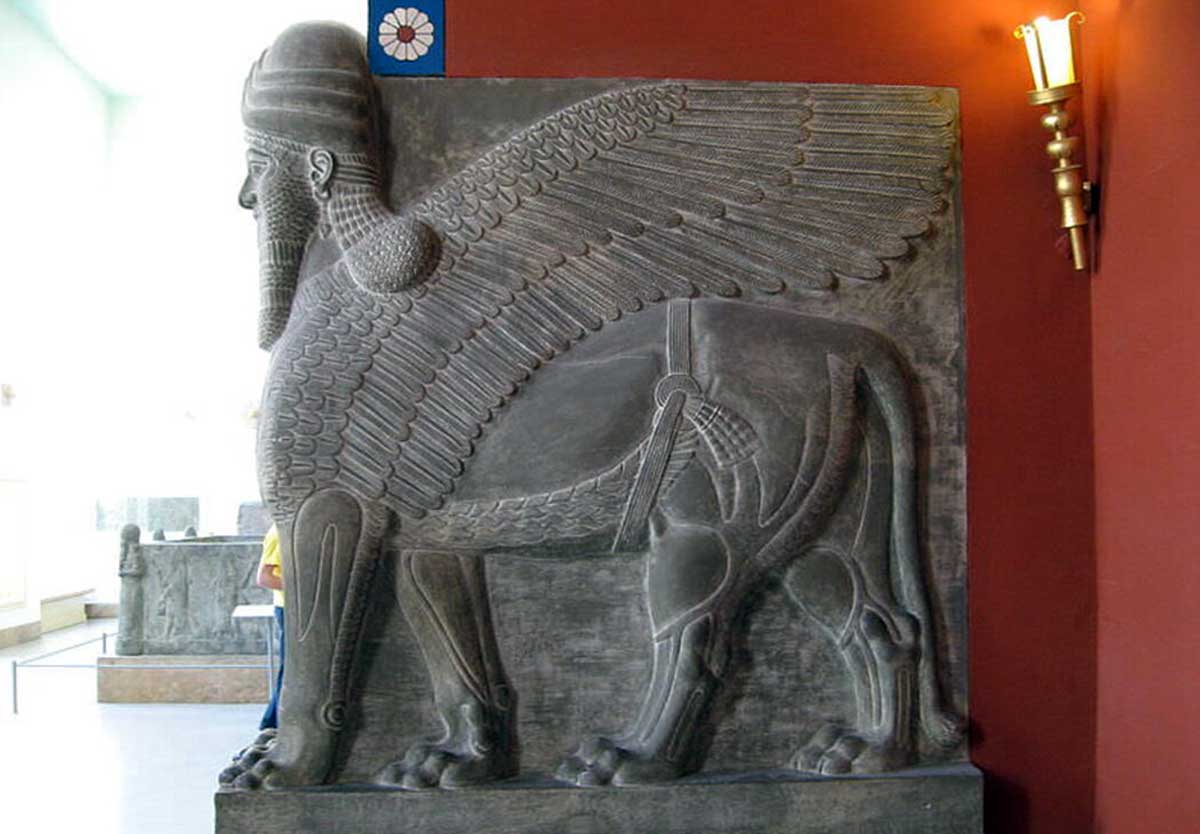
At first glance, it appears as if Ninus is undoubtedly the same as the Bible’s Nimrod. However, upon closer examination, we see that the evidence actually points to a very different conclusion. Rather than being identified as Nimrod, it appears that the legendary Ninus can actually be identified as Tukulti-Ninurta I. He was a historical king of Assyria in the 13th century BC.
Crucially, notice the fact that Ninus is not described as a king of Babylon who conquered Assyria. Rather, it is the reverse. He was a king of Assyria who conquered Babylon. This is the exact opposite of what Nimrod is said to have done. It does, however, match the activities of Tukulti-Ninurta I. Like Ninus, this historical king of Assyria was the king who greatly expanded Assyria’s borders and made it a major regional power. Furthermore, Ninus’ reported activities are so much greater than Nimrod’s that it strains credibility to equate the two, even accounting for exaggeration. On the other hand, Tukulti-Ninurta is recorded as having waged war as far as India (whether he actually did or not is another matter). He also defeated the Hittites in Anatolia and successfully campaigned in Arabia. As for the city, Tukulti-Ninurta I constructed a city and named it after himself. This was Kar-Tukulti-Ninurta.
What about Ctesias’ chronology? The truth is that Ctesias’ errors are very clear and demonstrable. He placed the fall of Assyria centuries too early, and he used an astonishing average generation length of 45 years. In reality, Ctesias’ claim that Ninus lived thirty generations before the last Assyrian king would place him precisely in the time of Tukulti-Ninurta I.
What Do We Know About Nimrod?
In conclusion, what do we know about Nimrod in the Bible and the stories of other cultures? Nimrod was said to have been the first mighty king after Noah’s flood, and he was a mighty hunter who was probably responsible for the construction of the Tower of Babel. It is likely that he can be identified as the Sumerian god Ninurta, the god of hunting and war. While a connection to Marduk cannot be ruled out, this identification is less convincing.
As for Greek records, many researchers have attempted to identify Nimrod with the legendary King of Assyria, Ninus, as mentioned in the writings of Ctesias. At first glance, he appears to be an excellent match. However, upon closer examination of the evidence, we find that there are some serious issues with this identification. In reality, King Ninus can be identified with Tukulti-Ninurta I.