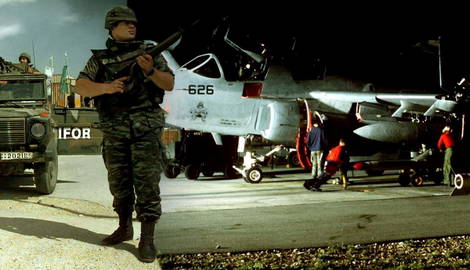

NATO’s bombing of the Bosnian Serb military in Operation Deliberate Force came in response to the worst massacres in Europe since the Second World War. This decision, while controversial, helped forestall additional massacres and forced the Serbs to accept Bosnian independence via the Dayton Accords.
The Bloody Stalemate in Bosnia
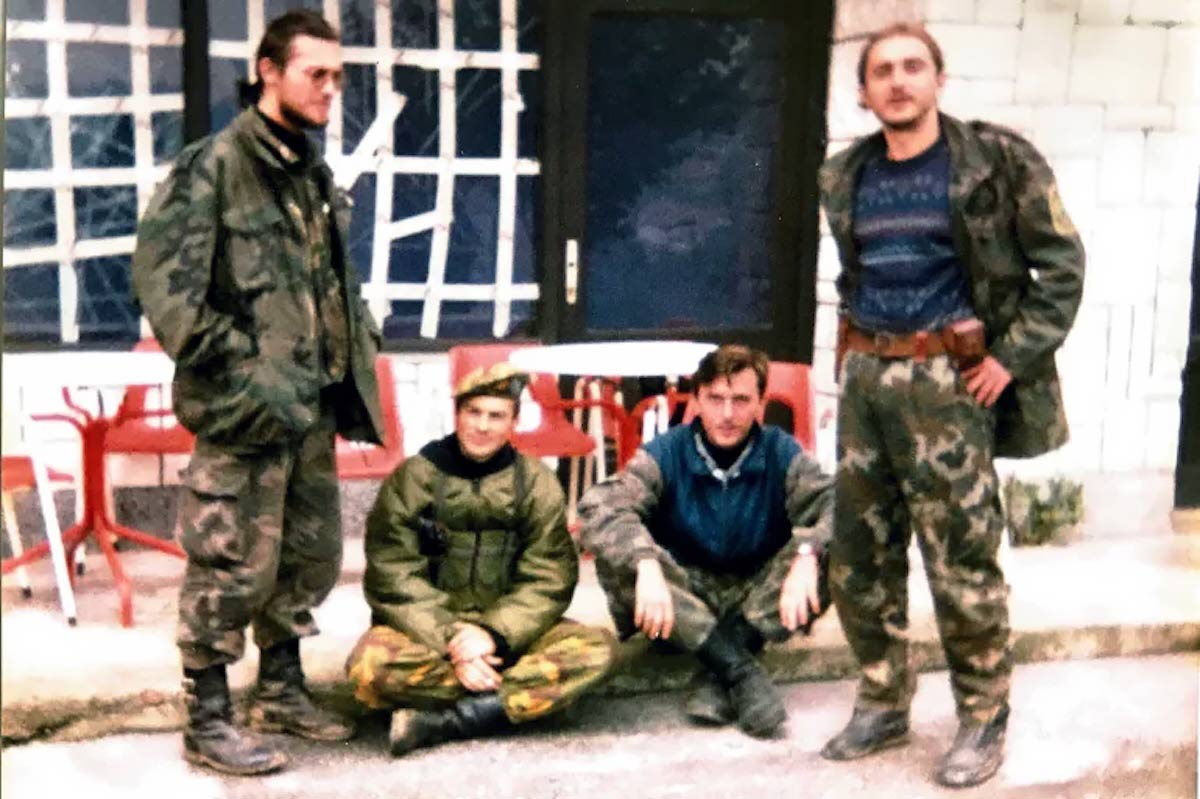
From 1992 to 1995, the small southeastern European country of Bosnia was engulfed in a brutal three-way war between the Bosniak (Bosnian Muslim) dominated Army of Bosnia-Herzegovina (ArBiH), Bosnian Croat militias, and the Bosnian Serb military (VRS). This conflict was a symptom of long-running ethnic tensions and the collapse of the former communist regime in Yugoslavia. The Bosnian Serbs, backed by the Serbian government in Belgrade, had a significant firepower advantage because they inherited the majority of the former Yugoslav military stockpiles. However, the Bosniaks and Bosnian Croats managed to fight the VRS to a bloody stalemate during the early stages of the war.
VRS forces, commanded by the infamous general Ratko Mladić, laid siege to several major population centers, including the Bosnian capital of Sarajevo in 1993. Hundreds of thousands of artillery and mortar rounds fell into the city, causing tens of thousands of casualties. Attempts by ArBiH and Croat forces to break the siege failed, but the defenses never collapsed. It became fairly clear what the Serbs’ intentions were: to ethnically cleanse any non-Serb in the territory they considered to be theirs.
In an attempt to get all parties to the negotiating table, the UN passed a resolution declaring an arms embargo on the entire country. This benefited the VRS, as they had considerable supplies already and received covert assistance from Serbia. The Bosniaks and Croats were forced to smuggle in large amounts of weaponry while the United States turned a blind eye. To enforce the UN’s mandate, a peacekeeping force called UNPROFOR arrived in June 1992.
Srebrenica and the Markale Market
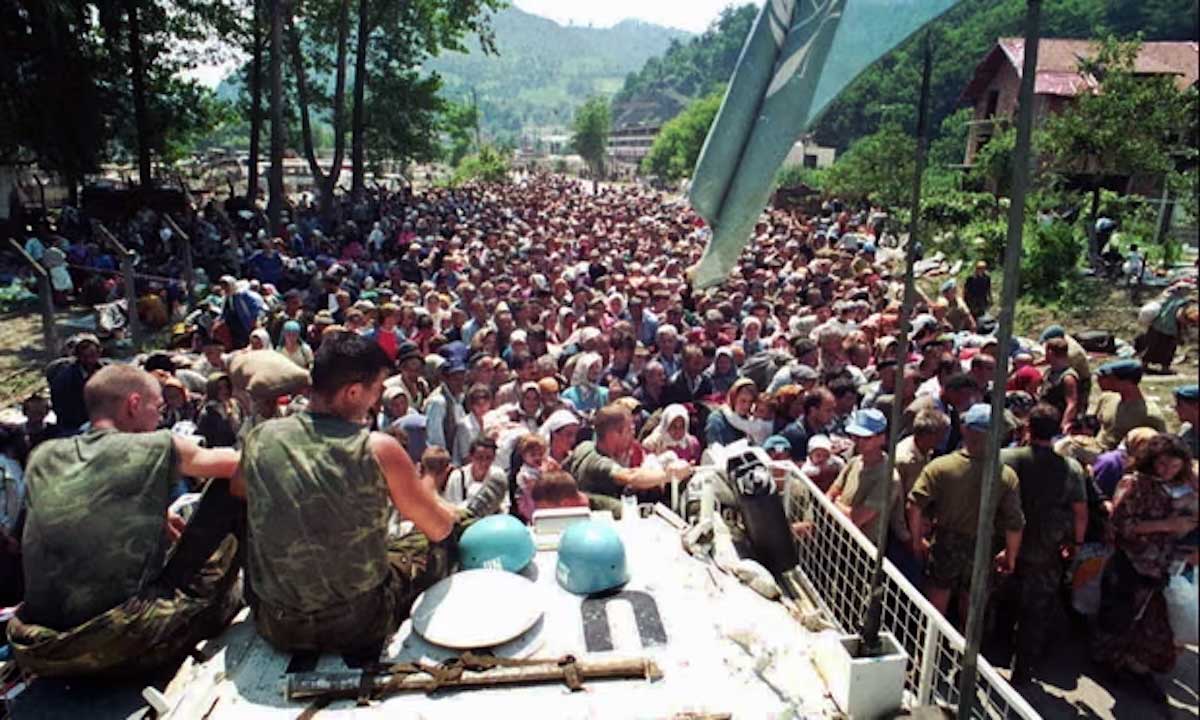
This UN multinational force, composed of troops from Europe and throughout the Muslim world, gained an infamous reputation for failing to stop the many atrocities committed during the war. Because it lacked a peace enforcement mandate, all its personnel could do was observe the conflict, attempt to disarm the combatants peacefully, and provide humanitarian aid. Some of its officers were found to have leaked information and provided arms to both the VRS and the ArBiH. Civilians on both sides, especially Bosniaks, became infuriated with UNPROFOR’s failure to prevent atrocities.
In July 1995, the UN’s credibility in Bosnia was shattered when VRS forces committed the worst atrocity Europe had seen since WWII under the eyes of helpless Dutch peacekeepers who were poorly equipped for the task. Mladić’s Drina Army Corps of the VRS overran a Dutch outpost near the town of Srebrenica and took tens of thousands of Bosniaks hostage. After forcing the Dutch troops to help separate men and boys from the women and girls, they began murdering thousands of people. This massacre, which would later be designated an act of genocide, horrified much of the world and led to demands for Western powers take action to stop the VRS from committing further atrocities.
While the massacre did not lead to immediate NATO action, an additional atrocity, broadcast around the world on live television, proved to be the tipping point. On August 28, 1995, several Serb mortar rounds hit a market known as the Sarajevo Markale, which was regularly used by the city’s residents. The strikes, which killed 43 people and wounded 84, convinced NATO leadership that decisive action needed to be taken to stop the VRS.
From Peacekeeping to Air Strikes
As part of the UN mandate to stop the war, NATO forces created a no-fly zone over Bosnia in Operation Deny Flight. This had little impact on the VRS’s military activity but enabled NATO aircraft to undertake bombing missions. President Bill Clinton’s administration, supported by US Envoy to the Balkans Richard Holbrooke and French President Jacques Chirac, began pushing for an operation at the July London Conference. NATO’s secretary general, Willy Claes, pushed for the withdrawal of the dual-key mechanism in which a UN official had to greenlight strikes. At the same time, British Lieutenant General Rupert Smith began withdrawing UNPROFOR units from exposed positions so that the VRS couldn’t attack them.
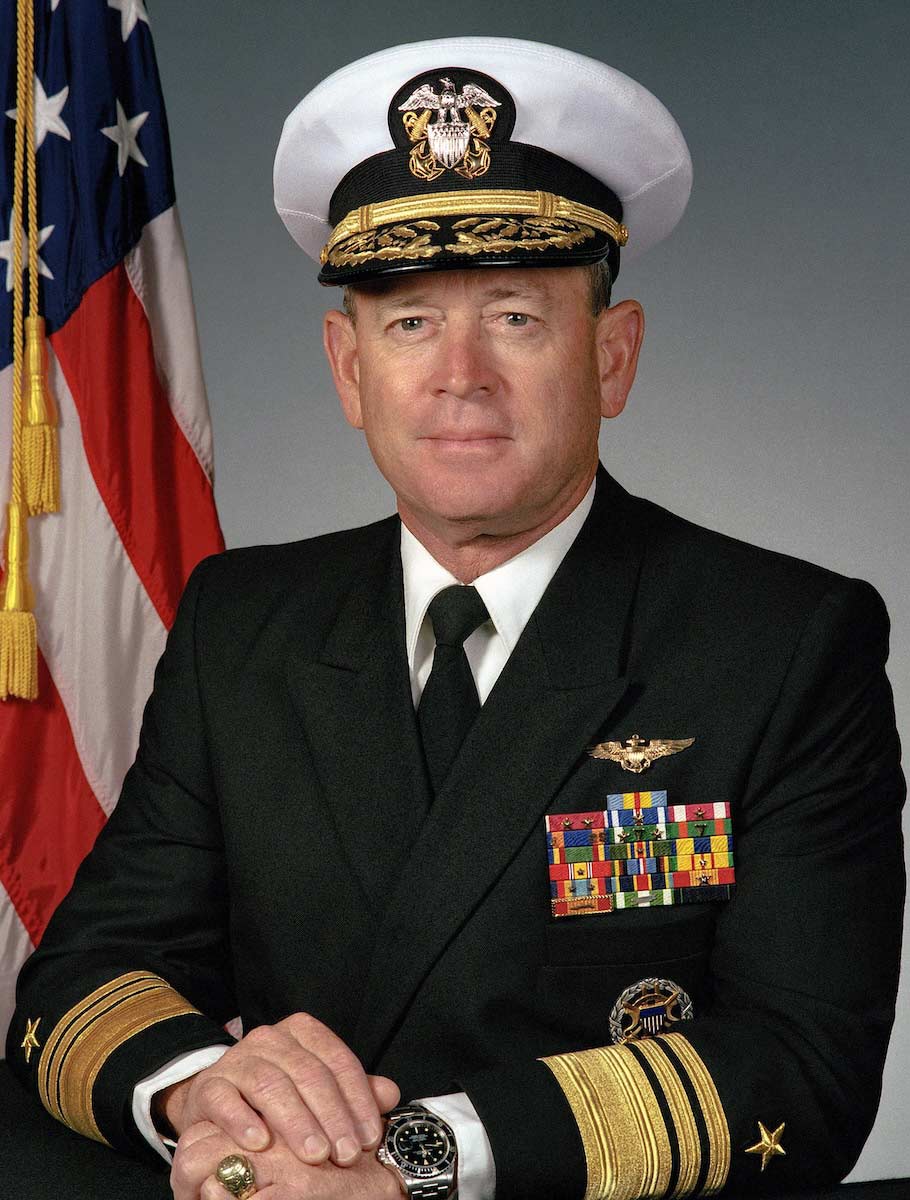
Admiral Leighton Smith, who was appointed supreme commander of the pending Operation Deliberate Force, came up with a dual-pronged plan. From the air, around 400-500 NATO planes would target VRS positions throughout Bosnia, focusing primarily on its heavy weapons. This would be accompanied by an Anglo-French-Dutch task force on the ground known as the Rapid Reaction Force (RRF), which would fire artillery at the Serb batteries surrounding Sarajevo. Once the Bosnian Serbs sued for peace, a new NATO-led force would arrive to oversee peace enforcement.
NATO leaders were willing to help Bosnian Muslim and Croat civilians but did not trust their leadership. Both factions had been fighting each other in addition to the Serbs and were accused of aligning with criminal gangs and international jihadist organizations. While NATO commanders did not coordinate with ArBiH or the Croats on the ground, Holbrooke did encourage the Bosnian and Croatian presidents to mount offensives to push the VRS back after the bombing began.
Dismantling the VRS’s Military Infrastructure
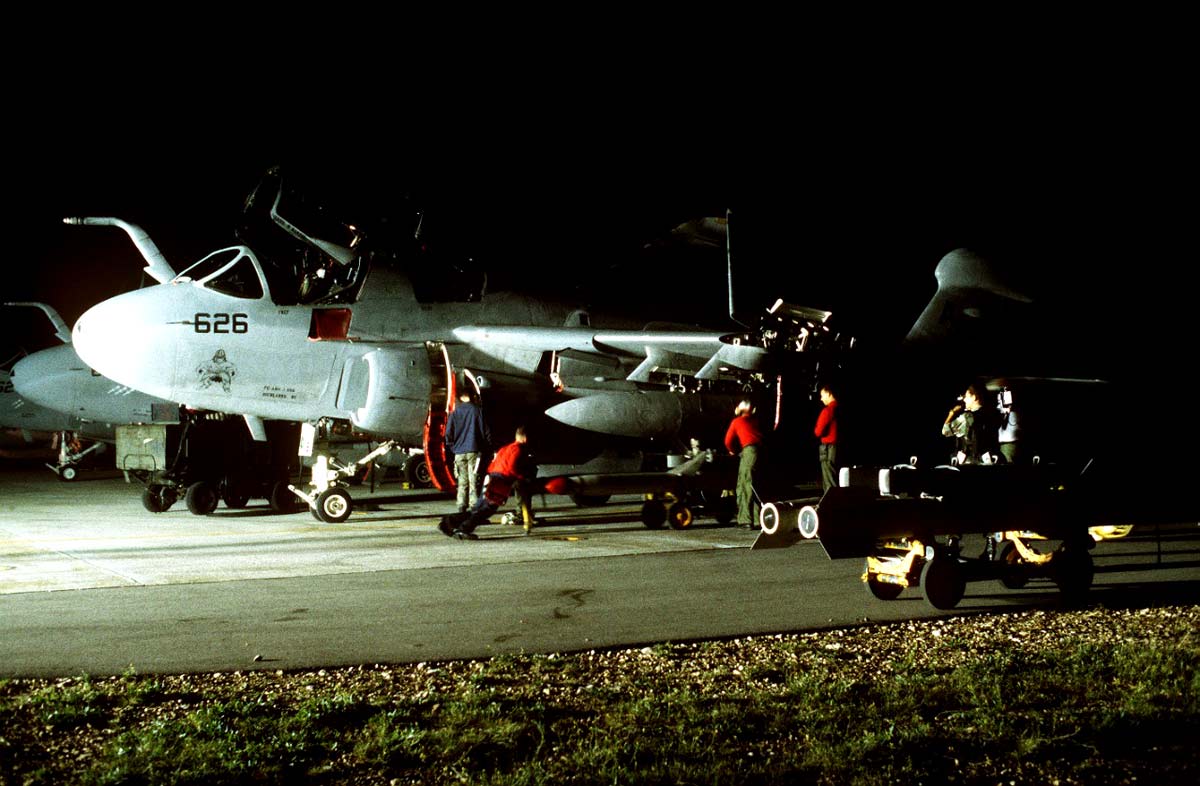
Operation Deliberate Force began on August 30. The Bosnian Serbs lacked an effective air force to counter the strikes, but they did have a lot of air defense systems that made NATO’s sorties perilous. For instance, on the first day of the strikes, a VRS anti-air launcher shot down a French Mirage 2000N. However, the attacks continued apace. From August 30 to September 20, NATO airmen flew 3,515 sorties and dropped 1,026 bombs. The rate of ordnance dropped exceeded anything the VRS had been accustomed to dealing with to that point in the war.
At the same time, the European RRF began hammering Bosnian Serb positions around Sarajevo in order to force Mladić’s troops and heavy weapons to pull back. Sarajevo’s civilians and Bosnian defenders were thrilled to see the VRS suffer heavy losses. Well over 600 shells were fired from the RRF’s batteries on Mount Igman, causing significant damage to VRS positions around the city. While this took place, the Bosnian and Croatian militaries began their own offensives, taking advantage of the VRS’s weaknesses.
While the Bosnian Serbs were well-armed and knew that NATO action was a serious possibility, they were caught off guard by the sheer amount of firepower used. Their personnel losses from the bombing were not particularly heavy but they lost a lot of equipment, which had been their main advantage during the war on the ground. Additionally, the psychological shock of the intense bombing campaign and the threat of ArBiH advancing on the city of Banja Luka (the Bosnian Serb capital) forced Mladić and Bosnian Serb leader Radovan Karadžić to accept demands for a ceasefire.
Dayton Accords and the End of the War
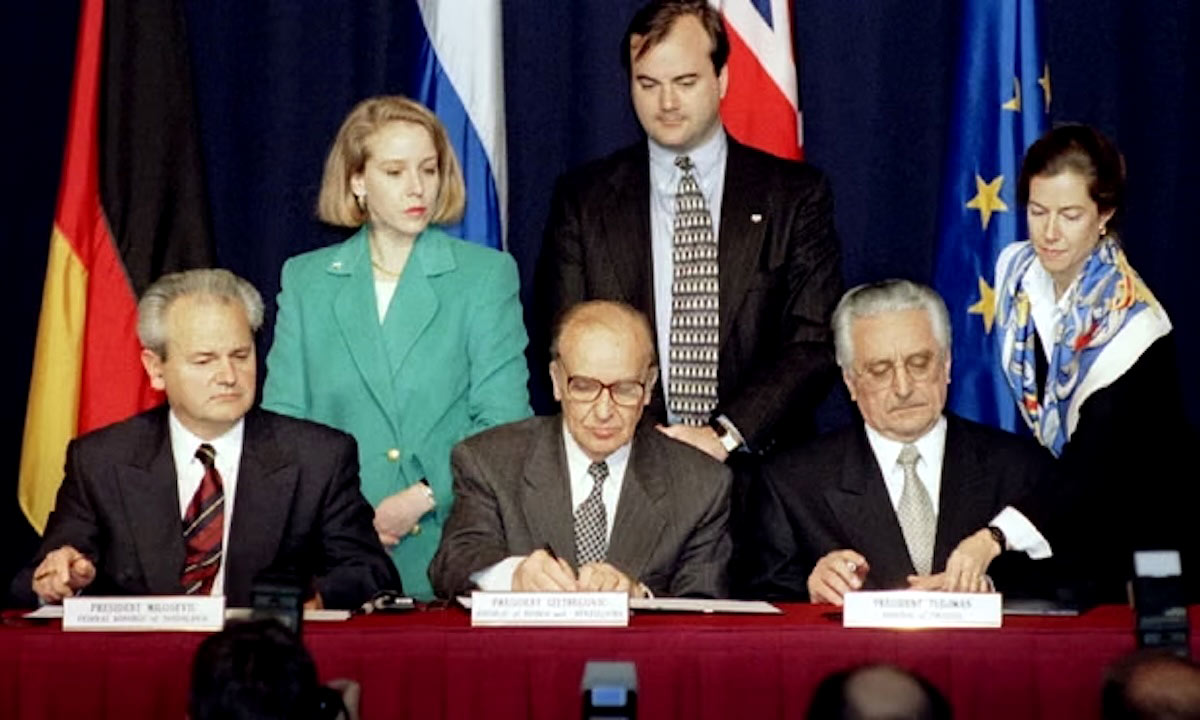
In early November, Richard Holbrooke managed to get the presidents of Bosnia, Serbia, and Croatia to meet at Wright-Patterson Air Force Base in Dayton, Ohio. The Bosnian Serb and Bosnian Croat leaders were not welcome because some of them were under international indictment for war crimes and they opposed the negotiating terms that were under consideration. Serbian president Slobodan Milošević agreed to make significant concessions to the Bosnians and NATO because he was exhausted by the war and the sanctions placed on Serbia. President Franjo Tuđman of Croatia also supported NATO’s demand for an independent Bosnia with autonomy for all ethnic groups, against the wishes of the Bosnian Croats.
From November 1 to the 21, the negotiators deliberated over the boundaries that were supposed to separate the Bosniaks, Croats, and Serbs. Individual towns, roads, and bridges were subjected to examination. While the Bosniaks wanted a central government in Sarajevo that would control the entire country, Holbrooke and other NATO diplomats feared an exodus of ethnic Serbs from the country.
The Dayton Accords managed to stop the bloodshed, but it led to the creation of a weak and fractious state that has continued to suffer from instability. Bosnia was split into two autonomous enclaves: the Federation of Bosnia-Herzegovina and the Republika Srpska. A three-way presidency was created and separate legislatures for each ethnic group. Lastly, an international peacekeeping force was to be stationed in the country that would be much stronger than UNPROFOR had been.
The Legacy of Operation Deliberate Force
Operation Deliberate Force proved to be a very successful operation that stopped the Bosnian War and allowed displaced people to return home. It also decisively reversed the momentum that the Bosnian Serbs had gained. In a mere few weeks, NATO planes managed to destroy much of the VRS’s equipment and enabled a Bosnian army offensive that retook much of the country. It did so at a lower cost than the coalition air offensive against Iraq during Operation Desert Storm. For advocates of the use of strategic air power as a foreign policy tool, Deliberate Force was a textbook campaign.
In the late 1990s, NATO launched massed air strikes against the Serbian military in Operation Allied Force during the Kosovo War. These strikes, more widespread than Deliberate Force, struck Serbian military equipment all across Kosovo and Serbia and hit Belgrade’s infrastructure. Again, the strikes helped force Milošević to the table and contributed to his ouster from power. These strikes followed the template of Deliberate Force, showing how NATO’s actions in Bosnia set a precedent.
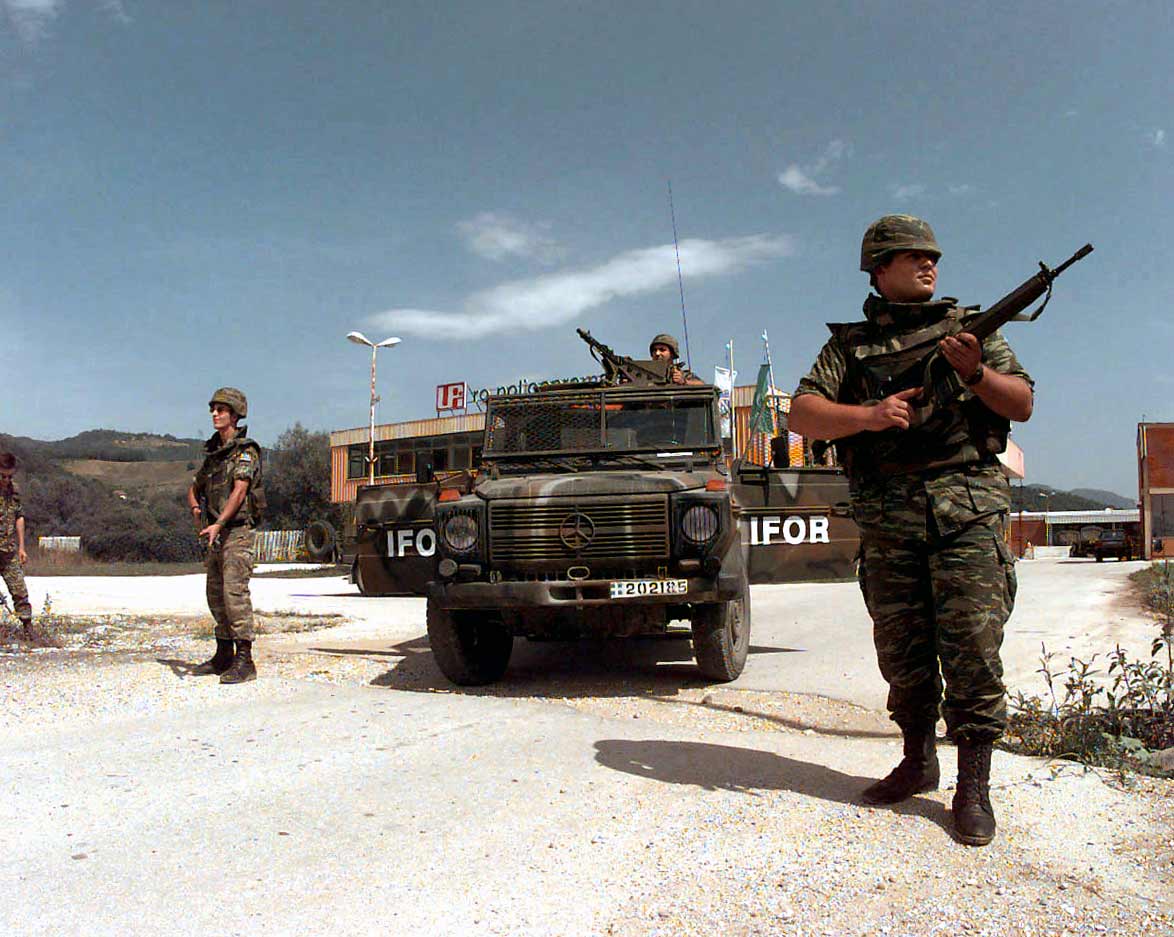
The postwar peacekeeping mission, Implementation Force (IFOR), proved to be very successful in stopping the violence and disarming many of the combatants. However, the Bosnian state never fully recovered and is today considered Europe’s most dysfunctional state. The Bosnian Serbs were bitter about losing the war and insisted on creating political gridlock to ensure that the state could not function properly. The Bosniaks and the Croats were also angry that the state was not unified under their control. Elements of NATO’s peacekeeping mission are still deployed there and the economy has been stagnant. While Deliberate Force proved to be a spectacular military success, the failure to create a robust peace plan after the war has hobbled Bosnia’s prospects ever since.