
Various navies throughout antiquity and the medieval era rank among history’s most successful maritime forces. Athens pioneered our notions of sea power; Rome secured the entirety of the Mediterranean while her successor Byzantium preserved maritime supremacy via resilience and innovation. Venice would establish an unsurpassed commercial-naval empire, and the Ming Empire demonstrated unmatched scale and reach. Together these navies transformed warfare, diplomacy, and empire.
1. The Athenian Navy: Ancient Greek Sea Power
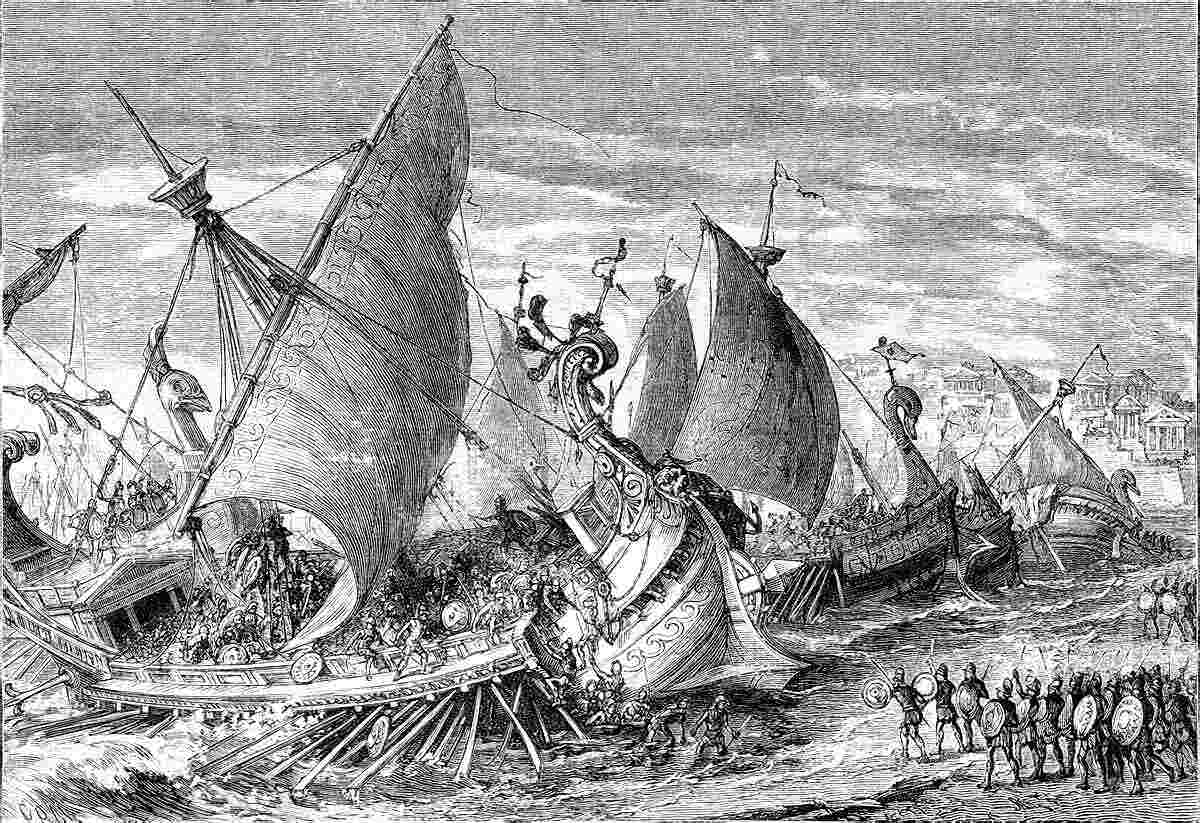
Of all the city-states of ancient Greece, Athens was best known for its maritime character. The Athenians were pivotal in defeating the Persian Empire at the Battle of Salamis in 480 BC, where their fleet was commanded by Themistocles, one of the most gifted soldier-statesmen in antiquity.
In the decades following Salamis, Athens consolidated its position as a naval superpower, effectively controlling the Aegean and much of the Eastern Mediterranean. The socio-economic impacts that followed dramatically altered Athenian civilization, enabling them to further embrace radical notions of democracy. Indeed, their naval fleet acted as a microcosm of Athenian society as the lower classes served in the navy as oarsmen, a unique form of citizen-soldier participation in the ancient world and constituting the nucleus of Athenian naval power.
The principal warship of the Athenian Navy was the trireme, named for its three banks of oars. At their peak the Athenians maintained a massive fleet of 400 ships and 80,000 personnel, dwarfing any other Greek polis. Athens’ superbly trained crewmen and knowledgeable naval officers enabled the city to become the uncontested naval power of the Eastern Mediterranean in the period leading up to the Peloponnesian War, the so-called Golden Age of Athens.
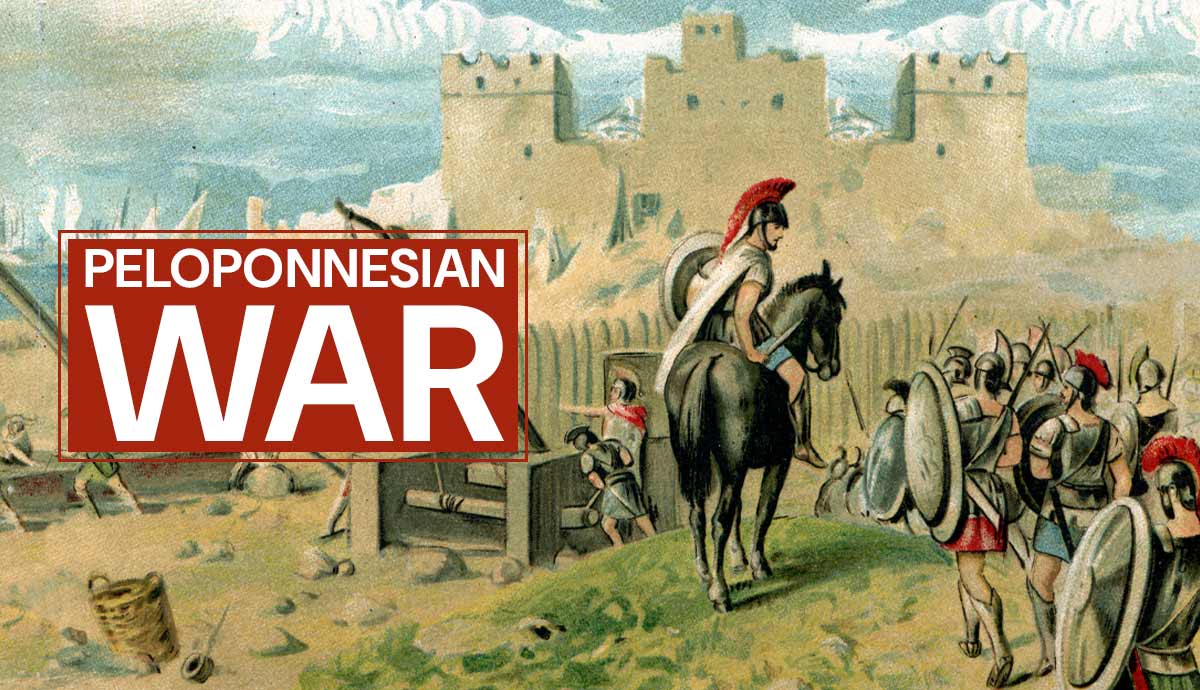
In 431 BC, Athens, the preeminent sea power, found itself at war with Sparta, the dominant land power in Greece. The Athenians planned to avoid battle on land while exploiting its naval dominance. However, over the next three decades Athens would find itself locked into stalemates and strategic quagmires culminating in the disastrous Sicilian Expedition (415–413 BC) and surprising loss to Sparta in the naval battle at Aegospotami in 405 BC. Despite their ultimate defeat, Athens has served as the precursor of naval empires and maritime states throughout history.
2. The Roman Navy: Mastering the Mediterranean
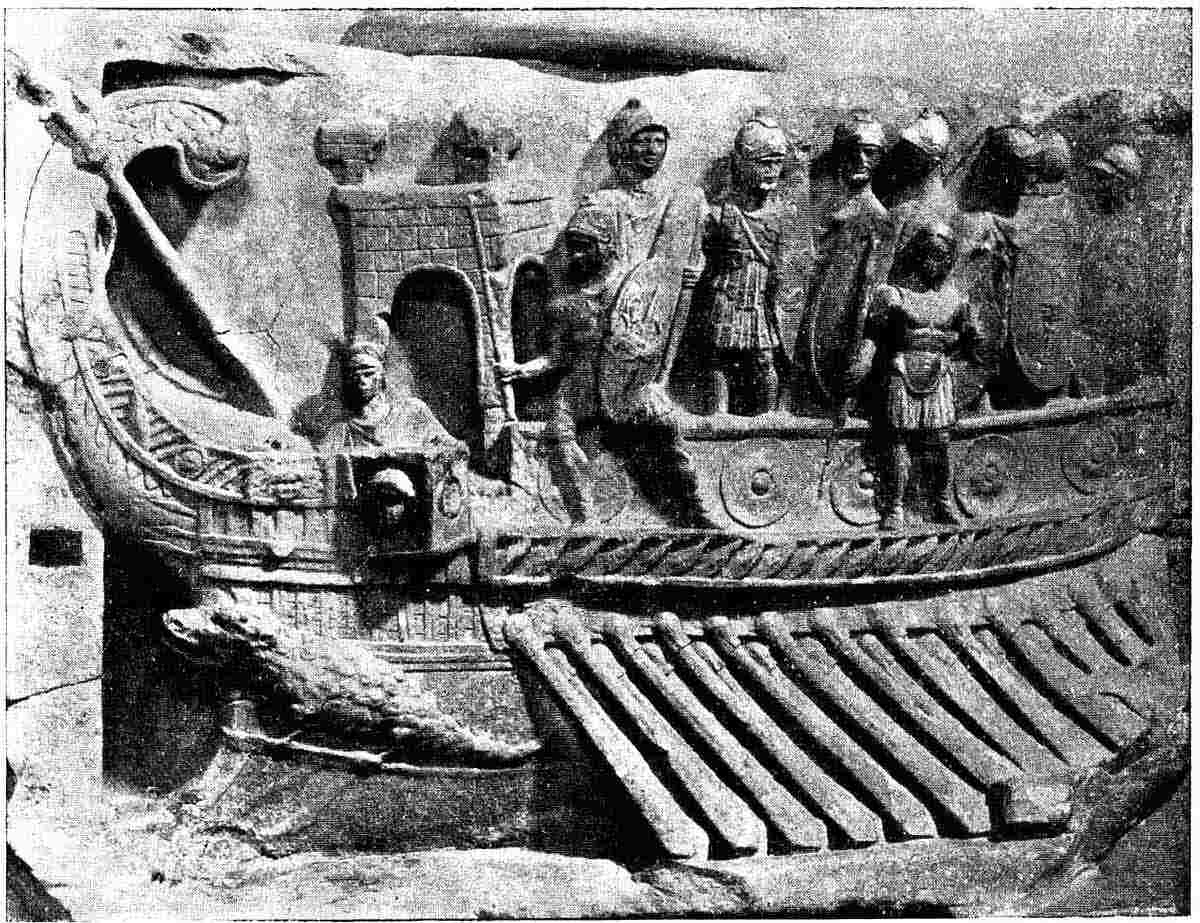
While frequently overlooked, the naval forces of the Roman Empire were pivotal in its early expansionism and consolidation of imperial borders. The navy’s initial “baptism by fire” came during the First Punic War (264 BC), when the budding Roman state contested for control of Sicily with Carthage, the dominant Mediterranean power. Employing experienced Greek sailors and adopting the tactics of their adversaries, the Romans would eventually emerge victorious in the conflict, achieving victories such as the colossal Battle of Cape Ecnomus in 256 BC.
Following their victory, the Romans would sustain their naval forces by recruiting skilled engineers throughout their empire and employing the latest advances in maritime technology and construction. After vanquishing its Carthaginian adversaries in the Third Punic War in the 140s BC, Rome emerged as the uncontested master of the Western Mediterranean. The Romans used their navy to encroach further into North Africa and the Eastern Mediterranean.
By the time Augustus established the Roman Empire, the Mediterranean was now a Roman Lake. The Roman navy secured vital and lucrative trade routes, particularly those from the Levant and Egypt. The navy also transported the famed Roman legions to frontlines and garrisons spanning the empire. Though never as renowned as the legions themselves, the navy played a crucial role in the rise of Rome. The city would never have been more than a regional Italian power had it not invested heavily in its maritime capabilities.
3. Byzantine Navy: The Shield at Sea
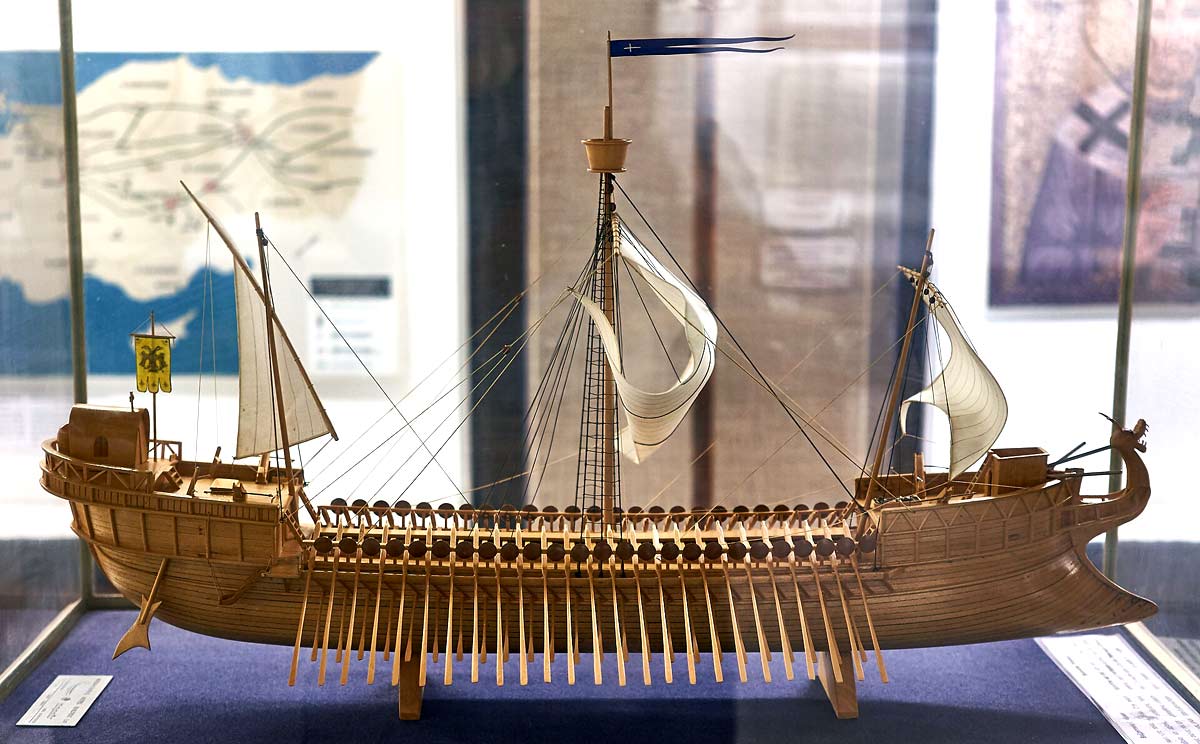
The Eastern Roman or Byzantine Empire was sustained for centuries even when overwhelmed by numerous adversaries. Though their versatile armies and sophisticated fortifications were pivotal to their longevity, their naval contributions are routinely overlooked. The Byzantine Navy was expertly commanded and successfully thwarted several attempted conquests of their capital Constantinople. Although the Mediterranean ceased to be an integrated Roman Lake, the Byzantines maintained maritime supremacy in vast swaths of the eastern portion, maintaining suzerainty in the Aegean, Adriatic, Ionian, and Black seas for centuries.
During periods of constant warfare on multiple fronts, the Byzantine Navy was vital in moving soldiers and supplies rapidly. Byzantine warships tended to be versatile as they were often needed and requisitioned for trade when not engaged in conflict. The most common Byzantine warship was the dromon which contained two to three sails powered by oars. The platforms could hold numerous archers and spearmen, but the most notorious weapon employed by the Byzantines was Greek Fire. An incendiary weapon which could be projected from ships, Greek Fire wreaked havoc on invading fleets, specifically the Arabs in 717 AD and raiders from Rus’ in the 10th century. Greek Fire would remain one of the Byzantines’ most feared and effective forms of weaponry until the 12th century when it mysteriously ceased to be used.
The Byzantine Navy continued to rule the waves of the Eastern Mediterranean until its power was gradually eclipsed by the burgeoning fleets of the Italian city-states, principally those of Genoa and Venice in the 11th and 12th centuries. As its navy waned, so too did the empire, and without its strong naval arm the Byzantines became increasingly vulnerable to encroaching adversaries until Constantinople was finally conquered by the Ottoman Turks in May 1453.
4. Venice: The Fleet of Saint Mark
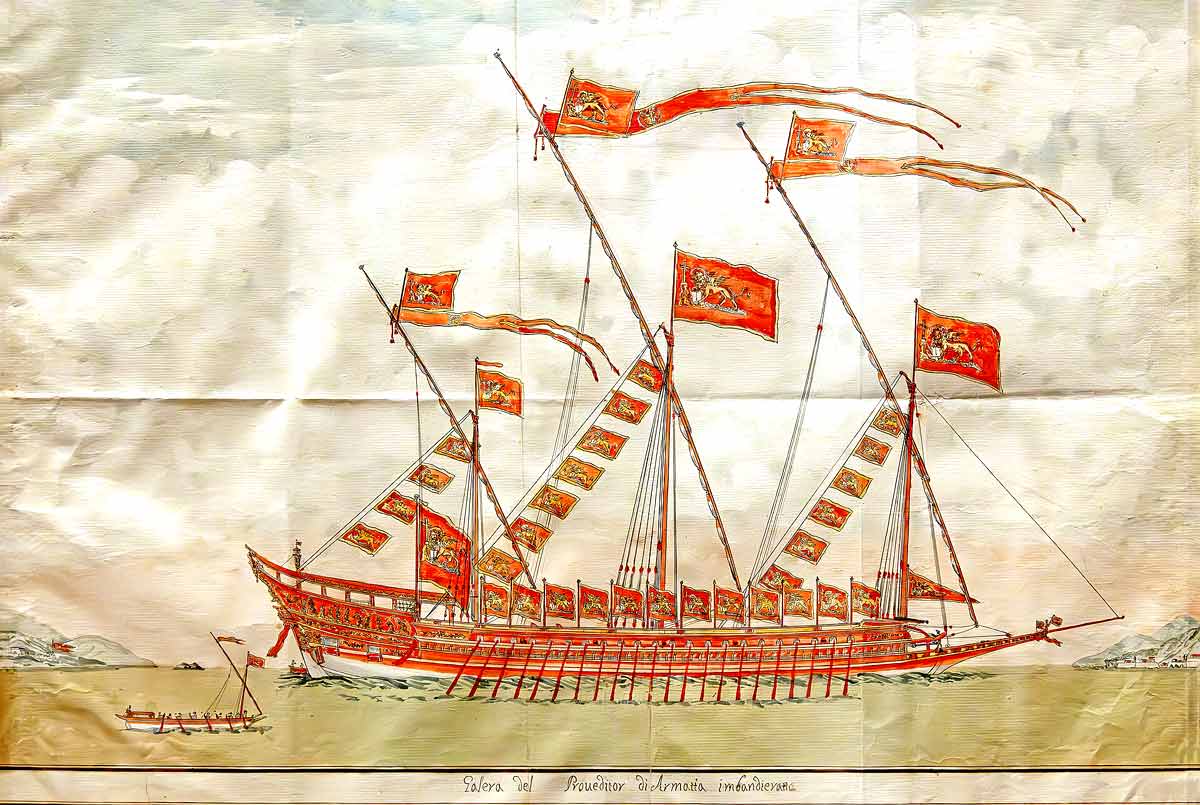
Built on a series of islands in a lagoon in the Adriatic Sea, the city of Venice was connected to the sea and mercantile trade like no other Italian city-state. Since its inception in the Early Middle Ages, Venice sought to expand its naval capabilities to better safeguard its commerce and lucrative trade routes throughout the Mediterranean. Venice would emerge as a dominant naval power, contending with Genoa and Pisa for trade privileges in the Eastern Mediterranean and regional maritime hegemony in the waters around the Italian peninsula. The Venetians also encountered serial piracy, necessitating a large fleet of advanced warships.
One of Venice’s most remarkable military assets was the Arsenale or Arsenal. This assembly line prototype enabled skilled Venetian shipyard workers to construct, arm, and furnish a war galley within a single day using specialized labor and use of prefabricated parts. They pioneered the use of cannon on their galleys, granting them an edge in naval warfare when the predominant tactic involved ramming and boarding an enemy vessel. The banner of Saint Mark flew proudly above Venetian ships, simultaneously demonstrating the Venetians’ commercial wealth and maritime prowess.
In the 15th and 16th centuries, Ottoman expansionism threatened Venetian commercial interests in the East as they were forced to deploy significant naval forces to safeguard their interests. The Venetians played a particularly significant role in the victory of the Christian Holy League over the Ottomans at the Battle of Lepanto in 1571.
While Venice would remain prosperous well into the 16th and 17th centuries, the center of maritime power gradually shifted northward to Britain and the Netherlands. Venetian maritime hegemony remains a blueprint for smaller and resourceful nations utilizing industry and sea power to establish wealth and remarkable influence relative to their size.
5. The Ming Empire: Treasure Fleets and Imperial Ambition
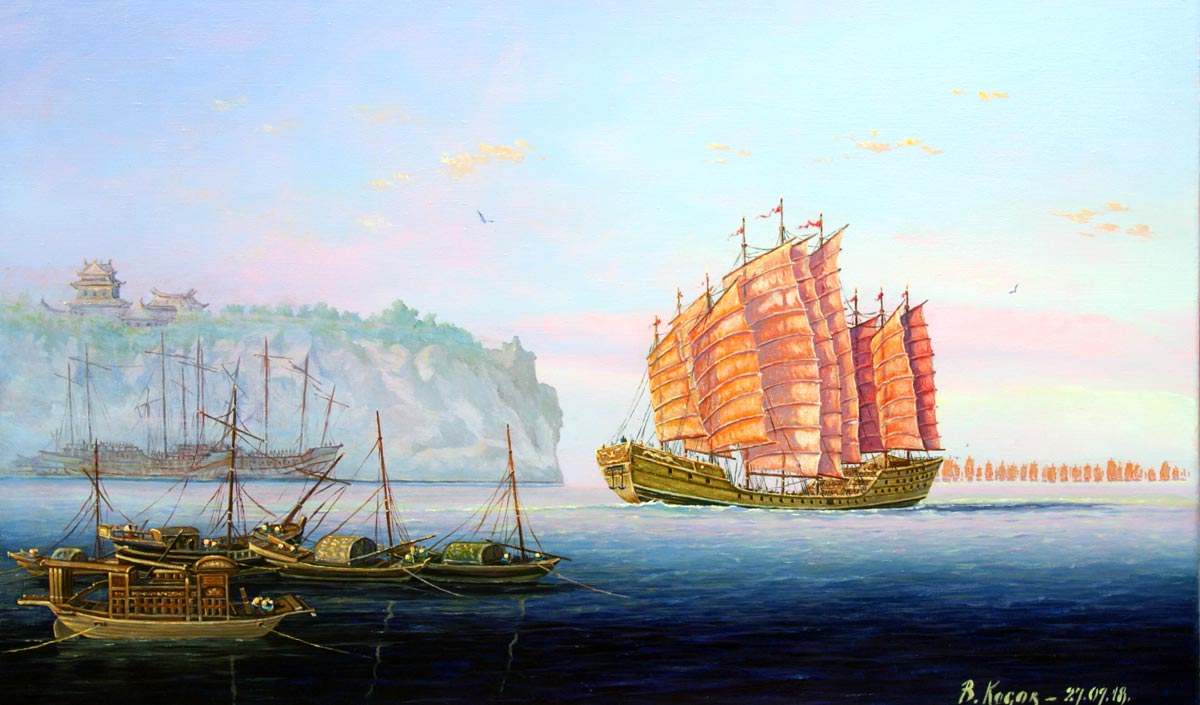
An essential function of maritime fleets is power projection, showcasing a nation’s military and economic prowess. The Treasure Fleets of the early Ming Empire in China embodied this geopolitical concept.
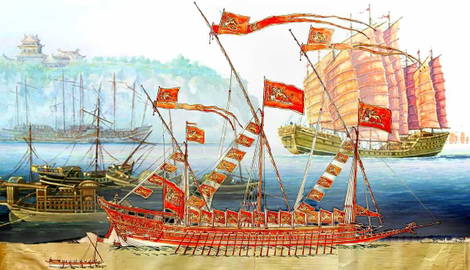
In the early 15th century, the Yongle Emperor sought to showcase China’s superiority by launching a series of maritime expeditions. Chinese shipyards began building enormous 400-foot “Treasure Ships” in great quantities (though the length may be exaggerated). These ships were not only tremendously long but were almost 200 feet wide. They were powered by a dozen sails and were furnished with enormous holds and luxurious staterooms. Until the 19th century, no other navy would possess as many ships of this size and scale. In addition, China possessed some of the leading naval technologies, having borrowed and refined various concepts from numerous peoples over centuries with particular emphasis on navigation and propulsion.
The Treasure Fleets were led by the famous eunuch admiral Zheng He, who commanded the first of seven expeditions in 1405, leading some 317 ships including fifty or more Treasure Ships. The fleet traveled throughout the Indian Ocean, from the Persian Gulf to Malacca, Sri Lanka, and East Africa. Several subsequent voyages would be sent out over the following decades, displaying the might of Ming China on an unprecedented scale and securing valuable trade relationships. Zheng He’s fleet rarely engaged in combat, since his primary concerns were trade, diplomacy, and prestige, rather than conquest. Nevertheless, the Ming Treasure Fleet was still among the most formidable fleets of the medieval world.
After Zheng He’s death in 1433, the Ming government considered the expeditions too costly and adopted a policy of isolation. Chinese seapower remained in abeyance until the emergence of the modern People’s Liberation Army Navy (PLAN) in the present day, whose officers continue to be inspired by Zheng He’s example of power projection.