
After the death of the emperor Tiberius in AD 37, the Roman state was jubilant. The old man was described as depraved, distant, and cruel by later Roman authors. Rome rejoiced when he was replaced by Gaius Caligula, the son of the popular general Germanicus, Tiberius’ deceased nephew. Unfortunately, the atmosphere of celebration soon soured as Caligula displayed the worst excesses of power. Consequently, a clandestine plot would bring about his downfall. The death of Caligula was a warning: should any future emperors fail to uphold the expectations of the role, change could be brought about violently.
Born to Rule: A Blue-Blooded Julio-Claudian Prince
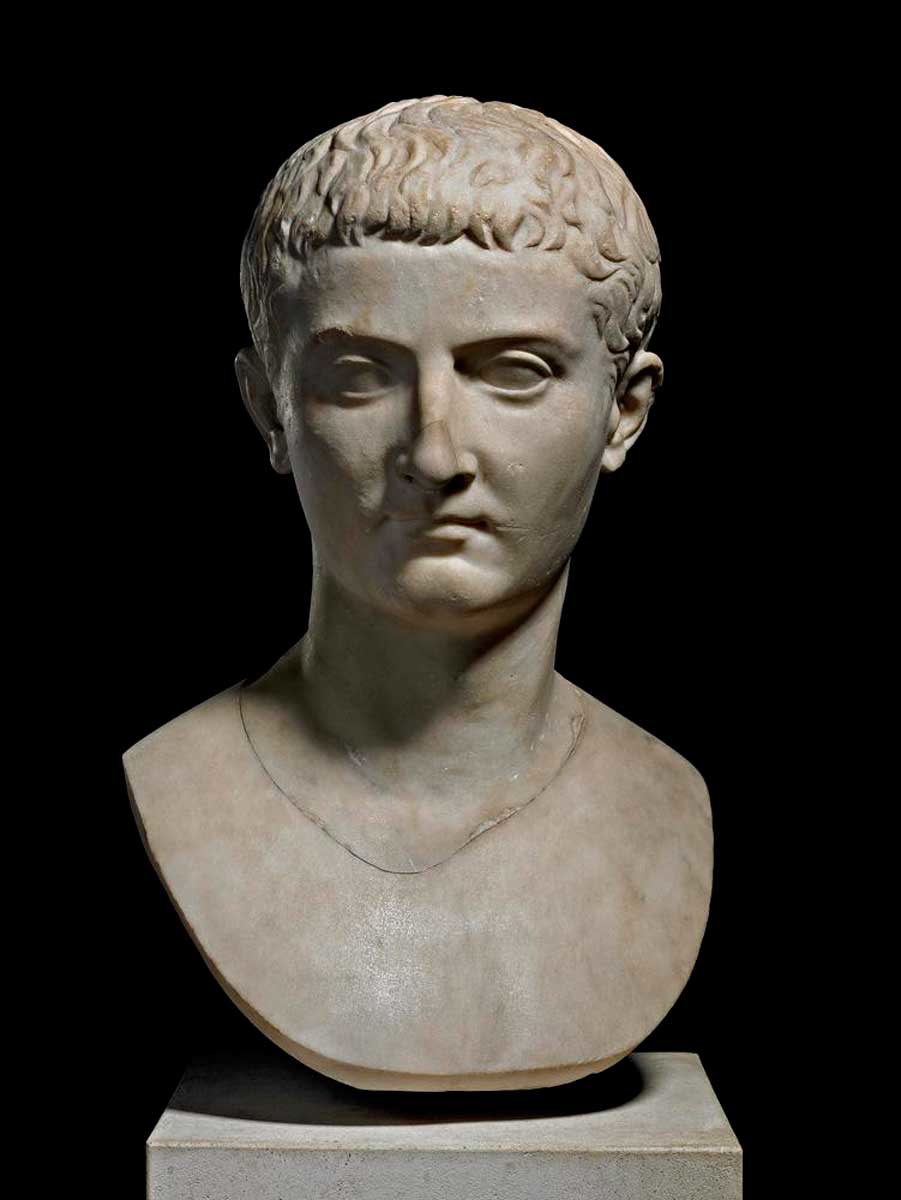
The third child of the marriage between Germanicus and Agrippina the Elder, Gaius, better known as Caligula, was deeply embedded in the dynastic politics of the early Julio-Claudian dynasty. His father was the grandson of Mark Antony, while his mother was the daughter of Agrippa and the granddaughter of Augustus himself. Likewise, Claudius, who would succeed Caligula as emperor, was the young man’s paternal uncle. One of Caligula’s three sisters, Agrippina the Younger, would become Claudius’ wife and future empress.
Perhaps unsurprisingly, proximity to power would have tragic consequences for the young Caligula as he was caught in the machinations of imperial politics. His father, Germanicus, was an immensely popular general. His support among his men enhanced his family’s reputation. Accompanying his father on campaign, the young Gaius had been nicknamed Caligae, or “Little Boots,” in honor of the imitation army uniform he wore.
Succession Struggles: A Family in Exile
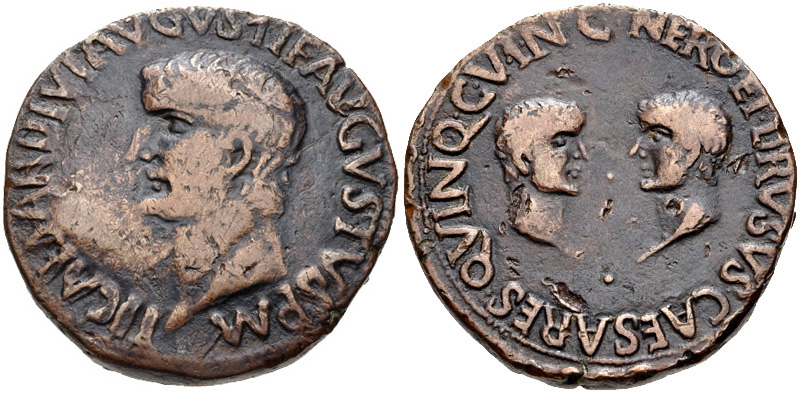
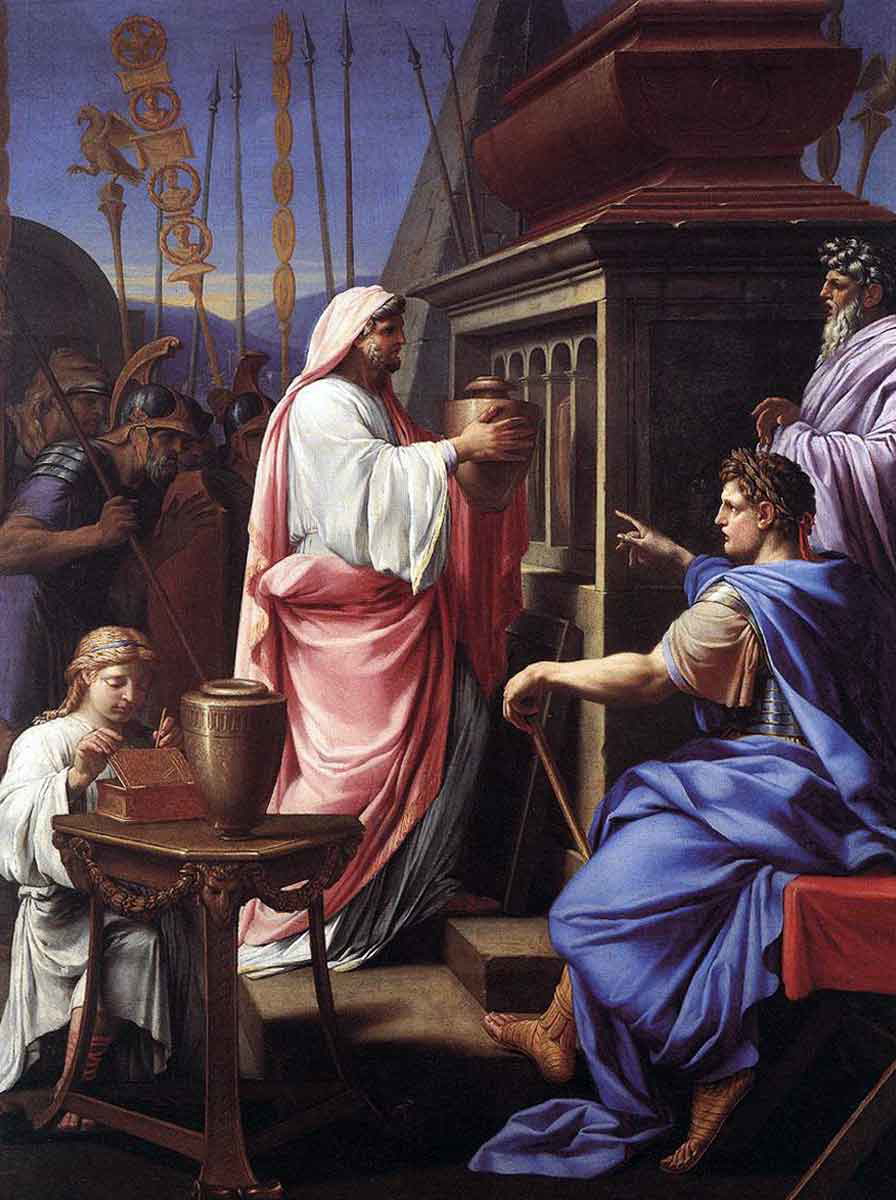
Germanicus was Tiberius’ named heir, so his popularity was both a boon and dangerous. The general died in mysterious circumstances at Antioch in AD 19. He was only 33, and rumors soon circulated that he had been murdered on the orders of the increasingly paranoid Tiberius. A massive public mourning followed, and Germanicus’ wife Agrippina missed no opportunity to claim her husband was poisoned. Tiberius was forced to place his friend and the governor of Syria, Gnaeius Calpurnius Piso, on trial for the poisoning. He committed suicide.
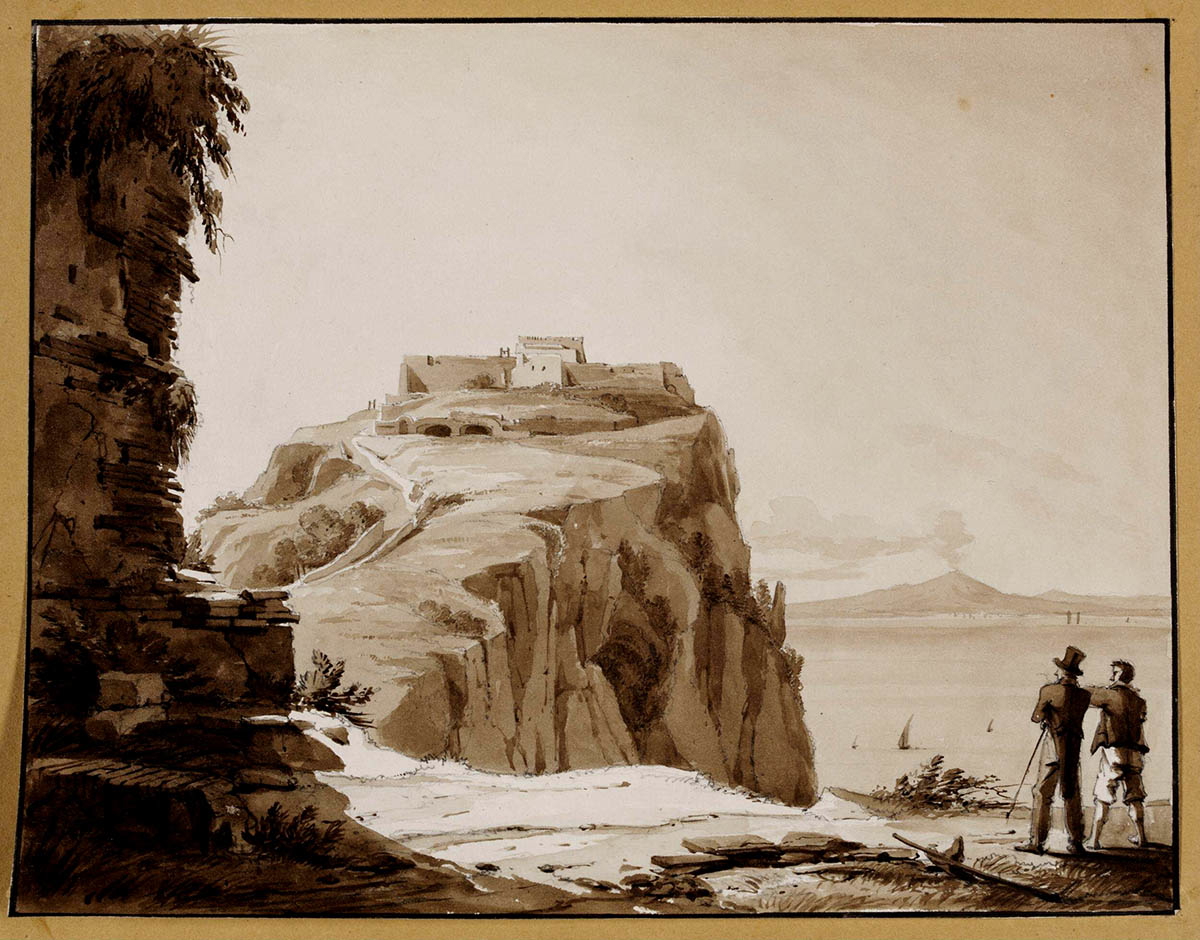
Agrippina continued to be outspoken about her husband’s death and the rights of her sons as successors, bringing her into conflict with Tiberius’ powerful Praetorian Prefect, Sejanus. This resulted in Agrippina and her two eldest sons, Nero and Drusus, being banished or imprisoned, each dying before Tiberius. Meanwhile, in AD 31, the 19-year-old Caligula was summoned to Tiberius’ private refuge on the island of Capri. He would remain under the emperor’s watch and tutelage.
Emperor in Training: With Tiberius on Capri
Caligula soon found himself one of two heirs to the aging Tiberius. The other was the emperor’s grandson, Tiberius Gemellus. Suetonius claims that Tiberius recognized in Caligula those traits that meant he should not be entrusted with the supreme power of the state. The assessment recorded by Suetonius was “a viper for the Roman people.” Such perspicacity by Tiberius, however, seems unlikely. This is probably a later attempt to temper the young Caligula’s popularity in light of his future depravities.
When he first rose to power in March AD 37, at just 24 years old, Caligula was exceedingly popular. For one thing, he had the single great benefit of not being the loathed Tiberius! According to Philo of Alexandria, a Hellenistic-Jewish philosopher, the accession of Caligula was akin to the dawn of a new golden age. The new emperor was unprecedented in his universal popularity (even beyond imperial borders). To begin with, Caligula paid service to political propriety, notably with regard to his relationship with the Senate, and the body duly ratified the new emperor’s status. More conspicuously, the emperor interred his deceased family members with all due honors in the family mausoleum.
Illness and Misfortune: A Change in Character
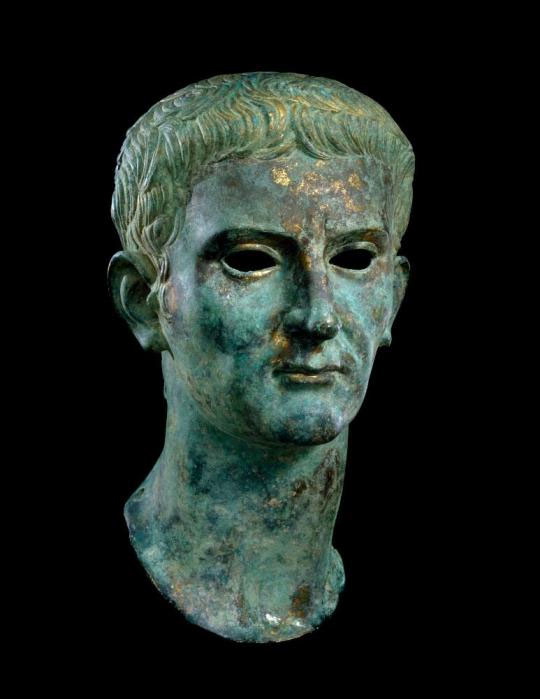
However, late in AD 37, the reign of Caligula underwent a sudden transformation. To paraphrase Suetonius’ infamous remark, we are no longer dealing with a man, but a monster. A sudden, mysterious illness afflicted the emperor that year. While the prayers of the Roman populace for his recovery were seemingly heard by the gods, the emperor who emerged appeared to be a totally different man from the one who had succeeded Tiberius.
It was after his illness, probably in early AD 38, that Caligula orchestrated the death of his rival Tiberius Gemellus. This was possibly because there was talk of his succession during Caligula’s illness. Caligula clearly had succession on his mind. Around the same time, he named his most trusted sister, Drusilla, as his heir and married her to a man named Marcus Aemilius Lepidus, who was likely another grandson of Augustus. He also took three wives in short succession, probably hoping for an heir.
The unexpected death of Drusilla due to illness in AD 38 seems to have undermined whatever Caligula was planning and contributed to the rise of his erratic behavior.
Transgression: Caligula’s Descent
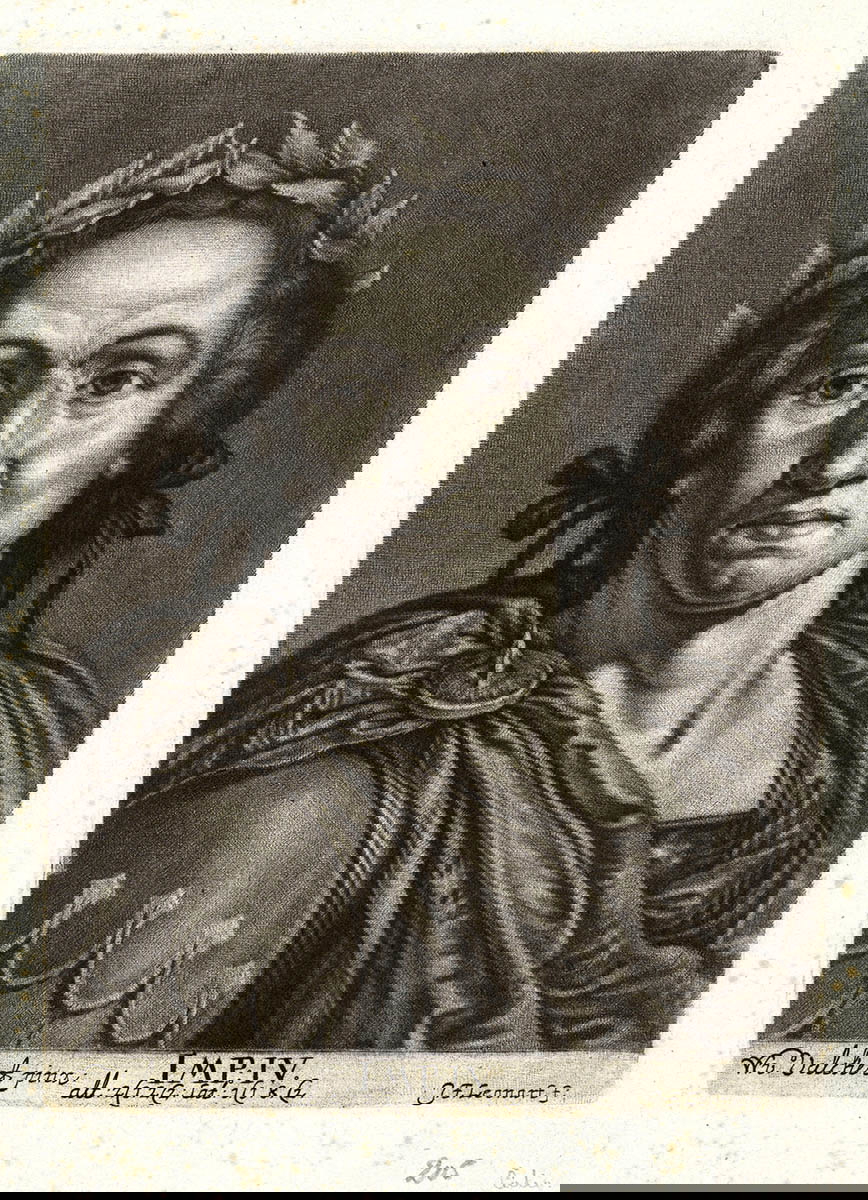
Whether this change in character would have occurred regardless or was itself a product of the emperor’s illness, it marked a watershed in Caligula’s reign. Thereafter, what had begun so promisingly descended into debauchery and cruelty reminiscent of the worst excesses of Tiberius’ reign. In particular, his relationship with the Senate deteriorated. Accusations of treason were made, senators exiled, and others publicly shamed. To hammer home his poor opinion of the Senate, Caligula infamously suggested that he make Incitatus, his favorite racehorse, a consul. The emperor was unlikely to have been that mad. His proposal was probably simply a pointed comment aimed at the senators.
He also reputedly began to demonstrate increasingly megalomaniac tendencies. This occurred in Rome and in the provinces. According to Philo, his order to erect a statue himself in the Jewish Temple in Jerusalem was especially inflammatory. Alongside the despotism, the emperor reputedly slid into sexual depravity. Suetonius’ biography is full of lurid details of incest and promiscuity: “he respected neither his own chastity, nor that of anyone else.”
Making Enemies: The Conspirators
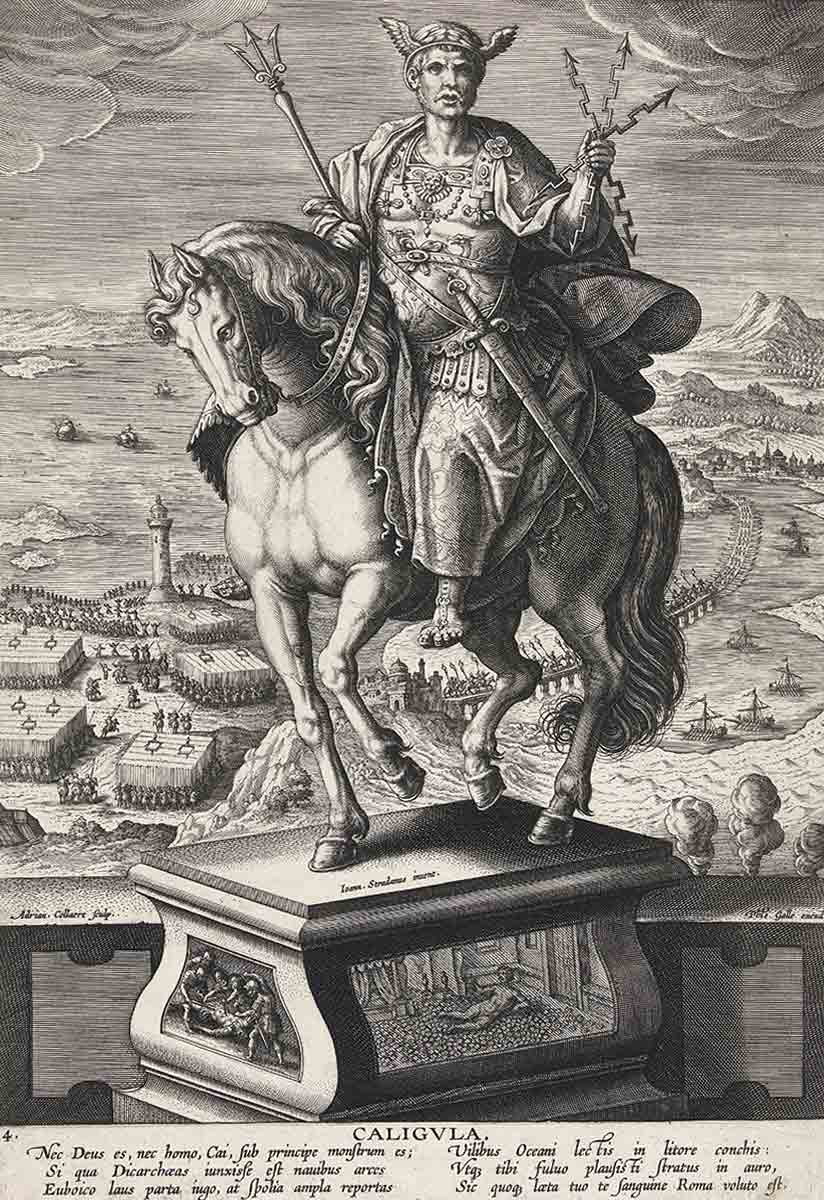
Unsurprisingly, such erratic behavior soon engendered the ire of several enemies. Along with the increasingly marginalized Senate, enemies also emerged among the soldiers. In particular, the Praetorian tribune Cassius Chaerea grew to hate Caligula. His dislike of the emperor did not stem from any grand ambitions to restore the Republic, despite Josephus’ characterization of him as an idealist. Rather, it was personal antipathy. The old-fashioned and rather prudish Cassius was being bullied by Caligula. According to Suetonius, the guard was frequently taunted, mocked as effeminate, and forced to use all sorts of suggestive, rude passwords with which the emperor was able to poke fun at him. Unable to tolerate the mockery anymore, Cassius began to orchestrate a plot that would rid Rome of its ruler.
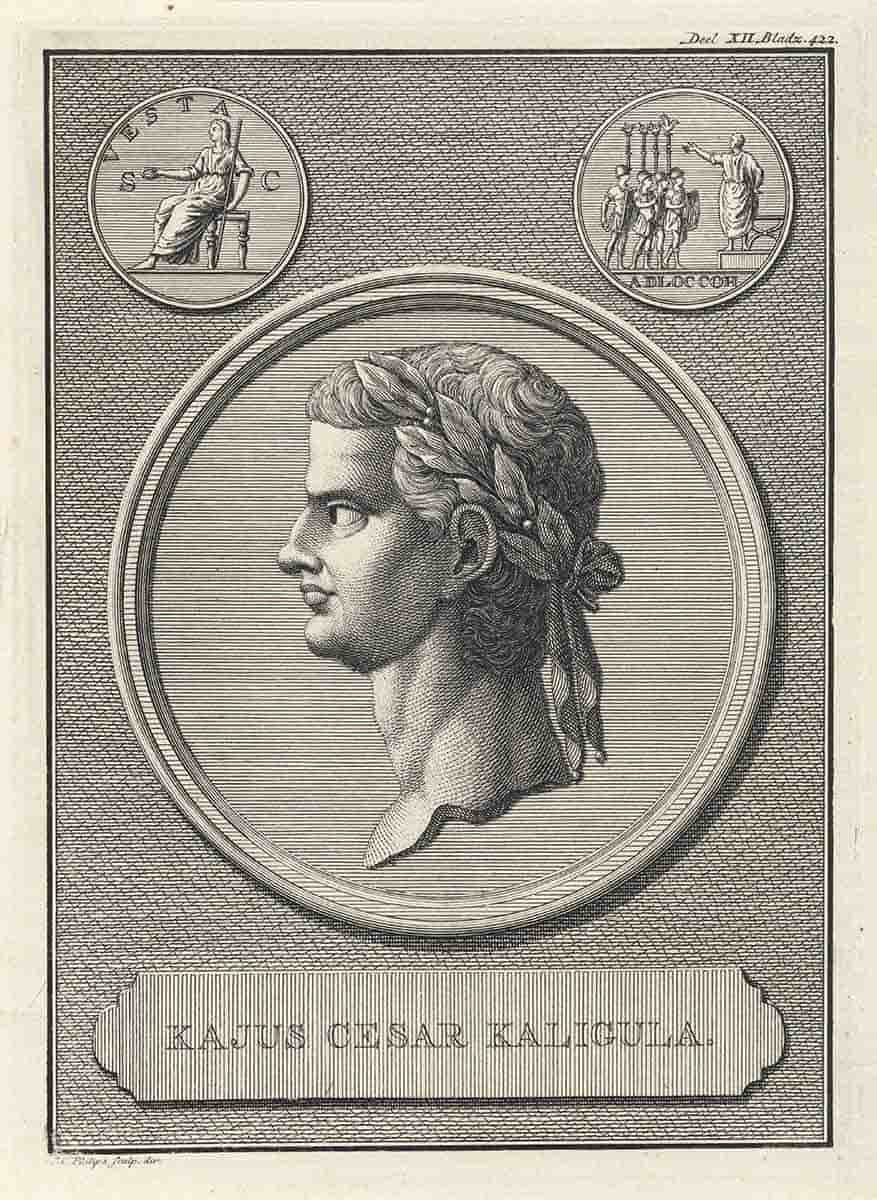
The reported portents that forewarned of an emperor’s impending demise are a common rubric throughout Suetonius’ biographies of the Caesars. Repeated omens and signs are listed by the author, but, as was always the case, the emperor was not able to see the writing on the wall. In Caligula’s case, the most explicit was perhaps the warning from the lots of Fortune at Antium. This warned the emperor to beware of Cassius. Caligula, aiming to forestall his end, promptly ordered the execution of Cassius Longinus, the proconsul of Asia. Unfortunately for Caligula (to say nothing of poor Longinus!), he appears to have forgotten that the name of the guardsman he frequently bullied was also Cassius.
An Emperor Assassinated: The Plot Against Caligula
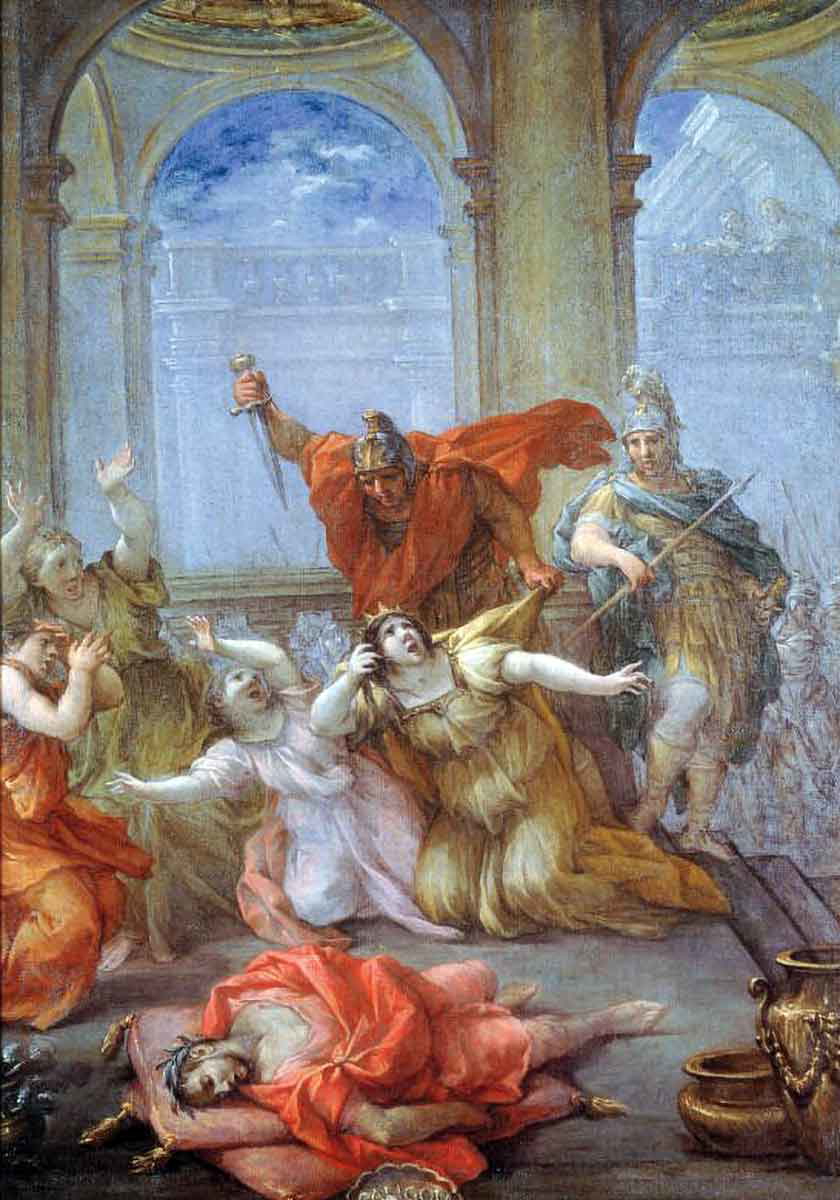
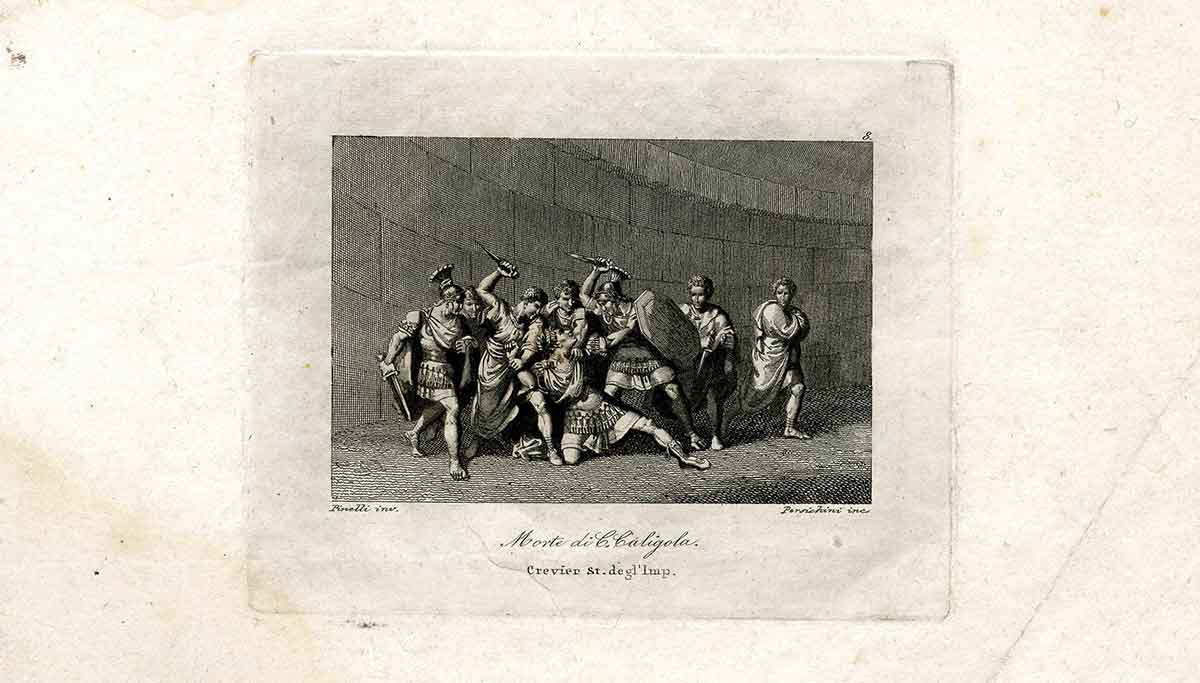
Cassius decided to strike against the emperor on January 24, AD 41, during the Palatine Games. The Praetorian did not act alone, however. By this time, many others, drawn together by their hatred of the increasingly tyrannical emperor, were in support of the conspiracy, including senators and other praetorians. Cassius Dio, who wrote in the early 3rd century AD, named another Praetorian, Cornelius Sabinus, as a co-conspirator with Cassius. He also names others and notes that Caligula’s inner circle had turned against him. But he also notes that Cassius and Cornelius were the two who delivered the fatal blow.
The emperor was struck down in the substructures beneath the Palatine Palace while addressing a group of actors performing as part of the games. The choice of venue worked perfectly for the conspirators. The narrow confines offered Caligula no room for escape but also ensured that his bodyguard, still loyal at this point, could not reach him in time. By the time they did arrive, Caligula, having been first struck by Cassius, was already dead. Rome had witnessed the first assassination of an emperor.
Succeeding Caligula: Emperor Claudius
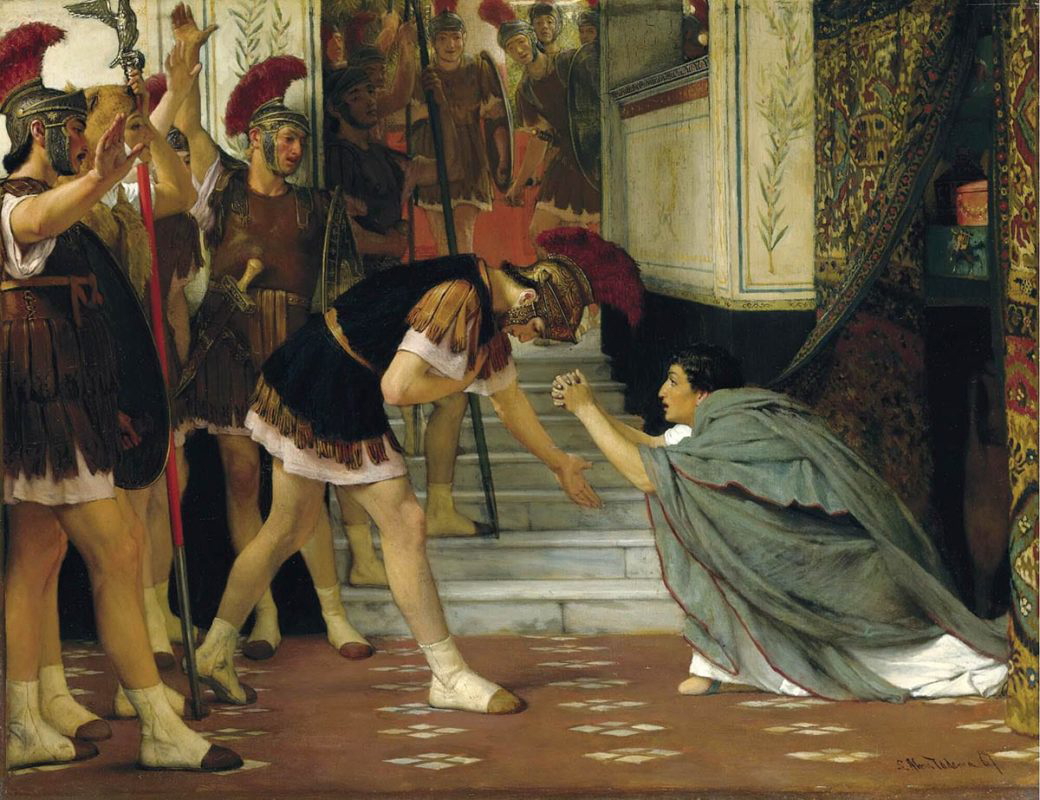
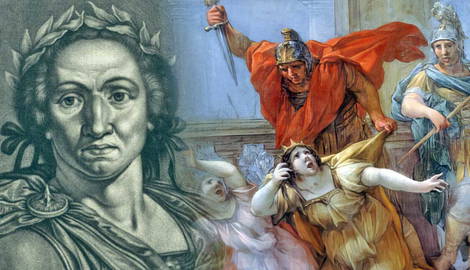
The killing did not stop with the emperor. As would become common practice in future imperial assassinations, Caligula’s nearest family members were also slaughtered. The victims included his wife, Caesonia, and Julia Drusilla, his young daughter. The only member of his immediate family to survive was his older, reputedly rather doddery uncle, Claudius. According to the historiographic tradition, the rampaging soldiers discovered Claudius cowering behind a curtain in the palace. Fearing the worst, Claudius was taken by surprise when he was instead whisked away to the comparative safety of the Praetorian camp. There, he was nominated as the next emperor by the guards.
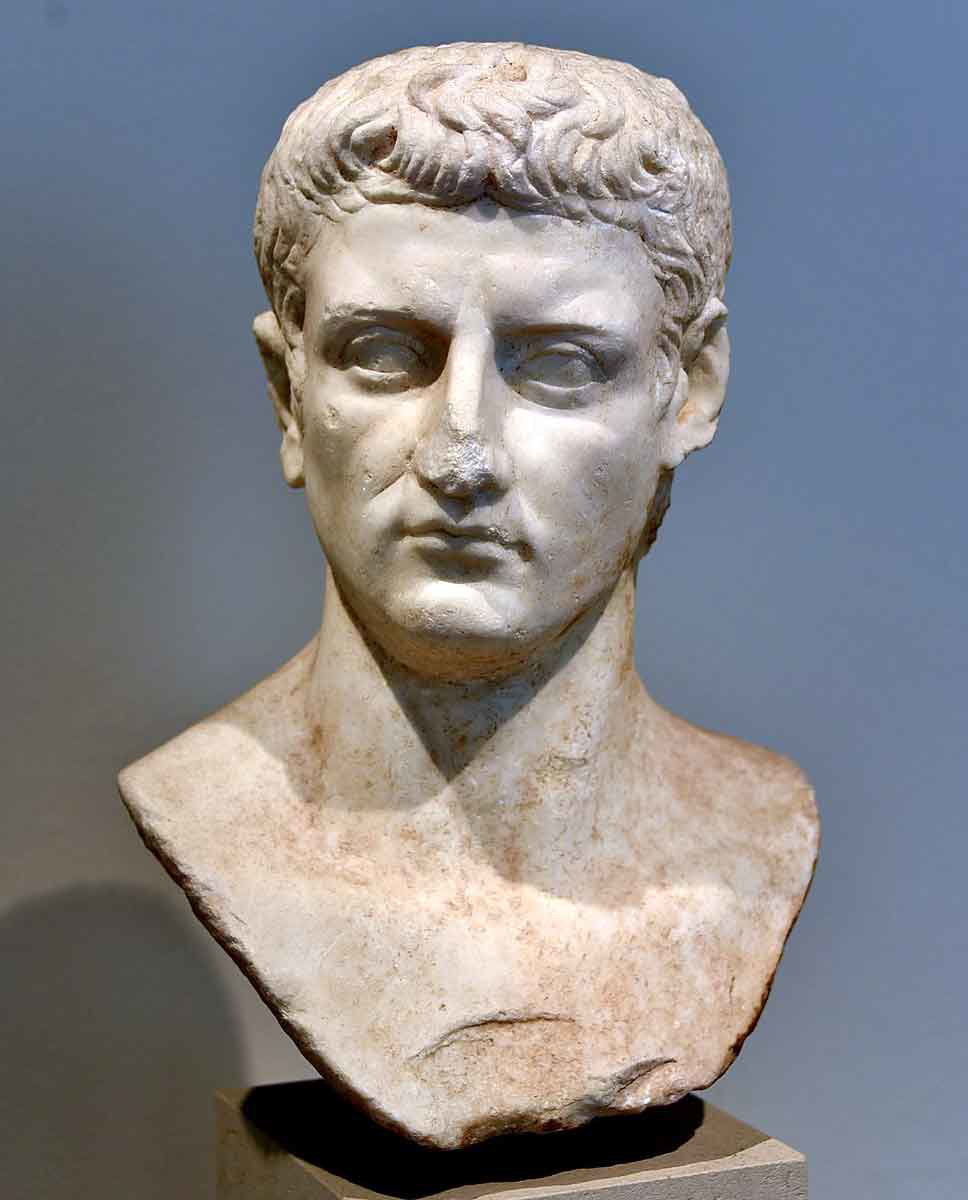
The unexpected elevation of Claudius appears to have denied the Senate and other conspirators the opportunity to reformulate Roman politics at this time. While notions of the return of the Republic, as described by Josephus in particular, seem rather far-fetched, it is highly unlikely that the murderers of Caligula were much enamored with the Praetorians’ choice of successor. Beyond that, the ordinary populace of Rome appears to have been alarmed by the violent removal of their ruler, and it is unlikely that a return to the bawdy and all too frequently bloody politics of the Republican period, which benefited the elite, would have found a groundswell of popular support among the plebs and others.
A Very Roman Tradition: Caligula and the Toppling of Tyrants in Roman History
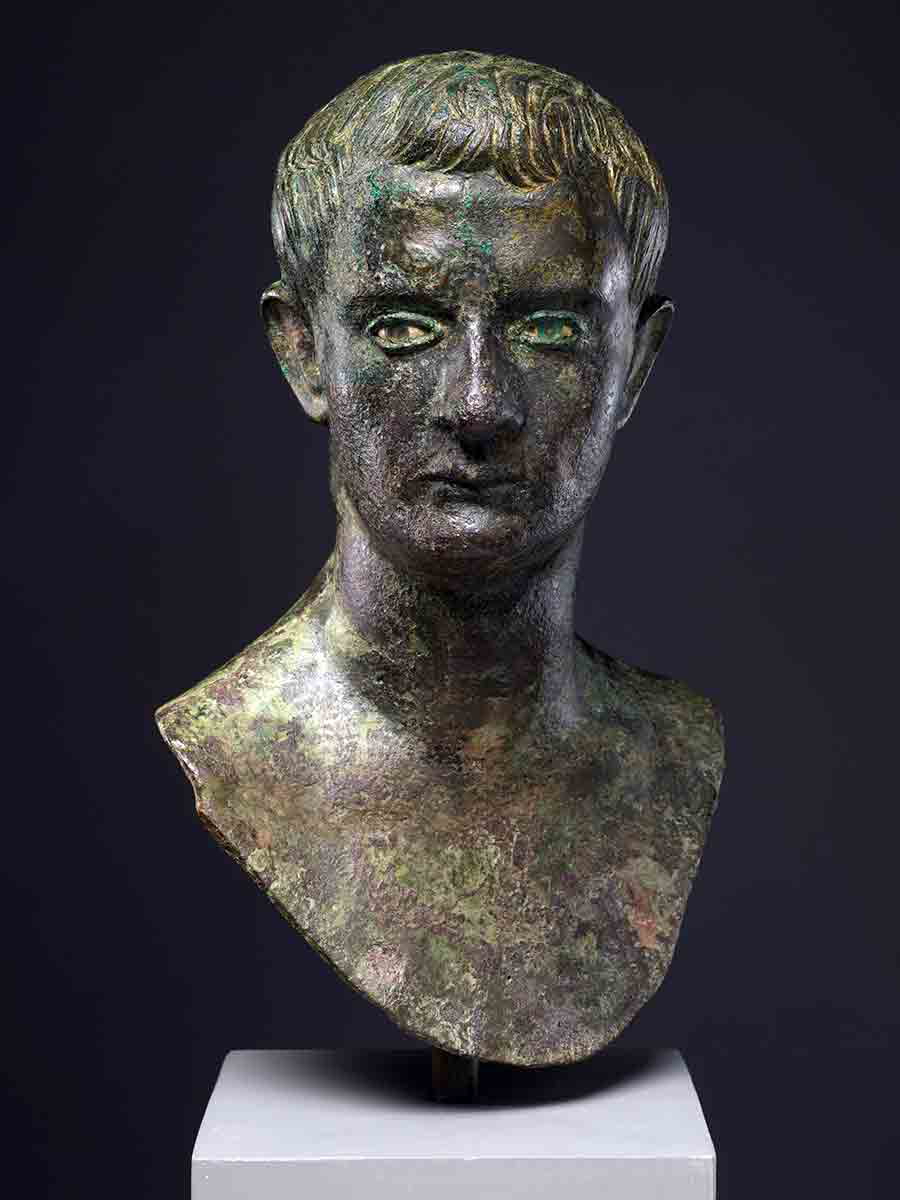
“Now he was spat upon by those who had been accustomed to do him reverence… his statues and his images were dragged from their pedestals…”
This is how the early 3rd-century historian Cassius Dio describes the posthumous treatment of Caligula. When considering the sweep of Roman history, however, the historian could be talking about any one of a number of felled despots. Dio’s account of Caligula’s treatment is strikingly similar to that inflicted on Commodus, the son of Marcus Aurelius, who was himself assassinated on New Year’s Eve AD 192. The practice of denigrating the legacies of some former emperors, as well as their wives and associates, is referred to by the neologism damnatio memoriae.
Also known to scholars as “memory sanctions,” these practices might include the destruction of statues and artworks, the erasure of inscriptions, the defilement and improper burial of corpses, and even the countermarking of coins. The aim was nevertheless the same. While memory could not be destroyed, these destructive practices created new narratives of power. They proclaimed loudly that an individual had failed to meet the expectations of their role, and they had been duly punished. After all, we all still know who Caligula was in the 21st century, but to stare at a vandalized portrait of the emperor or an erased inscription is to be clear that the emperor was not valued by the Romans as a man to emulate.
Caligula, who ruled for less than four years, suffered not only assassination but also posthumous sanctions against his memory. He was the first of the Roman emperors to have been killed prematurely, but he would not be the last. His successor, Claudius, would restore some order to the state, but after him would come Nero. His inability to engender suitable degrees of support would lead to his own murder in AD 68. Civil war would follow as rivals fought for ultimate power. While the Flavians would rise to power, their third and final emperor, Domitian, was assassinated in a story that mirrored Caligula’s.
Caligula’s assassination was the start of a pattern that was to be repeated throughout the centuries that followed. Being a Roman emperor, as Caligula proved, could be a very dangerous job.