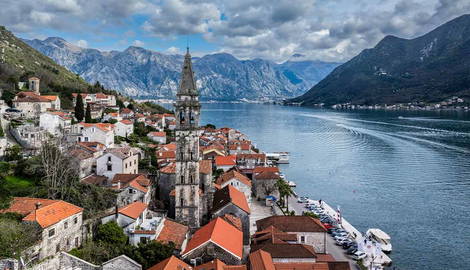

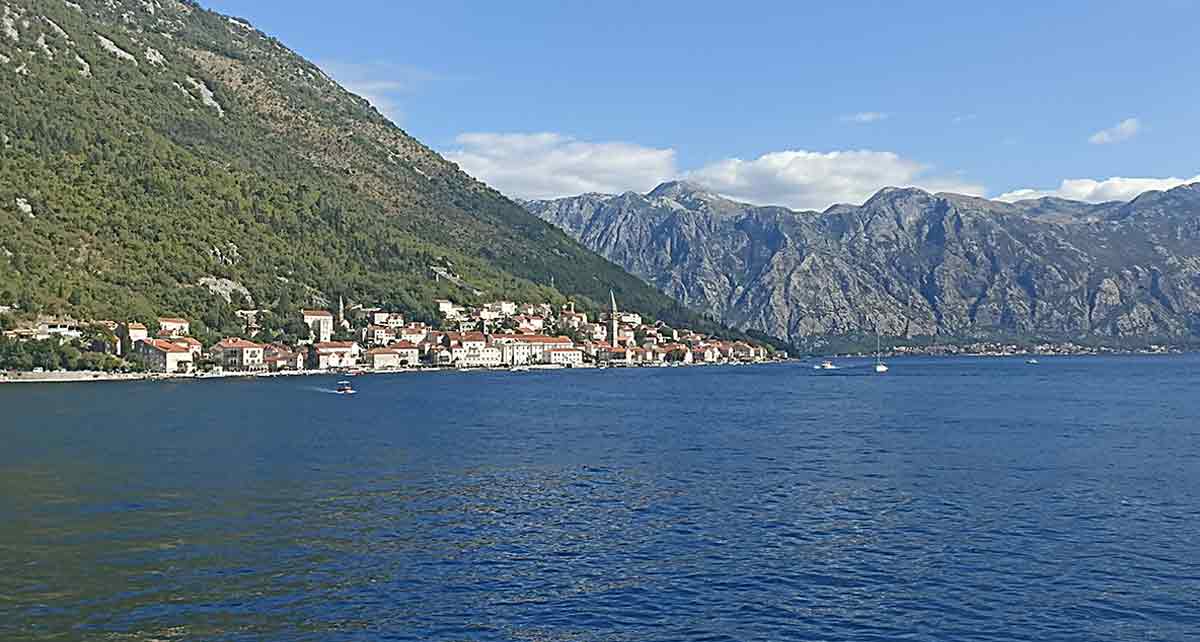
Located on the northern shore of the bay of Kotor, the town of Perast is home to fewer 400 people. Despite its modest population, Perast once enjoyed an international reputation for its seafaring prowess. Its wealth and prestige during four centuries of Venetian rule can still be seen in the walls of the Renaissance and Baroque palaces lining the waterfront. Read on to discover Perast’s history and heritage and the best way to experience what it has to offer.
A Quick History of Perast
The area around Perast was first settled in pre-history, and the town owes its name to the Pirusti, an Illyrian tribe who lived on the Adriatic coast prior to the arrival of the Romans. Perast is first recorded as a small village with a shipyard in 1336, during the period of Serbian rule. At the time Perast itself was effectively a colony of Kotor, which controlled the Monastery of St George on an nearby island.
In 1420, the Republic of Venice assumed control of the Bay of Kotor to defend the region from advancing Ottoman forces. Perast attained greater economic and strategic significance after 1482, when the Ottomans successfully occupied the coast from Herceg Novi to Risan.
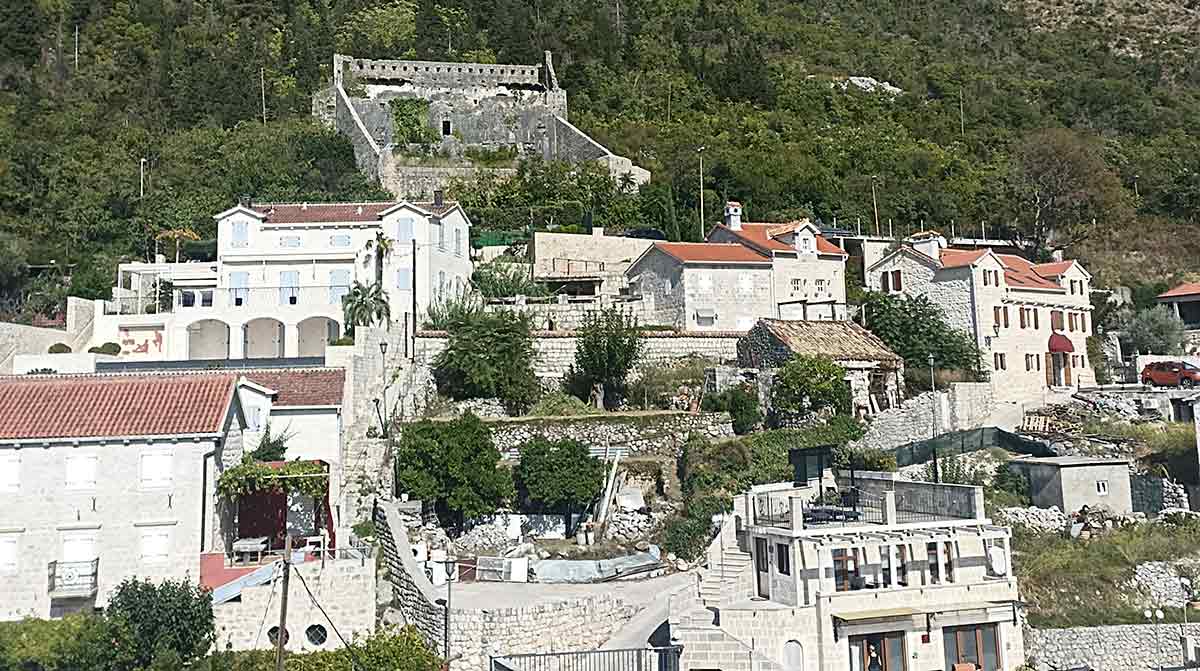
The Ottoman threat prompted the local authorities to fortify Perast, although they could not afford to build a defensive wall around the whole town. In 1570, the Venetians built the Fort of the Holy Cross on the mountainside overlooking the town. Later on, ten towers were erected within the town to serve as defensive strongpoints in the event of an enemy attack.
In 1624, a force of 2,000 Barbary pirates launched the Great Raid of Perast, devastating the local community by abducting over 400 people. Perast refused to submit and the remaining citizens raised funds to ransom their compatriots by selling property.
Thirty years later, Perast’s defenders achieved an extraordinary military success. During this period, Perast became a base for hajduks, local bandits who gained a reputation for ferocity in battle by leading constant raids into Ottoman territory. In May 1654, an Ottoman force of more than 6,000 men descended upon Perast by land.
The defenders consisted of around 50 Venetian soldiers, supported by an unknown number of hajduks possibly in the hundreds. While the civilian population sheltered in the fortress and the towers, the defenders led brave attacks against the Ottomans, killing dozens of Ottoman troops including their commander Mehmed Rizvanbegović, and wounding several hundred more. The poet and theologian Andrija Zmajević later wrote a poem entitled the Battle of Perast to commemorate the defense of his hometown.
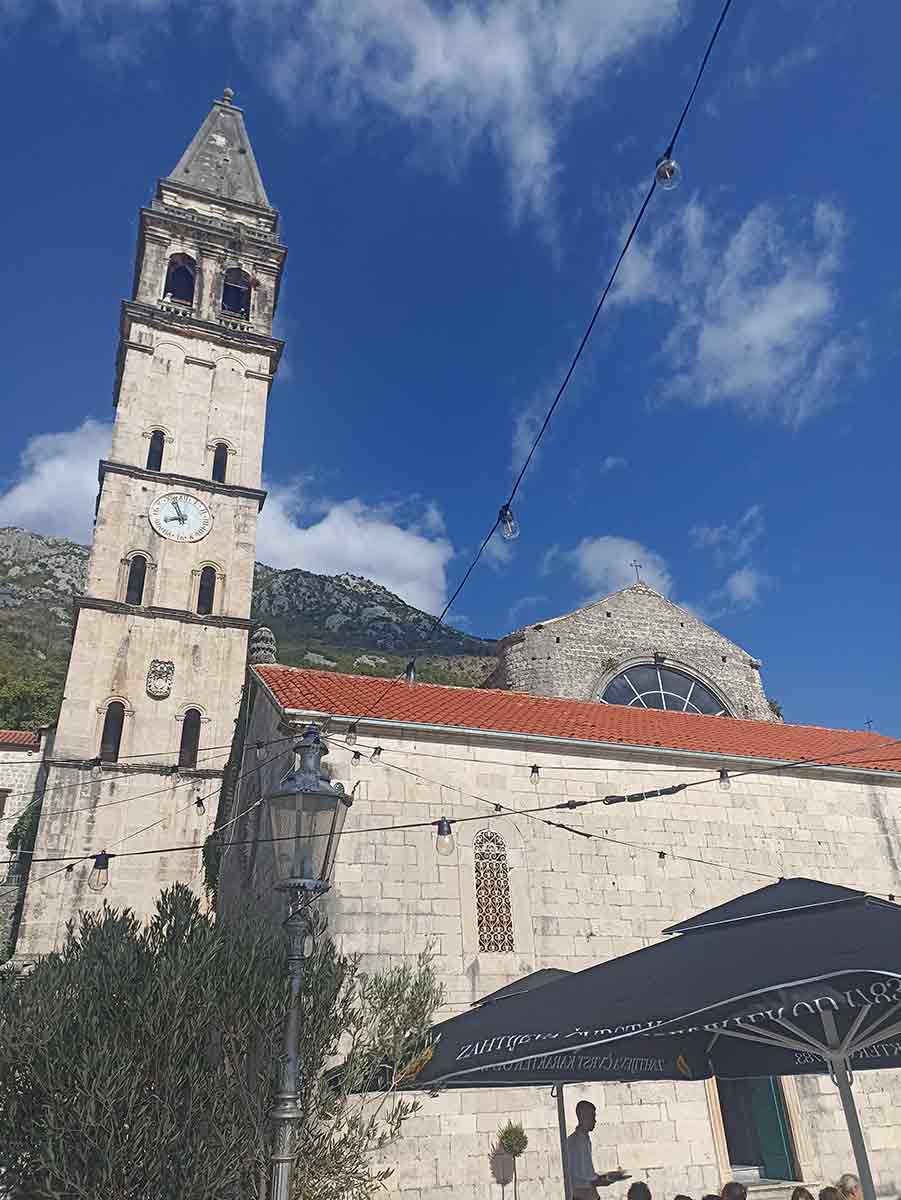
Perast’s strategic importance and the commercial and military prowess of its sailors enabled the leading families of the town (the so-called twelve casadas) to build over a dozen palaces during the 17th and 18th centuries. The church of St Nicholas was built in 1616, while a belltower was commissioned by Andrija Zmajević in 1691. Although unfinished, the church remains one of the town’s most impressive and attractive structures.
Before long, the town went into decline after the fall of Venice in 1797. Like the neighboring towns in the Bay of Kotor, Perast experienced brief periods of Austrian, Russian, and French rule before returning to Austrian control in the 19th century. Following World War I the town became part of Yugoslavia in its various guises until Montenegrin independence in 2006.
Maritime Heritage
Perast’s rich maritime heritage can be found throughout the town. Following the town’s exploits in the victory over the Ottomans in 1654, that officers from Perast had the honor of protecting the standard of St Mark in the Venetian fleet.
Perast’s maritime prowess also reached the court of Peter the Great in Russia. In 1698, the Russian ambassador Pyotr Tolstoy arrived in Perast and left an account of the town’s military reputation. Within a few years, Tsar Peter sent 16 cadets from the Russian nobility to study with Captain Marko Martinović, an accomplished sailor, mathematician, and shipwright who founded a renowned navigation school.
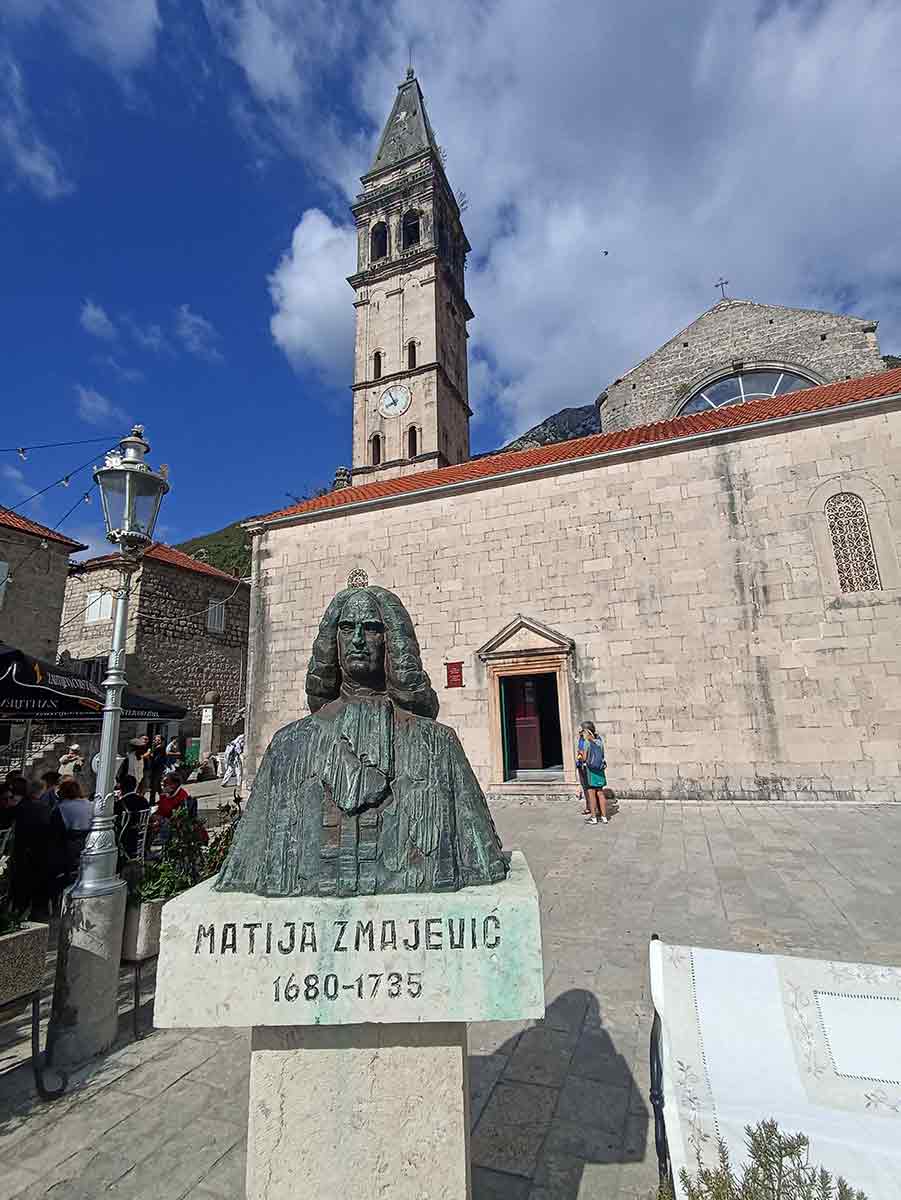
In 1712, the Perast naval officer Matija Zmajević arrived in St Petersburg. He had been forced to leave his hometown in 1709 after being involved in the murder of his fellow naval captain Vicko Bujović. Zmajević was soon given command of a ship in the Great Northern War and served as a senior commander during Russia’s victory over the Swedish fleet at the Battle of Gangut in 1714. Although the Venetian Republic restored Zmajević’s properties to him after Tsar Peter’s intervention, Zmajević remained in Russia and was later promoted to vice-admiral.
Perast’s Islands
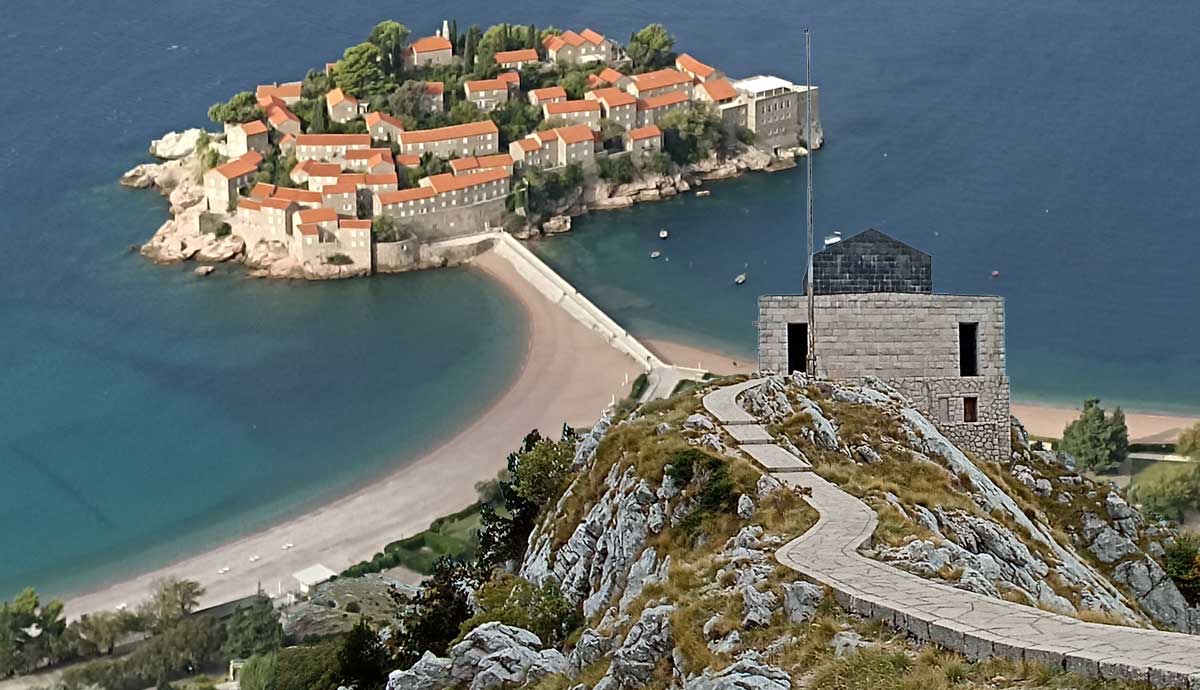
Perast is closely associated with the island of St George, around 800 meters off the coast. The only natural island in the Bay of Kotor, it was home to a Benedictine monastery and a large cemetery where members of Perast’s leading families were buried.
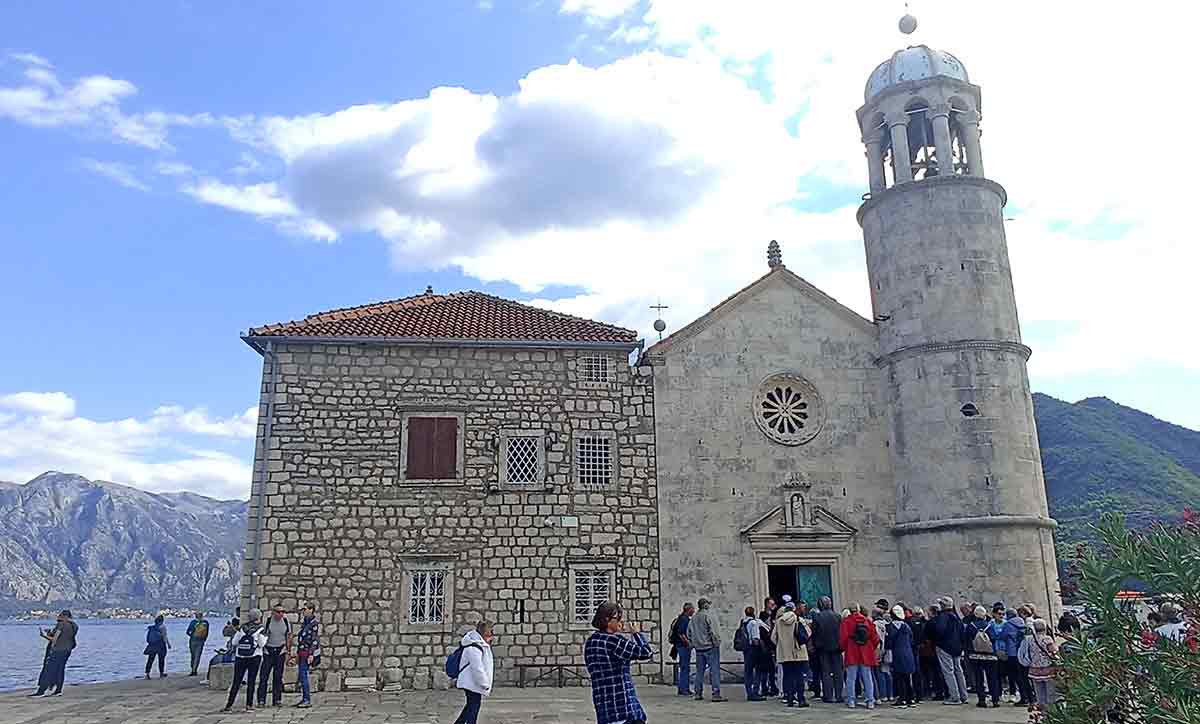
The adjacent island of Our Lady of the Rocks owes its existence to Perast’s accomplished seamen. According to legend, a returning sailor found an icon of the Madonna and Child was found on a rock in the sea on July 22, 1452. He brought the icon home but could not find it in the morning. After going back to sea, he discovered that the icon had reappeared on the very same rock.
From that date onwards, returning sailors have celebrated their safe return by placing a rock at the same spot as an offering to the Virgin Mary. Over time, an artificial island was formed, large enough to build a church to house the icon. The tradition continues to be honored in the fašinada festival, which takes place every year on July 22.
The small domed church boasts an ornate Baroque interior with an altarpiece of Carrara marble. The walls are adorned by silver votive tablets deposited by grateful sailors returning from perilous expeditions at sea. The church and its adjoining museum also has a collection of 68 paintings by Tripo Kokolja, a 17th-century Baroque artist from Perast who specialized in maritime subjects.
Marko Martinović, Matija Zmajević, and Tripo Kokolja are three of the most famous figures from Perast history. Busts of the three men are prominently displayed in the center of town in the square in front of the church of St Nicholas.
Noble Houses and Palaces
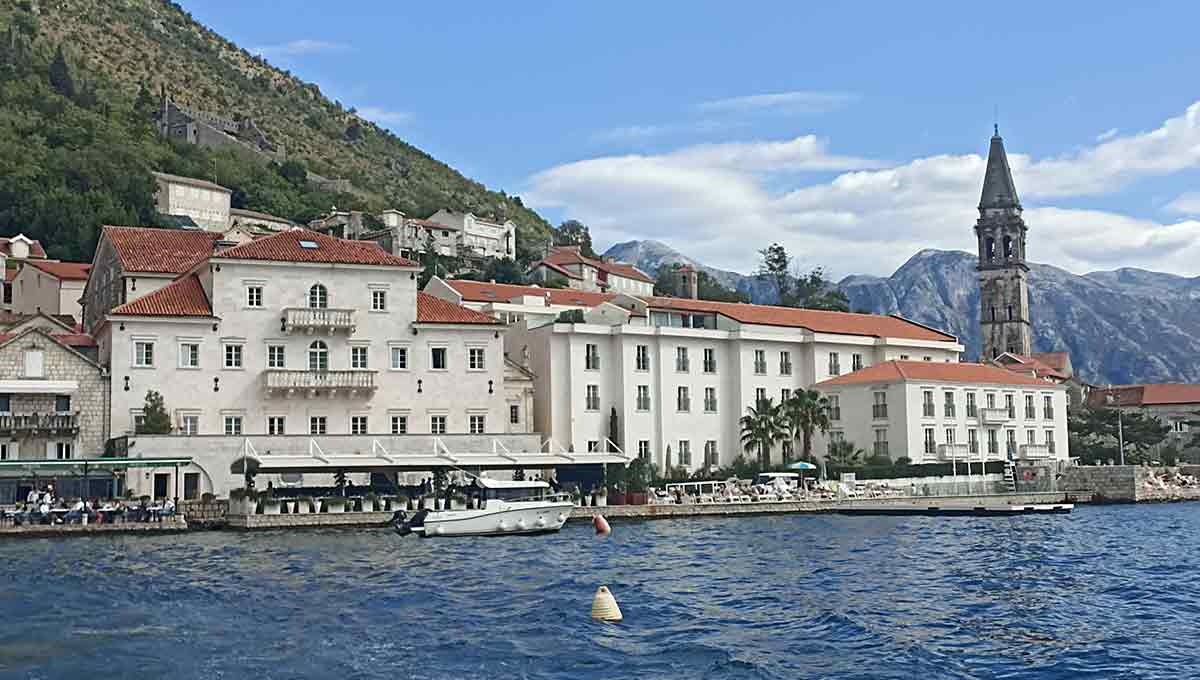
Perast is best known for its palaces, many of which line its mile-long waterfront. Depending on definitions and states of repair, there are between 16 and 19 palaces in Perast. The largest and one of the most attractive palaces belonged to the Smekja family, part of casada Cizmaj, who emerged from relative obscurity to achieve fame and fortune during the 18th century by establishing a trading route between Venice and Genoa.
The three-story Smekja Palace was built in 1764 on the waterfront from white stone quarried from the Croatian island of Korčula. Construction began on a second structure behind the old main road which was not completed until the 1930s. Both buildings are now part of Heritage Grand Perast, a luxury five-star hotel with rooms starting at €300 each during peak season.
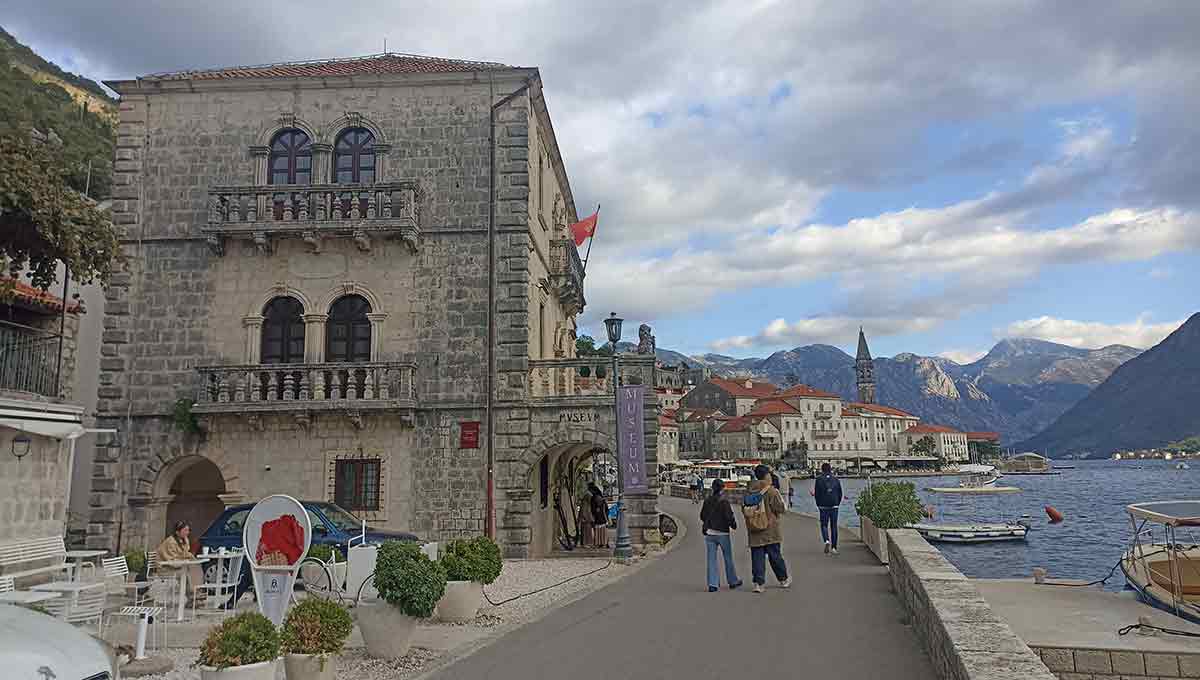
Another iconic aristocratic palace in Perast is the Bujović Palace, now home to the Perast Town Museum. It was built by Vicko Bujović, a prominent naval captain who led Perast’s forces in the Morean War in the late 17th century, during which the Venetians gained control of the Peloponnese in Greece from the Ottomans.
In 1694, Vicko and his brother Ivan Bujović completed their Renaissance palace at the western end of the town, designed by Venetian architect Giovanni Battista Fontana. The three-story palace is fronted by a portico of five rusticated arches with a first floor terrace. The central arch is surmounted by the family’s coat of arms.
Vicko Bujović was repeatedly elected Perast’s town captain between 1694 and 1708, but a feud with the Zmajević family led him to flee into Dubrovnik. After returning to Perast, Bujović was murdered in May 1709 in an incident that prompted Matija Zmajević to leave Perast.
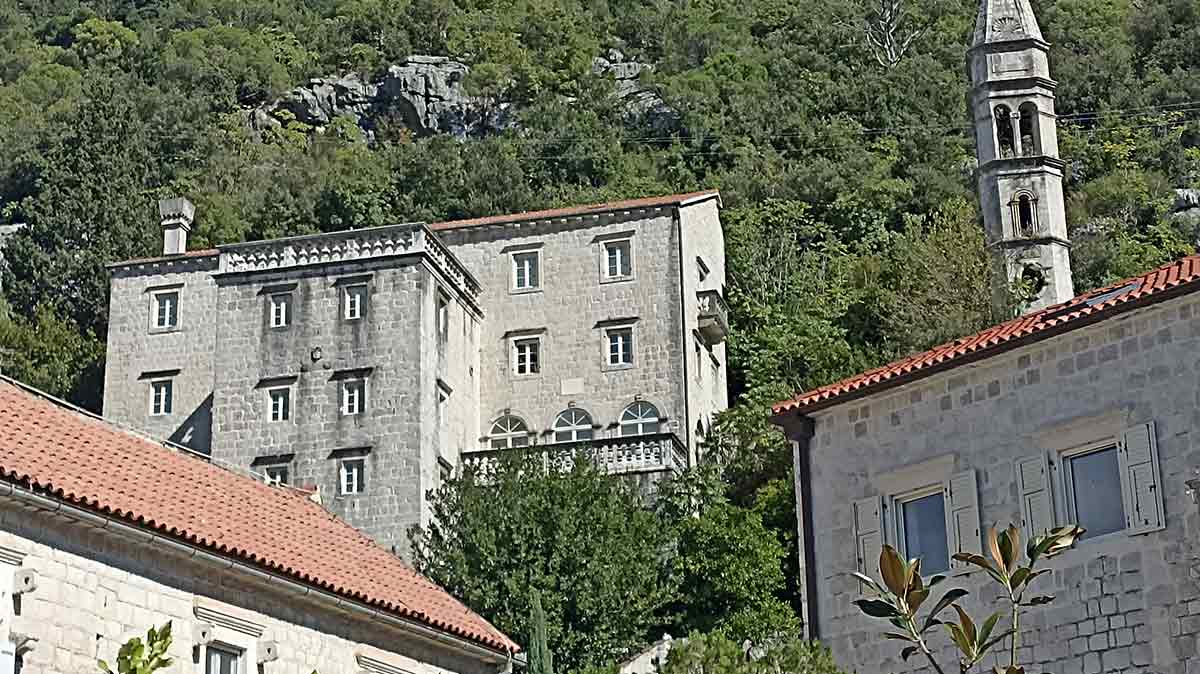
The Zmajević family came to prominence in the 17th century with Andrija Zmajević, the poet and Catholic theologian who became abbot of the island monastery of St George in 1656. He moved to Budva in 1664 after being appointed vicar, and in 1671 he was made titular archbishop of Bar, then under Ottoman rule.
The Zmajević palace is located in the western part of Perast further up the mountainside. It was built during the 17th century and came to be known as the bishopric after being expanded by Andrija Zmajević. During Archbishop Andrija’s tenure, the church of Our Lady of the Rosary was built as a family chapel, and its octagonal belfry is one of the most prominent landmarks in the town.
Andrija’s brother Krsto Zmajević was also a prominent merchant and civic leader who served as town captain and led fleets against Ottoman pirates in the 1670s. His elder son Vicko Zmajević would become the archbishop of Zadar in Croatia, while his younger son Matija was to become the famed Russian admiral.
A Montenegrin Idyll
The revival of the tourism industry after Montenegrin independence has catalyzed the rejuvenation of Perast as an attractive holiday destination. Although much smaller than the likes of Kotor and Tivat, Perast offers an idyllic alternative to the hundreds of tourists who are disgorged from cruise ships into Kotor’s Old Town every day.
Despite its size, there is enough to do in Perast for one or even two relaxing days. Start off with a 15-minute stroll along the full length of the waterfront, admiring the architectural details on the palatial facades, perhaps stopping for an ice cream along the way. The waterfront is also lined with restaurants, several of which are attached to hotels.
Step into the Perast Town Museum at the Bujović Palace at the western end of the town to learn more about the town’s history and its connection to the sea. The collection includes portraits of distinguished officers who served in Venetian and Austrian uniform, as well as their personal possessions.
In the center of town, check out the interior of the church of St Nicholas, and pay a small fee to climb up the belltower. At 55 meters, it is the tallest belltower in the eastern Adriatic and offers panoramic views of Perast itself, the Bay of Kotor, including the islands of St George and Our Lady of the Rocks.
Boats to the island of Our Lady of the Rocks depart regularly from the dock near the Smekja Palace. It is worth seeing the intricate interior of the small church and the museum. The neighboring island of St George is usually inaccessible to visitors.
While Perast is one of the quietest and most attractive towns in the Bay of Kotor, the influx of tourists during peak season (between May and September) can undermine its idyllic reputation. For the best experience, visit in April or October, or avoid the crowds by arriving early in the morning or late in the afternoon.