
Toothaches have plagued humans since the dawn of homo sapiens. Archaeological evidence shows that people in the Neolithic period drilled holes in teeth for pain relief. A 6,500 year old Slovenian jawbone reveals a dental filling made from beeswax. More recently, Ancient Egyptians may have prescribed dead mice to treat toothaches. The treatment of infected or hurting teeth is a common thread throughout human history. How was this universal issue dealt with during the Middle Ages?
Medieval Diets: Bread and Sugar, or Lack Thereof
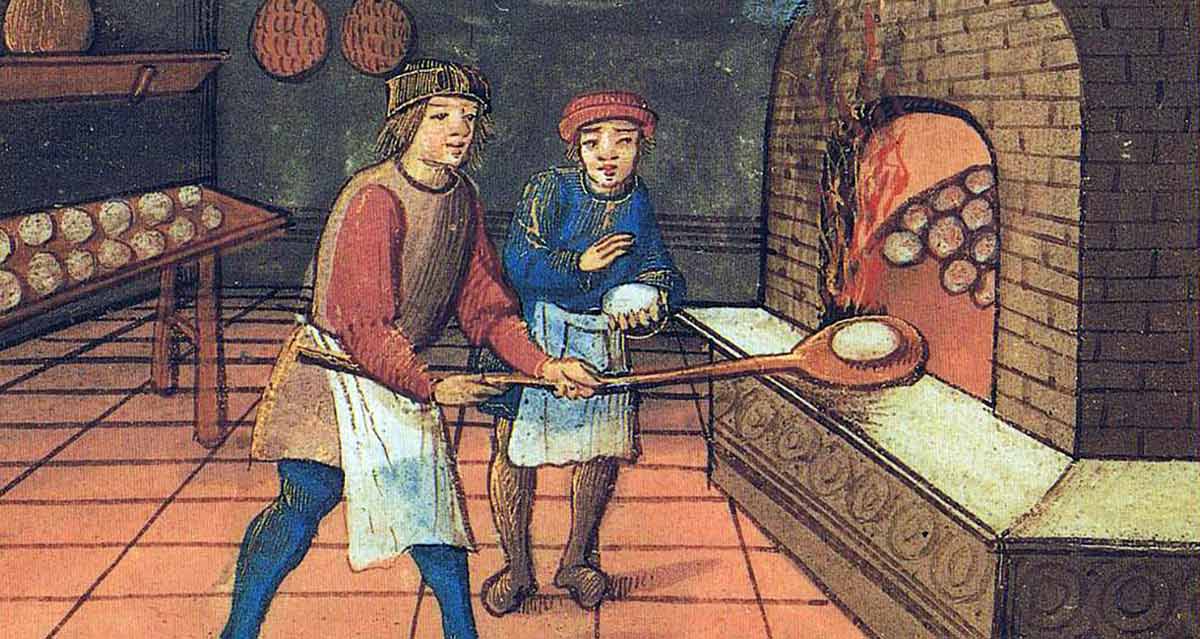
Although cakes, pastries, and chocolate are European staples today, sugar was not introduced into Europe until the First Crusade at the end of the 11th century. Crusaders first encountered sugar, or ‘sweet salt’ as they referred to it, during their visit to the Holy Land. Soldiers from the Crusades then carried the sweet substance back with them to Europe. However, it would take several centuries, and colonization of sugar-producing societies, before sugar became the food staple as we know it today.
The lack of readily available and refined sugar meant that people in the Middle Ages may have had better teeth than some people in the 21st century. However, tooth pain, decay, and infection were still ailments suffered in the Middle Ages.
Although sugar was absent, people in the Middle Ages ate other foodstuffs that decayed teeth. Bread was a staple, but medieval bread was ground by stone and extremely dense, causing teeth to wear down. Additionally, dental care was not a top priority. Despite the existence of medieval manuscripts advising methods of dental care, scholars like Juhani Norri suggest the average person in the Middle Ages likely did not have good dental habits. Diet combined with poor dental tendencies necessitated medical attention, procedures, and the people to administer them.
Medieval Barber-Surgeons
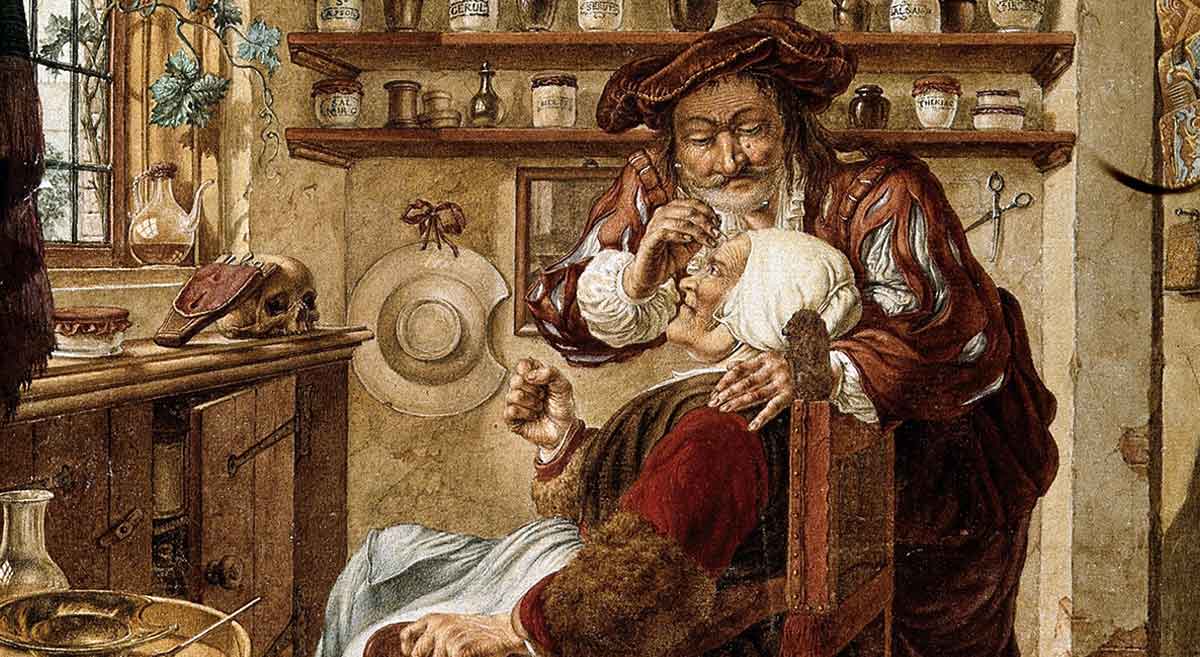
Although the treatment of dental pain has existed for millennia, the concept of a physician dedicated solely to teeth is relatively modern. Dentistry was a field spearheaded by French physicians beginning in the 18th century. Before dentists, if you were experiencing tooth pain, you would pay a visit to a physician, or a barber-surgeon, who combined the cutting of hair and the shaving of beards with operations like tooth extraction and bloodletting.
This was because these invasive procedures were deemed low status. The university curriculum at Oxford and Cambridge did not even include these surgeries for medical students. Instead, university-enrolled physicians spent their time analyzing the causes of different illnesses and their treatment using herbs and other concoctions.
This left operations like teeth-pulling and bloodletting “princypally with the handes of the werkman,” or barber, as a late Medieval English manuscript reads (Norri, p. 125). Rather than university, these jacks of all trades learned their craft through apprenticeships, which ranged anywhere between five and twelve years. Barbers may have also been the no-brainer choice for invasive procedures due to their readily available access to sharp instruments and tools, which they used for grooming.
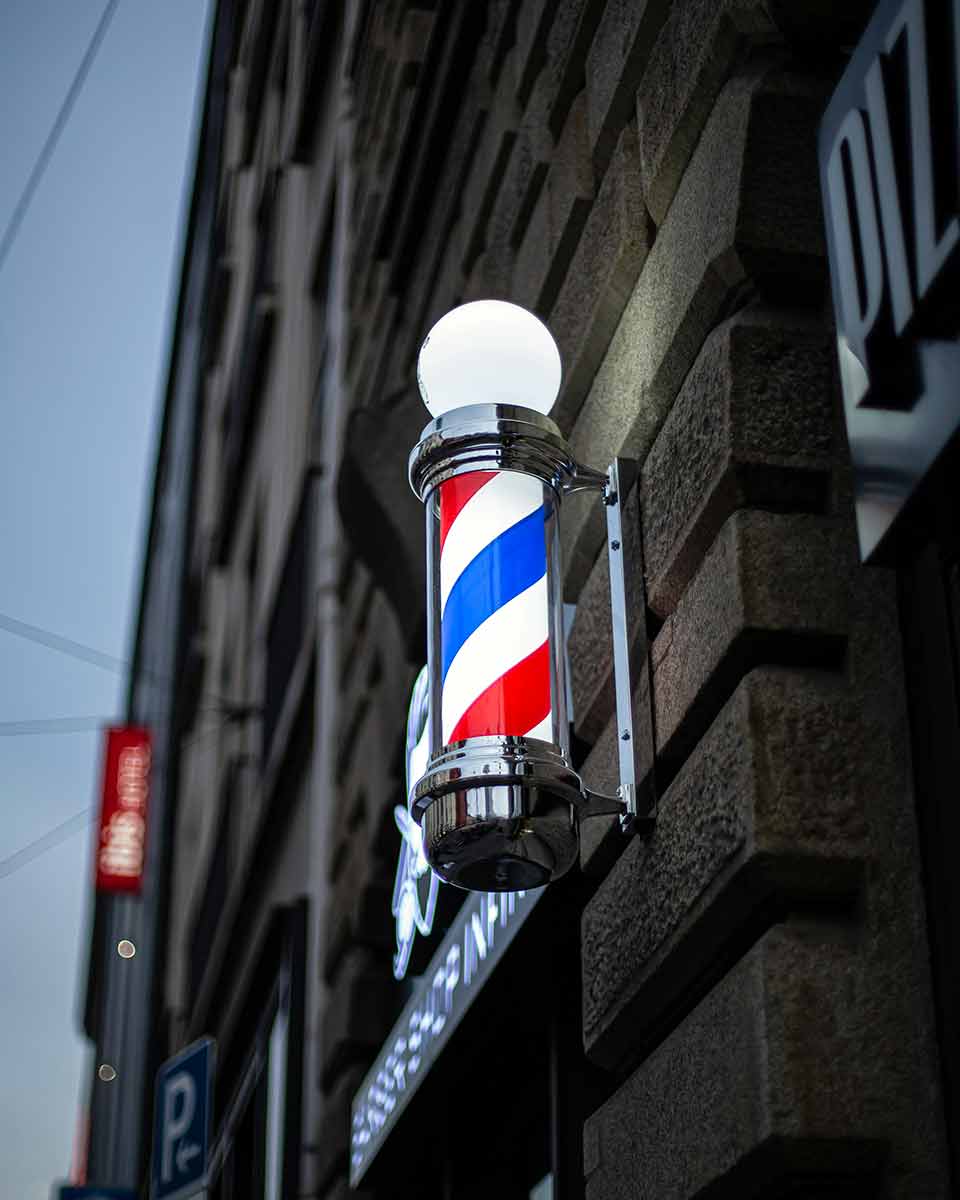
Bloodletting and the work of barbers became so synonymous with each other that their relationship is symbolically represented today via the red and white barber pole. After bloodletting procedures, the blood-stained rags would be hung outside barber shops possibly as a form of advertisement, informing the public what they could get done in addition to grooming. The way these rags twisted in the wind would become the basis for the spiral shape of the barber’s pole, which remains an iconic symbol used by barbershops throughout the world today.
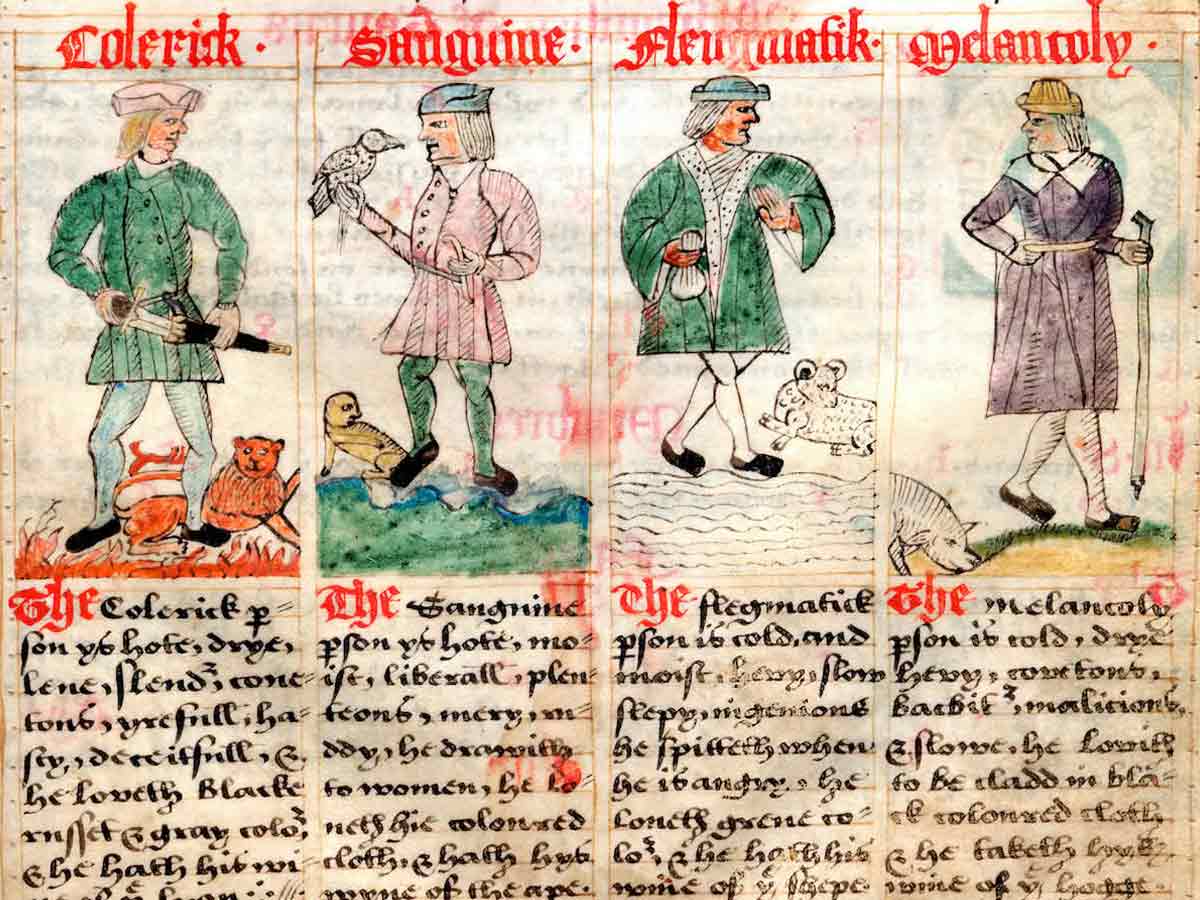
The Four Humors
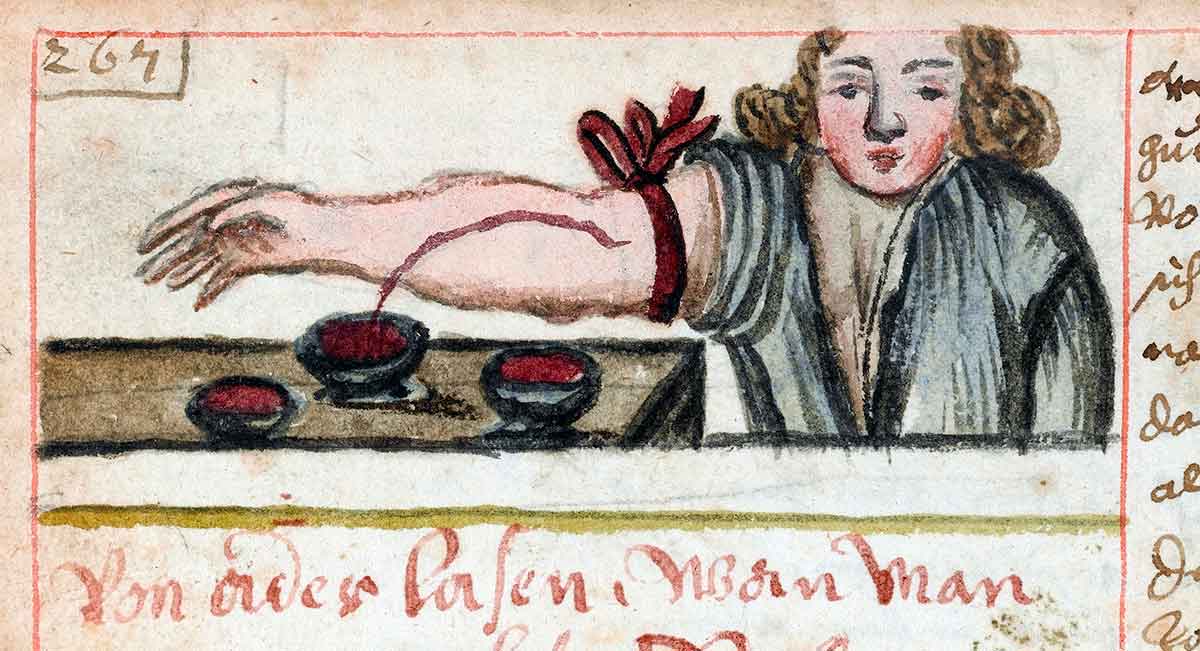
Why was bloodletting a part of dental care? Medieval medicine perceived the human body as a delicate balance between the four humors, or fluids. These were phlegm, blood, bile, and black bile. Each humor was tied to a specific state of being: cold and wet, hot and wet, hot and dry, and cold and dry, respectively. One became sick when one of these became imbalanced. To reinstate balance, treatment targeted the humor opposite the imbalanced humor: if a hot humor was in excess, the treatment involved increasing cold humors.
Bloodletting was used to relieve humors in excess. This procedure was practiced throughout human history in Ancient Egypt, Ancient Greece, and the Islamic world. By the Middle Ages, it was widely accepted as a viable treatment for a number of ailments, not just for dental pain. Bloodletting released the ‘bad’ or excessive humor from the body. Venesection, or cutting into the arm, was the most common form of bloodletting, but leeches would also be used to drain blood.
Worm-Infested Teeth
‘Corrupt’ humors could also create worms in the brain that trickled down to the teeth, causing toothaches and decay. Like bloodletting, the connection between worms and tooth pain was widely accepted throughout different eras of human history and across different parts of the world. Ancient Egyptians, Sumerians, and people living as far as China all shared this belief. In fact, the association of tooth pain with worms persisted long after the Middle Ages, maintaining a role in medical treatment as late as the 18th century.
People believed that the worms first took root in the jaws then migrated into the teeth. Tooth pain would occur as a result of these worms moving. However, worms could also be stagnant, or remain still. When this happened, a person would not feel any pain. Regardless of whether worms were moving or stagnant, they needed to be swiftly expelled from the mouth. One common method to extract them during the Middle Ages was through fumigation. This involved placing henbane seeds on top of smoking coals, which the patient was supposed to inhale via a pipe. By placing smoke beneath the teeth, the worms would eventually drop out from the mouth due to suffocation.
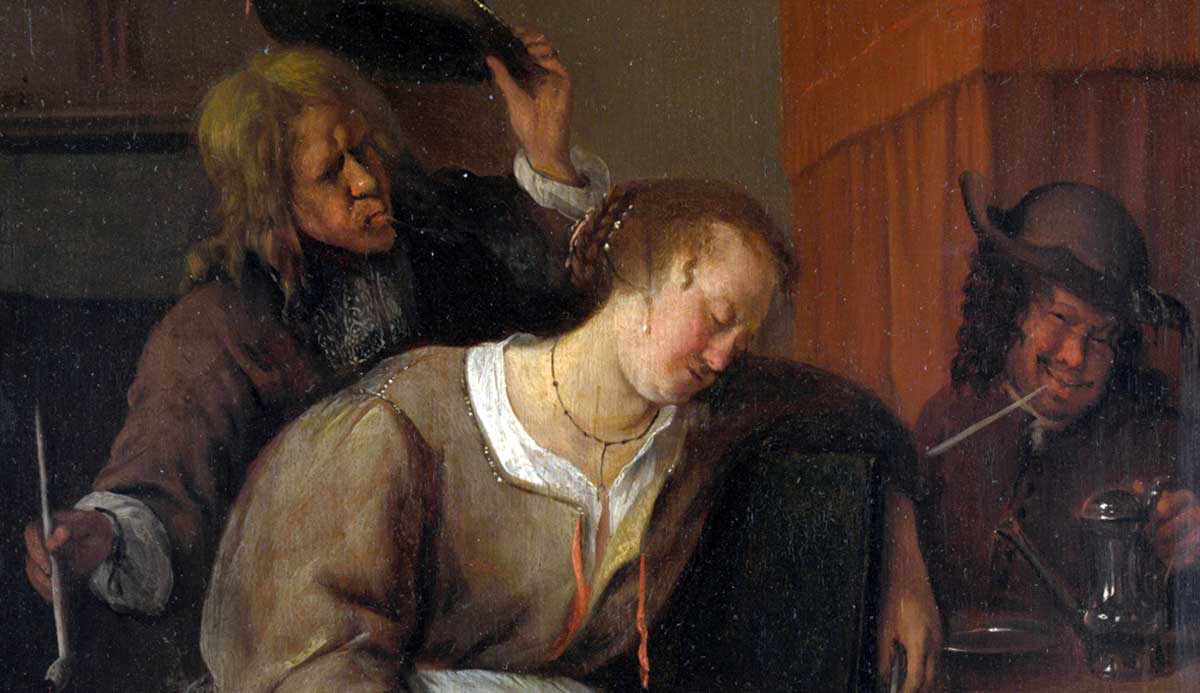
However, unfortunate side effects of this procedure were convulsions and hysteria. This is because henbane was a type of seriously poisonous plant. Surgeons and physicians of the Middle Ages were well aware of this side effect, and medieval physicians were warned not to get too close. However, despite the warnings, this practice was still used in parts of England up until the 20th century. Another poisonous plant used for fumigations was hellebore, which was labeled as “venemous & dystourblyng [disturbing]” (Norri, p. 132).
Cauterization
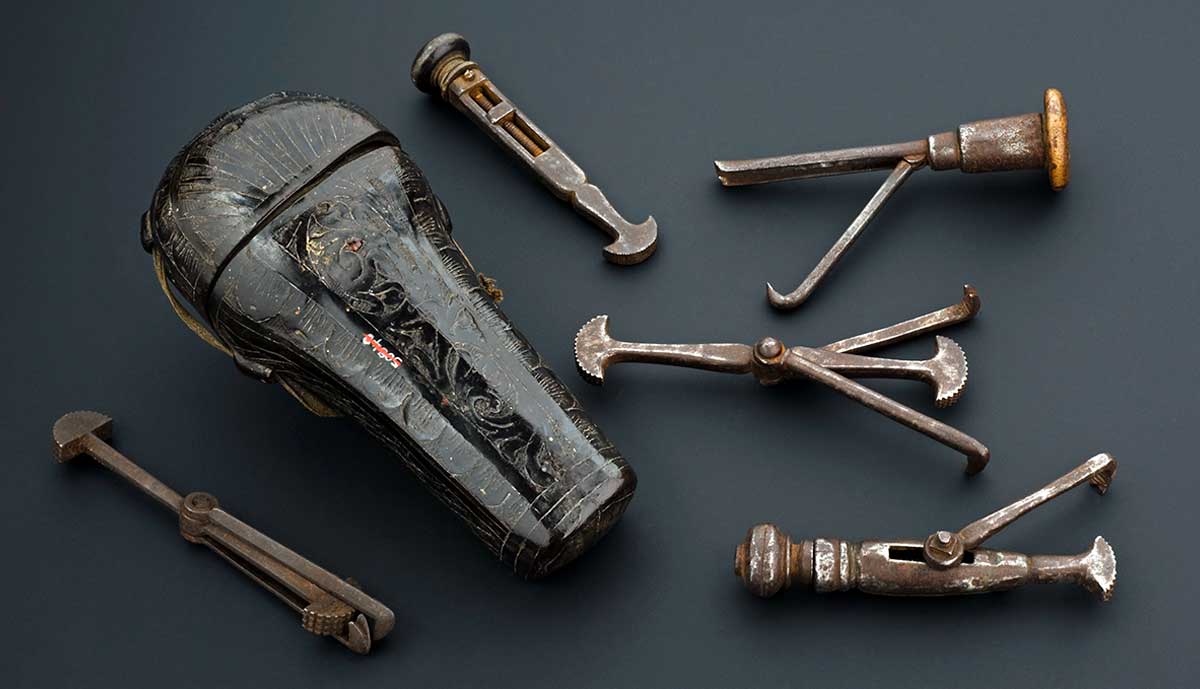
Another form of dental treatment in the Middle Ages was cauterization. There were many variations, but all generally involved heating an iron or bronze needle and placing it directly on a hurting tooth. Although practiced for millennia, the procedure came to be largely associated with 11th century Arab physician Al Zahrawi. A highly motivated and busy medical scholar, he produced over 200 surgical tools and wrote an extensive 30-volume medical text, the Kitab al-Tasrif. A big proponent of cauterization, Al Zahrawi’s text references this treatment nearly 50 times.
In addition to treating other ailments, Al Zahrawi also proposed cauterization to fill tooth holes. This involved placing a hot iron directly on a tooth hole until it cooled. This was repeated several times, so “the pain [would] surely pass, the same day or the day after.” Al Zahrawi’s procedures were widely referenced and practiced throughout European medicine, especially those of cauterization.
The Medieval Netherlands even used a variation of cauterization for dental fillings. A hot iron pricker would dipped into a concoction of olive oil, marjoram, and seed of hemlock. Like the procedures of Al Zahrawi, this was applied directly to the hole in the tooth and re-applied several times.
Exodontia
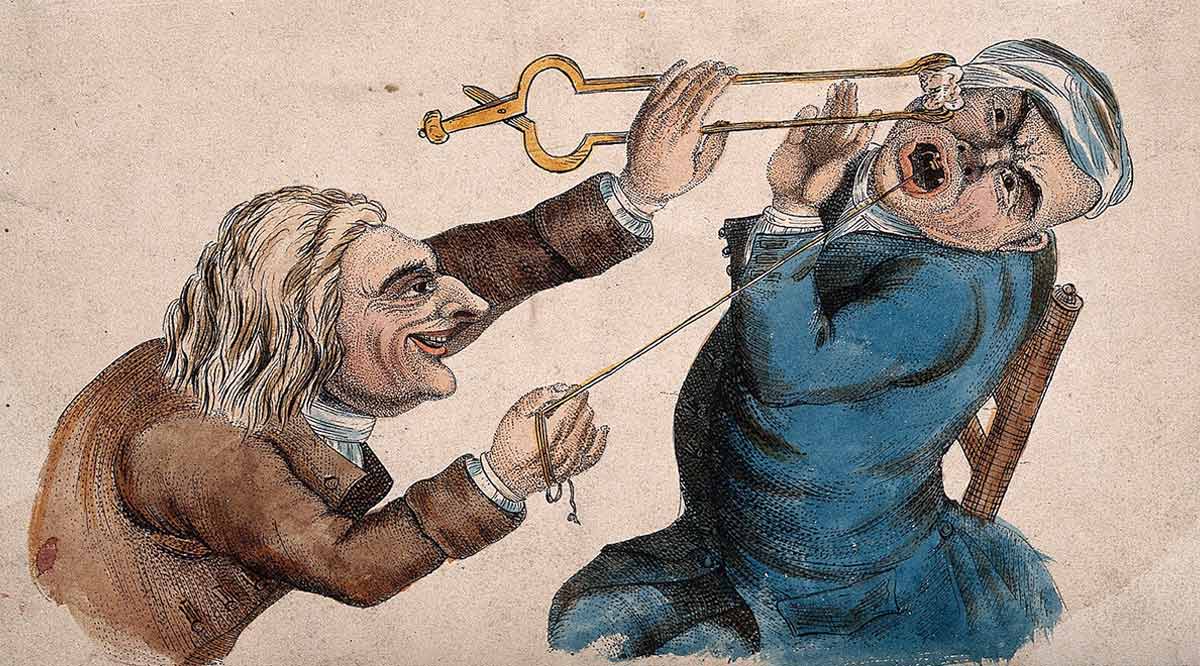
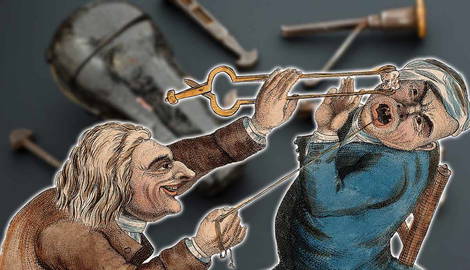
Tooth pulling, or exodontia, was the final straw if nothing else worked and pain persisted. However, even in the Middle Ages people understood the risks associated with tooth extraction. This procedure was highly dangerous because it could be fatal. Medical texts warned against extracting teeth that were not loose. A Medieval Dutch physician wrote: “If there are holes in teeth with pain and the teeth are not loose the teeth should not be extracted. In many people this resulted in a fatal outcome without healing, many are deceased in this.” Wrongly or poorly pulled teeth could also result in jaw abscesses and bone splinters.
However, if a patient’s tooth was bad enough, they would pay a visit to the barber for this risky business. Teeth extraction in the Middle Ages was a public spectacle. Private dentist offices did not exist, so many treatments were done in public spaces, in some cases as part of a public performance. In addition to barbers, there were the journeying ‘tooth-pullers.’ In most cases they were charlatans, simply taking advantage of people’s pain in order to make a quick buck in the cities they were passing through.
Teeth-Pulling Charlatans
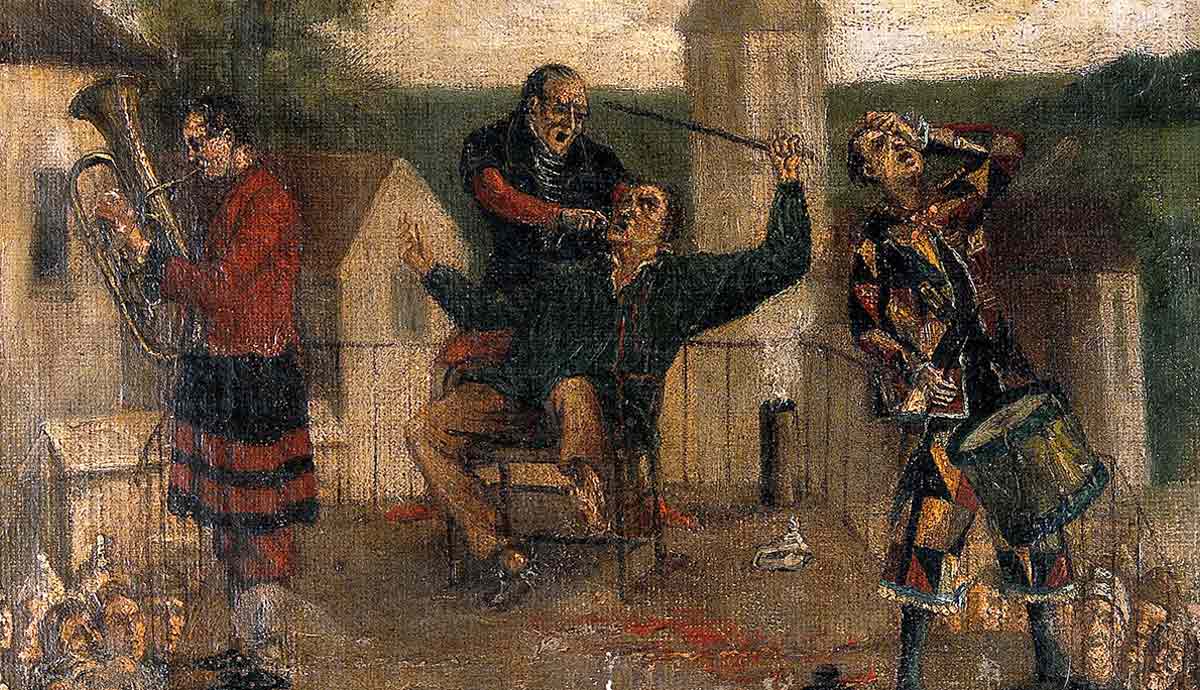
In fact, the word charlatan comes from the Italian ciarlatano, which meant someone who sold enslaved people, trinkets, and pulled teeth in public spaces (Wynbrandt, p. 30). They would usually be part of a traveling circus, and a wide stage would be set up in the town square. The procedures were made public as a marketing strategy. The more people in the crowd, the higher the chances there were people experiencing tooth pain who would be willing participants.
The tooth-puller, decorated with a necklace of teeth, would entice the crowd by first inviting an actor, unbeknownst to the crowd, who would perform having their teeth pulled. This encouraged others to follow suit. There were typically loud instruments being played, which would drown out the sounds of people’s screams. Their lack of credentials did not stop the tooth pullers, who would simply move on to the next town after their performances, leaving behind them a macabre trail of “life threatening complications” (Wynbrandt, p. 27).
Besides bloodletting, purging, and fumigation, some dental treatments incorporated materials that were downright vile. Some concoctions called for “excrement, urine, and any kind of dirt as the basic ingredients” (Norri, p. 132). The person administering them was encouraged not to reveal the medicine’s true ingredients. One recipe from a 15th century medical book recommends the physician to take “raven’s dung and put it in the hollow tooth and color it with the juice of pellitory of Spain that the sick recognize it not nor know what it be” (Wynbrandt, p. 29). Like the charlatan teeth-puller, these treatments were based on deceit.
The Legacy of Medieval Dentistry
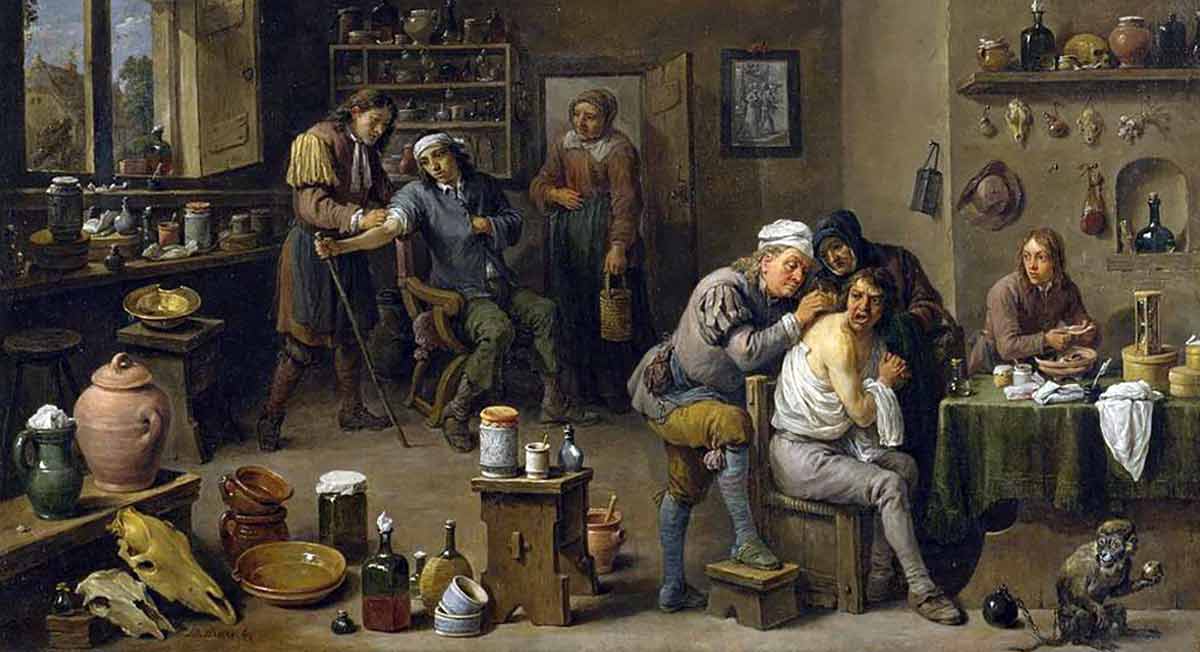
The Middle Ages was a difficult era for toothaches. Surrounded by the bloodstained rags of barbers, cauterizations, and tooth-pulling charlatans, the average person was likely intimidated to seek dental treatment, for good reason. However regressive we may perceive these practices, many persisted well past the Medieval Period, some creating foundations for modern dentistry. Further, this macabre dental history may have bled into the modern psyche; could dental phobia be lingering trauma from medieval dental procedures?
Bibliography
Norri, Juhani. “Dental treatment and related vocabulary in late medieval England.” Mémoires de La Société Néophilologique, 18 Oct. 2024, pp. 123–152, https://doi.org/10.51814/ufy.1041.c1457.
Wynbrandt, James. The Excruciating History of Dentistry Toothsome Tales & Oral Oddities from Babylon to Braces. St. Martin’s Press, 2024.