
From its earliest days, the Soviet state made its attitude towards religion and faith clear. Denounced as prejudice, activities of churches of any denomination were ceased or strictly limited. In the dark 1930s, thousands of people were executed on charges related to their religious beliefs. However, faith persisted, and the Orthodox Christian church managed to maintain its traditions and even gain new followers during these troubled decades.
The USSR’s Beginning: Churches After the Revolution
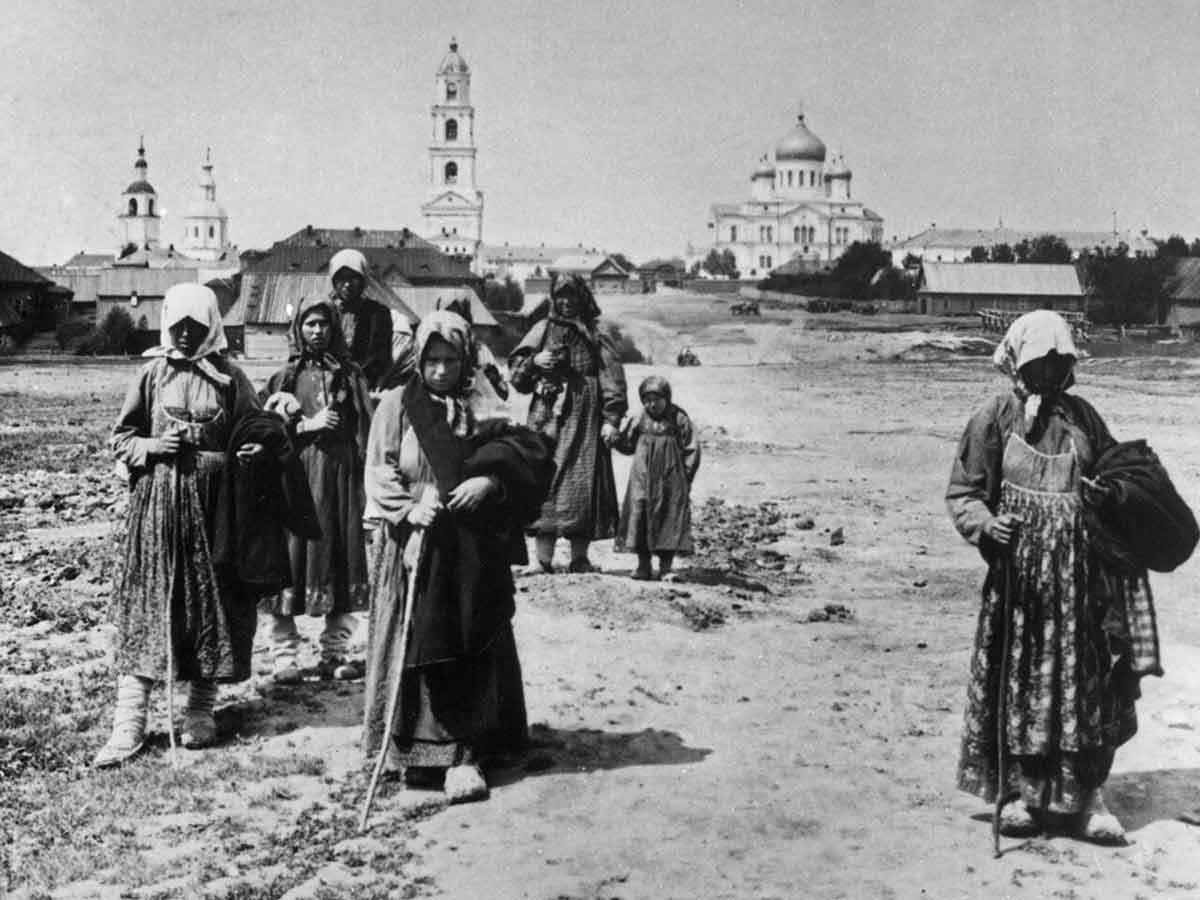
By the beginning of the 20th century, Orthodox Christianity was an integral part of the Russian Empire’s life and culture, closely connected to monarchy and governmental institutions. Above all, the official bodies of the church served as yet another branch of power that strengthened the monarchy’s position and offered it resources. Still, some churches and priests opposed some of the governmental decisions and even formed isolated cults and movements with political ambitions, but they rarely avoided prosecution. The clergy was a closed community with almost non-existent chances for those not related or otherwise affiliated with incumbent bishops and priests.
During the Russian Civil War, the majority of clergymen supported the anti-communist White Movement, which received its name in opposition to the Bolsheviks’ signature red. After the White Movement’s defeat, many prominent clergymen fled to Europe, establishing the Russian Orthodox Church Abroad.
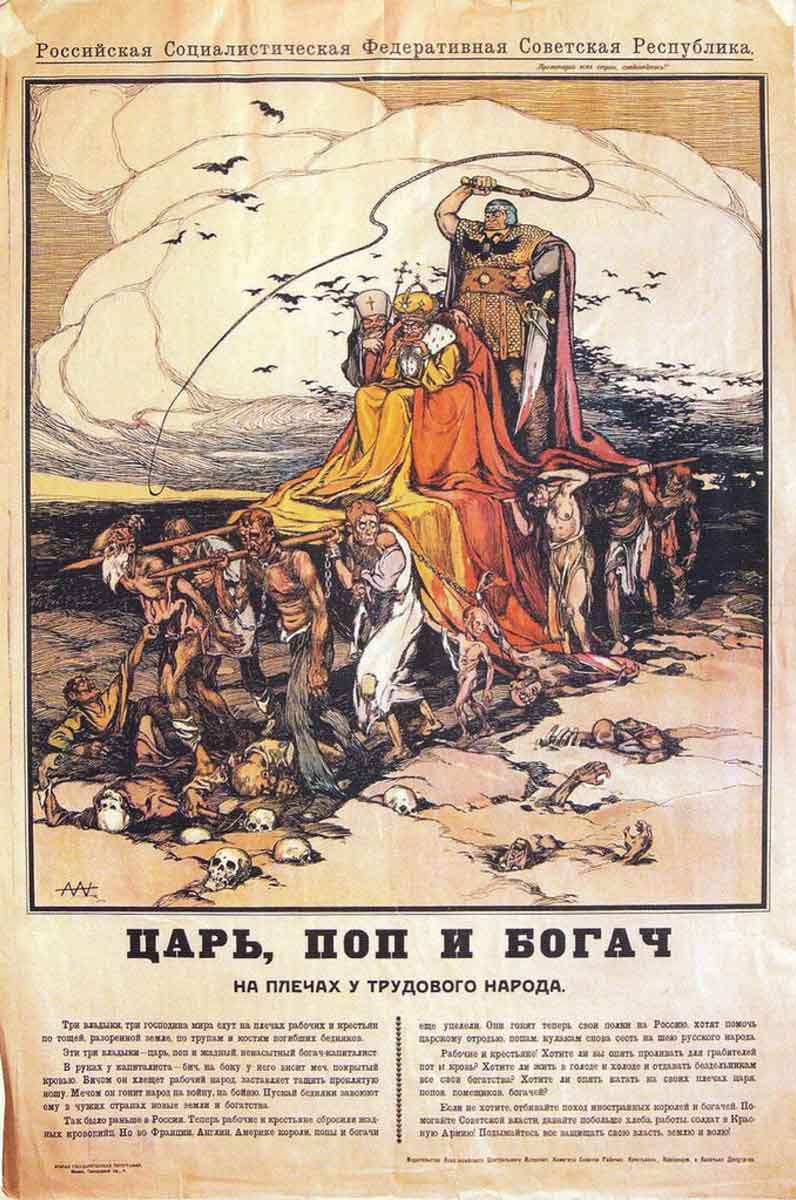
The clergymen who decided to stay in Russia expected radical changes and reforms from the new government that actively announced itself as secular. One of the first documents signed by the Bolshevik government led by Vladimir Lenin in 1917 abolished all ethnic and religious privileges of limitations. Publicly, the new officials called for the elimination of all “religious prejudice.” Newspapers published caricatures of priests, framing them as lazy and corrupt enemies of the working class, preying on their weaknesses and exploiting their labor.
By the 1920s, the government began the nationalization of all church property and confiscation of works of art and religious artifacts. Some of these objects were moved to museums (paradoxically, the move saved many Medieval artworks from destruction in humid and tightly-packed churches), and others fell into the private hands of governmental officials. Partially, this measure was a provocation aimed at identifying the most active and dangerous actors of the religious scene who would lead an expected insurrection. As a result, around two thousand clergymen and practicing Christians were executed.
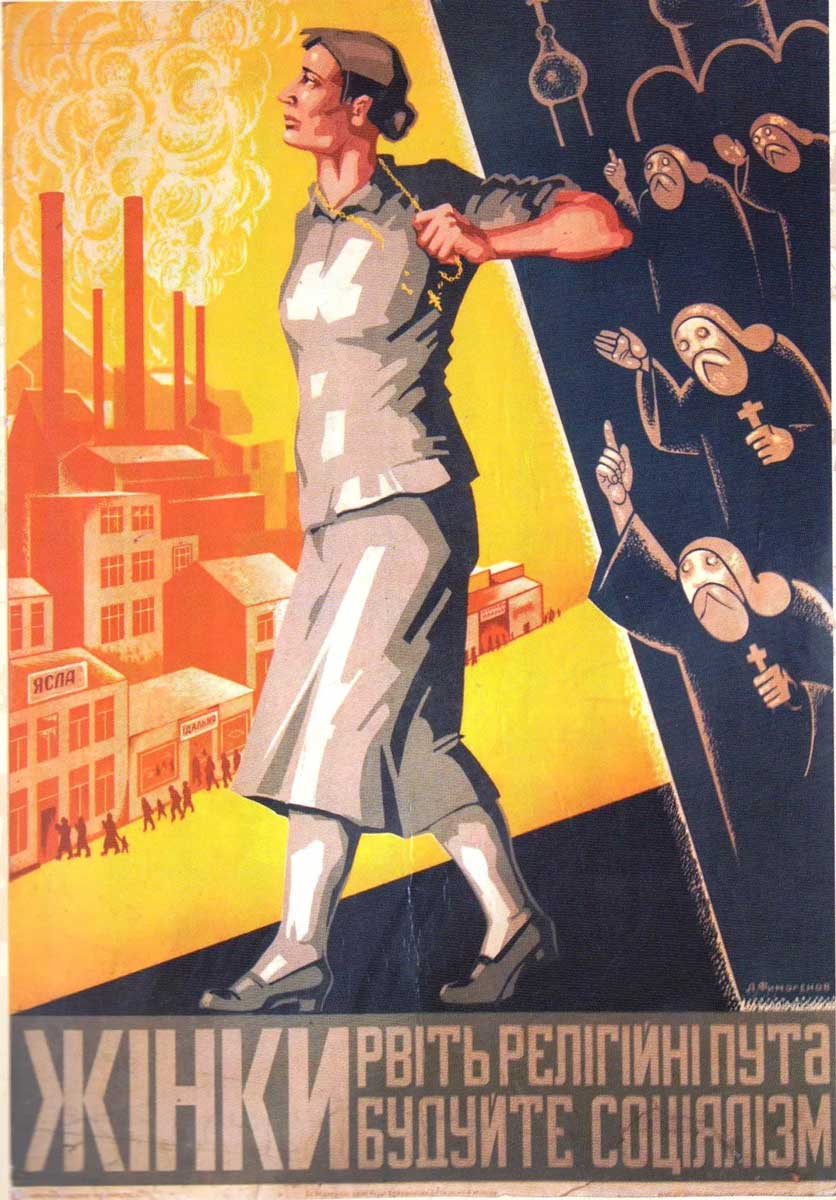
Among the early Soviet Christians, the attitude towards the new authority varied. Some decided to comply and collaborate with the officials, following all orders to avoid bloodshed. Others were more radical. Among more conservative branches of Orthodox Christianity, the clergy directly identified the Soviets with the Antichrist, who would come before the Last Judgment disguised as the Savior of all. In 1926, a group of rural conservative priests announced that the upcoming All-Soviet census was a sign of the upcoming Apocalypse. As a result, dozens of people committed suicide, either burying or burning themselves alive.
The 1930s: The Darkest Decade
The 1930s in Soviet Russia were known as the time of great terror, violence, and persecution. The paranoid government led by Joseph Stalin ruthlessly punished even those of their own ranks fighting for power. The church did not manage to stay out of it. In 1929, the Central Executive Committee adopted a law banning all religion-related activities except for church service. Education, social work, child care, and other functions were left to governmentally approved secular bodies. From around one thousand churches of all denominations that existed in pre-revolutionary Moscow, only forty remained functional.
If, during the 1920s, the Orthodox Christian clergymen were the main targets of repressions, a decade later, the focus shifted to practicing believers, including Muslims, Jews, Catholics, Protestants, Buddhists, and others. According to historians’ evaluations, around 300,000 people were arrested during the Great Purge, with about a third of them executed. Still, the exact number of those persecuted for religious reasons is almost impossible to pinpoint since many of them were formally arrested on other charges.
However, faith persisted among those who needed it. Despite oppression and threats, monks from shut-down monasteries organized underground convents disguised as shared houses for workers with no families. According to the 1937 Census, almost 50% of Soviet citizens still identified as Orthodox Christians, even if they were not actively practicing.
Communism as the New Religion
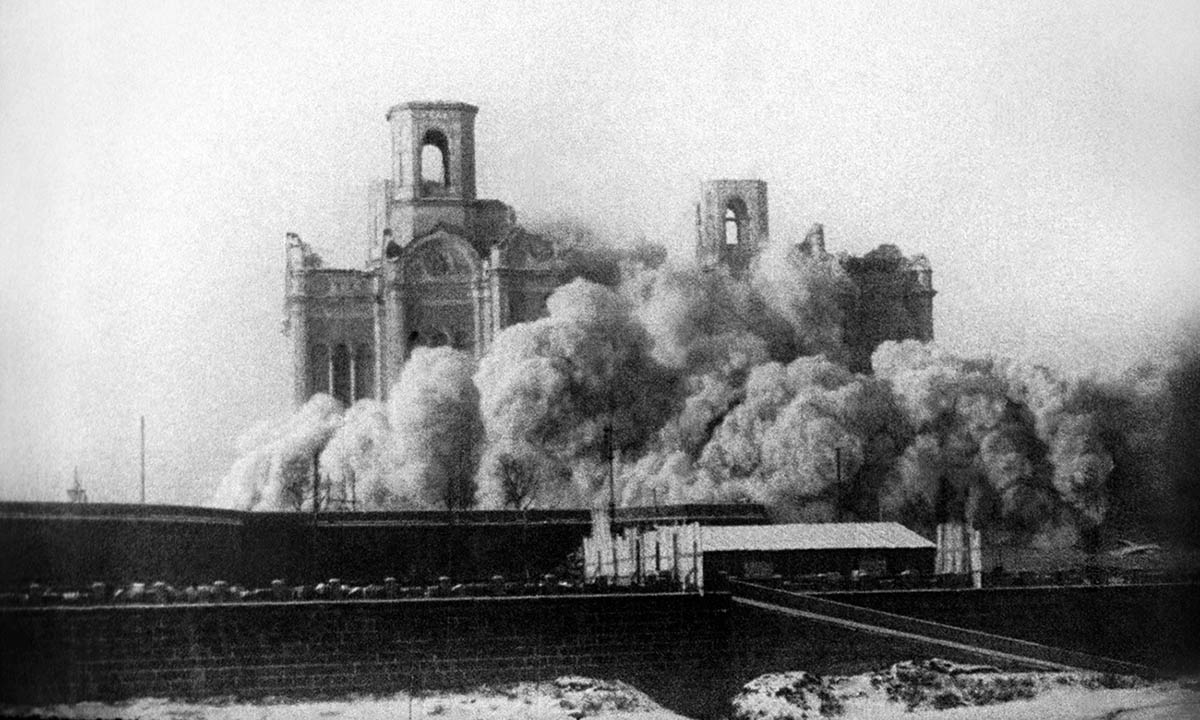
By forcefully tearing the religious component from the daily practices and worldviews of their citizens, the Soviet government left a gaping hole that needed to be filled. The new ideology became a perfect substitute: with the same enthusiasm, earlier reserved for religious rituals, citizens were expected to participate in regime-related activities. In 1931, the famous Cathedral of Christ the Savior in Moscow was demolished using dynamite. The cathedral was relatively new; it was consecrated only in 1883, but it nonetheless became an important symbol of monarchy and faith, which were interconnected.
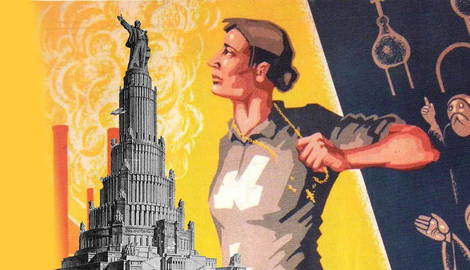
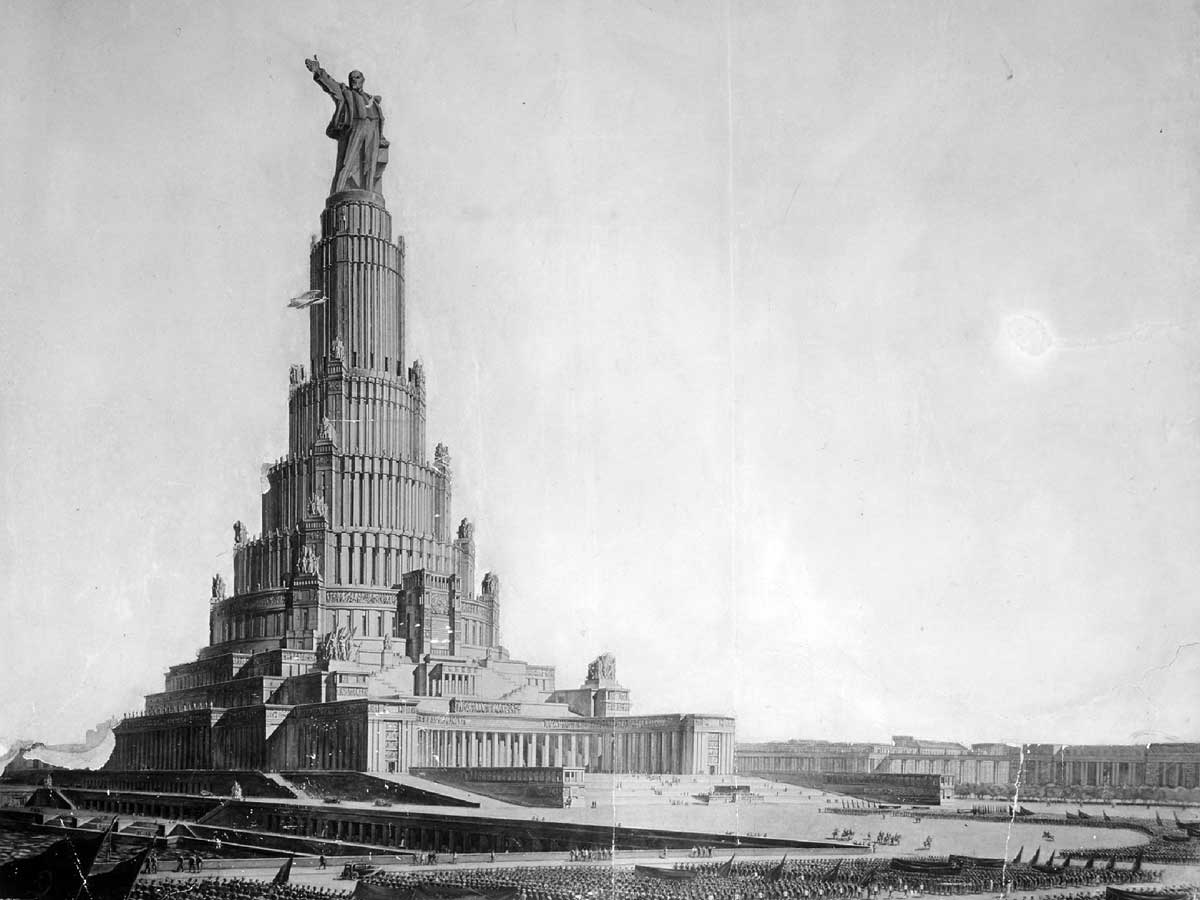
The cleared plot of land within walking distance from the Kremlin was meant to become a place for the new kind of temple—the monumental Palace of the Soviets. The Palace project, designed by Ukrainian-Jewish architect Boris Iofan, was a tall ziggurat-like structure of columns with a hundred-meter statue of Vladimir Lenin on top. It was meant to house mass demonstrations celebrating the USSR and regular sessions of the Supreme Soviet—the highest organ of state authority. The ambitious and borderline absurd project was never realized due to Nazi Germany invading the Soviet Union in 1941. In 1960, Nikita Khrushchev ordered the construction of a public swimming pool using the Palace’s abandoned foundation. In 1995, however, the pool was demolished, and the new Cathedral of Christ the Savior was constructed instead.
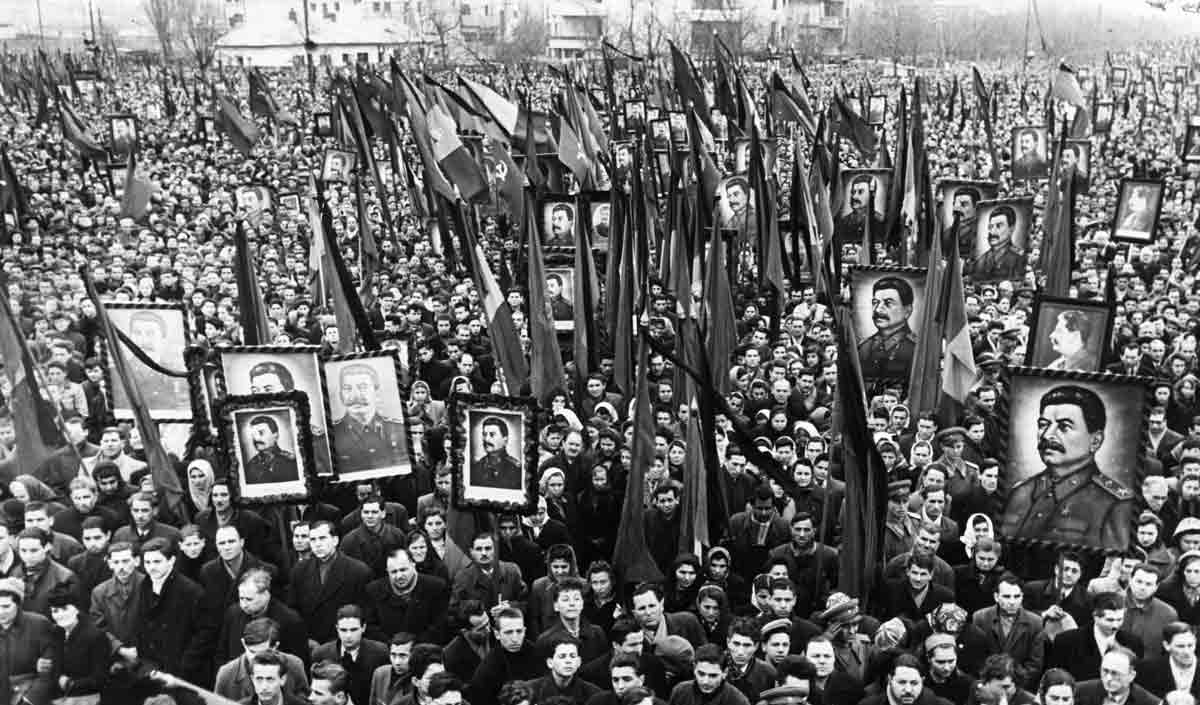
Personality cults of leaders replaced the cult of Jesus and Christian saints. The mythologized figure of Joseph Stalin as the father of the nation, successful in every deed and competent in any sphere of human knowledge, became a sacred symbol. Despite hundreds of thousands killed during the 1930s repressions, Stalin’s funeral in 1953 had around two million attendees, with hundreds (or, according to some evaluations, thousands) of people dying in a crowd clash.
Orthodox Church During World War II
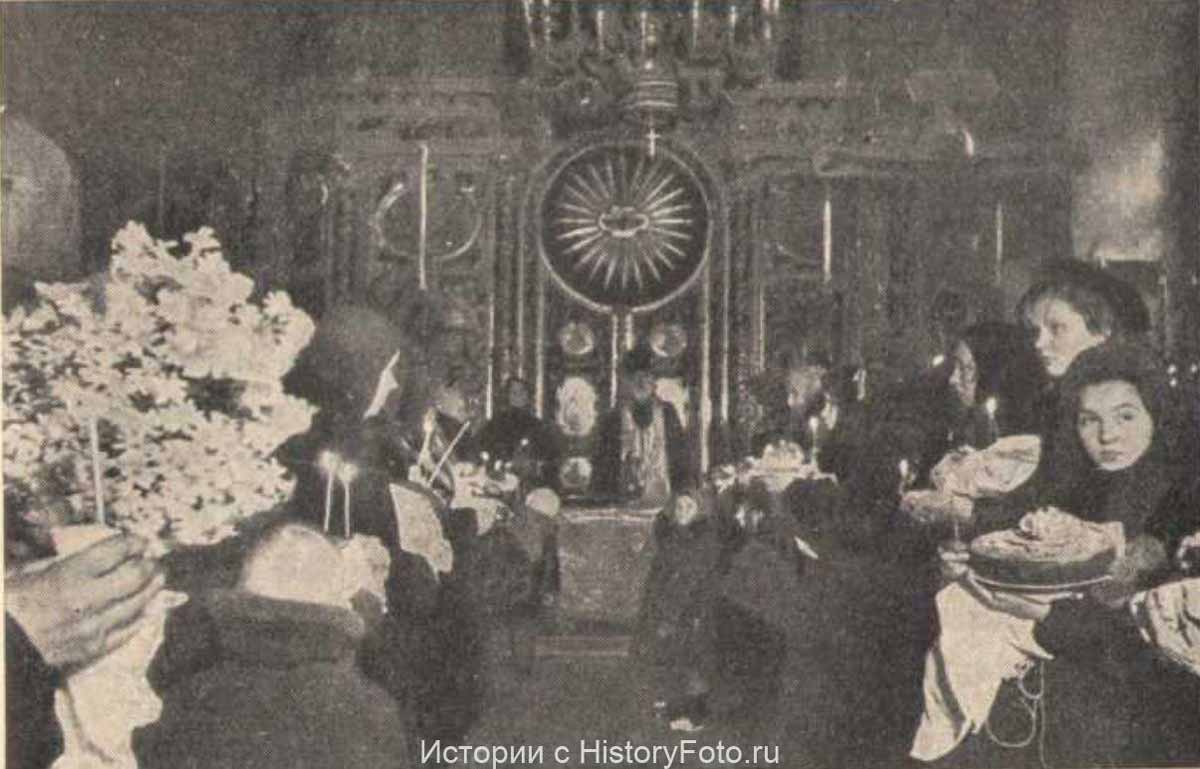
However, the Soviet state never resorted to a complete and radical elimination of all remnants of religious life. After the Nazi Germany opened the Eastern Front in June 1941, the government decided to do the contrary—revive the country’s religious life under the officials’ strict guidance. In April 1942, Moscow authorities lifted a curfew for one night to let the locals attend Easter service. Given the circumstances, the Soviet officials decided to once again make the church their instrument, this time to maintain the spirits of those who had to fight.
In 1943, right before the Tehran conference, focused on the issue of opening the second front among others, Stalin appointed the Russian Orthodox Church patriarch and several bishops to various parts of the Soviet Union. While some believe that this was a sign of Stalin’s change of heart towards faith, historians insist it was a political move aimed at showing Churchill and Roosevelt that the Soviet state could be tolerant and ready for compromise. As for the clergy, many of them volunteered for service during the war, mostly working as doctors and nurses. On the territories occupied by Nazi forces, they communicated with partisan forces, sheltering them or supplying information.
USSR After the War: Scientific Atheism
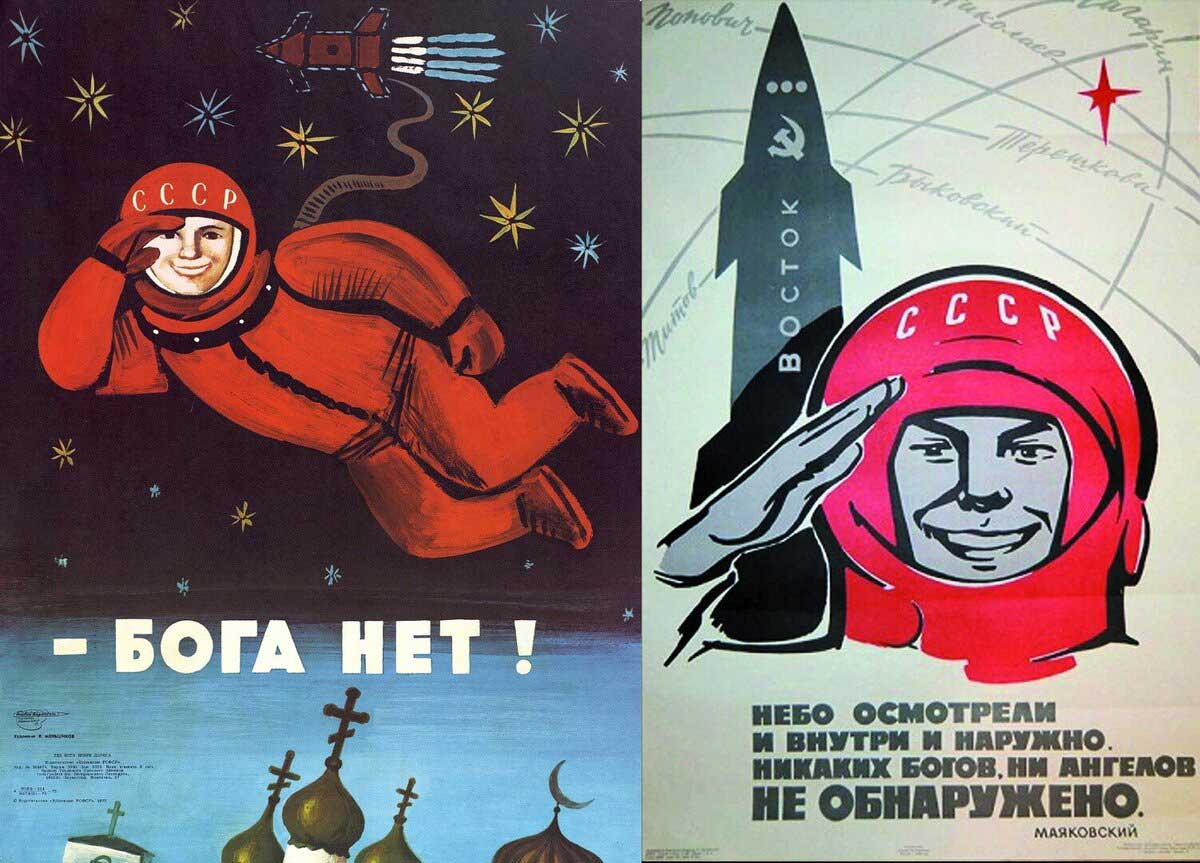
Despite the evident change of tone in the relationship between the church and the state, after Stalin’s death in 1958, Soviet clergymen and followers were prosecuted once again, although less violently. This time, the main restrictive measures concerned the churches’ funds and the amount of paid taxes. The 1960s and 1970s were decades of emphasized atheism, not in the least provoked by the rapid advancements in secular social welfare, science, and space exploration. One of the most popular propaganda posters of the time featured the image of Yuri Gagarin happily reporting that he hadn’t seen any God while in space.
Still, despite propaganda and oppressive measures, the new generation of Soviet people started to attend churches. Although executions and prison sentences became extraordinary, citizens still risked their jobs or social status by attending services or baptizing their children. These norms remained in place until the Soviet Union’s ultimate collapse in 1991 when churches of all confessions gradually restored their rights and privileges.