
For much of antiquity, Persia stood at the crossroads of civilizations. A cultural melting pot, many of its traditions differed greatly from anything found elsewhere in the world. One of the most striking differences was how the Persians treated their dead. Instead of burying bodies beneath the earth, they placed them as close to the sky as possible. These structures, known as Towers of Silence, functioned not as tombs but as platforms where nature itself carried out the final rites. To other civilizations, this practice seemed unsettling, but within Zoroastrian belief, it was deeply grounded and profoundly spiritual. Understanding these towers helps us better understand the Persian view of life and death, of nature, the body, and the soul.
Persia Before and After Zoroaster

Before the establishment of the Persian Empire, the region was inhabited by various Indo-Iranian tribes whose spiritual life was based on polytheistic rituals, nature deities, and practices shared with their Vedic cousins in ancient India. Early Persians had a diverse pantheon, including gods of the sky, water, wind, and fire. Each deity was honored through distinct symbolic rituals. But within this early belief system, death was regarded with deep suspicion. Corpses were believed to attract malevolent forces, and there was no unified doctrine dictating how the dead should be treated.
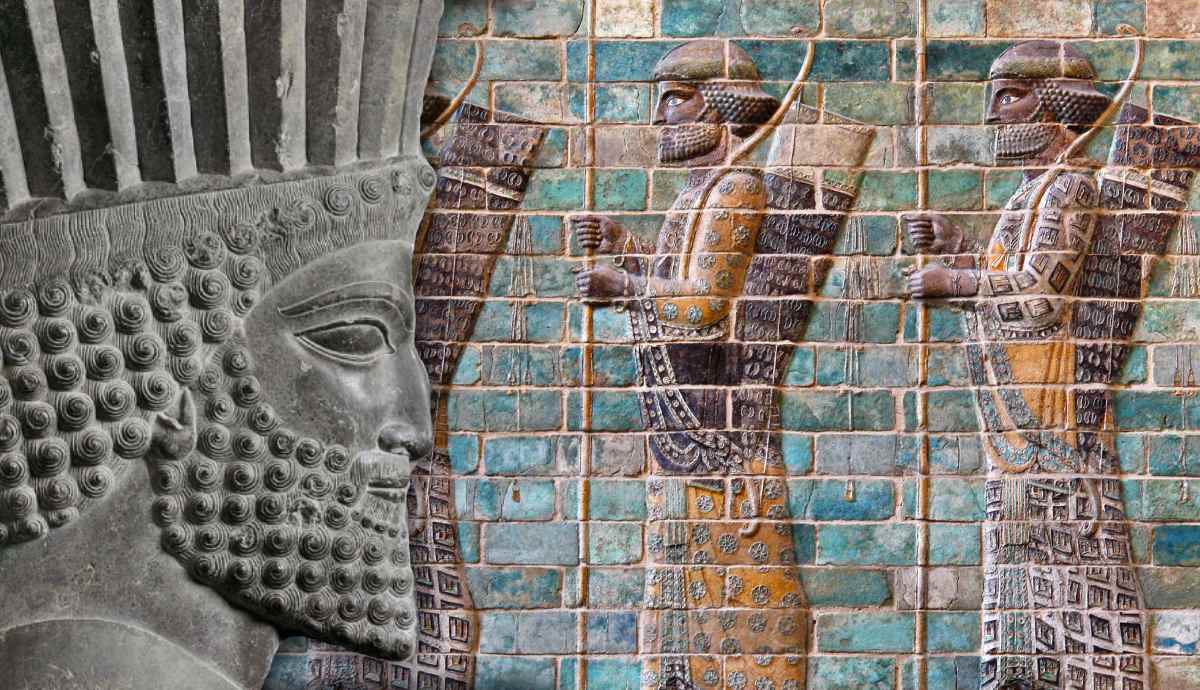
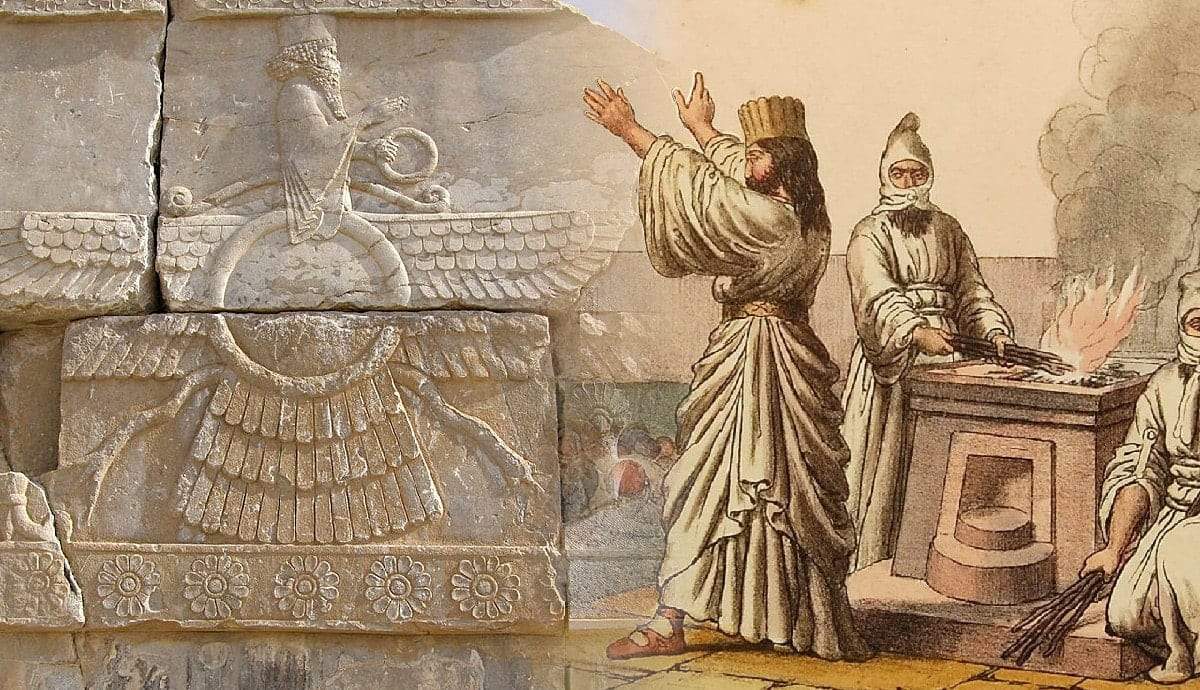
Dramatic changes came in the first millennium BC with the emergence of Zoroastrianism and its founder, Zarathustra, also known as Zoroaster. He declared that the world was a battlefield between Asha, the cosmic principle of truth and order, and Druj, the force of chaos and impurity. He called upon his followers to support Asha and the supreme deity, Ahura Mazda. By the time the Achaemenid Empire rose under Cyrus the Great in the 6th century BC, Zoroastrianism had become deeply intertwined with Persian identity.
Why the Dead Could Not Touch Earth
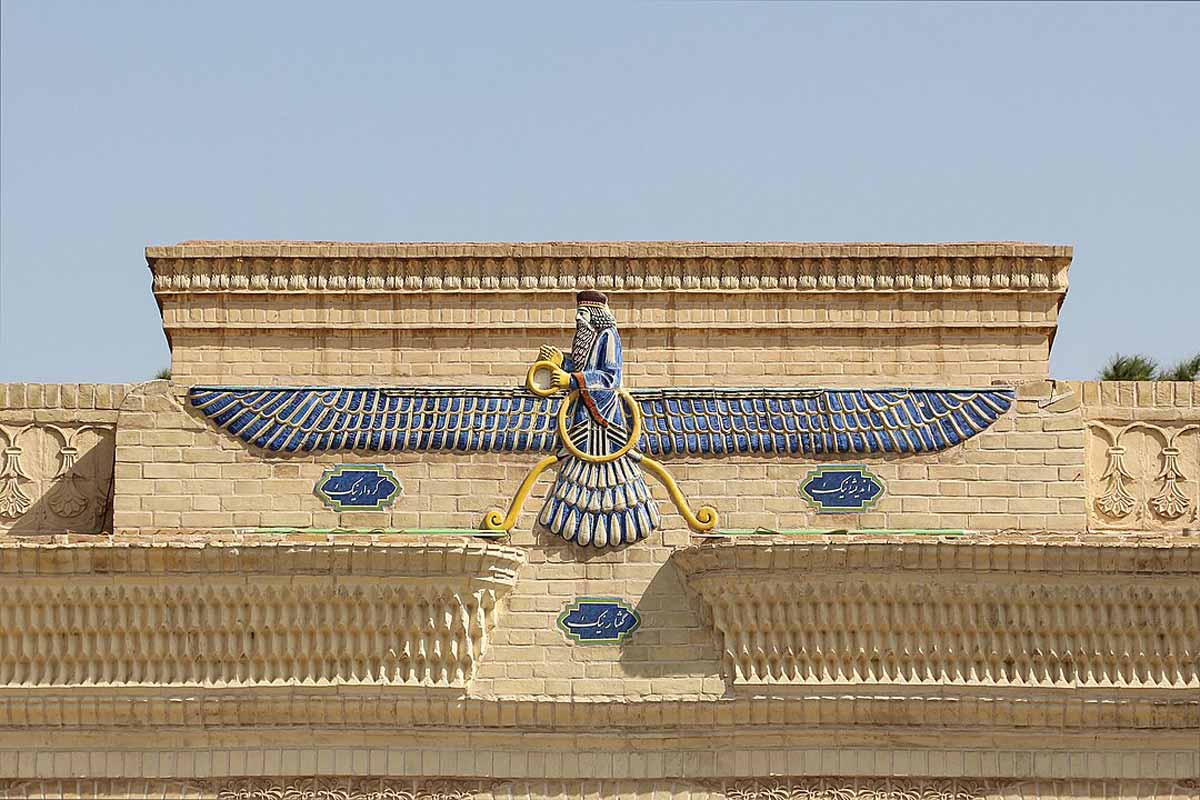
With the emergence of Zoroastrianism came a new way of treating the dead. In Zoroastrianism, ritual purity was one of the most important concepts, and one of the greatest sources of impurity was corpses. Followers of the faith believed that at the moment of death, the demon Nasu entered the body, turning it spiritually unclean and making it a carrier of Druj. This was not merely a symbolic fear but a literal one. They believed that impurity could easily spread through contact with a corpse.
Because of this belief in the unclean nature of the dead, bodies could not be buried in the earth. The Earth was considered one of the most important elements of the world. It gave life and provided everything necessary for living. If corpses were buried, the earth itself would become polluted.
But burial was not the only forbidden practice. Cremation was also prohibited. Fire, too, was regarded as one of the world’s most sacred elements, and burning a corpse would expose it to impurity. For this reason, new methods of handling the dead had to be developed, and priests established strict protocols outlining how corpses were to be treated.
“Let no man alone by himself carry a corpse. If a man alone by himself carries a corpse, the Nasu rushes upon him, to defile him, from the nose of the dead, from the eye, from the tongue, from the jaws, from the sexual organs, from the hinder parts. This Druj Nasu falls upon him, [stains him] even to the end of the nails, and he is unclean, thenceforth, forever and ever.” (Vendidad 3.14)
The Birth of the Dakhma
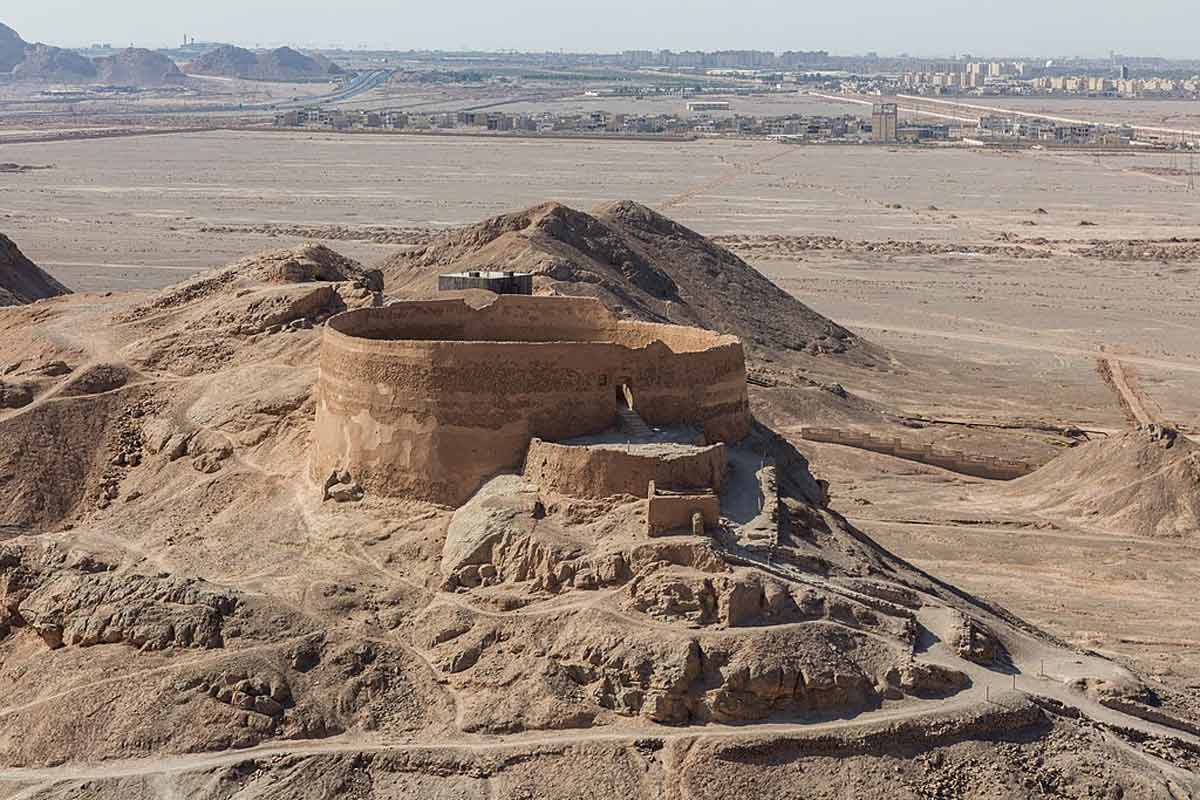
The birth of the Dakhma, or Tower of Silence, was not something that happened overnight; it was the result of centuries of tradition and carefully maintained protocols for handling the dead. This is why the earliest Zoroastrian texts contain no direct reference to any specific architectural structure used for funerary purposes. Instead, they present strict and explicit rules: corpses must not touch earth, fire, or water; impurity must be contained; and the body must be exposed to sunlight and scavenging birds so that nature can purify it.
“So much I can say for certain from my own knowledge about them: but what follows is reported about their dead as a secret mystery and not with clearness, namely that the body of a Persian man is not buried until it has been torn by a bird or a dog.” (Herodotus, Histories 1.140)
Initially, people laid the dead on hilltops or in distant open fields far from settlements to prevent the spread of impurity. But even this was not an ideal solution. Animals often scattered bodies or body parts, which sometimes found their way back to inhabited areas. Further, as time passed, it became increasingly difficult to find enough remote, unused land for depositing the dead.
These problems eventually led to the creation of the Dakhma. Sometime during the late Achaemenid or early Parthian period, between the 5th and 2nd centuries BC, communities began constructing circular stone enclosures elevated above the landscape. At first, these structures were simple, even primitive, but over time they grew increasingly sophisticated. Walls were strengthened, platforms were leveled, and drainage channels were added so that rainwater could not carry impurities into the environment.
Inside a Tower of Silence
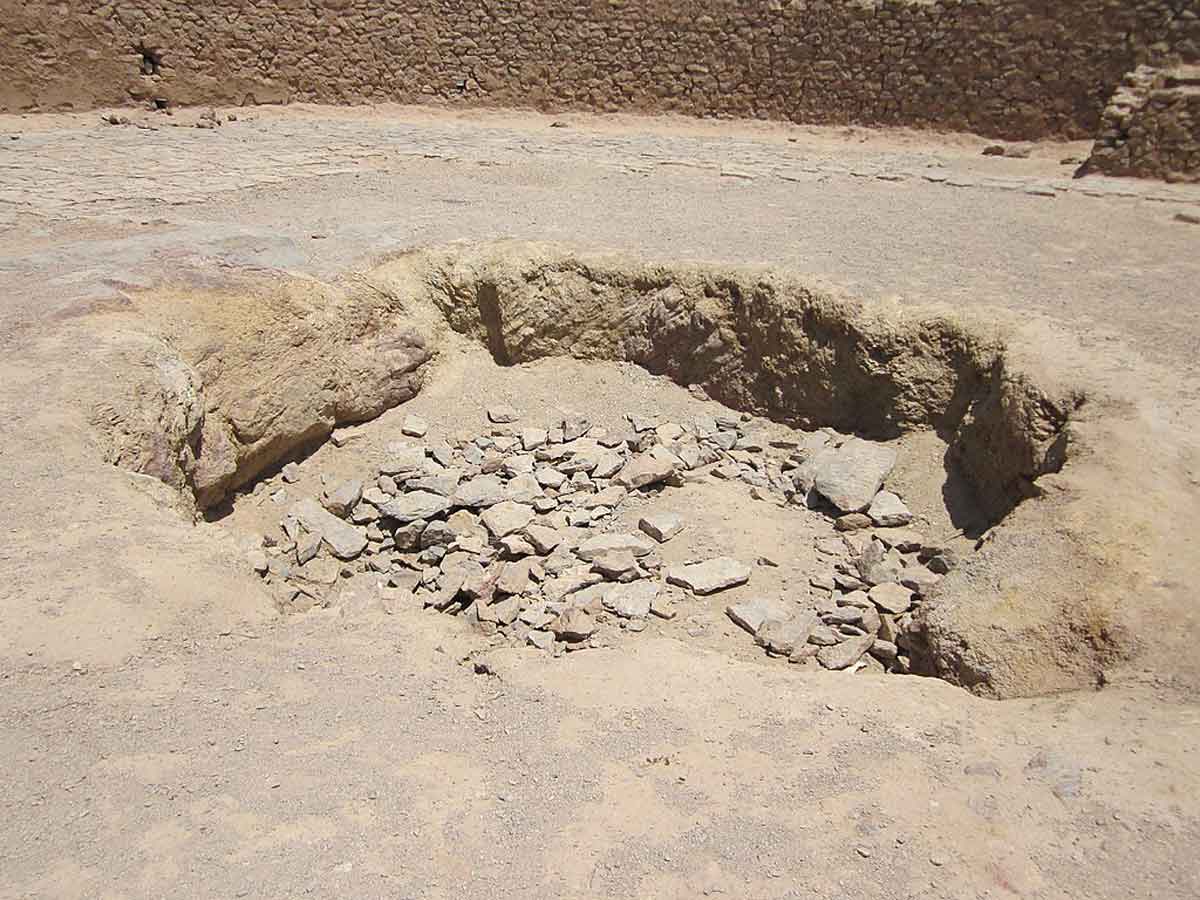
By the Sasanian period, the standard form of these funerary structures had become well established. The circular shape of the towers was not accidental but symbolic, representing cosmic order and the eternal nature of Asha. At the same time, it was practical, allowing for an even distribution of sunlight and wind. The walls were high, sometimes several meters tall, and served to isolate the ritual space and prevent animals from dragging remains away. There were often three rings inside the tower: the outer ring for adult men, the middle ring for adult women, and the inner ring for children. Bodies were laid out on slightly inclined stone slabs so that fluids from decomposition could drain away easily.
Naturally, not everyone was allowed to enter the tower. Only trained specialists could do so. Families of the deceased could accompany the procession only up to the gate of the tower’s enclosure, as entering the Dakhma itself was considered spiritually dangerous for anyone not ritually prepared. At the center of the tower was a deep, cylindrical pit known as the bhandar or ossuary. When scavenging birds stripped all the flesh from the bodies, usually within a few hours, the attendants, known as nasu-salars, would gather the bones and place them into the pit. Below the pit, engineers often constructed filtration systems made of charcoal, sand, and stone layers. These elements purified any remaining matter before it reached the earth.
In the Towers of Silence, every natural element had a clear and essential role. The sun purified the body and symbolized the illuminating power of Asha. The wind carried away impurities and accelerated drying, while the scavenging birds rapidly removed flesh from the bones, and with it the ritual impurity.
Were All Persians Laid to Rest in the Towers of Silence?
Although the Towers of Silence were an important part of Zoroastrianism, the reality is more nuanced. Not all Persians were laid to rest in these structures, and not even all Zoroastrians used them. There were differences in customs based on region, social status, and the historical period.
First of all, not every inhabitant of Persia followed Zoroastrianism. The empire included many Babylonians, Jews, Greeks, Armenians, and various tribal peoples, so they can be ruled out immediately. In some remote regions, even after adopting Zoroastrianism, people did not accept all its customs at once and continued practicing older traditions.
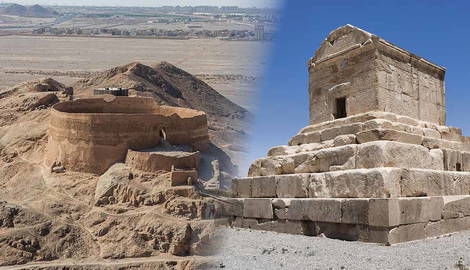
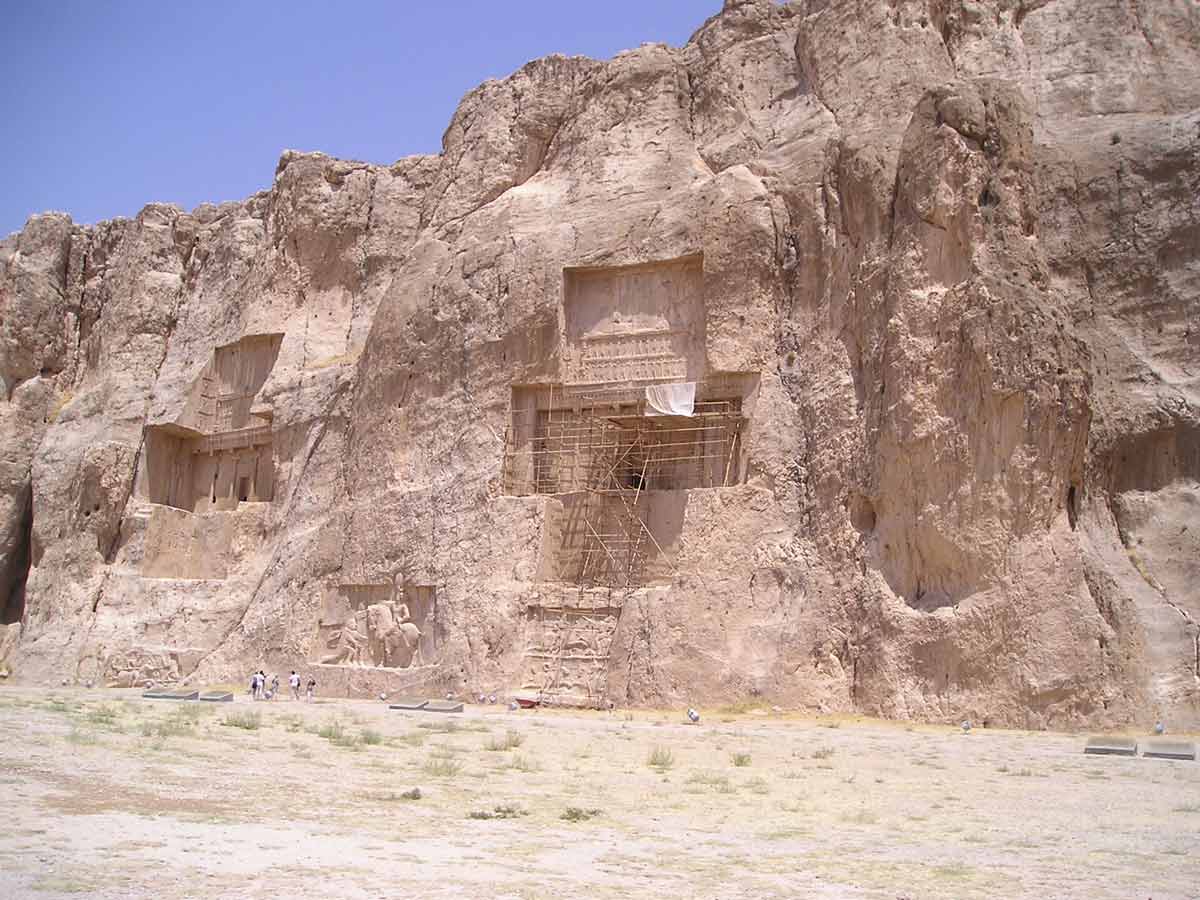
The bodies of Achaemenid kings such as Darius and Xerxes were placed in monumental rock-cut tombs at Naqsh-e Rostam and Persepolis, not exposed in a Dakhma. Yet these tombs were elevated above the ground, ensuring that their remains did not pollute the Earth, thus respecting the basic principles of Zoroastrian funerary law. Ordinary practice was also set aside in other specific cases. For example, infants who died before undergoing certain purification rituals were sometimes buried or placed in small, isolated structures. Nomadic communities, lacking the resources to build towers, often left bodies in elevated mountain areas instead.
Most Towers of Silence were constructed during the Sasanian period, when funerary practice became more uniform and followed stricter rules. But in such a vast empire, this method of dealing with the dead was not, and could not, be uniform.
The Decline of the Towers
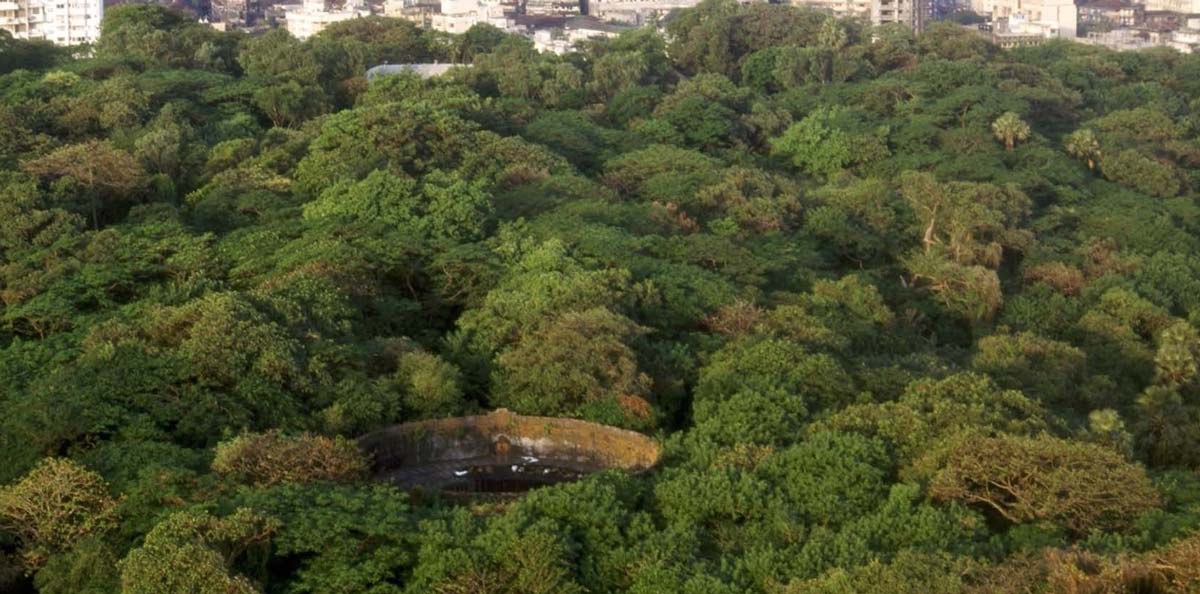
The Towers of Silence, as a method of burial in this region, remained in use for a remarkably long time. Their use began to decline in the 7th century following the Islamic conquests. Although Muslim leaders allowed Zoroastrians to practice their religion, this method of disposing of the dead declined.
As Persian towns expanded during the medieval and early modern periods, authorities, influenced by emerging ideas about sanitation and public health, argued that exposure posed biological risks. Travelers of the time who passed through Iran and India described these towers as barbaric and unhygienic.
The strongest blow to Zoroastrianism came with Reza Shah’s modernization reforms in the 1920s and 1930s. Zoroastrians who had not yet converted to Islam were forced to adopt alternative burial methods. Today, only around 80,000–120,000 Zoroastrians remain worldwide. The Towers of Silence are still used occasionally in India, though nowhere near as frequently as in earlier times.