
Historian Gordon S. Wood asserts that the American Revolution, “made the interests and prosperity of ordinary people—their pursuits of happiness—the goal of society and government.” Nonetheless, histories of this earth-shattering epoch often concentrate on the contributions of largely upper-class statesmen and generals, often ignoring the contributions of the ordinary people who made the American Revolution possible in the first place. Jonas Green was one of these ordinary people, rising from humble origins to become the official printer of Maryland, and igniting revolution in Maryland by opposing the Stamp Act.
The Rise to Printing Prominence
Jonas Green seemed destined to be a printer. His grandfather, Samuel Green, was once the lead newspaperman of Cambridge, Massachusetts, and his father, Timothy Green, worked as a printer in Boston before becoming Connecticut’s public printer shortly after his son’s birth in 1712. Learning the printing business in his youth, Green worked for the Boston printing firm Kneeland and Green in the early 1730s, then as a journeyman printer for Andrew Bradford in Philadelphia from 1736 to 1737. Opportunity would soon call from Maryland, with Green beginning to print proclamations for the colony in November 1737 while he was still in Philadelphia. Maryland’s governor, Samuel Ogle, was impressed with Green’s skills, and the Maryland Assembly made Green the colony’s official printer in April 1738. Shortly after marrying Anne Catherine Hoof, he settled in Annapolis and began printing there.
Green soon became active in Annapolis cultural and civic affairs, reviving The Maryland Gazette in 1745. The weekly newspaper informed the public on civic, military, religious, and social affairs, served as a forum for political debate, and also added to Annapolis’s cultural scene through its inclusion of poems, essays, treatises, and literary criticism. Jonas Green’s aim was not mere profit, believing the press to be instrumental in informing the body politic, foreshadowing his principled stance against the Stamp Act.
Green explained his intentions with The Maryland Gazette in his first issue: “Our intent therefore is to give the public a weekly account of the most remarkable occurrences, foreign and domestic, which from time to time come to our Knowledge; having always a principal regard to such articles is nearest concern to the American plantations in general and the province of Maryland in particular, ever observing the strictest Justice and with in relation of facts and the utmost disinterestedness and impartiality in points of controversy.”
“Improver and Encourager of Wit”: What Made Jonas Green Unique

Green had several distinct advantages that set him apart from many of the printers of colonial America. Firstly, there was the business acumen of his spouse, Anne Catherine Hoof Green. Born in 1720 in the Netherlands, Anne had the business skills that supported their large family. Green’s social activities in the city drained his earnings, and it was Anne’s decision to sell raisins, chocolate, and coffee from their shop that kept the family afloat. Anne’s skill in business was further revealed after her husband’s death, beginning with a successful campaign to secure payment from over a thousand of her husband’s debtors, as well as relocating her supplies and printing shop closer to the Green home in order to fulfill both her domestic and business duties more easily. Succeeding her husband as Maryland’s official printer, Anne was one of the only female newspaper owners in the Thirteen Colonies.
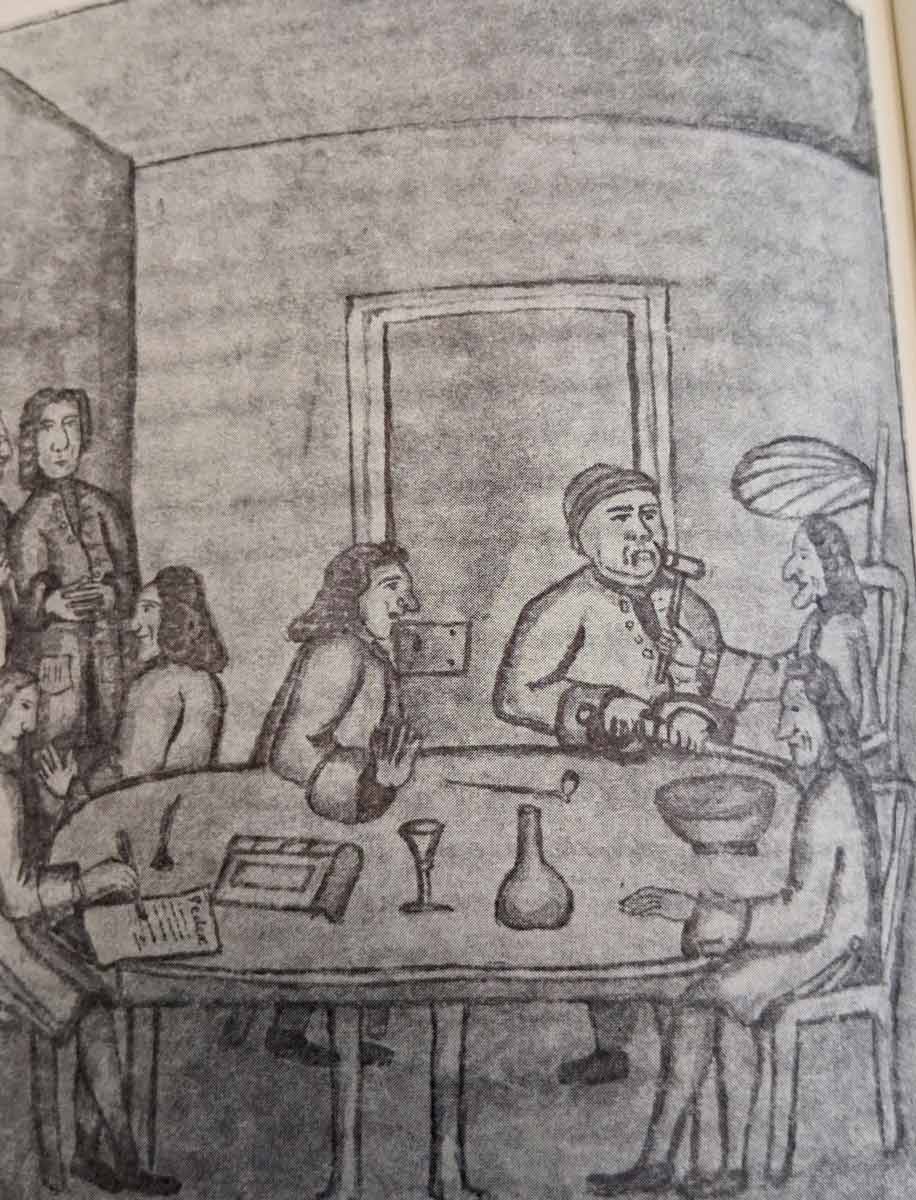
Green also benefited from a charmingly extroverted personality, as evidenced by his membership in the Tuesday Club, an intellectual club for men of wit, where he was known as the life of the party. The club’s founder, Alexander Hamilton (a local physician, not to be confused with the 1st secretary of the treasury) described him: “This gentleman is of a middle stature inclinable to fat, round-faced, small lively eyes, from which from two oriental portals, incessantly dart the dawning rays of wit and humor with a considerable mixture of the amorous leer, in his countenance he wears a constant smile having never been once seen to frown.”
Describing Green as an “Improver and encourager of wit,” Hamilton also attested to Green’s social aptitude: “for were there 50 clubs in the place, he’d be a member of every one of them.” While Green was very active in the Tuesday Club, known as the official purveyor, punster, punchmaker, general printer and poet (P. P. P. P. P. for short), he was also an avid Freemason and active in politics, becoming a councilman in 1755 and rising to the rank of alderman in 1767.

Green also benefited from an attribute shared by many other luminaries of the Enlightenment, an interest in science, noting the appearance of the Aurora Borealis in one of his first issues and covering topics including entomology in others. In the same months, Green reported on the bloody battles being fought in the ongoing Seven Years’ War. The 18th century was characterized by an enlightened pursuit of science as well as immense blood spilled around the world in the pursuit of imperial ambitions. Green reported on both with equal vigor.
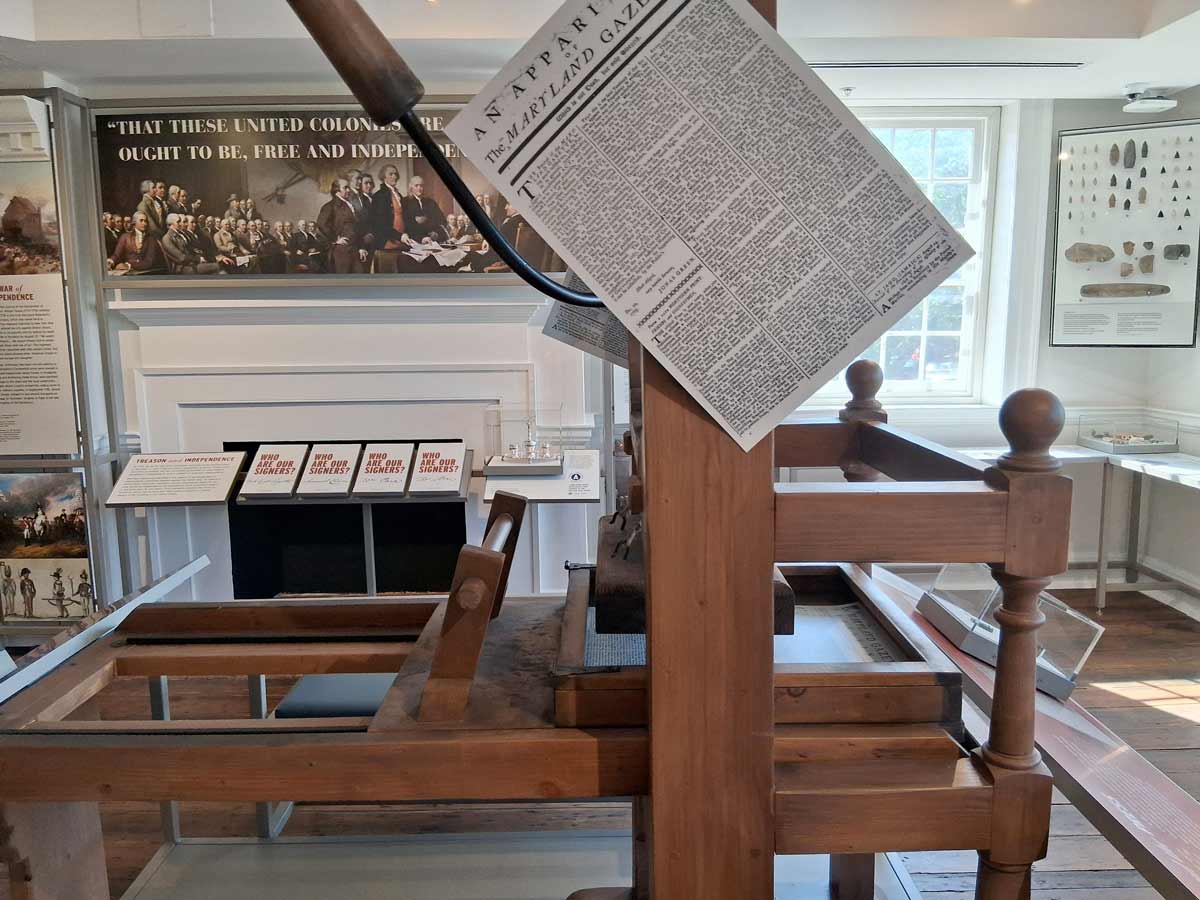
Green also revealed his writing skill through poetry, presenting a number of poems in the Tuesday Club, including this section of an ode presented to the club’s president:
“Rejoice with me Rejoice
join with melodious voice
You jovial streams, you Mountain Hills and rocks
Ye fertile Plains, ye fountains, rills, ye flocks
ye sweet and Flowery Lawns,
that when the morning dawns
With Orient pearly drops of dew,
Your odors on the day renew.”
Green also authored conundrums that would be read at each Tuesday Club meeting, and several of Green’s annual odes were put to music. Green even managed to have one of his poems, an ode for the year 1750, published in The Gentlemen’s Magazine of London—the capital of the colony and the capital of the empire were in agreement on Green’s literary talent.
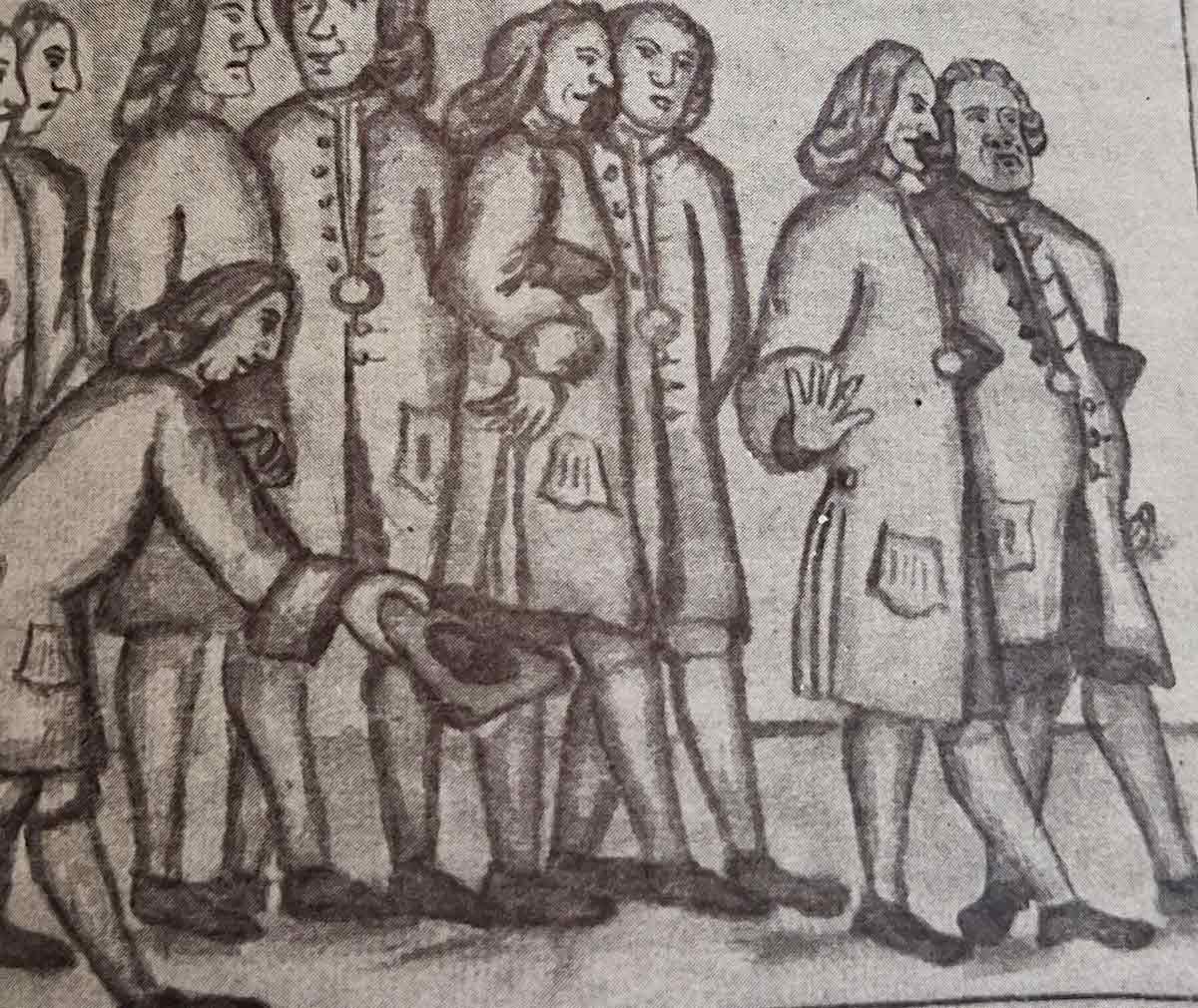
Green’s membership in the Tuesday Club should not be construed as simply an extension of his extroverted personality, for the Tuesday Club was not merely a club for men about town, but an essential building block of the burgeoning American identity. The Tuesday Club was a uniquely American endeavor that mocked the pretensions of the European aristocracy and was open to all classes. The Club allowed a broader group to contribute to Annapolis’s cultural milieu, blurring class lines and reflecting the upward mobility of American society. Green’s membership in the club should be considered as revolutionary as his later opposition to the Stamp Act.
Jonas Green, Revolutionary
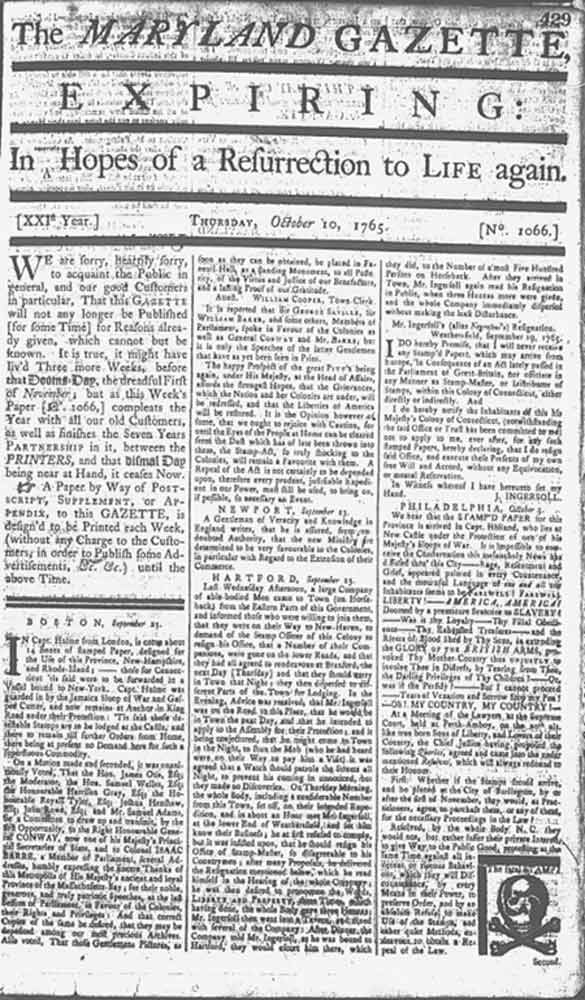
By the time of the Stamp Act, Green had run The Maryland Gazette for two decades, his beautiful prose, social aptitude, scientific interest, and wife’s business expertise serving him well. But he put it all on the line for the sake of political principle. Green was radicalized by a British levy passed on almost every item made from paper, including newspapers, passed in order to alleviate the debts incurred during the Seven Years’ War. He feared that the act would put his paper out of business and began to protest against it by reporting on opposition to the act throughout the colonies.
In August, Green reprinted a denunciation of the Stamp Act from the New York Gazette, written by an “unknown worthy writer” whom Green described as “a lover of Justice, and a friend to his Country.” Matters came to a head later that month when Maryland’s official stamp distributor, Zachariah Hood, arrived in Annapolis and was promptly burned in effigy in front of the state house. September would see Hood fall into greater danger when the frame house he was renting was torn down by an angry mob, prompting the frightened Hood to leave for New York. Green gave a short summary of the violence: “A number of people unknown assembled in this town and pulled down a house lately rented by a certain unwelcome officer.”
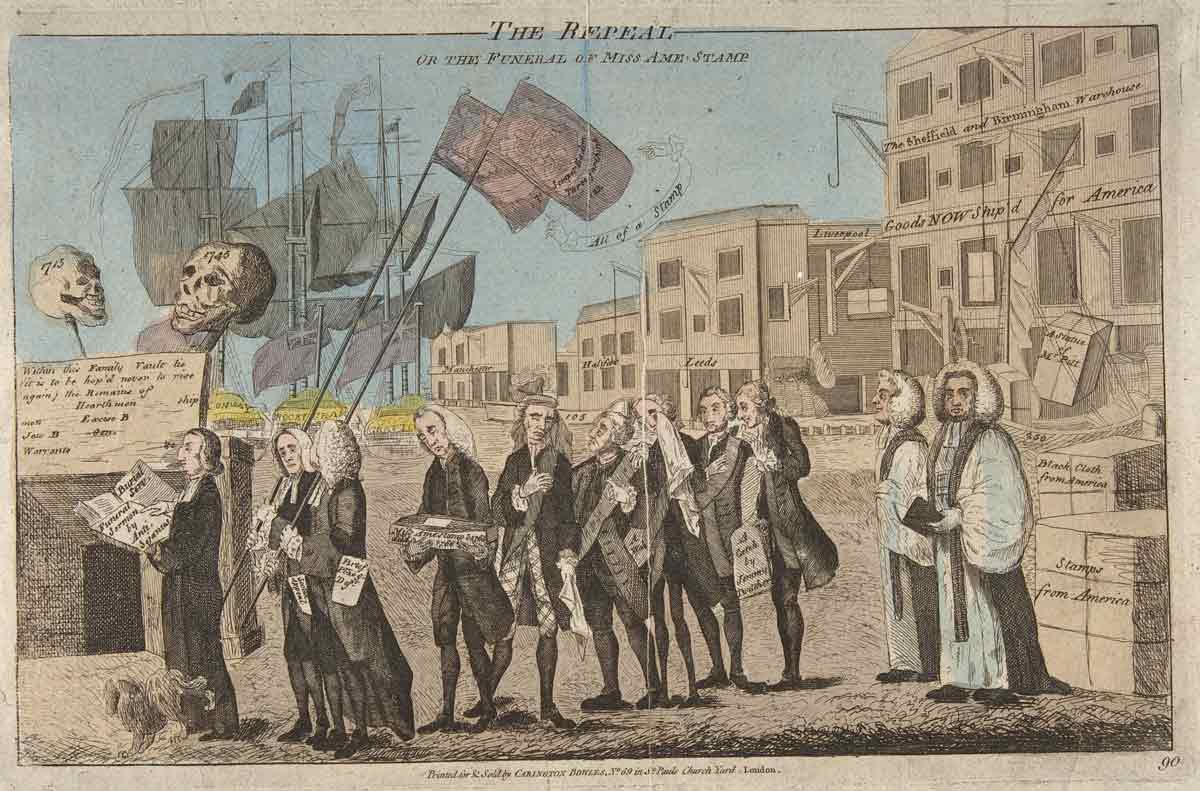
While Green had played a pivotal role in demonstrations against the Stamp Act, historian Jane Wilson McWilliams speculates that Green’s sparse retelling of the ransacking of Hood’s dwelling was due to a guilty realization that his months of lambasting the Act had indirectly caused the mob’s violence. Political violence motivated by opposition to the Stamp Act was becoming increasingly common in the Colonies. August saw the home of Andrew Oliver, Massachusetts’s official stamp distributor being ransacked in Boston. Deborah Franklin was forced to brandish a musket from the second story of her home in Philadelphia in response to an angry mob that blamed her husband, Benjamin Franklin, for failing to prevent the Stamp Act. However, while these protests were of a violent nature, they expanded the realm of political action beyond the propertied elite; it was Annapolis’s tradesmen who paraded through the streets burning the stamp collector in effigy, not its aristocrats.
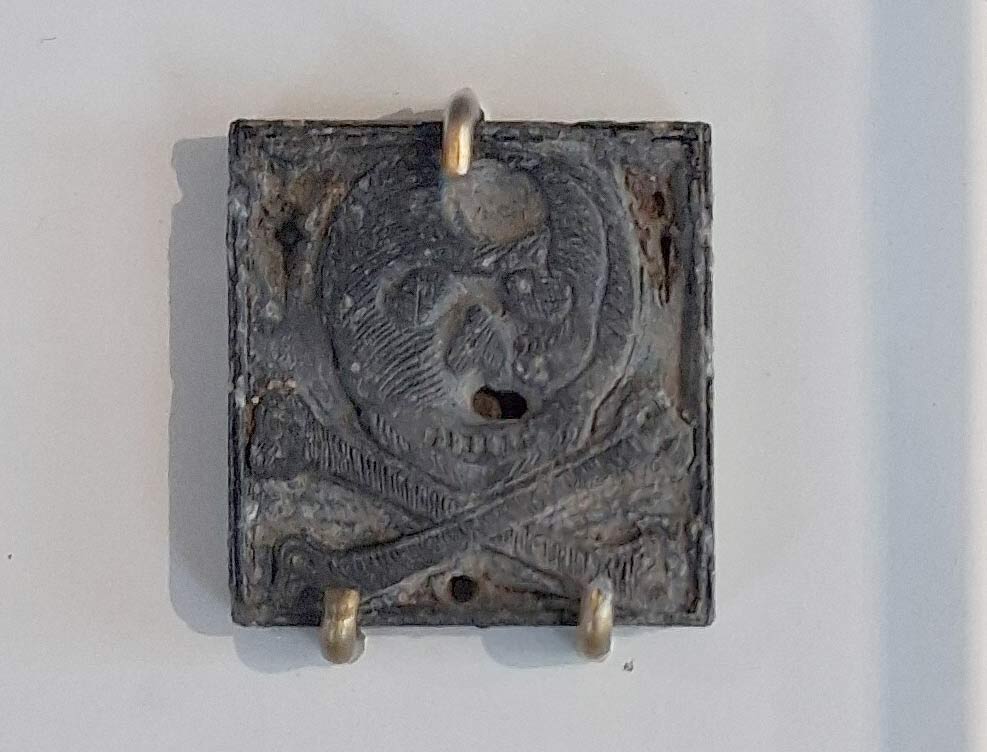
Green’s words would turn into action, with the printer eventually shutting down his paper in protest. In early October 1765, Green printed on the Gazette’s first page: “The Maryland Gazette expiring in hopes of a Resurrection to life again.” Green went on to note “We are sorry, heartily sorry to quit the public in general and our good customers in particular but this Gazette will no longer be published (for some time) for reasons already given, which cannot be but known.” In the aftermath of the decision, Green continued to print the Gazette through several “supplements,” craftily avoiding the British tax by not publishing a new edition.
December saw Green bring the wit he had used in the Tuesday Club to political discourse, describing his paper as a ghost rising from the grave after being slain by British tyranny in An Apparition of the late Maryland Gazette. However, the Maryland Gazette would soon “resurrect” as Green had hoped, with the disappearance of the stamp collector, who was found destitute in the Caribbean, virtually nullifying the Stamp Act in Maryland. In January 1766, he made yet another name change, to The Maryland Gazette, Reviving. Green’s paper would revert to its old name and numbering in March.
News of the Stamp Act’s repeal would reach Maryland in late May, and Green joyously described the celebration: “After Breaking up of the Assembly, on Tuesday evening last, the several branches of the Legislature met in the Council House, where the Loyal and Patriotic toasts were Drank, the Guns at the Dock at the same Time Firing, and other demonstrations of Joy shown, on account of the IMPORTANT NEWS OF The STAMP ACT being Repealed.”
Green’s Legacy
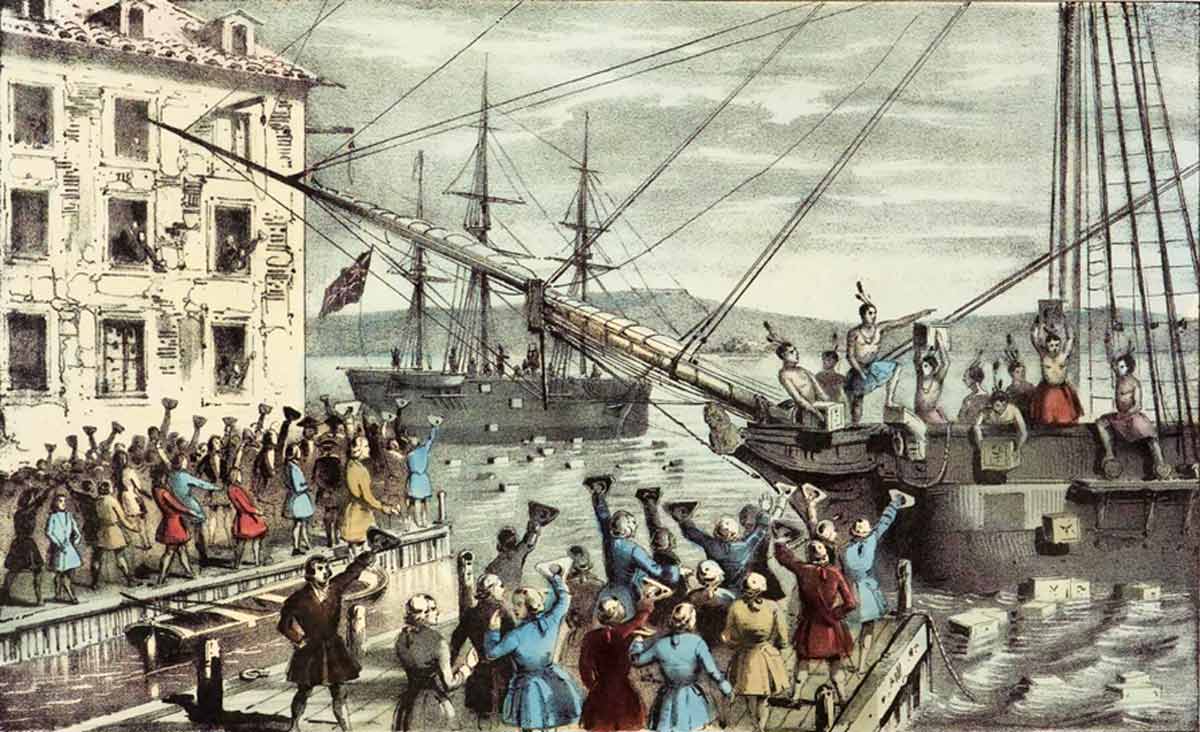
Green would die less than a year after the Stamp Act’s repeal, with the Gazette containing a notice on April 16, 1767, that he had died the previous Saturday at the age of fifty-five. Succeeding her late husband as the colony’s official printer, Anne proved herself as much of an advocate of American liberty as Green, informing her readers of events such as the Boston Tea Party and the protests against the Intolerable Acts throughout 1774.
However, like her late husband, Anne would never see the revolution she helped ignite, dying a month before the battles of Lexington and Concord. The paper was then ably managed by her son Frederick, who continued the family’s support for the patriot cause, though production was suspended from 1777 to 1779 due to the shortage of paper caused by the British occupation of Philadelphia. Publication resumed on April 30, 1779, this time run by both Samuel and Frederick Green, who continued the paper’s publication until their deaths in 1811. Samuel’s son Jonas continued his grandfather’s legacy until the end of the paper in 1839.
Thomas Jefferson once wrote to a friend about the importance of the fourth estate to American life: “Our liberty depends on the freedom of the press, and that cannot be limited without being lost. To the sacrifice, of time, labor, fortune, a public servant must count upon adding that of peace of mind and even reputation.” Green fit Jefferson’s ideal, a public servant dedicating his time, labor, and fortune to informing the public through The Maryland Gazette, with his social aptitude, writing ability, and interest in science serving him well.
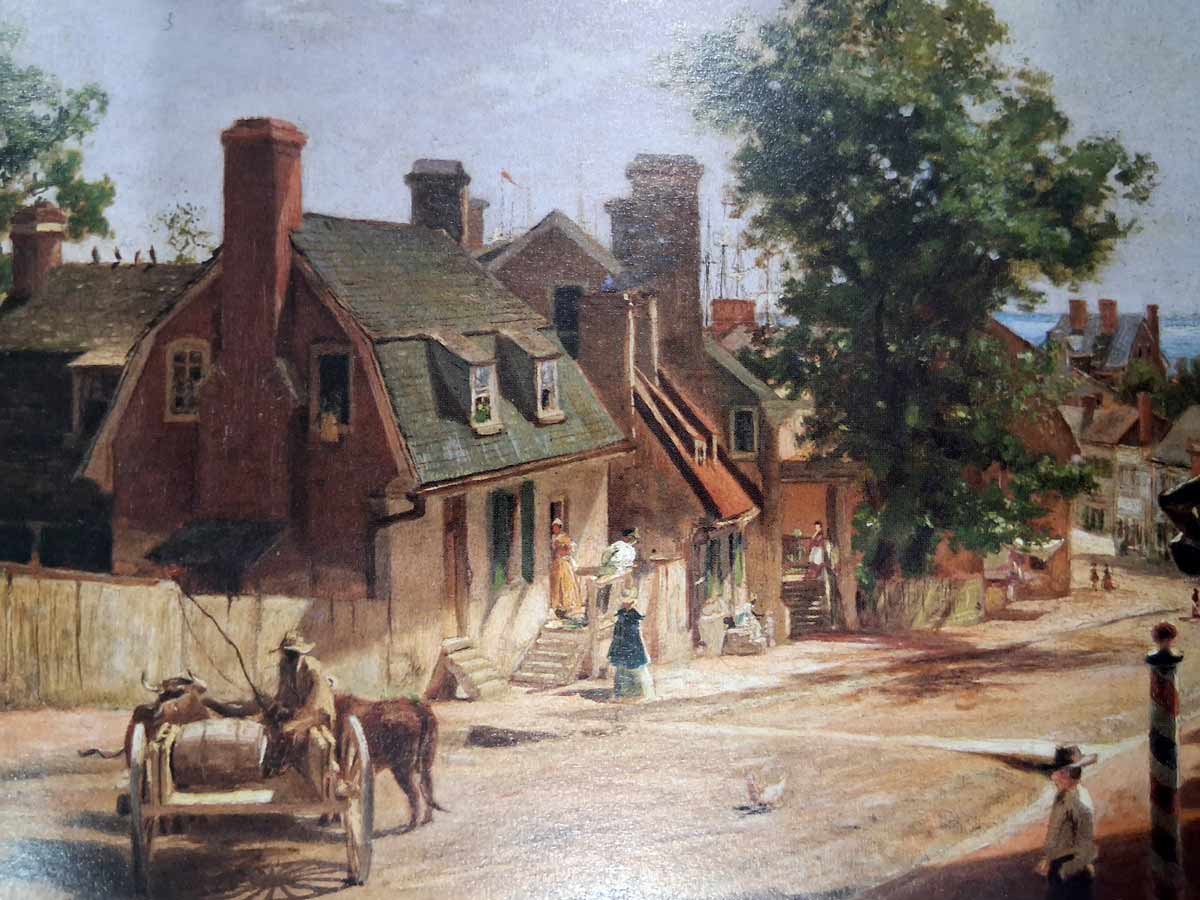
But while Green was a man of many talents, frugality was not one of them. While his extroverted nature served him well as Maryland’s official printer, it was also a double-edged sword, often driving the Green family into debt. His business would have failed if not for his wife’s business savvy. Though The Maryland Gazette flourished for decades, Green put all of that success on the line by protesting the Stamp Act. Through this opposition to British taxes, Green helped light the flame of revolution in Maryland, though he would not live to see the result. Nonetheless, the efforts of Jonas Green and his successors show the importance of the press in shaping American politics and culture.
Further Reading
- Hamilton, Dr. Alexander. History of the Ancient and Honorable Tuesday Club. Vol. 1. University of North Carolina Press, 1990.
- Jane Wilson McWilliams. Annapolis, City on the Severn: A History. Johns Hopkins University Press, 2011.
- Lemay, J. A. Leo. Men of Letters In Colonial Maryland. The University of Tennessee Press, 1972.
- Wood, Gordon S. The Radicalism of the American Revolution. Vintage Books, 1991.