Ever since Hollywood’s The Jazz Singer broke the “sound barrier” in 1927, filmmakers have sought to record live musical acts for audience entertainment and posterity. With the seismic breakthrough of rock ‘n’ roll in the mid-1950s, those cameras began cuing up a new type of documentary (or “rockumentary”) capturing Rock ‘n’ Roll on film by mixing live concert footage with offstage interviews and interludes. By the early 1960s, smaller, portable 16mm cameras and tape recorders had revolutionized the field, leading to early experiments such as 1962’s Lonely Boy.
Rock ‘n’ Roll on Film
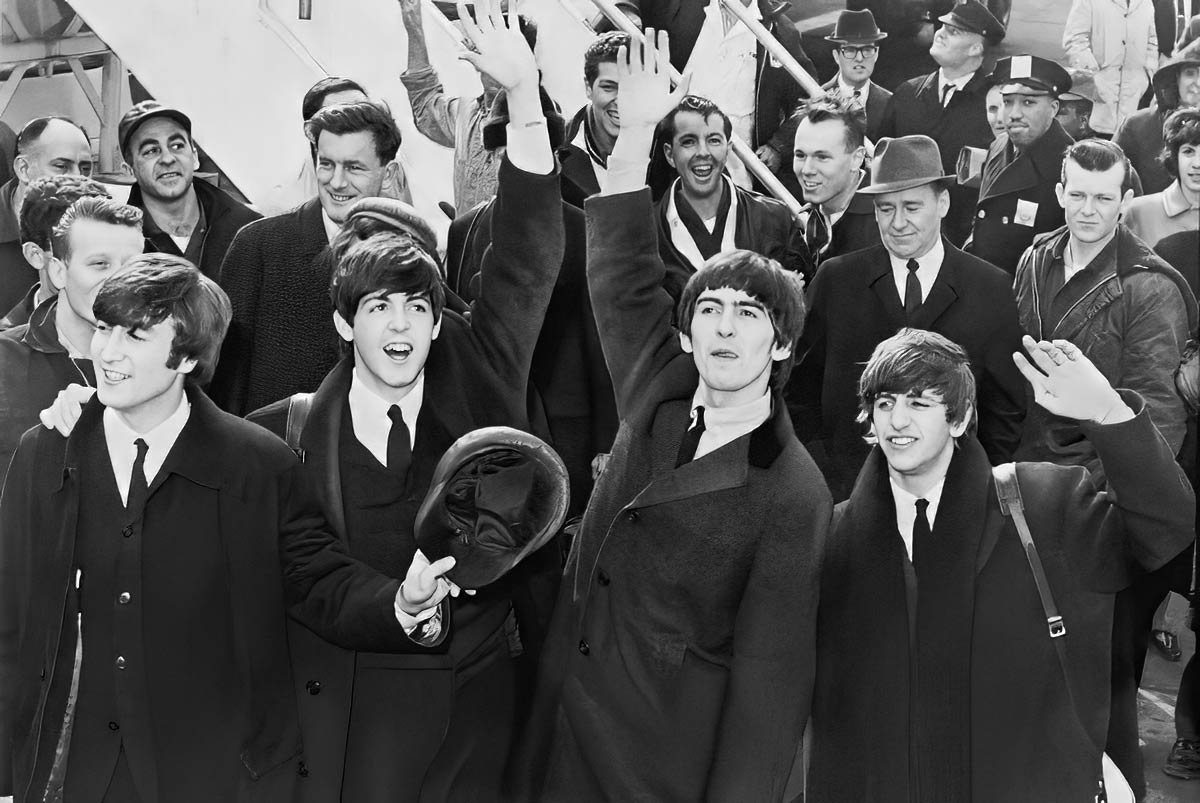
In America and the U.K., those early minimalist “cinema verité” (“truthful cinema”) shorts were soon succeeded by feature-length hybrids on the new pop superstars. First and foremost was the Beatles’ smash A Hard Day’s Night (1964), which dropped the Fab Four—and nine of their songs, within a shaggy quasi-fiction as the Liverpool lads flee, belittle, or battle the 24/7 zaniness of Beatlemania. In 1966’s Dont Look Back, director D.A. Pennebaker offered a warts-and-all, fly-on-the-wall mostly offstage view of Bob Dylan during his pre-electric 1965 U.K. tour, with Dylan playing the guitar, the piano, friends, and visitors alike with a virtuosity backed up by vitriol. Here are 7 movies you need to see!
1. The T.A.M.I. Show (1965)
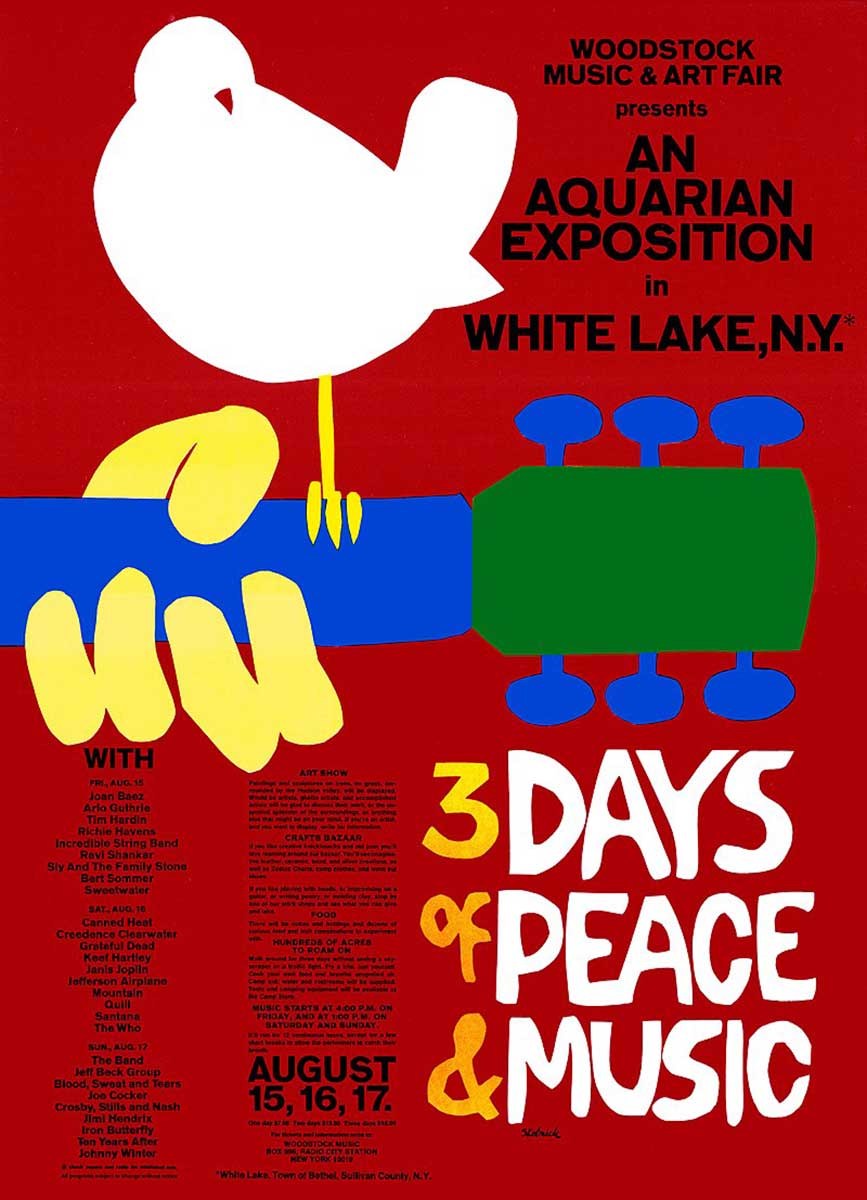
The T.A.M.I. Show (1965) may be, as it is often billed, the “best concert film you’ve never seen.” In the fall of 1964, just months after the Beatles took America by storm on The Ed Sullivan Show, promoters filled California’s Santa Monica Civic Auditorium with one of the best (and most diverse) line-ups ever assembled, shuffling vintage U.S. rock, soul, Motown, surfer music, Brill Building pop, and the first wave of the “British Invasion,” all shot by director Steve Binder and his crew with unprecedented show-stopping panache.
Just how many concerts could boast Chuck Berry, Diana Ross and the Supremes, the Beach Boys, Jan and Dean, Lesley Gore, James Brown, Smokey Robinson, and Marvin Gaye—topped by the Rolling Stones in one of their first U.S. engagements? (OK, Gerry and the Pacemakers were lightweights, but they had a couple of hits, including the lovely “Ferry Cross the Mersey.”) It gets even better: Binder’s house band was the now-legendary “Wrecking Crew,” touting Glen Campbell, Leon Russell, and drummer Hal Blaine. Sharp eyes will pick out Teri Garr and Toni Basil among the gyrating go-go dancers.
2. Monterey Pop (1968)
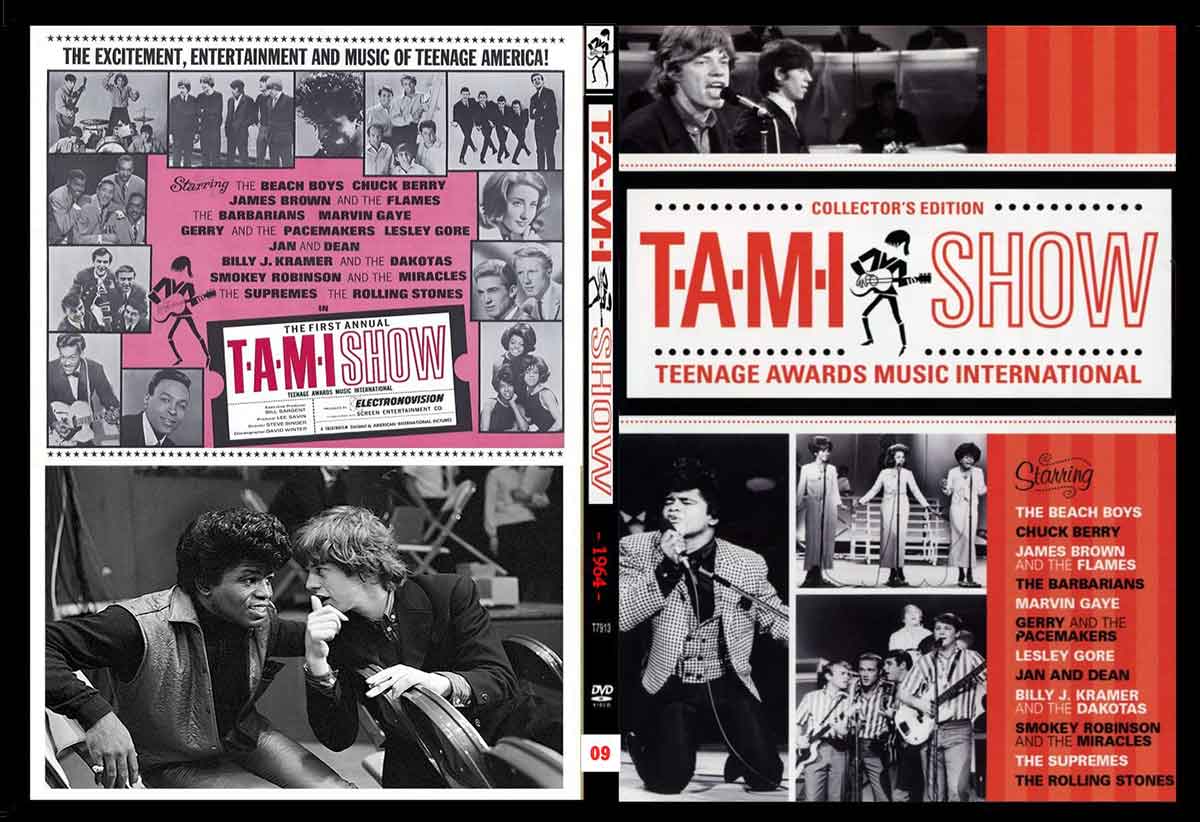
During what would be famously dubbed the West Coast counterculture’s “Summer of Love,” organizers (including John Phillips of the Mamas and the Papas) staged arguably the first all-star outdoor rock concert, spanning one idyllic weekend in June 1967 south of San Francisco in Monterey. From several hundred hours of footage, director D.A. Pennebaker cut his landmark documentary down to a decidedly pithy, if not puny, 80 minutes. Even so, the results were historic for the star-making U.S. breakthroughs of Janis Joplin, Jimi Hendrix, the Who, the Jefferson Airplane, Ravi Shankar, et al.
Not many rock concerts had their own theme song, but Phillips wrote “San Francisco (Be Sure to Wear Flowers in Your Hair)” for Scott McKenzie, whose recording ruefully evokes an era that would crash and burn in a few years. Armed with hand-held 16mm cameras, Pennebaker set the groove for the pop concert film, orchestrating a medley of tight close-ups on the performers (and Joplin soulfully up on her heels) and expansive shots of the jazzed crowd and the genuinely mellow scene. For those wishing an encore, the Criterion Collection’s 2017 DVD re-release includes several hours of that “lost” footage, with additional songs by Joplin and Hendrix (and his flaming guitar) as well as by performers left off the film, notably the Grateful Dead in an early live gig.
3. Woodstock (1970)
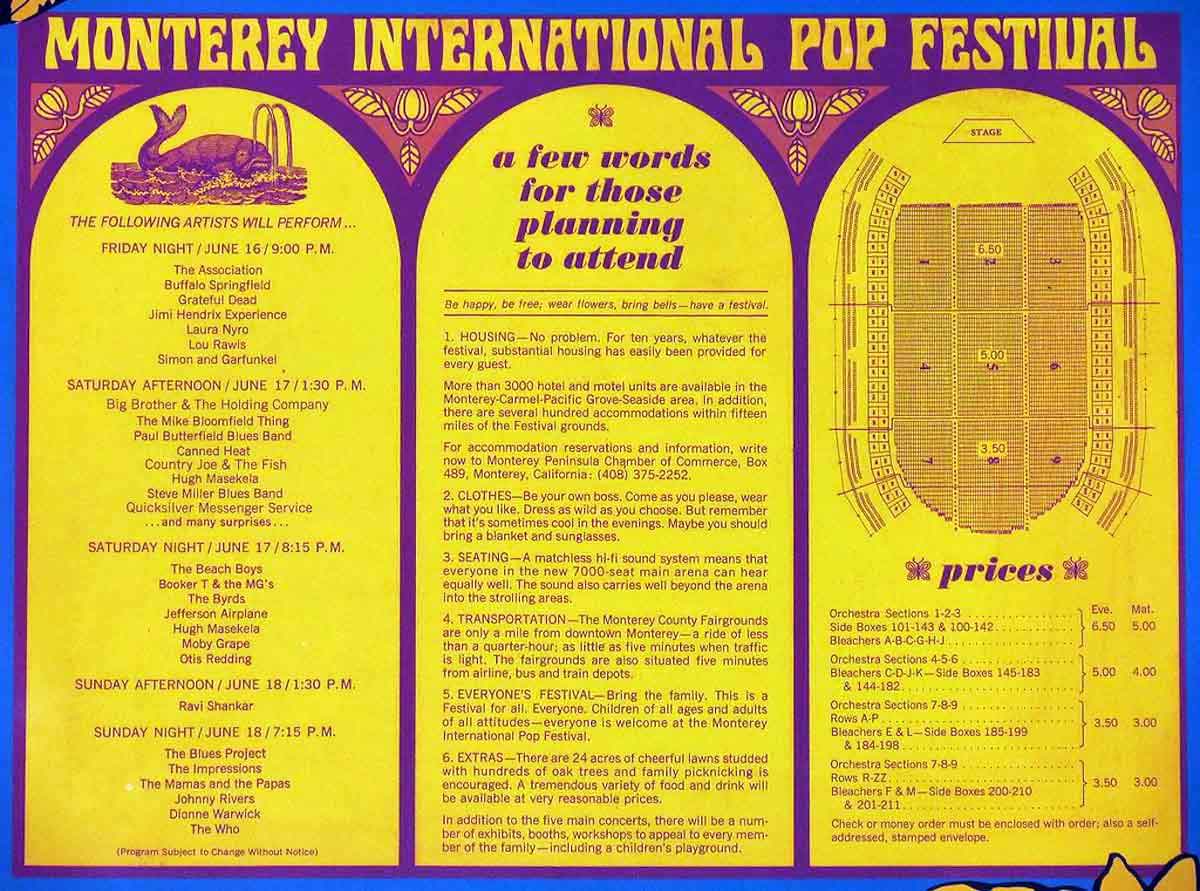
By the time we got to Woodstock, we were half a million strong, and everywhere there was song and celebration. So sang Joni Mitchell about the watershed “Three Days of Peace & Music” that was Woodstock, the most famous of all rock-music festivals. Happening over a long, wet, wild weekend in August of 1969, it was more than simply a “gathering of the tribes”—over 400,000 strong—of the growing U.S counterculture. It was, perhaps miraculously, a communal, largely peaceful mass demonstration of “Flower Power” and its musical might, especially in the face of the recently elected, politically repressive Nixon presidency.
After those momentous three-plus days, at three hours-plus long, Woodstock the movie was another hit, receiving celebratory reviews and casting a long shadow over rock festivals to come. If today several of the performances are a drag (like the 1950s nostalgic act Sha Na Na), the song that hums through Woodstock comes from the many young fans interviewed, all part of a generation that gathered on upstate New York farmlands not simply to dance to the music but to truly find a (high) way “to get back to the garden.” Among the highlights: Joplin and Hendrix again, along with new groups like Santana and Crosby, Stills, Nash & Young, though the latter—Neil Young—refused to be filmed.
4. Gimme Shelter (1970)
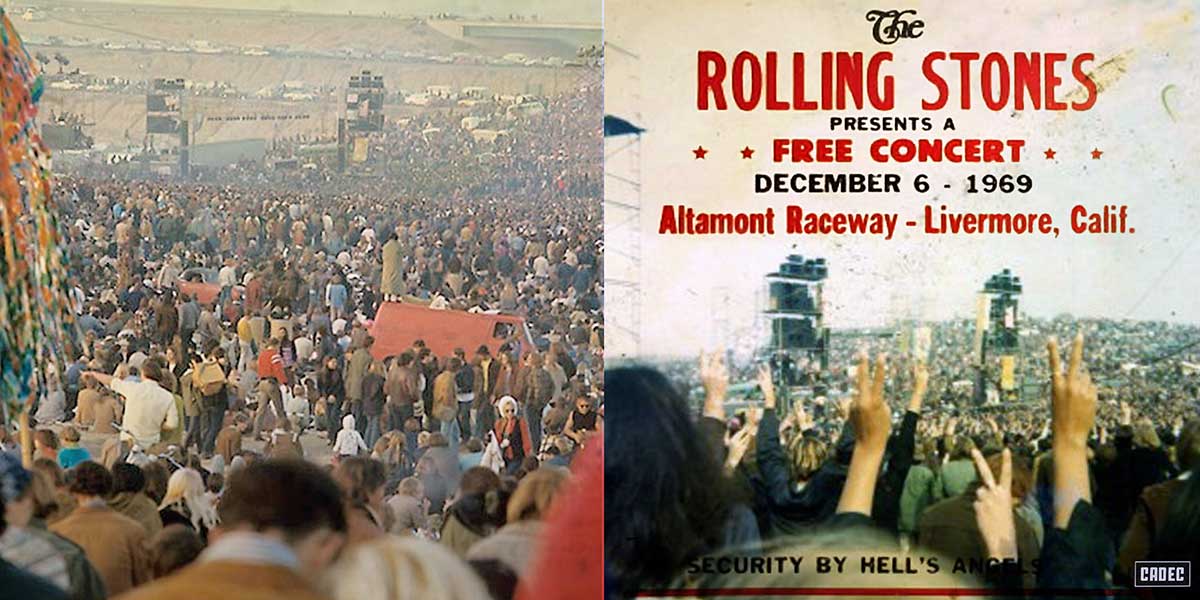
It’s a long-running cliché to say that the Rolling Stones’ disastrous free concert at California’s Altamont Raceway proved to be not only the horrific flip side to peace-and-love Woodstock, but also symbolized the ugly, bitter end of the counterculture 1960s. Then again, clichés often are amplified from reality. Made by the Maysles brothers, Albert and David, and Charlotte Zwerin in cinema verité (or “truthful cinema”) style, it is among the most disturbing of modern documentaries. While meant to be a chronicle of the bad-boy British band’s 1969 U.S. tour—starting in New York City’s Madison Square Garden—the Maysles foretell the mayhem to come by having Mick Jagger, Keith Richards, and company preview the Altamont footage first, underscoring the ensuing scenes with a downbeat of doom.
Much has been written about this controversial film, yet even that can’t take away from the visceral shock of watching what happened that December evening when the concert organizers (including the Stones) carelessly tossed a match into an incendiary mix of rock ‘n’ roll, 300,000 or so young fans, an orgy of drugs and alcohol, the Hells Angels (hired as, OMG, “security”), and a ridiculously ramshackle stage under siege by the teeming crowd—all bottled up in a remote, shelter-less (and phone-less) wasteland. In this nightmare Walpurgis Night, it’s not a little eerie that all hell breaks loose during Jagger’s “Sympathy for the Devil.”
5. The Last Waltz (1978)
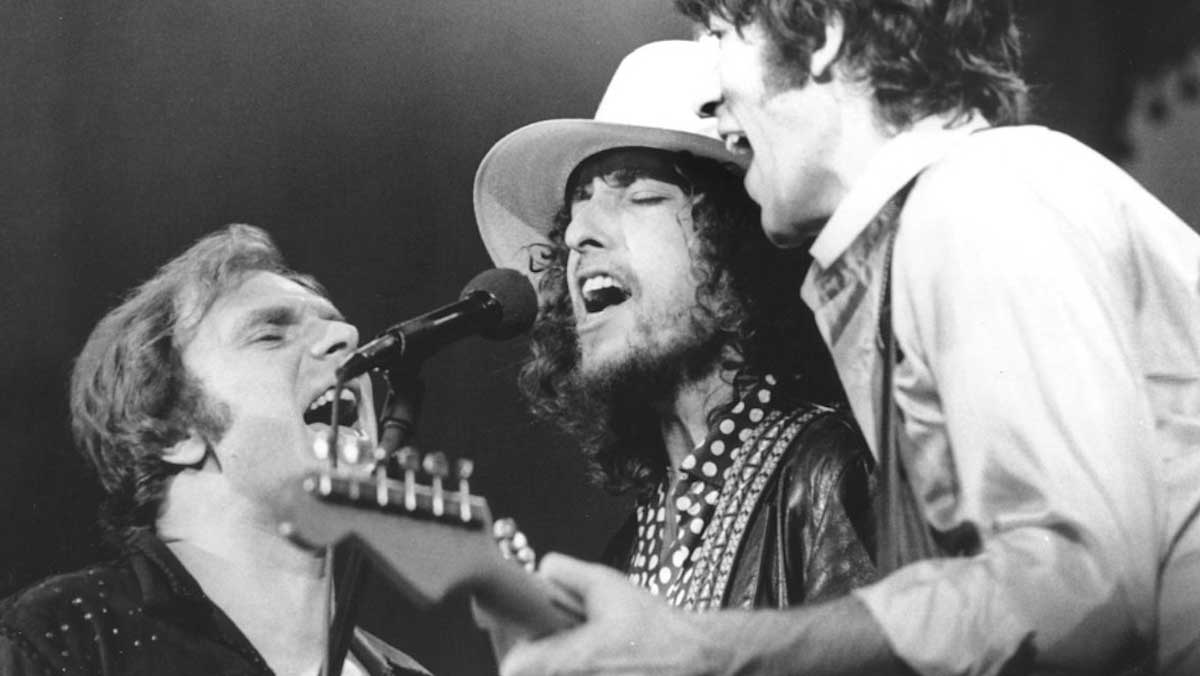
While in hindsight, director Martin Scorsese’s classy 35mm record of the Band’s last full performance together fudges a few missteps, it remains in the first tier of concert films. Today the unsung, meteoric Canadian-U.S. group might be best remembered for their pivotal collaborations with Bob Dylan, but its five members (Robbie Robertson, Rick Danko, Richard Manuel, Levon Helm, Garth Hudson) were among rock’s most versatile musicians, and their early albums blazed a jaunty new trail for others to follow, uniquely riffing classic rock with the old-time traditions of the blues, country, bluegrass, and Americana.
Their Thanksgiving 1976 concert footage at San Francisco’s old Winterland doesn’t betray the discord within the group, but revelations about lengthy re-dubbings and edits do leave a bit of a sour aftertaste. Nevertheless, even if Scorsese’s film was indeed “saved in the editing room,” it serves up a cornucopia of scrumptious, foot-stomping guest performances, from Van Morrison’s (“Caravan”) to Muddy Waters (“Mannish Boy”), Dr. John (“Such a Night”), Joni Mitchell (“Coyote”), and Neil Young (“Helpless”), along with the Band itself kicking up its heels with “The Night They Drove Old Dixie Down,” “Up on Cripple Creek,” and more from their bounty of underrated tunes. For dessert, Mr. Dylan himself steps in, along with Ringo Starr, Ron Wood, Eric Clapton, et al., letting loose on “I Shall Be Released.”
6. Stop Making Sense (1984)
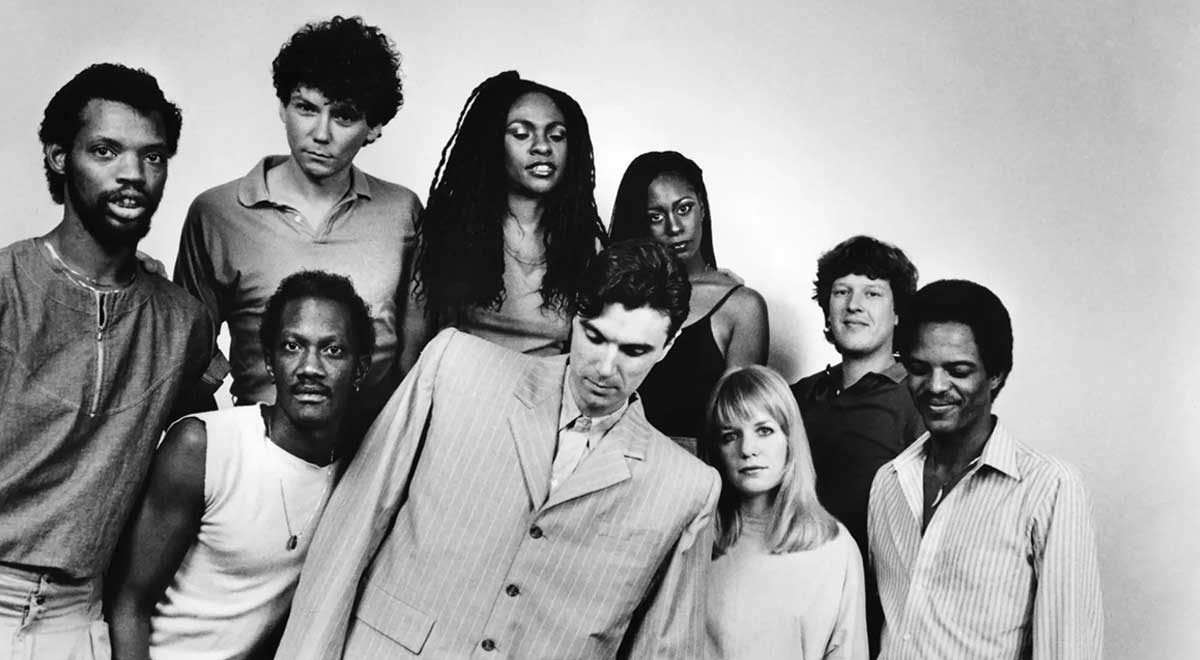
Check it Out! director Jonathon Demme’s minimalist Talking Heads concert documentary is a joyous non-stop house party that exuberantly gets down as much as it jumps and jukes to the top. Stop starts quietly on a bare stage at Los Angeles’ Pantages Theatre as lead singer David Byrne enters carrying a boom box, announcing he has a tape to play. Jammed in the next eighty-five minutes are 16 of the New York band’s buoyant New Wave art-funk-rock songs, all delivered by the Heads with pounding heart and soul.
With Tina Weymouth, Jerry Harrison, Chris Frantz, and company backing him up, the indefatigable, rubber-necked Byrne takes center stage—including in his outré “Big Suit”—for “Psycho Killer,” “Once in A Lifetime,” “Life During Wartime,” “Naïve Melody,” and other hits. It all comes to a delirious, burning-down-the-house crescendo during their deep dive into Al Green’s “Take Me to the River.” And when Byrne takes five, there’s no slowdown: Save a shout-out for the Weymouth-led Tom-Tom Club, drumming out their infectious, infinitely sampled “Genius of Love.”
7. Rock ‘n’ Roll on Film: The Beatles Rooftop Concert (1969)
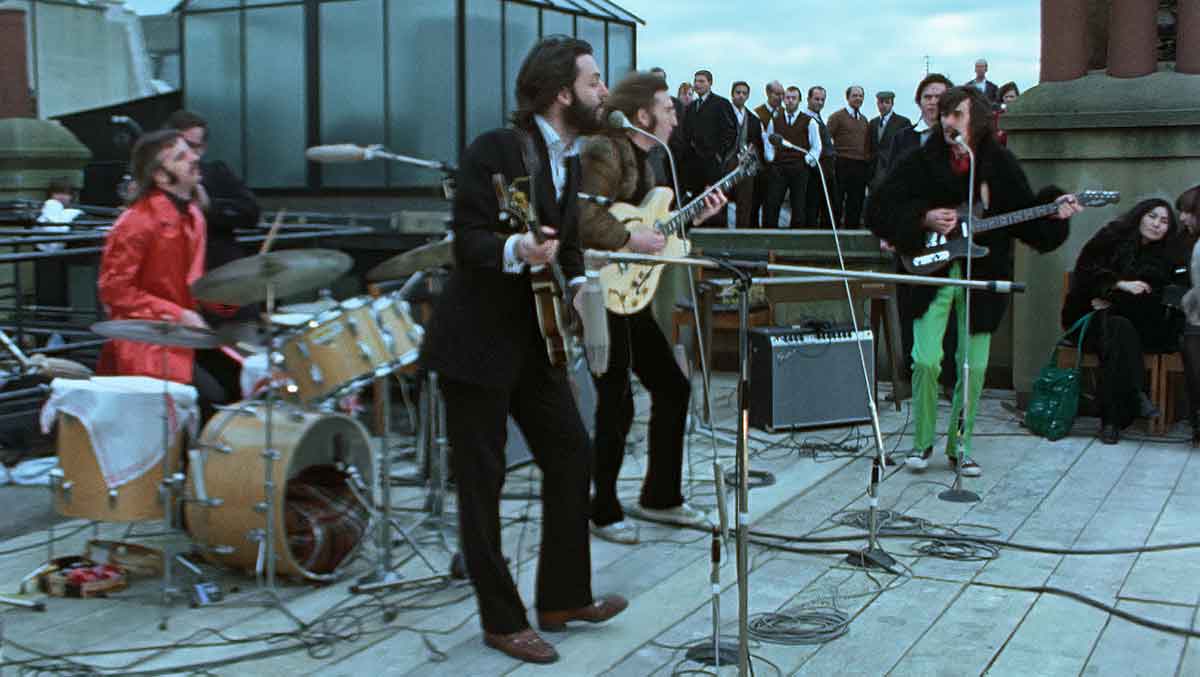
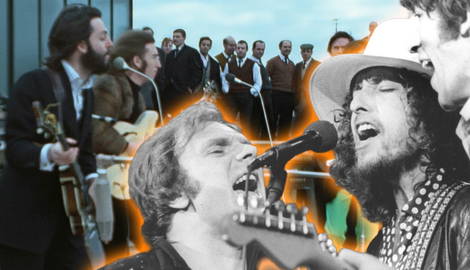
OK, director Peter Jackson’s epic 2021 makeover/restoration of the Beatles’ long-shelved 1969 Let It Be documentary doesn’t strictly qualify as a concert film, since only its last hour presents those four famed Liverpudlians’ last public performance. But, hey, this was the most phenomenal rock group in history, and their cheeky “rooftop concert” above their London Apple Corps offices has long had the air of legend. Peeled from over 60 hours of footage, Jackson and his crew struck a supersized three-part documentary as the Beatles set out to record a new album, which was to culminate in a filmed concert, perhaps for TV.
In the first two parts and much of the third, audiences are privy to the unbeatable sense of musical collaboration that marked the band’s unprecedented preeminence in global popular culture of the 1960s and beyond. Whether it was Paul McCartney’s charm and creative brilliance, John Lennon’s cock-eyed jokester genius, George Harrison’s cool aplomb, or Ringo Starr’s rock-steady back-beat, together the Fab Four was, well, fabulous. For proof, look (and hear) no further than that last concert; however, it consists of repeat takes of the six or seven songs. Audiences get a ticket to ride back to that chilly January afternoon when the boys (with keyboard wiz Billy Preston) went up on a London roof and played rock ‘n’ roll like they had always been together—and always would be.