
The son of a Roman farmer, born perilously close to poverty, could end up in comfortable retirement, living on a sizable tract of land, attended to by servants, and able to afford finery. How was this possible in ancient Rome, where the class division was rigid, and upward social mobility was, for all intents and purposes, impossible?
Although difficult, the military made it possible.
You Joined Poor, You Left Propertied

Living life in ancient Rome could be a volatile experience. Economic factors could make or break careers and even be the difference between life and death. Over centuries of fluctuating fortunes, the military represented a constant, and could provide a reliable income for those willing to make the commitment.
This commitment was a serious one as it generally lasted for 25 years and likely involved combat. Standing on the front line, fighting Rome’s enemies was certainly not the safest place to be. Out of combat, life could also be dangerous, with infractions of discipline and endangering the safety of one’s comrades (like sleeping on sentry duty) could generate punishment in the form of beatings and even execution if the offense was serious enough.

Despite the harsh realities, millions made the choice to serve, as the benefits were worth the risk. In times of war, legionaries received part of the plunder, plus a substantial cash bonus on the accession of an emperor, or on other special occasions. This was in addition to the professional pay, which was modest but respectable and standardized.
After 20 years of active duty and 5 years in the reserves, soldiers received the honesta missio— their honorable discharge. Common legionaries received a substantial payout of typically around 12,000 sesterces (although this fluctuated throughout the eras), and a land grant known as the missio agraria. Auxiliary soldiers, i.e., those from outside the Roman Empire and those within the empire with no full rights, were granted citizenship and the right to marry for themselves and their descendants. If the man was married, then his wife and children also received Roman citizenship.
The Centurionate: A Career Ladder With Rungs

There was also plenty of opportunity for upward mobility within the military, and legionaries could rise through the ranks, although there was a ceiling. The officer class was drawn from the nobility— equestrians and senators—, while the plebeians filled the ranks of the men who did most of the fighting, from the milites to centurions.
At the top of this plebeian rung were the centurions, who nominally commanded 80 men, of which there were 60 in a full-strength legion. Centurions received significantly more pay and a bigger share of the booty than the soldiers of lower ranks.
The highest ranking centurion in a legion was the primus pilus, and upon retirement, he was granted status as part of the equestrian class. So while it was technically possible for a rank-and-file foot soldier to break into the nobility this way, it was extremely unlikely.
Education in the Legion
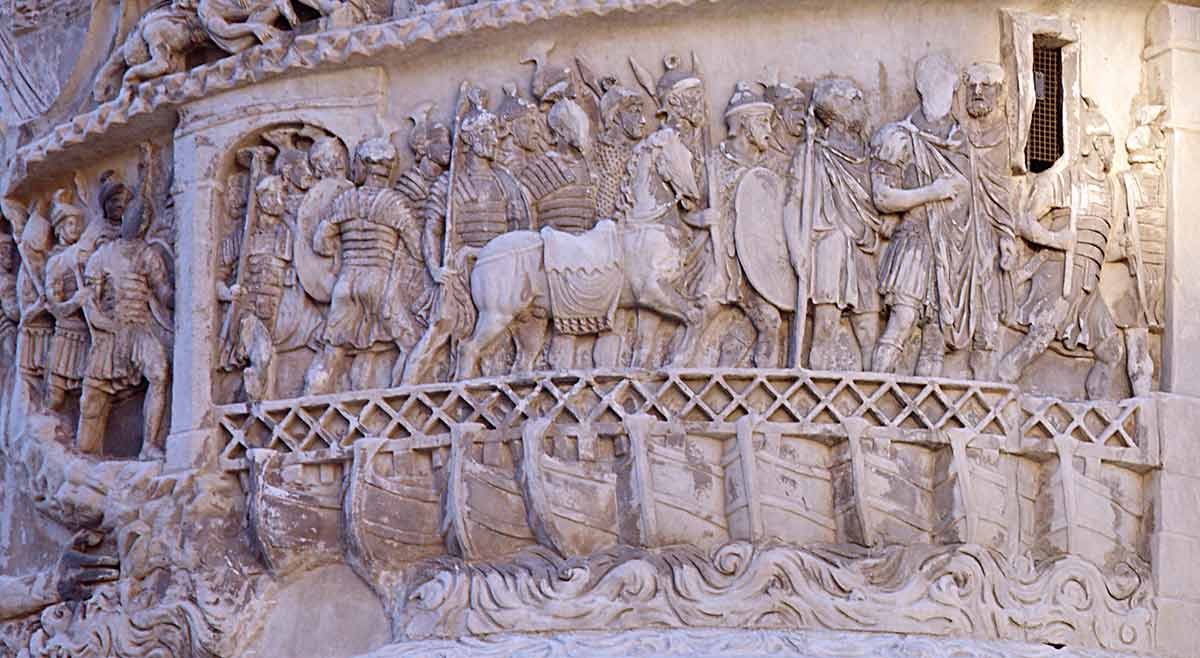
Literacy was of prime importance, and whether or not it was taught in the legions is unknown, but it was a requirement of soldiers that they be able to read and write.
Nevertheless, soldiers gained valuable knowledge in the legions, much of which aided them in life after retirement. After their military life was over, veterans put their skills to civilian use, becoming local elites, landholders, security guards, politicians, bureaucrats, and builders, among many other things. With such indispensable skills, the state encouraged veterans to settle in far-flung colonies where their skills and discipline were needed in establishing successful settlements. With state backing, such colonies had high levels of prestige and were showcases of Roman urbanism and authority.

Despite the opportunities available, it is still unsurprising that many people could not join the legions. Slaves could not join, and as expected, women were omitted. The mobility, too, was not unbounded. Plebeians moved within the plebeian ranks, and the nobility moved within the officer class. While moving up from the plebeian to the noble class was extremely rare, what mattered was the honor and wealth that could be accrued through military service.
The rewards for anyone who completed their terms of service were substantial and generated a great amount of interest for anyone looking to escape their civilian life.