
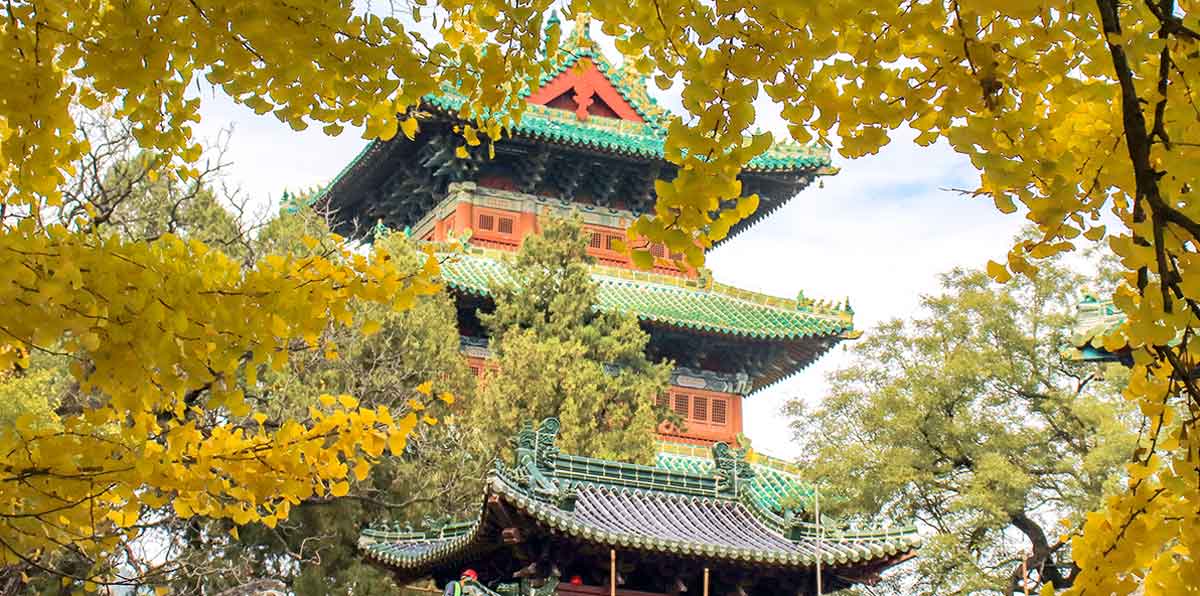
The Shaolin Temple on Mount Song in Henan province, China, is practically synonymous with martial arts. It’s hard to imagine martial arts without picturing rows of monks, dressed in their iconic orange robes, practicing forms in unison. Their training has inspired a multitude of people to get fit and learn martial arts, as well as a vast array of martial arts stories, movies, video games, and even rap albums, including the Wu-Tang Clan’s debut Enter the Wu-Tang (36 Chambers), named after the 1978 film The 36th Chamber of Shaolin.
The temple was founded in AD 495, when Emperor Xiaowen of the Northern Wei built it for the Indian monk Batuo, and tradition regards it as the birthplace of Chan (Zen) Buddhism in China. According to legend, the monks took up martial arts to counteract long hours of seated meditation, though the earliest reliable evidence of Shaolin fighting monks dates to the Tang Dynasty, when monks helped the future Emperor Taizong in 621.
Cardiovascular Endurance
The foundation of conditioning is cardiovascular endurance. During heavy exertion, the heart and lungs work in overdrive to deliver oxygen to the muscles and to the rest of the body. Prolonged aerobic activity makes the cardiovascular system adapt to a more demanding workload.
Continual practice of martial arts forms, sparring, and the daily rigors of temple maintenance meant that the monks were far from sedentary, just as Bodhidharma, the semi-legendary monk who allegedly taught the Shaolin, is said to have intended.
For many people in modern society, life is largely sedentary, and the potentially harmful effects cannot be fully offset by an hour or two at the gym once or twice a week.
This isn’t to say that there was no dedicated cardiovascular workout in the Shaolin repertoire. The simplest cardiovascular endurance exercise Shaolin monks would do was running. Traditional training accounts describe running as a way to clear the lungs of “stale” air and get the blood flowing. Traditional Chinese medicine, which was a part of Shaolin studies, extols the necessity of synergized flow of xue (blood) and qi (often translated as breath, energy, or life force).
Body Hardening
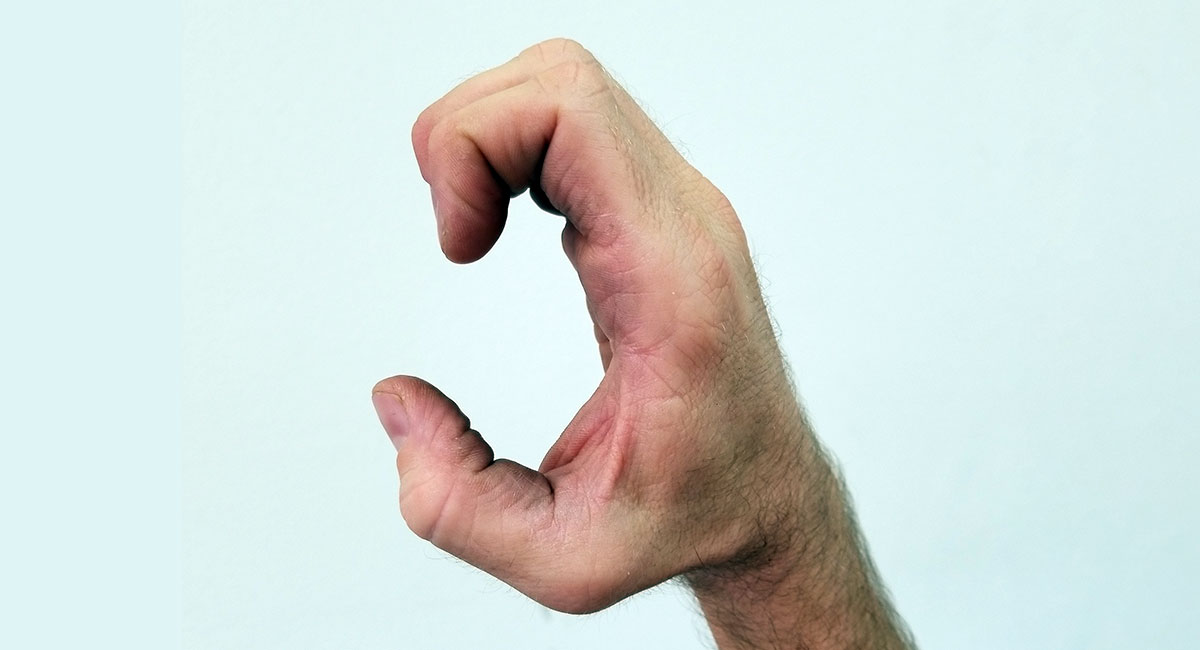
Monks at the Shaolin monastery are also known for displaying feats of exceptional pain tolerance and durability. They do this through progressive body hardening exercises, which build the resistance of bone, skin, and muscle to impact and, in demonstration feats, even to blades and spear points.
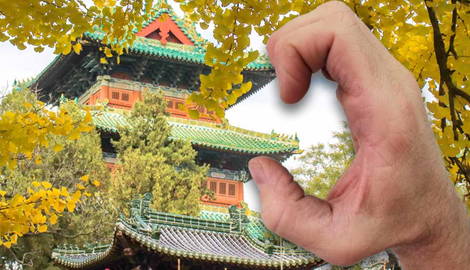
Exercises such as Iron Body and Iron Palm form a major component of the Shaolin training regimen. Monks start young, and they perform other exercises such as rolling bamboo over their shins, forearms, and other hard bones to toughen the skin and bone and dull their sensitivity to pain. Conditioning the fingers is also important for techniques like the eagle claw grip, as seen above.
Jin Jing Zhong’s 1934 book Training Methods of 72 Arts of Shaolin describes an impact exercise called Twin Lock (Shuang Suo Gong), in which the trainee knocks the forearms together, then progresses to the wrists, palms, and fingers, and finally strikes the shins. The idea is that bone adapts to repeated impact by growing denser, a principle sports scientists call Wolff’s law. The book warns that the early stages are painful and says the exercise takes at least three years to master.
Flexibility
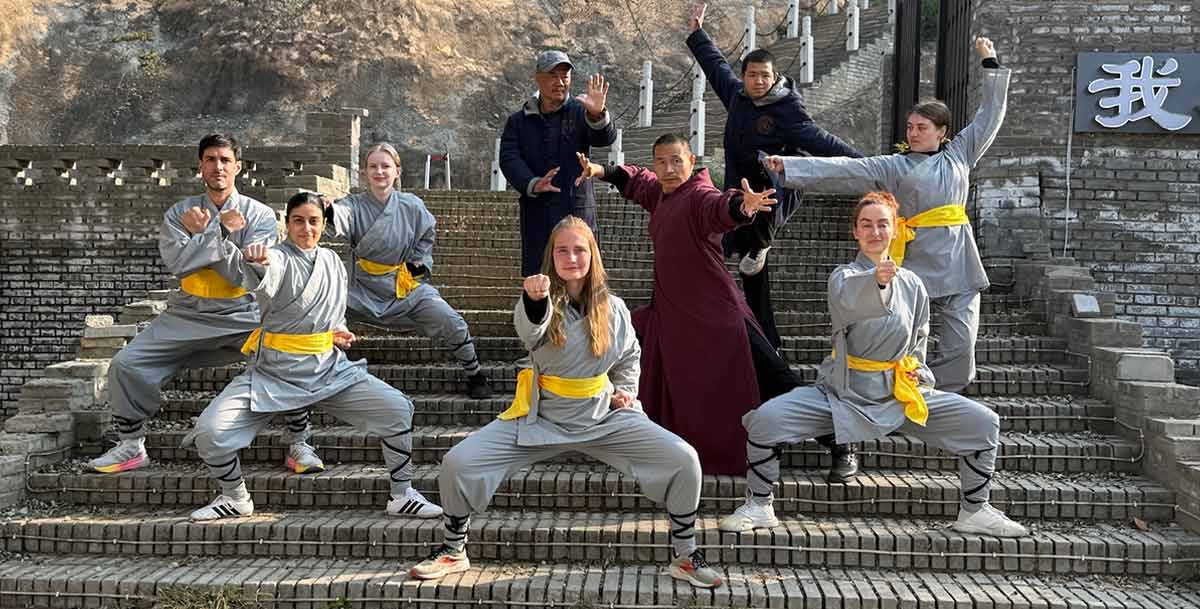
The Shaolin monks are capable of extreme flexibility: they can kick so high it almost looks like a vertical split, and a large portion of their training involves taking deep, extended stances such as the horse stance, where the thighs are parallel to the ground, and the feet are placed two shoulder widths apart.
Training for flexibility, known as Tongzi-gong, by necessity starts young, as with most aspects of this training. Many disciples of Shaolin kung fu begin this training as young children, often around five or six. At this time, the muscles, tendons, and bones of the child are most pliable. The focus at this stage is stretching the muscles and tendons, the connective tissue that joins muscle to bone, while they are still supple.
Stretching is often combined with breathing exercises by taking deep breaths when at the perceived limit of the range of motion to induce a state of relaxation. At the end of their range of motion, muscles reflexively tense to protect against strain, a response known as the stretch reflex.
The relaxation induced by exhaling allows a deeper stretch with less risk of injury or strain. Breathing exercises are a core part of qigong, which aims to cultivate qi, one of the Three Treasures of Chinese tradition alongside jing (essence) and shen (spirit).
Strength Training

Many Shaolin training exercises focus on calisthenics. Body weight exercises are a relatively simple way to build up muscle tone and strength, and they fit well into the ideal of simplicity. However, there are also traditional resistance exercises, such as lifting stone locks, intended to build explosive power.
Exercises from the 72 Arts such as Pulling Out a Nail and Embracing a Tree, in which the trainee tries to uproot a living tree, work different areas of the body. There is also the notion of using weighted training clothing, often in the form of bags of iron pellets fastened around the legs. This part must be done extremely carefully and incrementally; otherwise, there could be irreparable damage to ligaments and tendons.
Form Practice
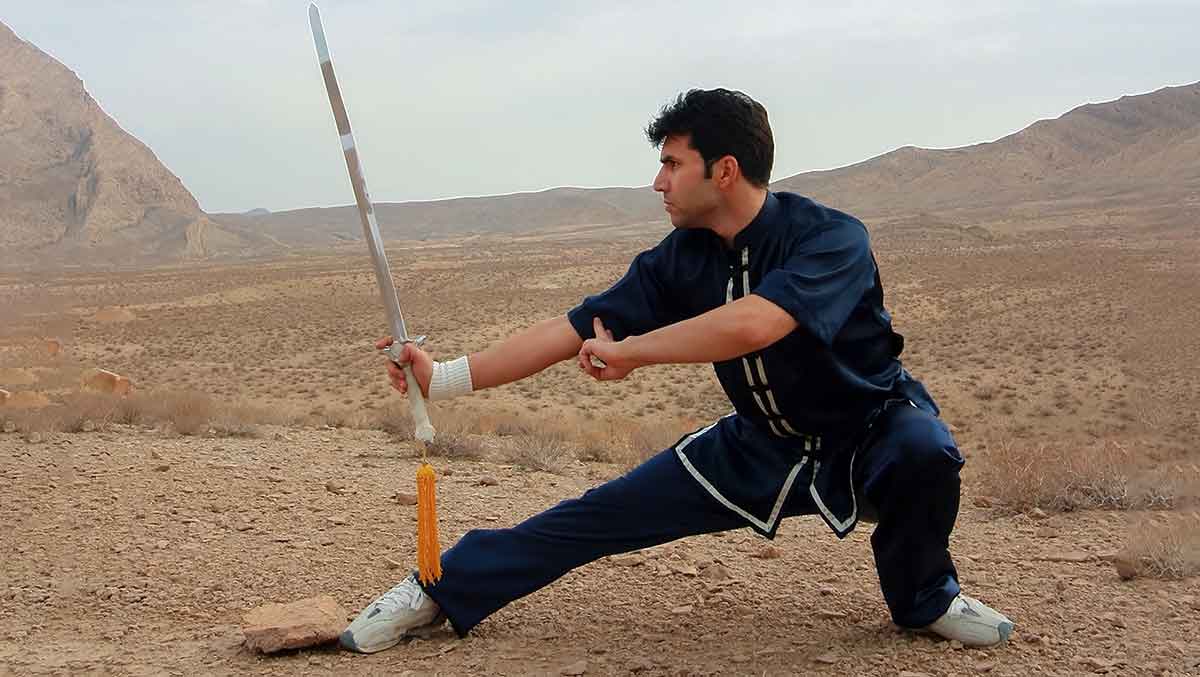
The practice of martial arts includes frequent repetition of forms. Shaolin forms and Chinese martial arts in general are called taolu. They are sequences of movements that simulate fighting against one or multiple opponents. Although the martial arts community sometimes questions the validity of form practice, there are benefits. Doing the moves in sequence helps to entrench them in procedural memory. Also, it teaches the body how to work in coordination: power from martial arts comes from kinetic alignment just as much as from raw strength. In fact, too much strength can be a detriment because the person might be predisposed to rely on it rather than proper mechanics.
Tradition holds that Shaolin training began with a sequence called the 18 Arhat Hands (Shiba Luohan Shou), the root of the later Luohanquan forms. These are a series of simple movements that have been expanded upon over the centuries. Many of the postures are used as qigong cultivation aids. When moving dynamically from one posture to the next, they make powerful strikes.
Perhaps the most well-known example of Shaolin forms are the five animal styles: Tiger, Crane, Leopard, Snake, and Dragon. Each of these focuses on different methods and philosophies. Students may learn the fundamentals of all five, but many go on to emphasize one or two.
Meditation
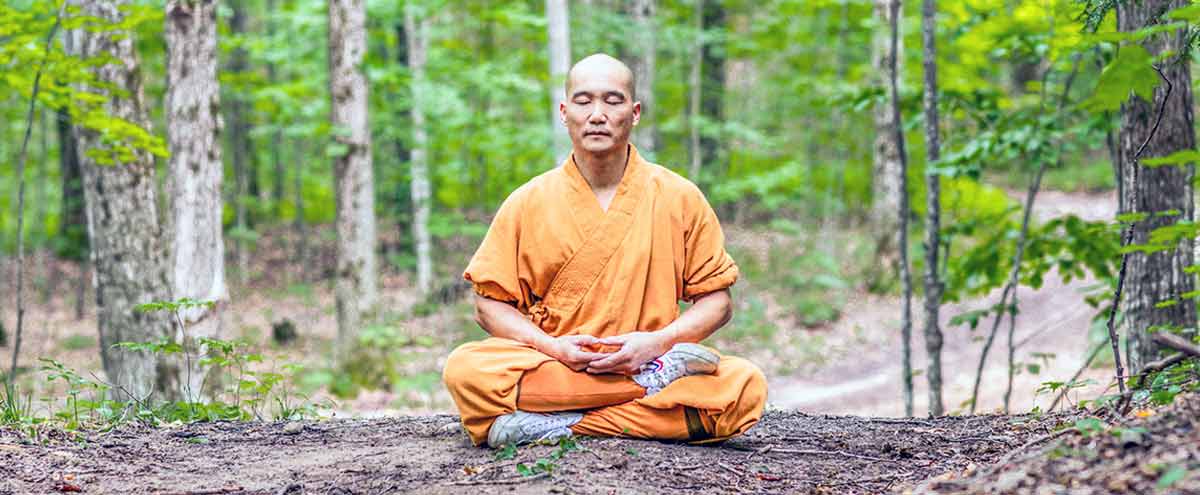
Shaolin monks frequently meditate to increase their ability to stay focused and to be fully in touch with the present moment. Most meditation takes the form of sitting in silence, focusing on a single thing. This could be a candle, the breath, or even just a bare spot on the wall. The aim is not to prevent the mind from wandering, because it is natural to think, but to become aware of when it does and gently bring the mental focus back onto the preferred target.
This skill increases the level of mental resilience, a crucial skill in combat. Over time, the mind develops the ability to subconsciously return to awareness.
Diet
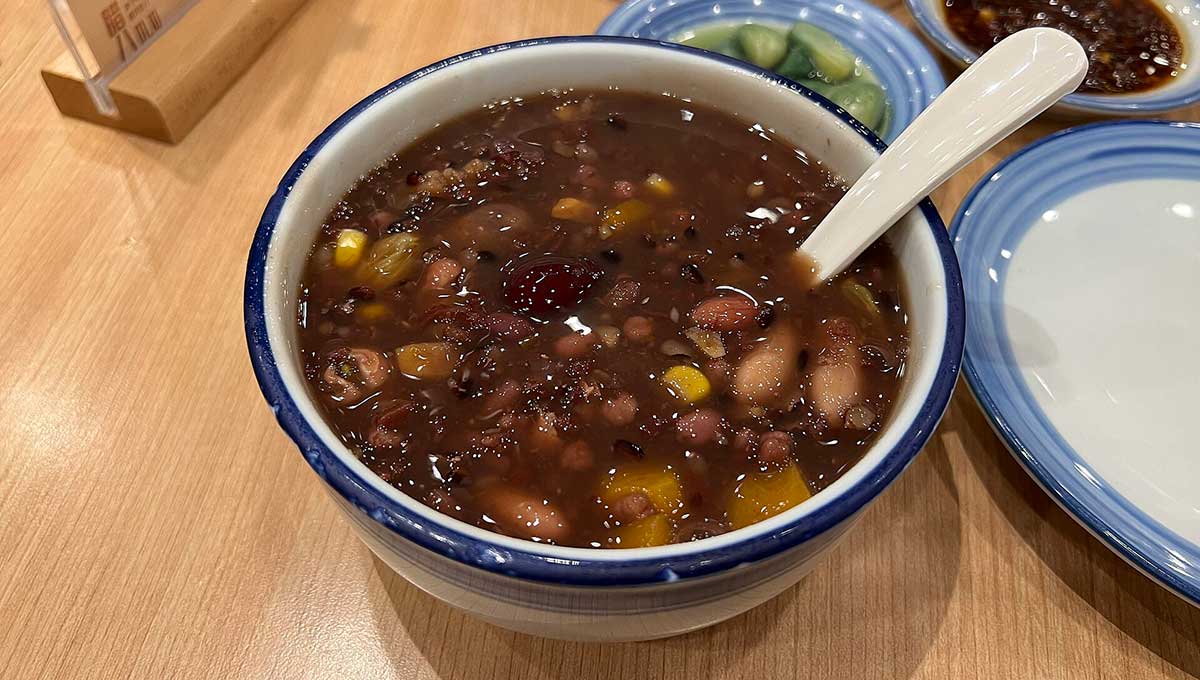
Shaolin monks keep a vegetarian diet, following the Chinese Buddhist monastic rule against meat that Emperor Wu of Liang enforced in the early 6th century, rooted in Buddhist beliefs about harming living beings. There are three meals in a day. At the start of the day, there is a simple breakfast often consisting of rice porridge (congee) filled with beans and dried fruit. Lunch is a plate of rice or noodles with vegetables. The kitchen also avoids the “five pungent” vegetables, such as garlic, onions, and leeks, which Buddhist tradition holds stir up desire and anger.
Dinner, meanwhile, is light, often noodles or soup, since a heavy meal before bed is thought to disturb digestion and sleep. Notably, monks do not drink with their meals, a habit said to aid digestion, and between meals they drink water or plain tea.
These meals change throughout the year, since the monks have long relied on seasonal foods and on how each food was thought to prepare the body for the weather ahead. For example, summer meals tend to include fruits, which traditional Chinese medicine classes as “cooling” foods that keep the body balanced in hot weather. And of course, fruits grew more readily in summertime.
A Life of Discipline
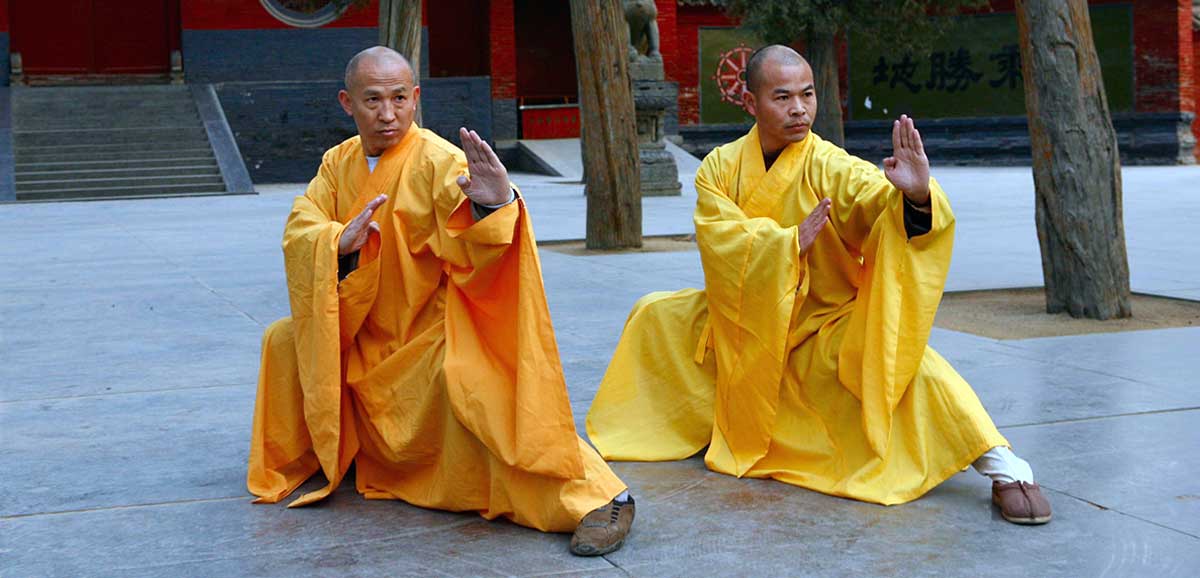
All of the above is made possible only by rigorous practice, which requires levels of discipline that do not come naturally. Temple life follows a rigorous schedule to instill a sense of routine and remove most of the day-to-day decisions that cause many people to feel constant physical and mental fatigue.
The monks typically rise between 4:00 and 5:30 AM, and the day begins with morning chanting in the main hall. After bathing and dressing, they engage in a short period of stretching and warm-up exercises, followed by breakfast, several hours of form training and conditioning, then lunch. After lunch, they do the various chores involved in temple upkeep, then another session of training and conditioning, followed by supper. After supper, usually served between 5:30 and 6:30 PM, the monks gather for evening chanting, such as the Heart Sutra, followed by study and meditation. Lights go out at the same time each night, usually between 9:00 and 10:00 PM.
The combination of all of these factors contributes to the Shaolin monks’ reputation as some of the most disciplined and skilled martial artists in history. None of what we’ve covered here is meant as instruction, since attempting these regimens without expert supervision can cause serious injury.