
The Tang Dynasty (618 to 907 AD) enjoyed almost 300 years of supremacy in China. But one chaotic event pushed this prosperous dynasty to the brink of collapse, the An Lushan Rebellion. While the civil war lasted eight years, from 755 to 763 AD, its political and economic effects lasted decades, ultimately defining the long decline of the dynasty.
The Fatal Flaw Hidden Behind China’s Golden Age
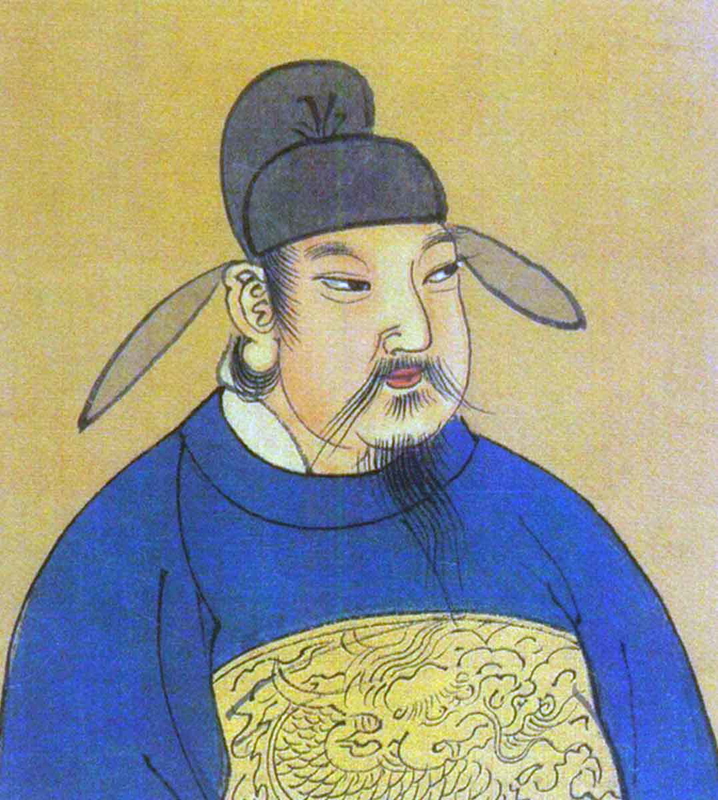
Before the rebellion, the Tang Dynasty enjoyed a golden age under Emperor Xuanzong. However, its governance structure had weaknesses. By the late 730s, the government had shifted from the traditional militia system, which relied on part-time peasant soldiers, to professional standing armies on the frontier, and the old militia was formally suspended in 749.
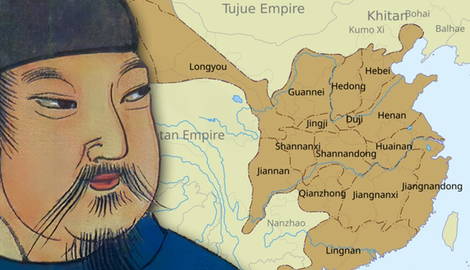
To secure its vast, dangerous borders, the Tang court established ten regional military governorships, known as fanzhen, ruled by commanders known as jiedushi. These regional leaders had significant autonomy. They collected taxes and managed military forces. While this worked well for border defense, it gave the governors immense power, and by 752 AD, An Lushan had become the most powerful governor. He was a general of Sogdian and Turkic descent. Over time, he was able to win the trust of Emperor Xuanzong and his favorite concubine, Yang Guifei.
As commander of three northern frontier commands, An Lushan controlled some 180,000 veteran soldiers. This force was much larger than what the emperor had in the capital city of Chang’an. The balance of power was precarious, and it required only one spark to ignite chaos.
The Mutiny That Forced an Emperor to Execute His Beloved Consort
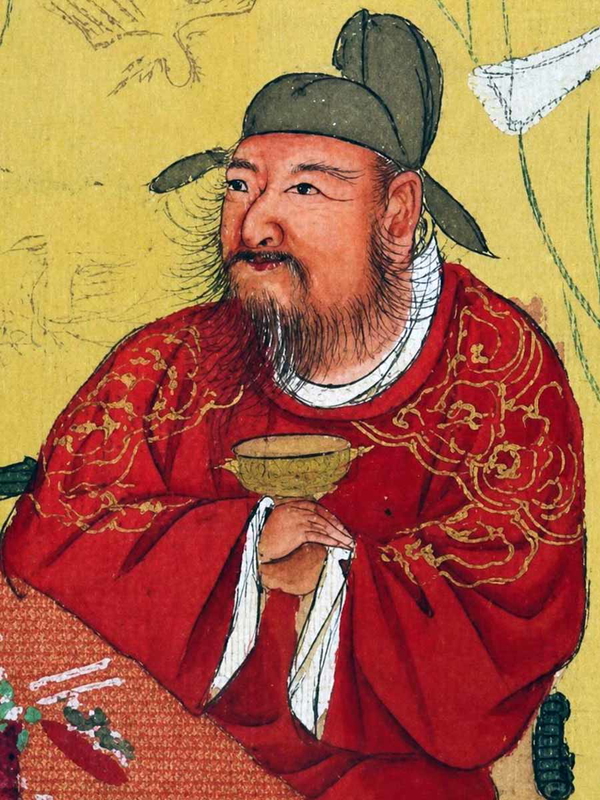
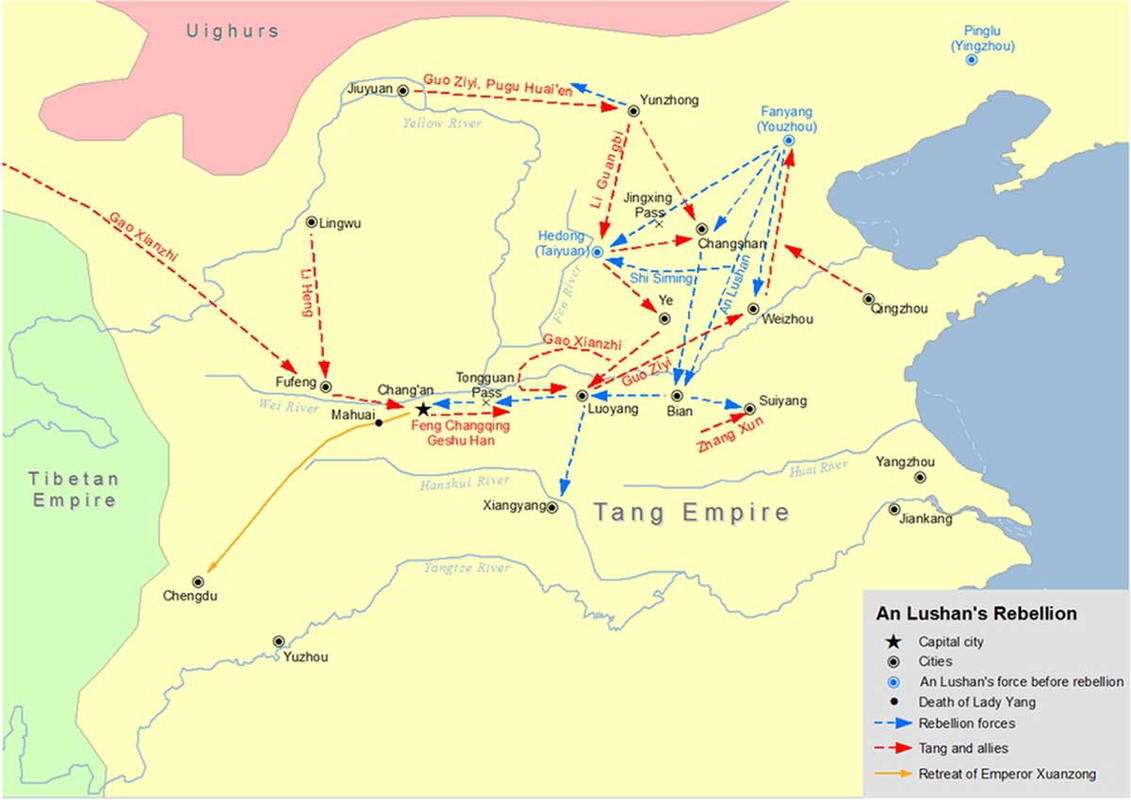
The spark came from the chancellor, Yang Guozhong, a rival of An Lushan, who spent years warning Emperor Xuanzong that An Lushan was plotting a coup. Fearing for his life and angry at this betrayal, An Lushan rebelled in December 755 and declared himself emperor of a new dynasty called the Great Yan Dynasty on February 5, 756. That was after capturing the eastern capital city of Luoyang. His armies then marched southwest. Because the Tang government relied on regional frontier commanders rather than keeping standing armies in the interior, there were no available internal troops to counter the march.
The Tang government was completely caught off guard. With the imperial army suffering a devastating defeat, Chang’an, the capital, fell in 756 AD. Xuanzong fled toward Sichuan, but at Mawei Station his own guards mutinied and killed Chancellor Yang Guozhong. They blamed the Yang family for the nation’s ruin and demanded the death of his cousin, Yang Guifei, the emperor’s favorite consort. Xuanzong gave in, and she was strangled.
Although the Tang Dynasty survived for another century and a half after this event, things were never the same. The fact that the emperor had been forced to execute his favorite consort to save his life broke the sacred power of the throne.
From Unified Empire to Rogue Warlord States
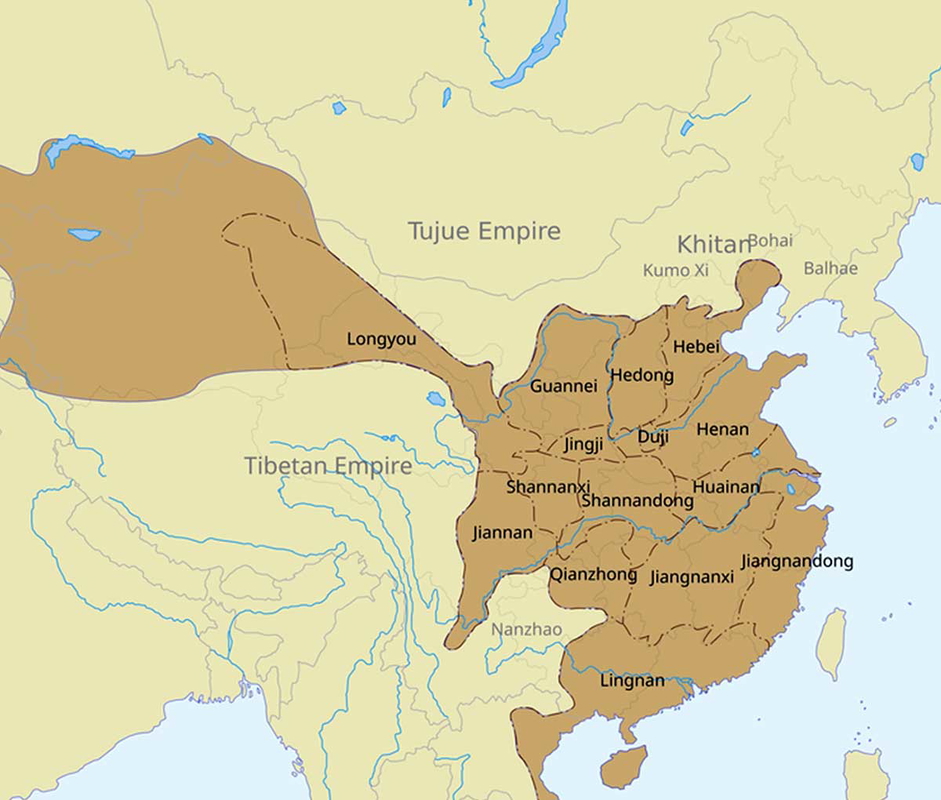
The Tang court extinguished the rebellion in 763 with help from the Uyghur Khaganate, but the path to victory came at a high price. To end the war, the court let surrendering rebel generals keep their armies and territories, and governors everywhere gained even greater autonomy than before. While An Lushan himself was assassinated by his own son, An Qingxu, in early 757 before the war ended, the court made major compromises to win. In the northeast, the Hebei provinces became virtually independent, withholding taxes from the court and passing power to their heirs, while governorships spread across the interior and broke the empire into regional power blocs. While they still offered token loyalty to the Tang court, they kept much of the tax revenue for themselves.
As such, in addition to losing control of the empire, the Tang lost its tax base. Census and tax collection systems were already poor, but the rebellion made it worse. In 780, the state replaced it with the Twice-a-Year Tax, which assessed households on their property and land rather than taxing every peasant at the same rate. This provided some income, but it never restored the revenues of the early Tang.
The 150-Year Death Spiral That Shattered Chinese Supremacy
The rebellion’s aftereffects haunted the Tang Dynasty until its end in 907, including the loss of Silk Road territories in Central Asia. Weak emperors became common as powerful eunuchs and manipulative military commanders gained influence over court politics. Despite a brief revival under Emperor Xianzong, Tang authority became largely symbolic after the Huang Chao rebellion of 874 to 884, making China’s emperor little more than a figurehead.
By the time it collapsed, the Tang Dynasty was a shadow of its former self. The once mighty empire disintegrated into the Five Dynasties and Ten Kingdoms, and the trajectory of Chinese history changed irrevocably.