
In the period following the lives of the Apostles of Jesus Christ, Irenaeus of Lyon and other early Christian church leaders faced the challenge of determining which books had authority in the Christian canon. A significant threat to this effort was the Gnostic movement, which, through its own gospels, offered differing views on who Jesus Christ really was.
The Gnostic Threat to Early Christianity
The early church, going back even to the time of the Apostles, had to deal with a general movement that attempted to combine certain parts of Greek philosophy with Christianity, a movement known as Gnosticism. This movement took on various “flavors” in the early Christian centuries, but a common thread was the idea that matter was evil and the spiritual was good. Gnostic believers did not believe that Jesus Christ, if he were the Son of God, would come as a human, because He would have to take an evil “form” to do so. The result was the conclusion that either Jesus Christ came as some sort of phantom that appeared physically, or that He was someone less than God incarnate.
One of the first heretical leaders to promote the idea of a non-corporeal Jesus Christ was Marcion of Sinope. Marcion produced his own gospel around 130-140 AD, which early church fathers generally held to be an edited and redacted version of the Gospel of Luke, and also a list of his own canon of scripture, 10 books, all of which he claimed to be Paul’s epistles.
Marcion of Sinope and the First Redacted New Testament
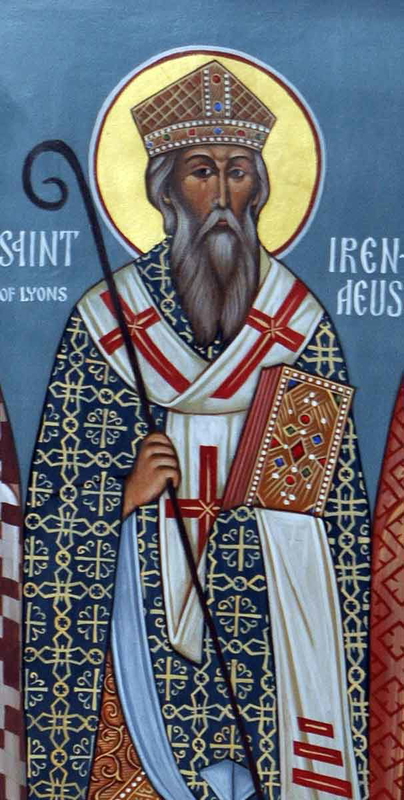
Irenaeus reacted to Marcion’s beliefs in his work Against Heresies, written around 180-190 AD. In it, Irenaeus formulated four standards upon which he judged canonicity.
1. Apostolic Authorship, or someone with firsthand knowledge, directly from an apostle:
An “apostle” is generally held to be someone who physically saw and was taught by Jesus Christ directly. Irenaeus writes extensively on the “fourfold Gospel” in direct argument against Marcion’s redacted version of Luke. He states, “Let us revert to the Scriptural proof furnished by those apostles who did also write the Gospel, in which they recorded the doctrine regarding God, pointing out that our Lord Jesus Christ is the truth…” (Against Heresies, Book III, Ch 5)
2. Scriptural proof from Revelation that there were four Gospels, as well as nature.
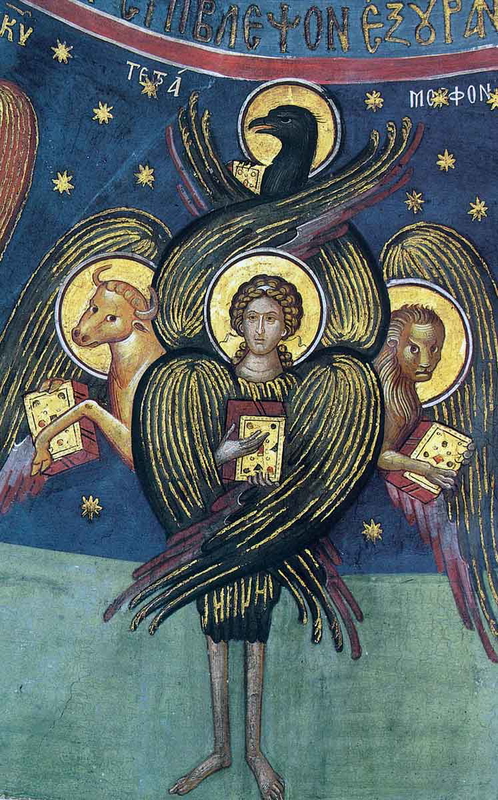
Irenaeus makes use of a passage from Revelation 4, likening the four creatures to the four Gospels:
“And around the throne, on each side of the throne, are four living creatures, full of eyes in front and behind: 7 the first living creature like a lion, the second living creature like an ox, the third living creature with the face of a man, and the fourth living creature like an eagle in flight. 8 And the four living creatures, each of them with six wings, are full of eyes all around and within, and day and night they never cease to say, ‘Holy, holy, holy, is the Lord God Almighty, who was and is and is to come!’”
Rev 4:6b-8 ESV
3. Oral tradition and testimony passed down through the church:
Irenaeus held a high view of the churches founded by the apostles, having the true testimony directly from the apostles, who “instituted bishops in the Churches, and [to demonstrate] the succession of these men to our own times; those who neither taught nor knew of anything like what these [heretics] rave about.” (Against Heresies) Book III, Ch3).
Irenaeus makes a strong argument that if the claims of the various gnostic sects were true, then the churches which the apostles founded only a generation or two before would have received such teachings from the apostles.
4. Widespread and common usage:
The testimony from the apostles was the same for each church, and that none of them received the teachings claimed by the gnostics:
“But the Church throughout all the world, having its origin firm from the apostles, perseveres in one and the same opinion with regard to God and His Son”— (Against Heresies Book III Ch 12)
The Legacy of Saint Irenaeus on the Christian Canon
Irenaeus also quoted extensively or alluded to almost every book in the New Testament except for III John, Jude, and Philemon (which are short works). He also used works from non-heretical sources, such as Clement and the Shepherd of Hermas, in his arguments. The only time he quoted from the Gnostic texts was to criticize them.
Irenaeus’ use of the New Testament (and some of the Old) as authoritative helped the church determine the canon in its early centuries. While it would be some time before a more definitive “list” was produced, the recognition and acceptance of what became known as the New Testament as authoritative—and the arguments that established its authority—were present within Christianity almost from its beginning.