
When we talk about ancient philosophy, it’s almost impossible not to think of Pythagoras as one of its most central figures. He had an immense influence not only in philosophy but also in mathematics and science in general. He thought of the numbers as the ultimate entities that construct the reality around us. He also incorporated this numerical point of view into other disciplines, including ethics, music, and religion. In fact, he proposed a symbolic background to the numbers, meaning that each and every one of them had significance.
Pythagoras and Metaphysics
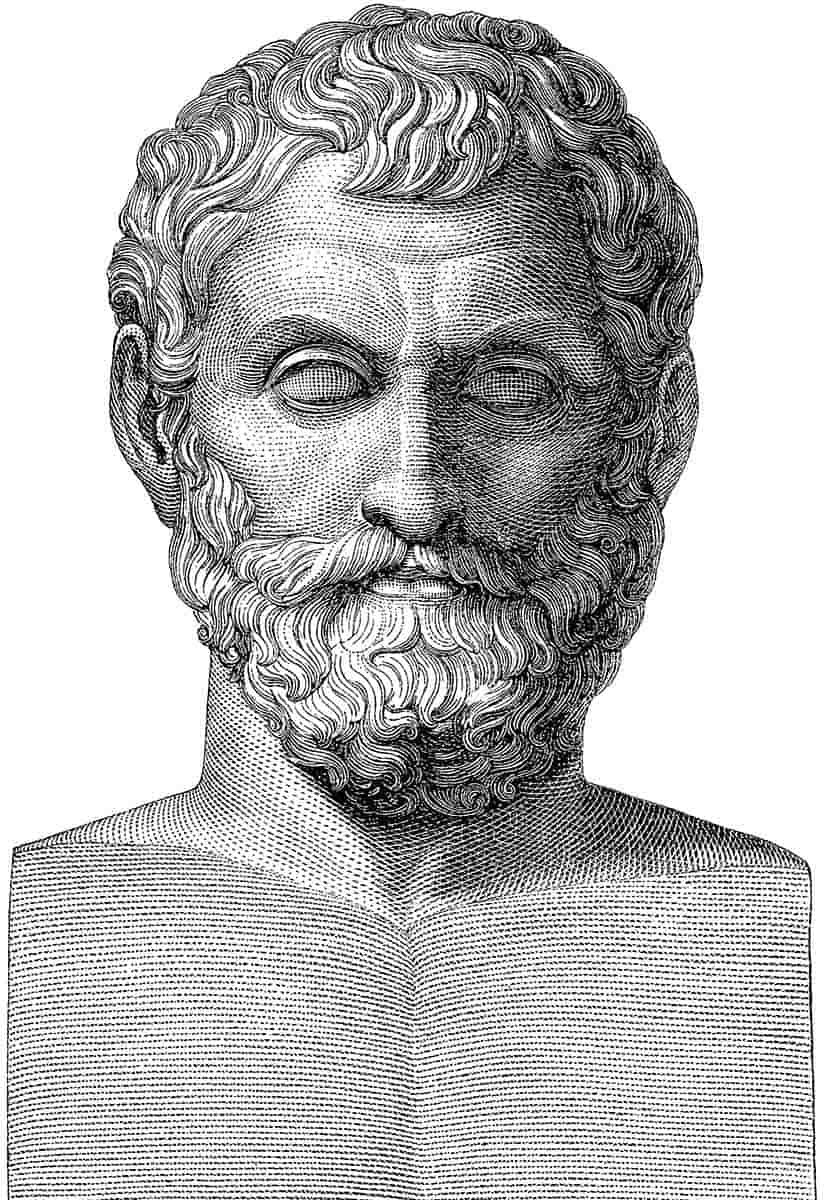
First and foremost, it’s important to take a look at the starting point in his philosophy upon which every other stance rests. We need to examine his ontology or metaphysics – the study of Being, and the underlying principle of the universe. This is a question that almost every ancient philosopher examined in their philosophy. They were all trying to locate the ultimate principle that “gave birth” to the world around us.
According to Thales, the ultimate principle responsible for everything existent around us is water. His follower, Anaximenes, on the other hand, thought that it was the air that constructed the universe, while Heraclitus thought that the underlying principle was fire. All of them thought of the first Being as made out of material matter.
However, Pythagoras came forward with a different opinion. He said that the first Being that ever existed, and the principle that created everything existent, is the number. Numbers are eternal, he said. They have existed long before we or the world existed, and even though they are ideal (not made out of matter), they are real. So, Pythagoras, opposite to his predecessors, was an idealist. He didn’t deny the existence of material things, but thought that the foundation of all material things is something ideal: the number as the underlying principle upon which all things rest.
Pythagoreanism
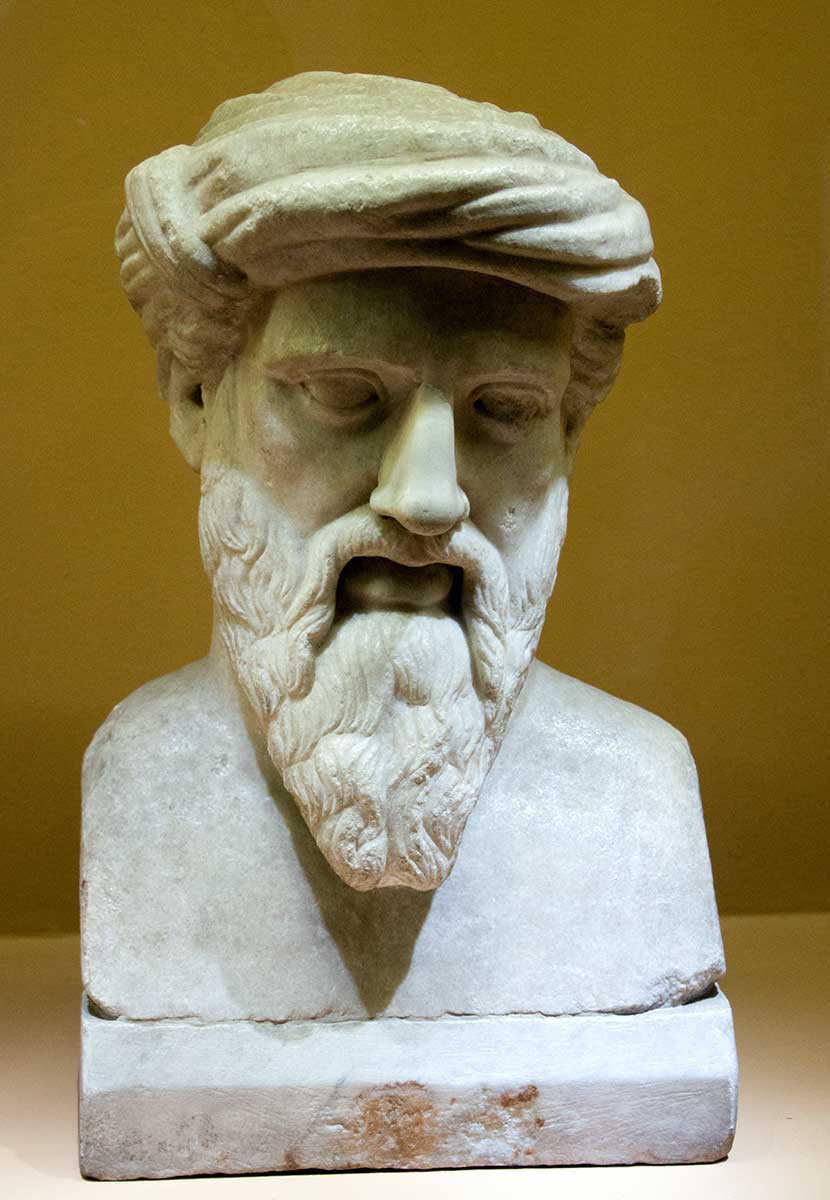
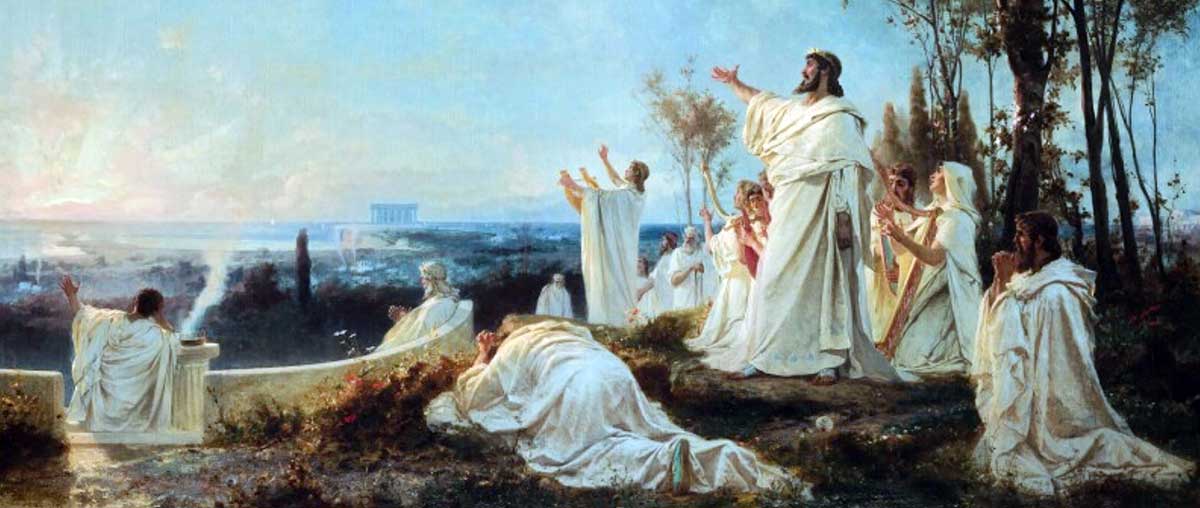
Although original and completely new, Pythagoras’ philosophy attracted many followers, students, and admirers. Thus, a whole new movement was formed under the name Pythagoreanism, consisting of Pythagoras’ philosophy as well as the new doctrine that was derived from his philosophy by his followers and admirers. Usually, Pythagoras’ followers are divided into two groups: esoteric members (the direct, inside members) and exoteric members (the members coming from the outside or the admirers). This distinction is important because Pythagoras prompted his closest followers to always dress a certain way and follow a certain routine, while the exoteric members were not obligated to do these things.
Pythagoras always requested that all his followers dress in white, and additionally, he prompted them to wake up early in the morning so that they could do the pentalpha ritual. So, from the outside, Pythagoreanism looked like a cult led by Pythagoras himself.
Pythagoreanism focused on four specific areas of interest: religion, mathematics, music, and ethics. These four disciplines constitute Pythagoras’ philosophy as a whole, and he incorporated his numeric metaphysics in all of them. He had developed a whole, consistent, and coherent system. That is why he considered himself to be the first philosopher.
According to legend, when Pythagoras was asked what exactly a philosopher is, he used the Olympic Games to describe what he does. He said that the Olympic Games have different kinds of visitors. There are visitors who only come to watch the games. There are also traders who attend the event for financial gain. Finally, the philosophers attend the event to closely observe and figure out why all of this is happening.
The Foundational Numbers

Now that we have briefly outlined the philosophy of Pythagoreanism, it’s time to delve into detail into the symbolism and significance of the numbers, Pythagoras’ ultimate Beings. According to Pythagoras, there are four basic numbers: 1 (monas), 2 (dias), 3 (trias), and 4 (tetras). These four numbers are of particular importance to Pythagoras because their sum (1+2+3+4) equals 10. The number 10 represents divinity and perfection, and therefore, Pythagoras even considers it a sacred number.
The four numbers represent an entity in themselves and do not serve merely as constituents in the sacred ten. Each of them has its own meaning and importance. Monas essentially signifies identity because it is a confirmation of its existence as one. Dias represents difference because it consists of two solidified identities (1+1). According to Pythagoras, there are 10 key differences, including day versus night, being asleep versus awake, finite versus infinite, good versus bad, etc. Trias represents perfection because it affirms three identities (1+1+1), which essentially represent the beginning, the middle, and the end.
Finally, Tetras represents the principle of the corporeal because it is at this point that the world of individual things is derived from numbers. Therefore, tetras also represents a geometric body and is often called the active four or tetractys. The active four acts, says Pythagoras, and thus the corporeal is created, and the process of formation or creation is called fluxion or outpouring.
Mystical Symbolism
The first four numbers are not the only numbers to which Pythagoras attributes meaning and symbolism. In fact, all the first ten numbers have a mystical meaning for him. In addition to the corporeal principle that the active four represents, the fourth number for Pythagoras also represents justice because it consists of four differences (2+2) between which justice should be distributed. Also, the fourth number, according to Pythagoras, has the same status as the number 10 because the sum of the first four numbers is 10. Hence, just like the number 10, the number 4 is a sacred number for the Pythagoreans.
Furthermore, the number five carries the meaning of marriage because it consists of the sum of 2+3. The number 2 represents the feminine principle, while the number 3 represents the masculine principle, according to Pythagoras. The number 6 signifies birth or revival, while the number 7 signifies health. Number 8 represents balance and cosmic order because it’s evenly even (2 x 2 x 2), but it is also tied to resurrection and regeneration. Number 9 represents completion and limit simultaneously because it’s where the horizon of multiplicity ends. Number 9 is the end of the numeric series before returning to unity at 10. Finally, number 10 represents perfection and totality. As mentioned, it’s seen as the perfect number because it contains all previous numbers in a complete whole. At the same time, number 10 also represents divine order, harmony of the universe, and the Pythagorean worldview.
Harmony of Spheres
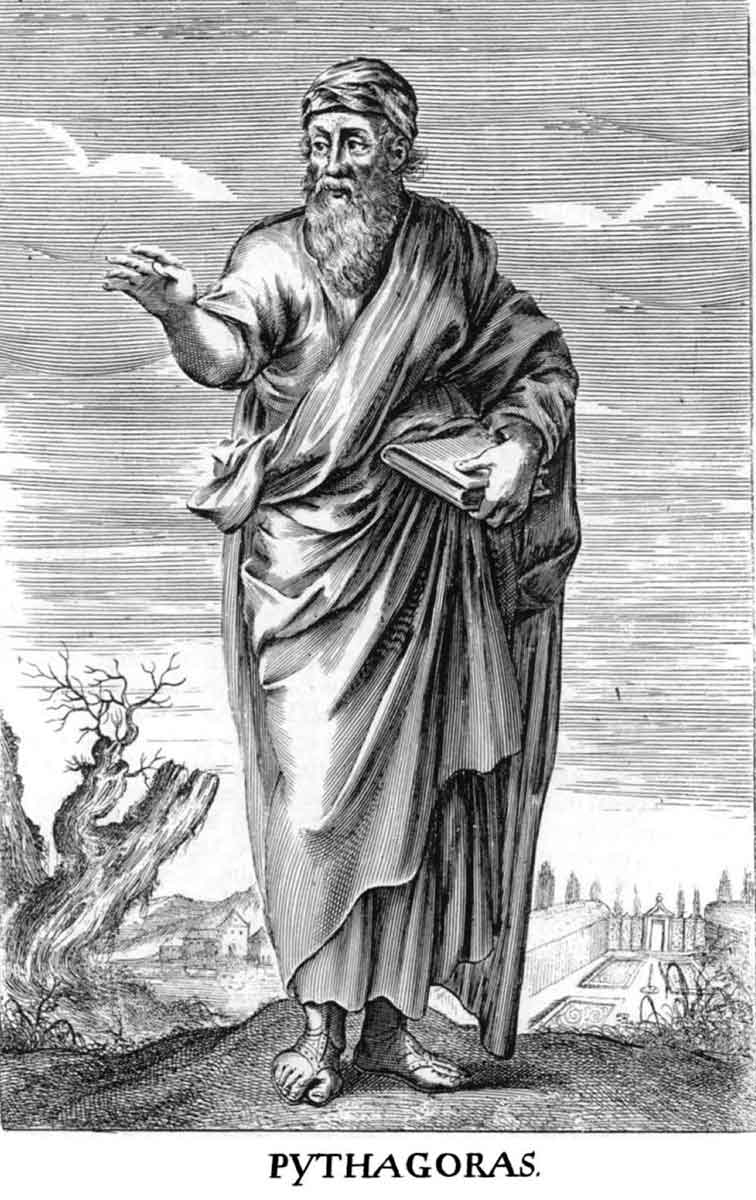
But Pythagoras didn’t just use numbers as abstract symbols and assign meaning to them at random. In fact, he believed that the entire cosmos was structured according to mathematical harmony and alignment. That is how he coined the phrase: All is number. He strongly believed that everything in the universe follows numerical ratios and harmonious proportions, especially in the order of the universe and the celestial bodies.
Pythagoras and his followers believed that the heavenly bodies, such as the stars and planets, moved according to mathematical ratios and order. Furthermore, they also explained that their cosmic movement produced a kind of sacred music, which they called Music of the Spheres. All celestial bodies, they said, are perfectly ordered in order to produce the music of the spheres. That is why Pythagorean cosmology has an aesthetic dimension as well, since everything is placed into perfect proportions.
Opposite to the modern view of the solar system that we have today, the Pythagoreans believed that there were 10 celestial bodies. This may appear surprising at first glance, but the surprise and confusion are gone as soon as we remember that number 10 is the perfect number, according to the Pythagoreans. In fact, to reach the perfect 10, they postulated the existence of a hypothetical 10th planet called Antichthon, the complete opposite of Earth. They believed in the following 10 celestial bodies: Mars, Venus, Saturn, Jupiter, Mercury, Sun, Moon, Earth, Antichthon, and the Sphere of the Fixed Stars. All 10 celestial bodies orbit a cosmic, mystical fire located at the center of the universe.
Significance & Importance of Pythagorean Philosophy
Pythagoras had a major influence on many philosophers following him. He was one of the first idealist thinkers in antiquity, and thus made the path of many idealistic oriented thinkers after him. Additionally, he had a huge influence in incorporating mathematics into the scope of philosophy. As a result, a lot of thinkers incorporated mathematical and logical elements into their philosophies as well.
Pythagoras was also one of the first philosophers to emphasize the importance of music. According to the Pythagoreans, music wasn’t just art; it was mathematics, and at the same time, a model for the universe itself. Pythagoras discovered that musical harmony is based on simple mathematical ratios. For example, he noticed that a string half the length of another sounds one octave higher, and this shows the ratio 1:2. So, Pythagoras was one of the first thinkers to scientifically examine music. Thus, he also contributed greatly to the foundation of music theory. Having all that in mind, we can conclude that Pythagoras is a crucial thinker, and his philosophy is necessary for anyone studying ancient philosophy or the history of philosophy as a whole.