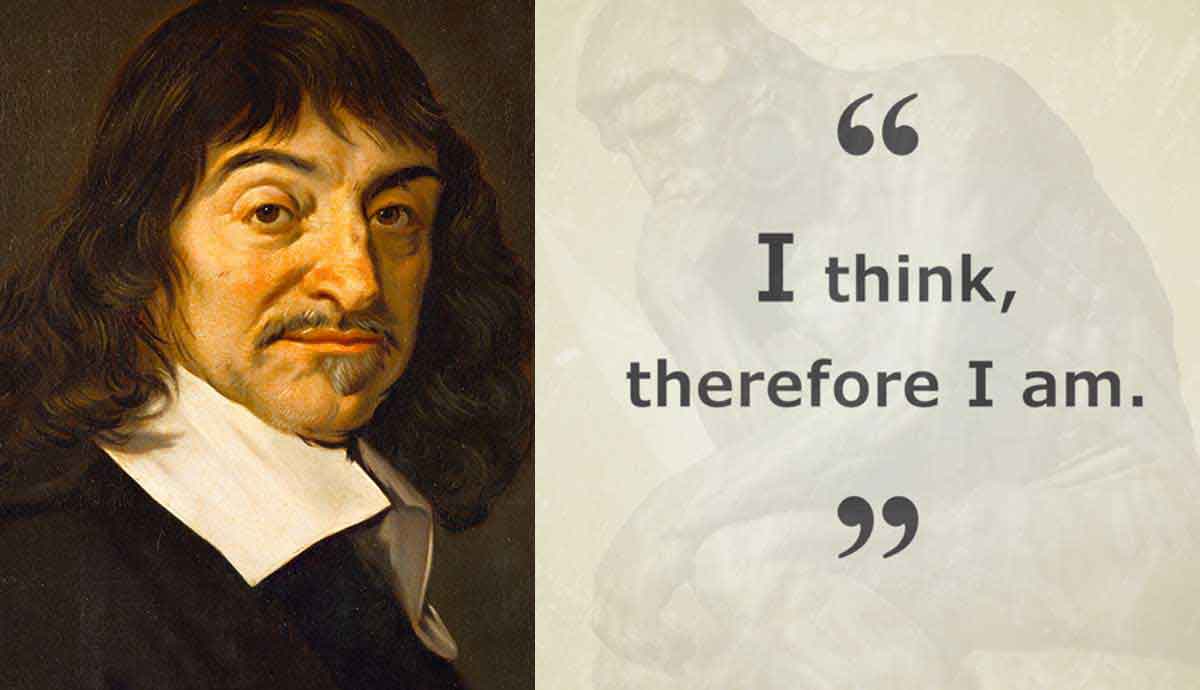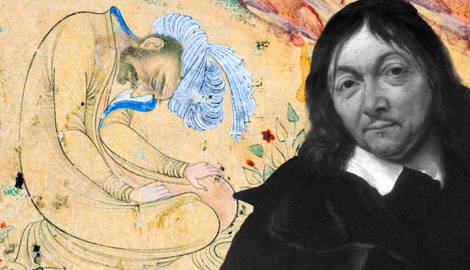

History credits René Descartes for introducing radical doubt and building beliefs back up from the single certainty of “I think, therefore I am.” But five hundred years before the 43-year-old Descartes sequestered himself in a small, stove-heated room to doubt reality, a giant of the Islamic Golden Age had done precisely the same thing. In 11th-century Persia, Al-Ghazālī doubted his beliefs so fundamentally that he lost the ability to speak. In this way, the Islamic Golden Age anticipated modern philosophy.
Al-Ghazālī’s Crisis in Certainty in Eleventh-Century Persia
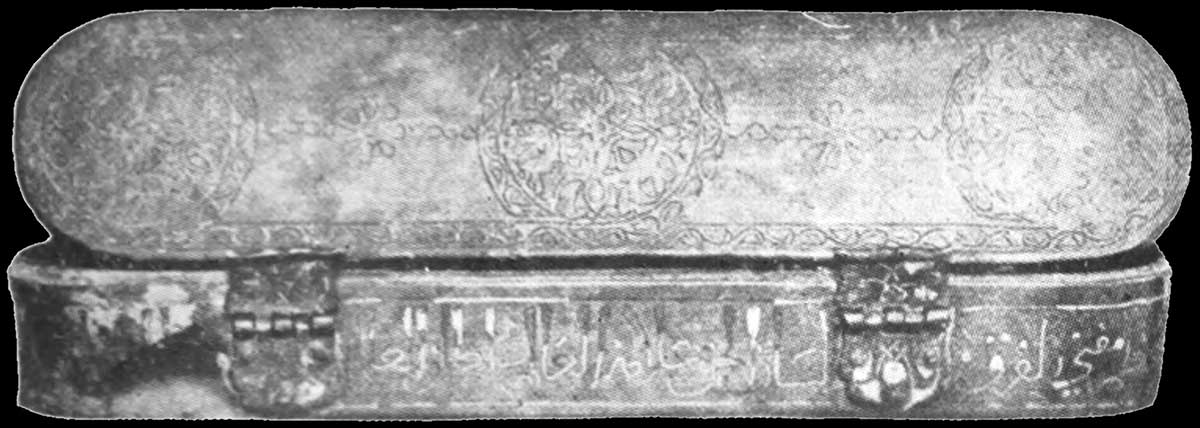
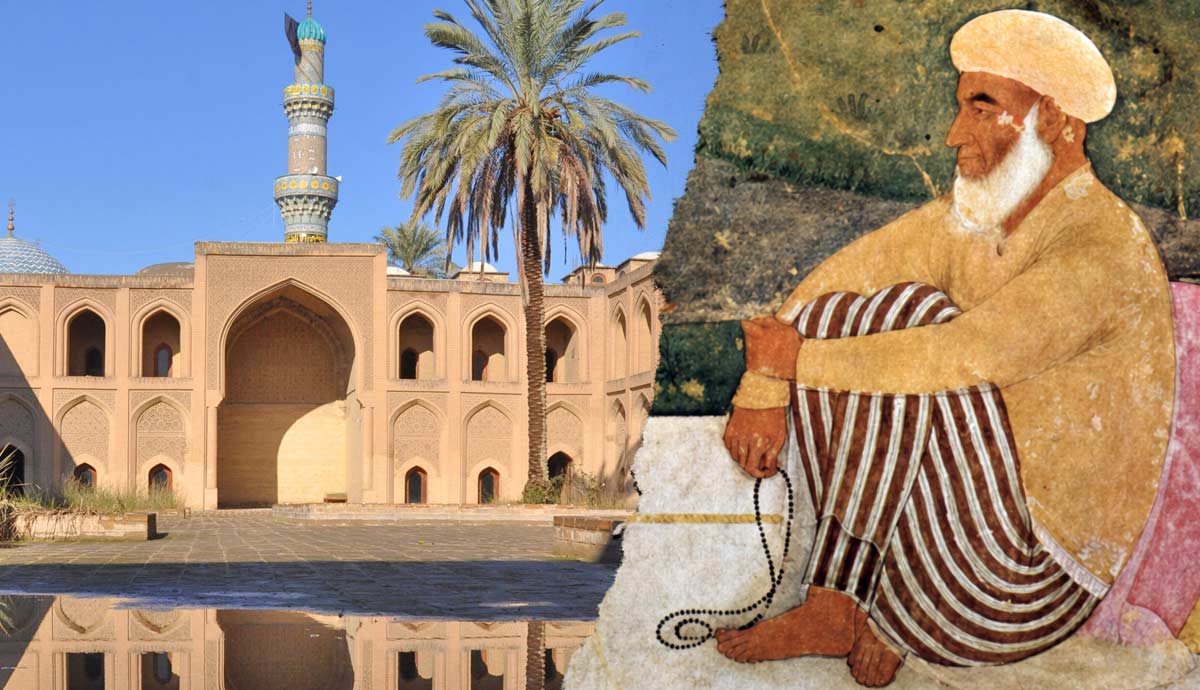
By 1095 CE, Al-Ghazālī was the head of the Niẓāmiyya Madrasa in Baghdad and at the height of his scholarly career. He was well-known to students and the powerful throughout the Great Seljuk Empire. The position brought him wealth and renown. But by the end of 1095, he was convinced his studies were futile and offered no path to salvation. He vacated his post following a psychosomatic breakdown that left him unable to eat, drink, or speak.
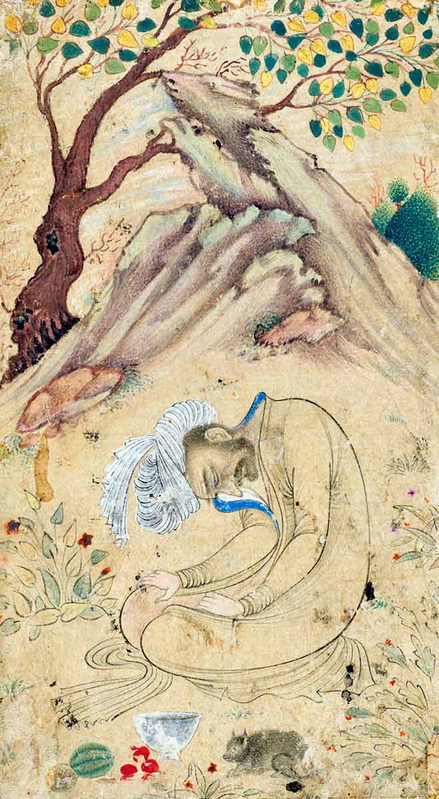
From a young age, Al-Ghazālī possessed an unquenchable thirst for knowledge, and by his thirties, mastered philosophy, which was critically expressed in his incomparable Tahāfut al-Falāsifa (The Incoherence of the Philosophers). Uncertain of what knowledge philosophy could truly afford, he plunged into a period of skeptical doubt, seeking absolute certainty that left no room for incredulity or error. His muteness was associated with a universal skepticism he could not shake off.
The Dream Argument and the Unreliability of the Senses
Al-Ghazālī’s argument for skepticism in al-Munqidh min al-Ḍalāl (Deliverance from Error) goes roughly as follows:
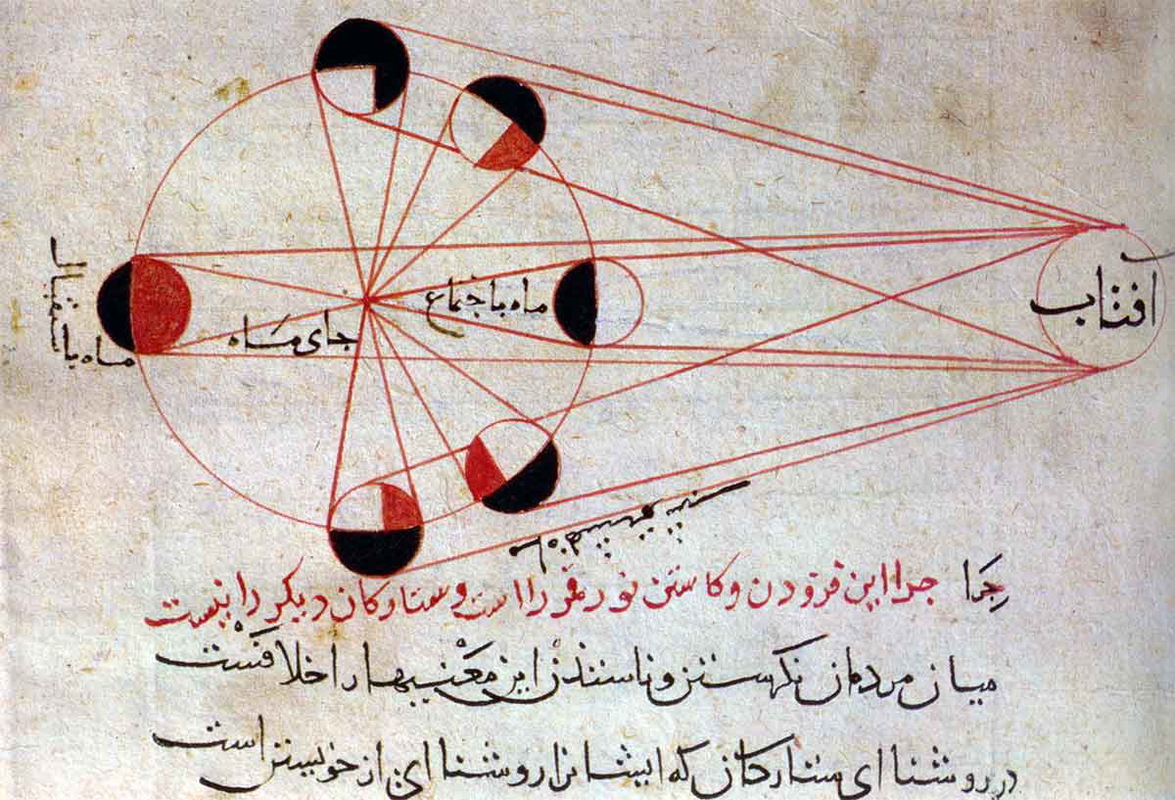
First, he questioned blindly accepted, inherited beliefs, as well as those acquired through processes of imitation and cultural indoctrination. He observed that sensory perception is prone to error. For instance, the appearance of stars as the size of a coin is an optical illusion, though geometry shows them to be larger than the Earth.
Reason, specifically self-evident and necessary principles (whether logical, metaphysical, or mathematical), might seem to offer a source of indubitable beliefs. Yet, it is logically possible, as a hypothesis, that our conscious experience could merely be a dream (the idea of which was first introduced in Plato’s Theaetetus), with no evidence to prove otherwise, provided the experience is identical to our current one.
Likening death to waking up from a dream, the meaning of Verse 22 of Sūrah Qāf becomes clear: “We have removed from you your veil, so your sight today is sharp.” This points to the possibility of a deceptive deity, thereby allowing one to call certainties, such as ten is greater than three, into question.
Shattering Reason and the Threat of Universal Skepticism
It is rarely taught in philosophy courses that Descartes had a near-identical realization in his Meditations. He too subjected unconsciously absorbed and unexamined beliefs to doubt, adopting a skeptical mindset akin to Al-Ghazālī’s in his quest to discover a firm, unshakeable foundation. To reach this unquestionable basis, he employed methodical doubt to his beliefs, persisting until he discovered a belief immune to any uncertainty.
Like Al-Ghazālī, Descartes pointed out the fallibility of the senses and proposed the dream argument, the idea that no experience or sensory perception can prove whether one is awake or immersed in an unending dream. This led him to question the existence of the external world, other minds, and even his own body. Descartes went further still, hypothesizing the existence of an evil spirit deceiving him throughout his life, driving him to question even the simplest and most universal truths, such as two plus three equaling five.
Two Parallel Paths to Divine Deliverance
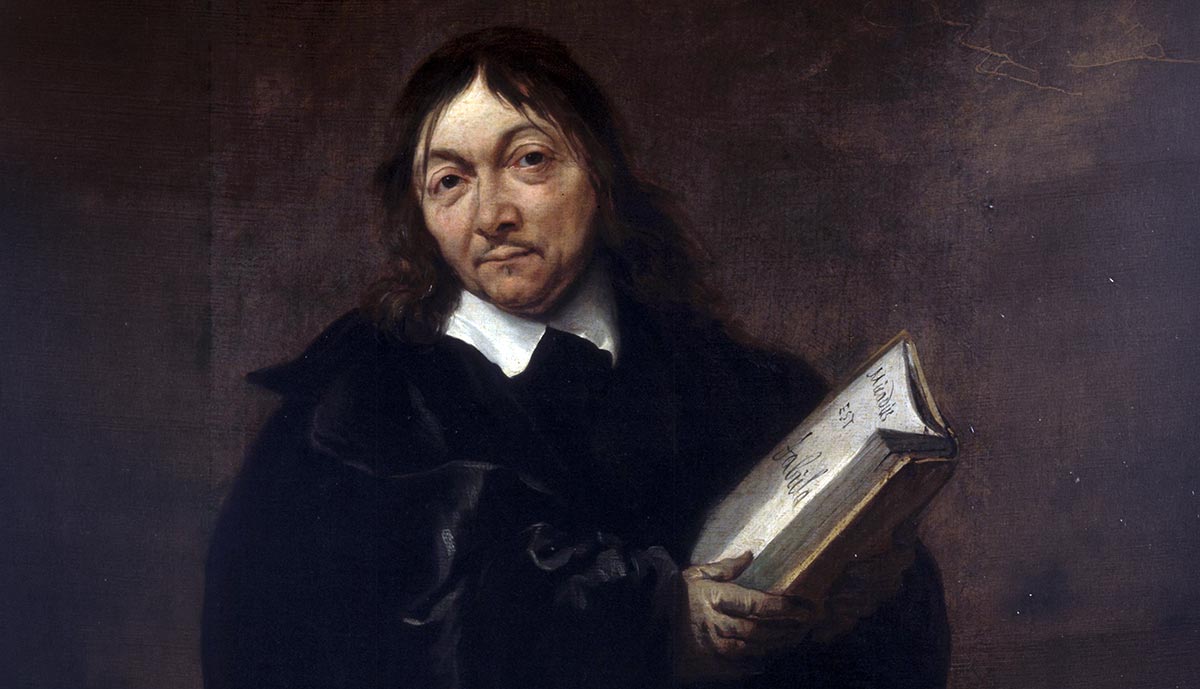
Descartes’ Cogito, “I think, therefore I am,” yielded only knowledge of his own internal modes of thought, that is, that he is a thinking thing. Thus, it was insufficient to guarantee knowledge of the existence of anything outside his own mind. For this reason, he advanced arguments to establish the existence of a perfect, non-deceiving God.
First, he argued that the idea of an infinite God could not have originated within himself, a finite and imperfect being, nor could it have been acquired by his senses or fabricated by his imagination. Rather, God Himself must have implanted it in his mind, for, this idea, being utterly clear and distinct, he reasoned, must possess a degree of objective reality exceeding that of any other idea. And by the “light” of natural reason, the notion that an infinite God possessing all perfections could deceive would be a manifest contradiction.
Al-Ghazālī emerged from a two-month period of absolute skepticism, not through formal reasoning, but through the divine imparting of light into his heart, which illuminated all else. Curiously, both thinkers relied on God to restore their trust in ordinary, everyday human faculties.
Did Descartes Read Al-Ghazālī?
Al-Ghazālī’s Aims of the Philosophers was translated into Latin in the late 12th century within Christendom. He was known to Dante, who mentioned him in his major philosophical work, Il Convivio (The Banquet), in Book IV, Chapter XXI. His philosophical writings were studied and translated into Hebrew by Jewish scholars during the Middle Ages and the Renaissance and studied by Scholastic philosophers in the Latin West. Western thought was undoubtedly influenced by Arabic and Islamic philosophy. The surprising similarities between Meditationes de Prima Philosophia and al-Munqidh min al-Ḍalāl are widely recognized, and the matter remains a subject of historical debate.