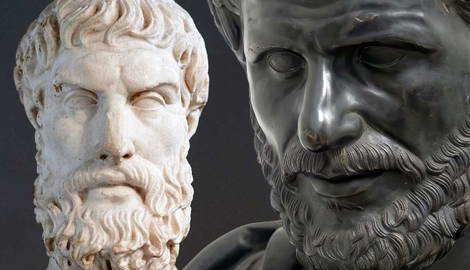

In ancient philosophy, Democritus and Epicurus deserve a special place. Both had developed their own original philosophy and gained a strong following as a result. Within the field of metaphysics, they took a similar stance, believing that the underlying principle upon which the universe rests is the atom. The atom is the very first thing that ever existed, and at the same time, the ultimate cause of everything existent as well. Because of that, their teachings are often labeled as atomic doctrines.
The Metaphysics of Democritus
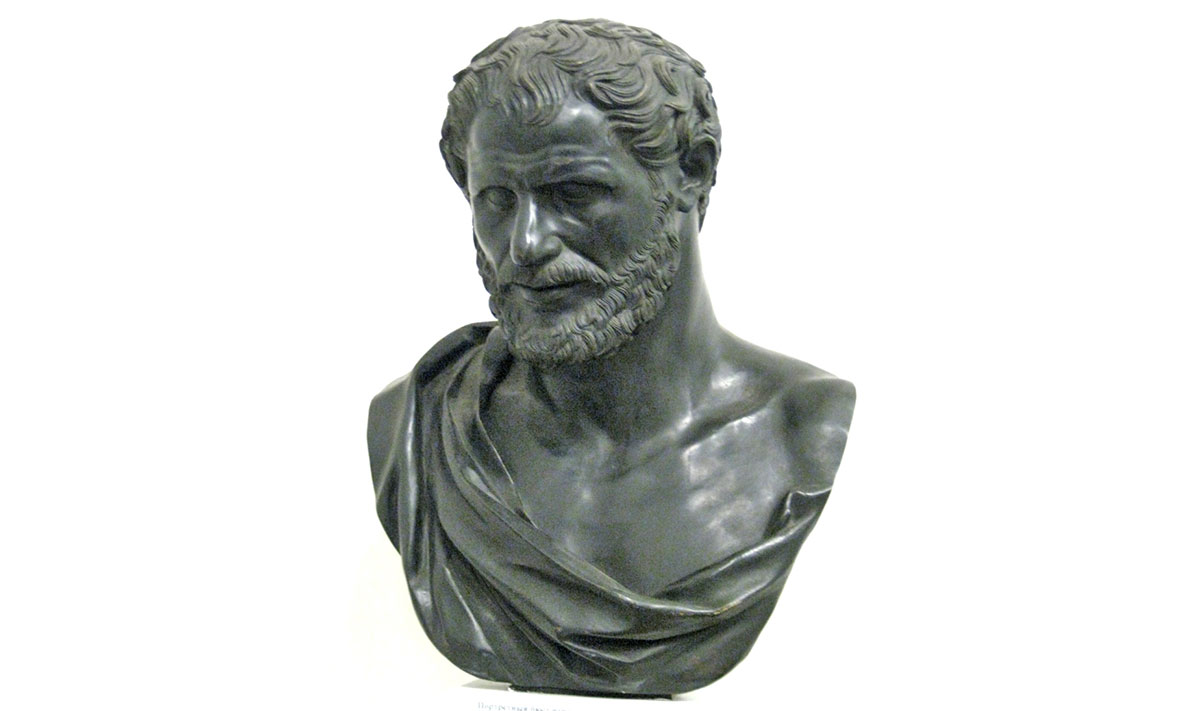
If we want to examine the atomic philosophy of Democritus, his metaphysics is the right place to start. According to Democritus, the underlying principle of everything existent is the atoms. The atom is the smallest material substance that’s unchangeable, indivisible, and invisible to our senses, said Democritus. Additionally, he stated that there are an infinite number of atoms in the world, and it’s thanks to their clashing, amalgamation, and separation that the world around us is created. This makes Democritus a pluralist thinker.
Furthermore, Democritus also elaborated that all atoms in the world are the same when it comes to their quality, and the only area in which they differ from each other is quantitative. Thus, atoms can be different from each other according to their form, magnitude, position, and movement. This explains why there are different types of forms and sizes of objects in the world, because of the quantity of atoms inside the objects, said Democritus.
However, atoms are not the only existing substance in the universe. In addition to the atoms that constitute the world, there exists an empty space in which the atoms reside. Thus, if the atoms are considered the ultimate beings of the world, the empty space is the non-being, and both of them exist, said Democritus. The empty space, just like the atoms, is infinite. So, the conditions that need to be met in order for creation to be possible are to have an infinite number of atoms and an infinite empty space, because if the space is finite, there wouldn’t be enough space for all the atoms. So, atoms (beings) are located and move in the empty space (non-being).
Determinism
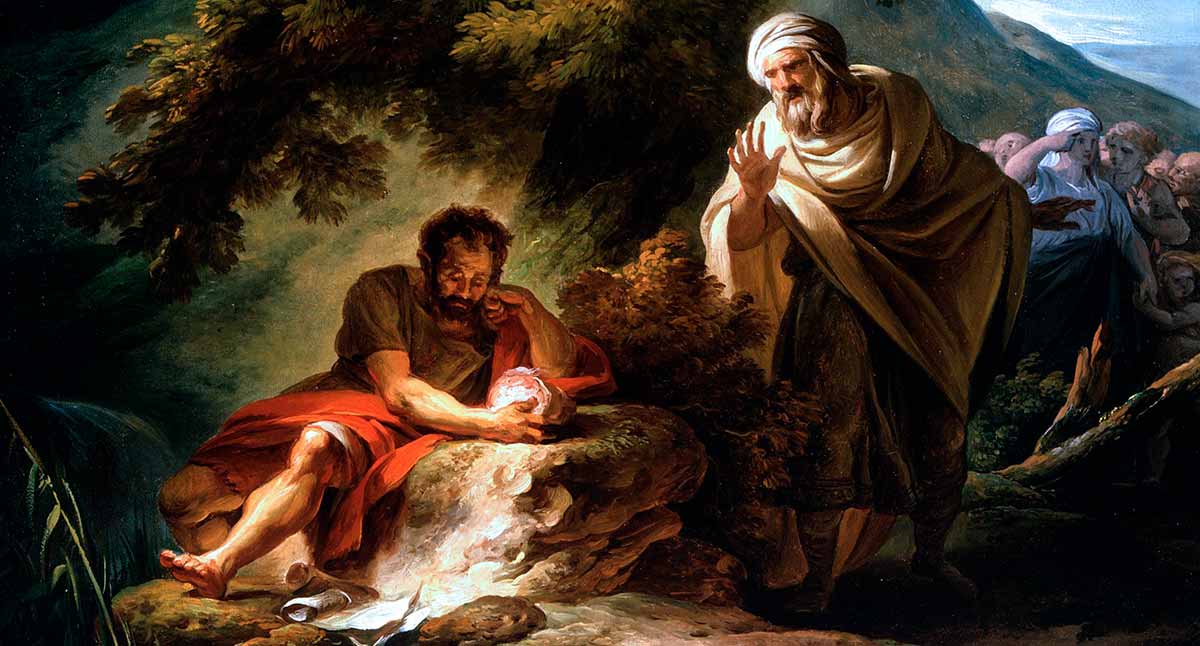
Now that we have shown that the atoms are at the heart of Democritus’ philosophy, it’s essential to elaborate on them in detail and showcase their properties and types of movements. According to Democritus, every atom has primary and secondary properties and qualities. Its primary properties are form, position, and order, while its secondary properties are the properties relating to quality, like color, taste, etc.
Another property of the atoms is the type of movement that they make. Although Democritus mentioned a few types of movements, two are the most important ones. The first one is a cyclical or whirling movement. This, said Democritus, is the starting movement of the atoms, but they eventually continue moving in a linear manner. Democritus used this type of movement to showcase his deterministic point of view. The way that atoms clash, unite, and separate is not random at all, but actually determined because of the linear movement that they make. When the atoms move in a linear manner, their unity with other atoms is predetermined, said Democritus. Thus, Democritus incorporated determinism into his atomic theory. However, he also applied it to his view of freedom.
Although philosophers either stick to the view that free will exists or choose the view that it doesn’t because everything is predetermined, Democritus claimed that both of them exist in the world. Everything in the world is predetermined because of the mechanistic nature of the atoms, meaning human choices are ultimately bound by cosmic necessity. This position that has led many thinkers to criticize his system as incompatible with true free will. Thus, this deterministic approach to freedom is one of the weakest points in Democritus’ philosophy.
The Philosophy of Epicurus
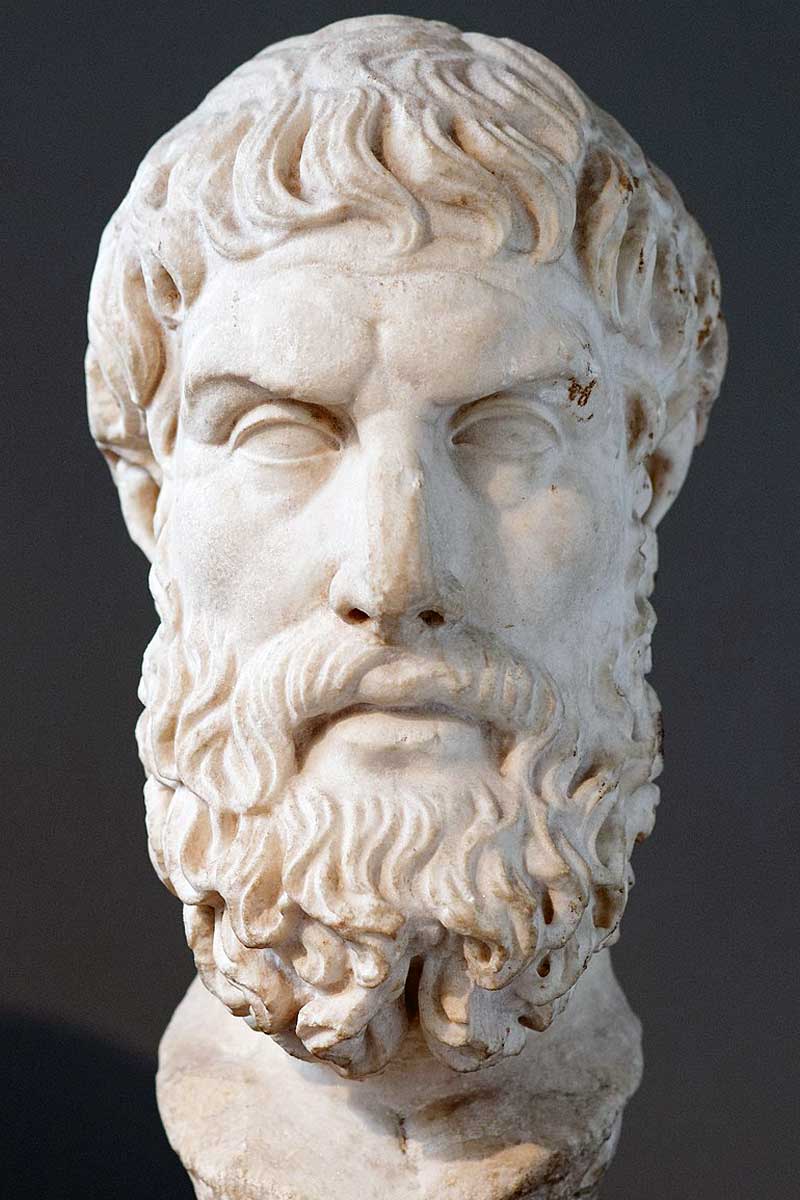
Epicurus is the founder of the philosophical school of thought known as Epicureanism. He gained many followers and admirers throughout his lifetime and had an immense influence on the philosophy that followed. Unfortunately, only a few fragments and letters have survived from his philosophy, out of about 300 books he wrote. Therefore, much of what is known about Epicurean philosophy comes from his later followers and commentators. However, it seems like they’re all in agreement that Epicurus’ philosophy is divided into three parts.
The first one is canonics. This is Epicurus’ theory of knowledge, and serves to determine the “canons” (norms) of our cognitive abilities according to which we determine what is true and what is false. The second part of his philosophy is his physics, which contains his atomic teachings, similar to those of Democritus. At last, the third and final part of his philosophy is his ethics, which, according to Epicurus, helps people with their spiritual struggles. Epicurus based his physics (his atomistic teaching) on his ethics. That is why he said: “It is impossible to free ourselves from the fear of the most difficult questions in life if we do not know the nature of the universe, but rather turn to mythology. Without the knowledge of nature, the attainment of happiness is impossible.”
Therefore, Epicurus builds a systematic teaching about nature that is based on Democritus’ teaching about atoms, i.e., his atomistic view of the world. The starting point in Epicurus’ teaching about nature is the view that “nothing comes from nothing; otherwise, all things would come from everything.” So, if everything existent must have a first principle, and cannot occur out of nowhere, what is that first principle, and how does it happen?
Epicurus’ (Meta)Physics
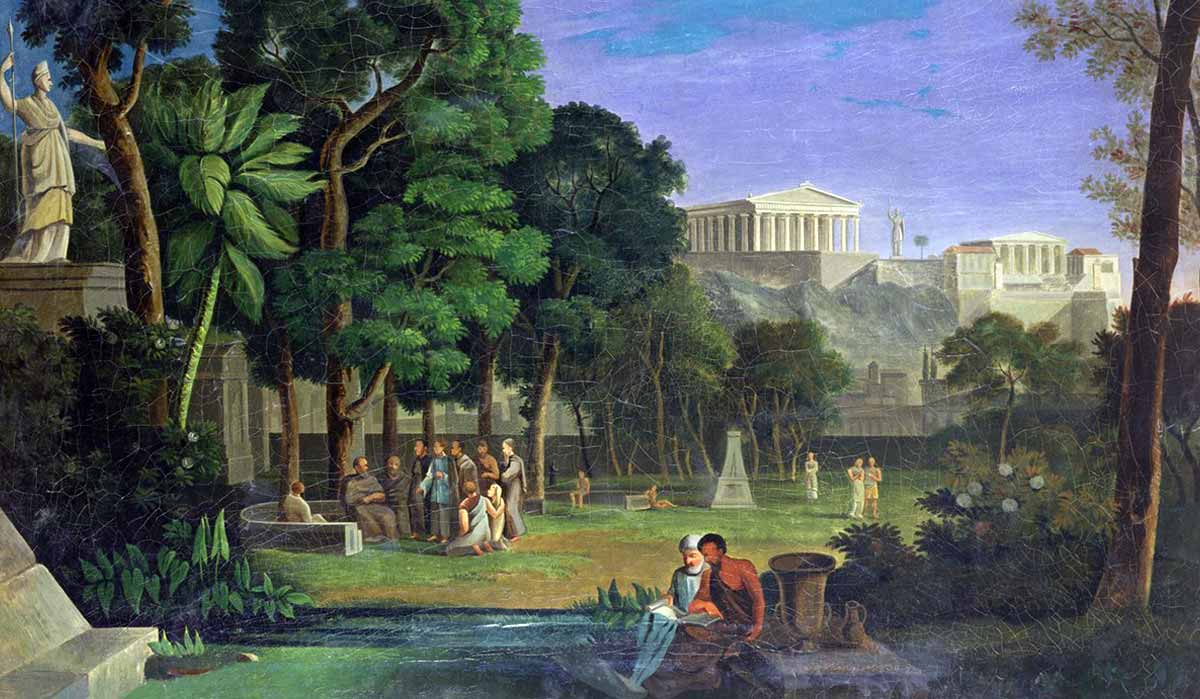
Well, Epicurus said that everything that exists, all of nature, consists of atoms and of their joining, separating, and joining again into a new whole. In addition to the atom, there is also an empty space in which the atoms move, and all of nature consists of these two components, just like Democritus thought. If there were no empty space (as Parmenides claimed, for example), the movement of atoms, their joining, that is, their coming into being and disintegration, would not be possible.
Furthermore, Epicurus wrote about the movement of the atoms, just like Democritus did. However, according to him, there are three types of movement: natural, by force, and small accidental deviations that violate the principle of causality (cause-effect relationship) and determinism (predetermination) in the world. The original natural movement is based on the weight of atoms: all atoms in the empty space fall from above downwards at the same speed regardless of their weight, said Epicurus.
The second type of movement is the movement by force. This is actually the collision of one atom with another, said Epicurus. Finally, there are also the declinations of atomic movement, or their sudden, random deviations, and this is the main point where Epicurus strays away from Democritus. By introducing the concept of the oscillating motion of atoms, Epicurus (minimally) broke with the theory of the deterministic, predetermined path of atoms that was present in the philosophy of Democritus. And although inspired by him, he still differed from him in this respect. In this way, through the non-deterministic structure of the world, Epicurus gives man the chance to choose what is good for achieving happiness, so that man can embark on the path of happiness. This is something that Democritus did not incorporate in his philosophy.
Democritus’ Ethics
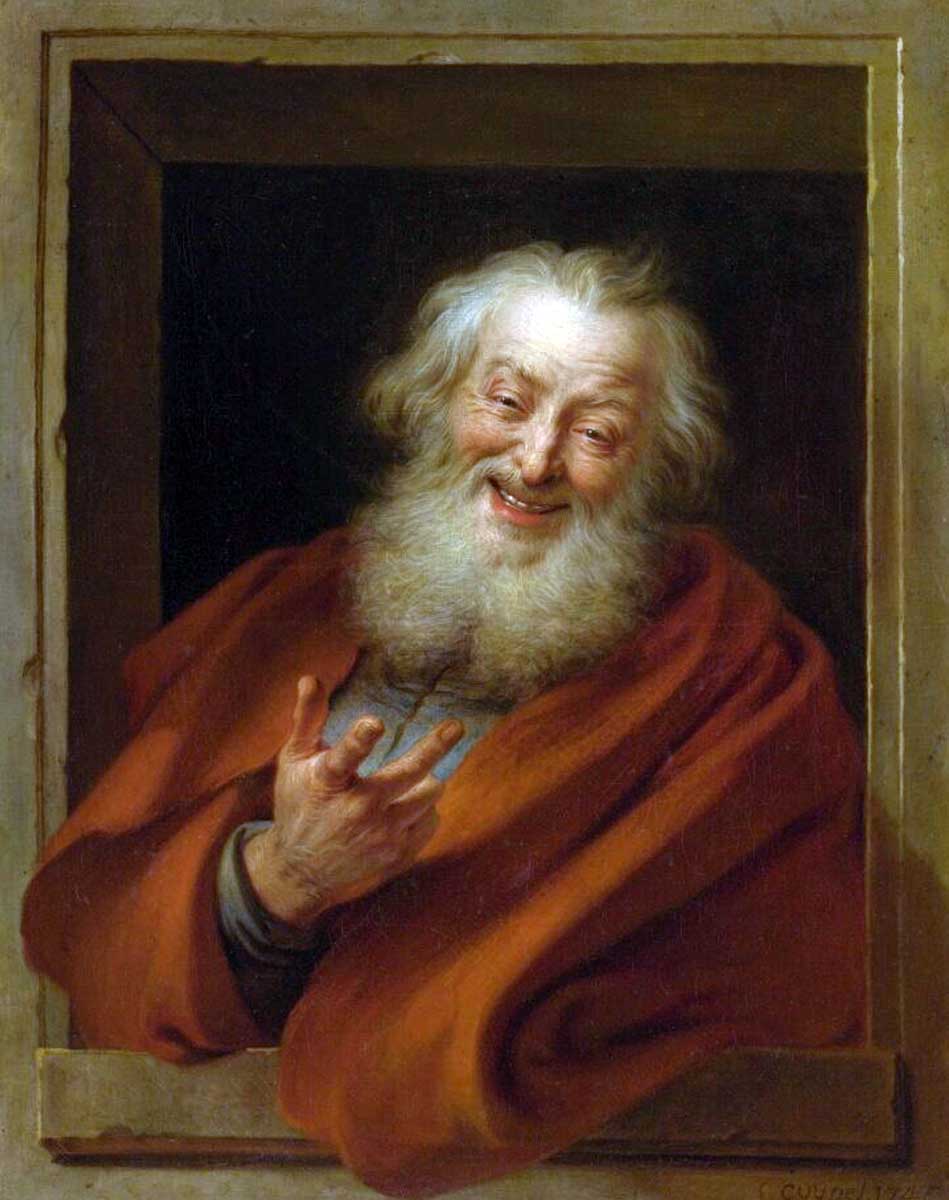
Now that we have examined the metaphysics of both Democritus and Epicurus, and shown where they differ from each other, it’s time to take a look at their ethics. Let’s start with Democritus. Even today, the question of whether Democritus’ ethics represents a system or is just a series of individual observations and rules without a scientific systematic connection has not yet been resolved. There are certain authors that claim that Democritus had a developed ethical system, while others dispute that claim stating that he had multiple observations and rules that do not support each other, but rather serve as incoherent, authentic thoughts about the virtuous way of living. Regardless, it seems that all agree that the highest good, according to Democritus, is bliss, and it consists in lasting cheerfulness, well-being, harmony, and balance, which he calls euthymia.
But before Democritus elaborated on the concept of euthymia, he drew a distinction between two types of pleasures: sensual, which deceive us, and spiritual, which are always real and true, he says. In order to achieve euthymia, we need to strive to achieve spiritual pleasures because these pleasures give us meaning, and therefore, give us the cheerfulness that he wrote about. That is why Democritus said that it is best for a person to spend life in as much spiritual cheerfulness as possible and in as little malice as possible.
Democritus’ ethics, therefore, is full eudemonism, in which there are also traces of hedonism and utilitarianism (because he recognized the sensual pleasures), but he does not sink into their unethical consequences and extremes. There is also a hint of asceticism in it, but it is not lost in its extremes either.
Epicurus About Fears
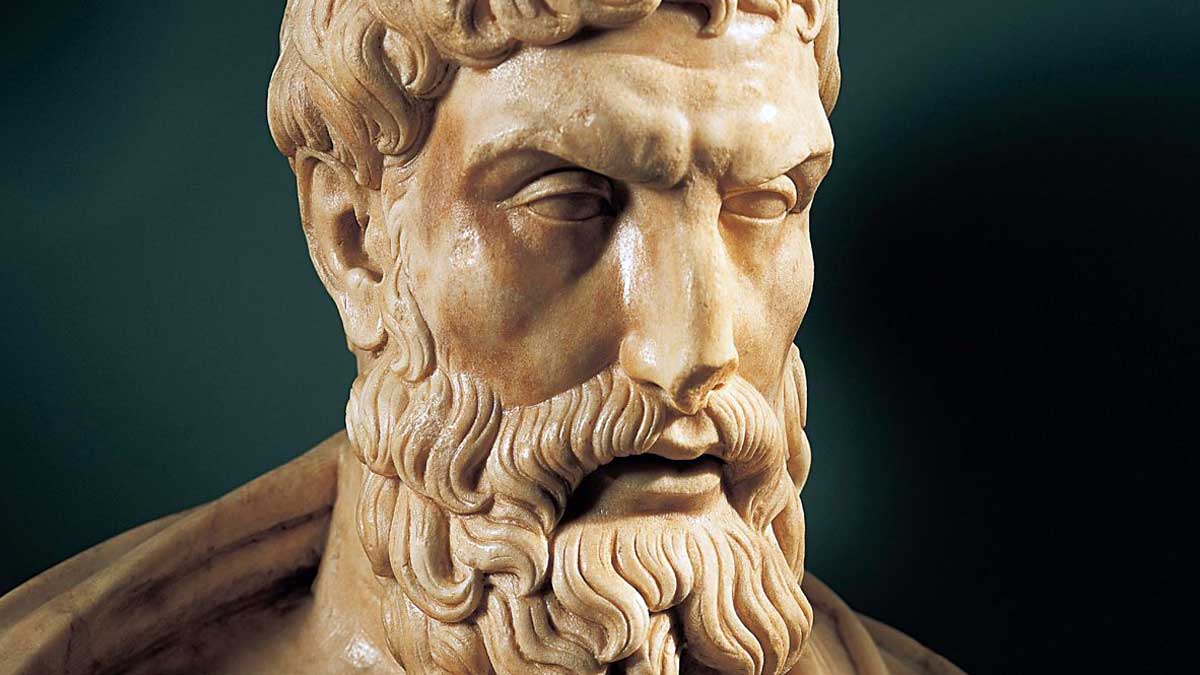
We can definitely agree that Epicurus developed an ethical system that we couldn’t find in Democritus’ philosophy. First, Epicurus said that the purpose of ethics is to help people in their spiritual suffering and troubles. He thought that ethics should provide them with a sense of happiness throughout their lives. For this purpose, we first need to free ourselves from fears, according to Epicurus.
He highlighted two types of fear: the fear of the Gods and the fear of death. He says that we should not be afraid of the gods because they did not create the world; the world came into being by the joining and splitting of atoms. Epicurus did not deny their existence, but the Gods, for him, were beings who live between worlds and are not interested in people’s lives, and simply are not bothered with them. On the other hand, man shouldn’t be afraid of death either, because both the soul and the body are made out of matter, thought Epicurus. Therefore, everything is mortal. So the soul also ceases to exist.
His ethics, like the Cyrenaics’, are individualized because they begin with individual pleasure. The end point, or goal towards which every human being strives, is a blissful life. In this sense, we can say that Epicurus recognized only one value that man strives for, pleasure, and, on the other hand, one evil that man constantly wants to distance himself from, pain.
Epicurus’ Ethics
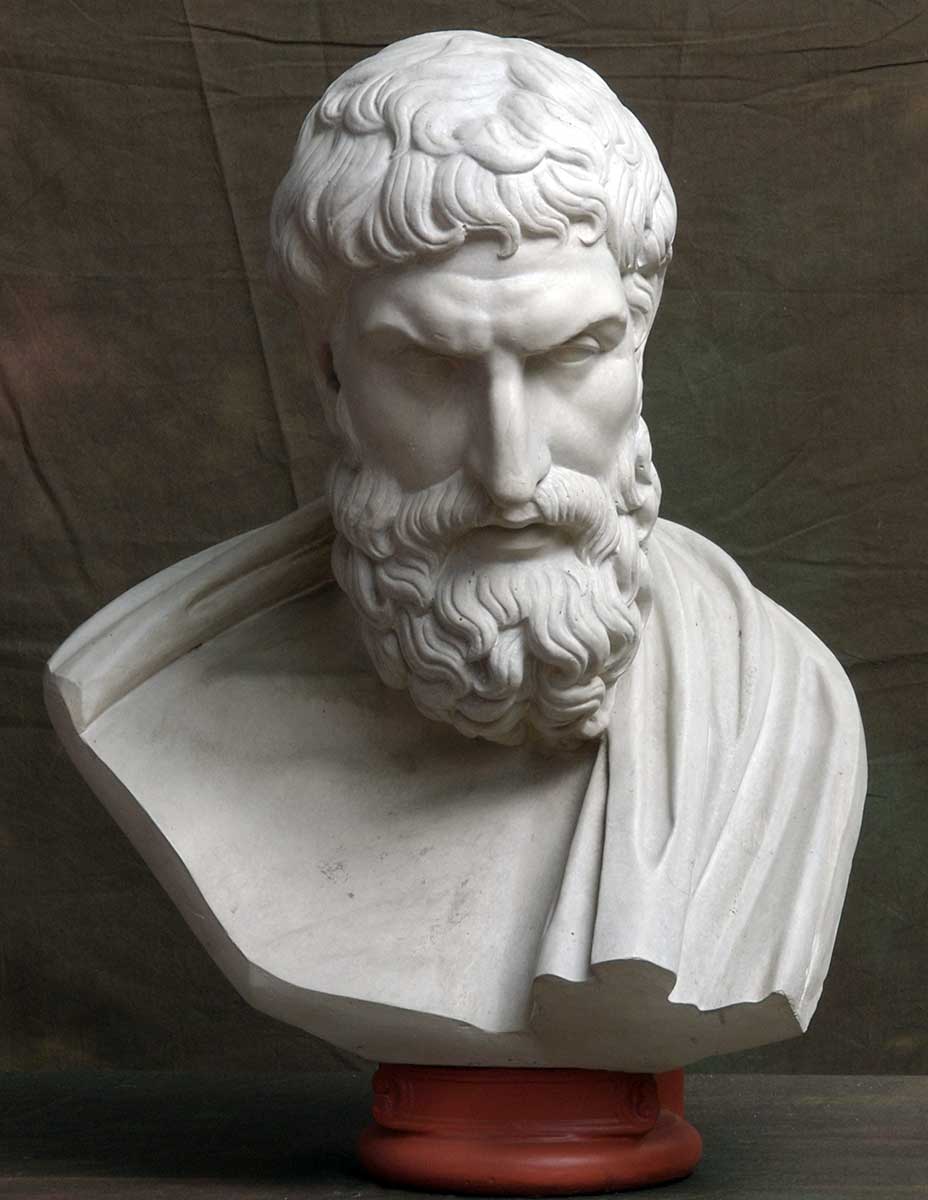
When Epicurus said that we should live a life according to nature, he meant a life according to pleasure. It is from this saying that the main basic idea of his ethical teaching, which is hedonistic in nature, is derived. Assuming pleasure as having a supreme value, he further set out some distinctions regarding types of pleasure. Just like Democritus, he distinguished two types of pleasures: pleasure in rest and pleasure in movement. Pleasure in movement provides joy and cheerfulness, while pleasure in rest provides calmness and painlessness.
On the other hand, he also distinguished between bodily and spiritual pleasures, a distinction similar to that of Democritus. Bodily pleasures are always dependent on and situated in the material world. Spiritual pleasure consists in thought, but it also depends on the feeling of bodily pleasure, so that at the moment of bodily pleasure, there appears an expectation of future bodily pleasure and ultimately a memory of previous pleasure. As such, Epicurus said that these are much stronger than the bodily pleasures: “Through the body we can only sense the present, and through the spirit the past and the future.” He also said: “The memory of past pleasure is a means to a pleasant life.” Only then can we achieve ataraxia, a state of calmness of the spirit, which was also a supreme value in the Hellenistic-Roman period.
As we can see, there are clear similarities between his ethics and those of Democritus, but at the same time, the differences cannot be overlooked. Democritus valued euthymia, achieved through seeking the spiritual pleasures, while the highest value in Epicurus’ ethics is ataraxia, a state of mental tranquility achieved by eliminating unneeded desires and prioritizing mental pleasures over transient bodily ones.. So, Democritus’ ethics is eudemonism, while Epicurus’ ethics is hedonistic.
Democritus and Epicurus: Final Verdict
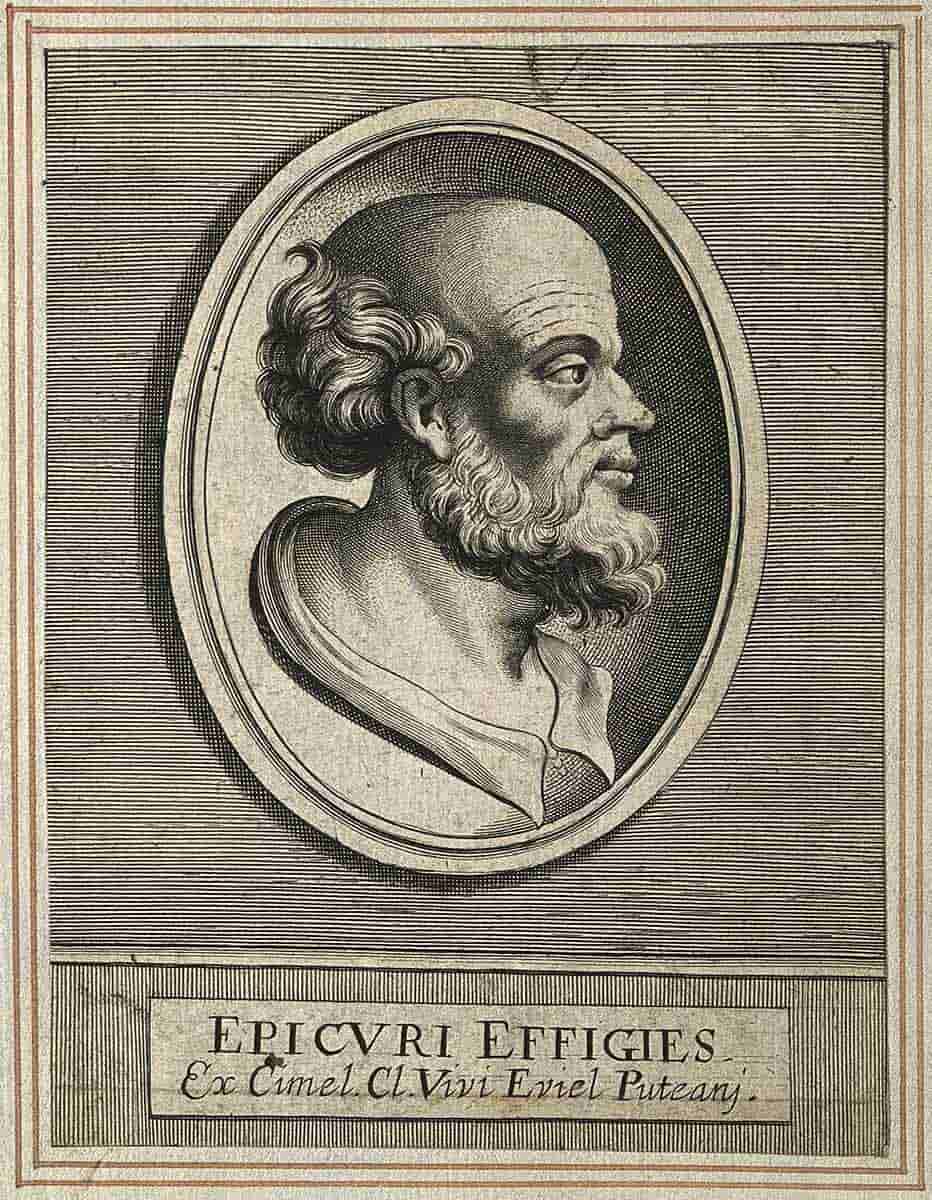
In this brief overview, we have outlined the key similarities and differences between Democritus and Epicurus. Both came forward with an original philosophy of their own, stemming from their atomic worldview. Both held the belief that it was the atom that was the first being to ever exist, and the cause for everything existent around us. Both elaborated on how the universe was created in detail, giving us a clear image of how everything came to be. However, they had different views on another aspect of their metaphysics. One believed that everything was predetermined, while the other believed that there was still a choice left for the atoms, as well as for us as human beings.
When it comes to their ethics, both recognized the existence and satisfaction from two types of pleasures. But they still had different value systems: Democritus, as shown, valued spiritual pleasures, while Epicurus crowned bodily pleasures. Another disagreement they had within the field of ethics concerned their views on the afterlife. As shown, Epicurus did not pay attention to the Gods and the afterlife because he believed that everything was mortal. On the other hand, Democritus rejected the concept of an afterlife entirely, arguing that death brings the complete dissolution of both body and soul, and he cautioned against myths of the underworld that foster existential dread. Regardless of their beliefs, similarities, and differences, one thing is certain: ancient philosophy wouldn’t be the same without them.