The Apache conflict in the American West started in the 1850s. But the initial clashes occurred centuries prior, in the 1580s, with the Spanish. They pushed into traditional Apache territory. From the 1820s onward, Americans arrived in large numbers. The Apache fought all ferociously for resources and territory.
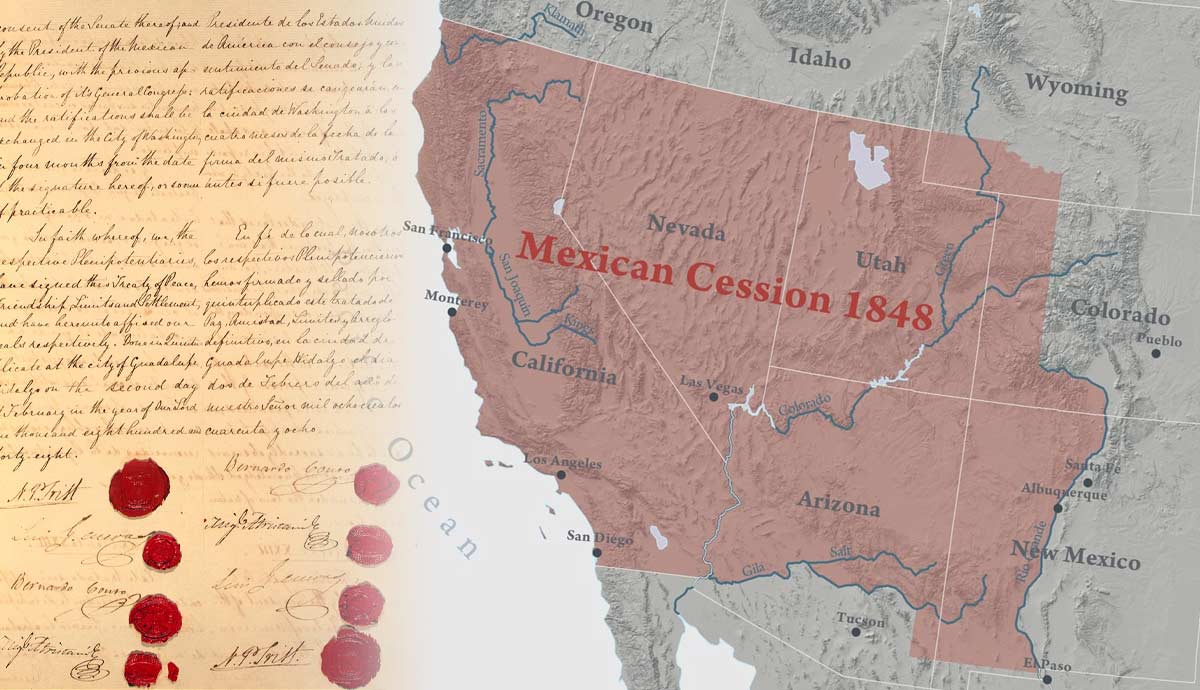
American settlement in the Southwest quickened after the 1848 Mexican-American War. The victorious Americans annexed New Mexico and Arizona, traditional Apache lands.
So, the Apache Wars began long before America’s founding.
American settlement in the Southwest quickened after the 1848 Mexican-American War. The victorious Americans annexed New Mexico and Arizona, traditional Apache lands.
So, the Apache Wars began long before America’s founding.
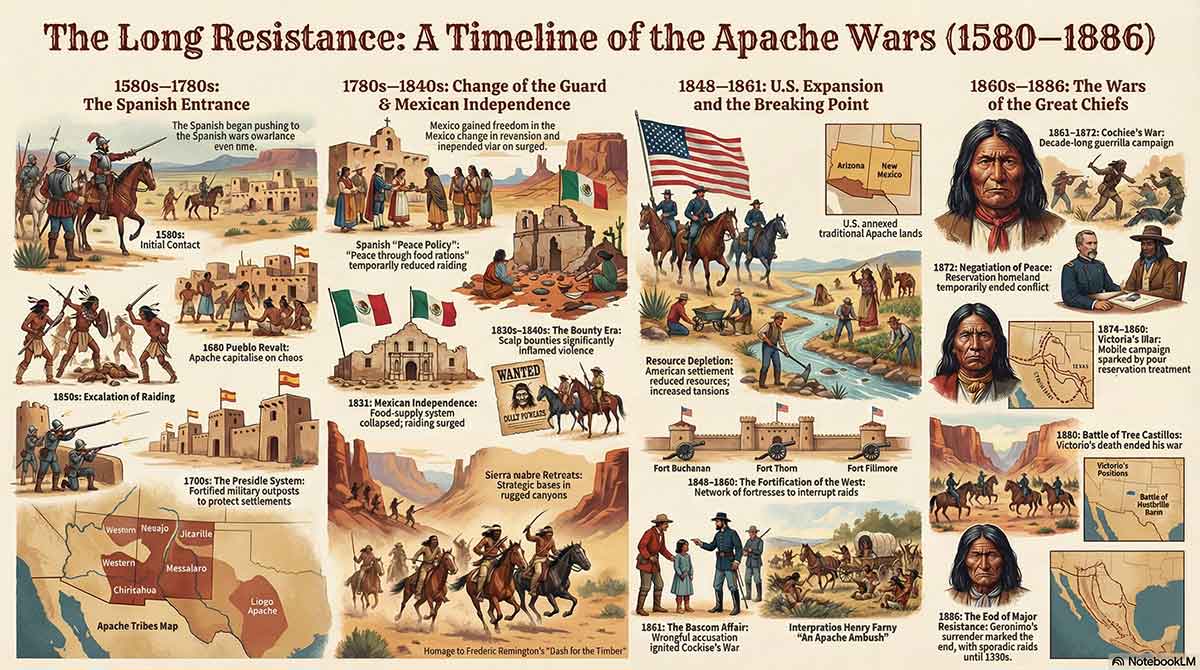
| Period | Era / Conflict | Key Events & Developments |
|---|---|---|
| 1580s – 1700s | The Spanish Entrance | Initial contact and clashes as Spain expands into the Rio Grande and northern Chihuahua. |
| 1650s – 1670s | Presidio Era | Spanish missions and presidios are built; Apache raiding activity ramps up for two decades. |
| 1680 | Pueblo Revolt | Apache capitalize on Spanish-Pueblo conflict by occupying abandoned villages. |
| 1780s – 1821 | Spanish Peace System | Spain provides food and supplies to Apache bands at missions, leading to a period of relative peace. |
| 1821 – 1840s | Mexican Independence | Mexico cannot afford the peace system; the system collapses, raids surge, and scalp bounties are created. |
| 1848 | Annexation | Treaty of Guadalupe Hidalgo; U.S. annexes New Mexico and Arizona, sparking “Apache versus Americans.” |
| 1849 – 1860 | Early U.S. Fortification | U.S. builds forts (Buchanan, Thorn, Fillmore) to stop raids and protect river valley settlements. |
| 1861 | The Bascom Affair | A turning point where a botched child rescue leads to execution of hostages and the start of Cochise’s War. |
| 1861 – 1872 | Cochise’s War | A decade-long guerrilla campaign in Arizona/Sonoma; ends with a reservation homeland negotiation. |
| 1874 – 1880 | Victorio’s War | Sparked by poor reservation conditions; mobile campaign across NM, TX, and Chihuahua; ends with Victorio’s death. |
| 1881 | Nana’s Campaign | A lightning-fast raid that kept the U.S. Army on high alert. |
| 1886 | The Last Gasp | Geronimo’s five-month final run marks the official end of the major Apache Wars. |
| 1880s – 1930s | Residual Conflict | Sporadic raiding continues, primarily in the border regions of Mexico. |
1600-1700s: The Spanish Entrance
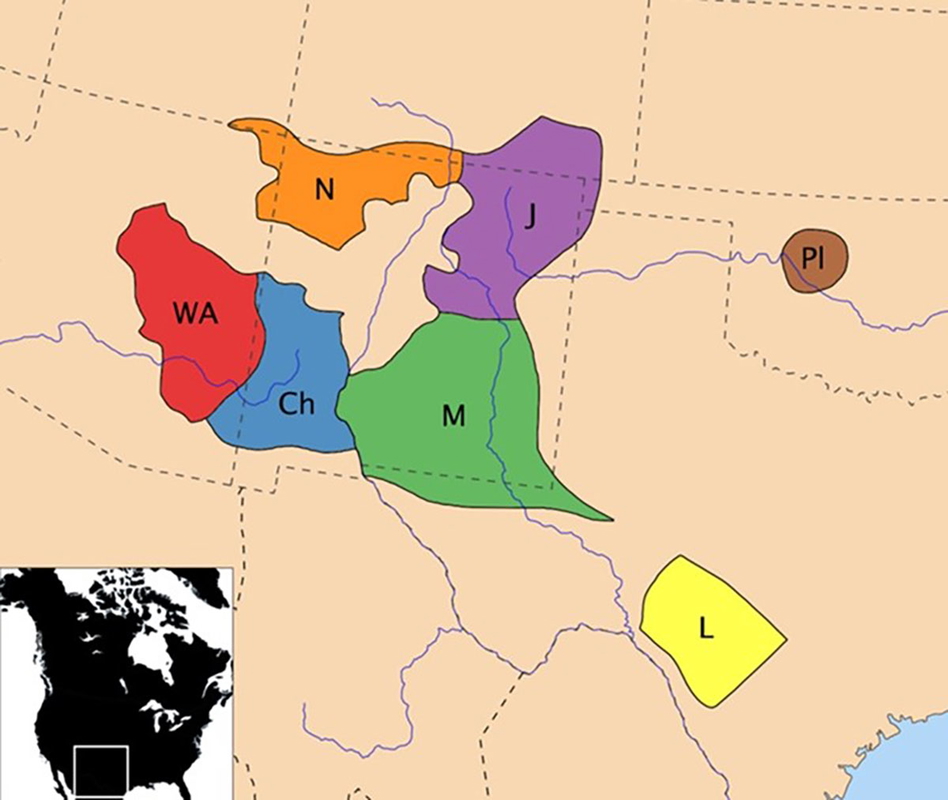
Upon landing in America after 1500 BCE, the Spanish consolidated their power. The next expansion occurred in the 1600s into the Rio Grande and northern Chihuahua areas. This créated the first conflicts with the Apache as they built settlements.
- The Spanish established missions and presidios along the Rio Grande and northern Chihuahua.
- 1650s onwards: The Apache ramp up raiding activity on these settlements. From Santa Fe or El Paso, the Spanish fight back. This lasts for two decades.
- 1680 Pueblo Revolt: The Apache capitalized on this Spanish-Pueblo clash, occupying abandoned villages.
- 1700s: Colonial authorities construct more presidios in response.
1780-1820s: Change of the Guard
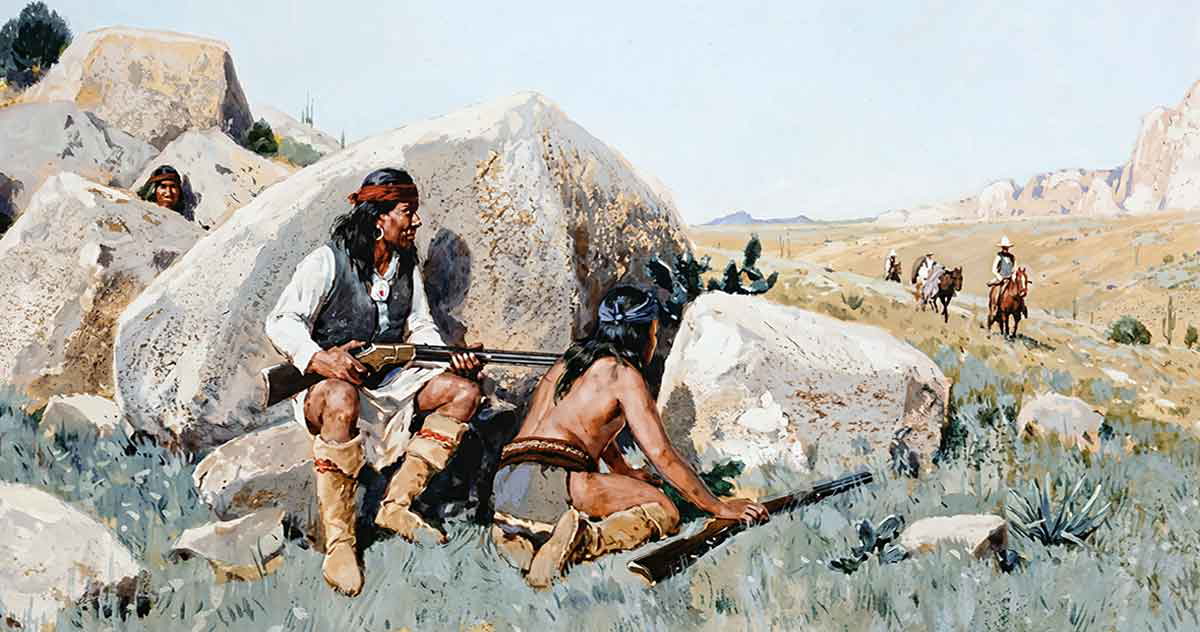
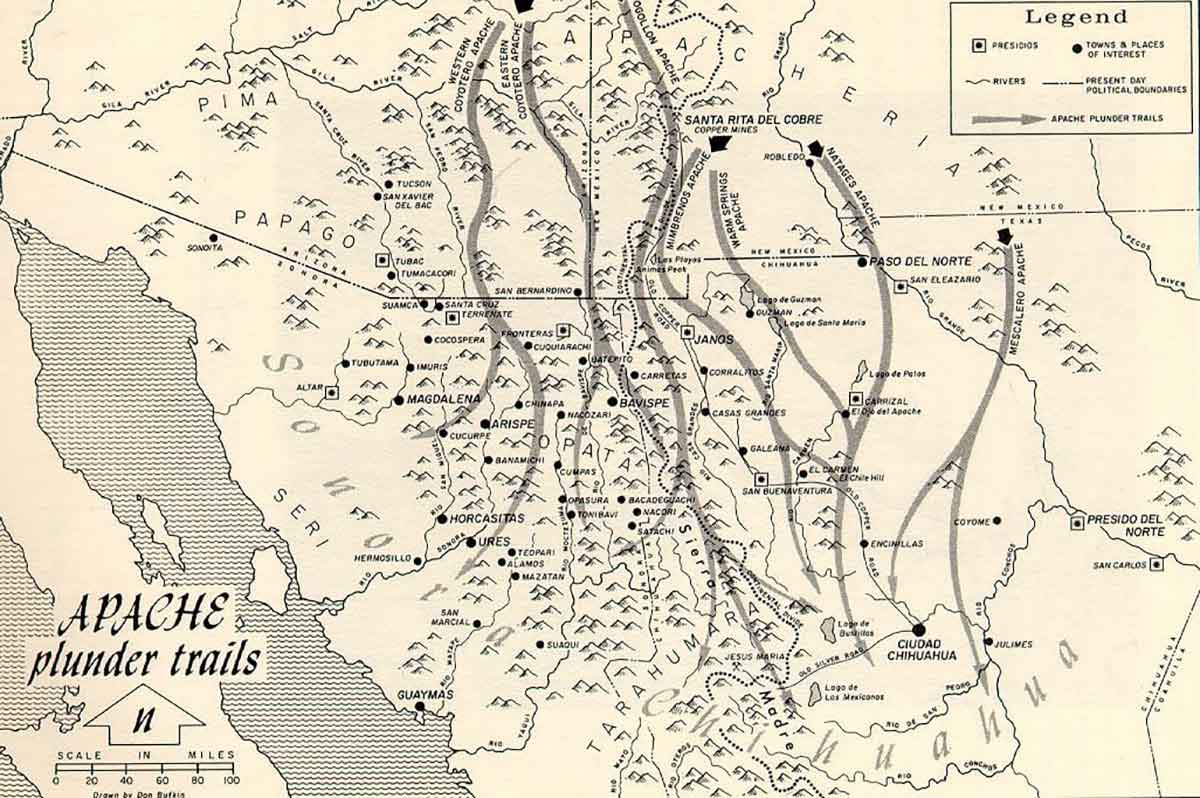
Mexico won its independence in 1821, but not Spain’s wealth. Previously, Spain fed Apache bands at missions, gaining some peace. Mexico couldn’t afford the upkeep, which weakened its defenses. This situation lasted into the 1840s.
- Spain establishes a peace system, supplying the Apache with food, reducing their raiding.
- 1821: Mexico gained its freedom, but couldn’t fund the peace system. This collapses, and raids drastically increase.
- Two Mexican provinces, Sonora and Chihuahua, créate scalp bounties, enflaming the violence.
- Groups of Apache moved to the Sierra Madre Mountains. Its canyons served for raiding and living.
1848-1861: Expansion Leads to Apache Versus Americans
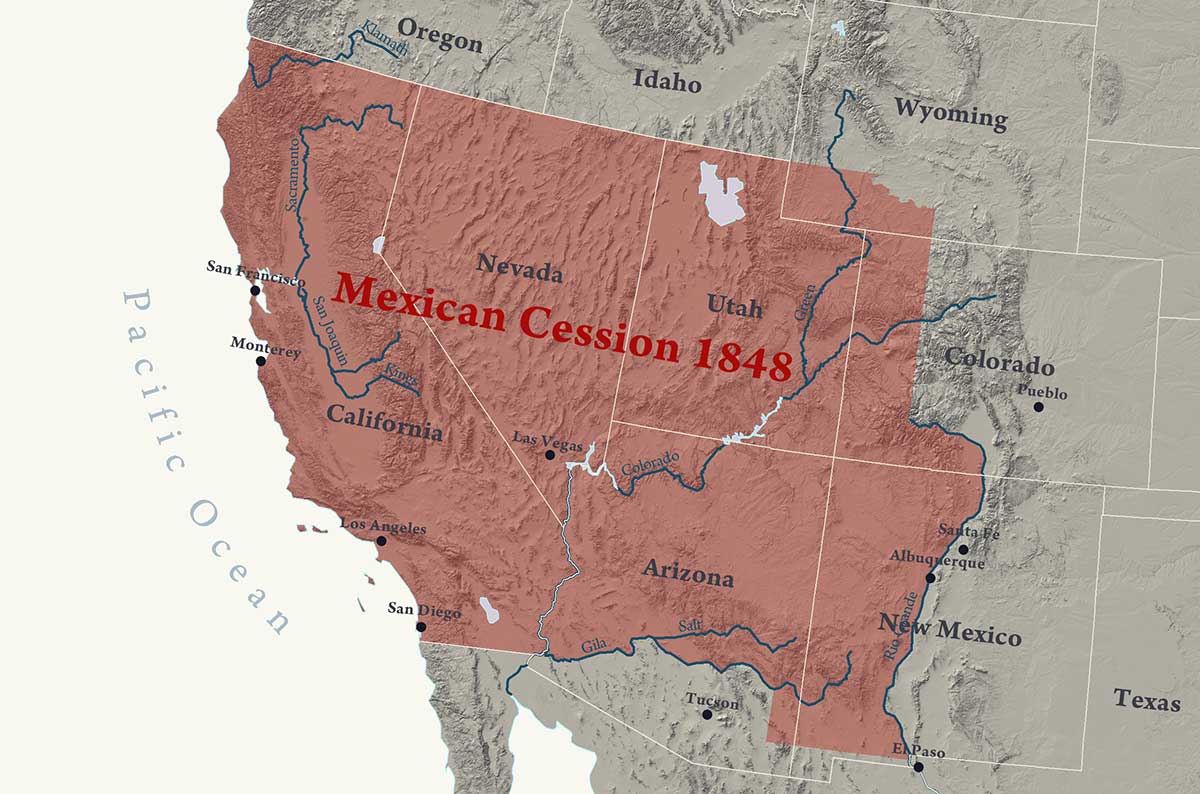
The 1848 Treaty of Guadalupe Hidalgo ended the Mexican-American War. U.S. expansion into the ceded territory went from a trickle to a flood.
As early as 1849, U.S. soldiers built a network of fortresses, interrupting Apache raids into Mexico. Also, more Americans settled in river valleys, where they farmed and mined. These reduced resources available to the Apache caused hard feelings. Tensions quickly boiled over, resulting in raids and clashes.
- The U.S. gained 525,000+ square miles from Mexico, including New Mexico, Arizona, and parts of Texas.
- The U.S. ends Mexican-era material support, causing a surge in raids with this increased contact.
- The U.S. constructs forts to establish control (Buchanan, Thorn, and Fillmore).
- 1850 to 1865: Frequent clashes ensued with different bands. Important battles included the Jicarilla War (1849-1855), the Yuma War (1850-1853), and the pitched battles during America’s Civil War.
- 1861 Bascom Affair Crisis: This event marked the Apache War’s turning point. The U.S. Army wrongly accused the Apache of kidnapping a child, botching a rescue. Fatalities happened on both sides. Cochise, the Chiricahua leader, fought back, igniting Cochise’s War, lasting until 1872.
- The U.S. Army established Fort Bowie in Apache Pass. The Apache War reached its zenith in the following two decades.
1860s-1880s: The Wars of Cochise and Victorio
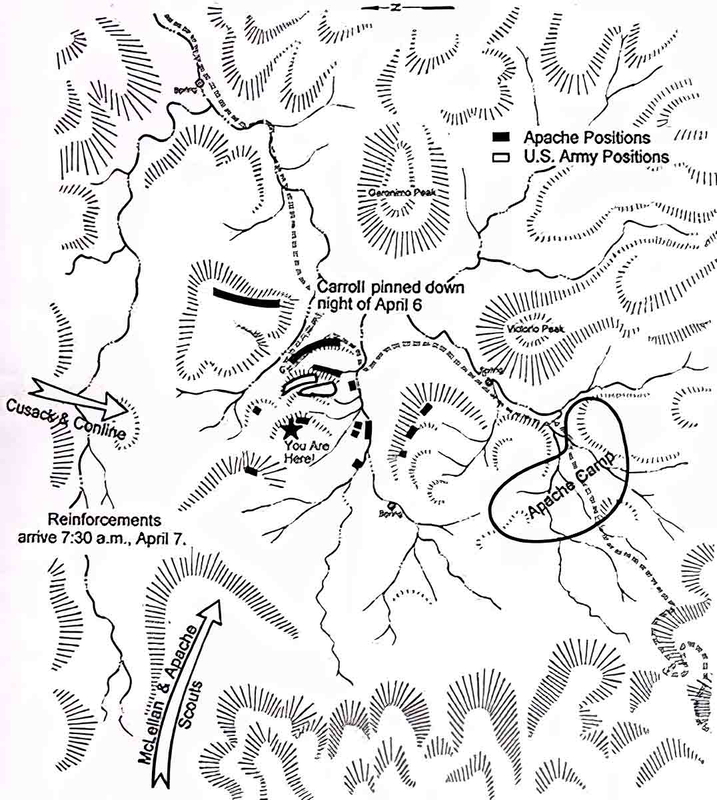
In the aftermath of the Bascom Affair Crisis, the Apache resistance hardened. The first, Cochise’s War, started in 1861. The battles centered on the rugged country of southeastern Arizona and northern Sonoma-Chiricahua Apache territory.
Victorio’s War (1874-1880) began after the Warm Spring Apaches’ relocation to a reservation. Harsh conditions and poor treatment caused many to flee. Under their leader Victorio, the Apache launched a sprawling, mobile campaign across New Mexico, Texas, and Chihuahua.
- Cochise’s warriors fought a guerrilla campaign across three states for almost a decade.
- High points of this piece of the Apache Wars include fights at Apache Pass, the Camp Grant Massacre, and the Hembrillo Basin.
- Cochise’s War ended with General Howard negotiating a reservation for a homeland in 1872.
- Victorio’s War began in 1874 with Victorio’s breakout.
- Moving fast, his band had major fights at Las Animas Canyon and Tres Castillos.
- Victorio’s War ended with Victorio’s death, killed by Mexican soldiers (Battle of Tres Castillos).
- His War lasted 14 months before many were returned to the reservation.
1886: End of the Apache Wars
The mid-1880s spelled the end of the Apache Wars. The causes varied, but the Apache didn’t go quietly. Nana’s lightning 1881 campaign kept the U.S. on edge. The Apache’s last gasp came with Geronimo’s five-month run in 1886.
Sporadic incidents or raids, especially into Mexico, lasted until possibly the 1930s.