
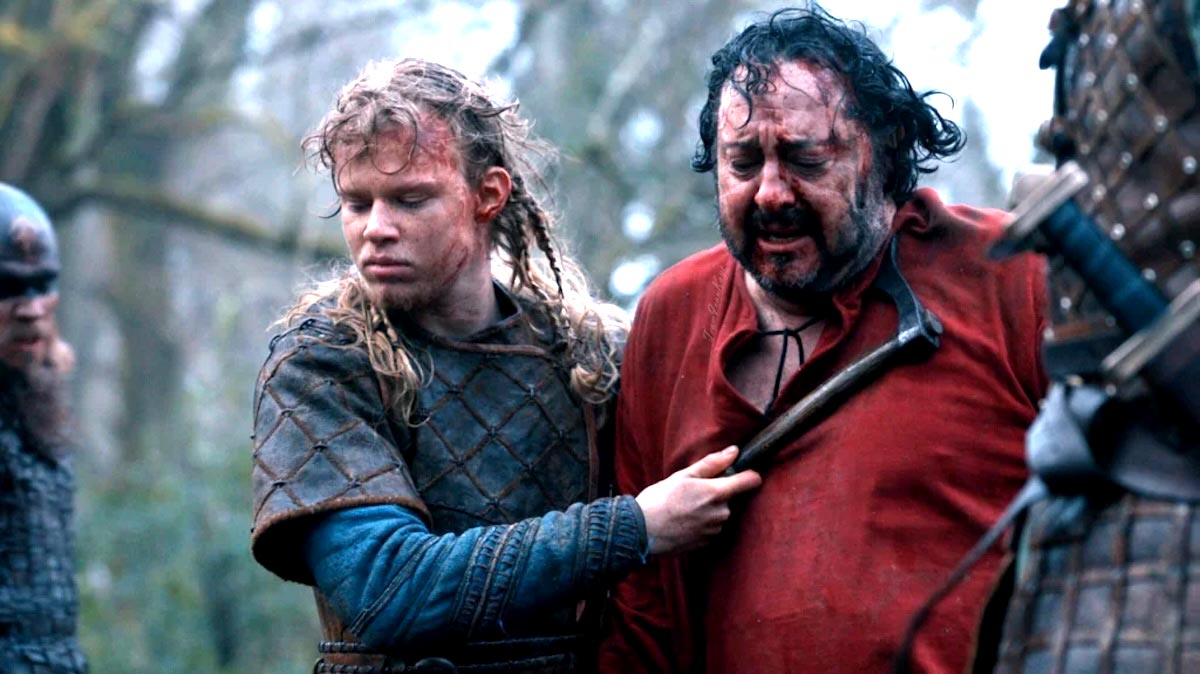
If you have watched the History Channel’s Vikings, you know the scene: the victim is executed by having their lungs removed to create a pair of bloody wings. Sources for the Viking Age describe this gruesome execution ritual known as the Blood Eagle. However, it is less clear whether this was a genuine practice or a literary device designed to paint the brutal Vikings as “demonic” pagans. What do archaeological finds and modern anatomical science tell us?
A warning to readers: this article contains graphic imagery.
What Was the Blood Eagle? Anatomy of a Nightmare
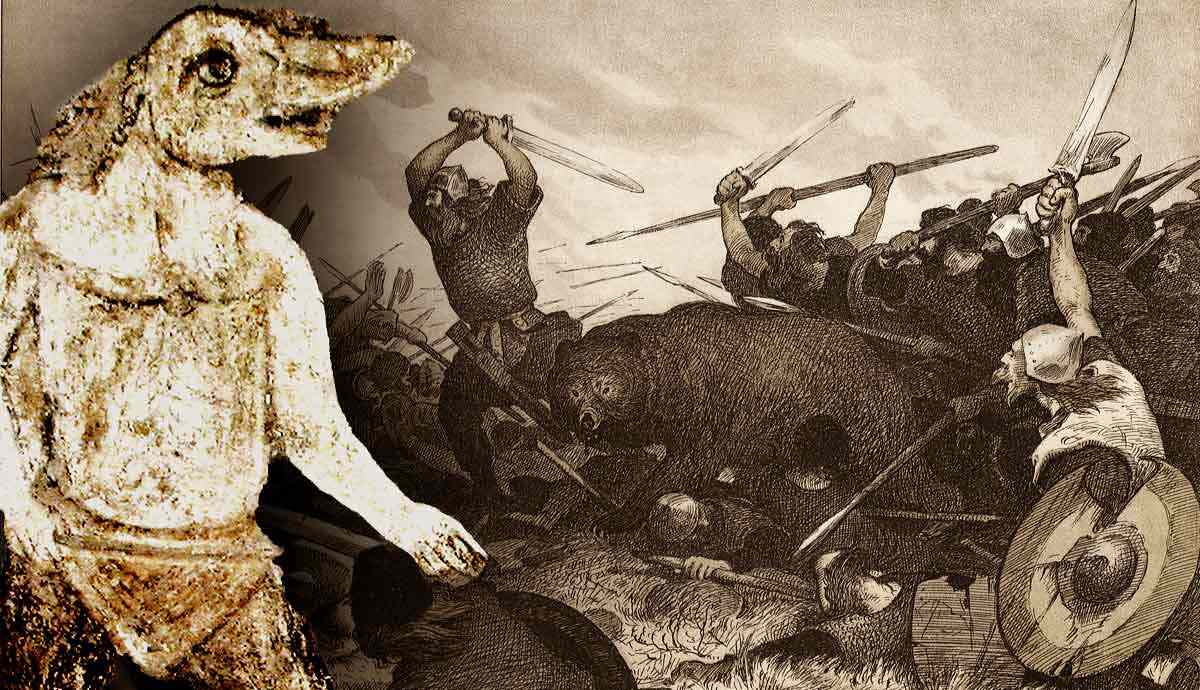
The Blood Eagle was a brutal form of ritual execution. The victim would kneel with their back exposed, and the executioner would carve into their back, separating the ribs from the spine and opening the ribs and skin outward to create a set of wings. Finally, their lungs were removed from the open chest cavity and placed on the victim’s shoulders. The victim was reportedly still alive at this point, so when they gasped for air, their lungs would twitch or flap like the wings of a bloody eagle.
This was a rare punishment reserved for those who murdered a patriarch or king and was a sacrifice to Odin. Considering it was an extreme form of punishment, it comes up quite often in the Norse sagas, with four victims remembered in nine different texts.
Victim #1 Halfdan Long Leg
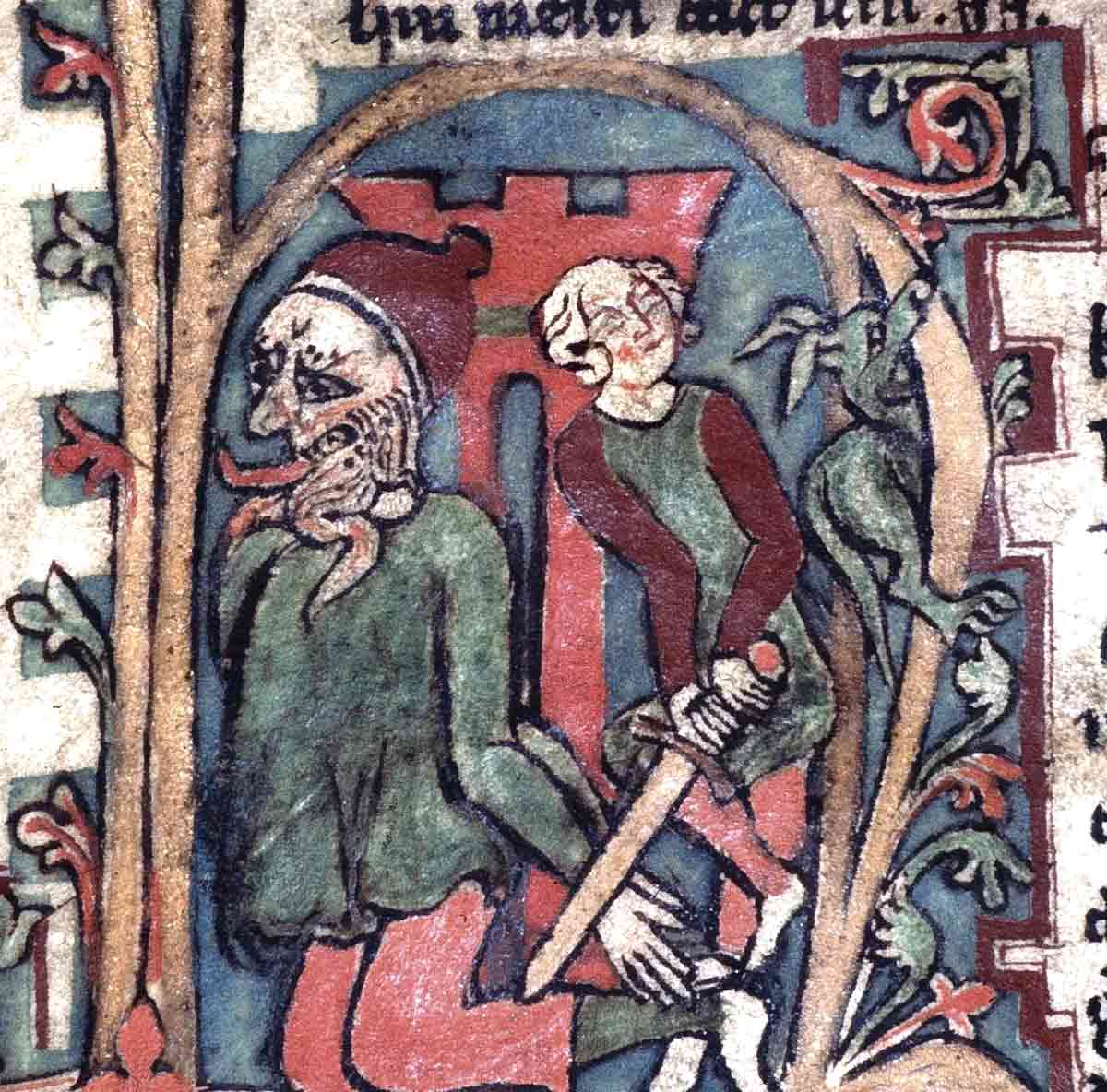
The most complete Blood Eagle account is the execution of Halfdan Long Leg in the Orkneyinga saga, a history of the Norse Earls of Orkney written in the 13th century. His execution is also mentioned in the Haralds saga hárfagra in Snorri Sturluson’s Heimskringla. They recount how two of the sons of King Harald Fairhair of Norway, Halfdan Long-Leg and Gudrod the Radiant, attacked and murdered a powerful noble named Rognvald, Earl of Møre, by trapping him in a house and burning him alive with 60 of his men.
Gudrod was dealt with in Norway, stripped of his titles and lands by the king; he later drowned at sea. Meanwhile, Halfdan fled, arriving at Orkney, which happened to be ruled by Rognvald’s son, Earl Torf-Einar. He captured Halfdan and executed him using the Blood Eagle ritual. The Orkneyinga saga says:
“The Earl made a blood eagle be cut on his back with the sword, and had his ribs severed from the backbone, and his lungs pulled out. Thus, he gave him to Odin as an offering for victory…”
In Haralds saga hárfagra, we get a similar account:
“Thereafter Earl Einar went up to Halfdan, and cut a spread eagle upon his back, by striking his sword through his back into his belly, dividing his ribs from the backbone down to his loins, and tearing out his lungs; and so, Halfdan was killed.”
Victim #2 King Aella of Northumbria
The most famous account of the Blood Eagle was the sons of Ragnar Lodbrok using it to execute King Aella of Northumbria for killing their father Ragnar by throwing him in a snake pit. It is mentioned in the skaldic poem Knútsdrápa by Sigvatr Þórðarson, written in the 11th century, which is the oldest surviving reference to the Blood Eagle. However, it simply says that Ragnar’s son Ivar the Boneless had Aella’s back cut.
Saxo Grammaticus also mentions the execution in his Gesta Danorum, written around 1200. He says that the likeness of an eagle was cut into his back and the wounds salted, but does not mention extracting the lungs. Mention also appears in the Ragnars saga loðbrókarand and the Þáttr af Ragnars sonum, both written in the 13th century.
Victim #3 Lyngvi Hundingsson
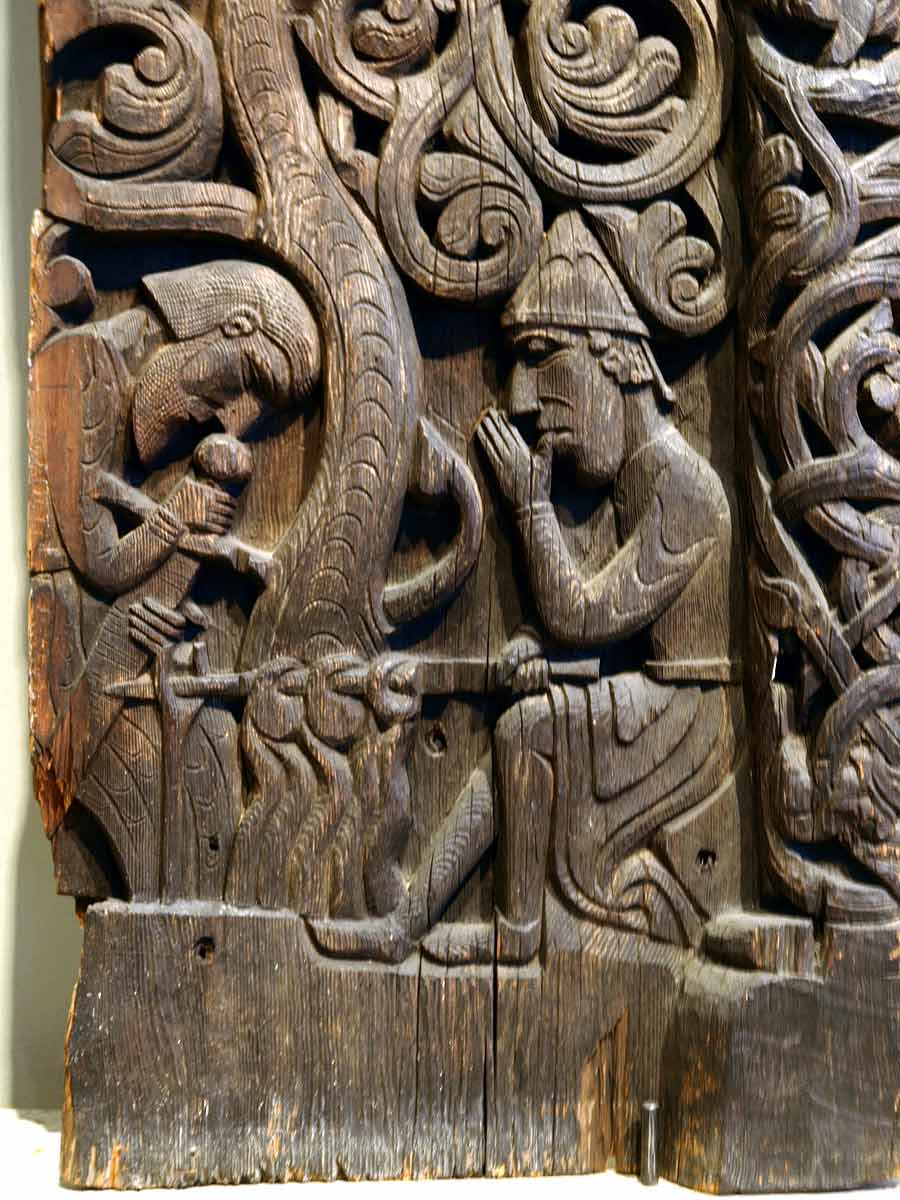
The Reginsmál tells the story of Sigurd the Dragon Slayer and says that he carved a bloody eagle into the back of Lyngvi Hundingsson, who was responsible for killing his father Sigmund. This is expanded on in the 14th-century Nornagests þáttr, saying specifically that the ribs were cut from the back and the lungs drawn out.
The tale also notes that Lyngvi died with great valor. This is a reference to him not crying out in pain during the process, which was considered an indication of bravery.
Victim #4 The Troll Brusi
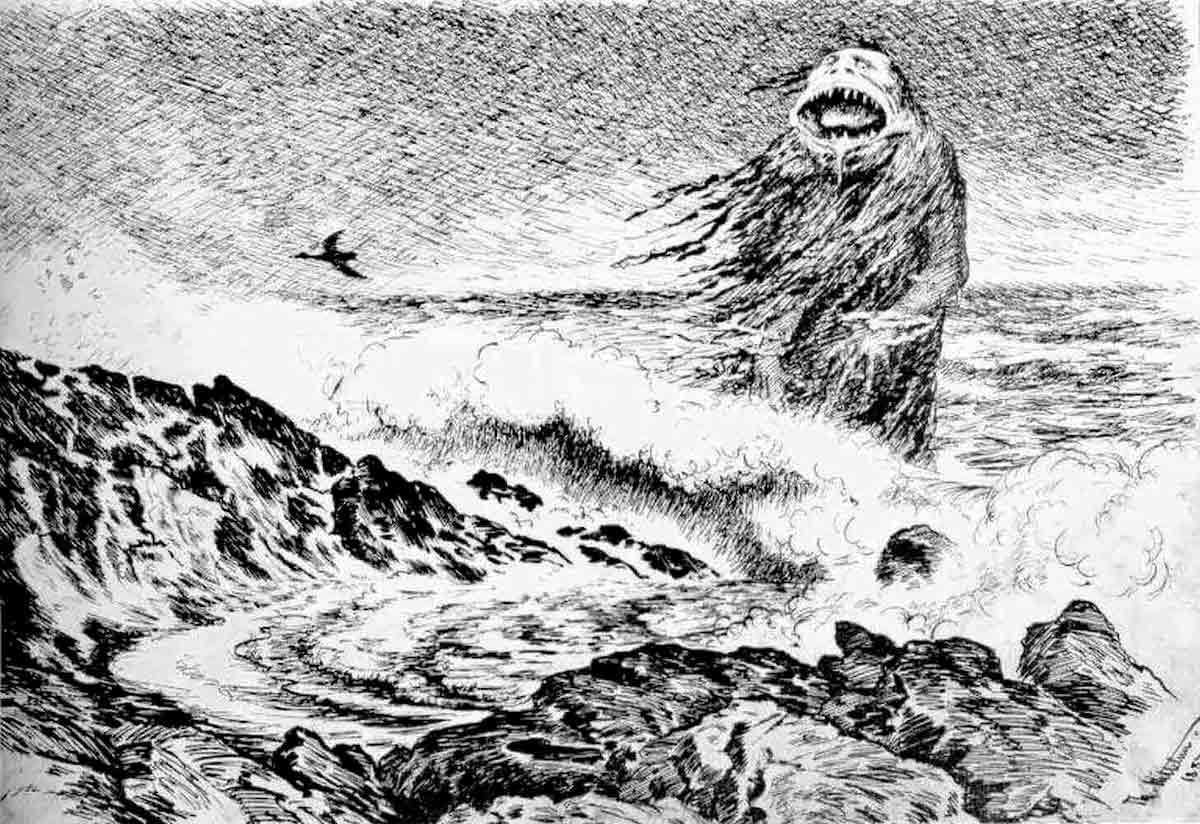
Finally, in what is more of an Icelandic fairytale than a saga, in the Orms þáttr Stórólfssonar, Orm performs the blood eagle on a troll named Brusi for murdering his blood brother Asbjorn. Orm, who was an infamous strongman, killed the monster himself, carving an eagle on his back, separating the ribs from the spine, and pulling out the lungs.
This tale stands out because before performing the Blood Eagle, Orm performed another form of torture in the troll known as the Fatal Walk. He sliced open Brusi’s abdomen, pulled out the end of his intestines, tied them to a wooden post, and then forced the troll to walk around the post, unraveling his own entrails.
The Poetic Problem: Lost in Translation
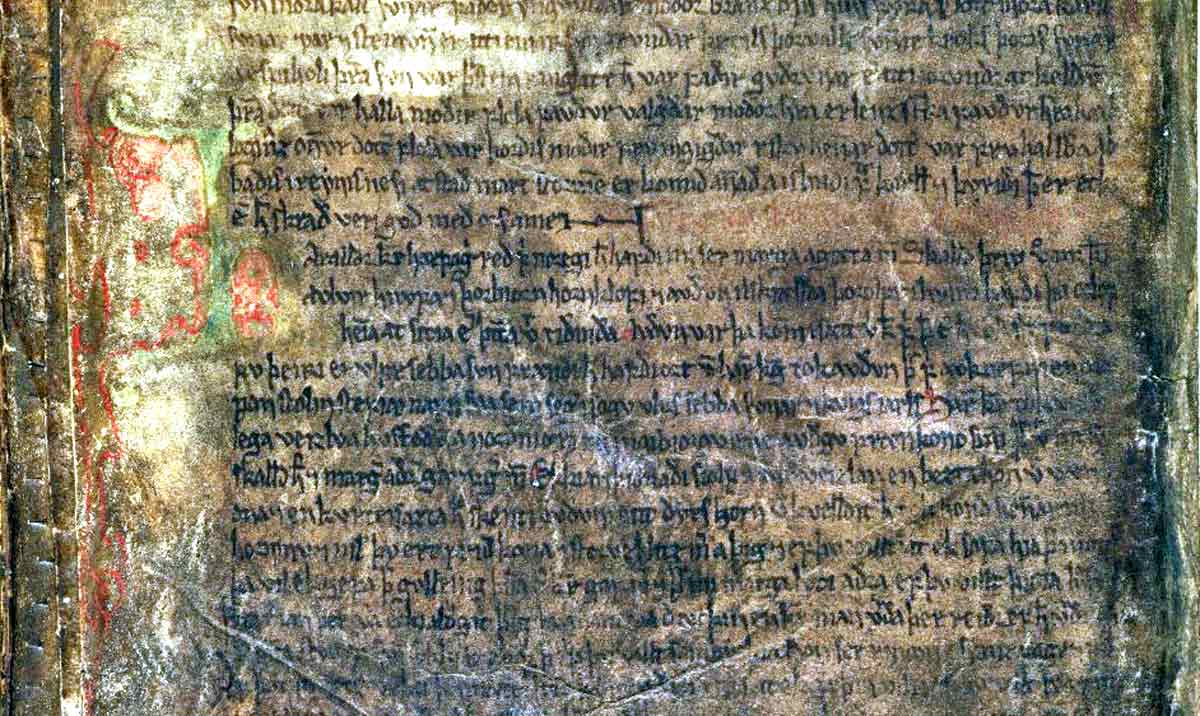
It is worth noting that even the earliest reference to the Blood Eagle, from the 11th century, dates from a time when the Viking world had already mostly converted to Christianity. While the authors of these gruesome tales may have been drawing on older sources, they were written down by Christians observing a barbaric heathen past. This raises the question of whether the Blood Eagle was a real practice or something projected onto the “godless” Vikings.
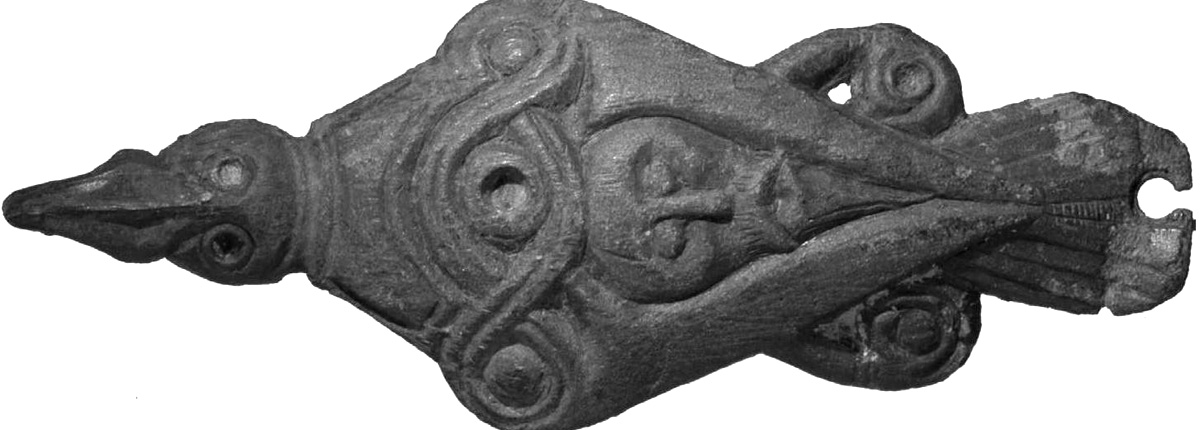
Modern scholars have suggested that the story of the Blood Eagle may have emerged from the misinterpretation of metaphors that were common in older Norse Skaldic poetry. For example, a 9th-century poem, attributed to Torf-Einar himself, says that Einar “gave Halfdan’s back to the eagle.” This could mean that his body, rather than receiving proper funerary treatment, was left out for the eagles that scavenged battlefields to eat. This could have been considered a sacrifice to Odin, since scavenger birds, especially ravens, were sacred to him. The principal advocate of this theory, Roberta Frank, points out that descriptions of the Blood Eagle may well have drawn inspiration from the deaths of Christian martyrs.
The Science of the Wings: Is It Biologically Possible?
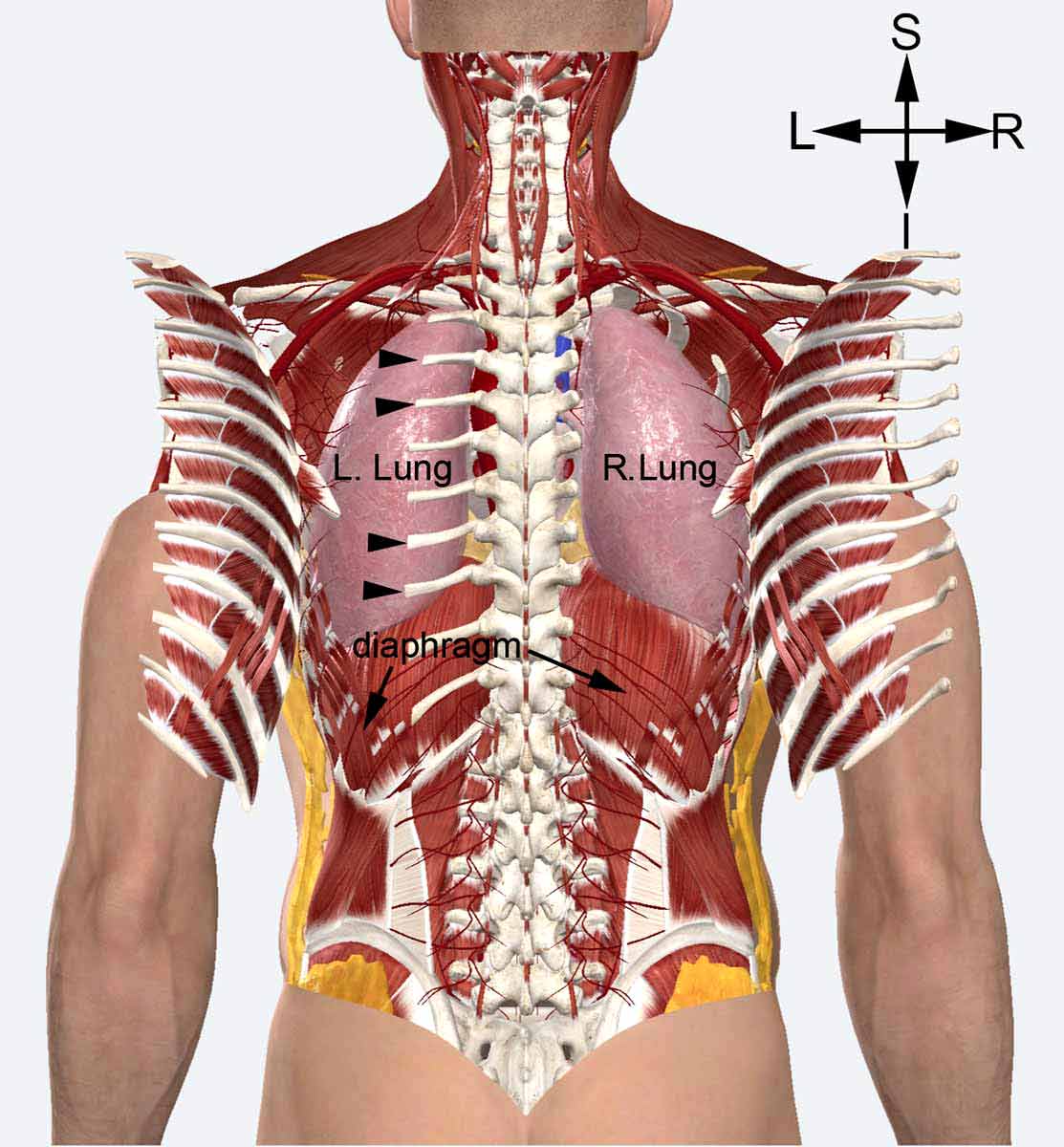
To resolve this debate, an interdisciplinary team of historians and medical anatomists looked to determine whether the Blood Eagle could be performed on a human body using Viking-era technology.
The next few paragraphs are graphic, so read with care.
The study determined that the Vikings certainly had tools sharp enough to cut the ribs from the spine, without damaging the internal organs. In fact, common Viking spearheads would have been suitable for the job and available for someone from the Great Heathen Army gathered to avenge Ragnar Lodbrok to have carried out the act.
However, the researchers doubted that the victim would live through the process. They certainly would not live long enough to breathe and flutter their lungs like wings. The chances of any victim suffering the procedure in heroic silence also seem slim.
More specifically, they noted that when the ribs were peeled back and the chest cavity exposed, the change in pressure would cause the lungs to collapse immediately to around 10% of their normal size. Moreover, the shock of this part of the process would probably see the victim dead within a few seconds. Therefore, it would be hard to spread the lungs as wings, and if there was any fluttering of the lungs once they were placed on the shoulders, this was probably orchestrated by the executioner for show. Moreover, the executioner would have required some specialist skills to complete the task.
While this suggests that stories of what happened during Blood Eagle rituals are exaggerated, as are many of the details included in the Norse sagas, some version of the Blood Eagle does not seem impossible.
It seems possible that the Earl of Orkney and the leaders of the Great Heathen Army had access to specialists who could have completed something resembling the task. They would also have had an interest in making an example of anyone who dared murder a powerful Viking ruler. The suggestion that Orm did so spontaneously on the battlefield is less convincing.
Silence of the Graves: A Lack of Archaeological Evidence
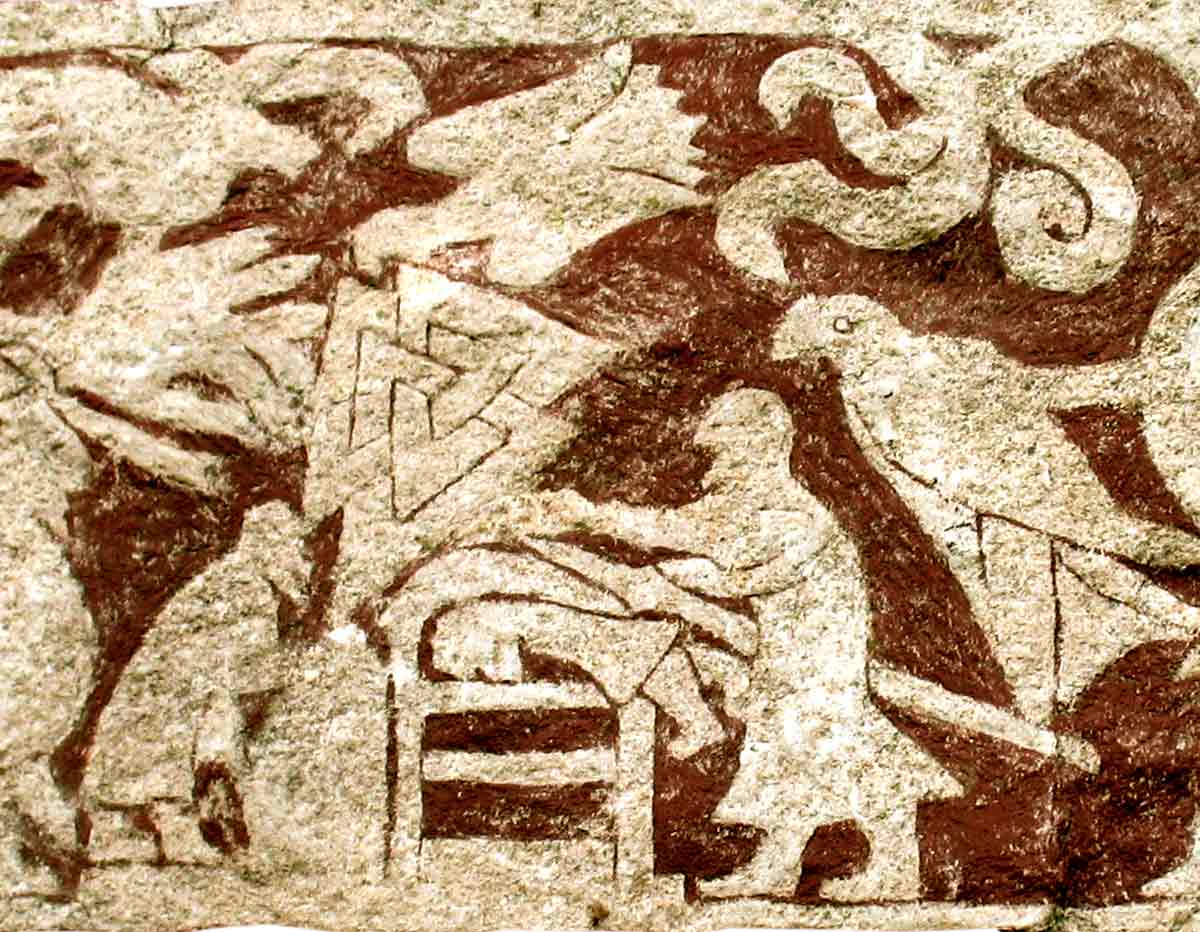
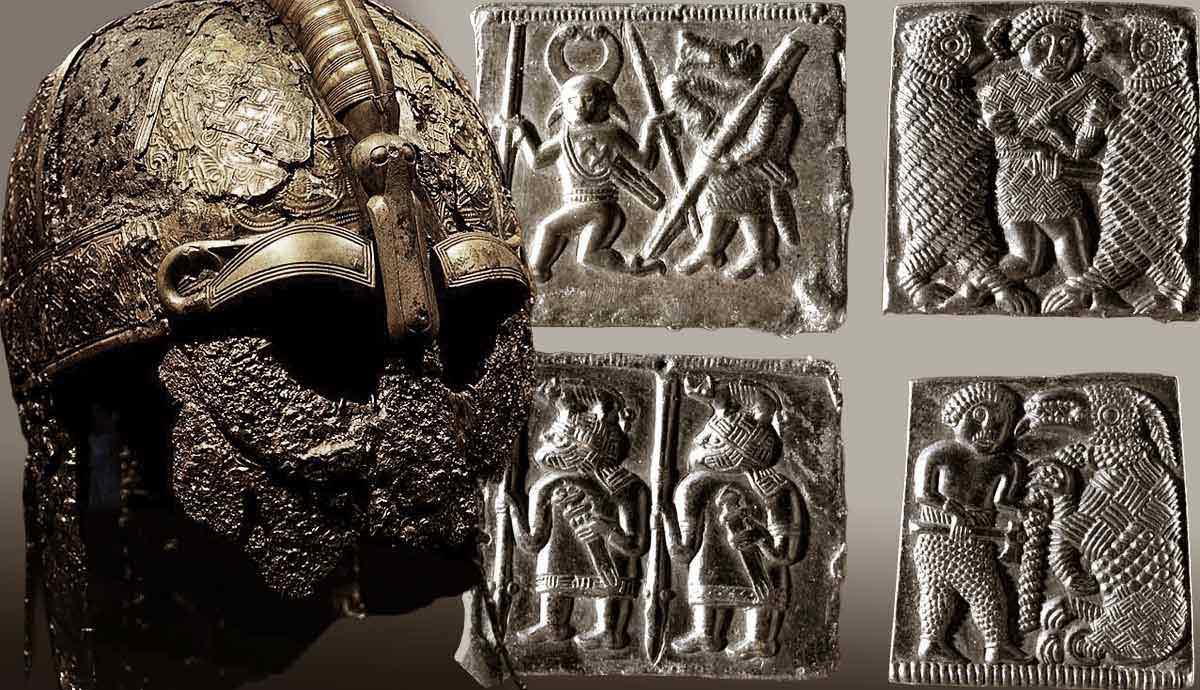
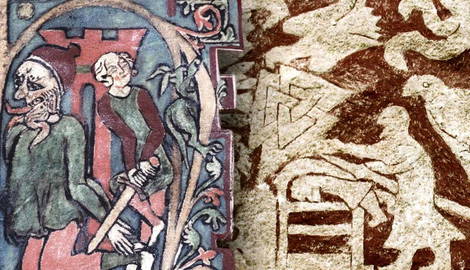
The debate over the Blood Eagle also revolves around finding evidence from the Viking Age itself. Scholars often point to the Lärbro Stora Hammars I picture stone from Gotland in Sweden. It seems to show a man lying face down on some kind of altar, with another man standing behind him with a spear in hand. Several birds of prey also appear in the scene. Directly above the two figures is a Valknut symbol, associated with both Odin and death. Together, this suggests that the scene could represent some kind of ritual execution not dissimilar from the Blood Eagle.
However, this interpretation is not without controversy. Modern depictions of the runestone include painting to highlight details that are sometimes ambiguous on the heavily weathered original stone. The figure on the altar is one of those details, which has alternatively been identified as a horned goat.
Moreover, no examples of bodies that have suffered the kind of rib trauma required for the Blood Eagle have been found. This is perhaps not surprising, since most human remains come from burials. It seems plausible that a criminal who was deemed worthy of a Blood Eagle execution would not have received a burial.
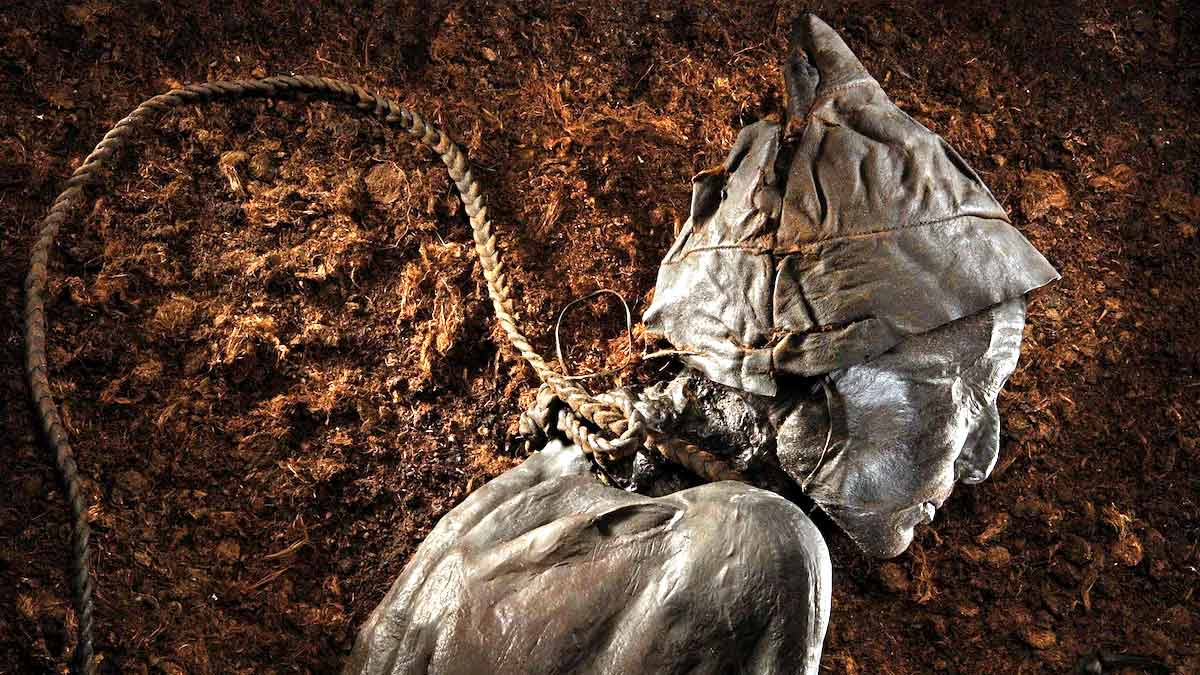
An exception to this might be bog burials. Disposing of human remains in bogs was a common practice across Europe, with examples discovered from Crete in the south to Norway in the north and Russia in the east. They were particularly common in Denmark, Norway, the Netherlands, and Northern Germany, suggesting a Germanic connection. Over 1,500 bog remains are in museums today of both sexes and a wide range of ages, including babies. They also date from Neolithic to recent times, but most date to 200 BC to AD 500, so just before the dawn of the Viking Age.
Bog burials continued in the Viking Age. In the Heimskringla, King Harald Bluetooth of Denmark lured the Norwegian queen Gunnhild to Denmark on the pretext of a marriage alliance. But when she arrived, he instead ritually sacrificed her by drowning her in a bog. Several Viking Age bog burials have also been discovered. The best preserved is an 11th-century bog burial from Skjoldehamn, which is a coastal region of Arctic Norway. It contained a woman of high rank based on her clothes and the fact that she was laid to rest on a reindeer pelt.
However, the woman of Skjoldehamn may be an exception, as scholars believe that the worst criminals were placed in bogs. This stems from a passage in Tacitus’ Germania in which he observes that in the 1st century AD Germanic tribes used bog burial as a form of judicial punishment. This is then supported by the fact that many people buried in bogs seem to have been killed in a brutal fashion or mutilated after death. Bodies were often strangled, hung, stabbed, sliced, and beaten. While there are no examples of blood eagle victims in bogs, it suggests that brutal public executions would have made sense within the context of Norse society in the Viking Age.
The Bogeyman Effect: Why We Still Love the Myth

Sadly, the Vikings themselves have left behind very few written records about their own culture. Instead, we must rely on accounts provided by the Christian communities they raided, or Norsemen writing in the centuries after the conversion to Christianity. For them, while they had pride in the Viking heritage, they were still heathen pirates who engaged in barbaric pagan practices that were unfathomable in the new Christian world.
According to the sagas, the Blood Eagle was a form of execution for the worst offenders against honor. The victim’s back was cut, their ribs ripped open, and their lungs splayed across their back, making a pair of bloody wings. While this kind of execution, which made a violent display of perpetrators, makes sense within what we know of Viking society, we can’t be sure whether this was a real practice or something invented by Christians to characterize the Vikings as barbaric pagans. The truth probably lies somewhere in the middle, with Christian chroniclers embellishing a real practice.
This distortion of the facts is perhaps understandable. Even today, we enjoy looking back on the Viking past as a time of brutality. Modern portrayals on TV and in film show warriors bathed in blood and more than capable of ripping their enemy’s organs out with their bare hands. We romanticize this brutality from a safe distance.