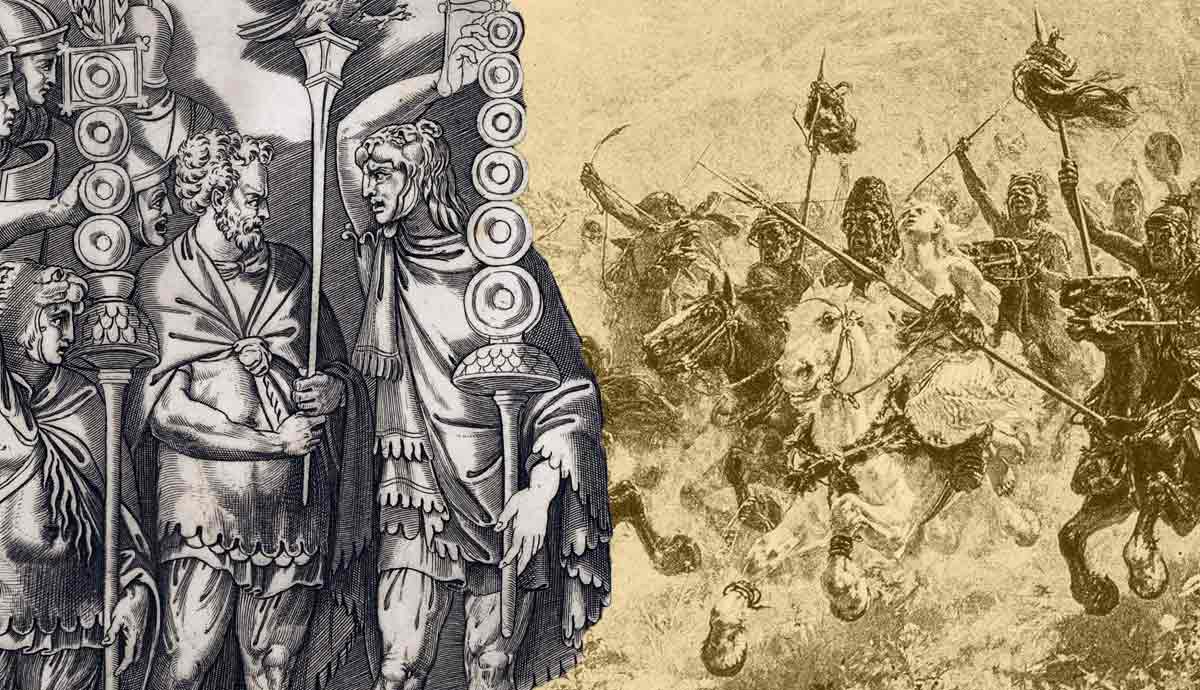
Vitruvius was a military engineer in Julius Caesar’s army, both in Gaul and during the civil war. When peace was restored, he spent his retirement writing De Architectura under the patronage of the imperial family. Despite Vitruvius himself referencing a broader literature on the topic, especially in Greek, his is the only treatise on architecture to survive from antiquity. It seems to have been a bit of a “best seller,” with dozens of manuscripts surviving into the Middle Ages. Vitruvius discusses technical elements of architecture, which is invaluable to modern researchers, but what sets his work apart is that he developed a philosophy of architecture. This meant that his work appealed to a larger audience and remained relevant as architectural techniques changed.
Who Was Virtruvius?
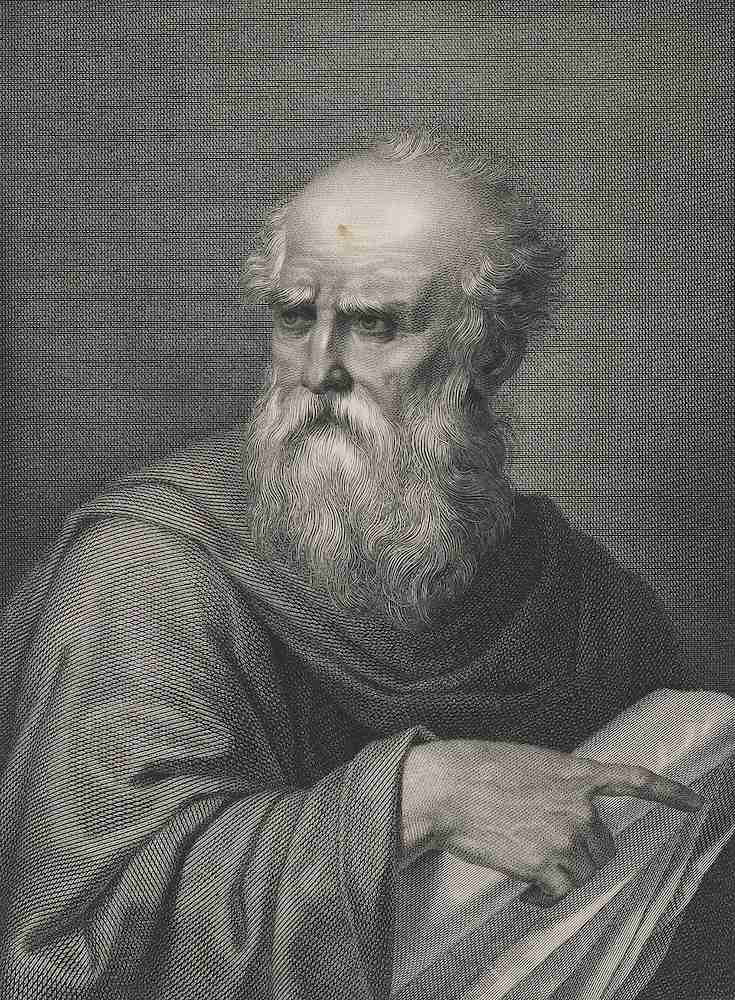
We know very little about Vitruvius the man. He tells us a little about himself in the preface to his work, and modern scholars have theorized about other aspects of his life based on internal references, but this is highly speculative. Even his full name is not certain.
He is often referred to as Vitruvius Pollio because a later epitome by Faventius, written in the 4th century CE, refers to “Vitruvius Pollio and other authors.” However, this may be a case of a missing comma between the two names, with Pollio referring to Gaius Asinius Pollio, a Roman soldier, politician, and historian active around the same time.
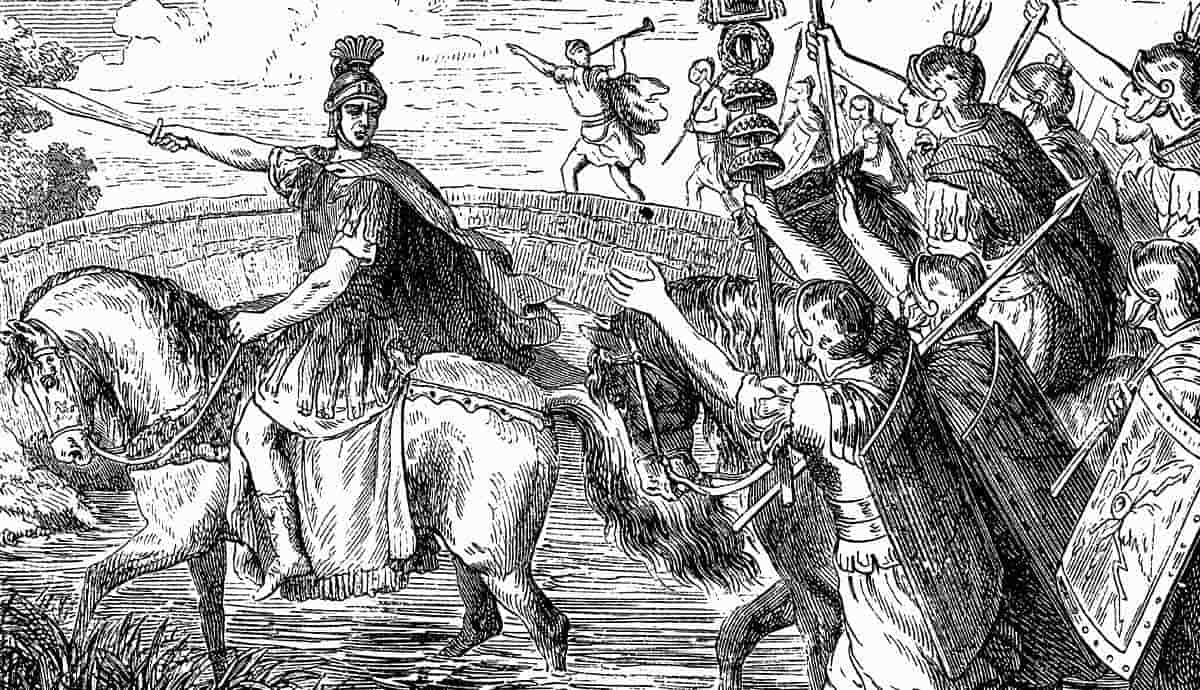
Vitruvius tells us that he was a military engineer in Julius Caesar’s army, modestly stating that he was “known” to Caesar. The observations he makes about local architecture and historical events give us a good idea of where he traveled. He is our only source for a Siege at Larignum in 56 BCE, which Caesar does not mention in his Gallic Wars. He verifies other events that Caesar does mention, including the massacre of 40,000 residents of Avaricum, the Siege of Gervonia, the Battle of Alesia, and the Siege of Uxellodunum.
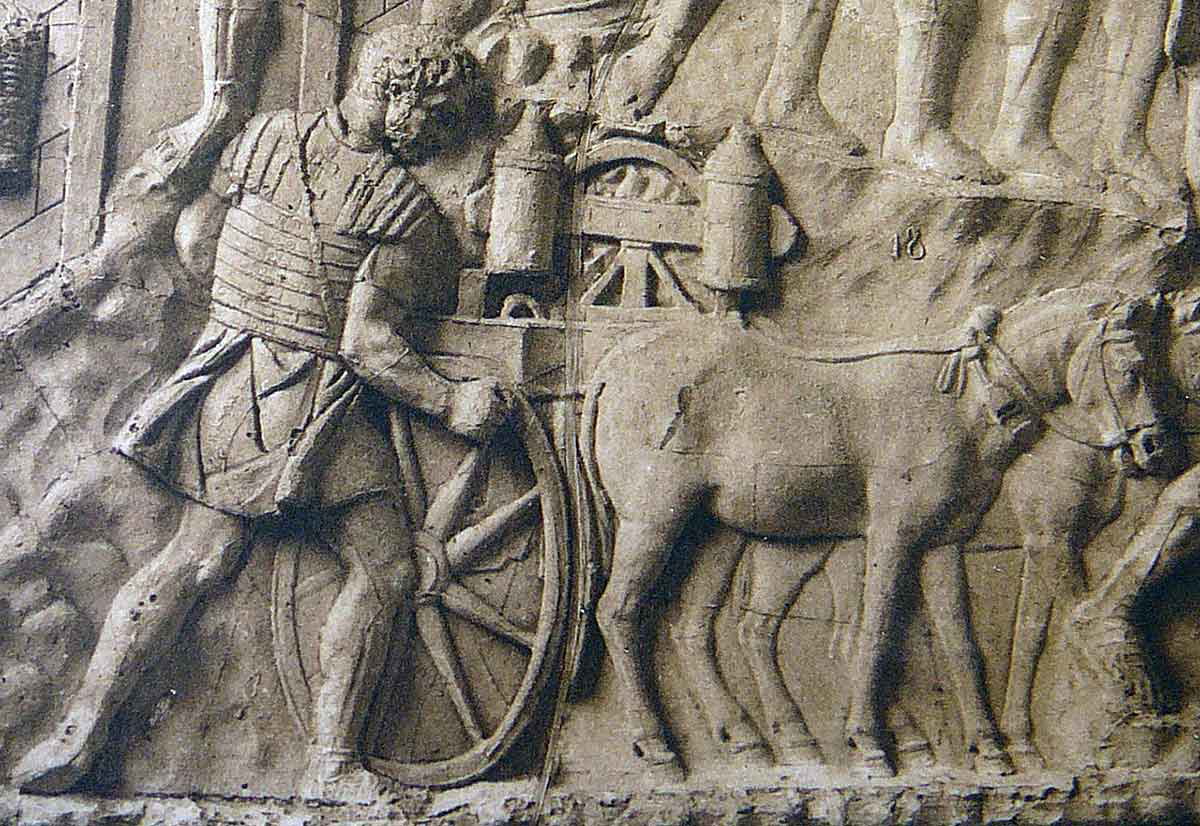
During the civil war, Vitruvius seems to have been present at the Siege of Massilia in 49 BCE in Gaul, the Battle of Dyrrhachium in 48 BCE on the other side of the empire in Albania, the Battle of Pharsalus in 48 BCE in Greece, the Battle of Zela in 47 BCE in Asia Minor, and the Battle of Thapsus in 46 BCE in Africa.
Some scholars have suggested that Vitruvius might have been a native of North Africa, but he was almost certainly Italian. He shows a deep love for the Italian landscape, commenting on the Apennine sands, Amiternum stone, and the curative waters of Ardea and Velia. He praises Italian wines and discusses Roman engineering techniques. He does not show the same familiarity with any other parts of the world, though he was clearly a student and admirer of Greek architectural techniques.
As a military engineer, Vitruvius probably directed the building of camps and fortifications by the soldiers. This is supported by his discussions of camp construction, including an interesting discussion of miasma and how unhealthy air from swamp waters can adversely affect the army’s health. He probably also worked on siege engines. For the Romans, the term architect had a much broader definition, including all types of construction and the use of machinery. We know of only one building that Vitruvius worked on: the basilica (public building) at Fanum Fortunae, completed in 19 BCE. Unfortunately, no traces of the building survive.
When Was De Architectura Published?
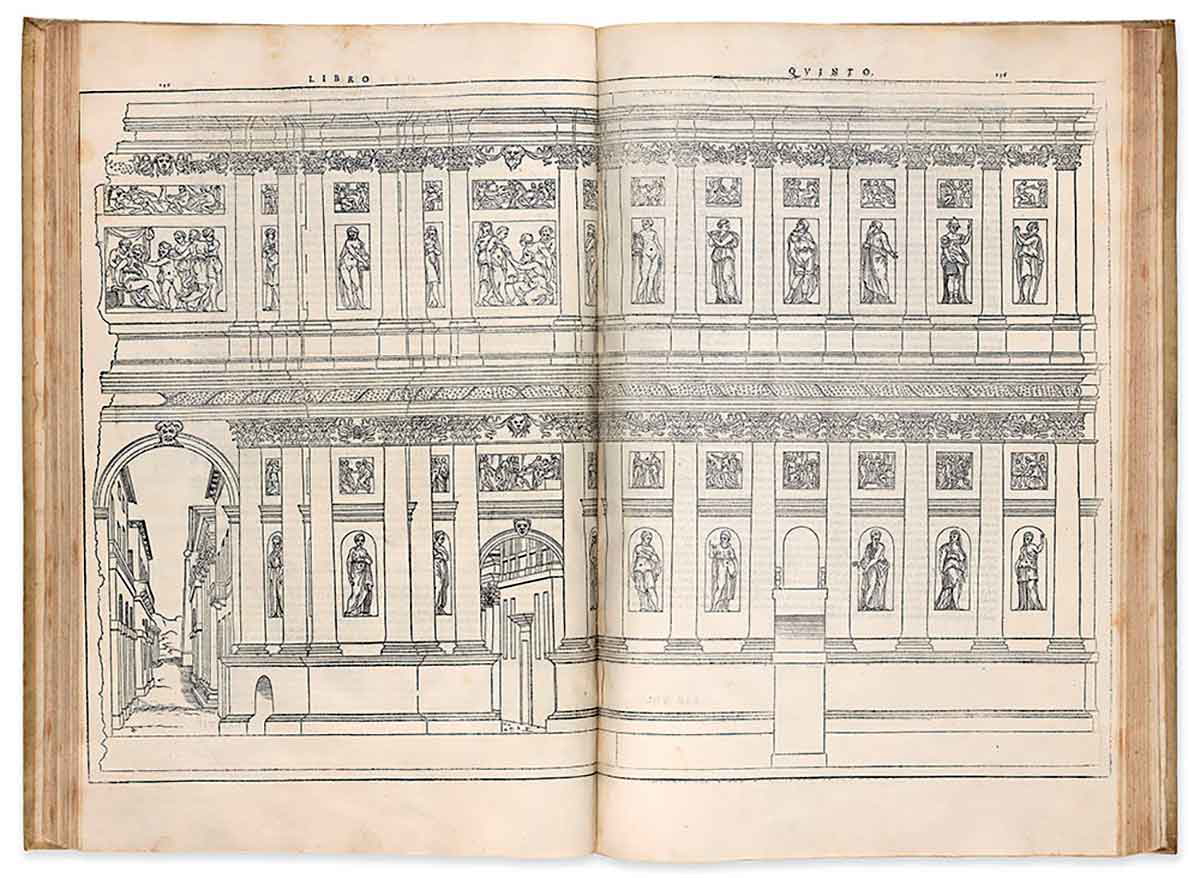
Vitruvius dedicates his book to Imperator Caesar, who acquired the “right to command the world.” This was almost certainly Augustus, suggesting that he was writing during Augustus’ long reign. He says he is responding to the emperor’s building projects that express the greatness of Rome, funded by the wealth gained from the expanding provinces.
He says that he was known to this Caesar’s father, who was now among the gods, probably referring to Caesar posthumously deified as Divus Julius. However, this Caesar could also potentially be Tiberius, with Augustus as the defied father, Divus Augustus. But Vitruvius also says he is writing in his older age and with financial stability, thanks to the patronage of Caesar’s sister. It is unclear who this would be in the case of Tiberius, but it could be Augustus’s sister Octavia, who died in 11 BCE.
He was probably writing early in Augustus’s reign, as he refers to two contemporaries, Faberius, a forger for Mark Antony whom he mocks for his garish taste, and Vestorius, who was a friend of Cicero. Both disappear from the historic record around 40 BCE. Vitruvius also refers to Imperator Caesar and never uses the title Augustus, suggesting he may have written at least the first books before 27 BCE, when Augustus adopted the title.
De Architectura comprises ten books and was likely published in serial form, with each book issued as an installment, as was common at the time. This is how Livy published his Ab Urbe Condita, also written under Augustus.
De Architectura Contents
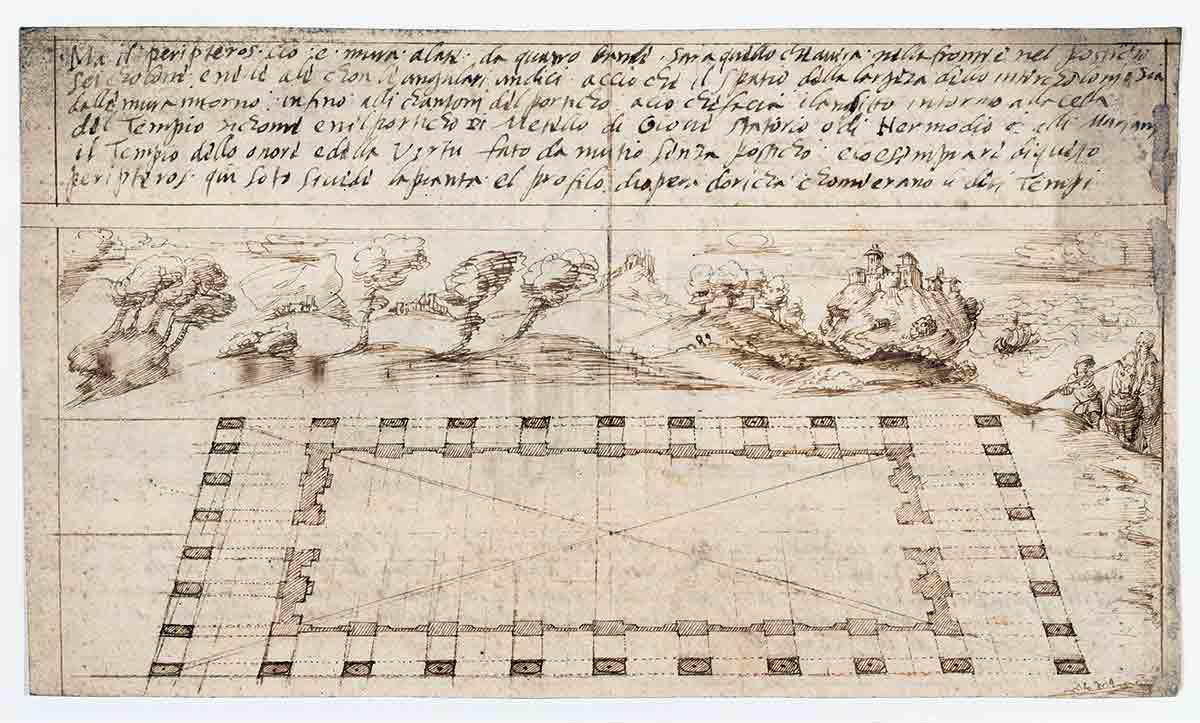
Vitruvius’s De Architectura is the only treatise on architecture that survives from antiquity. This seems to be because, as well as exploring the practical side of architecture, it also offers a philosophical perspective, giving it broader appeal.
A wide range of literature on architecture existed in Vitruvius’s own time, especially on Greek architecture, which he draws on. He seems to set out to write the quintessential Roman guide on the topic, creating a new Latin vocabulary for architecture.
Divided into ten books, De Architectura covers everything from what someone should study to become an architect to the historical development of certain architectural materials and methods, including public architecture (including sacred architecture), private architecture, military architecture, water supply, and machines and technology used in construction.
| Book One | Discussion of the disciplines architects should study to master both theory and practice, and general discussions of town planning and civil engineering |
| Book Two | The historical development of the materials and techniques used in architecture from primitive origins to Greek temple architecture |
| Book Three | Discussion of Greek temple design, orientation, and columnar orders. A discussion of human proportions and how they should be reflected in architectural proportions |
| Book Four | The use of geometric ratios and symmetries across all aspects of sacred architecture |
| Book Five | Proportional and ornamentation guidelines for public, private, and theatrical buildings |
| Book Six | Recommendations for urban planning, including site selection, street grids, and the healthy orientation of cities |
| Book Seven | Ideal home layouts, decoration, and furnishing for both wealthy and modest houses |
| Book Eight | Designing water supply infrastructure, drainage systems, and decorative water features |
| Book Nine | Technical instruction on timekeeping equipment, like sundials and water clocks |
| Book Ten | The use of simple machines and complex mechanical devices in construction |
Many people comment on the quality of Vitruvius’s Latin. This is because it is very unlike the “high Latin” used by the likes of Cicero and reflects everyday Latin, with similarities to graffiti found in places like Pompeii. Nevertheless, Vitruvius was clearly well-educated, as he had the capacity to draw on Greek sources.
Key Ideas From De Architectura
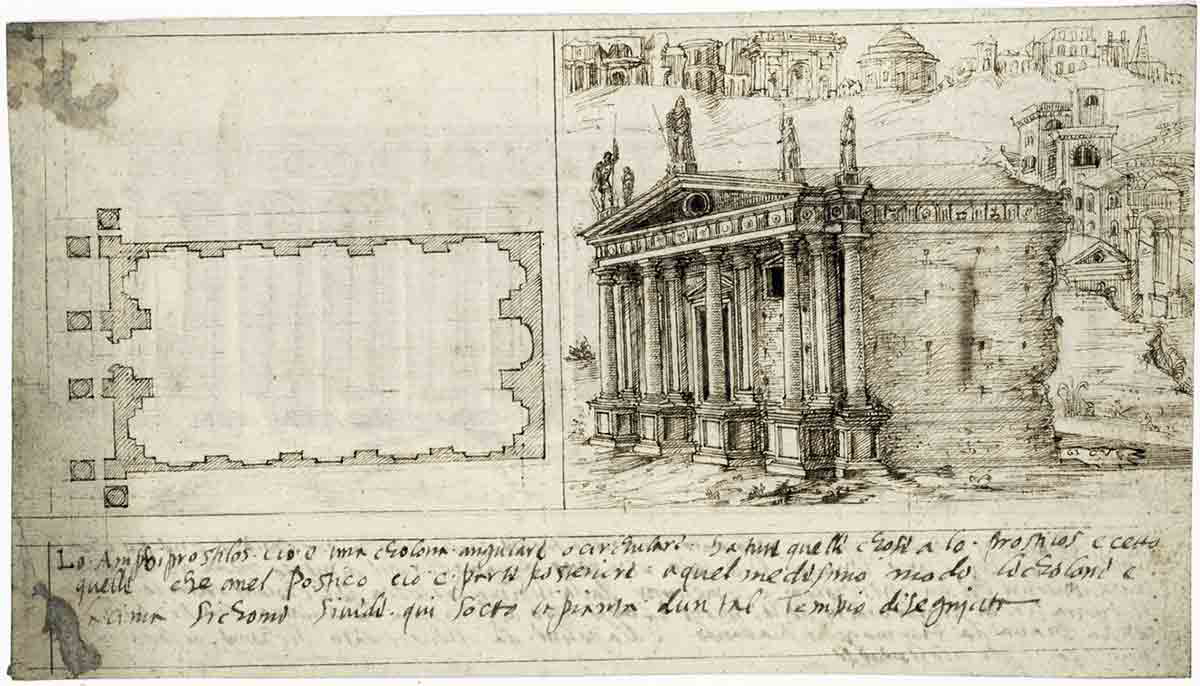
Vitruvius covers many important themes, but some have had a greater impact than others. Vitruvius was a Renaissance man in his own time, celebrating classic Hellenistic approaches to architecture over more modern techniques. This meant that the work would have quickly become dated as the Romans adopted new architectural techniques as they expanded their empire, had it not been for the philosophical elements.
He suggests that good architecture combines three elements: Firmitas (strength), Utilitas (functionality), and Venustas (beauty). This is derived in part from Latin rhetoric, as are his terms for order, arrangement, proportion, and fitness for purpose that appear throughout the work. He also relates his work to many philosophical ideas, for example, Socratic theories of matter when considering materials, such as cement, concrete, and lime, Plato’s abstract geometry, and astronomy.
Vitruvius was adamant that buildings should be fit for purpose and that the quality of a design depends on its social relevance above its workmanship. Thus, in his discussion of central heating systems for public baths and villas, he is preoccupied with fuel efficiency over aesthetics.
His work is incredibly important to historians today because it describes many of the machines used in Roman engineering, such as cranes, as well as military machines, such as siege engines. He also explains essential infrastructure, such as street grids and aqueducts. He notes that lead should not be used in water pipes, citing the observation that laborers working in lead foundries often became ill, demonstrating awareness of the risks of lead poisoning.
The Vitruvian Man
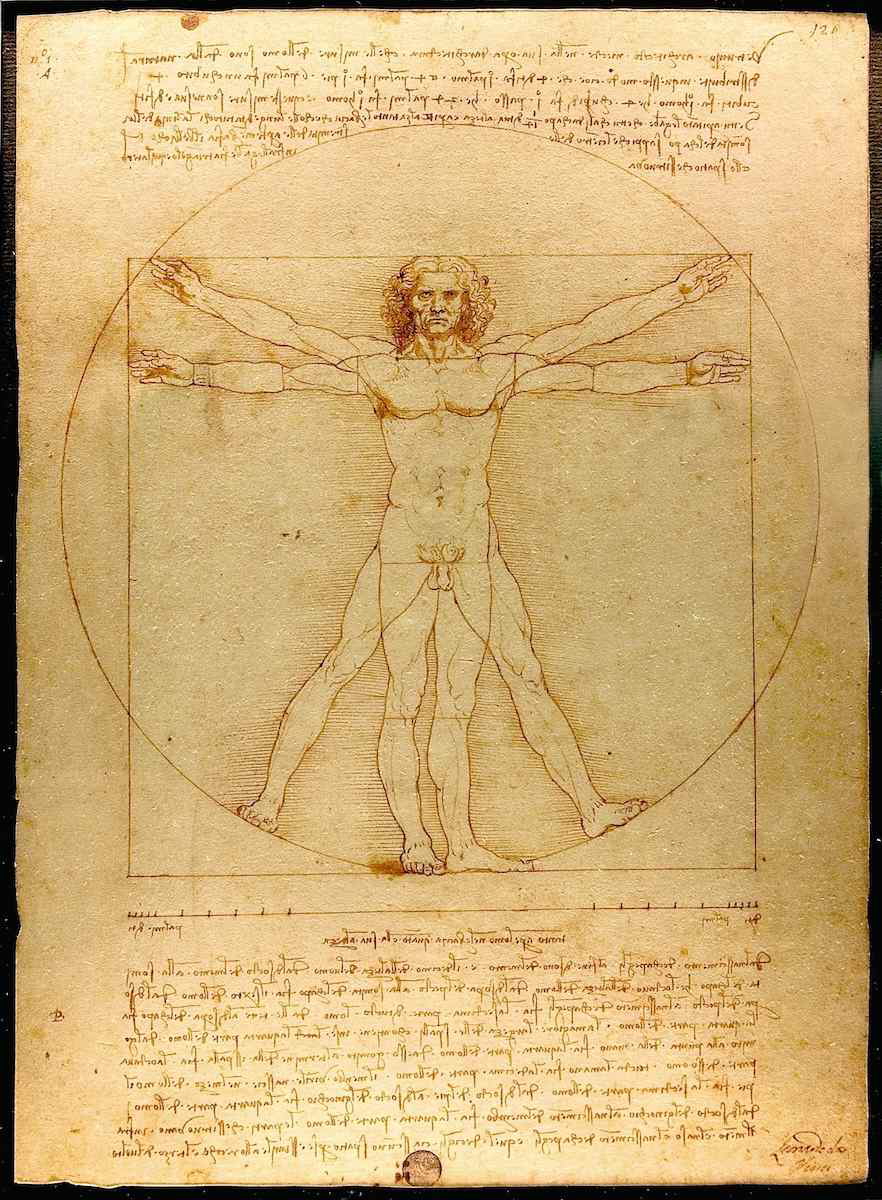
Vitruvius relates architecture to nature, noting that, as birds and bees build their nests, humans construct housing from natural materials to shelter themselves against the elements. But for him, the most perfect manifestation of nature was the human body, the proportions of which should be reflected in the proportions of temples.
In book three, he explains the symmetry of the body and the symmetrical proportion of everything, from the height and arm span to the length of the face and the size of the palm. He suggests that temples should be built with the same harmony and symmetry.
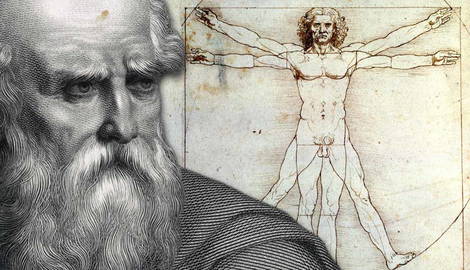
“… in the human body, the central point is naturally the navel. For if a man be placed flat on his back, with his hands and feet extended, and a pair of compasses centered on his navel, the fingers and the toes of his two hands and feet will touch the circumference of a circle described therefrom. And just as the human body yields a circular outline, so too a square figure may be found from it. For if we measure the distance of the soles of the feet to the top of the head, and then apply that measure to the outstretched arms, the breadth will be found to be the same as the height…” (3.1.3).
It was Vitruvius’s descriptions of the harmony of the human body that inspired Leonardo da Vinci’s drawing of the Vitruvian Man during the Renaissance, around 1490 CE.
Vitruvius in the Renaissance
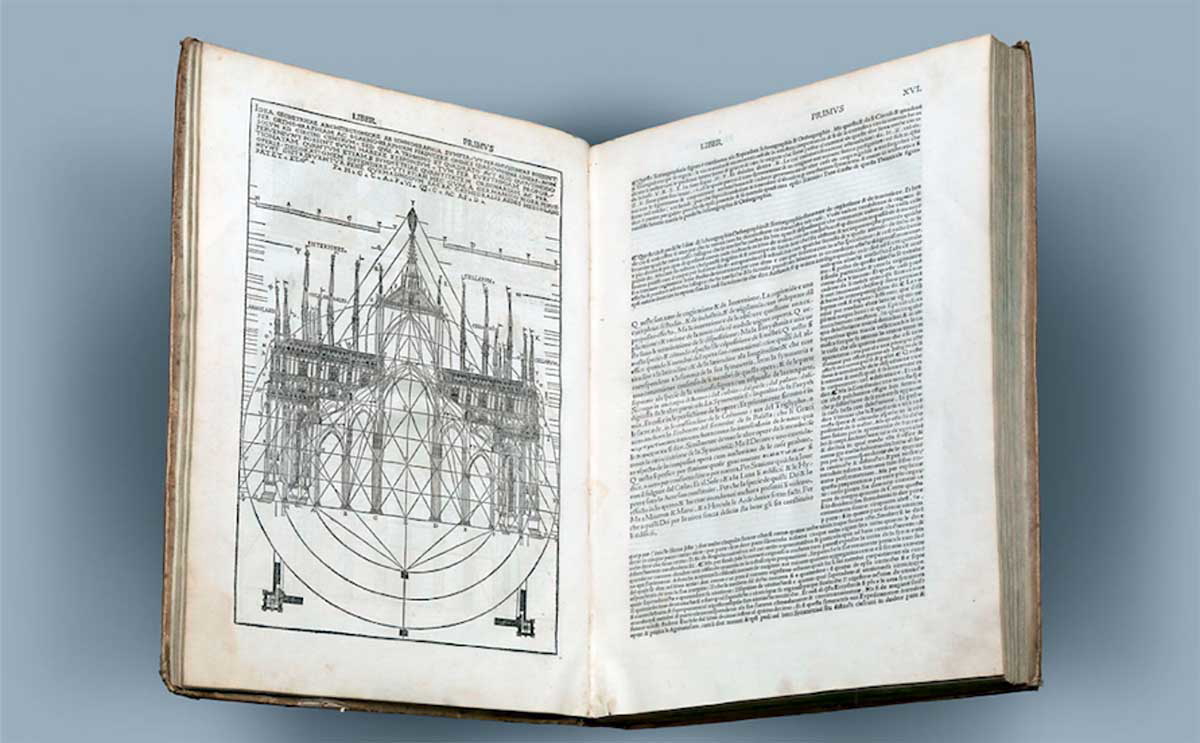
Vitruvius’s De Architectura largely survived thanks to Charlemagne’s palace scriptorium (where manuscripts were copied). It seems that the manuscript was not just copied but also read at Charlemagne’s court, as there is a record of a bishop asking a visiting English churchman for clarification of some of the technical terms in the book. It is also referenced by several authors in the Middle Ages.
Nevertheless, Poggio Bracciolini, a Florentine humanist, is often credited with “rediscovering” Vitruvius in 1416 in the Library of the Monastery of St Gall in Switzerland. He was certainly influential in popularizing the work, and it became highly influential among Renaissance architects.
Vitruvius appealed to Renaissance architects because it helped elevate architecture beyond simple mechanical art and tied it to the humanist movement of the day. First, like the architects of the Renaissance, Vitruvius advocated the revival of the classical Greek style in a rapidly modernizing world. Second, architects had to master the ancient Latin text, thereby entering the broader tradition of humanist scholarship. Finally, Vitruvius based his understanding of architecture on mathematics, which was highly prized as a liberal art at the time.
On this basis, Renaissance architects like Niccoli, Brunelleschi, and Leon Battista Alberti used Vitruvius to characterize their architectural knowledge as a scientific discipline.