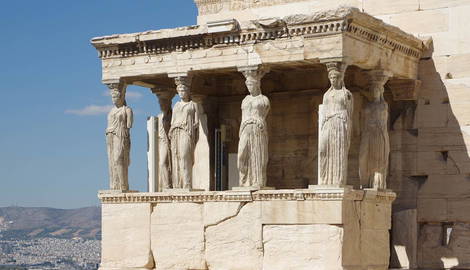
Each year, millions of tourists flock to the ruins of Greek temples that have captivated visitors and worshipers for centuries. Yet, a lesser-known part of this pantheon lies in the sacred spaces where local cults venerated Greek female deities. Many of these sanctuaries remain, tucked away on peaceful islands, quiet riverbanks, and flowering meadows. These temples reveal how the ancient world perceived and worshipped their goddesses of love, death, marriage, and witchcraft.
Sanctuary of Hecate, Lagina, Turkey
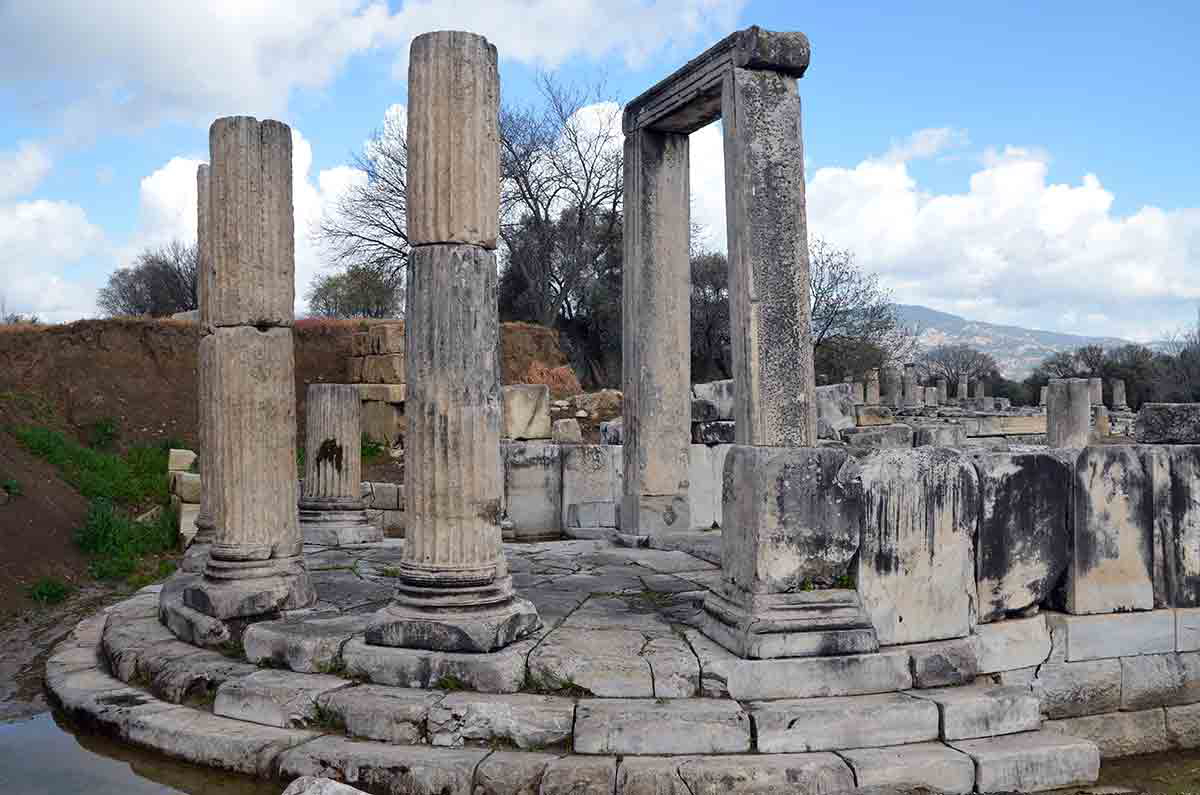
The only temple solely dedicated to the goddess Hecate lies near present-day Turgut in southwest Turkey. Once part of the ancient region of Caria, Greek influence infiltrated the area throughout the Hellenistic period and absorbed local deities into the Greek pantheon. The cult to Hecate incorporated these Carian goddesses with her role as the mysterious goddess of witchcraft, crossroads, liminal spaces, and necromancy.
The temple to Hecate was constructed in 125 BCE near the city of Lagina during the height of the Ionic Renaissance. Blending Greek and Carian architecture, the stoa was decorated with friezes combining local symbols with Greek mythological scenes of Zeus’s birth, battles against Giants, and her interactions with the Amazons. A Sacred Way path, a ceremonial road used to connect cities to nearby temples, enabled a direct route to the temple from Lagina.
Hecate was venerated at the end of each month with gifts of bread, cake, fish and large animal sacrifices. The annual celebration of her birth evoked her symbols of keys and torches. A procession of young women would sing and carried lit torches from Lagina to the temple along the Sacred Way. Upon arrival, one woman would unlock the temple gate with a ceremonial key.
The site remained in use and devotion until the 4th century CE when it was damaged by an earthquake and later converted into a Christian Basilica.
Heraion of Samos, Greece
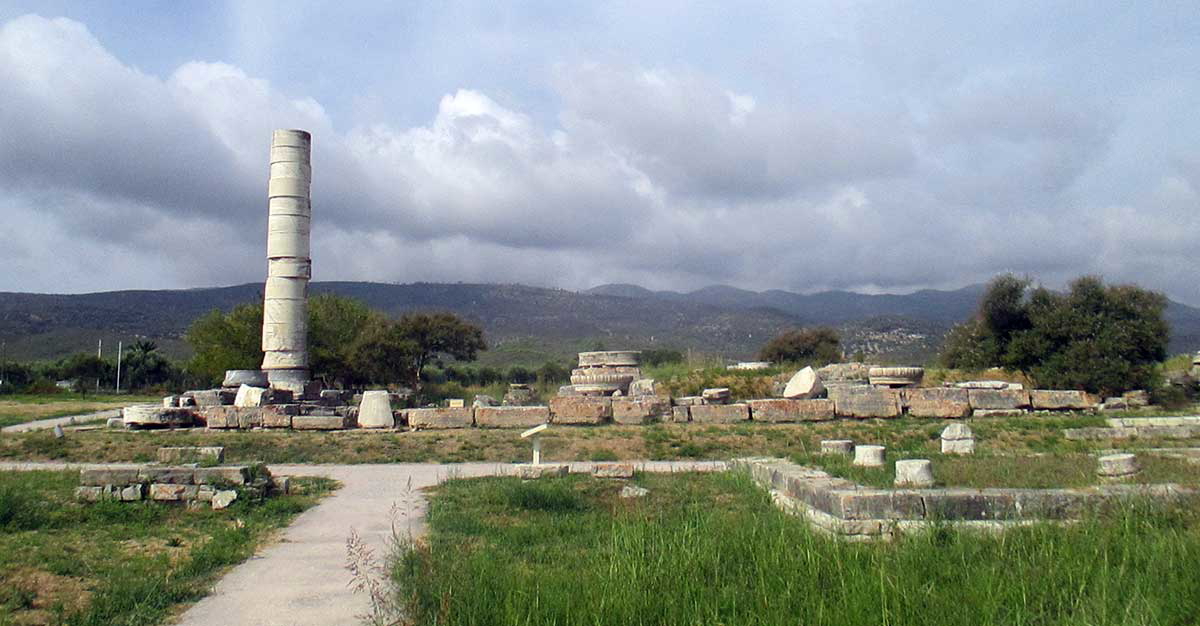
Samos dominated Ancient Greece as a leading political, cultural, and mythological center. Myths claim that the goddess Hera, Queen of Olympus, wife of Zeus, and the protector of women, marriage, and childbirth was born on the island under a lygos tree.
Built in the 8th century BCE, her temple became one of the largest and first free-standing Ionic temples of its time. The temple was over 100 feet long with double rowed columns. Over the centuries, additional altars, sculptures, and other structures were added. By the 6th century BCE, Heraion was the most important site for the cult of Hera.
Each year Hera’s birth was honored by binding a sacred image of her with lygos branches. A procession then brought the image to the sea and performed a ritual wash. Gifts to her included perishable foods, pomegranates, and poppy seeds. Unique offerings, materials, and bone fragments from the Middle East and North Africa were also excavated at the temple. Wooden votives, ivory, Babylonian deity figurines, and the bones of Egyptian crocodiles and African antelopes reflect the island’s ancient crossroads.
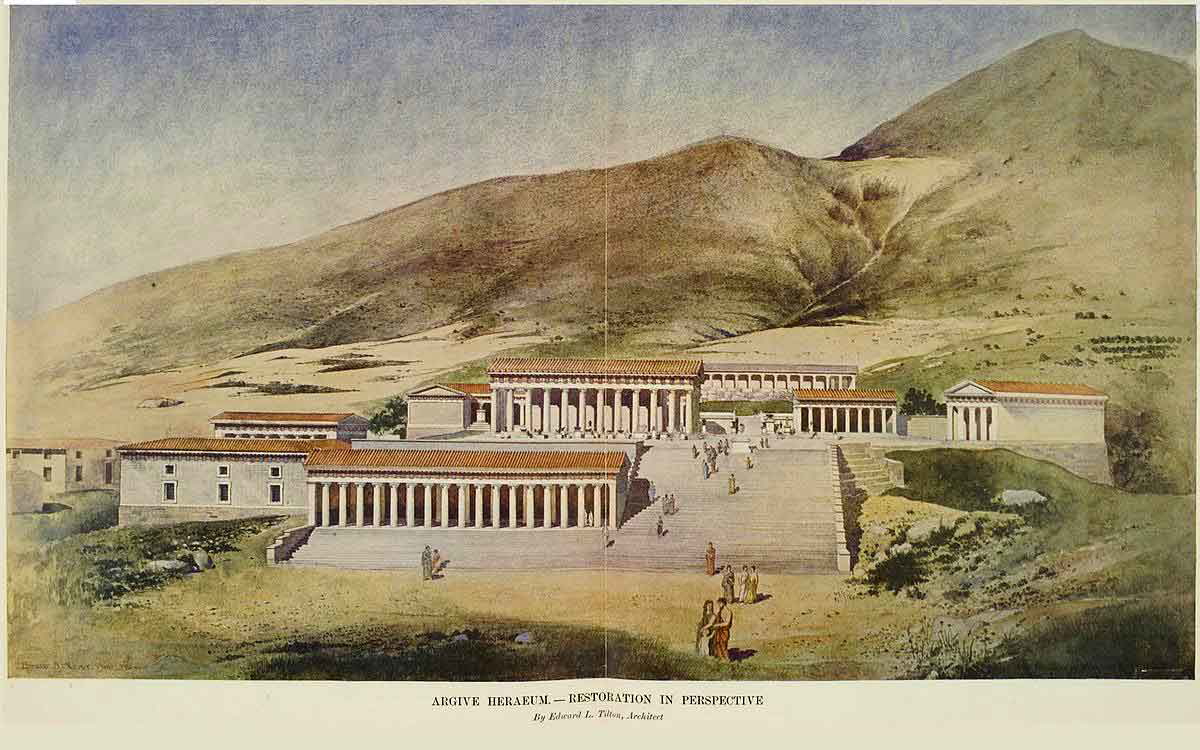
Heraion fell out of use with the expansion of Christianity under the Roman Empire. By the 4th century CE, all pagan celebrations were banned. The temple was converted to a church and later used as a stone quarry.
Sanctuary of Demeter and Persephone, Eleusis, Greece
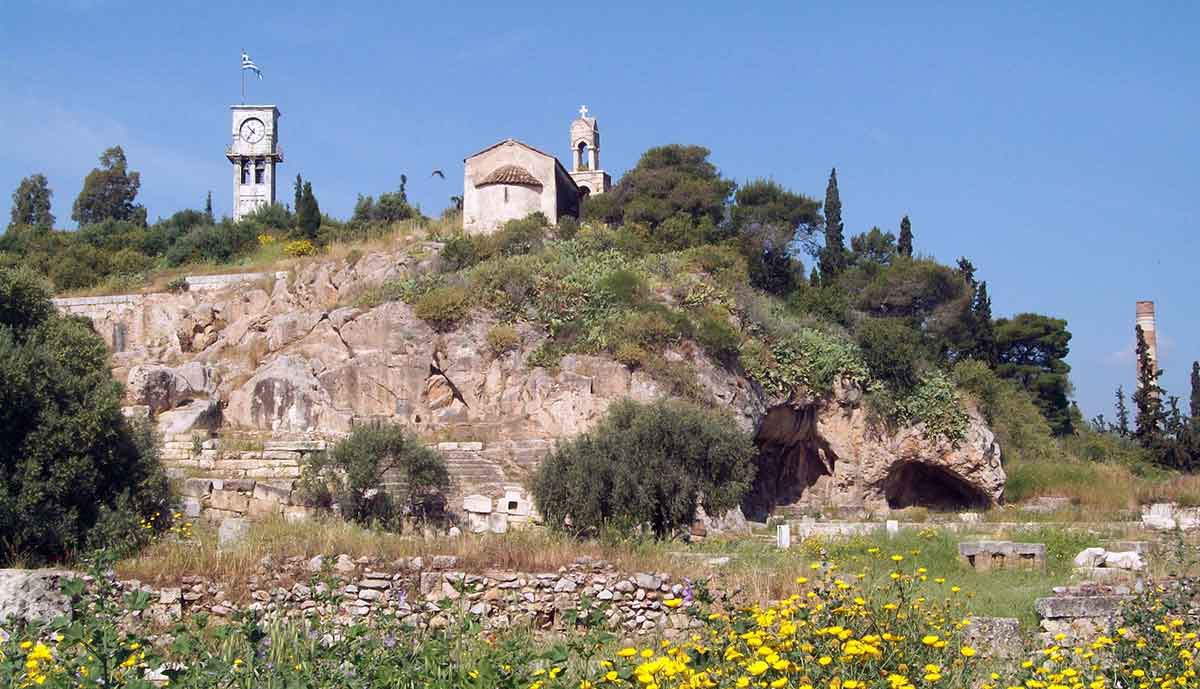
The sanctuary at Eleusis was the most important religious center for the worship of Demeter, the goddess of fertility and the harvest, and her daughter Persephone, goddess of Spring, rebirth, queen of the underworld, and wife of Hades. The goddesses were worshiped at Eleusis since the 7th century BCE in celebration of fertility, harvests, seasons, and immortality.
Eleusis was famous for its Great Mysteries, the most private and secret cult in Ancient Greece. The main temple, the Telesterion, was constructed in the mid-5th century BCE and could host thousands of initiates to the cult. Different temples, shrines, gates, arches, and altars expanded the complex and facilitated its use for centuries.
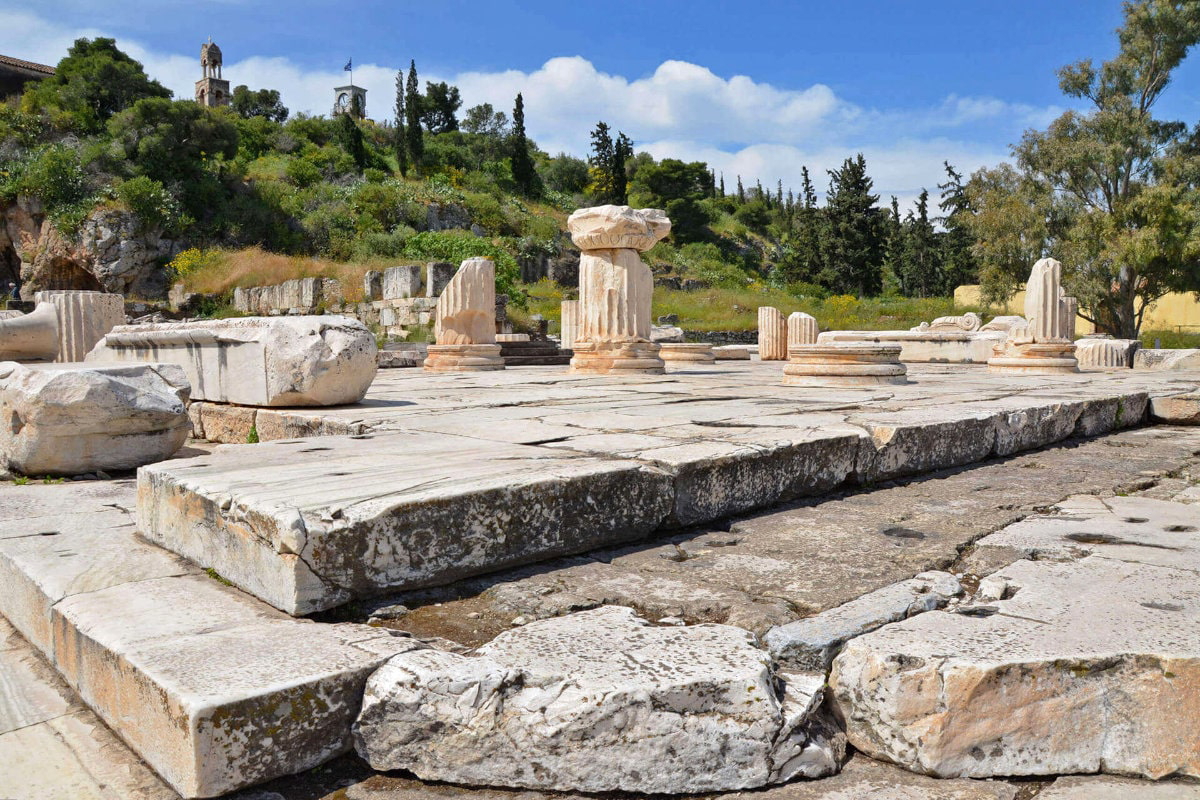
Rituals at the sanctuary were bound to total secrecy. Any violation or attempt to secretly observe the practices as a non-initiate was punishable by death. Furthermore, the sanctuary contained a crucial location in Greek mythology. The Plutonion Cave at Eleusis is the entrance to the Underworld used by Hades to kidnap Persephone, later becoming her main point of travel between the realms every six months.
Devotees honored this travel through bi-annual processions between Eleusis and Athens via the Sacred Way, re-enacting her original abduction in the Autumn and return in the Spring. Her return was celebrated with dances, sacrifices, libations, and a gong ceremony. Additional practices included celebrations of life and death with night-long festivities, and fertility festivals involving throwing rotten pigs into snake-filled pits, and baking genitalia shaped bread.
The site remained in use until the spread of Christianity under Roman occupation and the official closure of pagan sites in 392 CE.
Temple of Aphaia, Aegina, Greece
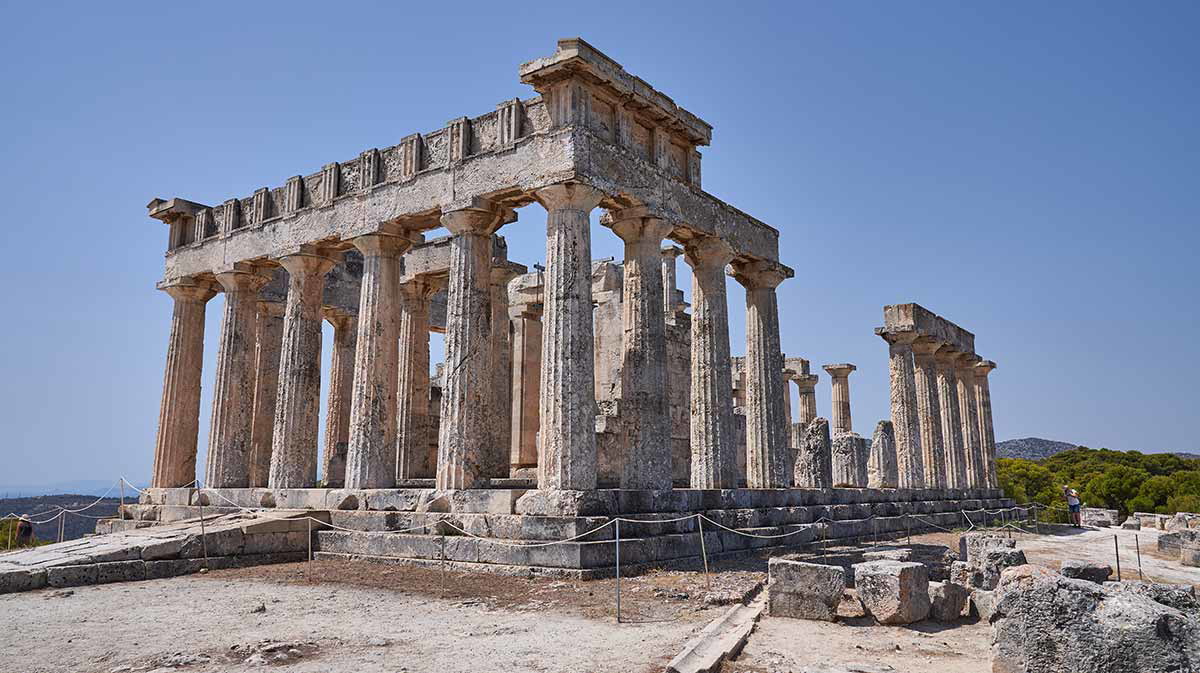
The Temple of Aphaia is located on the island of Aegina in the Saronic Gulf. Aphaia was a mountain nymph and friend of Artemis. When King Minos of Crete desired and pursued her, she threw herself into the sea, was captured by fisherman, escaped, and hid in the hills of Aegina. Artemis helped by granting her a new identity with the name Aphaia, meaning vanished. From then onwards, she served as the goddess of the hunt, harvest, fertility, and protector of Aegina, women, and infants.
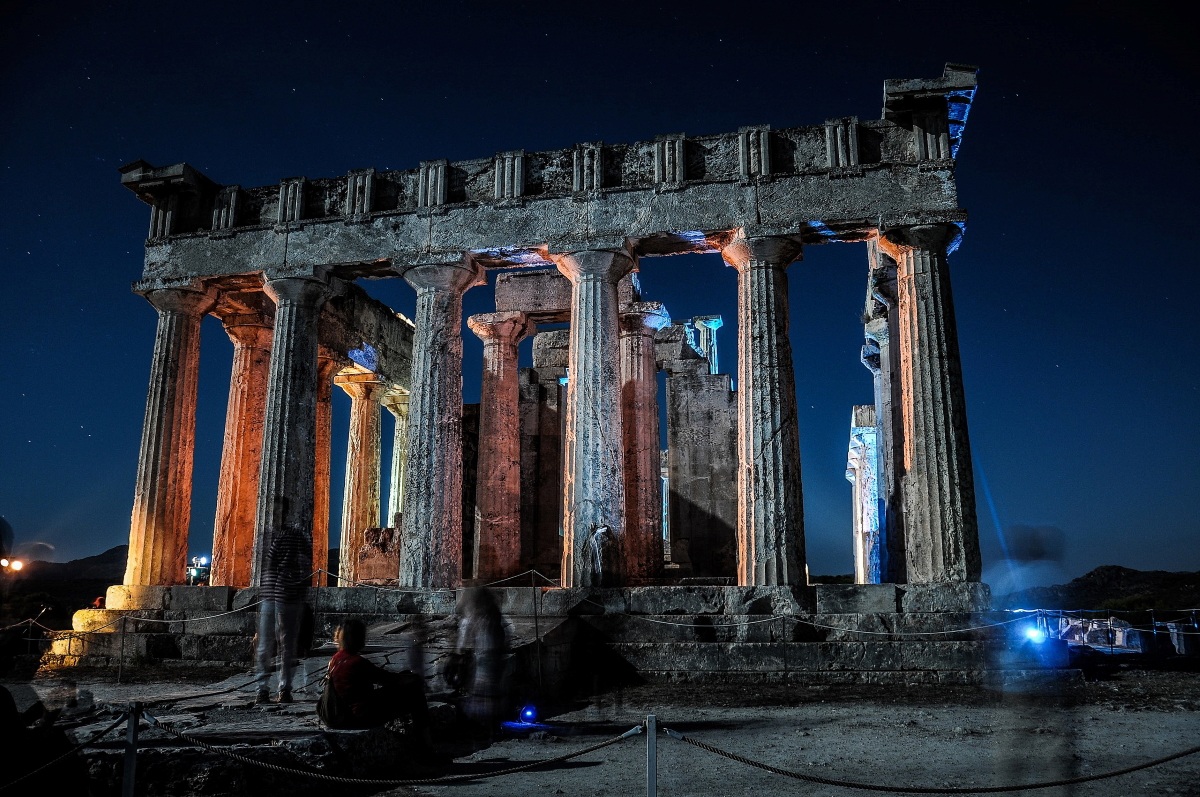
Her temple was built in the hills of the island, absorbing the traditions of a previous fertility goddess worshiped at the site since the Bronze Age. Built in 430 BCE, her temple is the physical embodiment of the evolution of Greek architecture from the Archaic to the Classical period. Newly invented pully systems erected 32 columns in the doric style. Artwork excavated at the site also reflect this combination of aesthetics. Friezes and sculptures depict outdated clothing and hairstyles, while others show the development of more life-like carving techniques for human characters dressed in modern armor.
The temple fell out of use with the decline of Aegina by the 5th century BCE and the rise of Athenian influence and rule on the island. By the 2nd century BCE, the site was abandoned.
Temple of Despoina at Lykosoura, Arcadia, Greece
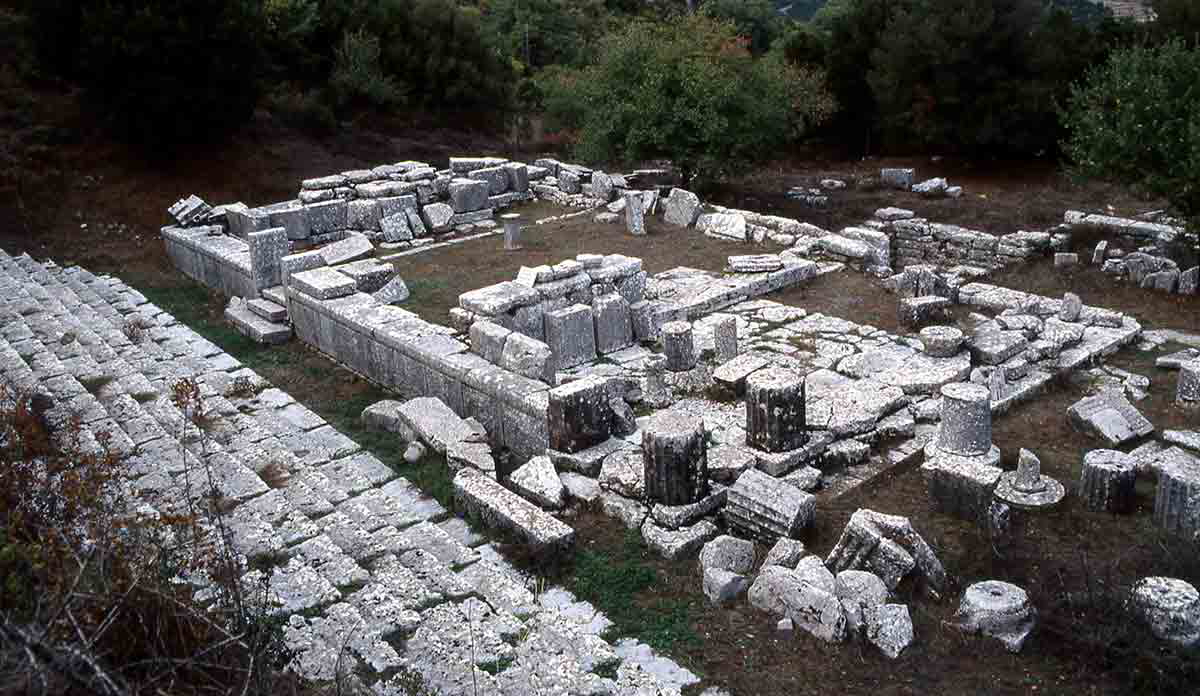
The Temple of Despoina was built near the ancient city of Lykosoura in southern Arcadia. The ancient Greek author, Pausanias, claims Lykosura to be the oldest city in the world. Despoina belonged to Arcadian myths as the daughter of Demeter and Poseidon. She was worshiped by the Eleusinian Mysteries alongside her mother as the goddess of secret knowledge, nature, seasons, and fertility.
Built in the 4th century BCE on the slopes of Mount Lyaikon, Despoina’s temple involved a main Doric-style rectangular building with a stoa topped with friezes of Zeus, the fates, nymphs, and Hercules. Three altars were flanked by theater-like stone seats, granting all participants access and involvement in rituals. Artwork excavated at the site associated her with eagles, thunderbolts, olive branches, and sea creatures.
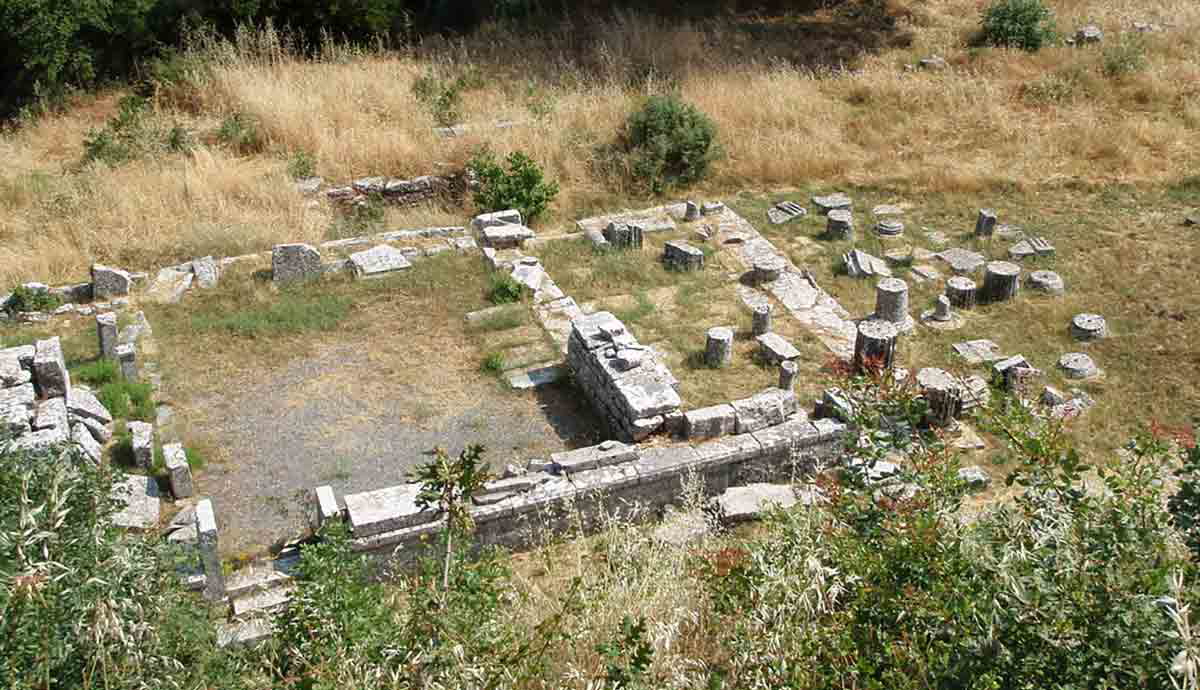
The actual celebrations and even the real name of Despoina remain a secret. Instead, her name translates to Mistress as it was only known to initiates sworn to secrecy. Onlookers recorded in ancient texts that devotees worshiped the goddess through dancing, flute playing, processions of female initiates dressed in animal masks, and sacrifices of black rams violently hacked to death.
The temple fell out of use in 368 BCE when the region was forcefully unified under the Megalopolis city-state. While most neighboring communities fled or were massacred, inhabitants of Lykosoura were spared because of the sanctuary. The site was eventually abandoned with the rise of Megalopolis’ political influence. Despoina was later conflated and worshiped with Persephone.