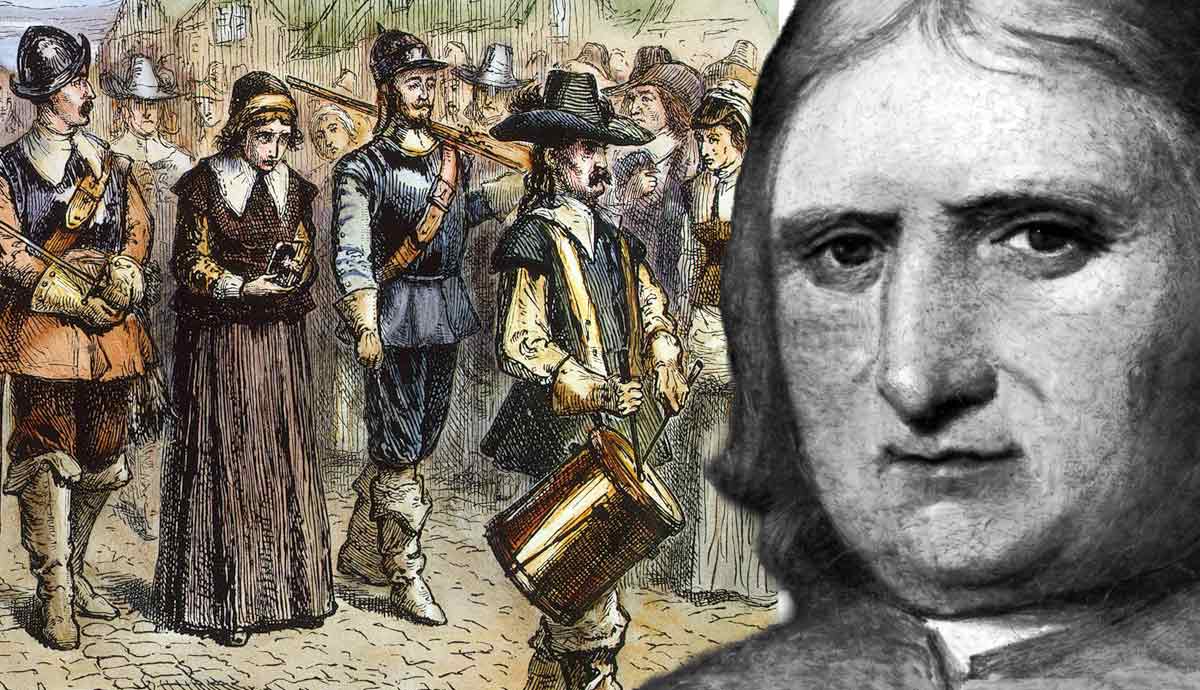

Portland, Maine, has seen its share of protests. As a political center of the state, it is no stranger to controversy and sometimes, spirited arguments. However, this is not a new phenomenon, as marked by the 1855 Portland Rum Riot. In June of that year, a mob gathered, angered by the actions of their mayor, who also happened to be the father of US Prohibition law. Simmering outrage soon escalated to a deadly clash between the city government and its people, fueled by Nativist sentiment and economic inequality.
Neal Dow and the Rise of Maine Law
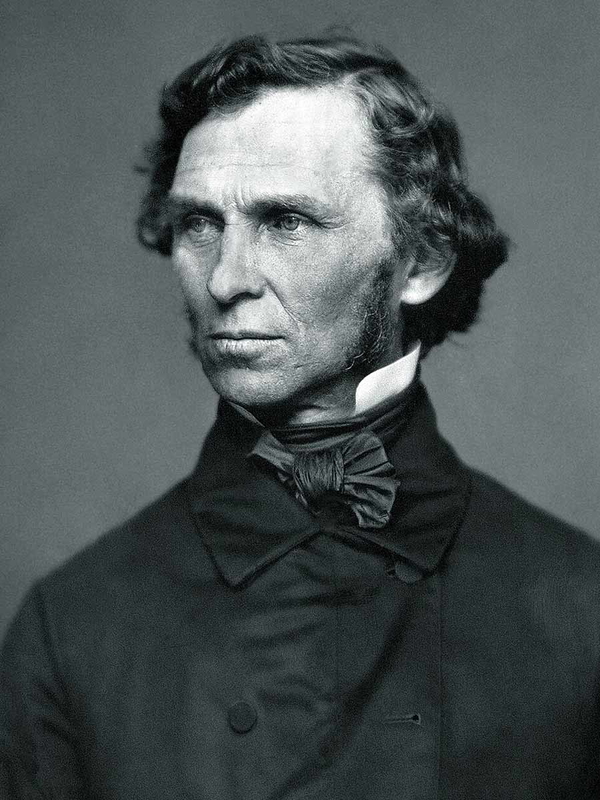
The son of Quakers, Neal Dow was a Mainer, born and raised. Surrounded by hard-living and hard-working people from an early age, Dow noticed that alcohol seemed to pervade Maine society. His observations were not unusual for the time. In the early part of the 19th century (Dow was born in 1804), alcohol use and abuse were widespread throughout America, with the average adult over 14 consuming over 6 gallons of alcoholic beverages a year (the modern average is 2.8). Following his father’s example, young Neal joined temperance organizations, and this activism soon led him into politics. Promoting Whig policies of morality and reform, Dow’s political star continued to rise, carrying him to the office of mayor of Portland, Maine’s largest city, in 1851.
Dow remained committed to the cause of temperance, leading to the passing of the 1851 “Maine Law,” the first significant Prohibition legislation in the nation. It forbade the traffic of beverage alcohol and allowed for easily obtained search warrants for enforcement. Within four years, most states in the Northeast and Midwest had followed suit with similar laws. In 1855, having found enforcement difficult, Dow championed another law, which passed, strengthening the first and introducing imprisonment for first-time offenders.
Tensions Build Between Reformers and Immigrant Workers
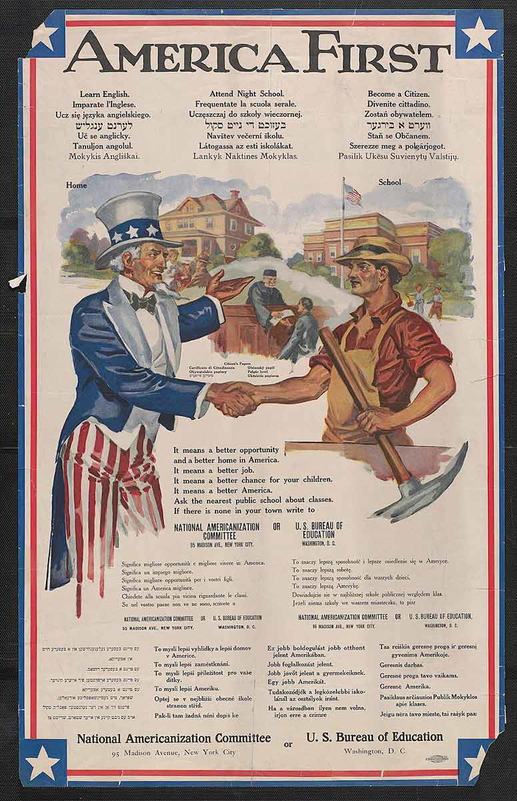
Despite the benefits touted by temperance supporters, Prohibition unfairly targeted immigrants and working-class people in Portland and beyond. Anti-immigrant organizations often teamed up with alcohol reformers. Bars in working-class neighborhoods were often singled out by politicians and law enforcement, and forerunners to organizations like the Ku Klux Klan used anti-alcohol sentiment as a “cover,” targeting those that they perceived to be their enemies under the guise of targeting drinkers. In a time of growing Nativist ideas, Prohibition only added to troubling social tension.
The Secret Shipment of Municipal Alcohol
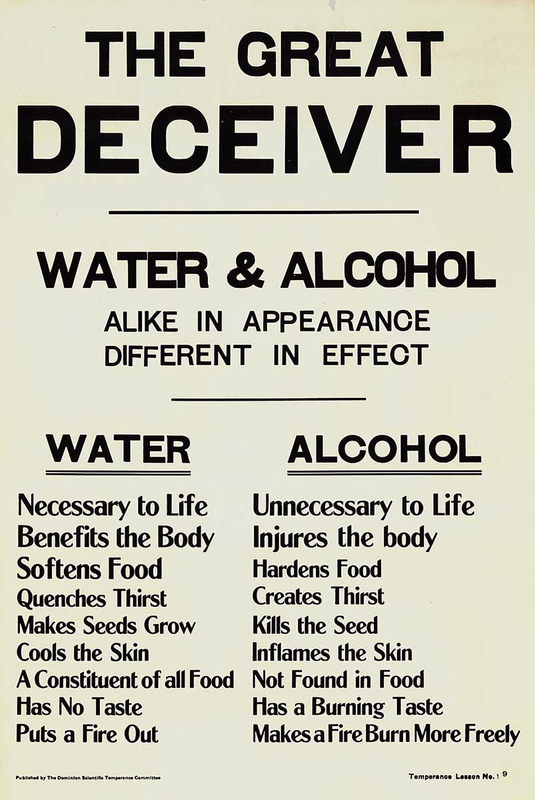
Though “beverage alcohol” was prohibited, alcohol for “medicinal and mechanical purposes” was allowed to be purchased by municipal liquor agents under the Maine Law. In 1855, Neal Dow made a mistake, violating his own law: he ordered a supply of alcohol from a wholesaler before city officials appointed a liquor agent who would legally be able to do so. A political opponent within the city government soon spread the news of the mayor’s misstep far and wide, painting him as a hypocrite.
The Standoff at the City Vault
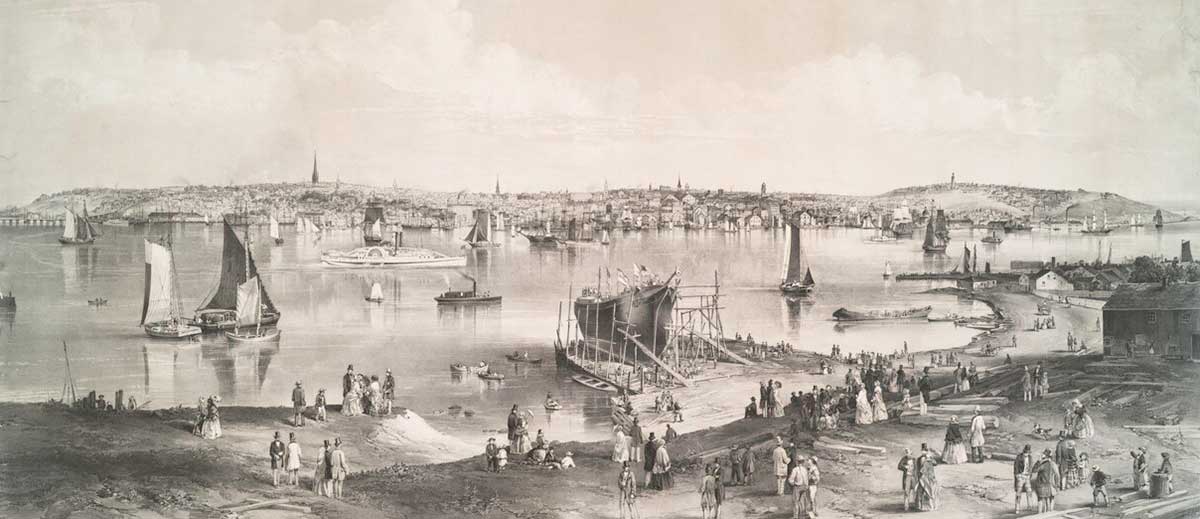
After the press spread the news of Dow’s law violation, angry citizens gathered to protest their mayor. On the afternoon of June 2, 1855, a crowd, small at first, began amassing outside of Portland’s City Hall. The crowd grew as the hours passed, both in size and unruliness. It is estimated that the mob measured 1500-2500 at its peak, and Dow recruited police officers to stand guard at City Hall, where the alcohol was stored. Two militias were also called into muster at the armory, ready to reinforce the police if needed.
Deadly Violence and the Political Fallout for Neal Dow
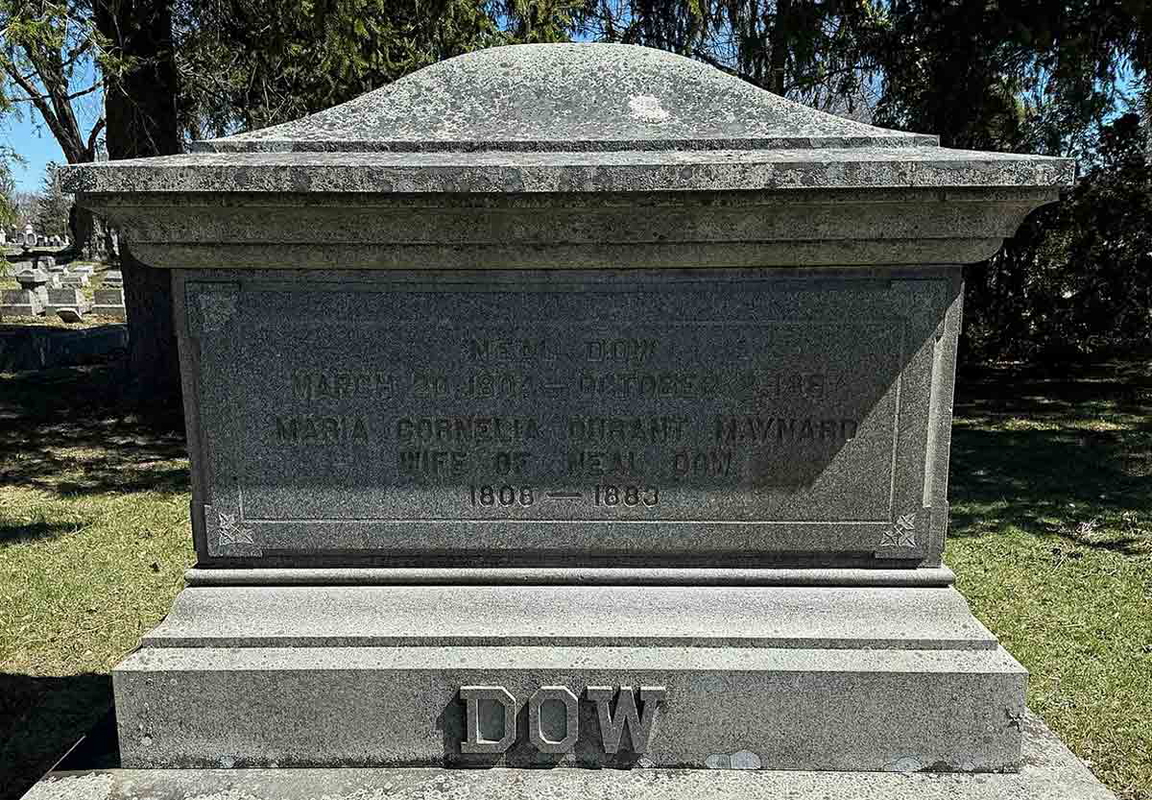
Tension only increased as the day passed into evening, and soon, some members of the mob began to lash out. Rocks and bricks were thrown at the building, and the militia arrived to read the official riot act. Objects continued to be hurled, hitting some of the soldiers and officers. An angered Dow ordered the militiamen to fire and disperse the crowd. At first, the militia captain refused the order, arguing instead that perhaps non-lethal measures should be taken first. Unfortunately, the violence escalated anyway, and the crowd breached City Hall. Police officers fired several volleys, killing the first man who entered the room where the liquor was held—sailor John Robbins. Firing continued, and several others were injured.
Dow’s image and career were targeted in the aftermath of the 1855 Portland Rum Riot, with blame falling on the mayor for the entire fracas as a result of his overzealous enforcement of Prohibition. He went on trial, but was acquitted. The following year, the Maine legislature repealed the 1855 strengthening of the Maine Law and passed a licensing measure that increased alcohol accessibility. Many other states followed suit. Though Prohibition in Maine remained in effect until it was repealed by the Constitution in 1934, enforcement was minimal after this time. The Father of Prohibition, Neal Dow, stuck to his values and remained a temperance activist until his death at 93.